
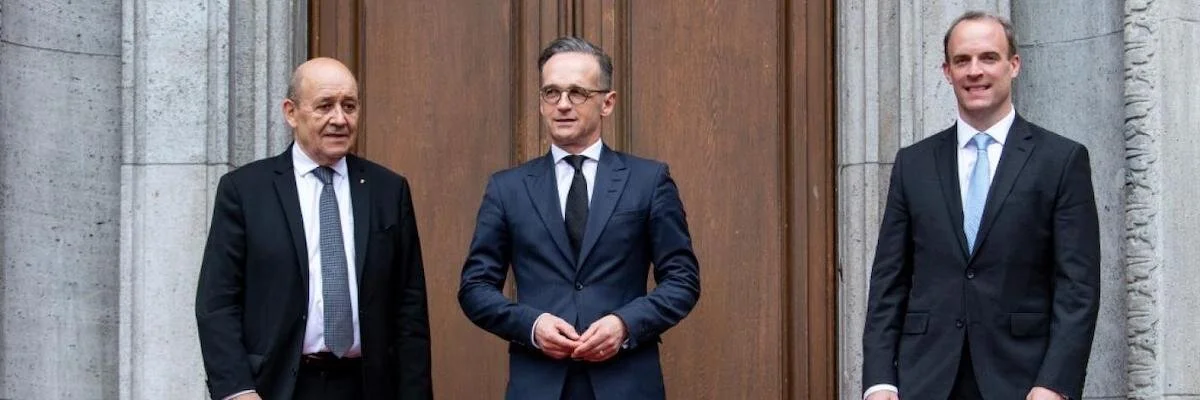
European Powers 'Welcome' Biden's Aim to Re-Enter JCPOA
The governments of France, Germany, and the UK “welcome the statements by President-elect Biden on the JCPOA and a diplomatic path to address wider concerns with Iran,” the trio said in a statement on Monday.
The governments of France, Germany, and the UK “welcome the statements by President-elect Biden on the JCPOA and a diplomatic path to address wider concerns with Iran,” the trio said in a statement on Monday.
The three governments, dubbed the E3, also declared that they would “address Iran’s non-compliance within the framework of the JCPOA,” reiterating their support for Joint Comprehensive Plan of Action. The statement described the deal as "the best and currently the only way to monitor and constrain Iran's nuclear programme.”
The E3 also expressed concerns over plans by Iran to install advanced centrifuges at its main nuclear enrichment plant in Natanz.
The UN's nuclear watchdog, the International Atomic Energy Agency (IAEA) reported last month that Iran had installed and begun operating advanced centrifuges at an underground section at Natanz.
"Iran's recent announcement to the IAEA that it intends to install an additional three cascades of advanced centrifuges at the Fuel Enrichment Plant in Natanz is contrary to the JCPOA and deeply worrying," the E3 said.
Under the terms of Iran's 2015 deal it is only meant to enrich uranium with a less sophisticated variety of centrifuges.
Since May last year Iran has taken steps to violate that limit and several others laid down in the deal in retaliation for US President Donald Trump's withdrawal from the accord in 2018 and subsequent reimposition of sanctions.
The three European powers said they had noted, "with great concern" a law passed by the Iranian parliament that would expand Iran's nuclear programme and limit the IAEA's monitoring access, saying this too would be "incompatible with the JCPOA and Iran's wider nuclear commitments".
The bill "for the lifting of sanctions and protection of the Iranian people's interests" was approved by the powerful Guardian Council on Wednesday but has to be signed by President Hassan Rouhani to become law.
Rouhani, whose government has signalled a readiness to engage with US President-elect Joe Biden, called the bill "detrimental to the course of diplomatic activities.”
The three European governments said that if Iran was serious about wanting to return to diplomacy with the incoming US administration, it had to reverse the bill and the installation of the centrifuges.
Photo: IRNA
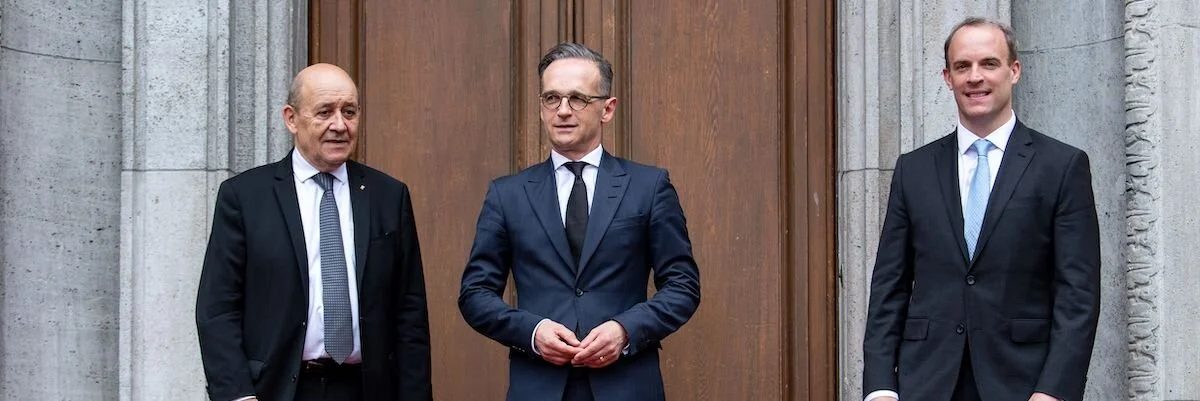
Britain, France, Germany Will Not Back U.N. Iran Sanctions Snapback
The foreign ministers of Britain, France and Germany said Friday they opposed lifting a UN arms embargo on Iran this year, but opposed sanctions “snapback,” after the UN's nuclear watchdog passed a resolution critical of Tehran.
The foreign ministers of Britain, France and Germany said Friday they opposed lifting a UN arms embargo on Iran this year, after the UN's nuclear watchdog passed a resolution critical of Tehran.
"We believe that the planned lifting of the UN conventional arms embargo established by Resolution 2231 next October would have major implications for regional security and stability," the ministers said in a joint statement.
The statement by the three key European powers on Iran will be a blow to Tehran, which had urged a lifting of the embargo despite US pressure for it to remain in place.
The ban on selling weapons—such as battle tanks, combat aircraft, warships and missiles or missile systems—to Iran had been set to be progressively eased from October.
Iranian President Hassan Rouhani earlier this month urged UN Security Council members to oppose a US "conspiracy" to extend the arms embargo.
The three powers said they plan to address the arms embargo issue "in close coordination" with UN Security Council permanent members Russia and China.
The board of governors at the International Atomic Energy Agency (IAEA) had passed a resolution Friday urging Tehran to provide inspectors with access to two sites to clarify whether undeclared nuclear activity took place there in the early 2000s.
It was the first such resolution since 2012 and came against a background of tension over the Iranian nuclear program, with Iran's position causing increasing exasperation in Europe.
"Since 2019, Iran has taken nuclear measures contrary to its commitments" under the 2015 deal on its nuclear program with world powers, the ministers' statement said.
It added that Iran "has denied the access requested by the agency for many months" to the sites.
But the powers insisted they remained committed to the 2015 nuclear deal, which analysts believe has been greatly undermined by the withdrawal of the United States in 2018.
They said sanctions should not be reimposed and that they opposed the "maximum" pressure policy against Iran of the administration of US President Donald Trump.
"We firmly believe that any unilateral attempt to trigger UN sanctions snapback would have serious adverse consequences" in the UN Security Council.
"We remain committed... (to the nuclear deal) and, in order to preserve it, urge Iran to reverse all measures inconsistent with the agreement and return to full compliance without delay," said the statement.
Photo: Shutterstock
Britain, France, Germany to Hold Iran Talks
◢ Britain, France and Germany will hold talks Friday on how to preserve the beleaguered Iran nuclear deal and protect shipping in the Persian Gulf. Ahead of the meeting, British foreign minister Dominic Raab said they would aim to "build on the momentum of the positive G7 talks on Iran.”
By Damon Wake
Britain, France and Germany will hold talks Friday on how to preserve the beleaguered Iran nuclear deal and protect shipping in the Persian Gulf.
Tensions have spiked recently in the strategic shipping lane where Iran has seized Western tankers as Tehran and Washington have locked horns over the 2015 deal.
US President Donald Trump last year unilaterally pulled out of the accord that handed Iran relief from sanctions in return for curbs on its atomic programme.
The move alarmed European powers, which see the deal as the best way to stop Iran acquiring nuclear weapons, and infuriated the Islamic republic.
The foreign ministers of Britain, France and Germany -- the three European parties to the deal -- will be joined by EU diplomatic chief Federica Mogherini for talks on the sidelines of an EU meeting in Helsinki
All have repeatedly said they are committed to saving the deal, but efforts to shield Iran's economy from the reimposition of US sanctions have so far borne little fruit.
The G7 summit last weekend brought a glimmer of hope as Trump indicated willingness to talk to Iran and Mogherini said the EU would support such a move -- provided the current deal was preserved.
'Build on Momentum'
Ahead of the meeting, British foreign minister Dominic Raab said they would aim to "build on the momentum of the positive G7 talks on Iran.”
As well as mooting the summit with his Iranian counterpart Hassan Rouhani, Trump also appeared open to a French suggestion that Iran be given a line of credit to help stabilise its economy.
"The nuclear deal is the only deal on the table that prevents Iran from getting a nuclear weapon and we will continue working together to encourage Iran to uphold the agreement in full," Raab said.
"We also need the broadest international support possible to tackle the threats to international shipping in the Strait of Hormuz."
Britain, along with Australia and Bahrain, has joined Washington's Operation Sentinel mission to protect commercial shipping on the crucial oil trade routes through the Gulf, in particular at the Strait of Hormuz.
Other European countries have been cool on the idea, fearing greater naval presence in the region could risk escalating an already febrile situation still further.
The idea has been floated of a European observation mission in the Strait of Hormuz, a strategic choke point at the mouth of the Gulf, but a number of EU countries have voiced reservations.
Mogherini on Thursday gave a cautious welcome to the idea of US-Iran talks but stressed that "first and foremost what is existing needs to be preserved" -- including the 2015 deal.
In response to the US pulling out of the deal and reimposing sanctions, Tehran has breached certain limits on its nuclear production imposed by the accord, but the EU insists Iran has so far not taken any irreversible steps.
Photo: Wikicommons
High-Stakes Iran Talks Try to Prevent Atomic Deal Unraveling
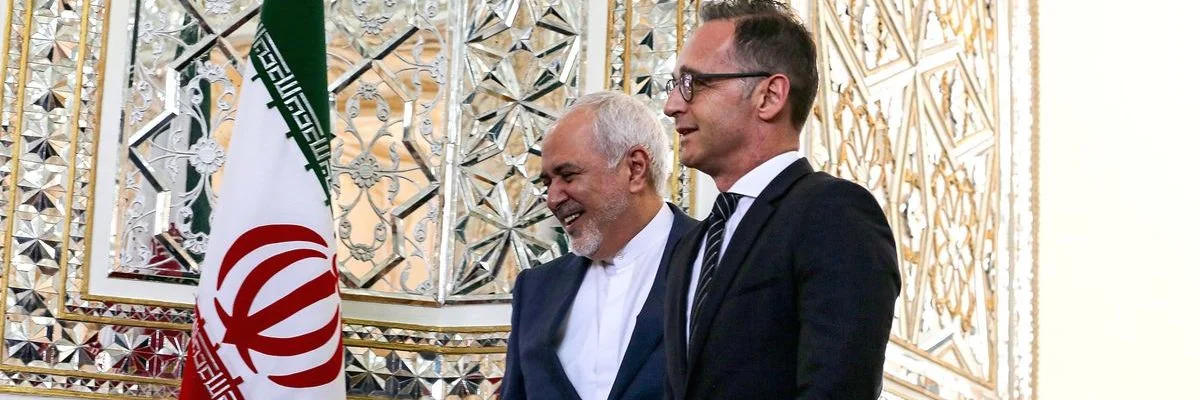
◢ Diplomacy intended to salvage the Iran nuclear deal goes into high gear this week after Tehran threatened to follow the U.S. in abandoning the accord. German Foreign Minister Heiko Maas landed in Iran’s capital to meet Monday with his counterpart Mohammad Javad Zarif. Japanese Prime Minister Shinzo Abe arrives in Tehran on Wednesday for more consultations.
By Golnar Motevalli, Jonathan Tirone and Patrick Donahue
Diplomacy intended to salvage the Iran nuclear deal goes into high gear this week after Tehran threatened to follow the U.S. in abandoning the accord.
German Foreign Minister Heiko Maas landed in Iran’s capital to meet Monday with his counterpart Mohammad Javad Zarif. Japanese Prime Minister Shinzo Abe arrives in Tehran on Wednesday for more consultations. In Vienna, the International Atomic Energy Agency will assess the state of the 2015 agreement that was supposed to rein in Iranian nuclear work in return for sanctions relief.
While European governments recognize Iran’s right to benefit from the nuclear accord and are striving to protect trade with it despite U.S. sanctions, they won’t accept the Islamic Republic’s “reneging” on its nuclear obligations because the U.S. has, Maas said.
The only way to reduce tensions is ending America’s “economic war” on Iran, and Germany and the European Union have a role to play in this, said Zarif, speaking alongside his German counterpart.
Iranian Ultimatum
The flurry of diplomacy kicked off after Iran’s president signaled May 8 that the country could soon violate terms of the agreement, known as the Joint Comprehensive Plan of Action. The declaration was made on the one-year anniversary of the U.S. decision to unilaterally exit the accord and reimpose sanctions, including on vital oil exports. With its economy plunging into recession, Iran gave European signatories 60 days to deliver the financial relief offered under the deal in return for moderating its nuclear output.
The European vehicle to sustain trade with Iran, Instex, will become operational this month, according to a senior European official with knowledge of the Maas-Zarif talks, who asked not to be identified to discuss the private consultations. A material Iranian violation of the nuclear agreement would force EU governments to end efforts to help Tehran mitigate U.S. sanctions.
Germany initially had hoped Maas would be accompanied to Tehran by officials from France and the U.K., the other EU signatories to the deal, according to another European official.
In Vienna, IAEA monitors convene to assess Iranian compliance. They reported last month in a 15th consecutive quarterly report that showed Iran has observed its obligations, amid growing concerns that the Trump administration’s campaign to counter Iranian influence in the Middle East could spill into war.
“I am worried about tensions over the Iran nuclear issue,” IAEA Director General Yukiya Amano said in a statement. “The nuclear-related commitments entered into by Iran under the Joint Comprehensive Plan of Action represent a significant gain. I therefore hope that ways can be found to reduce current tensions through dialogue.”
Iran has increased the rate at which it enriched uranium, although the amount stockpiled is still short of the 300 kilograms (661 pounds) allowed under the deal, Amano said at a press briefing. Any potential violation will be immediately reported and could trigger and emergency meeting in Vienna.
The country had about 180 kilograms of the material stockpiled last week—well short of the amount needed for a weapon, were the material to be further enriched, and if Iran were to make the decision to pursue a bomb. Tehran has always said its program is solely for civilian energy and industrial use, but world powers pursued the deal because they doubted that claim.
Tensions spiked after the U.S. accelerated the deployment of a carrier strike group to the Gulf to counter unspecified Iranian threats, and suggested without providing proof that Iran and its proxies were to blame for attacks on ships in the crucial waterway as well as a Saudi oil pipeline, and sent more troops to the region.
The visit by Abe, the first by a sitting Japanese prime minister in 41 years, was endorsed by President Donald Trump and is an effort to open a channel for mediation. But with the U.S. continuing to pile on new sanctions that target Iran’s petrochemical industry, the initiative has failed to gain traction.
“We are witnessing a treacherous policy” from the U.S., said Abbas Mousavi, the spokesman for Iran’s Ministry of Foreign Affairs. “They bring up negotiations and at the same time administrate maximum pressure. To Iran, this isn’t acceptable.”
High-level diplomacy could continue over the next month depending on the outcome of talks this week in Tehran. The remaining parties to the accord—China, France Germany, Russia and the U.K.—could convene a meeting of foreign ministers if that lends to the accord’s survival, according to one of the European officials.
Photo: Bloomberg
EU's Iran Payments Vehicle Ready - But Stuck
◢ A payment mechanism the EU hopes will save the Iran nuclear deal by bypassing US sanctions is ready, diplomats said Monday, but is held up by disagreements among European countries. The "Special Purpose Vehicle" is being put together by Germany, France and Britain, the European signatories to the 2015 accord that curbed Tehran's nuclear ambitions in return for sanctions reilef.
A payment mechanism the EU hopes will save the Iran nuclear deal by bypassing US sanctions is ready, diplomats said Monday, but is held up by disagreements among European countries.
The "Special Purpose Vehicle" is being put together by Germany, France and Britain, the European signatories to the 2015 accord that curbed Tehran's nuclear ambitions in return for sanctions reilef.
The entity, to be based in France with German governance and finance from all three countries, will allow Iran to receive payments despite Washington reimposing sanctions after ditching the deal.
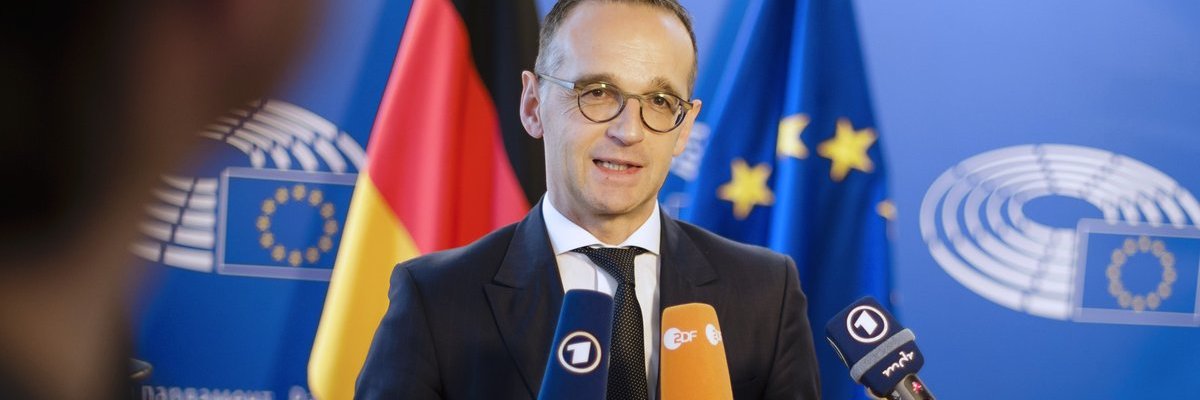
"It will be registered, it is not yet registered. I would say that we are immediately before the point of the implementation of our plan," German Foreign Minister Heiko Maas said at a meeting in Brussels organized by the Belgian government.
While the vehicle is the work of the three governments involved, the EU wants to launch it along with a formal statement on Iran endorsed by all 28 member states and addressing the whole spectrum of European concerns about the Islamic republic.
The EU has commended Iran for sticking to its commitments under the nuclear deal, but has growing concerns about Tehran's ballistic missile program, as well as its human rights record, its interference in Middle East conflicts and recent attempted attacks against opposition groups in Europe.
Diplomatic sources said that Italy and Spain have so far blocked the adoption of the statement, meaning it may have to wait until the next formal meeting of EU ministers on February 12.
It is not clear whether Germany, France and Britain will wait for consensus on the statement or go ahead and launch the vehicle without it.
Photo Credit: Phototek
Iran Expects Measures to Save Nuclear Deal by End of May
◢ European countries have until the end of May to propose ways to mitigate the effects of the US withdrawal from a landmark nuclear deal between world powers and Tehran, a senior Iranian official said Friday. Tehran has threatened to restart its uranium enrichment program at an "industrial level" if the 2015 pact falls apart.
European countries have until the end of May to propose ways to mitigate the effects of the US withdrawal from a landmark nuclear deal between world powers and Tehran, a senior Iranian official said Friday.
Tehran has threatened to restart its uranium enrichment program at an "industrial level" if the 2015 pact falls apart.
The comments came ahead of the first "joint commission" meeting in Vienna between the other signatories of the deal—China, Russia, France, Britain, Germany and Iran—since Washington's dramatic announcement on May 8 that it was pulling out from the Joint Comprehensive Plan of Action (JCPOA) and would re-impose sanctions on Iran.
The move has put the deal in "intensive care", the senior Iranian official said, speaking on condition of anonymity.
US President Donald Trump has long trashed the deal—concluded under his predecessor Barack Obama -- saying it did not do enough to curtail Tehran's nuclear ambitions.
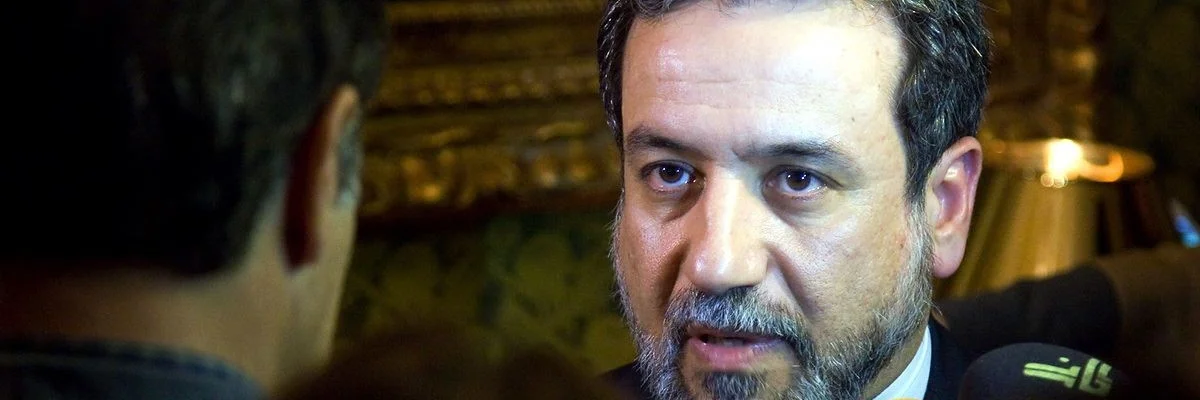
After Friday's meeting, Iranian Deputy Foreign Minister Abbas Araghchi said negotiations were ongoing with the remaining signatories "to see if they can provide us with a package which can give Iran the benefits of sanctions lifting."
He added that "practical solutions" were required to address Iran's concerns over its oil exports, banking flows and foreign investments in the country.
"The next step is to find guarantees for that package," he said.
Araghchi said that talks would continue over the next few weeks "particularly at an expert level", after which Iran would decide whether or not to stay in the accord.
"We got the sense that Europeans, Russia and China... are serious and they recognize that JCPOA's survival depends on the interests of Iran being respected," Araghchi added.
A senior EU official said after the meeting that the bloc could not "give guarantees but we can create the necessary conditions for the Iranians to keep benefiting from the sanctions lifting under the JCPOA and to protect our interests and continue to develop legitimate business with Iran."
"We are working on a variety of measures to mitigate consequences of the US withdrawal," the official, who did not want to be named, said while cautioning that "there are things that will take more time."
Russian delegate Mikhail Ulyanov struck an upbeat note, saying: "We have
all chances to succeed, provided that we have the political will.
"I must tell you that the JCPOA is a major international asset. It does not belong to the United States, it belongs to the whole international community."
He added that the possibility of referring the matter back to the UN "was not discussed during this meeting".
'Dying' Deal
Unusually for a meeting of the joint commission, the head of the UN's nuclear watchdog Yukiya Amano was invited to brief the participants on his organization's work in Iran.
According to a report seen by AFP on Thursday, the International Atomic Energy Agency (IAEA) believes Iran is still abiding by the deal's key restrictions on its nuclear facilities in return for relief from damaging economic sanctions.
The IAEA, however, is "encouraging (Iran) to go above and beyond the requirements" of the deal in order to boost confidence, said a senior diplomat in Vienna, where the nuclear watchdog is based.
As well as criticizing the deal for not adequately restricting Iran's nuclear activities, Trump also said it did not go far enough in limiting Iran's ballistic missile program, or its intervention in regional conflicts from Yemen to Iraq and Syria.
The unnamed senior Iranian official rejected any attempt to link the JCPOA to other such issues.
The official said such an attempt would mean "we lose JCPOA and we (would) make the other issues even more complicated to resolve," adding it was pointless for the Europeans to try to "appease" Trump.
"We have now a deal which is in the intensive care unit, it's dying," the official said.
The five signatories still committed to the agreement have said they want Iran to stay in the deal, with the European countries saying they would not rule out further talks with the Islamic Republic on an expanded text.
However, Iranian officials have warned that there was no question of broadening the discussions.
Photo Credit: YJC
Iran FM Heads to Brussels on Final Leg of Nuclear Deal Saving Tour
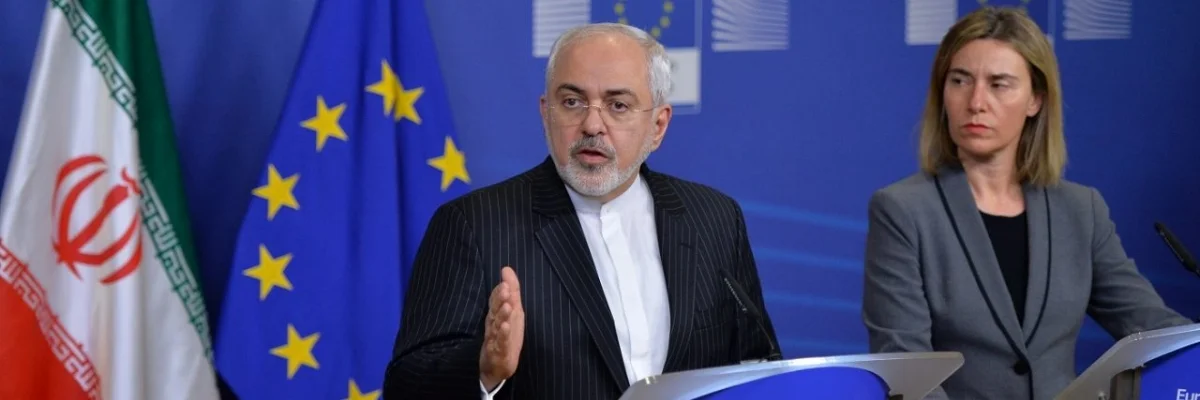
◢ Iran's foreign minister is due to land in Brussels later Tuesday on the final leg of a global tour rallying diplomatic support for the country's nuclear deal. Mohammad Javad Zarif will meet with his counterparts from Britain, France and Germany—the three European nations involved in the landmark deal who are incensed by Washington's abandonment of the pact.
Iran's foreign minister is due to land in Brussels later Tuesday on the final leg of a global tour rallying diplomatic support for the country's nuclear deal after the Trump administration's abrupt withdrawal.
Mohammad Javad Zarif will meet with his counterparts from Britain, France and Germany—the three European nations involved in the landmark deal who are incensed by Washington's abandonment of the pact.
After long negotiations, Iran agreed in July 2015 to freeze its nuclear program in return for the repeal of punishing international sanctions.
But last week US President Donald Trump announced he was leaving the deal and reimposing sanctions.
Zarif's has since embarked on a whirlwind global tour, visiting both Russia and China, the two other signatory nations, in a bid to bolster support.
Washington's decision to go against its European allies' advice and abandon the deal has pushed them closer to Beijing and Moscow as diplomats scramble to keep the pact alive.
"The agreement with Iran is working, we must do our utmost to preserve it," Maja Kocijancic, spokeswoman for the head of European diplomacy Federica Mogherini, told AFP ahead of Zarif's arrival.
Iran has said it is preparing to resume "industrial-scale" uranium enrichment "without any restrictions" unless Europe can provide solid guarantees that it can maintain trade ties despite renewed US sanctions.
On Monday Zarif met with his Russian counterpart Sergei Lavrov, a day after visiting leaders in Beijing.
"The final aim of these negotiations is to seek assurances that the interests of the Iranian nation will be defended," Zarif said at the start of a meeting.
After the talks, Zarif praised the "excellent cooperation" between Moscow and Tehran and said Lavrov had promised him to "defend and keep the agreement".
Lavrov, for his part, said Russia and Europe had a duty to "jointly defend their legal interests" in terms of the deal.
'Malign Behaviour'
On Monday Zarif also sent a letter to the United Nations in which he accused the US of showing a "complete disregard for international law" in pulling out of the deal.
Russian President Vladimir Putin has already spoken with German Chancellor Angela Merkel and Turkey's President Recep Tayyip Erdogan about efforts to save the accord, after voicing his "deep concern" over Trump's decision.
And on Monday Putin met Yukiya Amano, the head of the International Atomic Energy Agency, telling him that Russia was "ready to continue to uphold the Iran nuclear deal despite the withdrawal of the United States."
Analyst say Trump's move to ditch the nuclear deal has brought Europe, Moscow and Beijing together.
"(European) cooperation with Russia, which until recently seemed impossible because of the Skripal (spy poisoning) case, with the expulsion of diplomats and the reduction of contact, is now receiving a fresh boost," said Andrei Baklitsky of the Moscow-based PIR Center nuclear safety NGO.
"The Europeans, after the withdrawal of the US from the deal, have found themselves forced to save the Joint Comprehensive Plan of Action themselves," he told AFP, referring to the official name of the nuclear deal.
Moscow would have to play a key role in ensuring Tehran does not resume its nuclear program, he added.
On Sunday, US Secretary of State Mike Pompeo said Washington still wants to work with Europe to counter Iran's "malign behavior" and was working hard to thrash out a more wide-ranging deal with its European partners.
But while he talked up the prospect of renewed coordination with America's allies, another top aide reminded Europe its companies could face sanctions if they continue to do business with the Middle Eastern power.
Russian efforts to save the accord will boost its role as a power player in the Middle East, after its intervention on the side of Bashar al-Assad's regime in Syria.
This, along with its diplomatic moves to orchestrate an end to the Syrian conflict, has put Moscow at loggerheads with the US and Europe, which have intervened against the regime.
Merkel is set to visit Russia and meet Putin in the Black Sea resort of Sochi on Friday, while French President Emmanuel Macron will be in Saint Petersburg later this month for an economic forum.
Photo Credit: IRNA
'No Decision' by Trump on Iran Nuclear Deal: Bolton
◢ US President Donald Trump has not decided whether or not to scrap the Iran nuclear deal, US National Security Advisor John Bolton said Sunday. Trump has called the existing accord "insane" and "ridiculous," in part because its restrictions start to expire in 2025.
US President Donald Trump has not decided whether or not to scrap the Iran nuclear deal, US National Security Advisor John Bolton said Sunday.
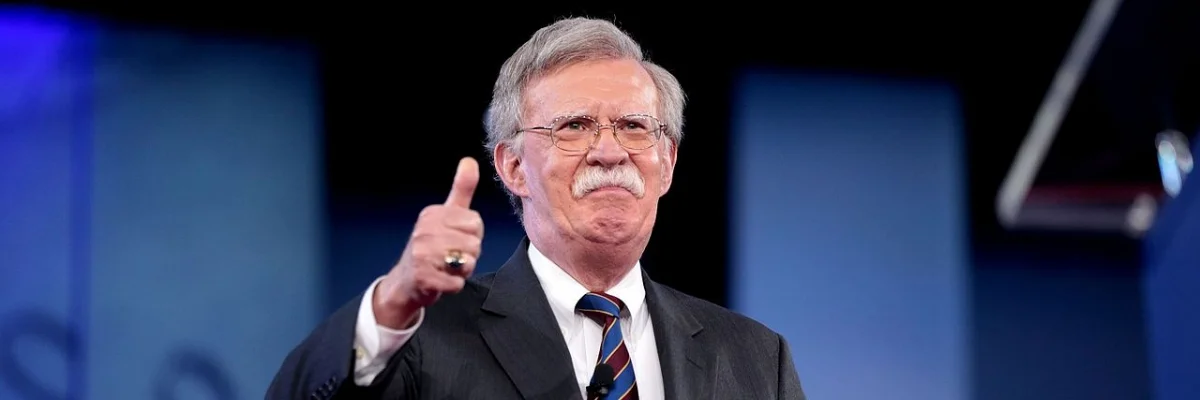
"He has made no decision on the nuclear deal, whether to stay in or get out," Bolton told Fox News Sunday.
"He is certainly considering the framework, the four pillars that President (Emmanuel) Macron laid out in their meeting last week," said Bolton, referring to efforts to supplement the Iran deal with additional measures to make it more palatable to Trump.
In 2015 the United States, along with other nations, struck a deal with Iran to end a 12-year standoff over that country's nuclear program, which was feared to be leading towards an atomic weapons capability.
Iran agreed to freeze its nuclear program in return for the lifting of punishing international sanctions, but Trump has criticized the deal as not going far enough.
Britain, France and Germany—the three European countries that signed the Iran nuclear deal—are working to head off Trump's threat to walk away from the accord and reimpose sanctions.
Trump has called the existing accord "insane" and "ridiculous," in part because its restrictions start to expire in 2025.
French President Emmanuel Macron has proposed an additional deal that extends Iran's nuclear restrictions while also curbing its ballistic missile program and support for militias in the Middle East.
Iran's President Hassan Rouhani rejected any hopes of rewriting the nuclear deal itself.
Photoe Credit: Wikicommons

Germany's Merkel Says Existing Iran Deal 'Not Sufficient' to Curb Iran Ambitions
◢ German Chancellor Angela Merkel, standing alongside President Donald Trump at the White House, said Friday that the existing international accord on Iran is not enough to curb the Islamic republic's regional ambitions.
AFP Correction: Headline corrected to remove reference to 'nuclear program' to better reflect original German speech.
German Chancellor Angela Merkel, standing alongside President Donald Trump at the White House, said Friday that the existing international accord on Iran is not enough to curb the Islamic republic's regional ambitions.
The so-called Joint Comprehensive Plan of Action, signed by Tehran and six world powers including Germany and the United States, is "a first step that has contributed to slowing down their activities in this particular respect," Merkel told reporters.
"But we also think from a German perspective that this is not sufficient in order to see to it that Iran's ambitions are curbed and contained."
"Europe and the United States ought to be in lock step on this," she said.
Photo Credit: Wikicommons
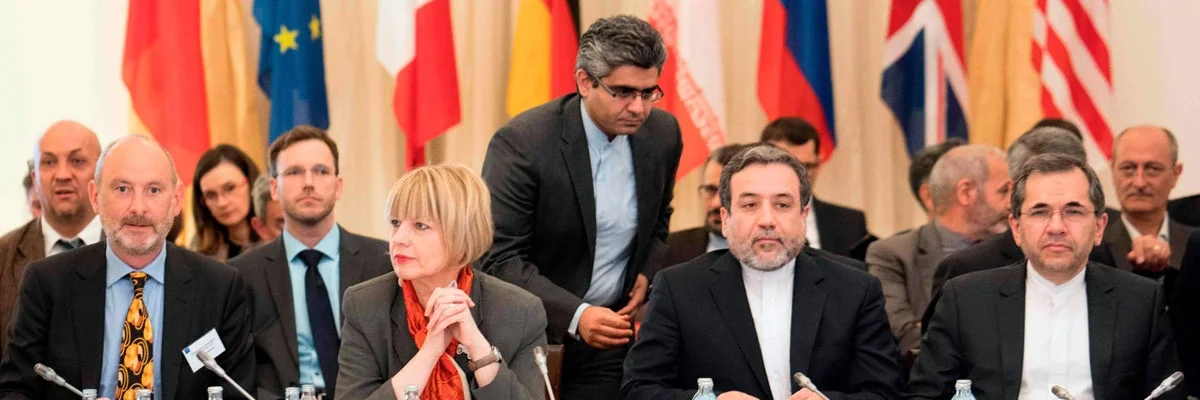
US Seeking 'Supplemental' Iran Deal With European Powers
◢ The US and European powers have had "very good" discussions towards agreeing a "supplemental" accord beyond the Iran nuclear deal by May 12, a senior US official said Friday. This would cover Iran's ballistic missile program, its regional activities, the expiration of parts of the nuclear deal in the mid-2020s and tighter UN inspections.
The US and European powers have had "very good" discussions towards agreeing a "supplemental" accord beyond the Iran nuclear deal by May 12, a senior US official said Friday.
President Donald Trump said in January that the 2015 deal between Iran and major powers must be "fixed" by May 12 or the United States will walk away. Senior State Department official Brian Hook said on Friday after talks in Berlin and Vienna that Trump wants to reach a "supplemental" deal with the European signatories to the agreement by then. This would cover Iran's ballistic missile program, its regional activities, the expiration of parts of the nuclear deal in the mid-2020s and tighter UN inspections, Hook said.
"We are taking things one week at a time, we are having very good discussions in London, Paris and Berlin," Hook, recently ousted Secretary of State Rex Tillerson's chief of strategy, told reporters.
"There is a lot we agree on and where we disagree we are working to bridge our differences," Hook said.
He declined to indicate what would happen if and when such an agreement is reached, saying: "We are not under instructions from the president to go beyond seeking an agreement with our European allies."
The 2015 accord between Iran and the US, Russia, China, France, Britain and Germany curtailed Iran's nuclear activities in exchange for sanctions relief.
Iran, which according to the UN atomic watchdog has been abiding by the deal since it came into force in January 2016, has ruled out any changes to the agreement.
The talks in Vienna on Friday, a regular review of the accord, involved Iran and the six other signatories. Trump's decision this week to replace Tillerson with Mike Pompeo as secretary of state has been widely seen as another bad omen for the agreement.
Tillerson and his erstwhile cabinet ally Defence Secretary Jim Mattis had urged Trump to listen to the Europeans to preserve the agreement. Pompeo, head of the Central Intelligence Agency, is seen as taking a harder line on Iran.
Photo Credit: Wikicommons
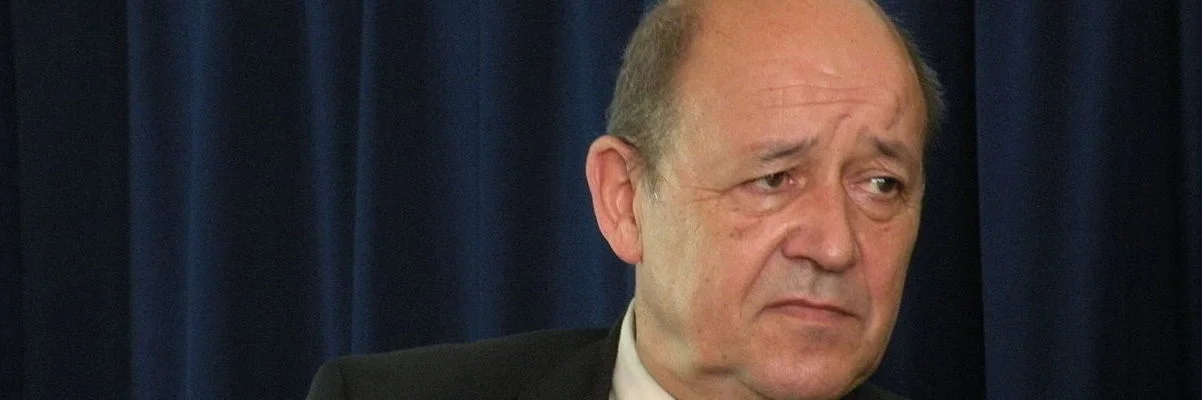
French Foreign Minister Visits Iran
◢ France's Foreign Minister Jean-Yves Le Drian arrived in Tehran early Monday for talks on the 2015 nuclear deal and Iran's role in the Syrian conflict. It is the first visit by one of the European signatories to the nuclear deal since US President Donald Trump set an ultimatum that he would abandon it in May if it was not "improved".
France's Foreign Minister Jean-Yves Le Drian arrived in Tehran early Monday for talks on the 2015 nuclear deal and Iran's role in the Syrian conflict.
It is the first visit by one of the European signatories to the nuclear deal since US President Donald Trump set an ultimatum that he would abandon it in May if it was not "improved".
Le Drian has made it clear to Tehran that he is no "emissary of Donald Trump", the foreign minister's team have told AFP. The visit was originally scheduled for January but postponed due to a week of violent protests in Iran.
"We want to preserve the nuclear deal because it is working, it's robust and because the Iranians are respecting it," Le Drian's team said. Le Drian, however, has said that without an end to ballistic missile tests by Iran, it will "always be suspected, with reason, of wanting to develop nuclear weapons."
Tehran denies seeking nuclear arms and says its missiles are purely defensive and not up for discussion. Iran has said it "will not accept any amendments in (the nuclear) agreement, be it now or in the future, and it will not allow any other issues to be linked to (it)".
Despite their differences, Iran has welcomed French efforts to re-engage economically and politically with the Islamic republic. Last year, Iran signed a $5-billion gas exploration deal with French energy giant Total, Tehran's biggest since the nuclear accord.
But political differences were on show on Sunday in a call between presidents Hassan Rouhani of Iran and France's Emmanuel Macron.
The French president called for Iran to put "the necessary pressure" on its Syrian ally, President Bashar al-Assad, to stop "indiscriminate" attacks on civilians.
For his part, Rouhani said countries exporting weapons to Saudi Arabia—France being one of the biggest suppliers—must answer for war crimes being committed by that country in Yemen.
Photo Credit: Wikicommons