
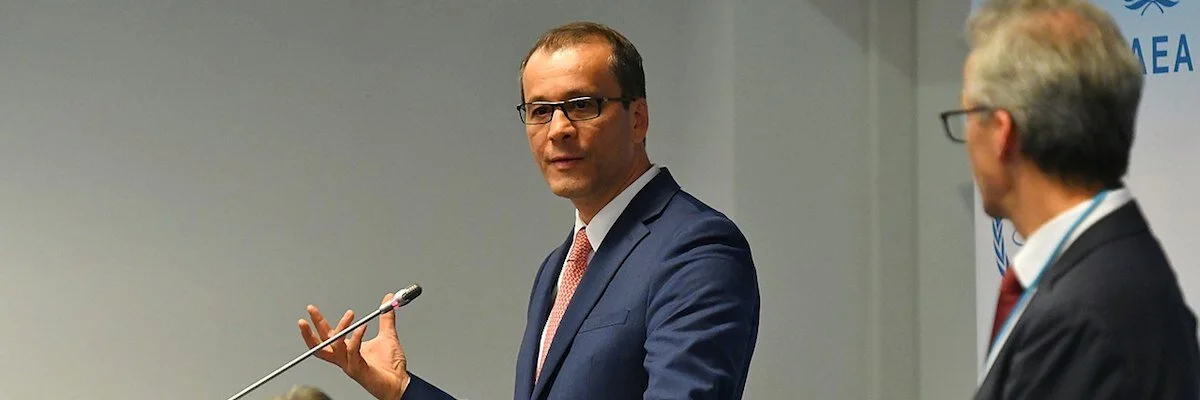
Nuclear Agency Urges Iran to Explain Uranium Particles at Undeclared Site
◢ The UN nuclear watchdog on Thursday urged Iran to explain the presence of uranium particles at an undeclared site, as a landmark deal aimed at curbing Tehran's atomic activities threatens to collapse. The agency's acting head Cornel Feruta said IAEA and Iranian officials would meet in Tehran next week to discuss the matter, adding that the UN body had not received any additional information.
By Julia Zappei
The UN nuclear watchdog on Thursday urged Iran to explain the presence of uranium particles at an undeclared site, as a landmark deal aimed at curbing Tehran's atomic activities threatens to collapse.
The International Atomic Energy Agency (IAEA) said in a report made public last week that its inspectors had "detected natural uranium particles of anthropogenic origin at a location in Iran not declared to the agency".
The agency's acting head Cornel Feruta said IAEA and Iranian officials would meet in Tehran next week to discuss the matter, adding that the UN body had not received any additional information.
"The matter remains unresolved... It is essential that Iran works with the agency to resolve this matter promptly," he told IAEA member states at a meeting of the agency's board of governors.
A diplomatic source told AFP that the IAEA would send a high-ranking technical delegation to Iran next week.
The particles are understood to be the product of uranium which has been mined and undergone initial processing, but not enriched.
While the IAEA has not named the site in question, diplomatic sources have previously said the agency asked Iran about a site in the Turquzabad district of Tehran where Israel has alleged secret atomic activity in the past.
Sources say the IAEA took samples from the site in the spring and that Iran has been slow in providing answers to explain the test results.
The 2015 deal between Iran and world powers has been faltering since last year when the United States pulled out and started to reinstate punishing sanctions on Tehran, leaving the other signatories struggling to salvage the agreement.
Over the past few months, Iran has breached several parts of the deal it signed with the US as well as Britain, China, France, Germany and Russia, in which it committed to scaling back its nuclear programme in exchange for sanctions relief.
But Britain, France and Germany have said they are extremely concerned by Iran's actions in stepping up its uranium enrichment and other breaches.
Enrichment is the process that produces fuel for nuclear power plants but also, in highly extended form, the fissile core for a warhead.
On Monday, the IAEA confirmed Iran's stock of heavy water for reactors has surpassed the 130-tonne limit set under the agreement.
Heavy water is not itself radioactive but is used in nuclear reactors to absorb neutrons from nuclear fission.
Heavy water reactors can be used to produce plutonium for nuclear weapons as an alternative to enriched uranium.
The IAEA has also said one of its inspectors was briefly prevented from leaving Iran, calling her treatment "not acceptable".
Iran has cancelled the inspector's accreditation, saying she triggered a security check at the entrance gate to the Natanz enrichment plant last month.
The IAEA has disputed the Iranian account of the incident, without going into details.
Photo: IRNA
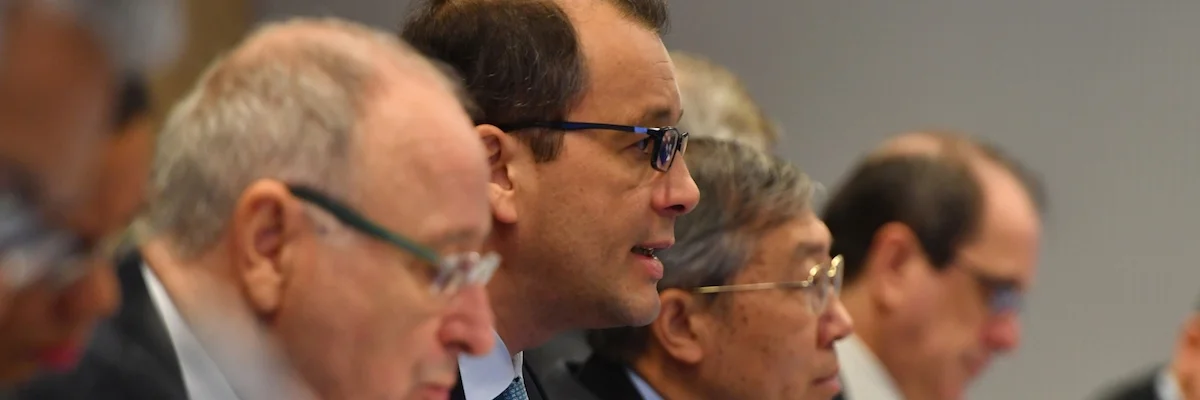
Iran Nuclear Crisis Escalates With New Inspections Report
◢ Iran accused an international atomic monitor of setting off explosives detectors at its main enrichment plant, ratcheting up tensions that threaten to tip the nation into a new nuclear crisis. The IAEA inspector triggered alarms during routine screening on Oct. 28 at Iran’s Natanz enrichment facility, Ambassador Gharib Abadi said at a briefing in Vienna.
By Jonathan Tirone
Iran accused an international atomic monitor of setting off explosives detectors at its main enrichment plant, ratcheting up tensions that threaten to tip the nation into a new nuclear crisis.
The International Atomic Energy Agency inspector triggered alarms during routine screening on Oct. 28 at Iran’s Natanz enrichment facility, Ambassador Gharib Abadi said at a briefing in Vienna. The IAEA recalled the inspector after she was questioned by Iranian authorities over traces of explosives detected in her handbag.
The IAEA refuted the charge. “The agency does not agree with Iran’s characterization of the situation involving the inspector, who was carrying out official safeguards duties,” it said in an email. Iran shouldn’t have delayed her departure, the agency said.
The Iranian allegation was made shortly after IAEA officials said Iran had failed to cooperate with its probe into radioactive samples discovered at a site identified by Israel.
“There were suspicious materials involved in this incident,” Abadi said. “Iran expects the necessary level of cooperation during the investigation.” U.S. ambassador to the IAEA, Jackie Wolcott, called the detention of the monitor for questioning an “outrageous and unwarranted act of intimidation,” according to a statement.
The agency’s top inspector, Massimo Aparo, had told diplomats in a closed-door meeting in Vienna on Wednesday that Iran is evading attempts to discover the source of man-made and natural uranium particles detected at a warehouse in Tehran earlier this year, according to two officials familiar with the briefing who asked not to be identified.
New Front
IAEA acting director General Cornel Feruta convened an extraordinary meeting of the 35-member board of governors Thursday to discuss the new concerns. The Romanian diplomat said only last month that Iran had taken “a step in the right direction” in attempting to clarify matters troubling inspectors.
“Iran should provide full and timely cooperation,” the IAEA said in an emailed statement. “The IAEA is ready to continue interactions with Iran with a view to resolving the matter as soon as possible.”
The findings threaten to open a new front in the tense confrontation that has erupted over Iran’s nuclear program since the U.S. withdrew from the multi-power nuclear deal with Tehran last year and reimposed punishing economic sanctions. Iran, which has vowed to return to the nuclear deal once the U.S. does the same, this week announced it would begin enriching uranium at Fordow, a fortified site built into the side of a mountain.
European signatories say they remain committed to the nuclear accord but have struggled to devise a mechanism that wouldn’t expose European companies to penalties if they trade with the Islamic Republic.
Secretary of State Mike Pompeo on Thursday urged the world to address what he called Iran’s nuclear “extortion.”
Safeguards Obligations
The IAEA has satellite images showing that the Turquz-Abad site where the particles were found was cleared out after Israeli Prime Minister Benjamin Netanyahu presented documents that Mossad spies smuggled out of a secret warehouse in Tehran. Those files allegedly show Iran lied about a weapons project that operated until 2003, and then intensified efforts to hide its atomic archive after agreeing to the 2015 nuclear accord. Iran denies its nuclear program is aimed at producing weapons.
The U.S. is expected to press European allies that remain committed to the pact to support authorizing IAEA inspectors to broaden their investigation, according to the diplomats. That effort would be led by Argentina’s Rafael Grossi, who’ll replace Feruta as director general next month.
The suggestion that Iran could be providing incomplete information has potentially serious consequences. The entire international apparatus of rules that the IAEA enforces is based on verifying the correctness and completeness of nations’ declared nuclear material and nuclear-related activities.
The IAEA’s board referred Iran to the United Nations Security Council in 2006 for failing to fulfill safeguards obligations. The council then imposed crippling international sanctions that were only lifted after the 2015 agreement was agreed.
Photo: IAEA
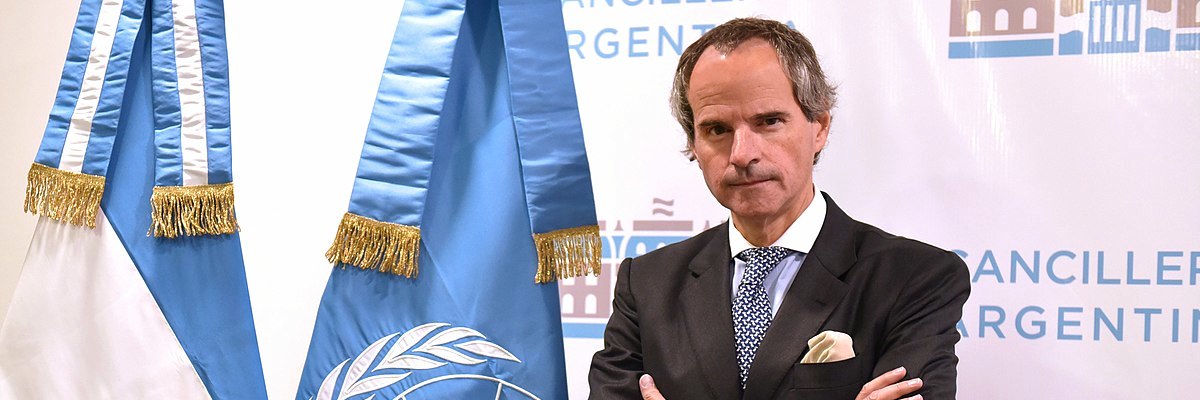
Argentina's Grossi Elected Head of UN's Nuclear Watchdog
◢ Argentina’s Rafael Grossi was elected on Tuesday to head the UN's nuclear watchdog, which is tasked in particular with monitoring the implementation of the increasingly shaky Iran nuclear deal. Grossi received 24 votes to Feruta's 10 from the IAEA's 35-member Board of Governors in the third official round of voting.
By Julia Zappei
Argentina's Rafael Grossi was elected on Tuesday to head the UN's nuclear watchdog, which is tasked in particular with monitoring the implementation of the increasingly shaky Iran nuclear deal.
Grossi beat Romanian diplomat Cornel Feruta to become director general of the International Atomic Energy Agency (IAEA) following the death of the former head Yukiya Amano of Japan in July.
The election of Grossi, Argentinia's ambassador to the IAEA, comes at a critical time for the Vienna-based agency as Iran is decreasing its commitments under the 2015 landmark deal.
US President Donald Trump last year withdrew from the agreement and proceeded to re-introduce sanctions, leaving Iran to press the remaining signatories to hold up economic benefits in return for its nuclear programme cutbacks.
Grossi received 24 votes to Feruta's 10 from the IAEA's 35-member Board of Governors in the third official round of voting, reaching the two-thirds majority needed to become the new director general, according to a diplomatic source.
"With Rafael Grossi securing a qualified majority in the board of governors, IAEA has taken a decisive step towards electing its director general," Xavier Sticker, the French ambassador to the United Nations in Vienna, said on Twitter.
An IAEA general conference is expected to approve the board's choice.
Feruta had been the organisation's acting director general since the death of Amano, who had led the agency since 2009.
‘Broker for All'
Grossi, who becomes the first IAEA head from Latin America and is believed to have had the backing of the US, has said he wants to be "an honest broker for all" without a "hidden agenda".
"My approach with Iran will be very firm but very fair," the 58-year-old told AFP in a September interview.
Grossi, a seasoned diplomat, became Argentina's permanent representative to the United Nations in Vienna in 2013.
Prior to that he was at the IAEA from 2010, latterly as the assistant director general for policy and chief of cabinet.
Both Grossi and Feruta had been lobbying strongly for the post with two other contenders—Lassina Zerbo of Burkina Faso and Marta Ziakova of Slovakia—dropping out earlier in the race.
"I think Grossi's style would be to shake things up a little more," one diplomat told AFP ahead of this week's voting, describing the Argentinian as hard-working and engaged.
"You can't fault his work ethic," the diplomat added.
The IAEA is tasked with monitoring Iran's nuclear activities to ensure they abide by the terms of the 2015 deal known as the Joint Comprehensive Plan of Action (JCPOA).
Tensions have been escalating between Iran and the United States since May last year when Trump pulled out of the nuclear accord and began reimposing sanctions.
The remaining partners in the deal with Iran are Britain, China, France, Germany and Russia.
The European parties have repeatedly said they are committed to saving the accord, but their efforts have so far borne little fruit.
Tehran has already hit back three times with countermeasures in response to the US withdrawal from the deal.
On July 1, Iran said it had increased its stockpile of enriched uranium to beyond a 300-kilogramme maximum set by the deal, and a week later it announced it had exceeded a 3.67-percent cap on the purity of its uranium stocks.
In its latest move it fired up advanced centrifuges to boost its enriched uranium stockpiles on September 7.
Photo: Wikicommons
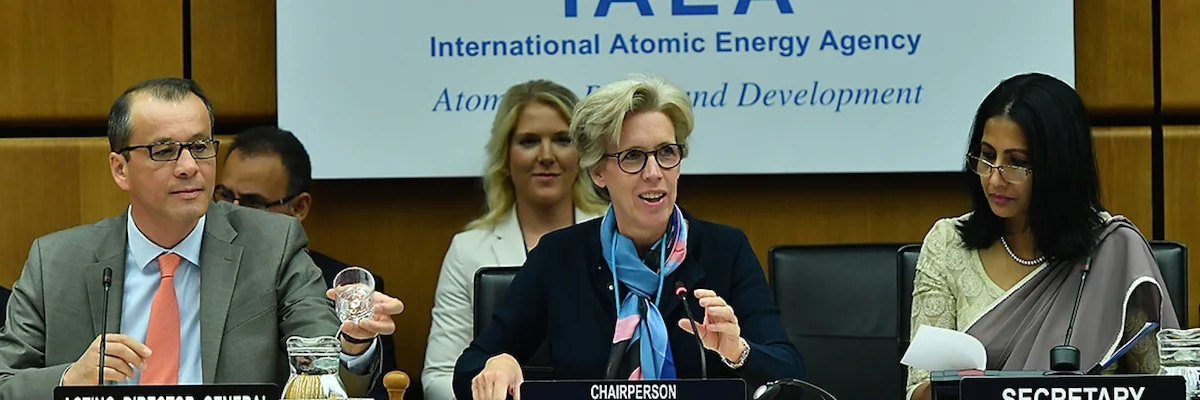
The Secretive Election of the World’s Top Nuclear Peacekeeper
◢ When the head of the world’s nuclear watchdog died in July, his death was kept secret for four days. Many people didn’t even know Yukiya Amano was sick. The process that will see his post finally filled this week is shrouded in just as much mystery.
By Jonathan Tirone
When the head of the world’s nuclear watchdog died in July, his death was kept secret for four days. Many people didn’t even know Yukiya Amano was sick. The process that will see his post finally filled this week is shrouded in just as much mystery.
The ambassadors of the 35 nations on the International Atomic Energy Agency’s board will enter a sealed chamber at its headquarters in Vienna on Monday. Two lawyers acting as witnesses will stand guard as one-by-one each envoy slips a paper ballot into a wooden box. Votes are counted and if nobody receives two thirds, the process is repeated.
It will be only the sixth time since the dawn of the nuclear age that the IAEA’s board of governors convenes for the odd ritual, which has been compared to the conclave, the gathering of Catholic cardinals who select the new pope.
“It’s a somber occasion, almost like those meetings in the Sistine Chapel,” said former IAEA policy coordinator Tariq Rauf.
The agency’s wood-paneled halls may lack the grandeur of being in the presence of Michelangelo’s Last Judgement, but whoever is chosen can wield significant power in some of the world’s most vexing hotspots.
The new leader will oversee inspections in Iran as well as the clean-up of Japan’s Fukushima meltdowns and negotiate a safeguards agreement with Saudi Arabia. And then there’s President Recep Tayyip Erdogan wondering why Turkey shouldn’t have nuclear weapons and North Korea still holding tight to its arsenal.
Argentine diplomat Rafael Grossi is the slight favorite to succeed Amano, according to two informal straw polls. He’s facing off against acting Director General Cornel Feruta from Romania and Burkina Faso’s Lassina Zerbo.
The winner inherits a built-in conflict at the core of this Cold war-era institution. It’s won a Nobel Peace Prize for helping prevent nuclear power from being misused for weapons -- but its diplomats, lawyers and scientists are still promoting the spread of nuclear technology at at time when the mood has swung toward renewable energy.
“There are a lot of challenges out there right now,” said U.S. Secretary of Energy Rick Perry last month in Vienna, who tabbed Grossi as a good fit for the job. “Our message to other countries is ‘don’t drag this out.’ To not have a director general in place is problematic.”
U.S. President Dwight Eisenhower founded the agency in 1957 just months before the Soviet Union launched its Sputnik satellite into orbit, prompting concern the U.S. could lose the technology race. Choosing the capital of a neutral country to host its headquarters appealed to actors on either side of the Iron Curtain who used it as a base for espionage.
Unlike the International Monetary Fund or World Health Organization, the IAEA’s board doesn’t publish a job description outlining the minimum qualifications to become its chief. Four IAEA director generals have been lawyers and just one, Sigvard Eklund of Sweden, was a scientist.
The Cardinals
Western countries that dominate the agency want it to strictly keep watch over other nations investigating the mysteries of the atom, according to Britain’s former IAEA ambassador, Peter Jenkins, who added “the cardinals don’t like to be hemmed in by other objective criteria in choosing a leader.”
The language of religion often infuses the atomic Jesuit cabal. The agency’s so-called Safeguards codes are referred to as “the bible” atop which all other activity rests, said one senior diplomat who asked not to be named. IAEA information circulars are to heads of state what Papal encyclicals are to Catholic souls, said another official. Altogether, the rules allow inspectors to track gram-levels of nuclear materials stored in secretive sites around the world.
Rauf, the former IAEA policy coordinator, held court during the 2009 vote when Amano was elected after a record six rounds of balloting. That race was characterized by intense behind-the-scenes lobbying to elect the Japanese diplomat, who was perceived as “solidly in the U.S. court,” according to State Department cables published at the time by WikiLeaks.
Now Rauf’s advocating for more transparency in the selection process to avoid any appearance of “diplomatic corruption and deal making.” The agency’s future could hinge on building trust over how its 377 million euros ($419 million) is administered, he said.
The IAEA has taken some steps to appear less secretive and lessen the legacy of a bygone era, publishing video clips of candidate speeches and pictures of preliminary voting.
“We live in 2019, so I think it was a natural thing,” said Sweden’s Ambassador Mikaela Kumlin Granit, who’s in charge of organizing the voting. “The IAEA should be an organization that keeps up with the times.”
Photo: IAEA
Iran Boosts Nuclear Cooperation Following Diplomatic Push
◢ Iran boosted its cooperation with the international nuclear agency that’s trying to determine whether the government in Tehran failed to provide adequate information to monitors. Following meetings with Foreign Minister Mohammad Javad Zarif in New York, Iran started to provide more detailed information to IAEA officials.
By Jonathan Tirone
Iran boosted its cooperation with the international nuclear agency that’s trying to determine whether the government in Tehran failed to provide adequate information to monitors.
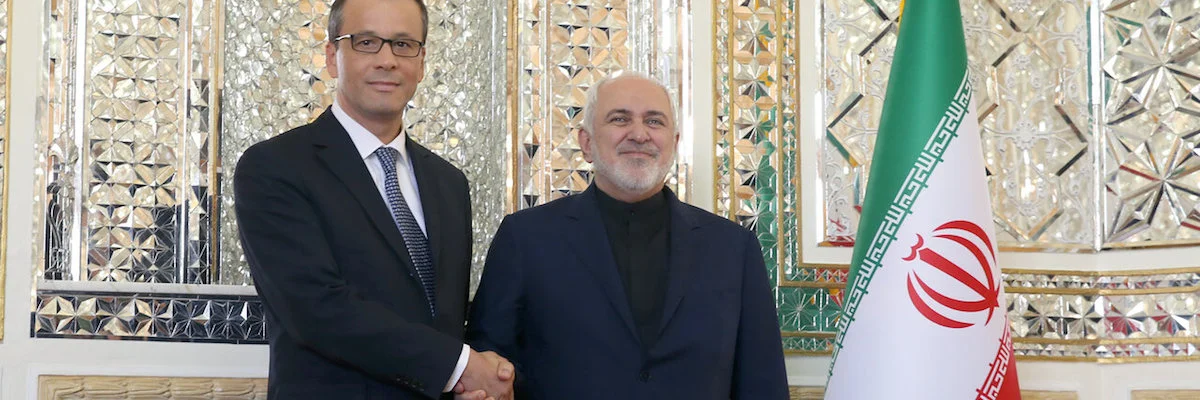
Following meetings with Foreign Minister Mohammad Javad Zarif in New York, Iran started to provide more detailed information to International Atomic Energy Agency officials charged with reviewing the country’s uranium stockpiles.
“Engagement doesn’t mean that the issues are completely addressed but this is a step in the right direction,” IAEA acting Director General Cornel Feruta said Friday at a briefing in Vienna. “The message that we sent out in September, and my visit to Tehran, was understood by Iranian officials.”
Feruta had warned Iran that “time is of the essence” in answering IAEA questions. The IAEA has come under increased pressure from the U.S. and Israel to report analysis of environmental samples that detected trace levels of radioactivity at a Tehran warehouse.
Scores of inspectors monitor Iran, both on the ground at the country’s nuclear sites as well as remotely using surveillance technologies, looking for any breach of its compliance with safeguards obligations.
The suggestion that Iran could be providing incomplete information was a warning with potentially serious consequences. The entire international apparatus of rules that the IAEA enforces is based on verifying the correctness and completeness of nations’ declared nuclear material and nuclear-related activities. Countries that don’t adequately provide gram-level accounts of fissile material can be referred to the United Nations Security Council for possible sanction.
The radioactive samples were taken from the Turquz-Abad site earlier this year and have been authenticated by the agency’s network of analytical laboratories, according to a senior diplomat familiar with the agency’s work in Iran, who asked not to be named in line with rules to discuss confidential information.
The site in the Iranian capital was flagged to IAEA inspectors by Israel last year, after Prime Minister Benjamin Netanyahu announced his intelligence agencies had retrieved documents indicating a secret program to build nuclear bombs. Iran said the claims were recycled from events that the IAEA had already “dealt with.”
Photo: IRNA
'Time is of the Essence' in Iran Co-Operation: UN Nuclear Watchdog
◢ The acting head of the UN nuclear watchdog on Monday called on Iran to "respond promptly" to the agency's questions regarding Tehran's nuclear program. He said that in his meetings he "stressed the need for Iran to respond promptly to Agency questions related to the completeness of Iran's safeguards declarations", adding "Time is of the essence."
By Jastinder Khera
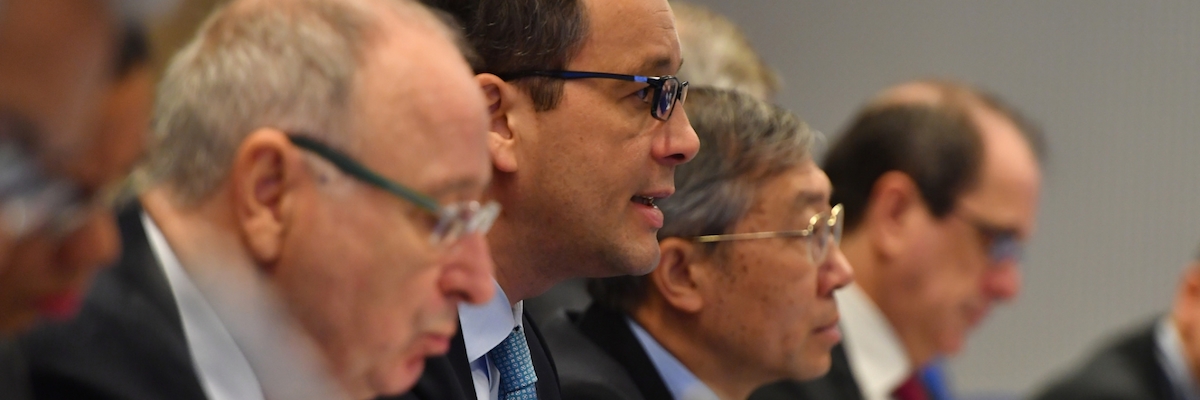
The acting head of the UN nuclear watchdog on Monday called on Iran to "respond promptly" to the agency's questions regarding Tehran's nuclear program.
Cornel Feruta was addressing the quarterly board meeting of the International Atomic Energy Agency (IAEA) a day after meeting high-level Iranian officials in Tehran.
He said that in his meetings he "stressed the need for Iran to respond promptly to Agency questions related to the completeness of Iran's safeguards declarations", adding: "Time is of the essence."
Earlier Monday, the IAEA confirmed that Iran was installing advanced centrifuges, a move that puts further pressure on the troubled 2015 nuclear deal with world powers.
The IAEA's latest statements come a day after Tehran hit out at European powers, saying they had left Iran little option but to scale back its commitments under the 2015 Joint Comprehensive Plan of Action (JCPOA).
In its statement, the IAEA added that the centrifuges had been installed at Iran's Natanz facility and all of them "had been prepared for testing with UF6 (uranium hexafluoride), although none of them were being tested with UF6 on 7 and 8 September 2019".
Iran has also informed the IAEA that it will take steps to accomodate "a cascade of 164 IR-4 centrifuges and a cascade of 164 IR-2m centrifuges".
Under the JCPOA Iran is only meant to enrich uranium using the less advanced IR-1 centrifuge model.
‘Wrong Approach'
Iran has said that notwithstanding its reduction of commitments under the JCPOA, it will continue to allow access to IAEA inspectors who monitor its nuclear programme.
Iran has already broken the limits on uranium enrichment levels and the overall stockpile of enriched uranium laid down in the JCPOA.
The landmark accord has been under mounting pressure since the US withdrew from it in May 2018 and then re-introduced sanctions on Iran.
Earlier Monday, China—a signatory to the JCPOA along with France, Germany, Britain and Russia—called on the US to "give up its wrong approach such as unilateral sanctions and extreme pressure against Iran.
"At the same time, all parties to the agreement should also commit themselves to the full and effective implementation" of the JCPOA, Chinese foreign ministry spokeswoman Hua Chunying told reporters in Beijing.
"We hope that the relevant parties can meet at halfway and push for the easing of tensions around the Iranian nuclear issue," Hua said.
Photo: IAEA
Iran Slams European Powers as Nuclear Deal Unravels
◢ Iran's atomic agency chief hit out Sunday at European powers, saying their broken promises gave the Islamic republic little choice but to scale back its commitments under a nuclear deal. "The European Union was supposed to be the replacement of the US but, unfortunately, they failed to act on their promises," Salehi told reporters.
By David Vujanovic
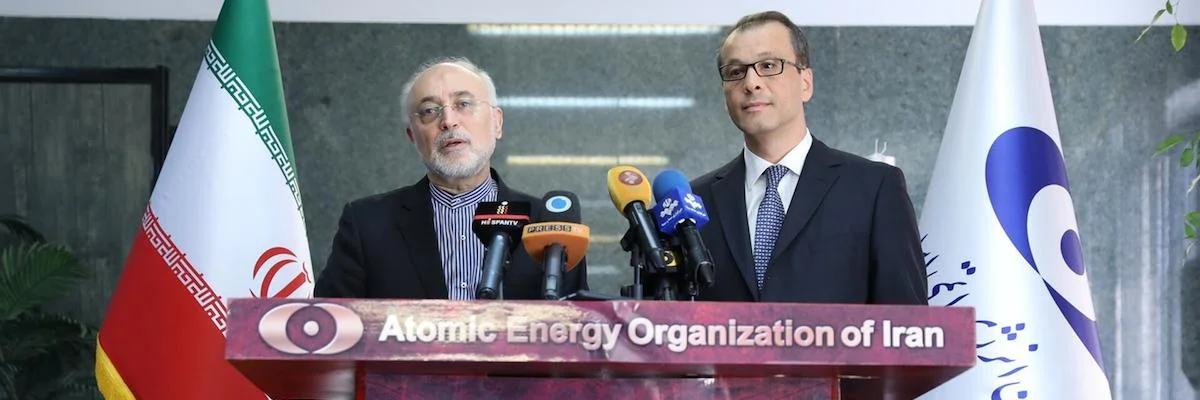
Iran's atomic agency chief hit out Sunday at European powers, saying their broken promises gave the Islamic republic little choice but to scale back its commitments under a nuclear deal.
Ali Akbar Salehi was speaking to reporters alongside Cornel Feruta, the acting head of the International Atomic Energy Agency who was on a one-day visit to Tehran.
The IAEA official's visit came less than 24 hours after Iran said it was firing up advanced centrifuges that enrich uranium at a faster rate—the latest blow to the landmark 2015 nuclear deal.
It was the third step in a strategy Iran implemented in May, reducing its nuclear commitments in a bid to force the deal's remaining parties to deliver on promises of relief from crippling US sanctions.
Britain, France and Germany have been trying to save the nuclear deal, which began unravelling last year when US President Donald Trump withdrew from it and began reimposing the punitive measures against Iran.
"The European Union was supposed to be the replacement of the US but, unfortunately, they failed to act on their promises," Salehi told reporters.
"We heard the EU spokesperson say they would be committed to the JCPOA as long as Iran is," he said, referring to the deal by its formal name, the Joint Comprehensive Plan of Action.
"I am wondering. Are they committed to non-adherence? Are they committed to breaking promises? Unfortunately, the Europeans have done this so far."
'One-Way Street'
The head of Iran's Atomic Energy Organisation said the JCPOA was now just a "one-way street.”
"The street was supposed to be two-way. If it's going to be one-way, the Islamic Republic of Iran will definitely make the right decisions at the right time like it has done with these three steps," said Salehi.
During his visit, Feruta was informed about Iran's "announced activities related to its centrifuge research and development", according to a statement from the Vienna-based IAEA.
The UN nuclear watchdog said "ongoing interactions... require full and timely cooperation by Iran," which diplomats said may hint at worries about information sharing.
In a report on August 30, the IAEA said it was continuing to verify compliance through cameras and on-site inspections.
France, which has been leading the European efforts to rescue the nuclear deal, on Sunday urged Iran to halt its steps away from the accord.
"The channels for dialogue are still open, including today... (but) Iran must give up such actions," said Foreign Minister Jean-Yves Le Drian.
The crumbling accord was meant to give Iran relief from sanctions in return for curbs on its nuclear program.
IAEA Scrutiny
Iran has taken a series of retaliatory steps to reduce compliance with the deal since the US withdrawal in May 2018.
On July 1, it said it had increased its stockpile of enriched uranium to beyond the 300-kilogram limit set by the agreement.
A week later, the Islamic republic announced it had exceeded the deal's uranium enrichment level of 3.67 percent.
On Saturday, Iran's Atomic Energy Organisation said it had taken another step by starting up 20 IR-4 and 20 IR-6 advanced centrifuges.
Under the Joint Comprehensive Plan of Action, Iran was allowed to enrich uranium using only first generation—or IR-1—centrifuges.
Despite the latest move, the agency said Iran would allow the IAEA to continue monitoring its nuclear facilities in accordance with the 2015 agreement.
Feruta also held talks on Sunday with Iran's top diplomat Mohammad Javad Zarif.
The watchdog said he would report the findings from his visit to Iran to the agency's board of governors when it convenes for a quarterly meeting in Vienna on Monday.
Photo: IRNA
Atomic Watchdog Chief in Iran for High-Level Talks
◢ The acting head of the UN atomic watchdog, Cornel Feruta, arrived in Tehran on Sunday for high-level talks with Iranian officials, the semi-official ISNA news agency reported. The International Atomic Energy Agency official's visit comes a day after Iran announced its latest step in reducing its commitments to a 2015 nuclear deal.
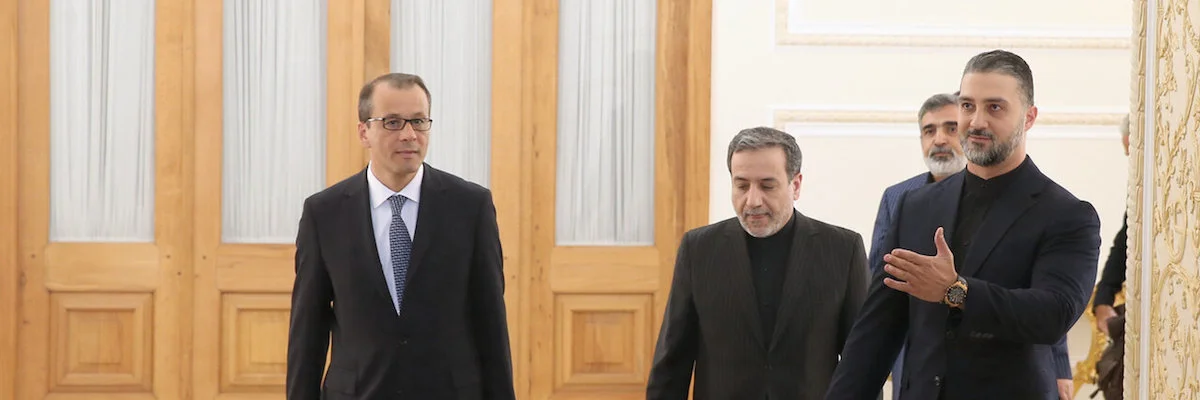
The acting head of the UN atomic watchdog, Cornel Feruta, arrived in Tehran on Sunday for high-level talks with Iranian officials, the semi-official ISNA news agency reported.
The International Atomic Energy Agency official's visit comes a day after Iran announced its latest step in reducing its commitments to a 2015 nuclear deal.
The Romanian diplomat was to meet Iran's Atomic Energy Organisation chief Ali Akbar Salehi, Foreign Minister Mohammad Javad Zarif, and Ali Shamkhani, secretary of Iran's Supreme National Security Council, ISNA said.
The IAEA said the visit was part of its "ongoing interactions" with Tehran, including "verification and monitoring in Iran under the Joint Comprehensive Plan of Action (JCPOA)," the technical name for the 2015 deal.
The accord gave Iran relief from sanctions in return for curbs on its nuclear programme.
Iran's Atomic Energy Organisation said on Saturday that it had fired up 20 IR-4 and 20 IR-6 advanced centrifuges -- a third step it has taken back from the nuclear deal.
Despite the latest move, the agency said Iran would allow the IAEA to continue monitoring its nuclear facilities in accordance with the 2015 agreement.
In response, the IAEA said it had noted Iran's latest move and indicated its inspectors were ready to check its compliance.
"Agency inspectors are on the ground in Iran and they will report any relevant activities to IAEA headquarters in Vienna," spokesman Fredrik Dahl said.
Iran has taken a series of retaliatory steps to reduce compliance with the deal after the United States withdrew from it last year and began reimposing sanctions against the Islamic republic.
On July 1, Iran said it had increased its stockpile of enriched uranium to beyond the 300-kilogramme limit set by the agreement.
A week later, it announced it had exceeded the deal's uranium enrichment limit of 3.67 percent.
Feruta's visit to Tehran comes a day before the IAEA board of governors convenes for a quarterly meeting in Vienna, at which its verification and monitoring mission in Iran will be discussed.
In its latest report on August 30, the watchdog said it was continuing to verify compliance through cameras and on-site inspections.
But in an apparent hint at worries about access, it said "ongoing interactions... require full and timely cooperation by Iran.”
Photo: IRNA