
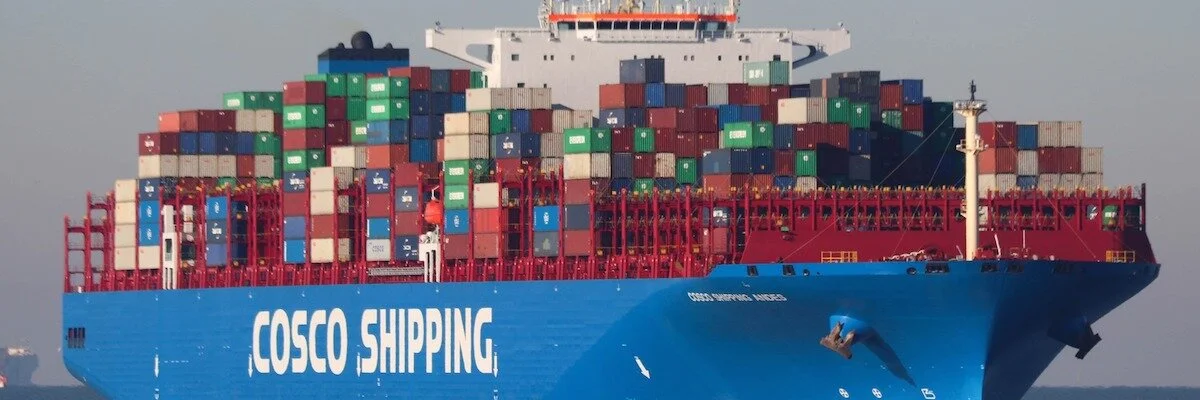
U.S. Lifts Sanctions on Unit of China’s Biggest Shipping Company
◢ The U.S. lifted sanctions against a unit of China’s biggest shipping company that was accused of hauling Iranian crude in violation of American restrictions. The penalties had barred U.S. citizens and companies from dealing with the firms, effectively blocking them from American banks at the heart of the global financial system.
By Stephen Cunningham
The U.S. lifted sanctions against a unit of China’s biggest shipping company that was accused of hauling Iranian crude in violation of American restrictions.
According to a notice posted on the Treasury Department’s website Friday in Washington, sanctions were removed. In September, restrictions were placed on the Dalian units of China COSCO Shipping Corp., sending freight rates soaring as traders canceled charters linked to the parent company. Four other Chinese entities were also sanctioned.
Tanker stocks DHT Holdings Inc, Nordic American Tankers Ltd., Frontline Ltd. and Teekay Corp. fell following Friday’s announcement, all dropping by more than 4%.
“With all of the sanctioned tankers back in the open market, overcapacity will weigh even faster and heavier on rates,” said Peter Sand, chief shipping analyst at Bimco. “In combination with demand being low from China, this will be an added burden for the crude oil tanker market.”
Temporary Waivers
The penalties had barred U.S. citizens and companies from dealing with the firms, effectively blocking them from American banks at the heart of the global financial system. However, companies still doing business with the COSCO unit were twice given temporary waivers to wind down their transactions, with the latest one due to run out on Feb. 4.
“The actual impact via the COSCO sanctions was limited as temporary waivers allowed most of the vessels to continue to operate on global trade routes,” said Randy Giveans, vice president for equity research at Jefferies LLC in Houston. “And other vessels just switched to regional, short-haul trades.”
The announcement comes weeks after U.S. President Donald Trump called a truce in his trade war with China and signed what both sides called a “phase one” agreement. In October, people familiar with the matter said China was planning to ask the U.S. to lift the sanctions during trade negotiations in Washington.
Rates to transport oil had soared when the restrictions were placed on the COSCO units, data from the Baltic Exchange in London show. Daily earnings for 2 million-barrel carrying supertankers hit $300,000 a day briefly in October, before quickly retreating as trades become more challenging due to the high cost of moving cargoes. They still remained high by industry standards, though, and exceeded $100,000 as recently as this month.
Even if rates decline further after the return of the sanctioned ships, it won’t necessarily boost U.S. crude exports to China. Beijing’s 5% tax on American crude imports, in effect since September, is an obstacle.
”U.S. crude exports to China would still require the dismantling of Beijing’s U.S. crude tariffs,” said Frode Morkedal, managing director of equity research at Clarksons Platou Securities AS, an investment banking unit of the world’s biggest ship-broker.
Photo: FleetMon
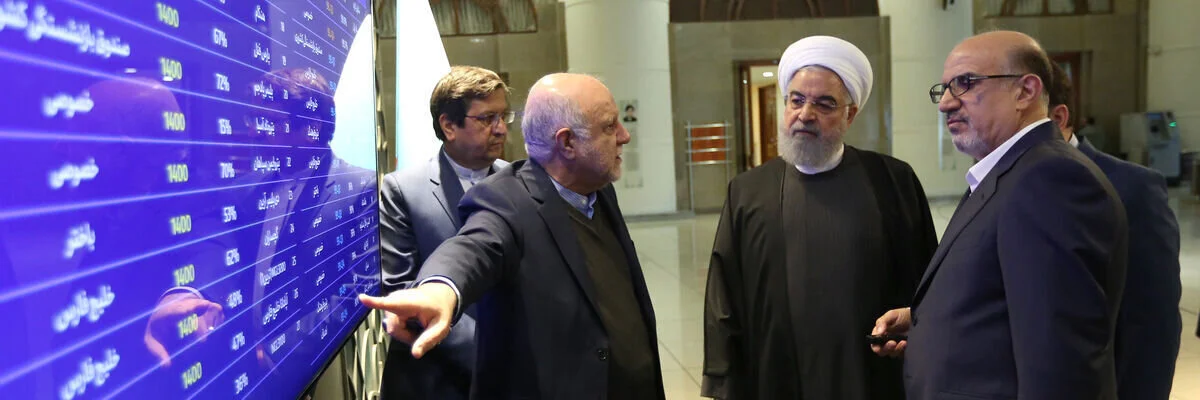
U.S. Extends Clampdown on Iran With Sanctions on Energy Firms
◢ The U.S. sanctioned four companies that it says have traded hundreds of millions of dollars worth of Iranian petroleum and petrochemicals in its latest effort to clamp down on Iran’s revenue sources. All property and interests in the property of the designated companies are blocked and U.S. persons are generally prohibited from engaging in transactions with them.
By Serene Cheong and Elizabeth Low
The U.S. sanctioned four companies that it says have traded hundreds of millions of dollars worth of Iranian petroleum and petrochemicals in its latest effort to clamp down on Iran’s revenue sources.
The Treasury Department penalized Triliance Petrochemical Co. Ltd., Sage Energy HK Limited, Peakview Industry Co. Limited, and Beneathco DMCC for dealings with the state-owned National Iranian Oil Co., it said in a Jan. 23 statement. The transactions helped finance Iran’s Islamic Revolutionary Guard Corps-Qods Force and its terrorist proxies, the department said.
The move is a continuation of the White House’s aggressive strategy to penalize firms dealing with Iran, a country it nearly went to war with earlier this month. Last July, It sanctioned Zhuhai Zhenrong Co., a secretive company with links to the Chinese military and a history of taking Iranian crude and fuel. A couple of months after that it threw global shipping markets into disarray after it penalized a unit of COSCO Shipping Corp.
“Iran’s petrochemical and petroleum sectors are a primary source of funding for the regime’s global terrorist activities and enable its persistent use of violence against its own people,” Treasury Secretary Steven Mnuchin said in the statement.
In 2019, Triliance Petrochemical ordered the transfer of the equivalent of millions of dollars to NIOC as payment for Iranian petrochemicals, crude oil, and petroleum products shipped to the U.A.E. and China after the expiration of any applicable exceptions, the Treasury Department said. In facilitating these shipments, Triliance worked to conceal the origin of these products, it added.
Triliance and Sage are based in Hong Kong, while Peakview is headquartered in Shanghai and Beneathco in Dubai. Calls to Triliance’s head office went unanswered, while a person at Beneathco declined to immediately respond to questions. Contact information for Sage and Peakview wasn’t immediately available.
All property and interests in the property of the designated companies are blocked and U.S. persons are generally prohibited from engaging in transactions with them, while foreign financial institutions that knowingly deal with them may be penalized, the department said.
Photo: IRNA
U.S. Seeks to Squeeze Shipping, Metals in Iran Sanctions Bid
◢ The Trump administration plans to strengthen enforcement of Iran sanctions now that it’s driven oil exports down to unprecedented lows, with a plan to increase pressure on global shippers, Chinese state-owned enterprises and exporters of raw materials used in metal production.
By Nick Wadhams
The Trump administration plans to strengthen enforcement of Iran sanctions now that it’s driven oil exports down to unprecedented lows, with a plan to increase pressure on global shippers, Chinese state-owned enterprises and exporters of raw materials used in metal production.
The initiatives, described by two U.S. officials familiar with the situation and confirmed by outside analysts aware of the administration’s plans, mark the next phase of President Donald Trump’s bid to squeeze Iran’s economy so hard that the government has no choice but to negotiate new limits on its nuclear and ballistic-missile programs.
Asked about the new moves, Brian Hook, the State Department’s Iran envoy, said in a statement Tuesday that the U.S. is now turning to “all remaining sources of export revenue, including from petrochemicals and metals that are subject to U.S. sanctions.”
At the center of the administration plan, which hasn’t been previously reported, will be guidance issued via the State and Treasury Departments warning ship insurers, banks, charter companies, port owners, crews and captains that they all face sanctions exposure if they can’t account for the legitimacy of the cargoes they carry.
Despite an array of U.S. sanctions since Trump withdrew from the Iran nuclear deal in 2018, Tehran has refused to buckle to American demands for a more comprehensive deal and has moved forward with efforts to enrich uranium. At the same time, President Hassan Rouhani has confronted street protests against price increases and corruption that has left his government cornered politically, potentially benefiting hard-liners even more opposed to Washington.
One element of the new U.S. effort will focus on the automatic identification system used by ships, according to the people. The administration will demand that insurers and ship owners pay closer attention to when ship transponders are turned on and off, and steer clear of doing business with vessels with questionable histories.
The enforcement effort amounts to a renewed bid to overhaul the often shadowy world of global shipping, in which the true owners of ships are easily disguised, vessels fly under the flags of countries that rarely punish them for wrongdoing and insurers and banks turn a blind eye to illicit behavior.
It also aims to close one of the most common means of avoiding sanctions: the ship-to-ship transfers at sea of crude oil, refined petroleum products and bulk goods.
“The U.S., in particular, has started monitoring what these tankers are up to much more carefully,” Hugh Griffiths, the former head of the United Nations panel overseeing sanctions on North Korea, said in an interview. “The main means by which sanctions are being evaded, to the tune of hundreds of millions of dollars in each incident, is through a ship-to-ship transfer in which the AIS is switched off.”
Many of the initiatives planned by the U.S. echo recommendations spelled out in Griffiths’s report from March that highlighted sanctions-busting by North Korea, chiefly through ship-to-ship transfers.
The administration sent a powerful signal to the shipping industry, as well as nations that help Iran evade restrictions, when it imposed sanctions against the Dalian units of China COSCO Shipping Corp. in September. That move led to increases in the cost of transporting oil globally.
One administration official said that should be taken as a signal that the U.S. is willing to target other Chinese state-owned enterprises, including those that operate or lease out terminals and pipelines.
The U.S. is telling ship owners to protect themselves during ship-to-ship transfers by taking photographs with their mobile phones of the crew of the other ship. That would help expose the identity of any potential sanctions violators with whom they unknowingly do business.
The administration is also telling players in the maritime sector that they should review guidance issued in connection with North Korea and assume it also applies to Iran.
“It’s been a huge wake-up call for the shipping industry, which has been scrambling and rates are still escalated,” said Elizabeth Rosenberg, a former Treasury official who’s now a senior fellow at the Center for a New American Security in Washington. At the same time, she said the U.S. has also sought to clarify to shippers that there are limits to the sanctions and they won’t be at risk if they avoid Iran-related business.
“The Treasury Department has gone to great lengths to explain the limitations of exposure,” Rosenberg said. “It serves the purposes of Iran hard-liners that this is vastly more aggressive, but that’s not entirely true.”
Another element of the plan is to target exporters of graphite electrodes and needle coke, two key components for steel-making, as Iran shifts its focus away from oil and toward metals in response to sanctions.
“The Iranians use evasive practices, and companies should be protecting their business and reputations through enhanced diligence,” Hook, the Iran envoy, said. “We have a very good idea of the entities and jurisdictions that are skirting our sanctions.”
Oil Cut
Hook displayed his penchant for unconventional approaches to enforcing sanctions earlier this year when he emailed the captain of an Iranian tanker carrying oil to Syria and offered him a multimillion-dollar reward to take the vessel to a port where it could be impounded by the U.S. The captain declined.
The Trump administration says sanctions have cut Iran’s oil exports by more than 2 million barrels a day and pushed oil revenue down by 80%. The new effort has the backing of Iran hawks in the U.S. who have long argued for more measures to limit Iranian revenue, regardless of the source.
“Petrochemicals are a major source of hard currency export revenue to Iran. Given that the oil shipments have dropped so radically, the U.S. is looking for non-oil export revenue,” said Mark Dubowitz, the chief executive of the Washington-based Foundation for Defense of Democracies. “While they’ve been putting sanctions on Iran, the real key is the enforcement piece.”
Dubowitz’s organization has proposed even further restrictions on how Iran spends its money as part of efforts to ensure that a future U.S. administration can’t undo measures imposed by Trump. The organization has submitted a memo to the State and Treasury Departments arguing that Iran should only be allowed to spend money currently sitting in overseas escrow accounts on humanitarian goods.
Photo: IRNA
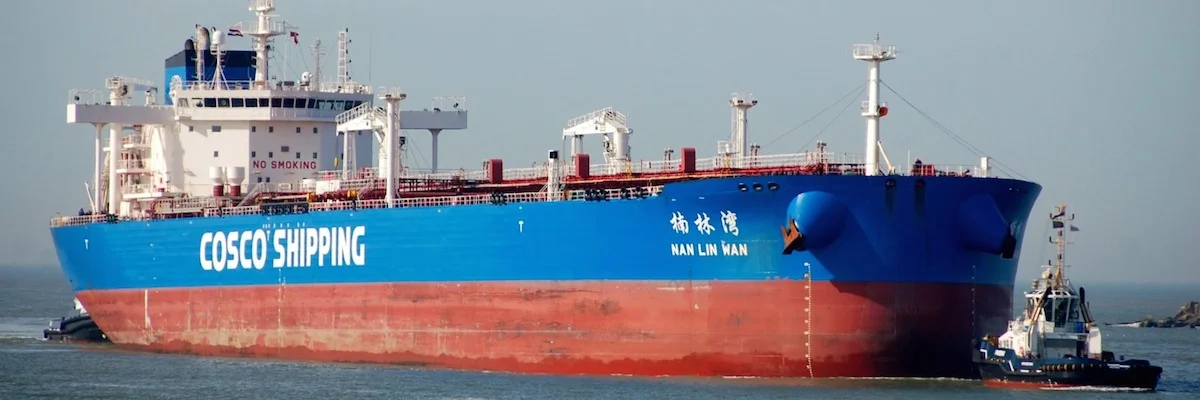
U.S.-Sanctioned Cosco Unit Gets Two-Month Wind-Down Period
◢ Companies still doing business with a U.S.-sanctioned unit of China’s biggest shipping company have less than 60 days to wind down their transactions. The temporary reprieve comes after last month’s surprise announcement of sanctions against the Dalian units of China COSCO Shipping Corp.
By Stephen Cunningham
Companies still doing business with a U.S.-sanctioned unit of China’s biggest shipping company have less than 60 days to wind down their transactions.
The temporary reprieve comes after last month’s surprise announcement of sanctions against the Dalian units of China COSCO Shipping Corp. caused freight rates to skyrocket as traders canceled charters linked to the parent company.
The U.S. on Thursday issued a license permitting activities deemed necessary to the “maintenance or wind down of transactions” with one of the units, Shipping Tanker (Dalian) Co., until Dec. 20, according to a statement.
Tanker stocks DHT Holdings Inc, Nordic American Tankers Ltd., Frontline Ltd. and Teekay Corp. fell following the announcement.
The Treasury Department sanctioned the Dalian units in September for allegedly hauling Iranian crude. Four other Chinese entities were also sanctioned at the same time. The penalties bar U.S. citizens and companies from dealing with the firms, effectively blocking them from American banks at the heart of the global financial system.
Tanker rates soared after the sanctions as shippers scrambled to find replacement ships, depressing refining margins and affecting normal crude flows around the world.
The sanctions also created uncertainty among among shippers on whether cargoes that had already been loaded onto the vessels of sanctioned firms could be delivered or not.
Photo: Fleetmon
China to Ask U.S. to End Sanctions on Its Biggest Shipping Company
◢ China plans to ask the U.S. to lift sanctions on its biggest shipping company at high-level trade negotiations in Washington this week, people familiar with the matter said. Officials plan to raise the issue of penalties against the Dalian units of China COSCO Shipping Corp., which the U.S. accuses of knowingly violating restrictions on carrying Iranian oil.
By Sarah Chen
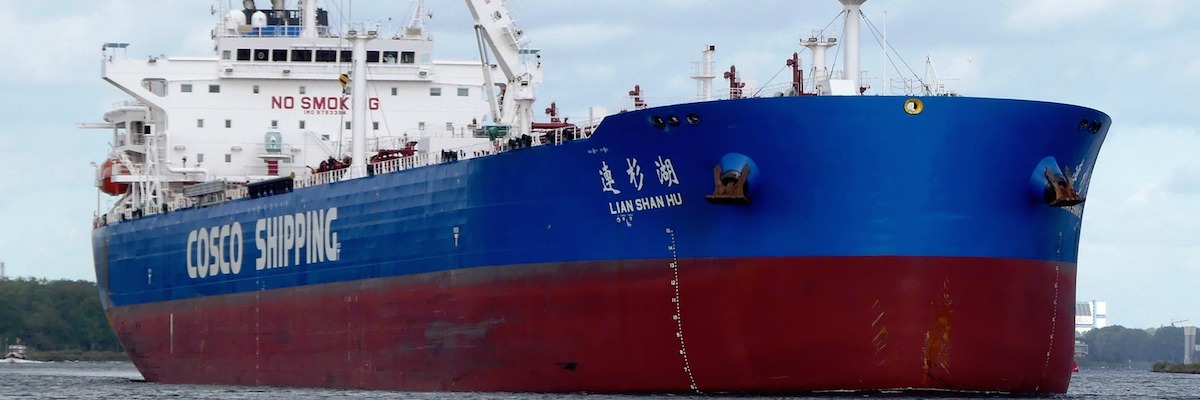
China plans to ask the U.S. to lift sanctions on its biggest shipping company at high-level trade negotiations in Washington this week, people familiar with the matter said.
Officials plan to raise the issue of penalties against the Dalian units of China COSCO Shipping Corp., which the U.S. accuses of knowingly violating restrictions on carrying Iranian petroleum, said the people, who asked not to be identified discussing a private matter. Four other Chinese entities were also sanctioned last month along with Cosco. The people did not say if the Chinese delegation planned to seek relief for those companies.
The U.S. decision to impose sanctions on Chinese shipowners including COSCO Shipping Energy Transportation Co. prompted a bidding war as charterers scrambled to replace vessels owned by targeted companies. It sent costs for ships with oil-carry capacities ranging from 650,000 to 2 million barrels to a 2019-high, while supertanker day rates for the Middle East to China route surged to its highest in probably 11 years.
The penalties against the Chinese companies bar U.S. citizens and entities from dealing with the firms, effectively blocking them from American banks at the heart of the global financial system. China’s National Development and Reform Commission and Ministry of Commerce didn’t immediately respond to faxes seeking comment on the request. China Cosco Shipping did not respond to an email and fax.
Top negotiators from both sides are scheduled to meet on Thursday and Friday for the first face-to-face talks between senior officials since July. A Chinese official said earlier the country was open to reaching a partial deal. People familiar said separately the U.S. is seeking to include a previously-agreed currency pact in any agreement reached.
While the sanctions specifically targeted COSCO’s Dalian subsidiary, charterers indiscriminately shunned all tankers owned by its parent company and other units for fear of running afoul of the rules. This week, however, some oil traders once again started booking tankers operated by COSCO, although the charters are not expected to immediately bring calm to markets.
Photo: Fleetmon
Tanker Costs Surge as Chinese Firms Sanctioned Over Iranian Oil
◢ Oil-tanker costs are surging after the U.S. slapped sanctions on Chinese companies it accused of hauling Iranian crude, prompting a scramble in freight markets to secure alternative vessels. Rates for ships hauling 2 million-barrel cargoes of Middle East oil to Asia jumped 15% or more, according to brokers. Shares of tanker operators also gained.
By Alaric Nightingale and Firat Kayakiran
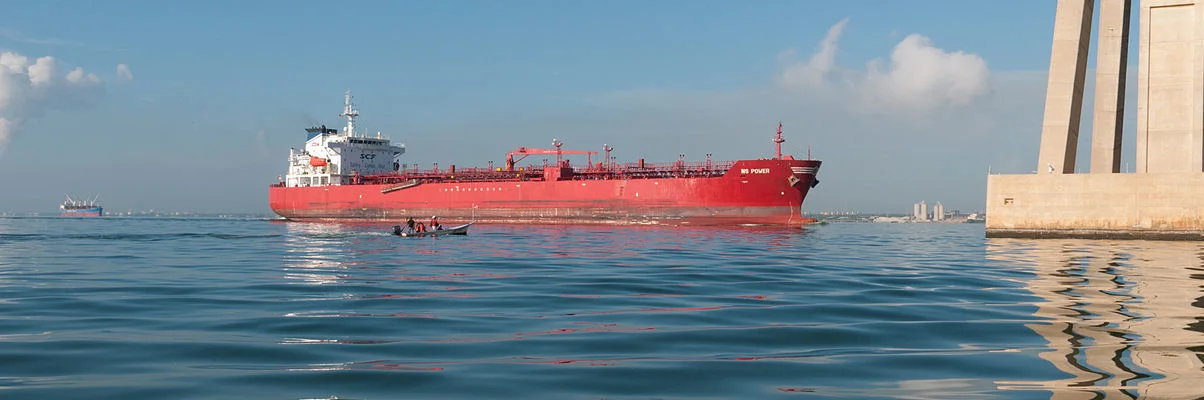
Oil-tanker costs are surging after the U.S. slapped sanctions on Chinese companies it accused of hauling Iranian crude, prompting a scramble in freight markets to secure alternative vessels.
Rates for ships hauling 2 million-barrel cargoes of Middle East oil to Asia jumped 15% or more, according to brokers. Shares of tanker operators also gained.
“There’s a lot of panic out there,” said Halvor Ellefsen, a tanker broker at Fearnleys in London. “Modern vessels are available, but just hard to get.”
The list of sanctioned Chinese companies includes a unit of COSCO Shipping Corp., which operates the world’s second-largest tanker fleet. The penalties bar U.S. citizens and companies from dealing with the sanctioned entities, effectively blocking them from American banks at the heart of the global financial system. As a consequence, oil traders spent the day canceling bookings and letting provisional charters lapse.
Tankers were being booked for about 75 Worldscale points for voyages to Asia, brokers said Thursday. A benchmark published by the Baltic Exchange in London was at 64 on Wednesday. Worldscale is an industry standard that allows traders to easily calculate costs and returns from thousands of different tanker routes. Shares of Frontline Ltd. advanced 8% in Oslo while Euronav NV gained 7.6% in Antwerp.
Rates were already rallying after attacks on Saudi oil installations earlier this month obliged traders to seek alternative cargoes, particularly from suppliers in the U.S. and elsewhere in the Atlantic Basin.
The sanctioned COSCO unit, COSCO Shipping Tanker (Dalian) Co., operates 26 supertankers capable of hauling a combined 52 million barrels of oil, according to data from Clarkson Research Services Ltd. Its parent company is not affected by the sanctions, the U.S. Treasury said.
China opposes the penalties against its companies and citizens and has consistently disagreed with the U.S. imposing unilateral sanctions, Geng Shuang, a foreign ministry spokesman, said at a media briefing.
“Western charterers may avoid all those COSCO VLCCs, but China Inc. is still the largest importer of crude oil, so domestically alone there could be usage of those vessels,” said Jon Chappell, an analyst at Evercore ISI in New York. “Longer term it’s hard to see how it has a sustainable impact unless the ships are banned from global trading.”
Photo: Wikicommons