
Britain Says Iran Tried to 'Impede' UK Tanker in Persian Gulf
◢ Britain said on Thursday that Iranian military vessels tried to "impede the passage" of a UK oil tanker but were warned off by a British warship in a dramatic escalation of tensions with Tehran in the Gulf. "Contrary to international law, three Iranian vessels attempted to impede the passage of a commercial vessel, British Heritage, through the Strait of Hormuz," the UK defence ministry said in a statement.
By Dmitry Zaks
Britain said on Thursday that Iranian military vessels tried to "impede the passage" of a UK oil tanker but were warned off by a British warship in a dramatic escalation of tensions with Tehran in the Persian Gulf.
The incident in the narrow but busy Strait of Hormuz occurred on Wednesday after President Donald Trump ratched up his own administration's pressure even further by warning that sanctions against the Islamic Republic would be "increased substantially" soon.
CNN initially reported that Iranian boats attempted to seize the British tanker but were driven off by a Royal Navy frigate.
The UK defense ministry said only that the Iranian boats tried to "impede" a commercial vessel called British Heritage, which is owned by British energy giant BP.
"Contrary to international law, three Iranian vessels attempted to impede the passage of a commercial vessel, British Heritage, through the Strait of Hormuz," the UK defense ministry said in a statement.
"HMS Montrose was forced to position herself between the Iranian vessels and British Heritage and issue verbal warnings to the Iranian vessels, which then turned away."
It also urged "the Iranian authorities to de-escalate the situation in the region".
Iran's Revolutionary Guards—a vast and powerful security organization that the United States blames for staging several tanker attacks since May—denied trying to seize or impede the UK tanker.
"There has been no confrontation in the last 24 hours with any foreign vessels, including British ones," the Revolutionary Guards said in a statement.
'Path of Diplomacy Open'
The episode adds further fuel to a volatile mix of brinkmanship and saber rattling in a region already unsettled by the Trump administration's nuclear standoff with the Islamic Republic.
Iranian President Hassan Rouhani on Wednesday warned Britain of unspecified "consequences" over last week's detention of one of its oil tankers off Gibraltar.
Officials in Gibraltar—a British overseas territory on Spain's southern tip—said the cargo was believed to be destined for Syria.
Damascus is subject to EU sanctions while the US has its own sets of trade restrictions on Iranian oil.
Iran condemned the detention as an "illegal interception."
Britain has denied suggestions from Gibraltar officials that it was acting on the orders of the United States.
Iran has been ramping up uranium enrichment in response to the Trump administration's decision last year to pull out of a landmark nuclear agreement world powers signed after a decades of talks with Tehran in 2015.
It surpassed one limit set in that deal one month ago and breached a second one on Monday.
French President Emmanuel Macron's diplomatic adviser Emmanuel Bonne met with Rouhani on Wednesday in an attempt to mediate some sort of reprieve in the escalating standoff.
Rouhani told Bonne that Tehran had "completely kept the path of diplomacy and talks open," according to a statement issued by the Iranian presidency after the talks.
He called on other parties to the nuclear deal to "completely implement their commitments" to keep it alive.
Full Compliance 'Without Delay'
Britain and other European nations have been trying to save the agreement by setting up their own independent trade mechanism that evades US sanction on Tehran.
But Iran's decision to push ahead with enrichment to ever higher levels is putting the European strategy under strain.
European parties of the agreement issued a tough joint statement on Tuesday saying Iran must reverse its activities and return to full compliance "without delay.”
Photo: BP
BP Oil Tanker Shelters in Persian Gulf on Fear of Iran Retaliation
◢ An oil tanker run by BP Plc is being kept inside the Persian Gulf in fear it could be seized by Iran in a tit-for-tat response to the arrest by Gibraltar last week of a vessel hauling the Islamic Republic’s crude. The British Heritage, able to haul about 1 million barrels of crude, was sailing toward Iraq’s Basrah oil terminal in the south of country when it made an abrupt u-turn on July 6.
By Kelly Gilblom and Serene Cheong
An oil tanker run by BP Plc is being kept inside the Persian Gulf in fear it could be seized by Iran in a tit-for-tat response to the arrest by Gibraltar last week of a vessel hauling the Islamic Republic’s crude.
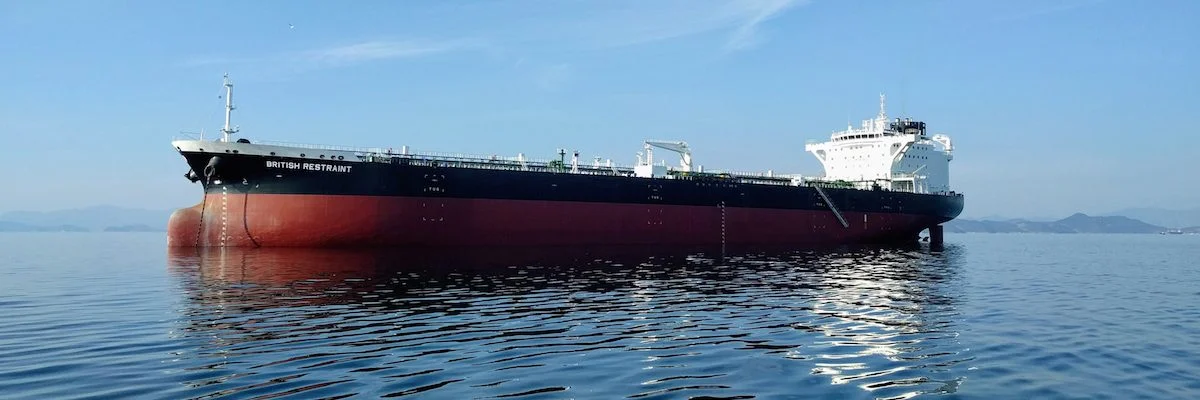
The British Heritage, able to haul about 1 million barrels of oil, was sailing toward Iraq’s Basrah terminal in the south of country when it made an abrupt u-turn on July 6. It’s now off Saudi Arabia’s coast and a person with knowledge of the matter says BP’s concern is that it could become a target if Iran seeks to retaliate for the seizure near Gibraltar—by British Royal Marines—of the tanker Grace 1 on July 4.
BP’s decision shows how rising tensions between Iran and the west are having an impact on the oil tanker industry that’s vital to the global trade in crude. Tehran’s foreign ministry said the arrest of Grace 1 was an act of piracy and a former leader of Iran’s Revolutionary Guard said on Twitter the Islamic Republic should take a British tanker in response. The U.S. accused Iran of recent attacks on tankers just outside the Persian Gulf.
“It’s a psychological game that’s being played,” said Olivier Jakob, managing director of energy consultant Petromatrix GmbH. “Nobody wants to be that one whose vessel is seized in a ‘tit-for-tat’.”
The overall oil market impact will probably be limited because Iran is unlikely to escalate the conflict beyond seizing one vessel in retaliation, he said, adding that companies will work hard to avoid being targeted.
The ship, registered in the Isle of Man and flying under the British flag, had been chartered by Royal Dutch Shell Plc to transport crude from Basrah to northwest Europe, tracking data and shipbrokers said. It didn’t collect that cargo and the booking was canceled.
British Heritage won’t be able to exit the Strait of Hormuz, the chokepoint through which about a third of global seaborne oil moves, without sailing close to Iran’s coast, thereby placing it at greater risk.
Legal Issues
Tensions between Iran and the U.K. may remain high until the legal issues surrounding the arrest in Gibraltar are smoothed out, Jakob said. That could take months, according to Anna Bradshaw, a partner at the law firm Peters & Peters, who specializes in sanctions.
Tensions have escalated since the U.S. resumed sanctions on Iran, prompting the country to say it would enrich uranium in defiance of a global pact that was meant to stop that from happening.
Iran may choose to enrich uranium at a higher purity level as its next step in a new policy that’s gradually undoing the restrictions imposed by a 2015 nuclear pact with world powers, the official Islamic Republic News Agency reported on Monday, citing Behrouz Kamalvandi, the spokesman for the Atomic Energy Organization of Iran.
The escalation has heightened the risks for shipping companies exporting crude from the Persian Gulf, a region responsible for about one third of all seaborne petroleum supplies. Insurance costs for both tankers and their cargoes soared in the aftermath of the attacks, while some wary owners are now choosing to refuel elsewhere.
Photo: BP