
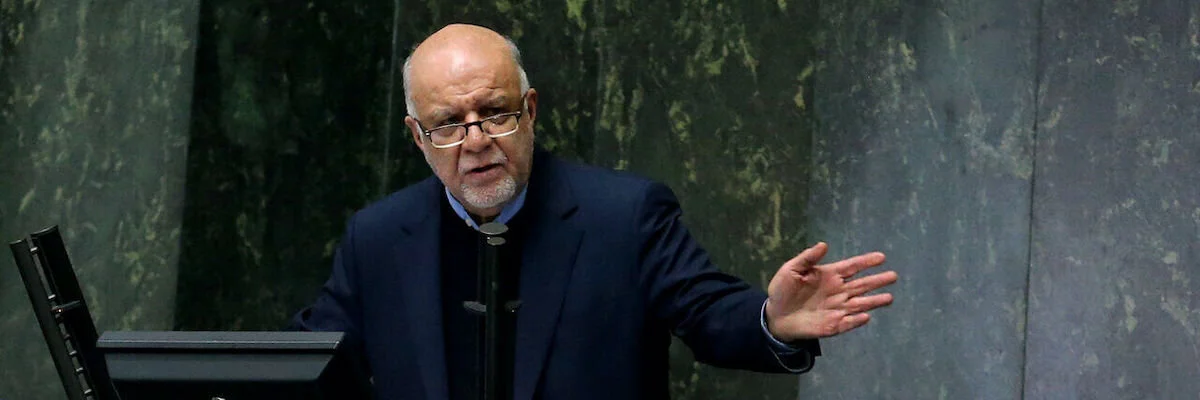
Trump Admin Places Sanctions on Iran Oil Minister
President Donald Trump's administration on Monday slapped fresh sanctions on Iran's oil sector including over sales to Syria and Venezuela, reducing Joe Biden's room for maneuver if he wins next week's election.
By Shaun Tandon
President Donald Trump's administration on Monday slapped fresh sanctions on Iran's oil sector including over sales to Syria and Venezuela, reducing Joe Biden's room for maneuver if he wins next week's election.
The Trump administration has since 2018 enforced sweeping sanctions aimed at ending all of Iran's key oil exports, seeking to choke off all cash sources for the regional nemesis of US allies Saudi Arabia and Israel.
Under the new measures, the administration designated the National Iranian Oil Company, Iran's petroleum ministry and the National Iranian Tanker Company under a counterterrorism authority, raising the bar for any future administration to reverse course.
The Treasury Department issued the sanctions by linking the three entities to the Revolutionary Guards' elite Qods Force, which was earlier designated as a terrorist organization by the United States and whose commander, Qasem Soleimani, was killed in a US attack at Baghdad airport in January.
Secretary of State Mike Pompeo said that the sanctions should send a warning to "the few remaining buyers of Iranian crude oil."
"These designations are an important step in the maximum pressure campaign to limit the Iranian regime's ability to threaten its neighbors and destabilize the Middle East," Pompeo said in a statement.
'Sanction Addict'?
Iranian Oil Minister Bijan Zanganeh denounced the sanctions as a "passive reaction to the failure of Washington's policy of reducing (Iran's) crude oil exports to zero."
"I have no assets outside of Iran to be subject to the sanctions. I would sacrifice my life, belongings and reputation for Iran," Zanganeh, who was also targeted personally, wrote on Twitter.
Foreign Minister Mohammad Javad Zarif called the United States a "#SanctionAddict," tweeting, "Kick the habit."
If Trump loses the November 3 election, the sanctions could be among his last volleys against Iran's leaders.
Biden, who leads in polls ahead of next Tuesday's election, favors diplomacy with Iran and backed an accord negotiated by previous president Barack Obama under which Tehran sharply curtailed nuclear work in exchange for promises of sanctions relief.
Behnam Ben Taleblu, a senior fellow at the Foundation for the Defense of Democracies, a group close to the Trump administration which presses for a hard line against Tehran, said that any administration would face a "significant" burden in clearing Iran over the oil sales in question.
“It's likely that the impact of these penalties, even this late in the game, could outlive the politics of 2020," he said.
The Treasury Department said that a network backed by the Qods Force shipped more than one dozen tankers of oil in spring 2019—mostly to Syria, where Iran is a top backer of President Bashar al-Assad as he emerges from a brutal civil war.
Separate from the terrorism designations, the Treasury Department imposed sanctions on a British-based Iranian businessman, Mahmoud Madanipour, and related companies for transactions with Venezuela.
The Treasury Department accused him of arranging the shipment of tens of thousands of metric tons of gasoline to Venezuela, where Trump has been trying unsuccessfully to depose the leftist leader, Nicolas Maduro, who has recently stepped up economic ties with Iran.
Earlier this month, the administration took another major step to cripple the Iranian economy by imposing sanctions on the nation's banks—making most transactions with the outside world difficult.
The measures alarmed European allies of the United States which warn of dire consequences even to humanitarian trade, although the Trump administration insists it is not targeting food or medicine.
Photo: IRNA
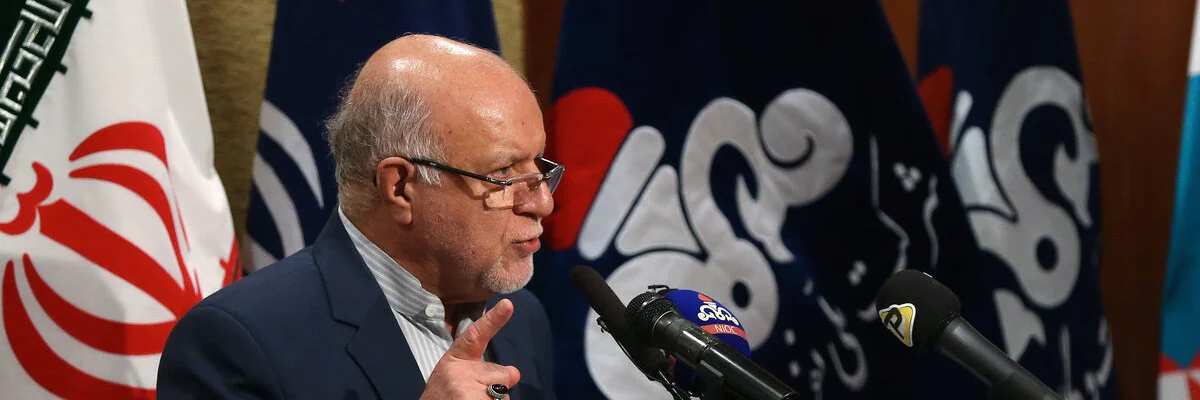
Iran Retains 'Strong Voice' in OPEC ahead of Key Meeting
◢ Iran, hit by year-long US oil sanctions and recent protests over domestic fuel price hikes, retains a "strong voice" in the OPEC producing cartel which meets this week, analysts say. OPEC descends on its plush Vienna headquarters Thursday and Friday and is expected to maintain output cuts alongside its partners—or perhaps even go deeper.
By Benoit Pellegrin
Iran, hit by year-long US oil sanctions and recent protests over domestic fuel price hikes, retains a "strong voice" in the OPEC producing cartel which meets this week, analysts say.
The Islamic republic suffers from tumbling output yet remains a significant player in the Organization of the Petroleum Exporting Countries (OPEC), whose 14 nations from Africa, the Middle East and Latin America together pump 40 percent of the world's oil.
Washington had re-imposed sanctions last year on Tehran's exports after withdrawing from a 2015 nuclear deal.
"They still have a strong voice," SEB analyst Bjarne Schieldrop told AFP ahead of this week's gathering of both OPEC and its partners that include Russia.
OPEC descends on its plush Vienna headquarters Thursday and Friday and is expected to maintain output cuts alongside its partners—or perhaps even go deeper.
The cuts of 1.2 million barrels per day from October 2018 levels were originally fixed in December last year and were already extended at OPEC's last meeting in July.
Crucially however, Iran was exempt from the deal, which is aimed at shoring up world oil prices and protecting precious revenues.
Yet the republic's output has been shredded by US sanctions that prevent it exporting oil abroad.
According to OPEC data, Iran produced 2.192 million barrels of crude oil per day (mbpd) in the third quarter of 2019.
That contrasted sharply with the 3.813 mbpd of production which the Middle Eastern nation averaged in 2017.
PVM analyst Tamas Varga told AFP that Iran was suffering as a result of "maximum pressure from the United States.”
"Oil export exports are falling," he added.
At the same time, some OPEC nations like Iraq and Kuwait have been able to keep their own output levels unchanged despite the cartel's pact, Schieldrop said.
"The situation is unfair seen from Iran's side," he told AFP.
Meanwhile, Iran's regional rival Iraq has not curbed its output, instead exceeding its own quota despite criticism from OPEC's de-facto leader Saudi Arabia.
In the absence of US sanctions on Iran, oil prices would currently be trading far lower, according to Schieldrop.
"If that was not happening, we would have very low prices today," he noted. Iran—a founding OPEC member which sits on the world's fourth-biggest oil reserves and second-largest gas reserves -- still retains its authority within the cartel.
It has been vocal critic of Russia's increasingly powerful role within the so-called OPEC+ grouping.
But analysts note that Iran now faces social unrest linked to the impact of US sanctions.
Protests broke out across the country from November 15 and were ignited by a price hike on fuel—a heavily subsidized commodity in Iran—as part of an effort to ease pressure on the sanctions-hit economy.
"Iran is suffering economically and socially," Varga said.
Videos emerged this week showing harrowing scenes of bleeding protesters, burning roadblocks and snipers on rooftops after Iran lifted a near-total internet blackout.
The footage has opened a window onto what analysts say was one of Tehran's bloodiest crackdowns.
Many videos from some of the estimated 100 areas where demonstrations erupted appear to show security forces firing at close range at unarmed demonstrators or beating them with batons.
Meanwhile, The US State Department announced that Secretary of State Mike Pompeo would meet Wednesday in Portugal with Israeli Prime Minister Benjamin Netanyahu, who was expected to call for increased US pressure on the "tottering" Iranian government.
Photo: IRNA
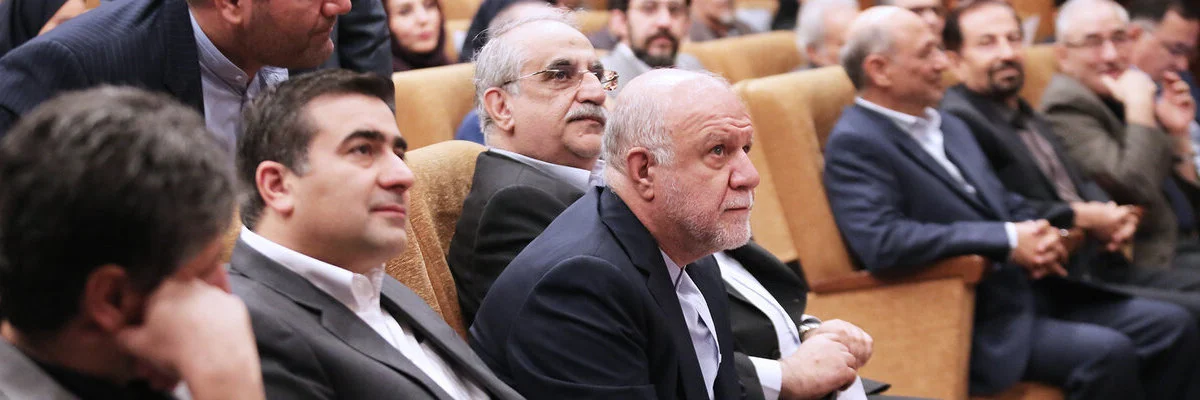
Iran Says China's CNPC Pulls Out of Gas Project
◢ Iran's oil minister said Sunday that China's CNPC has withdrawn from the development of an offshore gas field and that state-owned Petropars will take over the entire project. The South Pars gas field was to be developed jointly by France's Total, China National Petroleum Corporation and Petropars under a $4.8-billion deal signed in July 2017.
Iran's oil minister said Sunday that China's CNPC has withdrawn from the development of an offshore gas field and that state-owned Petropars will take over the entire project.
The South Pars gas field was to be developed jointly by France's Total, China National Petroleum Corporation and Petropars under a $4.8-billion deal signed in July 2017.
The deal came after Iran reached a 2015 agreement with world powers that gave it relief from sanctions in exchange for limits on its nuclear program, ending years of economic isolation.
Total left the project three months after US President Donald Trump's administration withdrew from the nuclear accord in May last year and reimposed sanctions on Iran's oil industry and other key sectors of the economy.
"Phase 11 (of South Pars) will be entirely developed by Petropars company," Iran's Oil Minister Bijan Namdar Zanganeh was quoted as saying by the ministry's official website.
Asked whether CNPC International had abandoned the project, Zanganeh said:
“Yes, they have.”
The other parties to the Iran nuclear deal—Britain, France, Germany, China and Russia—have vowed to stay in the accord despite the US withdrawal, but their efforts have so far borne no fruit.
Zanganeh said that Petropars did not take the lead on South Pars from the outset because "we wanted to attract foreign investment for this project" and that Petropars was "supposed to learn alongside these (foreign) companies".
He added that the development of a pressure booster platform would depend on talks between Iran's MAPNA Group and other companies.
Petropars signed a $440 million agreement in September with another state-owned firm, Pars Oil and Gas Company, to develop the Balal field in the Persian Gulf.
Photo: IRNA
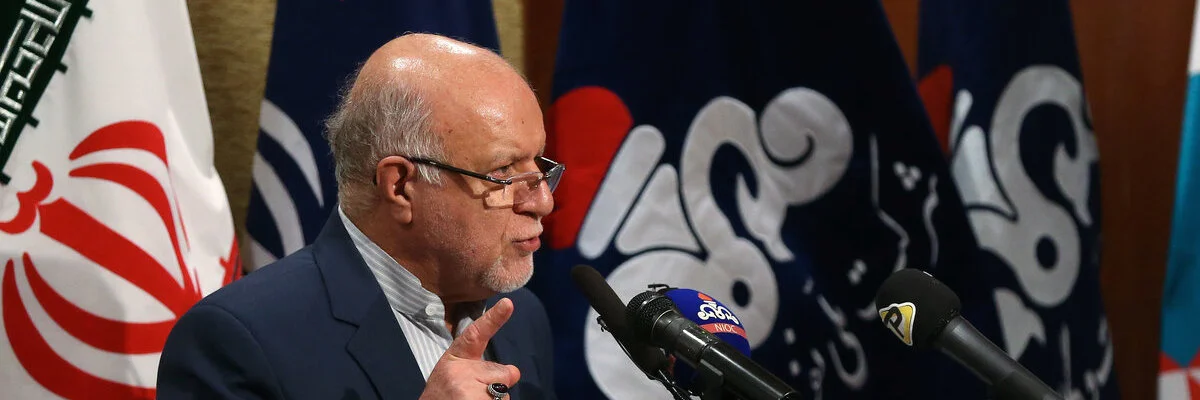
Iran Inks Deal to Develop Gas Field in Tense Persian Gulf
◢ Two Iranian companies signed a $440 million agreement Saturday to develop a gas field in the sensitive Persian Gulf, with the oil ministry saying it showed arch-foe the United States could not stop the country with sanctions.
Two Iranian companies signed a $440 million agreement Saturday to develop a gas field in the sensitive Persian Gulf, with the oil ministry saying it showed arch-foe the United States could not stop the country with sanctions.
Oil Minister Bijan Namdar Zanganeh said the deal reached between two government-owned firms, Pars Oil and Gas Company and PetroPars, to develop the Balal field would be the first of many.
Tensions have soared in the Gulf since last year when the US began reimposing sanctions on Iran after unilaterally withdrawing from a 2015 deal that put curbs on its nuclear program.
"Signing this contract is ... the beginning of a process," Zanganeh said, quoted by the oil ministry's Shana website.
"This is a sign that we are still functioning with sanctions at their peak... We are alive, we are active and working for Iran's oil industry," the Iranian minister said.
The sanctions, he added, "have not been able to stop the progress of Iranian oil industry and its development."
"We don't want to boast, but the United States cannot stop Iranian oil exports." The Balal gas field is located 90 kilometres south of Lavan island in the Persian Gulf.
The deal aims to reach a production rate of 500 million cubic feet of gas per day over a 34-month period.
Photo: iRNA
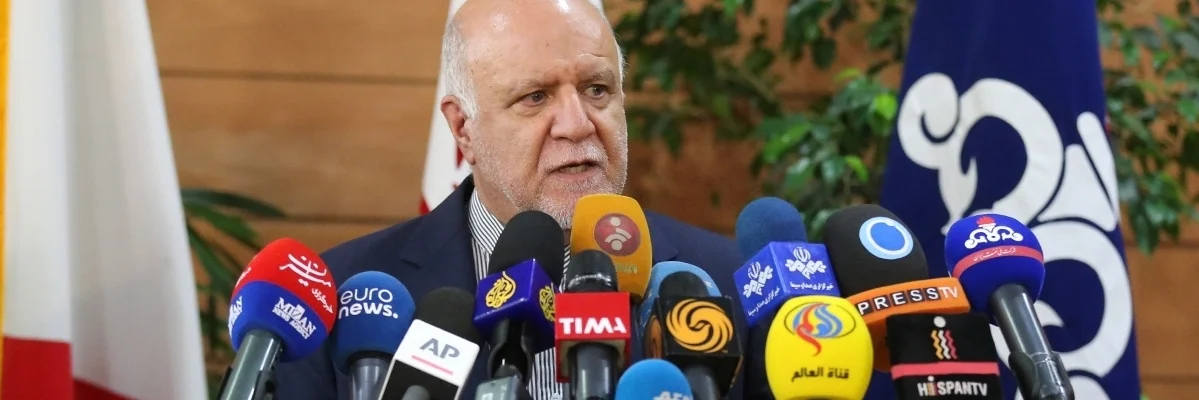
Iran Accuses US of Using Oil Sanctions to Gain Market Clout
◢ Iran's oil minister has accused the United States of using sanctions to "shock" the global oil supply and gain market clout for its booming shale oil production. "I think one of the reasons for sanctions against Iran and Venezuela is opening up the market for American oil sales," Oil Minister Bijan Namdar Zanganeh said in an interview with state TV.
Iran's oil minister has accused the United States of using sanctions to "shock" the global oil supply and gain market clout for its booming shale oil production.
Washington abandoned a landmark 2015 nuclear deal between Tehran and world powers last year and reimposed sanctions on the Islamic republic's crucial oil sales as well as other parts of the economy.
"I think one of the reasons for sanctions against Iran and Venezuela is opening up the market for American oil sales," Oil Minister Bijan Namdar Zanganeh said in an interview with state TV late Sunday, a transcript of which was provided by his ministry's SHANA news agency.
“This much oil production needs a market and could not be compensated for with regular OPEC cuts, therefore America needed to shock the market to find a place for itself. Some sanctions are (imposed) so that Americans can keep producing and developing shale oil," he added.
New technology that allows for extracting oil and gas from shale rock formations has led to a boom in oil production in the US in recent years.
Zanganeh said that according to US figures, shale oil's breakeven cost can be as low as $40 per barrel.
Benchmark Brent crude was trading at around $64 dollars a barrel in London on Monday.
The US is currently the world's biggest oil producer followed by Russia and Saudi Arabia, and is set to become a net exporter from 2021, according to the International Energy Agency.
The White House said in April that tightening sanctions on Iran will have "no material impact" on oil prices given the large supply of US oil on the global market.
OPEC, pressured by US output, abundant global crude supplies and weak oil demand growth, agreed last week to extend by nine months daily oil output cuts first announced in December aimed at supporting prices and soaking up excess supplies.
Iran, whose production has been severely hit by US sanctions, is exempt from the cuts agreement along with crisis-stricken Venezuela and Libya.
Battling what he called "the most severe organized sanctions in history," Zanganeh last week vowed to keep selling oil via "unconventional means.“
Iran's state TV recently aired a program showing an Iranian-flagged tanker under US sanctions that delivered one million barrels of crude oil to China, one of the remaining partners to the nuclear deal and which has rejected Washington's efforts to cut Tehran's oil exports to zero.
Photo: IRNA
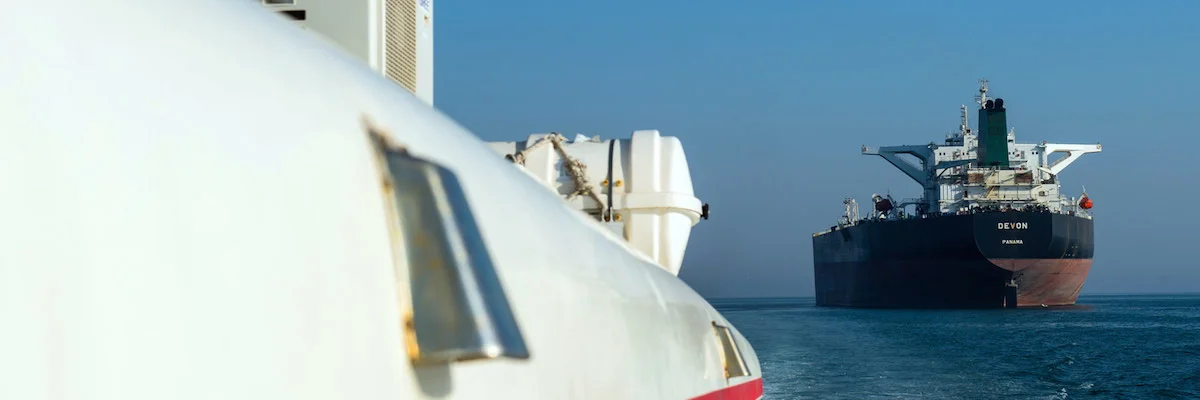
Iran Says Neighbors Exaggerating Oil Capacity
◢ Iranian Oil Minister Bijan Namdar Zanganeh on Wednesday claimed two neighboring countries were "exaggerating" their production capacity to reassure markets after the US ended sanction waivers for buyers of Iranian crude. Zanganeh also said Washington's stated aim to bring Iran's oil exports "to zero" was "an illusion.”
Iranian Oil Minister Bijan Namdar Zanganeh on Wednesday claimed two neighboring countries were "exaggerating" their production capacity to reassure markets after the US ended sanction waivers for buyers of Iranian crude.
Zanganeh also said Washington's stated aim to bring Iran's oil exports "to zero" was "an illusion.”
The White House announced last week it would end from Thursday oil purchase waivers granted to Iran's main customers—including China, India and Turkey.
Since then, Zanganeh claimed, "two of our neighboring countries constantly try to reassure the market, by issuing statements and by exaggerating their surplus capacities.”
These countries which he did not name were trying to signal to the world that "there would be no problem facing global supplies as Iranian oil goes off the market.”
It's "an exaggeration", Zanganeh said, speaking at an oil and gas conference in Tehran.
"World affairs are not as simple as America and some of its supporters and instigators think. The oil market cannot be managed with statements, what is determining is real oil production that is placed on the market."
The end of the exemptions sparked fears of supply shortages, pushing prices to near six-month highs.
After the US announced an end to the oil waivers, Iran's regional rival and neighbor Saudi Arabia said the kingdom had no immediate plans to boost output but was committed to balancing the oil market.
"We will not leave our customers scrambling for oil," Saudi Energy Minister Khalid al-Falih said on April 24.
Countries looking to replace Iranian crude "know which number to dial," Falih said.
"(Global) inventories are continuing to rise despite what's happening in Venezuela and tightening sanctions on Iran," he added.
Saudi Arabia, a member of the OPEC cartel, is the world's top crude exporters.
Iraq, the cartel's second-largest producer and also a neighbor of Iran, has the capacity to increase its exports by 250,000 barrels a day to compensate for any market shortfalls, an Iraqi government official said last week.
Photo: Bloomberg
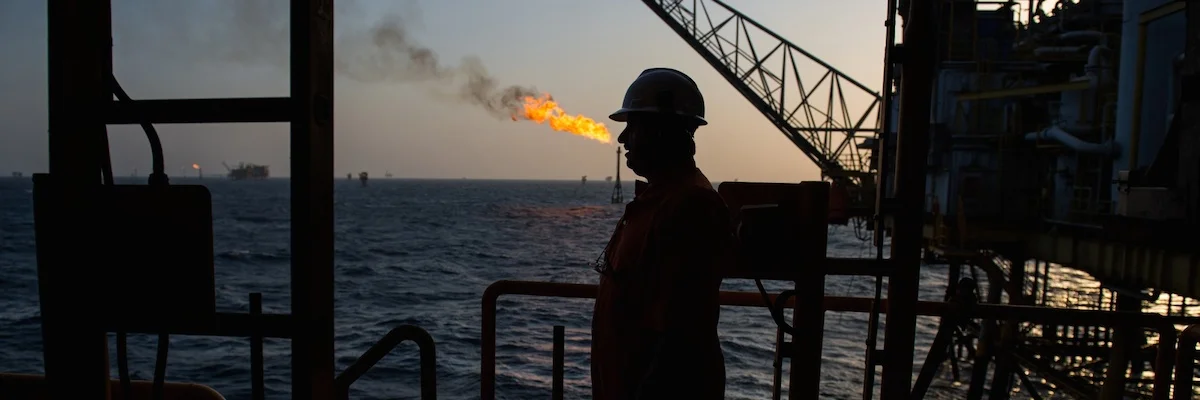
Iran Says OPEC+ Pact Will Be `Easy' to Extend Beyond June
◢ The OPEC+ group could easily extend its agreement on oil-production cuts, according to Iranian Oil Minister Bijan Namdar Zanganeh. Iran is exempt from oil-output cuts following U.S. President Donald Trump’s decision to re-impose sanctions on the country last year.
The OPEC+ group could easily extend its agreement on oil-production cuts, according to Iranian Oil Minister Bijan Namdar Zanganeh.
“My understanding is, there is no difficulty extending the cooperation. It should be easy” to prolong the deal beyond the first half of the year, Zanganeh told reporters in Moscow following a meeting with his Russian counterpart Alexander Novak. The current OPEC+ pact “is going ahead well,” Zanganeh added.
Iran is exempt from oil-output cuts following U.S. President Donald Trump’s decision to re-impose sanctions on the country last year. When the Organization of Petroleum Exporting Countries and its allies met in Vienna in December to work out the details of the new production-cuts pact, Iran’s opposition was one of the stumbling blocks to reaching a deal. Russia helped to overcome this and get a deal agreed.
The OPEC+ agreement to reduce oil output by 1.2 million barrels a day expires at the end of June. So far, there’s little clarity on how willing the key members of the group are to extend it. Russia, OPEC’s main ally outside the group, has advocated a wait-and-see approach, proposing to postpone a decision until May or June. Saudi Arabia, which was initially in favor of making a new commitment quickly, later agreed more time is needed.
Oil just had its best quarter in a decade which prompted Trump to criticize OPEC, saying the cartel should increase production because prices are getting “too high.”
Despite pressure from Trump to raise production, Saudi Arabia and the other members of OPEC+ seem resolved to continue restraining output to avert a glut. OPEC’s crude production slid in March for a fourth month, according to a Bloomberg survey, as Saudi Arabia pressed on with output curbs aimed at balancing global markets, and as an economic crisis in Venezuela escalated.
Photo Credit: Bloomberg
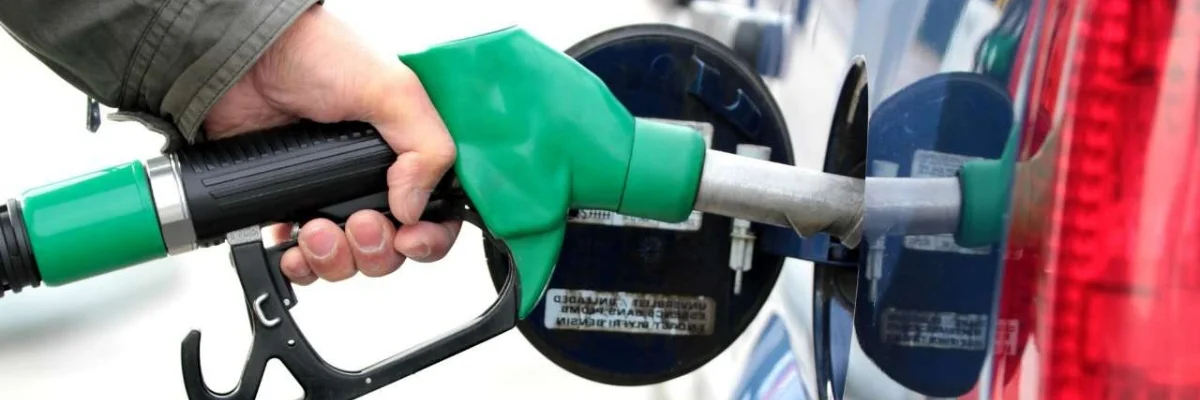
Iran to Cap Petrol Sales to Curb Smuggling
◢ Iran is reintroducing fuel cards that will cap petrol purchases in a bid to combat rampant smuggling, state media reported on Tuesday. Smuggling has boomed in recent months as the rial has plummeted against the dollar in the face of the reimposition of crippling US sanctions following Washington's withdrawal from a landmark 2015 nuclear deal between major powers and Tehran.
Iran is reintroducing fuel cards that will cap petrol purchases in a bid to combat rampant smuggling, state media reported on Tuesday.
Smuggling has boomed in recent months as the rial has plummeted against the dollar in the face of the reimposition of crippling US sanctions following Washington's withdrawal from a landmark 2015 nuclear deal between major powers and Tehran.
The Islamic republic has some of the most heavily subsidized petrol in the world, with a pump price of around USD 0.08 per litre (less than two US cents per gallon).
Low fuel prices have led to high consumption, with Iran's 80 million population buying an average of 90 million litres (20 million gallons) per day, according to state news agency IRNA.
They have also fueled very high levels of smuggling—estimated at around 10 to 20 million liters (2.2 million - 4.5 million gallons) per day, IRNA said.
Much of it heads across the border to Pakistan, where petrol costs 10 times, and diesel around 40 times, as much as in Iran.
Fuel cards were first introduced in 2007 with a view to reforming the expensive subsidies system. High limits were set—180 litres (40 gallons) per day for the average driver—since the focus was on curbing large-scale smuggling.
The state-run National Iranian Oil Products Distribution Company said drivers would have three weeks to register for the new electronic cards setting a daily limit on petrol purchases.
The limit has not yet been set, but was introduced "in order to prevent fuel smuggling," the firm said in a statement on Monday.
It said the return to a card system "does not mean there will be fuel rationing and price hikes."
But Oil Minister Bijan Namdar Zanganeh has said a price increase may be necessary in the coming year—a move that remains highly sensitive in a country that boasts the world's second-largest reserves of gas and fourth-largest of oil.
Photo Credit: IRNA
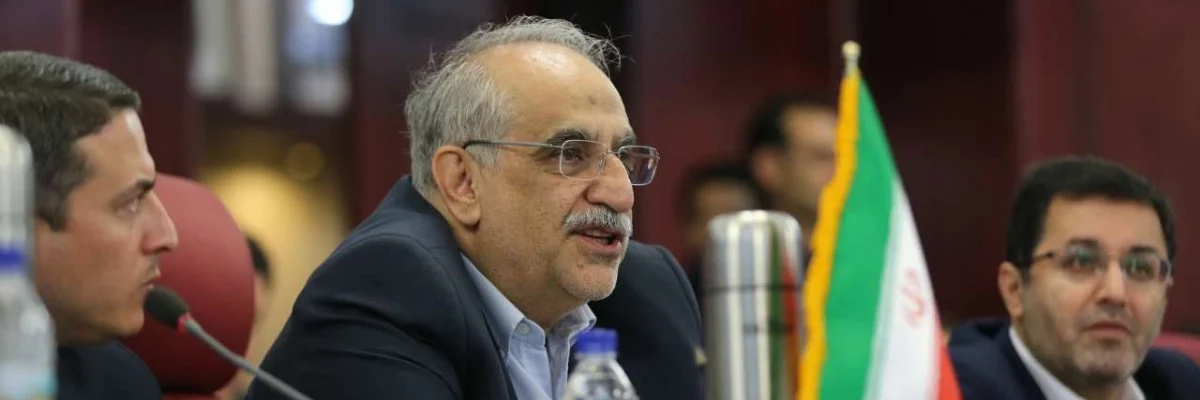
Impeached Economy Minister to Head Iran Oil Firm
◢ Iran's former economy minister, impeached less than three months ago, will head the national oil company as it works to evade renewed US sanctions, local media reported Monday. Masoud Karbasian, 67, was impeached by parliament on August 26 after only a year in the job, over his handling of the country's economic downturn.
Iran's former economy minister, impeached less than three months ago, will head the national oil company as it works to evade renewed US sanctions, local media reported Monday.
Masoud Karbasian, 67, was impeached by parliament on August 26 after only a year in the job, over his handling of the country's economic downturn.
In a short statement run by the state-run Iran newspaper Monday, he vowed to "use four decades of experience... to overcome the sanctions crisis."
Karbasian takes over the National Iranian Oil Company (NIOC) at a crucial moment following the US oil embargo that was reimposed on November 5.
Although he kept a very low profile during his tenure as economy minister, he was praised in the reformist Sazandegi newspaper on Monday for his "anti-corruption" stance—particularly during an earlier stint as head of customs.
But there was some confusion over his appointment, since he is in breach of a new law barring anyone over 60—the age of retirement—from public office.
Parliament passed the law in September, and it was used to remove outgoing NIOC head Ali Kardor, who is three years younger than Karbasian, according to several newspapers.
The Iran daily said Karbasian's age was overlooked due to "sanctions and the gravity of sustaining oil sales.”
The US reimposed sanctions on Iran after deciding in May to abandon a landmark multi-lateral deal signed in 2015 over the Islamic Republic's nuclear program.
Temporary exemptions have been granted to several key customers of Iran's oil, including China and India.
But Iranian authorities are seeking alternative and clandestine methods to keep oil flowing as Washington remains determined to eventually force its exports down to zero.
The unaffiliated Haft-e Sobh newspaper described the new NIOC chief as "special agent: Masoud Karbasian".
It said his appointment was approved by the Council for Special Economic Measures, set up during the previous sanctions period between 2010 and 2015, headed by President Hassan Rouhani, and whose decisions are taken in consultation with supreme leader Ayatollah Ali Khamenei.
Photo Credit: IRNA
Iran Sells Oil on Exchange in Bid to Counter Sanctions
◢ Iran sold oil to private buyers through its energy exchange for the first time on Sunday, as part of its efforts to counter the imminent return of US sanctions. Only 280,000 barrels were sold out of one million offered, and went for USD 74.85 per barrel, more than USD 4 below the initial asking price.
Iran sold oil to private buyers through its energy exchange for the first time on Sunday, as part of its efforts to counter the imminent return of US sanctions.
Only 280,000 barrels were sold out of one million offered, and went for USD 74.85 per barrel, more than USD 4 below the initial asking price.
The identity of the buyer remained a secret, with the conservative Fars news agency saying only that a conglomerate of private firms had made the purchase through three brokerages.
The US is set to reimpose sanctions on Iran's oil industry on November 5, following President Donald Trump's decision to walk out of the 2015 nuclear deal in May.
The plan to sell oil to private companies on the energy exchange was floated back in July by first vice-president Eshaq Jahangiri with the aim of "defeating America's efforts ... to stop Iran's oil exports."
The government hopes selling to private buyers, rather than direct to foreign clients, will make it harder for the US to monitor and stop its sales.
"With the imminent return of a new wave of sanctions, the government is determined to utilise the maneuvering ability of the private sector to sell Iran's oil and find new markets," Hamidreza Salehi, director of Iran's energy exports federation, told semi-official news agency ILNA.
Some estimates show Iran's crude exports have already dropped by a third since May when it was selling around 2.5 million barrels per day.
The government currently intends to offer oil on the energy exchange once a week, according to Fars.
Its initial base price on Sunday was USD 79.16, but it received limited bids as much as USD 16 lower as trading began, the exchange's website showed.
The final buyer only emerged after the base price was dropped to USD 74.85 in the closing hours.
The head of Iran's securities and exchange organization, Shapour Mohammadi, promised on Friday that the identity of the buyer would not be revealed.
Photo Credit:IRNA
Iran Says Saudi Claims To Replace Its Oil 'Unbelievable'
◢ Iran's oil minister said on Monday that the market will never believe "exaggerated" claims by Saudi Arabia that it can replace Iranian oil shipments lost due to renewed US sanctions. "Such exaggerations might please Mr Trump, but the market will never believe them," Bijan Namdar Zanganeh said, according to the oil ministry's SHANA news site.
Iran's oil minister said on Monday that the market will never believe "exaggerated" claims by Saudi Arabia that it can replace Iranian oil shipments lost due to renewed US sanctions.
"Such exaggerations might please Mr Trump, but the market will never believe them," Bijan Namdar Zanganeh said, according to the oil ministry's SHANA news site.
"These statements were made due to Mr Trump's pressure on Saudi authorities. In reality, neither Saudi Arabia nor any other producer has such a capability," he added.
Saudi Crown Prince Mohammed bin Salman told Bloomberg on Friday that Saudi Arabia "did(its) job and more" by making up for the recent drop in Iranian oil sales.
He said Iran's sales had fallen by 700,000 barrels per day since the United States announced in May that it was pulling out of the 2015 nuclear deal with Iran and reimposing sanctions on its oil industry.
Precise figures are unavailable, not least because Iran has begun switching off tracking devices on some oil-exporting ships since the threat of sanctions returned, according to analysts.
Iran was exporting between 2.5 and 2.7 million bpd in April before the US announced the return of sanctions.
"We export as much as two barrels for any barrel that disappeared from Iran recently," Prince Mohammed told Bloomberg.
But Zanganeh retorted that the Saudis had only opened up "their previous reserves" to the market and that their output capacity had not increased.
The Saudi statement could have a "short-term psychological effect", he added, but it would not mean much to global energy markets which had shown their concern over shortages by hiking prices.
The sanctions on Iran's oil sector are not due to hit until November 5, but several key buyers in Europe and Asia have already cut purchases in recent months under pressure from Washington.
Photo Credit: IRNA