
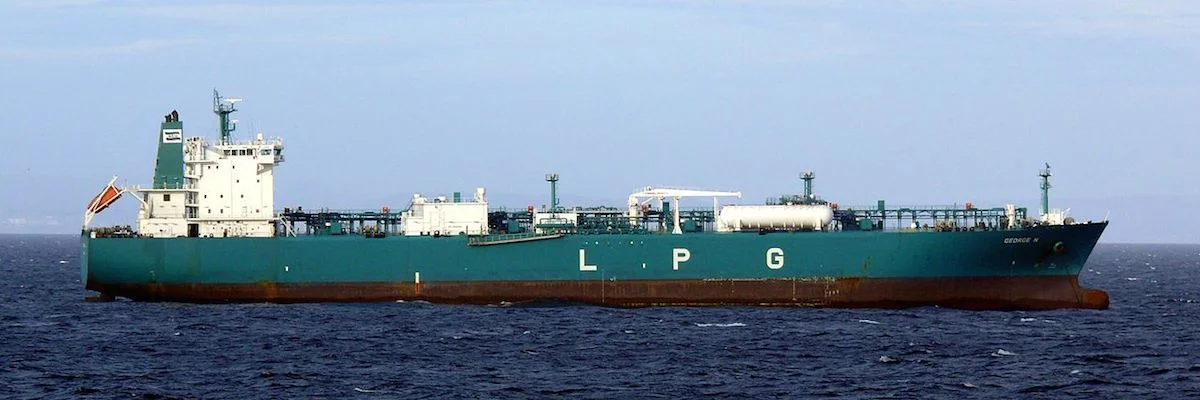
China Is Buying Iranian LPG Despite Sanctions, Ship-Tracking Shows
◢ After being hit by the trade war and U.S. sanctions on Iran, some Chinese buyers of liquefied petroleum gas from the Persian Gulf nation are finding it’s too tough a habit to kick. China probably isn’t complying with U.S. sanctions on Iranian crude, U.S. Deputy Energy Secretary Dan Brouillette said Friday, adding that he didn’t have any hard evidence to show this.
By Saket Sundria and Dan Murtaugh
After being hit by the trade war and U.S. sanctions on Iran, some Chinese buyers of liquefied petroleum gas from the Persian Gulf nation are finding it’s too tough a habit to kick.
China sourced around a fifth of its LPG—used as cooking fuel, in cigarette lighters and to make plastic—from the U.S before Beijing slapped a 25% tariff on the gas last August as the trade tussle heated up. Buyers then turned to Iran, which accounted for around a third of imports in April, before President Donald Trump blocked all energy exports from the country in May.
But some Chinese customers are still buying from Iran, according to Kpler SAS. Based on ship-tracking data, the Paris-based energy researcher estimates that at least five supertankers loaded Iranian LPG in May and June that was destined for China. That would equate to around $100 million of the gas, according to Bloomberg calculations.
“They’ve started using a variety of techniques to hide their activity,” Ilya Niklyaev, an LPG analyst at Kpler, said in an interview. “Like switching off transponders as well as intentionally signaling wrong destinations and indicating loading ports in Qatar, Saudi Arabia or the U.A.E.”
The predicament of the Chinese buyers underscores how the White House’s aggressive trade and foreign policy is disrupting global commodity flows. To avoid running afoul of the U.S. sanctions, LPG importers in Asia’s largest economy would have to turn to more expensive supplies from elsewhere in the Middle East or Africa.
Going Dark
Tankers carrying Iranian oil and gas are notorious for masking their journeys by turning off satellite locator beacons, a technique known as going dark, and transferring fuel between ships to hide the origin of the cargo.
LPG tanker Sea Dolphin sailed into the Persian Gulf between Iran and Qatar with empty tanks on May 17, and then turned off its beacon, Kpler said in a June 6 note. It turned the locator back on May 26, indicating its tanks were now full, and headed toward the Maldives, where it again went dark.
Another ship, the Pacific Yantai, loaded its tanks near where the Sea Dolphin had stopped, and then set sail toward China, according to Kpler. Bloomberg ship-tracking data confirms the movements of the two vessels and show the Pacific Yantai appearing to drop off a partial cargo at Ningbo on June 14.
The Sea Dolphin is owned by Kunlun Trading Co., data compiled by Bloomberg show. Staff who answered the phone at its Hong Kong office said they weren’t authorized to speak to the media and there was no spokesperson. There was no response to emails sent to Kunlun’s investor relations department.
Pacific Yantai is owned by China’s Pacific Gas, Bloomberg-compiled data show. The ship was on a long-term charter, said a staff member at the company’s Shanghai office who asked not to be identified as the person is not authorized to speak to media. The person wouldn’t name the company that chartered the vessel. Nobody answered emails sent to generic addresses for information and investor relations at Pacific Gas.
Oil Imports
Chinese refiners may also be circumventing American sanctions to import Iranian oil, with FGE saying in a note last week that it expects some degree of non-compliance. China probably isn’t complying with U.S. sanctions on Iranian crude, U.S. Deputy Energy Secretary Dan Brouillette said Friday, adding that he didn’t have any hard evidence to show this.
LPG is an important export for Iran. Some 83% of the country’s 507,000 barrels a day of petroleum product shipments in 2017 were LPG and fuel oil, according to Energy Information Administration data. That compared with 2.5 million barrels a day of crude and condensate exports.
China’s Foreign Minister Wang Yi last month pledged to support Tehran’s efforts to safeguard its interests. The country’s Ministry of Commerce and the General Administration of Customs didn’t respond to faxed requests for comment.
China took 346,000 tons, or 80%, of Iran’s LPG exports in May, Kpler estimated. If the cargoes loaded before the end of the U.S. waivers on May 2 they may not have been in contravention of the sanctions. Iran is likely to export a total of 400,000-500,000 tons in June with at least eight supertankers set to load the fuel in coming weeks, Kpler said in the note. Three supertankers have loaded LPG from Iran in June, of which at least one is headed for China, it said.
Kpler and Chinese customs figures show similar overall LPG import data for the past year. But while the Kpler numbers show a sizable portion coming from Iran, the Chinese data has no cargoes from the Persian Gulf nation since mid-2017.
Iranian LPG supplies have been among the cheapest in the world as customers from Japan to South Korea turned away from doing business with the country following the U.S. sanctions. China could turn to other suppliers, like Qatar and Saudi Arabia, but it would be more expensive.
After rising 21% this year through late April, the benchmark east Asian price for propane, a type of LPG, has since fallen 23%, according to data from PVM Oil Associates. The contract traded 3.2% lower on Tuesday at $410.12 a ton.
“While the LPG market isn’t expected to be nearly as tight in the second half of 2019, China will still have to lean heavily on LPG supplies from Iran, as well as from Qatar, Saudi Arabia, Nigeria and Angola to fill the gap left behind by the U.S,” said Han Wee Ong, a Singapore-based senior consultant at FGE.
Photo: Wikicommons
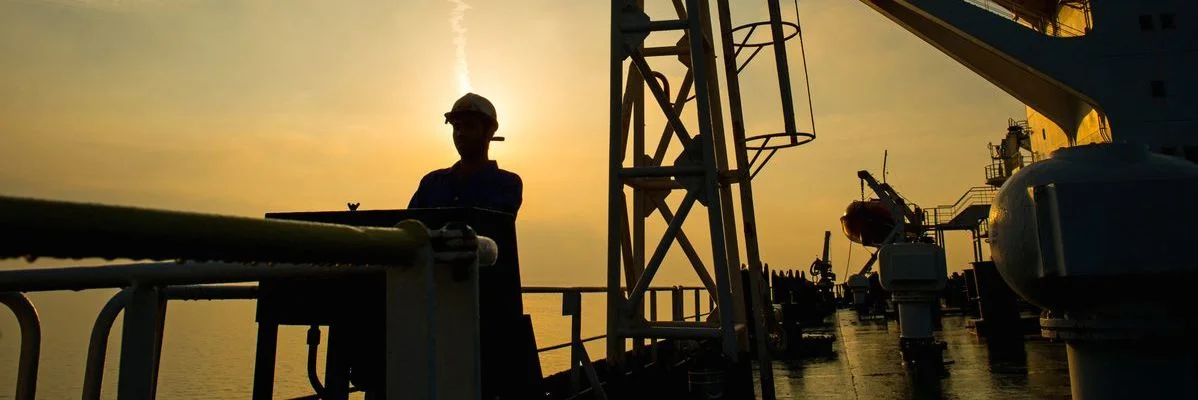
China's Bank of Kunlun Denies Owning Ship Carrying Oil From Iran
◢ Bank of Kunlun, a Chinese lender, said it doesn’t own a ship that the U.S. pinpointed last week as carrying Iranian oil. A senior U.S. official said May 28 that the ship, the PACIFIC BRAVO was the property of the bank and was headed toward Hong Kong.
By Karen Leigh
Bank of Kunlun, a Chinese lender, said it doesn’t own a ship that the U.S. pinpointed last week as carrying Iranian oil.
A senior U.S. official said May 28 that the ship, the PACIFIC BRAVO was the property of the bank and was headed toward Hong Kong. The official, who spoke on condition of anonymity, warned that any entity in the Asian financial hub that did business with the ship would be exposed to U.S. sanctions.
“After our checks, the vessel PACIFIC BRAVO and the goods it carries, have nothing to do with Bank of Kunlun,” the bank said in an emailed statement. It didn’t provide further information.
Hong Kong’s government has “strictly” implemented United Nations Security Council sanctions, which don’t impose “any restrictions on the export of petroleum from Iran,” a spokesperson for the city’s Commerce and Economic Development Bureau said last week in response to a question about the U.S. warning.
U.S. Warning
Washington wants to put Hong Kong and China on notice that it will aggressively and consistently enforce its sanctions on Iran, the senior U.S. official said.
While the U.S. official said the tanker is heading to Hong Kong, ship-tracking data compiled by Bloomberg showed a vessel called the Pacific Bravo off the coast of Indonesia on Monday.
President Donald Trump has increased pressure on Iran since taking office, exiting the landmark 2015 nuclear deal that gave the Islamic Republic sanctions relief in exchange for curbs on its disputed nuclear program.
Reuters reported in October that the Bank of Kunlun—once Beijing’s major channel for transactions with Iran—would stop handling such payments due to sanctions pressure.
Photo Bloomberg
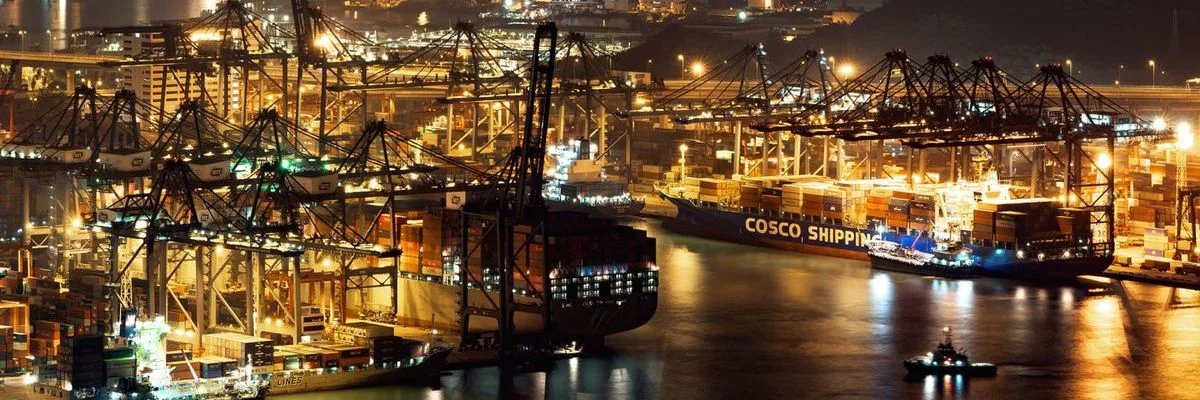
U.S. Warns Hong Kong to Avoid Tanker in Breach of Iran Sanctions
◢ The U.S. warned Hong Kong that it could face penalties if it does business with PACIFIC BRAVO, an oil tanker headed for the city that allegedly violated sanctions on Iran. Washington wants to put China and the autonomous city on notice that it will aggressively and consistently enforce its Iran sanctions, a senior U.S. official said on Tuesday, speaking on condition of anonymity.
By Karen Leigh and Shelly Banjo
The U.S. warned Hong Kong that it could face penalties if it does business with an oil tanker headed for the city that allegedly violated sanctions on Iran.
Washington wants to put China and the autonomous city on notice that it will aggressively and consistently enforce its Iran sanctions, a senior U.S. official said on Tuesday, speaking on condition of anonymity. The official said China would be informed that any entity doing business with the ship would expose it to U.S. sanctions.
The attention levied on this single vessel, the PACIFIC BRAVO, underscores Washington’s desire to stymie Iran’s oil exports. Relations between the two sides have deteriorated sharply in recent weeks, following President Donald Trump’s pledge to force Iran’s vital oil exports down to zero and a revocation of key sanctions waivers.
The PACIFIC BRAVO is owned by China’s Bank of Kunlun, according to the senior U.S. official. Reuters reported in October that the bank—once Beijing’s major channel for transactions with Iran—would stop handling such payments due to sanctions pressure.
Next Stop
While the U.S. official said the tanker is heading to Hong Kong, ship-tracking data compiled by Bloomberg shows a vessel called the PACIFIC BRAVO off the coast of Sri Lanka and signaling Indonesia as its next stop.
The senior U.S. official said it was imperative that Hong Kong authorities prevent the vessel from docking or allowing local entities from providing services to ships that might misrepresent themselves in order to avoid exposing themselves to sanctions violations.
Washington wants to make clear that anyone doing business with Iran, won’t be doing business with the U.S., the official said, adding that there would be more sanctions to come.
An emailed request for comment to the Hong Kong Monetary Authority wasn’t immediately returned on Tuesday evening. The city’s Maritime Department referred an earlier request to the relevant bureau.
Rising Tensions
Reuters reported on May 16 that a tanker in violation of U.S. sanctions had unloaded close to 130,000 tons of Iranian fuel oil into storage tanks near the eastern Chinese city of Zhoushan. It had earlier reported that a batch of Iranian fuel oil had sidestepped American sanctions on petroleum exports by using ship-to-ship transfers involving four vessels including that tanker—the Marshal Z.
Trump has increased pressure on Iran since taking office, exiting the landmark 2015 nuclear deal that gave the Islamic Republic sanctions relief in exchange for curbs on its disputed nuclear program.
Senior Iranian officials have made recent tours of neighboring countries in an effort to boost support, after the U.S. announced it would increase troop deployments in the Middle East and sell weapons to some of Iran’s rivals.
Photo: Bloomberg
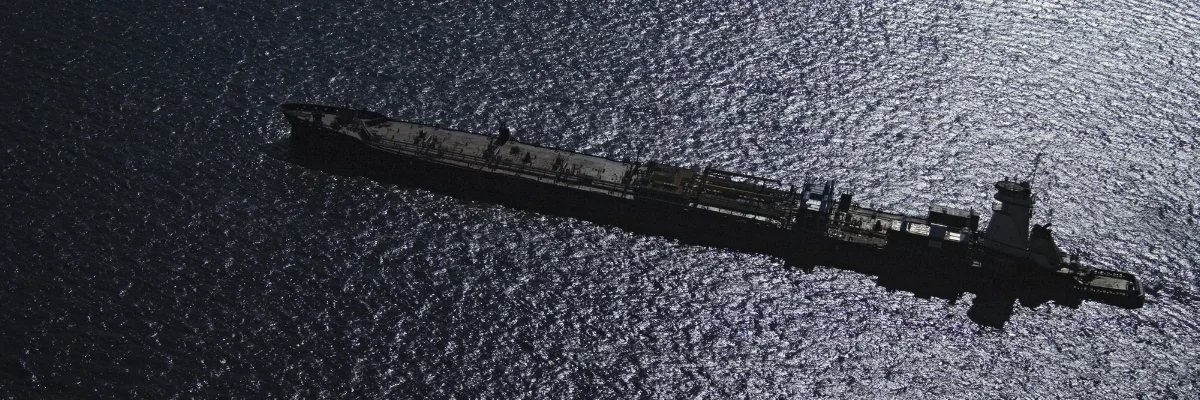
Iran Tankers Go Dark to Keep Selling Oil
◢ Working from their small offices in Stockholm, analysts at a new watchdog that monitors global oil shipments have been run ragged by Iran's efforts to skirt US sanctions this month. In late October, every single one of Iran's vessels "went dark", switching off their transponders to avoid international tracking systems—a first since TankerTrackers.com began operating in 2016.
Working from their small offices in Stockholm, analysts at a new watchdog that monitors global oil shipments have been run ragged by Iran's efforts to skirt US sanctions this month.
In late October, every single one of Iran's vessels "went dark", switching off their transponders to avoid international tracking systems—a first since TankerTrackers.com began operating in 2016.
The ships can now only be tracked manually using satellite imagery.
"It's the first time I've seen a blanket black-out. It's very unique," co-founder Samir Madani told AFP.
It is part of efforts by Iran and its customers to keep oil flowing ahead of a new US embargo set to hit on Monday.
"Iran has around 30 vessels in the Gulf area, so the past 10 days have been very tricky, but it hasn't slowed us down. We are keeping watch visually," added co-founder Lisa Ward.
Huge improvements in commercially available satellite imagery in recent years have allowed firms like TankerTrackers to watch the progress of vessels on a daily basis, where once images would have come only once a week or more.
Iran hopes less transparency will allow it to keep selling oil after November 5 when the United States reimposes the last set of sanctions lifted under the 2015 nuclear deal, which Washington abandoned in May.
But Joel Hancock, from analysis firm Natixis, said this did not mean their sales would necessarily remain high.
"The main issue with tanker trackers is they are tracking exports, maybe not sales," he told AFP, adding that the ships could just be moving oil to storage facilities in China or elsewhere.
Another method—used during the last sanctions period between 2010 and 2015—is to keep oil on huge tankers off the Gulf Coast.
TankerTrackers says there are currently six vessels, with a total of 11 million barrels of capacity, parked offshore as floating storage containers—freeing up port capacity and allowing for quick deliveries.
'Dead in the Water'
Although precise figures are rarely available in the notoriously opaque oil market, most analysts say Iran's exports dropped from around 2.5 million barrels per day in April to roughly 1.6 million in October.
Countries with close security and trade ties with the US were quick to cut their purchases—South Korea went almost straight to zero, with Japan and much of Europe close behind.
Although the European Union has vowed to create a "special purpose vehicle" (SPV) to protect companies buying oil, analysts see little chance that firms will risk US penalties by using it.
"The SPV is currently dead in the water. It can't handle oil in any serious volume," said Henry Rome, a specialist on Iran sanctions for the Washington-based Eurasia Group consultancy.
The US granted waivers to eight countries but only on condition they make substantial cuts to their purchases.
But the trickiest customers for the US in its "maximum pressure" campaign are the biggest buyers, India and China.
China, the largest buyer of Iranian oil, has been surprisingly willing to play ball with sanctions so far, in part because it has bigger fish to fry in the form of its ongoing trade war with Washington.
During the last sanctions period, China funneled almost all its Iranian transactions through the Bank of Kunlun, controlled by Chinese state energy group CNPC, which was sanctioned by the US in 2012 but shielded the rest of the sector from penalties.
"Kunlun was a sacrificial lamb in the past... but Chinese banks appear to have realised the immense risk and are a lot more cautious," said Rome.
Unconfirmed reports suggested this month that the Bank of Kunlun was quietly halting transactions with Iran.
But China is likely to seek new paths to keep the oil flowing, according to Rome.
"It looks like they'll open another channel, maybe another bank, and keep importing sizable amounts, but there's still a lot to work out," he said.
India, another major buyer, will also be looking for mechanisms as they did during the last sanctions period.
"The difference last time was that sanctions were phased in gradually over a long period," said Rome.
"There's a certain panic this time that they are being required to make very substantial reductions immediately, and also that banking systems are much more intertwined than in the past."
Even if Iran can continue to sneak oil out of its ports, it will find it difficult to get the cash into its accounts.
“Iran is a formidable adversary, well practiced in different techniques to keep selling oil and muddle the data, but that won't be a panacea for everything," said Rome.
Photo Credit: Depositphotos