
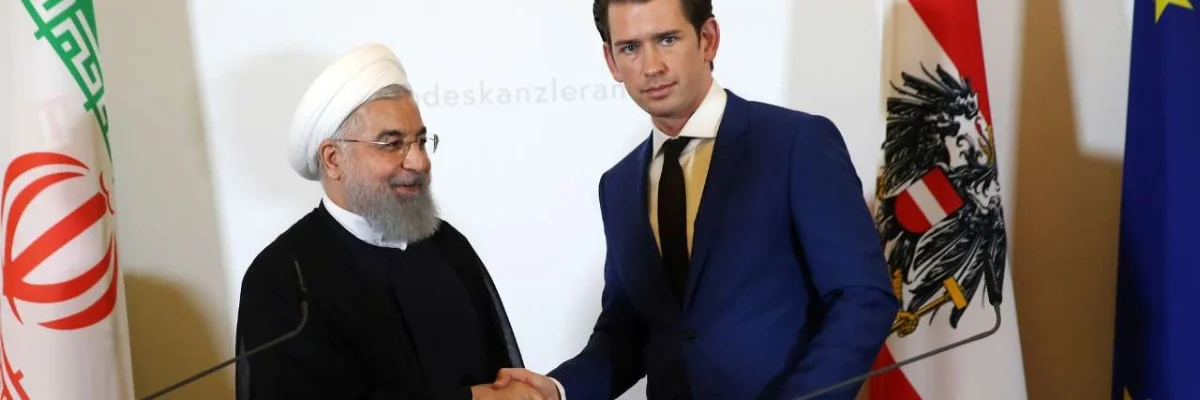
Austria Says Won't Host Iran Sanctions-Busting Payments System
◢ Austria has rejected hosting a special payment system designed to help EU countries trade with Iran despite US sanctions, the Austrian foreign ministry said Tuesday. "We were asked if Austria would be prepared in principle to host this special purpose vehicle," foreign ministry spokesman Peter Guschelbauer said.
Austria has rejected hosting a special payment system designed to help EU countries trade with Iran despite US sanctions, the Austrian foreign ministry said Tuesday.
"We were asked if Austria would be prepared in principle to host this special purpose vehicle," foreign ministry spokesman Peter Guschelbauer said.
But after studying the idea "very closely", the Austrian government "came to the conclusion that at the moment we are not in a position to host this vehicle," Guschelbauer told the Austrian APA agency.
The Bloomberg agency reported that Austria had been approached to be the venue for the vehicle after Belgium and Luxembourg had already turned down the idea of hosting it.
"There are lots of unanswered technical questions" about the "effectiveness of this setup," Guschelbauer added.
Austria supported the principle of the vehicle, he said, "but of course it has to be set up in a way that fulfils its purpose".
Last week the US announced a fresh raft of sanctions, the latest tranche of such measures since May when US President Donald Trump dramatically withdrew from the 2015 nuclear deal between Iran and world powers, known as the Joint Comprehensive Plan of Action (JCPOA).
The US sanctions aim to cut off Iran's banks from international finance and significantly cut its oil exports.
Since May, the remaining five signatories to the JCPOA—Britain, China, France, Germany and Russia—have been exploring ways to keep the deal alive.
As part of those efforts the EU has floated the idea of the special purpose vehicle, which would in theory allow Iran to keep selling oil and European companies to continue doing business in the country despite the US sanctions.
However, details of the scheme have remained vague.
The Austrian capital Vienna is the headquarters of several international organizations, including several arms of the UN and OPEC, and hosted the negotiations which resulted in the JCPOA.
On Monday the UN atomic watchdog the International Atomic Energy Agency (IAEA) said in its latest report that Iran was still abiding by the terms of the deal.
Photo Credit: IRNA
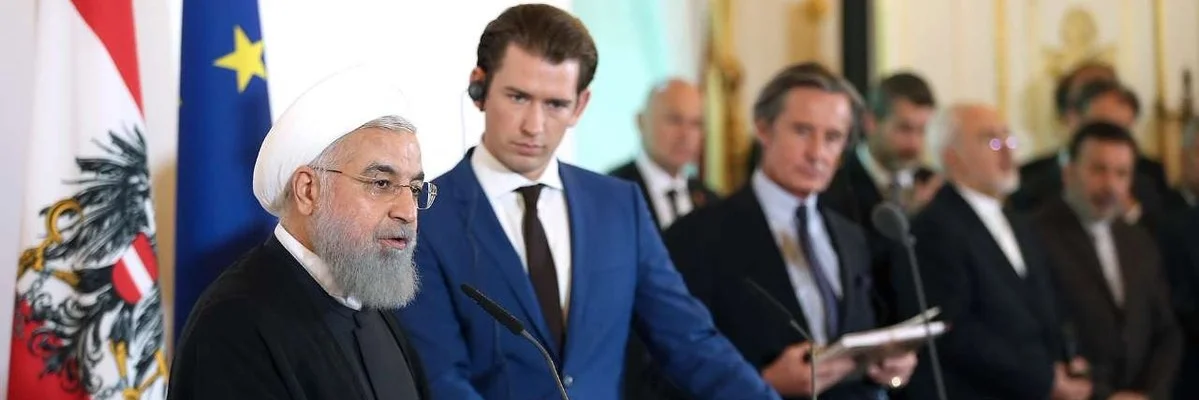
Iran's Rouhani in Vienna to Shore Up Nuclear Deal, Dogged By Diplomat's Arrest
◢ Iranian President Hassan Rouhani on Wednesday was on the second leg of his European tour seeking assurances over the 2015 nuclear deal, a trip clouded by the arrest of a Tehran diplomat over an alleged bomb plot against opposition exiles in Paris. Hoping to boost economic cooperation to help offset the return of US sanctions following Washington's pullout from the historic deal, Rouhani arrived late Tuesday in Vienna—the city where it was signed.
Iranian President Hassan Rouhani on Wednesday was on the second leg of his European tour seeking assurances over the 2015 nuclear deal, a trip clouded by the arrest of a Tehran diplomat over an alleged bomb plot against opposition exiles in Paris.
Hoping to boost economic cooperation to help offset the return of US sanctions following Washington's pullout from the historic deal, Rouhani arrived late Tuesday in Vienna—the city where it was signed.
"Insofar as it is possible for Iran, we shall remain party to the accord, we shall not quit the JCPOA (the Joint Comprehensive Plan of Action) on condition that we can also benefit from it," Rouhani said.
"If the other signatories, apart from the United States, can guarantee Iran's interests then Iran will stay in the JCPOA", he insisted.
US President Donald Trump unilaterally pulled out of the agreement nearly two months ago, to the ire of the other signatories—China, France, Germany, Britain and Russia—which along with the European Union have continued to back the accord.
"We need a balance between our duties and the hypothesis of restrictions.... We hope for decisive actions regarding trade and the economy," added Rouhani in comments sending a message to the other deal signatories, whose foreign ministers are due to meet in Vienna on Friday for the first time since Trump's decision to dump the deal.
Austria just took up the European Union's six-month rotating presidency, while Vienna is the home of the UN nuclear watchdog, the IAEA, which monitors Iran's compliance with the accord.
Rouhani's European trip will be of "prime importance" as it could "provide a more precise picture of cooperation between Iran and Europe," the Iranian foreign ministry spokesman said at the weekend.
The Iranian government has itself warned that it will not continue to abide by the nuclear agreement if doing so goes against its economic interests.
Rouhani, a moderate conservative re-elected in 2017, began meeting President Alexander Van der Bellen on Wednesday, and met Chancellor Sebastian Kurz later in the day.
'False Flag Ploy'
The nuclear deal has been the cornerstone of Rouhani's policy of greater openness with the West, and the US departure has seen him severely criticized by ultra-conservatives at home.
Iran's supreme leader, Ali Khamenei, has demanded Europe provide a number of economic guarantees in order for Tehran to continue its commitment.
Increasing the pressure on Iran's European partners, he ordered preparations be made to quickly restart nuclear activities in case talks collapse.
Rouhani's visit follows reports of the Iranian diplomat's arrest along with five others over a purported foiled attack on a rally of thousands of Iranian opposition supporters in Paris.
Rouhani has not changed his programme over what his foreign minister dismissed as a "false flag ploy" designed as a distraction.
"How convenient: Just as we embark on a presidential visit to Europe, an alleged Iranian operation and its 'plotters' arrested," Mohammad Javad Zarif tweeted.
Just hours before welcoming Rouhani to Austria, Vienna summoned Iran's ambassador and announced that the unnamed diplomat's status would be withdrawn.
The diplomat attached to the Iranian embassy in Austria, who was detained in Germany, was believed to be a contact of a couple at the centre of the alleged plot.
He may soon be extradited to Belgium, which is spearheading a probe into the alleged bomb plot, prosecutors told the German news agency DPA.
"We are waiting for full clarification" on the case, Kurz said at a press conference alongside Rouhani.
Zarif, who is accompanying Rouhani, will on Friday meet top envoys from the five powers for the first time since Washington's withdrawal.
Kurz had said he would speak plainly with Rouhani about Iran's role in the Middle East, as Tehran continues to deny accusations it is destabilizing the region.
The Austrian Chancellor said he considered it "absolutely unacceptable" to question the right of Israel to exist or call for the state's destruction.'
Photo Credit: IRNA
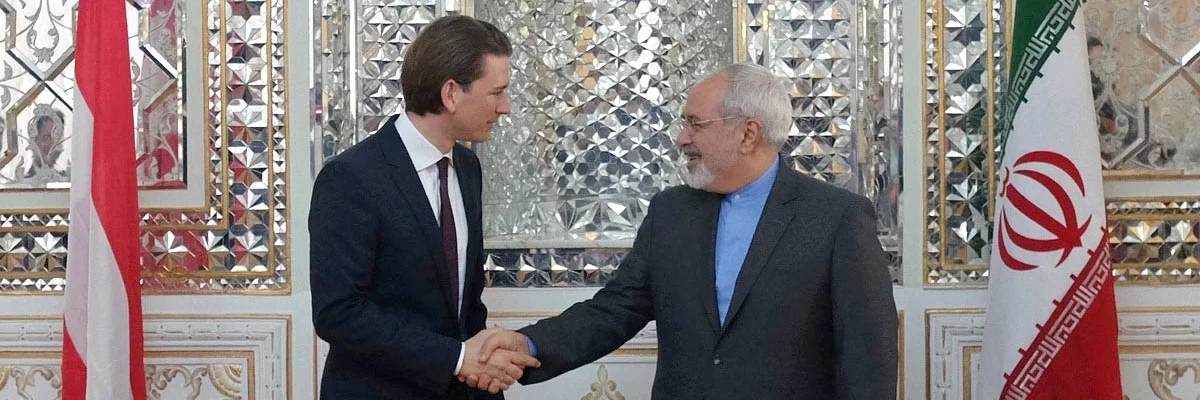
Austria Calls on Iran to Lift Immunity of Detained Diplomat
◢ Austria asked Tehran Tuesday to lift the immunity of an Iranian diplomat suspected of involvement in an alleged plot to bomb a rally by an exiled Iranian opposition group in France. The diplomat, who is based at the embassy in Vienna, was detained in Germany on Saturday.
Austria asked Tehran Tuesday to lift the immunity of an Iranian diplomat suspected of involvement in an alleged plot to bomb a rally by an exiled Iranian opposition group in France.
The diplomat, who is based at the embassy in Vienna, was detained in Germany on Saturday.
Vienna delivered the request to "lift the immunity of the Iranian diplomat" to Iran's ambassador to Austria, who was summoned to the foreign ministry after news of the alleged plot emerged on Monday, a ministry spokesman said.
Austria also informed Iran on Tuesday that the diplomat would be "deprived of his diplomatic status within 48 hours because of the existence of a European arrest warrant" against him, said the spokesman, Matthias Forenbacher.
The diplomat was one of six people arrested in Belgium, France and Germany over the alleged plot.
The apparent foiled attack was to have targeted a meeting of thousands of Iranian opposition supporters in a northern suburb of the French capital that was also attended by leading US figures, including close allies of President Donald Trump.
Federal prosecutors in Brussels first revealed the arrests, charging a husband and wife they described as Belgian nationals "of Iranian origin".
They said the Iranian diplomat in Vienna was believed to be a contact of the couple.
The arrests were revealed on the day Iranian President Hassan Rouhani arrived in Switzerland on a visit that Tehran said was of "crucial importance" for cooperation between the Islamic Republic and Europe after the US withdrawal from the Iranian nuclear agreement.
Rouhani is also due to visit Austria, which currently holds the six-month presidency of the European Union.
Iran's foreign minister dismissed the attack plot as a "false flag ploy" designed to overshadow Rouhani's tour.
"How convenient: Just as we embark on a presidential visit to Europe, an alleged Iranian operation and its 'plotters' arrested," Mohammad Javad Zarif tweeted.
Photo Credit: IRNA
Belgium Charges Two for Attack Plot on Iran Opposition in France
◢ Belgian prosecutors on Monday charged a husband and wife over a plot to bomb a weekend rally by an exiled Iranian opposition group in France. Amir S. and Nasimeh N., both Belgian nationals, "are suspected of having attempted to carry out a bomb attack" on Saturday in the Paris suburb of Villepinte, during a conference organized by the People's Mujahedin of Iran, a statement from the Belgian federal prosecutor said.
Belgium, France and Germany have detained six people, including an Iranian diplomat, over an alleged plot to bomb a weekend rally by an exiled Iranian opposition group in Paris, authorities and sources said Monday.
The apparent foiled attack was to have targeted a meeting of thousands of Iranian opposition supporters in a northern suburb of the French capital that was also attended by leading US figures, including close allies of President Donald Trump.
The developments came on the day Iranian President Hassan Rouhani arrived in Switzerland on a visit that Tehran said was of "crucial importance" for cooperation between the Islamic Republic and Europe after the US withdrawal from the Iranian nuclear agreement.
Rouhani is also due to visit Austria, which currently holds the six-month presidency of the European Union, and hosts the detained Iranian diplomat.
Iran's foreign minister dismissed the attack plot as a "false flag ploy" designed to overshadow Rouhani's tour.
"How convenient: Just as we embark on a presidential visit to Europe, an alleged Iranian operation and its 'plotters' arrested," Mohammad Javad Zarif tweeted .
"Iran unequivocally condemns all violence and terror anywhere, and is ready to work with all concerned to uncover what is a sinister false flag ploy," he said.
Federal authorities in Brussels first revealed the arrests, charging a husband and wife described by prosecutors as Belgian nationals "of Iranian origin".
Amir S., 38, and Nasimeh N., 33, "are suspected of having attempted to carry out a bomb attack" on Saturday in the Paris suburb of Villepinte, during the conference organized by the People's Mujahedin of Iran, a statement from the Belgian federal prosecutor said.
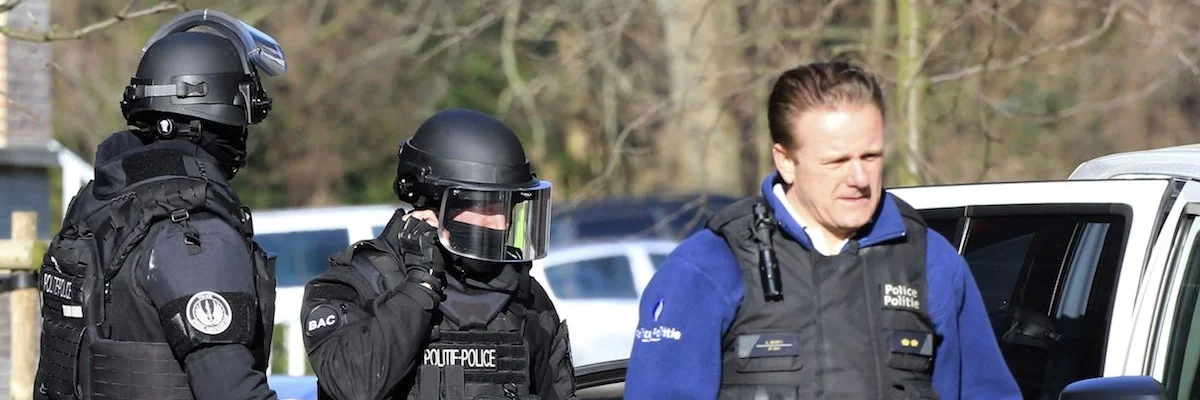
The couple were carrying 500 grams (about one pound) of the volatile explosive TATP along with a detonator when an elite police squad stopped them in a residential district of Brussels.
The statement said that an Iranian diplomat at the embassy in Vienna, a contact of the couple, was also detained in Germany.
In France, three people were taken into custody Saturday, a security source said on Monday—two of them later released.
In Belgium, police carried out five nationwide raids on Saturday, authorities said, though they refused to detail the results.
'Around the Corner'
The Belgian statement said about 25,000 people attended the rally in France where people waved the red, green and white flag of the National Council of Resistance of Iran (NCRI), and cheered its leader Maryam Rajavi.
The NCRI groups some exiled opposition organizations including the former rebel People's Mujahedin, which is banned in Iran.
At the rally, former New York mayor and Trump lawyer Rudy Giuliani urged regime change in Iran, saying the prospect was closer than ever after the Islamic Republic was hit by a wave of strikes and protests.
Giuliani called for a boycott of companies "that continually do business with this regime".
"Freedom is right around the corner," he said of the recent protests in Iran.
Giuliani and other US politicians have been hugely paid to speak at the annual Paris rally in recent years. Republican firebrand and former House speaker Newt Gingrich also addressed the rally.
The People's Mujahedin, formed in the 1960s to overthrow the shah of Iran, fought the rise of the mullahs in Tehran following the 1979 Islamic revolution.
It was listed as a "terrorist organization" by the US State Department in 1997 and was only removed from terror watchlists by the European Union in 2008 and Washington in 2012.
Belgium has been on high alert since the smashing of a terror cell in the town of Verviers in January 2015 that was planning an attack on police.
Photp Credit: EPA
Iranian President Flies to Europe to Rally Support
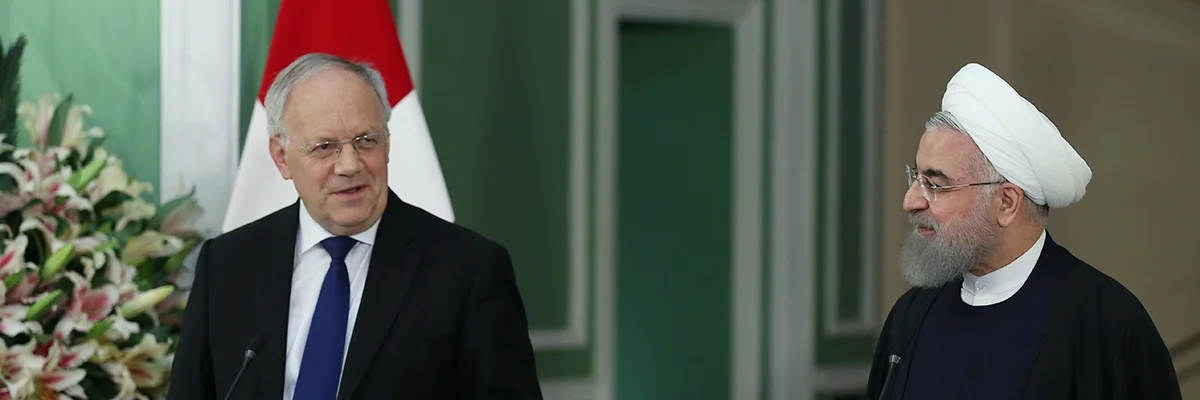
◢ President Hassan Rouhani departed Iran on Monday for a trip to Europe billed as of "prime importance" after the US pulled out of the 2015 nuclear deal between Tehran and world powers. Rouhani was set to visit Switzerland and Austria as part of Tehran's ongoing efforts to secure Europe's continued support for the landmark agreement.
President Hassan Rouhani departed Iran on Monday for a trip to Europe billed as of "prime importance" after the US pulled out of the 2015 nuclear deal between Tehran and world powers.
Rouhani was set to visit Switzerland and Austria as part of Tehran's ongoing efforts to secure Europe's continued support for the landmark agreement.
The Iranian president left Tehran on an early afternoon flight and was due to land in Zurich in the mid-afternoon, Iranian state media reported.
His delegation will travel on to Vienna Wednesday, according to authorities in Austria, where the historic nuclear deal was signed in July 2015.
The trip will be an "opportunity to talk about the future of the (nuclear) agreement," Rouhani told reporters at Tehran's Mehrabad Airport before boarding his flight, state television showed.
Foreign Minister Mohammad Javad Zarif is also scheduled to hold talks with Swiss officials in Bern.
The visit comes nearly two months after US President Donald Trump unilaterally pulled out of the agreement, to the ire of the other signatories—China, France, Germany, Britain and Russia—which along with the European Union have continued to back the accord.
Rouhani's European trip will be of "prime importance" as it could "provide a more precise picture of cooperation between Iran and Europe," Iranian foreign ministry spokesman Bahram Ghassemi said in comments carried by the semi-official ISNA news agency on Saturday.
Austria on Sunday took over the European Union's six-month rotating presidency, while Switzerland represents US interests in Iran owing to the absence of diplomatic relations between Washington and Tehran.
Vienna, where the deal was signed, is also the home of the United Nations' nuclear watchdog, the IAEA, which monitors Iran's compliance with the accord.
The nuclear deal has been the cornerstone of Rouhani's policy of greater openness with the West, and the US departure has seen him severely criticized by ultra-conservatives at home.
Even before Trump's decision, Iranians had long complained that the hoped-for uptick in foreign investment after the deal had not materialized.
Washington's decision paves the way for new US sanctions against Tehran, which will encompass businesses from third countries that continue to operate in Iran.
A number of foreign firms have already announced they would cease their Iranian activities in light of the looming imposition of sanctions.
Failure 'Very Dangerous'
While in Switzerland officials are due to sign agreements on economic cooperation, according to Iran's official IRNA news agency.
Rouhani will meet with the Swiss president, Alain Berset, and his two-day visit will coincide with a bilateral economic forum on health and nutrition, although it was not clear whether he will attend in person.
There will be a similar focus on finances in Vienna, where the Iranian president is expected to sign memorandums on economic cooperation according to Austrian media.
Chancellor Sebastian Kurz said he will speak plainly with Rouhani about Iran's role in the Middle East, as Tehran continues to deny accusations it is destabilizing the region.
Kurz will also find "clear words" to discuss the human rights situation in Iran, the chancellor told Austrian news agency APA.
The European tour is part of a broader diplomatic effort by Tehran to rally support in the wake of Trump's May 8 withdrawal from the deal, formally known as the Joint Comprehensive Plan of Action (JCPOA).
Last month Rouhani visited China, where he discussed the future of the nuclear deal with his Chinese and Russian counterparts on the margins of a security summit.
Zarif meanwhile embarked on a tour of Britain, France, Germany, China and Russia.
The foreign minister on June 24 warned that failing to save the nuclear deal would be "very dangerous" for Tehran.
But the Iranian government has also said it will not continue to abide by the agreement if doing so goes against its economic interests.
Iran's supreme leader, Ali Khamenei, has demanded Europe provide a number of economic guarantees in order for Tehran to continue its commitment.
Increasing the pressure on Iran's European partners, he ordered preparations be made to quickly restart nuclear activities in case talks collapse.
Photo Credit: IRNA
Iran's Rouhani in Europe in July to Seek Backing for Nuclear Deal
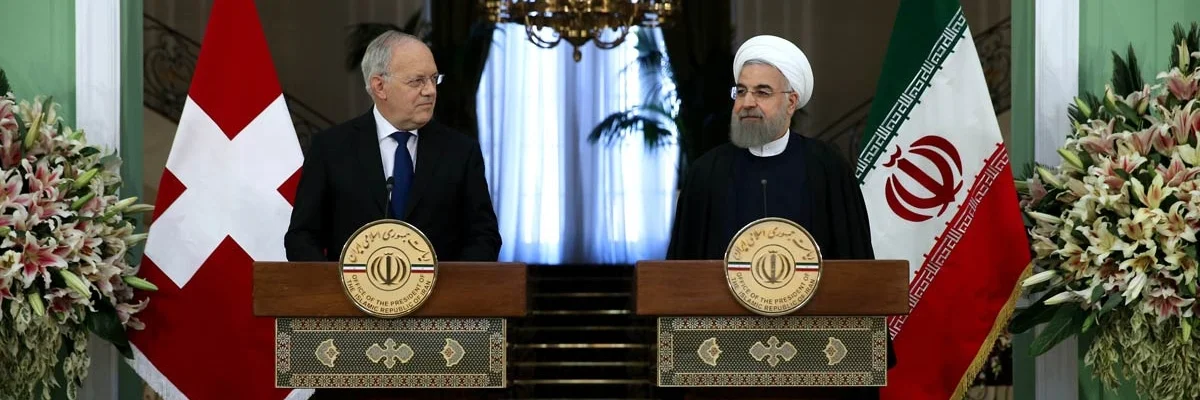
◢ Iranian President Hassan Rouhani will visit Austria and Switzerland next month as part of a campaign by Tehran to secure continued European backing for the 2015 nuclear accord. Relations between Tehran and Bern, which represents Iran's interests in the United States, have been deepening in recent years, and Rouhani will be welcomed with full military honors, a statement from the Swiss presidency said.
Iranian President Hassan Rouhani will visit Austria and Switzerland next month as part of a campaign by Tehran to secure continued European backing for the 2015 nuclear accord.
The future of the landmark deal was thrown into doubt when President Donald Trump announced last month that the United States would withdraw and reimpose sanctions that would hit international businesses operating in Iran.
The other parties to the agreement—Britain, China, France, Germany and Russia—have vowed to stay in the accord but their companies risk huge penalties if they keep doing business in the Islamic republic.
Iran has already warned it is ready to resume uranium enrichment to 20 percent "within days" if the deal falls apart and warned Europe that time was running out.
The visits were announced Monday by the presidencies of both European countries.
Rouhani will visit Switzerland on July 2-3 and then head on July 4 to Vienna—home of the UN nuclear watchdog the IAEA which monitors Iran's compliance with the accord.
Relations between Tehran and Bern, which represents Iran's interests in the United States, have been deepening in recent years, and Rouhani will be welcomed with full military honors, a statement from the Swiss presidency said.
Vienna played host to marathon talks that began in June 2013 and led to the signing in July 2015 of the deal aimed at preventing Iran from building an atomic bomb.
Photo Credit: IRNA