
US Wants Security Council to Extend Iran Arms Embargo
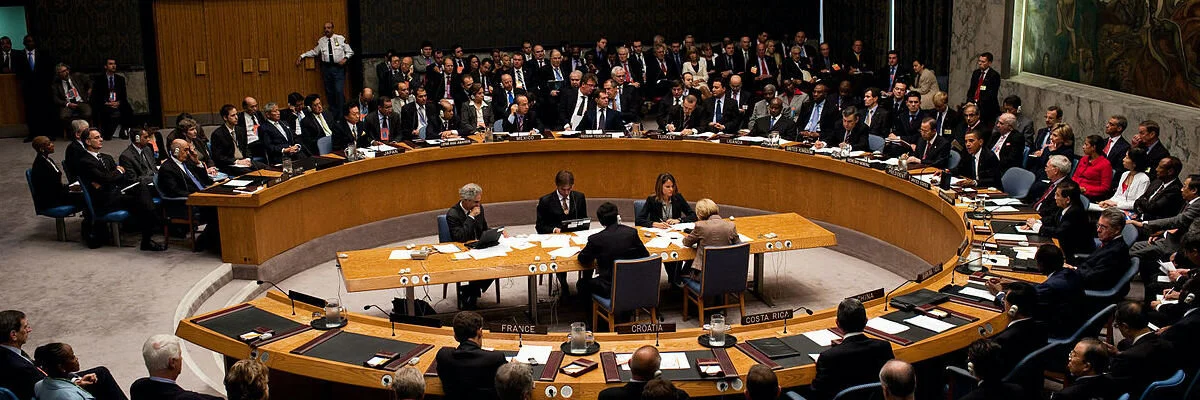
The US has proposed a UN Security Council resolution condemning a devastating 2019 attack on Saudi oil facilities it blames on Iran and proposing an extension of an arms embargo against the Islamic Republic, sources said.
The US has proposed a UN Security Council resolution condemning a devastating 2019 attack on Saudi oil facilities it blames on Iran and proposing an extension of an arms embargo against the Islamic Republic, sources said.
The embargo, put in place as part of a nuclear accord signed with Tehran in 2015, is set to expire in October, but Washington has been working to extend the ban as tensions with its arch-rival remain high.
On Friday, France, the UK and Germany—all signatories to the deal—issued a joint statement arguing against lifting the ban as scheduled, saying it could have "major implications for regional security and stability."
The US resolution—a draft of which was obtained by AFP—"condemns the attacks of September 2019 against Saudi Arabia carried out by Iran.”
It also calls for the body to "prohibit the supply, sale or transfer, direct or indirect... of weapons and related materials," excluding those that are approved with 30 days' notice.
No date has been scheduled for a vote on the resolution and it is unlikely to pass, as veto-wielding China and Russia have already spoken out against extending the embargo.
The 2019 attacks on Saudi state oil giant Aramco's facilities caused extensive damage and briefly interrupted production of half of the country's oil output.
Parts of the cruise missiles and drones used in the attacks were either made in Iran or exported there, according to a UN report based on an examination of the debris released earlier this month.
Observers say the US attempt to extend the embargo is part of efforts to re-impose UN sanctions on Iran, lifted in 2015 when the agreement was signed.
France, the UK and Germany have already rejected any "unilateral attempt" to re-impose UN sanctions on Iran.
Iran agreed with major world powers in 2015 to freeze its nuclear program in return for the lifting of punishing international sanctions.
But in 2018, US President Donald Trump pulled the United States out of the agreement and reimposed sanctions, prompting Iran to roll back its own commitments.
Photo: Wikicommons
Pompeo Lands in Saudi for Talks Focused on Iran
◢ US Secretary of State Mike Pompeo landed in Riyadh Wednesday for talks with Saudi leaders focused on countering Tehran, his first visit since a top Iranian general's killing sent regional tensions soaring. The top US diplomat, whose visit follows his first trip to sub-Saharan Africa, will hold talks with King Salman and his son Crown Prince Mohammed bin Salman as well as Foreign Minister Faisal bin Farhan.
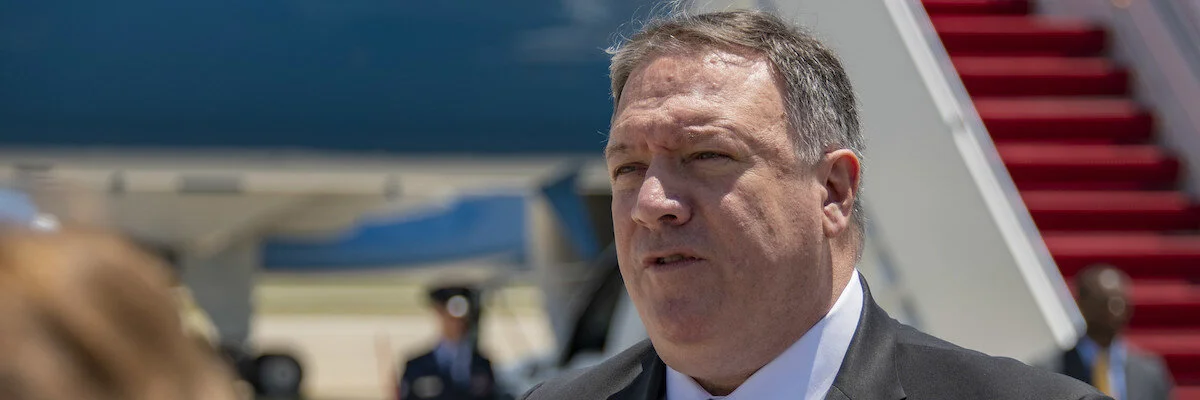
US Secretary of State Mike Pompeo landed in Riyadh Wednesday for talks with Saudi leaders focused on countering Tehran, his first visit since a top Iranian general's killing sent regional tensions soaring.
The top US diplomat, whose visit follows his first trip to sub-Saharan Africa, will hold talks with King Salman and his son Crown Prince Mohammed bin Salman as well as Foreign Minister Faisal bin Farhan, State Department officials said.
"We'll spend a lot of time talking about the security issues with the threat from the Islamic Republic of Iran in particular," Pompeo told reporters in the Ethiopian capital Addis Ababa before heading to Riyadh.
Pompeo said the United States was "prepared to talk anytime" to Iran but emphasised that the Iranian regime has "got to fundamentally change their behaviour".
"The pressure campaign continues. It's not just an economic pressure campaign, its diplomatic pressures, isolation through diplomacy as well," he said.
US President Donald Trump, who is closely allied with Saudi Arabia, in 2018 withdrew from a nuclear accord with Iran and imposed sweeping sanctions aimed at reducing Tehran's regional clout.
Pompeo's three-day visit to close ally Saudi Arabia comes in the wake of a US-ordered drone strike that killed Qasem Soleimani, Iran's most powerful general, as he visited Baghdad on January 3
Regional tensions rose following the killing and Iran responded with missile strikes on US forces in Iraq.
US officials blamed Iran for a September attack on Saudi oil installations, although Riyadh has since appeared keen to engage in cautious diplomacy to ease friction.
Pompeo faces a tough balancing act in Saudi Arabia as he said he would also discuss "human rights" during his visit.
The 2018 murder of Saudi journalist Jamal Khashoggi, which sparked global condemnation of the crown prince, has tested relations between the two allies.
After Riyadh, Pompeo will fly to Oman to meet the new sultan, Haitham bin Tariq, on Friday.
Pompeo will offer condolences over the death of his predecessor Qaboos, who was the Arab world's longest-serving leader and served as a go-between for Iran and the United States.
Photo: State Department
Iran Refutes US Accusations Over Saudi Attacks
◢ Iran on Sunday dismissed US accusations it was behind drone attacks on Saudi oil installations, suggesting Washington was seeking a pretext to retaliate against the Islamic Republic. "Such fruitless and blind accusations and remarks are incomprehensible and meaningless," foreign ministry spokesman Abbas Mousavi was quoted as saying in a statement.
Iran on Sunday dismissed US accusations it was behind drone attacks on Saudi oil installations, suggesting Washington was seeking a pretext to retaliate against the Islamic Republic.
"Such fruitless and blind accusations and remarks are incomprehensible and meaningless," foreign ministry spokesman Abbas Mousavi was quoted as saying in a statement.
US Secretary of State Mike Pompeo condemned Iran after Saturday's attacks, which knocked out half of Saudi Arabia's oil production.
Yemen's Iran-aligned Huthi rebels claimed responsibility for the drone strikes, but Pompeo said "there is no evidence the attacks came from Yemen".
"The United States will work with our partners and allies to ensure that energy markets remain well supplied and Iran is held accountable for its aggression," the top US diplomat tweeted.
Mousavi said the US allegations over the pre-dawn strikes on Abqaiq and Khurais in Saudi Arabia's Eastern Province were meant to justify actions against Iran.
"Such remarks... are more like plotting by intelligence and secret organisations to damage the reputation of a country and create a framework for future actions," he said.
Tehran and Washington have been at loggerheads since May last year when President Donald Trump pulled out of a 2015 multilateral deal that promised Iran relief from sanctions in return for curbs on its nuclear programme.
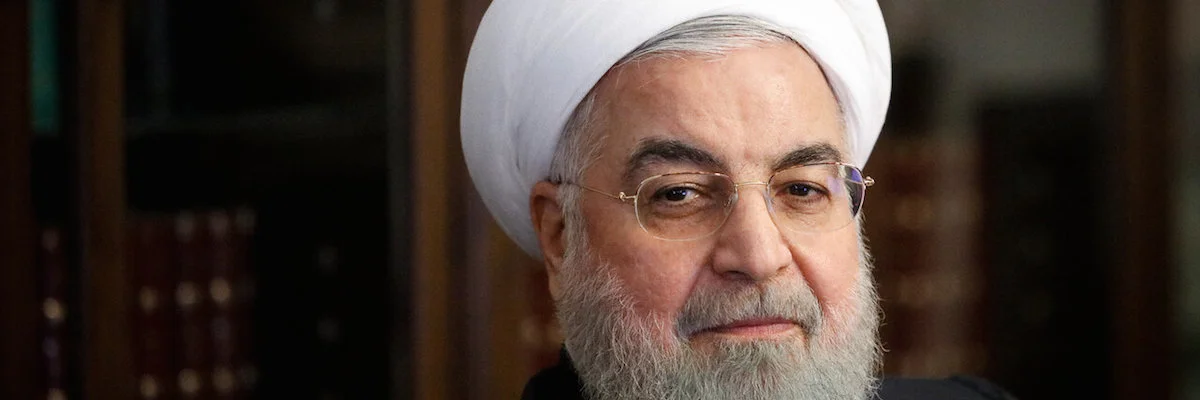
Iran's President Hassan Rouhani accused Washington of diverting blame for the war in Yemen, where US ally Saudi Arabia leads a military coalition that has regularly carried out air strikes.
"Today, witness that innocents die every day in Yemen ... Americans, instead of blaming themselves—and confessing that their presence in the region is creating problems—blame the region's countries or Yemen's people," Rouhani said.
"If we want there to be real security in the region, the solution is that America's aggression cease," Iran's president added, before leaving for Ankara to attend a trilateral meeting on Syria with Turkey and Russia.
"We believe the region's issues can be solved through talks in Yemen, Yemeni-Yemeni negotiations -- they must decide for themselves. The bombardment of Yemeni people must stop," Rouhani said.
'Maximum Lying'
Since its withdrawal from the nuclear accord, the United States has slapped crippling sanctions on Iran as part of a campaign of "maximum pressure".
The Islamic Republic has responded by reducing its nuclear commitments.
"The Americans have taken the policy of 'maximum pressure' which has apparently turned into 'maximum lying' due to their failures," said Mousavi.
The arch-foes were on the cusp of confrontation in June when Iran downed a US drone and Trump ordered retaliatory strikes before cancelling them at the last minute.
In remarks published Sunday, the commander of the Islamic Revolutionary Guard Corps' aerospace arm said Iran's missiles could hit US bases and ships within a range of 2,000 kilometres (about 1,240 miles).
"Neither us nor the Americans want a war," Brigadier General Amirali Hajizadeh said, quoted by Tasnim news agency, which is considered close to the Guards.
"Of course, some forces facing each other in the field could do something, by which a war could start," the commander said.
"We have always prepared ourselves for a full-fledged war... everyone should know that all American bases and their vessels in a 2,000-kilometer range can be targeted by our missiles," he added.
Photo: IRNA
Pompeo Blames Iran for Drone Attack on Saudi Oil Industry
◢ U.S. Secretary of State Michael Pompeo blamed Iran for a series of brazen attacks on a massive Saudi Aramco oil facility, saying there was no evidence the drones originated in Yemen as Tehran-backed rebels there claimed. Iran denied responsibility for the raids Saturday, which forced Saudi Arabia to slash its daily oil output in half.
By Maria Jose Valero and Nadeem Hamid
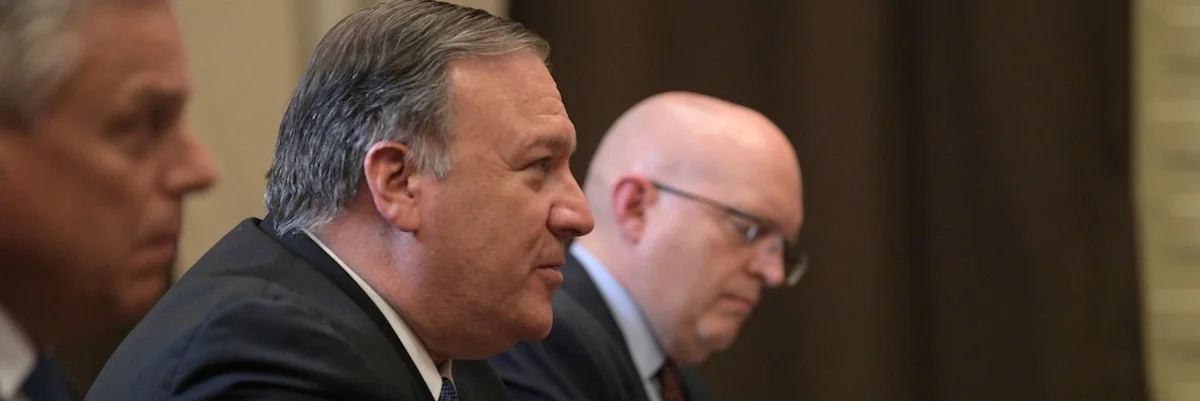
U.S. Secretary of State Michael Pompeo blamed Iran for a series of brazen attacks on a massive Saudi Aramco oil facility, saying there was no evidence the drones originated in Yemen as Tehran-backed rebels there claimed.
Iran denied responsibility for the raids Saturday, which forced Saudi Arabia to slash its daily oil output in half.
Pompeo tweeted after the White House confirmed that President Donald Trump offered support for Saudi Arabia’s self-defense in a call on Saturday with Saudi Crown Prince Mohammed Bin Salman.
Iran launched an “unprecedented attack on the world’s energy supply,” Pompeo said on Twitter after at least one Republican lawmaker urged the U.S. to respond in kind with a strike on Iranian oil facilities. He gave no evidence to back up that allegation.
The Wall Street Journal reported that Saudi and U.S. officials are investigating the possibility that cruise missiles were launched from Iraq, which is much closer than Yemen, and is home to a host of Iran-backed Shiite missiles.
Pompeo said the U.S. will work with allies to ensure the energy market remains well supplied, echoing comments from the White House. He also called on all nations to “publicly and unequivocally condemn Iran’s attacks.”
Saudi Arabia, which is locked in multiple proxy wars with Iran in the Middle East trying to contain its widening influence, hasn’t blamed anyone for the assault on the oil facility. On Sunday, it was racing to restore oil production after state energy producer Saudi Aramco lost about 5.7 million barrels per day of output in the raids on the world’s biggest crude-processing facility and the kingdom’s second-biggest oil field.
The attack intensified the volatility in the Persian Gulf region, which has been destabilized by a showdown between the U.S. and Iran over the 2015 nuclear deal. Frictions have mounted in the Gulf ever since Trump quit the deal last year and began reimposing harsh sanctions on Iran to try to force it to renegotiate a deal that would more broadly limit its nuclear and military ambitions.
Iran has responded by rolling back some of its obligations under the accord, as the agreement allows parties to do when others pull away from their commitments. It’s also been accused of carrying out a number of attacks on oil tankers in the Gulf region, charges it has denied.
Iranian Foreign Ministry spokesman Abbas Mousavi rejected the latest U.S. allegations, saying such “blind and fruitless accusations and statements are unfathomable and meaningless.” Foreign Minister Mohammad Javad Zarif tweeted, “Having failed at ‘max pressure,’ @SecPompeo’s turning to ‘max deceit.’”
Iranian-backed Houthi rebels in Yemen claimed responsibility for the strikes. A Saudi-led coalition backed by the U.S. has been fighting for more than four years to try to vanquish the Houthis and restore Yemen’s President Abdrabbuh Mansour Hadi to power. But the Houthis have proven more tenacious than the Saudis expected, withstanding four years of withering air attacks and fighting off better-armed forces with a disciplined insurgency.
They’ve stepped up their drone and missile attacks on enemy forces and Saudi territory, and as the war has dragged on, thousands of civilians have died, millions have gone hungry, and al-Qaeda and Islamic State have mounted a resurgence.
The U.S. “strongly condemns today’s attack on critical energy infrastructure,” White House spokesman Judd Deere said in an emailed statement that was also posted on Twitter. The U.S. government “is monitoring the situation and remains committed to ensuring global oil markets are stable.”
France, which has been working with Iran to try to salvage its nuclear deal with world powers after the U.S. pulled out last year, condemned the attacks and expressed “total solidarity” with the kingdom.
“Such actions can’t but aggravate the tensions and the risk of conflict in the region,” the French Foreign Ministry said. “It’s imperative they stop,” it added, without assigning blamed.
Republican Senator Lindsey Graham, a confidant of Trump, earlier urged a decisive U.S. response against Iranian targets.
“It is now time for the U.S. to put on the table an attack on Iranian oil refineries if they continue their provocations or increase nuclear enrichment,” Graham of South Carolina said on Twitter. “Iran will not stop their misbehavior until the consequences become more real, like attacking their refineries.”
Photo: Kremlin.ru