
European Leaders Say Iran Behind Saudi Attack, Urge Dialogue
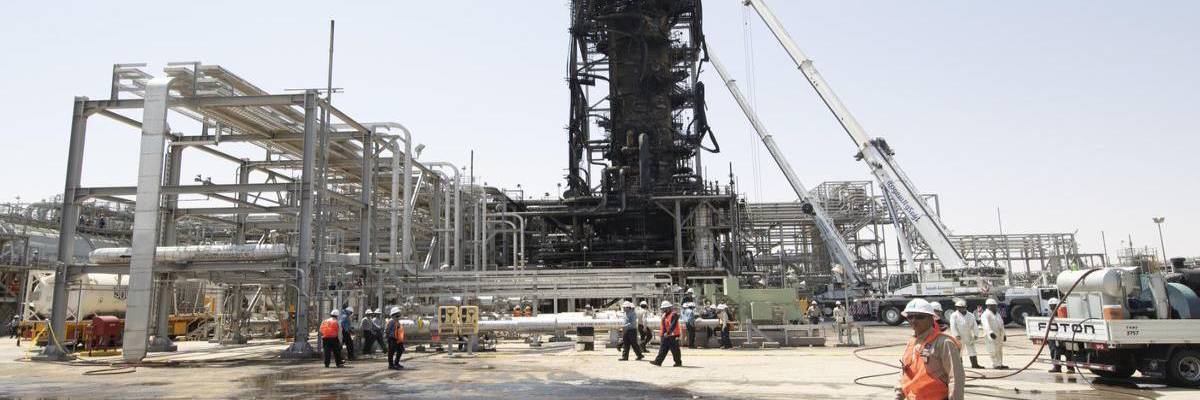
◢ The leaders of France, Germany and Britain on Monday agreed that Iran carried out this month's attack on Saudi Arabian oil infrastructure and called on Tehran to choose dialogue over further "provocation." The leaders backed the conclusion of the United States on the blasts at the Abqaiq and Khurais facilities.
The leaders of France, Germany and Britain on Monday agreed that Iran carried out this month's attack on Saudi Arabian oil infrastructure and called on Tehran to choose dialogue over further "provocation."
French President Emmanuel Macron, German Chancellor Angela Merkel and British Prime Minister Boris Johnson backed the conclusion of the United States on the blasts at the Abqaiq and Khurais facilities.
"It is clear for us that Iran bears responsibility for this attack. There is no other explanation," they said in a joint statement released by France after meeting on the sidelines of the UN General Assembly.
But the three countries—which remain party to a nuclear deal with Iran from which President Donald Trump withdrew the United States—said the solution was diplomacy
"We call on Iran to commit to such a dialogue and to avoid any new provocation and escalation," they said.
"The attacks also highlight the need for a de-escalation in the region, for sustained diplomatic efforts and engagement with all sides."
The three nations said that they remained committed to the 2015 agreement with Iran that was negotiated under former president Barack Obama.
They called on Iran to come back into strict compliance.
Iran has taken several steps including installing centrifuges that are more advanced than allowed as a way to voice anger at not receiving sanctions relief promised under the deal.
Photo: IRNA
Europe Doubles Down on Iran Support as Trump Targets Oil Exports
◢ Europe pledged to keep afloat its efforts to aid Iran after the U.S. tightened the screw by targeting all exports of Iranian oil for sanctions. The French government and the European Union both said they will abide by the terms of the Iran nuclear accord with world powers even after the latest U.S. move.
Europe pledged to keep afloat its efforts to aid Iran after the U.S. tightened the screw by targeting all exports of Iranian oil for sanctions.
The French government and the European Union both said they will abide by the terms of the Iran nuclear accord with world powers even after the latest U.S. move. France and its European partners intend to continue efforts to ensure that Iran derives economic benefits as long as Tehran complies with its nuclear obligations, the Foreign Ministry in Paris said.
U.S. Secretary of State Michael Pompeo said Monday that the U.S. wouldn’t renew waivers granted to eight countries including South Korea, Japan and Turkey that allowed them to buy Iranian oil without facing sanctions. The non-renewal of waivers that were due to expire on May 2 roiled energy markets and risks upsetting major importers including China and India.
Europe’s insistence on standing by the Iran nuclear deal, known as the JCPOA, risks further inflaming tensions with the Trump administration as it seeks to force Tehran to renegotiate the terms of the accord to include Iran’s non-nuclear ballistic missiles and influence in the wider Middle East.
“We regret yesterday’s announcement by the U.S. not to renew oil waivers,” European Commission spokeswoman Maja Kocijancic told reporters in Brussels. “This further risks undermining the implementation of the JCPOA, which is a key element of the global nuclear non-proliferation architecture that was endorsed unanimously by the UN security council.”
Trade Spillover
European leaders such as French President Emmanuel Macron and German Chancellor Angela Merkel may have concerns at potential fallout for EU-U.S. trade talks aimed at averting more tit-for-tat tariffs, since President Donald Trump has previously shown willingness to conflate disparate policy matters in a bid to achieve his goals.
Germany, France and the U.K. have already created a special purpose vehicle for trade with Iran designed to get around U.S. sanctions. Work on the INSTEX mechanism to facilitate financial transactions for European companies trading with Iran is “progressing positively with a view to a near completion,” the French ministry said.
Iran should continue work on its mirror mechanism, the ministry said. Exchanges between the two sides are underway to ensure that both structures “operate in a manner consistent with international financial standards,” it said.
France said it is “determined” to persevere with the nuclear deal, while Kocijancic at the commission said the EU will abide by the accord “as long as Iran continues with the full and effective implementation of its nuclear-related commitments.”
Photo: Bloomberg