
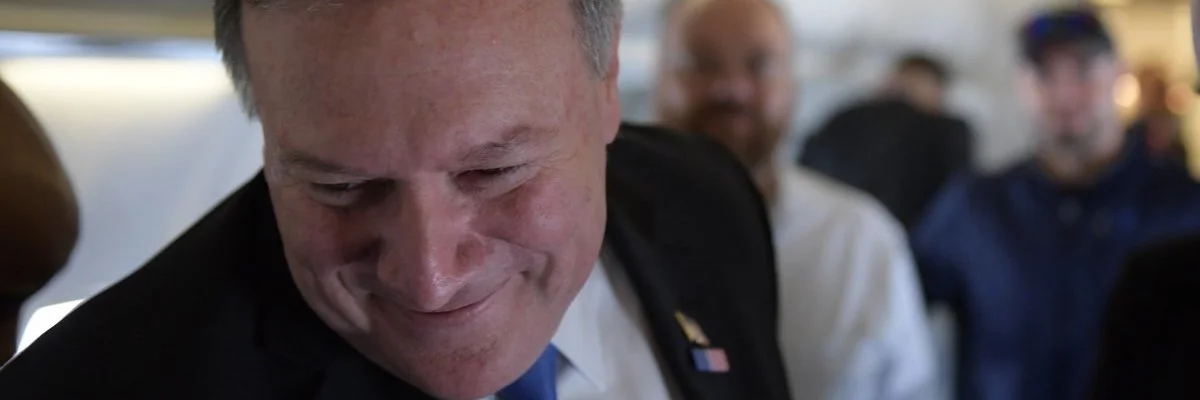
Pompeo in Baghdad on Unannounced Visit
◢ US Secretary of State Mike Pompeo landed in Baghdad late Tuesday on an unannounced visit, an Iraqi government source told AFP, cancelling a trip to Germany amid escalating US-Iran tensions. The source, speaking on condition of anonymity because of the high security nature of the visit, said Pompeo was set to meet Iraqi Prime Minister Adel Abdel Mahdi.
US Secretary of State Mike Pompeo landed in Baghdad late Tuesday on an unannounced visit, an Iraqi government source told AFP, canceling a trip to Germany amid escalating US-Iran tensions.
The source, speaking on condition of anonymity because of the high security nature of the visit, said Pompeo was set to meet Iraqi Prime Minister Adel Abdel Mahdi.
The visit comes two days after the US announced it was dispatching an aircraft carrier strike group and bomber task force to the Middle East to send a "clear and unmistakeable" message to Iran.
National Security Advisor John Bolton said the deployment was in response to a "number of troubling and escalatory indications and warnings," but did not elaborate.
"The United States is not seeking war with the Iranian regime, but we are fully prepared to respond to any attack, whether by proxy, the Islamic Revolutionary Guard Corps, or regular Iranian forces," he said.
Pompeo had been en route to Germany but suddenly cancelled the trip due to "pressing issues," the State Department said, without elaborating where he was heading.
But in response to a question about threats from Iran or its proxies on US forces in Iraq, the top US diplomat mentioned both Iraq and Jordan.
"As Secretary of State I have a responsibility to keep the officers that work for me safe each and every day all around the world. That includes in Erbil and Baghdad, in our facilities in Amman, all around the Middle East," he said.
"And so any time we receive threat reporting, things that raise concerns, we do everything... that we can to make sure that those planned or contemplated attacks don't take place, and to make sure that we've got the right security posture," he said.
Pompeo had been traveling from Finland, where he had attended a meeting of the Arctic Council.
He was due to meet both Chancellor Angela Merkel and Foreign Minister Heiko Maas later Tuesday in Germany.
Photo: State Department
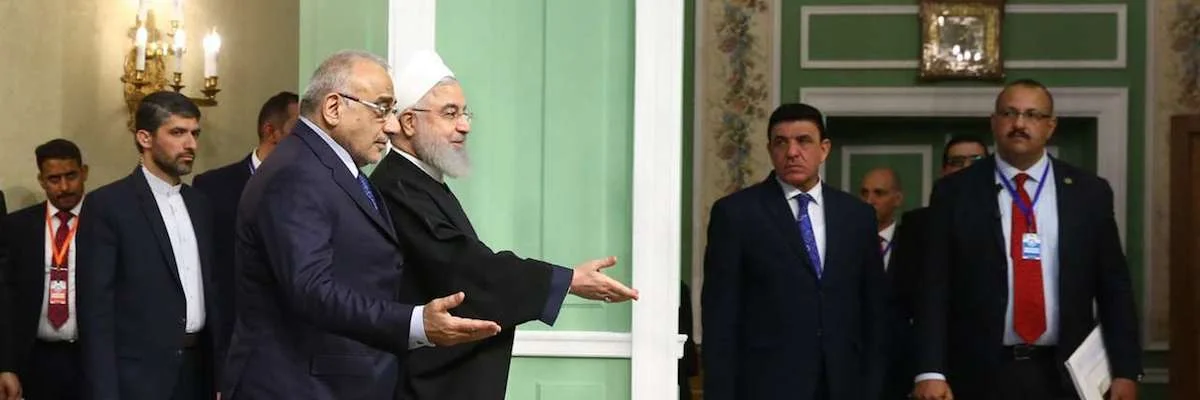
Iraq Says Tried to Stop US Blacklist of Iran Revolutionary Guard
◢ Baghdad tried to stop Washington from blacklisting Iran's Revolutionary Guards as a "terrorist organization," Iraqi Prime Minister Adel Abdel Mahdi said Tuesday, warning that the decision could further destabilize the region. The United States declared the Islamic Revolutionary Guard Corps a "terrorist" group on Monday, prompting Tehran to quickly slap US troops with the same designation.
Baghdad tried to stop Washington from blacklisting Iran's Revolutionary Guards as a "terrorist organization," Iraqi Prime Minister Adel Abdel Mahdi said Tuesday, warning that the decision could further destabilize the region.
The United States declared the Islamic Revolutionary Guard Corps a "terrorist" group on Monday, prompting Tehran to quickly slap US troops with the same designation.
"We tried to stop the American decision. We reached out to all sides, to the US and the Saudis," Abdel Mahdi said during a weekly press conference on Tuesday.
He said he had warned Washington and its ally Riyadh that the move would have "negative repercussions in Iraq and in the region,” but stopped short of denouncing it.
Any escalation, he said, "would make us all losers.”
The premier has repeatedly said Baghdad would seek good ties with both Tehran and Washington, and the new sanctions have forced it to walk an even tighter rope.
They mark the first time Washington has branded part of a foreign government a terrorist group, meaning anyone who deals with the Revolutionary Guard could face US prison.
The IRGC was integral during Iraq's years of fighting against the Islamic State group, with the head of its foreign wing Major General Qassem Suleimani coordinating fighting across various Iraqi battlefields.
Since the battle against IS ended in late 2017, Suleimani has continued to meet with Iraq's top political brass.
Officially, the IRGC has no presence in Iraq, and it remains unclear whether these sanctions impact Iraqi figures, institutions or military groups.
Washington reimposed tough sanctions on Tehran's energy and finance industries last year, but granted Iraq several temporary waivers to continue importing Iranian gas and electricity to prop up its frail power sector.
At the same time, Iraq and Iran seem to be deepening trade ties, with Iranian President Hassan Rouhani visiting Baghdad in March and Abdel Mahdi returning the visit at the weekend.
The premier has also said he is planning trips soon to both Riyadh and Washington, Tehran's main foes.
Photo Credit: IRNA
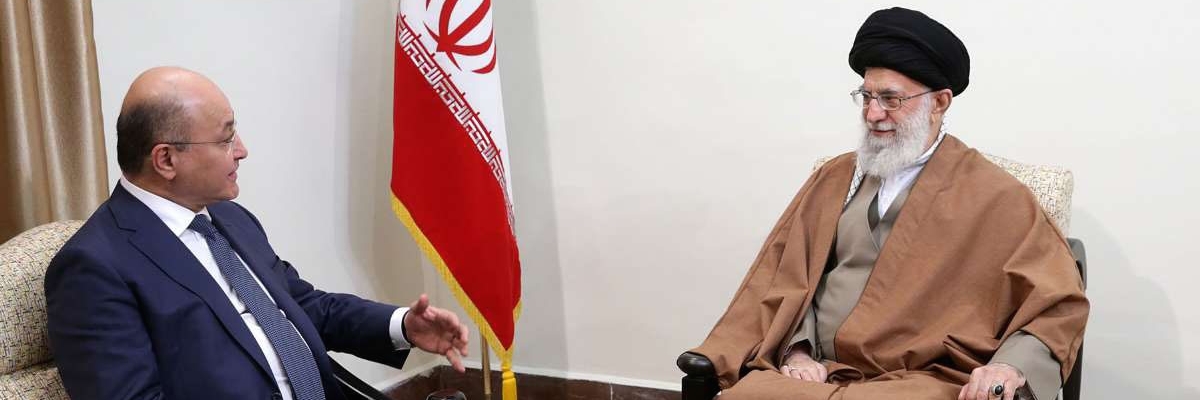
US Grants Iraq 90-Day Extension to Iran Sanctions Waiver: Source
◢ The United States has granted Iraq a 90-day extension to an exemption from reimposed sanctions on Iran to keep on importing energy, a government source said on Thursday. President Donald Trump reimposed crippling unilateral sanctions on Iran's energy and finance sectors on November 5 following his May decision to abandon a landmark 2015 nuclear deal between major powers and Tehran.
The United States has granted Iraq a 90-day extension to an exemption from reimposed sanctions on Iran to keep on importing energy, a government source said on Thursday.
President Donald Trump reimposed crippling unilateral sanctions on Iran's energy and finance sectors on November 5 following his May decision to abandon a landmark 2015 nuclear deal between major powers and Tehran.
But he gave Iraq a 45-day waiver to continue buying electricity and natural gas to generate it from its eastern neighbor.
Iraq was expected to use that time to submit a plan on how it would wean itself off Iranian supplies.
In the days leading up to the deadline Thursday, Prime Minister Adel Abdel Mahdi said a delegation of Iraqi officials would travel to Washington to discuss sanctions.
And on Thursday, a government source involved in the talks, told AFP the delegation had secured a 90-day extension so Iraq could keep buying both Iranian electricity and gas.
Asked whether the US had pressured the Iraqi delegation to partner with US companies to fill the eventual gap, the source said the issue was part of "complicated discussions.”
Iraq faces a chronic power shortage that often leave homes without mains electricity for as much 20 hours a day and was a key driving factor behind mass protests this summer.
To cope with the shortages, Iraq pipes in up to 28 million cubic meters of Iranian gas a day for power generation and also directly imports up to 1,300 megawatts of Iranian electricity.
That dependence is uncomfortable for Washington, which sees Tehran as its top regional foe.
Last week, US Energy Secretary Rick Perry discussed sanctions with Iraq's ministers of oil and electricity in Baghdad, and said Iraq should partner with US companies to become energy independent.
"Working together, the US and Iraq can develop Iraq's oil, gas and water industries," Perry said.
Iraq's electricity ministry said it could stop relying on Iranian electricity within two years, but that halting gas imports would be much more difficult.
One solution would be developing Iraq's ability to capture gas flares, the gas set alight during oil extraction.
The World Bank estimates that wasted flares represent an annual loss of about USD 2.5 billion—enough to fill the gap in Iraq's gas-based power generation.
A second source with close knowledge of the negotiations told AFP Washington was trying to convince Iraq to partner with American firms General Electric, Baker Hughes and Orion to capture flares.
“The US tells Iraqi officials it's a win-win-win: they stop relying on Iran, they capture their own gas and they benefit US companies in the process," the source said.
Neither Iraq's electricity ministry nor the US embassy in Baghdad responded to AFP requests for comment.
Photo Credit: IRNA