
Iran Defends Barring of Candidates as Campaign Ends
◢ Iran's electoral watchdog on Wednesday defended its decision to disqualify thousands of candidates for a crucial parliamentary election in two days, as a lackluster campaign neared its end. Conservatives are expected to make an overwhelming resurgence in Friday's vote.
By David Vujanovic
Iran's electoral watchdog on Wednesday defended its decision to disqualify thousands of candidates for a crucial parliamentary election in two days, as a lackluster campaign neared its end.
Conservatives are expected to make an overwhelming resurgence in Friday's vote, which comes after months of steeply escalating tensions between Iran and its decades-old arch foe the United States.
Their gains would be made at the expense of those who back President Hassan Rouhani, a moderate conservative who was re-elected in 2017 promising people more freedoms and the benefits of engagement with the West.
But many people in Iran feel their lives have been crippled by an economic slump exacerbated by harsh US sanctions since President Donald Trump pulled the United States out of a landmark nuclear deal with the Islamic republic in 2018.
A week of campaigning, which has seen posters go up but only a few low-key gatherings, comes to an end on Wednesday, before a day of silence on the eve of polling day.
The interior ministry said around half of the 16,033 hopefuls would contest the election after the Guardian Council barred thousands, most of them moderates and reformists.
But the Council said it was "neutral" in its dealings with all political camps and acted in accordance with the law when it blocked their candidacy.
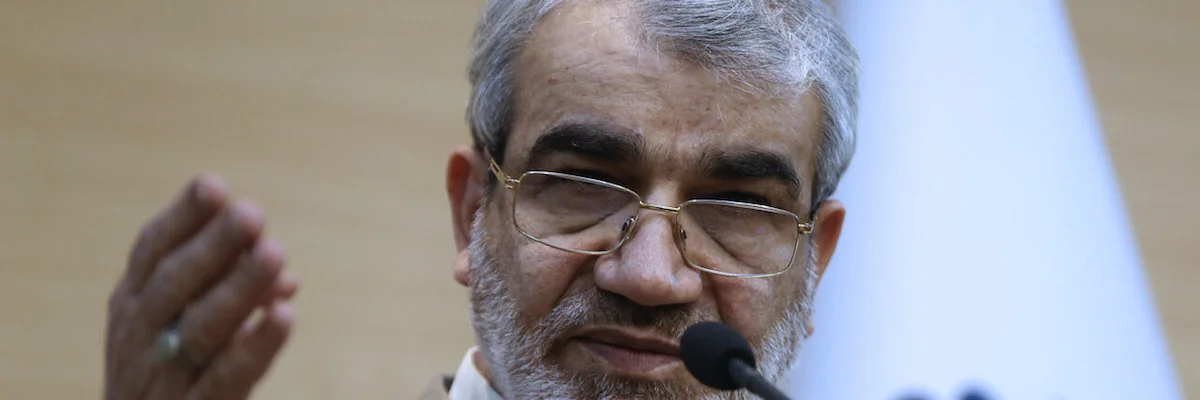
"The Guardian Council follows the laws and regulations parliament has passed at different times," said its spokesman Abbas Ali Kadkhodaee.
Disillusionment
"This time, just like at previous (elections), we have tried to properly follow the law," he told a news conference.
"The Council has never had a political view... It approaches political factions with closed eyes.
"What it does judge is the evidence in the cases of the candidates and then it only acts in accordance with the law passed by parliament."
Commentators expect disillusionment among the 57 million-strong electorate in the sanctions-hit country to result in a low turnout.
Many people on the streets of Tehran have expressed dissatisfaction with politicians ahead of the election, saying they failed to keep their word or to raise living standards.
Supreme leader Ayatollah Ali Khamenei on Tuesday urged Iranians to vote, saying it was a "religious duty".
Rouhani issued a similar call on Wednesday, saying that taking part would give Iran the "strength and unity" needed in its stand against the United States.
"We are going to the polls to choose the best people for parliament, which is a very important institution," he said in televised remarks after a meeting of his cabinet.
"We are under severe sanctions and pressure by the global arrogance, and we have to break these sanctions and improve people's lives," he added, referring to the United States.
"Sanctions are a terrorist and tyrannical act against Iran.
"One cannot say sanctions have no effect and the government should be doing more... It's lies, it's supporting America."
Turnout at Iran's past 10 elections averaged 60.5 percent, said the interior ministry.
'Tyrannical' Sanctions
The Guardian Council said it expected at least 50 percent of registered voters to cast ballots in the election.
"Our forecast is that we will have a good turnout in the upcoming election, and the average turnout has usually not been under 50 percent, and we will witness a turnout of 50 percent turnout in this election too," its spokesman Kadkhodaee said.
Iranians have been feeling the strain after months of turmoil.
The economy has been battered since Trump abandoned the nuclear deal in 2018 and reimposed sanctions as part of a "maximum pressure" campaign.
In November, demonstrations over petrol price hikes spread across Iran and turned violent before being crushed in a deadly crackdown.
Tehran and Washington have nearly gone to war twice in the past seven months, most recently after the US killed prominent Iranian general Qasem Soleimani on January 3.
The "martyrdom" of the hugely popular general provoked an outpouring of grief in Iran.
Millions of people turned out to mourn his death, but that unity suffered a blow after Iran admitted it "accidentally" shot down a Ukrainian airliner, killing 176 people.
Voting for Iran's 290-seat parliament, or Majles, opens at 8:00 am (0430 GMT) on Friday and lasts 10 hours, but can be extended. The first results are expected on Sunday.
Photo: IRNA
Iran Official Points to More Open Elections
◢ A senior Iranian official has suggested in an interview with AFP that authorities may be more open than in the past in approving candidates for a looming parliamentary election. "We don't consider ourselves immune from criticism," said Guardian Council spokesman Abbas Ali Kadkhodaee.
By Marc Jourdier
A senior Iranian official has suggested in an interview with AFP that authorities may be more open than in the past in approving candidates for a looming parliamentary election.
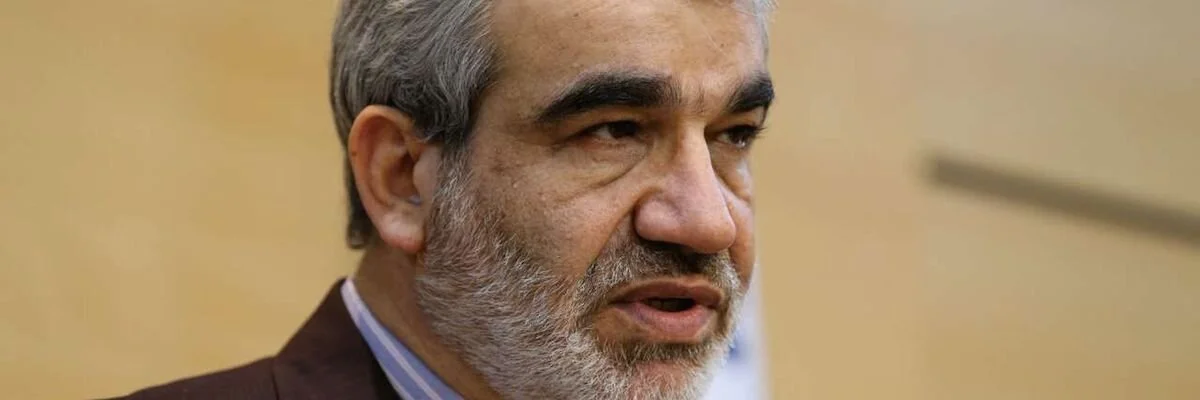
"We don't consider ourselves immune from criticism. We may also accept that mistakes have been made in the past," said Guardian Council spokesman Abbas Ali Kadkhodaee.
"But for the next legislative elections we are trying to reduce our mistakes and respect the rights of candidates."
Kadkhodaee was speaking to AFP on the eve of the opening on Sunday of the registration of candidates for the parliamentary election to be held on February 21.
The Guardian Council, which is under the control of ultra-conservatives, is responsible for organising and monitoring elections in Iran, including vetting candidates.
"If we insist on enforcing the law, we'll be able to satisfy as many candidates as possible," said Kadkhodaee.
In past elections, the council has faced accusations in Iran, particularly by reformists, of barring candidates more on political than constitutional grounds.
In November, President Hassan Rouhani, a moderate conservative, called on the council to stick to the letter of the law in view of the forthcoming election.
At Iran's last parliamentary election in February 2016, the council authorized 6,229 candidates for the 290 seats at stake—just over 51 percent of those who sought to stand.
In the interview, Kadkhodaee said a higher number of successful candidates should also lead to a "higher participation rate".
The opening of the registration period, which runs until Saturday, comes two weeks after around 100 cities and towns in sanctions-hit Iran saw protests against a shock fuel price hike that turned violent.
Authorities say they have restored calm after "rioting" backed by enemies of the Islamic republic, including the United States, Israel and Saudi Arabia.
London-based human rights group Amnesty International said 161 demonstrators were killed in a crackdown.
'Unjust Economic Sanctions'
But Iran's deputy interior minister, Jamal Orf, said such figures were "exaggerated", in remarks published on Saturday by state news agency IRNA.
For Kadkhodaee, the unrest was not a sign of the rejection of the political system of the Islamic republic.
The people would "continue to support the country despite the difficulties, as they have patiently endured the unjust economic sanctions imposed by Western countries," he said.
They would "continue to support the Iranian political system", he added.
Iran's economy has been battered since last year when the United States withdrew from a landmark 2015 nuclear deal and began reimposing crippling sanctions.
The International Monetary Fund expects the country's economy to shrink by 9.5 percent this year.
"Sometimes the participation rate can be low when the people are not happy with the country's economic situation," said Kadkhodaee.
"But we are sure that we will have a good participation rate, even if it is lower than it may have been in the past," said the Guardian Council spokesman.
"Generally in Iran, the participation rate is between 50 and 70 percent, depending on the economic and social situation in the country," he told AFP.
"Even if the turnout is low, it does not endanger the Iranian political system. We know that there are ups and downs depending on elections.
"Personally I expect and hope that the rate will be higher than 50 percent."
Photo IRNA