
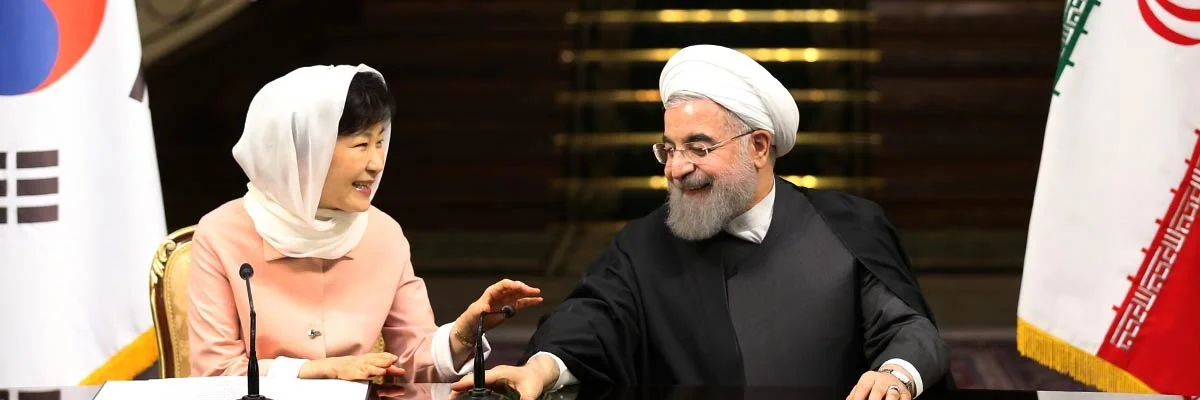
Iran Hails Oil-For-Goods Deal With South Korea
◢ Iran said Saturday it had finalized a deal with South Korea to trade oil for goods, skirting renewed US sanctions. "A mechanism has been devised for returning oil export revenues from South Korea, by which Iran's oil export revenue will be bartered with imported goods," Hossein Tanhayi, head of the Iran-South Korea chamber of commerce, told state news agency IRNA.
Iran said Saturday it had finalized a deal with South Korea to trade oil for goods, skirting renewed US sanctions.
"A mechanism has been devised for returning oil export revenues from South Korea, by which Iran's oil export revenue will be bartered with imported goods," Hossein Tanhayi, head of the Iran-South Korea chamber of commerce, told state news agency IRNA.
Washington unilaterally reimposed a crippling oil embargo on Iran last month following its withdrawal in May from a landmark 2015 nuclear deal.
South Korea—a close political ally of the United States—has cut Iranian oil purchases to zero from an estimated 285,000 barrels per day in the first six months of the year, according to Bloomberg figures.
The sanctions also target Iran's banking sector and its ability to bring dollars into the country, but leave open the possibility of trade in goods.
Tanhayi did not give details of the mechanism, but said a "joint fund" could be opened between their respective central banks.
South Korea is Iran's third largest trade partner after China and the United Arab Emirates.
Bilateral trade has dropped from USD 12 billion in 2017 to USD 5.7 for the first
10 months of 2018, according to the chamber of commerce.
Photo Credit: IRNA
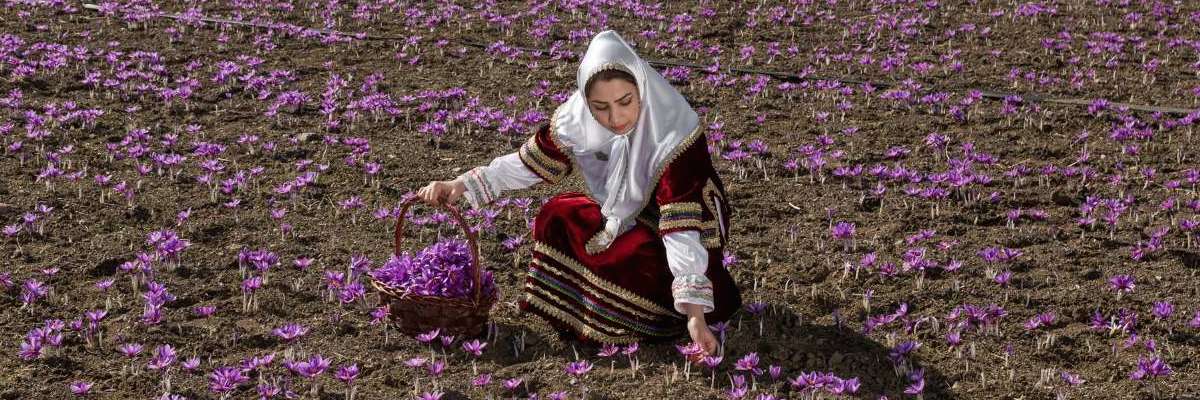
Iran's Saffron Seeks Global Recognition
◢ The laborers edge their way across a field of bright purple flowers gathering up the world's most expensive spice, a bounty that makes this dusty corner of Iran a crucial part of global cuisine. The delicate purple leaves of the Crocus sativus plant hold just three or four of the even more delicate red stamen, better known as saffron, that sprouts for just 10 days a year.
The laborers edge their way across a field of bright purple flowers gathering up the world's most expensive spice, a bounty that makes this dusty corner of Iran a crucial part of global cuisine.
The delicate purple leaves of the Crocus sativus plant hold just three or four of the even more delicate red stamen, better known as saffron, that sprouts for just 10 days a year.
These tiny filaments are currently selling in local markets for 90 million rials per kilo—about USD 700 on Iran's volatile exchanges—and perhaps four times higher abroad.
The government says more than 90 percent of the world's saffron grows from the hard soil in Khorasan province of northeastern Iran—a figure corroborated by France's specialist institute of agriculture and fishing FranceAgriMer—eventually finding its way into Spanish paellas, Indian curries, Swedish saffron buns and much more.
India is a distant second, followed by Greece, Morocco, Azerbaijan, Afghanistan and Spain, according to a FranceAgriMer report in 2013.
The star producer in Iran is the small town of of Torbat-e Heydariyeh, about 700 kilometers (435 miles) east of Tehran—which accounts for a third of global production, according to FranceAgriMer.
But poor marketing means Iran has not always won the credit it deserves as the home of saffron, having mostly exported it wholesale to other countries who label it as their own.
“All the cultivation is done here, but the marketing and sales is done elsewhere," local parliament member Saeid Bastani told AFP.
"The people of the world should know that all saffron—of any brand in any market in the world—is Iranian whether it says Spain, Italy or Switzerland," he added with just a sprinkle of patriotic exaggeration.
The government is working with local businesses and farmers to fix the problem.
From his swish new factory on the outskirts of Mashhad, Ali Shariati, CEO of Novin Saffron, sends out around 15 tonnes of high-grade saffron to world markets each year and is spearheading "Made in Iran" efforts.
It's tricky because the major markets each have their own saffron needs that require specific packaging and branding—Spain wants powder for paella, Britain likes entire threads for Indian cuisine, Sweden likes tiny capsules for seasonal saffron treats.
"We have to keep innovating and adapting so we can compete with the marketing in other countries," said Shariati.
Drought Migration
Other issues are forcing innovation on the industry—most pressingly, the devastating drought that has hit Iran's dry regions for the past two decades.
Saffron plants require much less water than many other crops, but the drought is still causing a migration northwards.
"The land being cultivated is gradually moving north, but that means they're moving into wetter regions and that's no good because the quality is better in dry areas," said Amin Rezaee, a farmer in the heart of saffron country—around two hours' drive south of Mashhad.
Like most farmers, he has been sucking water out of the ground to water his land, but now realizes he must invest in more sophisticated irrigation systems if he wants it to survive.
"It's a problem that people are irrigating in traditional ways. They must start to invest in modern methods," he said.
At his factory, Shariati said the problem is easily solvable with better education and support for villagers, which could boost Iran's production from 400 to 1,000 tonnes per year.
The biggest issue for farmers, he recognized, was navigating Iran's nightmarish banking sector, which is notoriously reluctant to lend to small businesses.
So under a new "fair trade" scheme his firm now organizes loans on farmers' behalf, bulk-buys equipment at cheaper prices, and provides education on farming techniques.
"We're educating at least 20,000 farmers and we have guaranteed purchases contracts with 4,000," he said.
"We want them to deliver more organic saffron and improve their lives at the same time."
‘Salt, Pepper, Saffron'
The other obstacle is Iran's struggling economy, which has lately seen wild fluctuations in the currency, in part due to US sanctions.
"The price of bulbs, fertilizer and laborers have all trebled this year, but the price of saffron has only doubled," said Mohamad Jafari, whose family has been selling saffron in the small town of Torbat-e Heydariyeh for half a century.
That is good for exports, but another blow for Iranians hit by soaring prices.
Still, most people in the saffron trade remain upbeat.
International sales have been boosted in the past five years by increasing interest from China, and foodstuffs are protected from US sanctions—making it a priority export for the government.
"The biggest problem with saffron is that people don't know about saffron," said Shariati.
“We want them to think 'salt, pepper, saffron'."
Photo Credit: IRNA
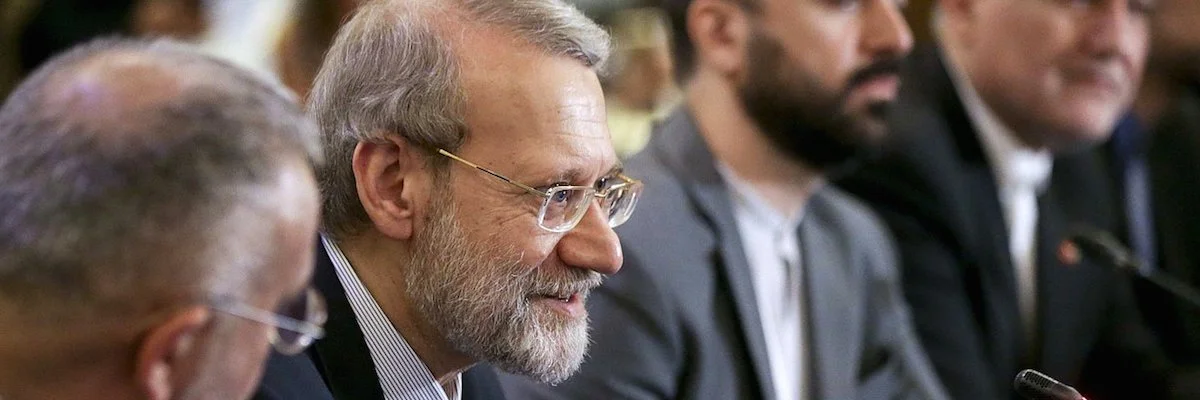
Iran Vows to Fight Trump's Israel-Palestinian Deal
◢ Iran is determined to fight against US Donald Trump's anticipated Israel-Palestinian peace plan, parliament speaker Ali Larijani said Tuesday according to semi-official news agency ISNA. Trump has dubbed his administration's long-awaited plan the "ultimate deal.” which has already unsettled the Palestinians although no details have yet been disclosed.
Iran is determined to fight against US Donald Trump's anticipated Israel-Palestinian peace plan, parliament speaker Ali Larijani said Tuesday according to semi-official news agency ISNA.
Trump has dubbed his administration's long-awaited plan the "ultimate deal.” which has already unsettled the Palestinians although no details have yet been disclosed.
Speaking in Tehran, Larijani said the "deal of the century" was a "plot" between Iran's arch foe Israel and the United States to establish the Jewish state's domination in the Middle East.
"We will stand against the regime of Israel and won't let this deal take place in the region," Larijani said at an annual conference on Islamic unity.
"If Americans are imposing sanctions on Iran today and are putting pressure on Iran, the reason for it is because Iran has stood against Israel," he added, quoted by ISNA.
Earlier this year, Washington pulled out of the landmark international nuclear accord with Iran and reimposed crippling sanctions on Tehran.
"In order to achieve their objective they try to create new political arrangements in the region," Larijani said of US-Israeli strategy in the Middle East.
The parliament speaker also singled out regional rival Saudi Arabia and the United Arab Emirates (UAE) as he warned countries against normalizing relations with Israel.
Countries in the region "should know that they would not benefit at all by letting (Israeli Prime Minister Benjamin) Netanyahu to their countries", Larijani said.
"People in the region, in any country, regard Israel as a cancerous tumour and hate it," he added.
Saudi Crown Prince Mohammed bin Salman earlier this year reaffirmed his country's "steadfast" support for the Palestinian cause, after coming under fire for saying both Israelis and Palestinians "have the right to have their own land".
Israel has diplomatic relations with just two Arab states—Egypt and Jordan—but Netanyahu has been pushing for broader regional ties.
The Israeli premier travelled to Oman in October, while two of his ministers visited the UAE.
Photo Credit: IRNA
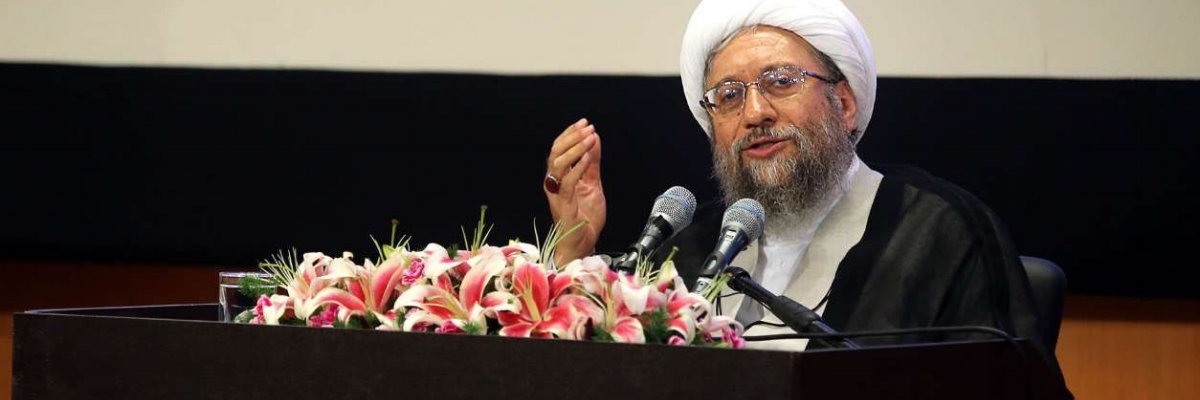
Iran Judicial Chief Warns Over Worker Unrest
◢ The head of Iran's judicial authority on Monday warned restive workers against creating "disorder", while calling on the government to address their problems. Ayatollah Sadegh Larijani spoke amid efforts to resolve a weeks-long strike at a major sugar factory in western Iran and popular discontent over rising prices.
The head of Iran's judicial authority on Monday warned restive workers against creating "disorder", while calling on the government to address their problems.
Ayatollah Sadegh Larijani spoke amid efforts to resolve a weeks-long strike at a major sugar factory in western Iran and popular discontent over rising prices.
"Workers should not allow their demands to become an excuse and an instrument for the enemy and creation of disorder in the country," Larijani said, quoted by the judiciary's news agency Mizan Online.
Acknowledging that many workers are struggling to make ends meet, he said the government must address workers' problems "immediately", according to Mizan.
"The demands of dear workers must be met in a rational atmosphere... with the involvement of the government and the judiciary branch," he said.
But "demands will never be met by turmoil, crisis and actions contrary to public order", he said.
A strike by workers at the Haft Tapeh sugar factory in Shush, a city in Khuzestan province, on Monday entered its 22nd day, according to the reformist ILNA news agency.
Workers are protesting against salary arrears and alleged criminal activity by managers.
The business has around 4,000 workers and was privatized in 2016.
The workers said on Monday that they have been paid their salaries for the period August 23 to 22 September, ILNA said.
ILNA said three out of four workers that it had reported arrested on November 18 have subsequently been freed.
Iran has been hit by strikes over working conditions in several key sectors this year, including education, mines, transport and the steel industry, mainly outside Tehran.
Inflation stands at 36.9 percent, according to the latest monthly data published by the central bank.
Photo Credit: IRNA
Qatar Airways to Expand Iran Flights Despite Sanctions
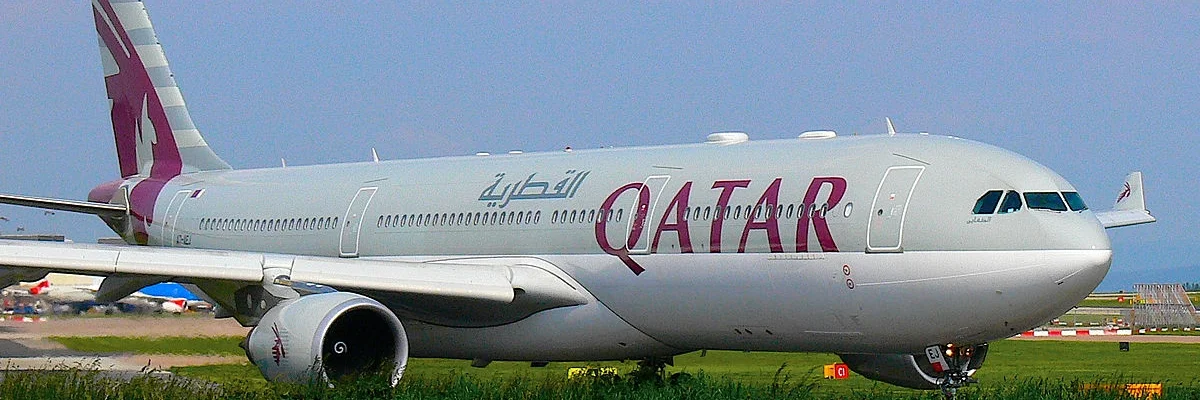
◢ Qatar Airways announced Monday it is expanding operations in Iran, despite US sanctions on the Islamic republic and a Gulf diplomatic rift over accusations Doha was too close to Tehran. The carrier will begin twice-weekly flights to Isfahan in February 2019 and increase existing services to Shiraz and Tehran in January 2019, it said in a statement.
Qatar Airways announced Monday it is expanding operations in Iran, despite US sanctions on the Islamic republic and a Gulf diplomatic rift over accusations Doha was too close to Tehran.
The carrier will begin twice-weekly flights to Isfahan in February 2019 and increase existing services to Shiraz and Tehran in January 2019, it said in a statement.
"These latest launches are further evidence of Qatar Airways' commitment to Iran," said Akbar al-Baker, the airline's group chief executive.
Last month, Baker said services to Iran would continue despite a tightening economic and political squeeze on the Islamic republic by Washington.
The United States said it would impose sanctions on any American or foreign company that continues to do business with Iran, prompting some major airlines, including Air France, KLM and British Airways, to stop flights to Iran.
A first tranche of US punitive measures were introduced in August after Washington withdrew earlier this year from the 2015 international deal aimed at curbing Tehran's nuclear ambitions.
Coupled with the US sanctions, Qatar is under scrutiny from regional powers over its relationship with Iran.
Since June 5, 2017, Saudi Arabia, the United Arab Emirates, Bahrain and Egypt have imposed a sweeping diplomatic and economic embargo on Qatar.
The four countries accuse Doha of seeking closer ties with Iran, Saudi Arabia's arch-rival, as well as supporting radical Islamist groups.
Qatar, which shares the world's largest natural gas field with Iran, denies the charges, saying its former allies are seeking regime change.
Photo Credit: Wikicommons
Strong Earthquake Rocks Western Iran
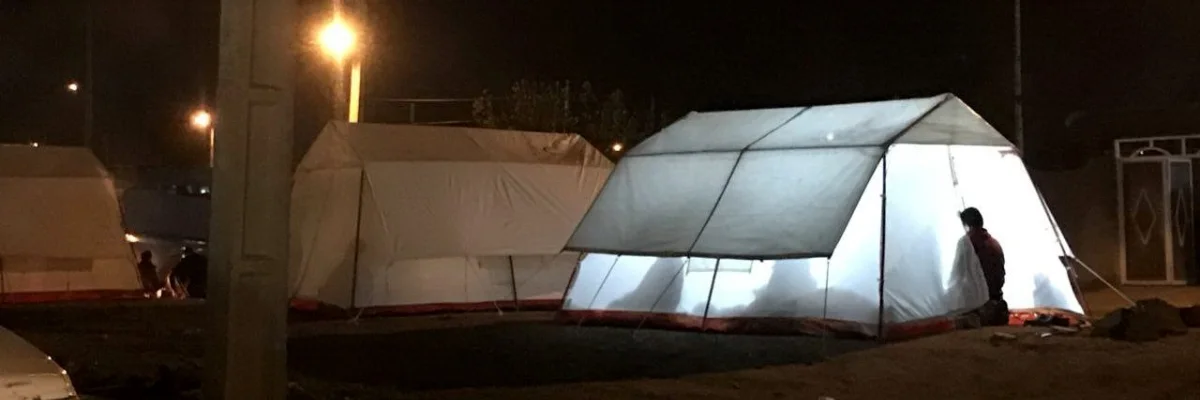
◢ A strong 6.4-magnitude earthquake hit Iran's western province of Kermanshah late Sunday, the country's institute of geophysics said, with local officials reporting some 260 people injured. The epicenter of the quake was 17 kilometers southwest of the city of Sarpol-e Zahab, according to the institute, which said it struck at a depth of 7 kilometers.
A strong 6.4-magnitude earthquake hit Iran's western province of Kermanshah late Sunday, the country's institute of geophysics said, with local officials reporting some 260 people injured.
The epicenter of the quake was 17 kilometers southwest of the city of Sarpol-e Zahab, according to the institute, which said it struck at a depth of 7 kilometers.
At least 260 people were injured in Sarpol-e Zahab and the neighboring city of Gilan-e Gharb, close to the Iraqi border, Kermanshah governor Houshang Bazvand told state television.
"We've had no reports of fatalities so far. The situation is currently under control," Bazvand said.
"There were power and water cuts in both cities, but they lasted only a few minutes."
The head of Iran's emergency medical services Pirhossein Kolivand said in televised comments that most of the injuries were due to "people panicking and fleeing their homes".
The number of those hurt could rise as 18 emergency teams dispatched from neighboring provinces were still assessing the damage, he said.
Sarpol-e Zahab resident Fariba Babayi described the fear that swept the city when the quake hit.
"Lights went out, walls looked as if they were going to fall and all the neighbors were screaming," Babayi, 36, told AFP by telephone.
"I didn't run this time, even though my mother was out calling to me."
Those living in the city are all too familiar with the devastation earthquakes can bring after it bore the brunt of a 7.3-magnitude tremor last November that killed 620 people and injured thousands more.
Partial rebuilding work on Babayi's house finished just a month ago after it was razed in that quake and her family are still paying construction costs.
"We cannot go back to normal life anymore. There are all the bad memories, the trauma people live with," she told AFP.
There were no official details of any damage to buildings and infrastructure after the latest earthquake.
The region was rocked by seven weaker aftershocks an hour after the initial tremor, the strongest of which was magnitude 5.2, the geophysics institute said.
There were also reports that the initial quake was felt across the border in Iraq.
’Just Reconstructed'
Morteza Salimi, an official with the red crescent society of Iran, told semi-official news agency ISNA that the quake rocked areas "just reconstructed" after the tremor a year ago.
The quake last November damaged some 30,000 houses, with huge numbers made homeless at the start of the cold season in the mountainous region.
Local officials said the estimated cost of reconstruction would be billions of dollars, at a time when Iran was struggling to cope with a tanking economy.
There was criticism that new social housing built as part of a scheme championed by ex-president Mahmoud Ahmadinejad had failed to withstand the tremor.
The western province of Kermanshah was also hit by a 6.0-magnitude quake in August that killed two people and injured more than 250.
Iran sits on top of two major tectonic plates and sees frequent seismic activity.
In 2003, a 6.6-magnitude tremor struck the southeast of the country, decimating the ancient mud-brick city of Bam and killing at least 31,000 people.
The country's deadliest was a 7.4-magnitude quake in 1990, that killed 40,000 people in northern Iran, injured 300,000 and left half a million homeless.
Photo Credit: IRNA
Iran 'Strongly Rejects' US Chemical Weapons Accusations
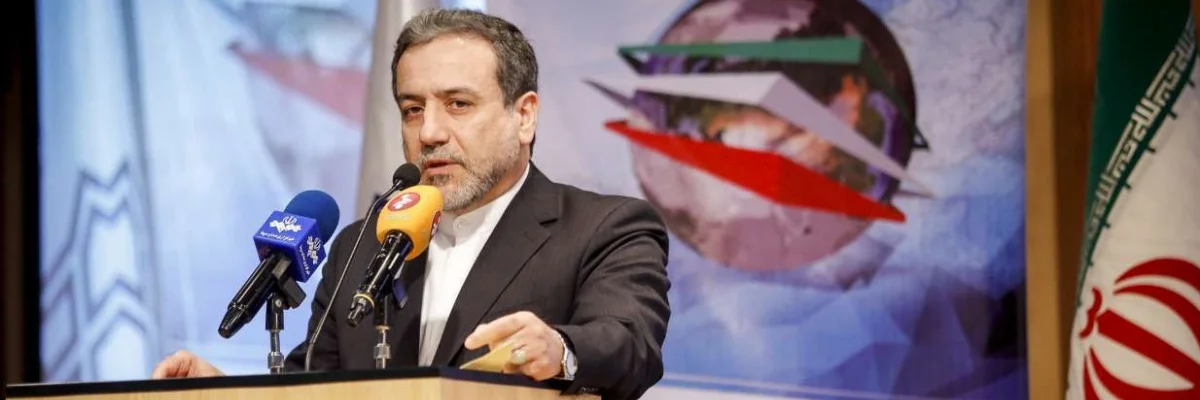
◢ Iran "strongly rejected" on Friday US accusations that it has a chemical weapons program and accused Washington of breaching its own commitments to the international watchdog. The US allegations are the latest salvo against Iran from the administration of President Donald Trump, who earlier this year pulled out of a landmark 2015 nuclear deal between major powers and Tehran and reimposed crippling unilateral sanctions.
Iran "strongly rejected" on Friday US accusations that it has a chemical weapons program and accused Washington of breaching its own commitments to the international watchdog.
The US allegations are the latest salvo against Iran from the administration of President Donald Trump, who earlier this year pulled out of a landmark 2015 nuclear deal between major powers and Tehran and reimposed crippling unilateral sanctions.
"The United States... has made, as is its habit, baseless accusations against the Islamic republic which we strongly reject," the foreign ministry said in a statement.
"Such incorrect and false accusations are due solely to enmity towards the Iranian nation and are intended to deflect international attention from its own broken commitments and continued support for the Zionist regime's chemical arsenal and for terrorist groups."
The US accused Iran on Thursday of failing to declare a chemical weapons program to the global watchdog in breach of international agreements.
US envoy Kenneth Ward told the Organization for the Prohibition of Chemical Weapons in The Hague that Tehran was also seeking deadly nerve agents for offensive purposes.
Iran promised its delegation would provide the OPCW with a detailed reply and in turn accused the US of being the "only member state that has a chemical weapons arsenal and has, until now, not acted on its obligations to destroy it."
Iran is one of the few countries that has been attacked with chemical weapons since the end of World War I in 1918.
Chemical weapons used by Saddam Hussein's Iraq during its 1980-88 war with Iran killed tens of thousands of Iranian soldiers and civilians.
Iran has expressed strong opposition ever since to the use or possession of chemical weapons by any country.
Photo Credit: IRNA
Iran Says No Trust in Trump's US for New Nuclear Talks
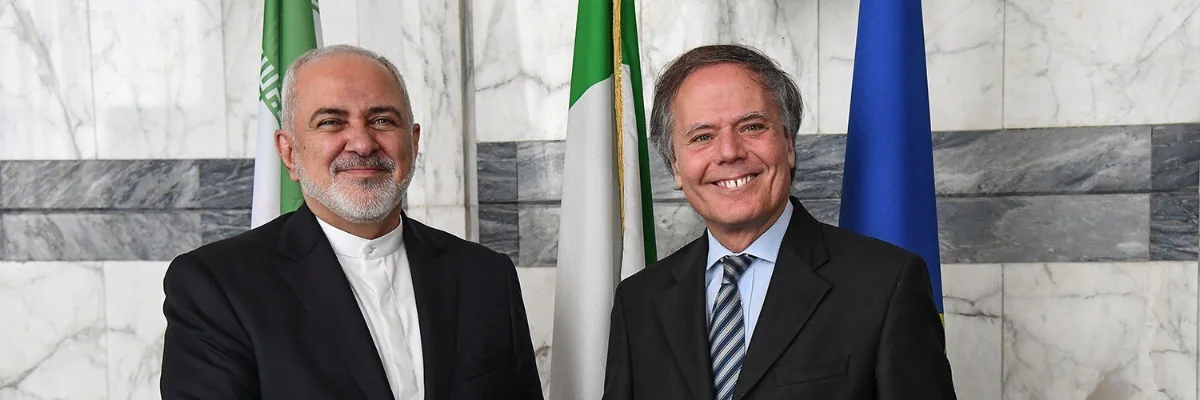
◢ Iran sees no point in fresh nuclear talks with the US without guarantees it will not renege on any deal made, Foreign Minister Mohammad Javad Zarif said on Thursday. US President Donald Trump pulled out of the 2015 Joint Comprehensive Plan of Action (JCPOA) in May, branding the deal to restrict Iran's nuclear work a"disaster.”
Iran sees no point in fresh nuclear talks with the US without guarantees it will not renege on any deal made, Foreign Minister Mohammad Javad Zarif said on Thursday.
US President Donald Trump pulled out of the 2015 Joint Comprehensive Plan of Action (JCPOA) in May, branding the deal to restrict Iran's nuclear work a"disaster.”
Iran continues to stick to the terms of the deal, and European nations also continue to support it and engage with Iran.
But Zarif said that without guarantees, Trump's US could not be trusted for any further talks.
"If we are to make an agreement with the United States, what is the guarantee that the agreement will last after the flight? You remember Canada?" he said, referring to Trump's withdrawal of his signature from a G7 summit closing statement in June after his plane left host Canada.
"How are we to be confident that the signature stays on the paper?" Zarif told the MED Dialogues conference in Rome.
Sweeping new American sanctions against Iran, which came into effect on November 5, have raised fears about whether the deal can survive.
Iran has said the future of the JCPOA would be called into question if it no longer received the economic benefits of the deal.
The deal envisaged sanctions on Iran being lifted in return for it accepting IAEA inspections and limits on its nuclear activities.
"We spent two-and-a-half years, this is not a two-page document, this is not a picture opportunity. This is a 150-page document," Zarif said of the deal, suggesting that Trump's objection was based on his "hatred" for former president Barack Obama.
"Why should we resume another talk just because somebody doesn't like it, just because somebody hates his predecessor? That's not the reason you engage in diplomacy, diplomacy is a serious game and we are ready for a serious game."
The remaining five signatories to the JCPOA—Britain, China, France, Germany and Russia—have backed an EU effort to set up a special payment system in an attempt to continue trade and business ties with Iran.
However, some European companies have already pulled out of Iran. Earlier this month senior EU officials admitted that the mechanism was proving difficult to set up.
Photo Credit: Italian Foreign Ministry

Iran Failed to Declare Chemical Weapons: US
◢ The United States accused Iran on Thursday of failing to declare a toxic arms programme to the global chemical warfare watchdog, in breach of international agreements. US envoy Kenneth Ward told the Organisation for the Prohibition of Chemical Weapons (OPCW) in The Hague that Tehran was also seeking deadly nerve agents for "offensive purposes.”
The United States accused Iran on Thursday of failing to declare a toxic arms programme to the global chemical warfare watchdog, in breach of international agreements.
US envoy Kenneth Ward told the Organisation for the Prohibition of Chemical Weapons (OPCW) in The Hague that Tehran was also seeking deadly nerve agents for "offensive purposes.”
Tehran did not immediately respond to the accusations, which add to tensions with Washington over Iran's nuclear program, terrorism, and the war in Syria.
"The United States has had longstanding concerns that Iran maintains a chemical weapons program that it failed to declare to the OPCW," ambassador Ward told a five-yearly meeting on the body's future.
"The US is also concerned that Iran is pursuing central nervous system-acting chemicals for offensive purposes."
Ward said Iran had failed to declare the transfer of chemical-filled shells sent to Libya in the 1980s despite an appeal by the OPCW to identify their origin. They were found after the death of Libyan leader Moamer Kadhafi in 2011.
"They were clearly of Iranian origin as evidenced by the farsi writing on the boxes containing the artillery shells," he said.
Iran had also failed to declare a "chemical weapons filling capability" despite the discovery of toxic shells and bombs in Libya and also in Iraq.
Finally, Iran had failed to declare riot control agents despite having marketed them at defence expos, he added.
The new chemical warfare allegations come amid growing pressure on Iran from President Donald Trump, who has withdrawn from the 2015 Iran nuclear deal and introduced several rounds of unilateral US sanctions.
Ward accused Iran and its ally Russia of "enabling" the use of chemical weapons by the government of Syrian President Bashar al-Assad "while pursuing their own chemical weapons programs".
Western powers have accused Russia of carrying out an attack using an undeclared Soviet-era nerve agent on former double agent Sergei Skripal in the British town of Salisbury in March.
Member states at the OPCW this week rejected attempts by Russia to block the watchdog's new powers to identify the perpetrators of chemical attacks in Syria and elsewhere.
Previously the OPCW—charged with enforcing the 1997 Chemical Weapons Convention under which all toxic arms will be destroyed—was only able to confirm the use of chemical weapons without assigning blame.
Photo Credit: OPCW

US Sanctions Iran for Shipping Oil to Syria
◢ The US slapped fresh sanctions on Iran Tuesday, accusing it of creating a complex web of Russian cut-out companies and Syrian intermediaries to ship oil to Damascus, which in turn bankrolled Hezbollah and Hamas. The US considers both Hezbollah, a powerful Lebanese militia, and Hamas, the Palestinian Islamist group that controls the Gaza Strip, to be terrorist organizations.
The US slapped fresh sanctions on Iran Tuesday, accusing it of creating a complex web of Russian cut-out companies and Syrian intermediaries to ship oil to Damascus, which in turn bankrolled Hezbollah and Hamas.
The US considers both Hezbollah, a powerful Lebanese militia, and Hamas, the Palestinian Islamist group that controls the Gaza Strip, to be terrorist organizations.
The US Treasury said in a statement that Tehran, "working with Russian companies, provides millions of barrels of oil to the Syrian government" of President Bashar al-Assad.
"The Assad regime, in turn, facilitates the movement of hundreds of millions of US dollars to the Islamic Revolutionary Guard Corps-Qods Force for onward transfer to Hamas and Hezbollah," it said.
The new sanctions also target a Syrian national, Mohamed Alchwicki and his Russia-based company, Global Vision Group. He is accused of playing a central role both in the transfer of oil to Syria and the funneling of money to the militant groups.
The US said his company had illegally received transfers of funds from the Iranian Central Bank via a set of complex transactions.
Intermediary firms involved in the plot to obscure the real destinations of the oil and the money included a subsidiary of the Russian Ministry of Energy, according to the statement.
Secretary of State Mike Pompeo warned on Twitter that there were "grave consequences for anyone shipping oil to Syria, or trying to evade US sanctions on the Islamic Republic's terrorist activities."
He added that Iran's supreme leader Ayatollah Ali Khamenei "should decide if spending the Iranian people's money on the Iranian people is more important than investing schemes to fund Assad, Hezbollah, Hamas and other terrorists."
Photo Credit: Wikicommons
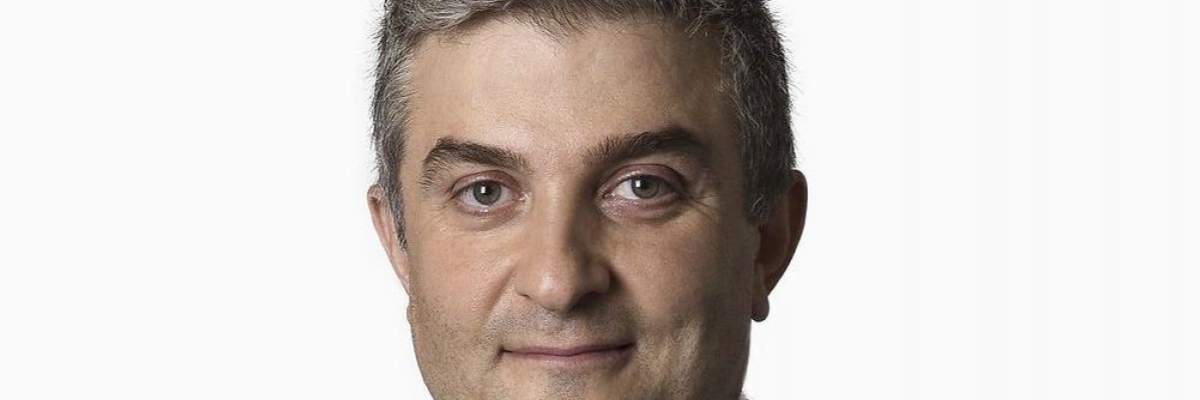
Danish Envoy Returns to Iran After Foiled Assassination Plot
◢ Denmark said Tuesday its ambassador would return to Iran this week, three weeks after he was recalled over Copenhagen's assertion that Tehran tried to kill three Iranian dissidents on Danish soil. "The ambassador is going back to Iran on Thursday," Danish foreign ministry spokeswoman Anne Moller told AFP.
Denmark said Tuesday its ambassador would return to Iran this week, three weeks after he was recalled over Copenhagen's assertion that Tehran tried to kill three Iranian dissidents on Danish soil.
"The ambassador is going back to Iran on Thursday," Danish foreign ministry spokeswoman Anne Moller told AFP.
Denmark has accused Tehran of plotting an "attack" against three Iranians believed to be members of the Arab Struggle Movement for the Liberation of Ahvaz (ASMLA) who live in Denmark.
Tehran blames ASMLA, which it calls a terrorist organization, for an attack on a military parade in the Iranian city of Ahvaz on September 22, spraying the crowd with gunfire and killing 24 people.
Iran has rejected the Danish allegations, claiming Tehran's enemies are conspiring to ruin its relations with Europe.
Copenhagen has been consulting with its European allies about possible sanctions against Tehran.
"In the meeting yesterday (Monday), we received a lot of support. We are still looking at what kind of sanctions can be applied to Iran," Moller said.
"A new phase has begun to counter Iran's unacceptable behavior. Danish diplomacy will focus heavily on supporting these efforts in European capitals, in Brussels and in Tehran," a foreign ministry statement said.
Photo Credit: Danish MFA
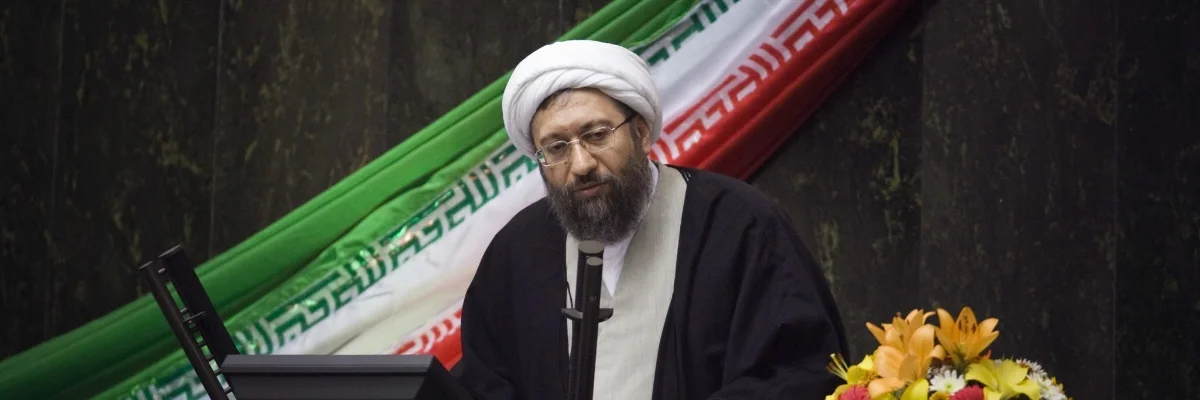
Iran Judiciary Criticizes Money Laundering Claims
◢ Iran's judiciary chief said Monday that government officials must not make accusations of vast money-laundering operations by powerful institutions, which could be exploited by the enemy. The criticism followed statements by Foreign Minister Mohammad Javad Zarif to the Khabar Online news agency last week in which he said: "Money laundering is a reality in our country, and a lot of people are benefitting from it."
Iran's judiciary chief said Monday that government officials must not make accusations of vast money-laundering operations by powerful institutions, which could be exploited by the enemy.
The criticism followed statements by Foreign Minister Mohammad Javad Zarif to the Khabar Online news agency last week in which he said: "Money laundering is a reality in our country, and a lot of people are benefitting from it."
Zarif said "thousands of billions" of rials were being laundered by unnamed organizations in Iran, and that these groups were behind efforts to block new laws against money laundering and terrorist financing.
"If there is huge money laundering in the country, why did you not report this to the judiciary?" said Sadegh Larijani, judiciary chief, in a speech on Monday, according to the semi-official ISNA news agency.
"The enemy's best tool is economic pressure... In such a situation officials are expected not to make two-sided statements that could be misused by the enemy," he added, without naming Zarif.
The government introduced four new laws this year aimed at meeting demands set by the Financial Action Task Force (FATF), which monitors global efforts to counter money laundering and terrorist financing.
Conservatives groups have attacked the bills, saying they would undermine Iran's ability to support allied militant groups in the region, such as Lebanon's Hezbollah.
But Zarif said wealthy groups were also involved because they opposed greater financial transparency.
"There are special interests behind some of these concerns and propaganda,"
he said.
"I don't aim to pin this to any certain organization, but those places that do launder thousands of billions are certainly financially capable of spending a few hundred billion on propaganda and psychological operations in the country," he added.
Larijani hit back on Monday, saying: "The authorities should not say things that drop like a dagger into the heart of the system."
Iran is alone with North Korea on the FATF blacklist, but the Paris-based organization has suspended counter-measures since June 2017 while it works on reforms.
One bill on the mechanics of monitoring and preventing terrorist financing was signed into law in August.
The remaining three have been approved by parliament but have been held up by higher authorities that oversee legislation.
Photo Credit: IRNA
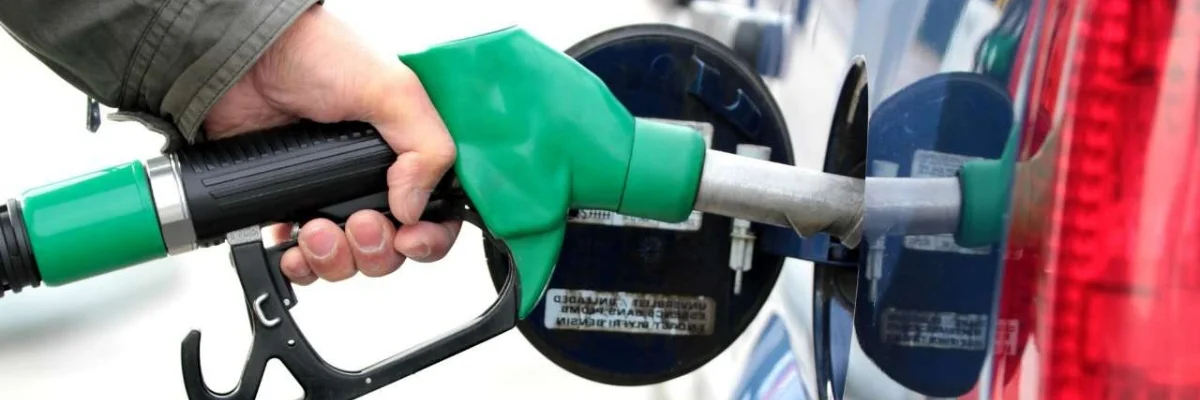
Iran to Cap Petrol Sales to Curb Smuggling
◢ Iran is reintroducing fuel cards that will cap petrol purchases in a bid to combat rampant smuggling, state media reported on Tuesday. Smuggling has boomed in recent months as the rial has plummeted against the dollar in the face of the reimposition of crippling US sanctions following Washington's withdrawal from a landmark 2015 nuclear deal between major powers and Tehran.
Iran is reintroducing fuel cards that will cap petrol purchases in a bid to combat rampant smuggling, state media reported on Tuesday.
Smuggling has boomed in recent months as the rial has plummeted against the dollar in the face of the reimposition of crippling US sanctions following Washington's withdrawal from a landmark 2015 nuclear deal between major powers and Tehran.
The Islamic republic has some of the most heavily subsidized petrol in the world, with a pump price of around USD 0.08 per litre (less than two US cents per gallon).
Low fuel prices have led to high consumption, with Iran's 80 million population buying an average of 90 million litres (20 million gallons) per day, according to state news agency IRNA.
They have also fueled very high levels of smuggling—estimated at around 10 to 20 million liters (2.2 million - 4.5 million gallons) per day, IRNA said.
Much of it heads across the border to Pakistan, where petrol costs 10 times, and diesel around 40 times, as much as in Iran.
Fuel cards were first introduced in 2007 with a view to reforming the expensive subsidies system. High limits were set—180 litres (40 gallons) per day for the average driver—since the focus was on curbing large-scale smuggling.
The state-run National Iranian Oil Products Distribution Company said drivers would have three weeks to register for the new electronic cards setting a daily limit on petrol purchases.
The limit has not yet been set, but was introduced "in order to prevent fuel smuggling," the firm said in a statement on Monday.
It said the return to a card system "does not mean there will be fuel rationing and price hikes."
But Oil Minister Bijan Namdar Zanganeh has said a price increase may be necessary in the coming year—a move that remains highly sensitive in a country that boasts the world's second-largest reserves of gas and fourth-largest of oil.
Photo Credit: IRNA
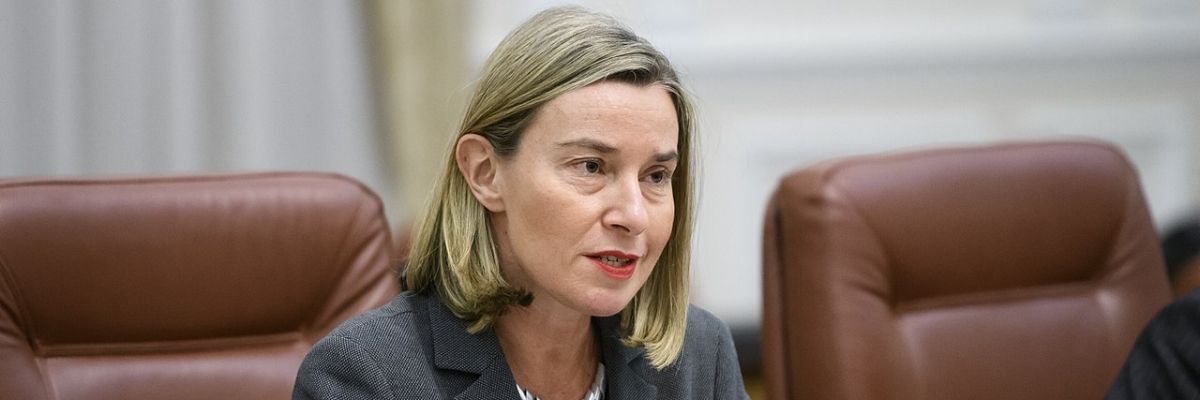
EU to Consider Sanctions on Iran for Failed Attack Plots
◢ EU foreign ministers on Monday agreed to examine possible sanctions against Iran over two foiled attacks in Europe blamed on Iranian intelligence, as demands grow for tough action against Tehran. France has hit two suspected Iranian agents with asset freezes over a plot to bomb a rally near Paris, while Denmark has called for a coordinated EU response to a foiled murder bid on its soil.
EU foreign ministers on Monday agreed to examine possible sanctions against Iran over two foiled attacks in Europe blamed on Iranian intelligence, as demands grow for tough action against Tehran.
France has hit two suspected Iranian agents with asset freezes over a plot to bomb a rally near Paris, while Denmark has called for a coordinated EU response to a foiled murder bid on its soil.
The move came as 150 MEPs slammed the bloc's "silence" over the plots as well as human rights abuse in Iran and called for steps to hold Tehran to account.
Up to now the EU has trod cautiously on Iran as it seeks to save the beleaguered nuclear deal with Tehran, after the US withdrew from it earlier this year and reimposed sanctions.
Copenhagen has been consulting EU partners about economic sanctions against Tehran after Danish intelligence accused Iran of planning to murder three Iranian dissidents in Denmark.
EU foreign ministers meeting in Brussels discussed the incident and decided to press ahead with work on sanctions.
"What happened (in Denmark) was completely unacceptable and this was clearly stated by all of us," EU foreign policy chief Federica Mogherini told reporters.
"The council will take forward some work to explore appropriate targeted responses in light of what has happened in Danish territory."
The measures could include adopting at EU level the sanctions France imposed last month on two suspected Iranian agents and others from Iran's ministry of intelligence and security.
France's security services concluded that the head of operations at the Iranian intelligence ministry had ordered a plot to bomb a rally of the People's Mujahedeen of Iran (MEK) opposition group in a suburb of Paris in June.
Iran has been blamed in the past for attacks in countries as far afield as Argentina, India and Thailand, and French officials say Tehran is also suspected of carrying out "several" assassinations of opposition figures in Europe since 2015.
Photo Credit: Wikicommons
Societe Generale Fined $1.3 Bn for US Sanctions Violations
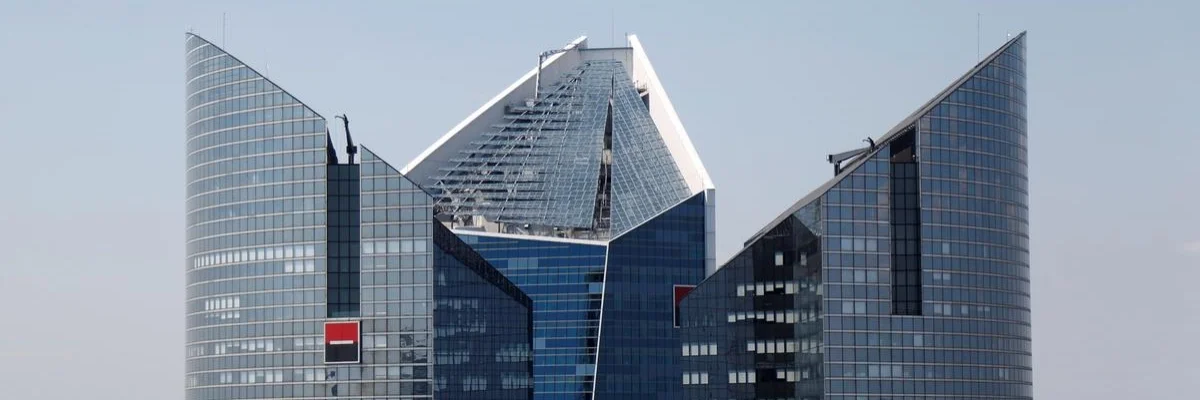
◢ US officials fined Societe Generale USD 1.3 billion after charging the French bank with violating US sanctions on Cuba, Iran and other countries in a criminal settlement unveiled Monday. The financial penalty is the second largest ever on a financial institution for violating US sanctions.
US officials fined Societe Generale USD 1.3 billion after charging the French bank with violating US sanctions on Cuba, Iran and other countries in a criminal settlement unveiled Monday.
The financial penalty is the second largest ever on a financial institution for violating US sanctions, said the Department of Justice, which was joined in the action by the Federal Reserve, US Treasury Department and New York authorities.
"Today, Societe Generale has admitted its willful violations of US sanctions laws—and longtime concealment of those violations—which resulted in billions of dollars of illicit funds flowing through the US financial system," said Geoffrey Berman, US Attorney for the Southern District of New York, outlining terms of a three-year probation period for the French bank under a deferred prosecution agreement.
"Other banks should take heed: Enforcement of US sanctions laws is, and will continue to be, a top priority of this office and our partner agencies."
The bank from 2004 through 2010 engaged in more than 2,500 Cuba-related transactions through US financial institutions, involving close to $13 billion that should have been blocked or stopped for investigation under US sanctions, the Justice Department said.
Societe Generale officials avoided detection by "making inaccurate or incomplete" notations on messages and "engaged in a deliberate practice of concealing the Cuban nexus of US dollar payments," the department said in a statement.
Federal prosecutors said senior bank officials were aware that the transactions breached US law but did not disclose the matter to US authorities. The probe was triggered by the blocking by other US financial institutions in 2012 of two transactions that Societe Generale processed on behalf of a Sudanese sanctioned entity, according to the Justice Department.
The New York Department of Financial Services, another agency involved in the settlement, also hit Societe General for undertaking transactions to Iran in an "improperly, non-transparent manner" involving more than USD 12.5 billion.
Societe Generale said it had already hired additional compliance officers, enhanced training and reorganized the teams for sanctions and embargoes compliance. The bank announced in September that it expected the fine and had set aside funds to pay it.
"We acknowledge and regret the shortcomings that were identified in these settlements and have cooperated with the US authorities to resolve these matters," said Societe Generale Chief Executive Frederic Oudea.
"We aim to meet the highest standards of compliance and ethics, in the best interest of our clients and of all of our stakeholders."
Photo Credit: Wikicommons
Cuba Eyes EU's Planned Iran Sanctions-Busting System
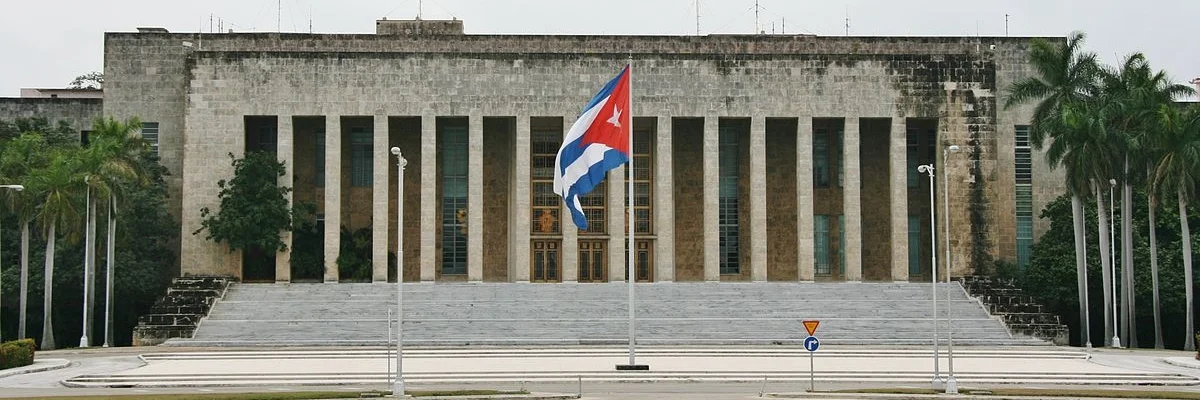
◢ Cuba hopes a special payment system the EU is creating to get round US sanctions on Iran will help it sidestep its own Washington-imposed trade embargo, a senior official told AFP on Monday. Brussels is working on a "special purpose vehicle" (SPV)—a system for clearing payments to Iran—-as it seeks to keep trade flowing despite Washington reimposing sanctions after ditching the 2015 nuclear deal with Tehran.
Cuba hopes a special payment system the EU is creating to get round US sanctions on Iran will help it sidestep its own Washington-imposed trade embargo, a senior official told AFP on Monday.
Brussels is working on a "special purpose vehicle" (SPV)—a system for clearing payments to Iran—-as it seeks to keep trade flowing despite Washington reimposing sanctions after ditching the 2015 nuclear deal with Tehran.
The EU is desperate to keep the nuclear deal alive and hopes the SPV will persuade Tehran to stay on board by giving companies a way of trading with Iran without fear of US sanctions.
The SPV was announced in September but has made little headway, with several countries saying they will not host it, fearful of repercussions from the administration of US President Donald Trump.
Nevertheless, senior Cuban foreign ministry official Rodolfo Reyes told AFP after talks with EU officials that Havana was interested in the project.
"There was a mention of this instrument and we of course also raised the interest that we would have in any solution of this kind that would allow European companies to become increasingly involved in foreign investment and bilateral trade with Cuba," Reyes told AFP.
Despite a thawing of ties under Trump's predecessor Barack Obama, the US still has a sweeping economic embargo in force against Cuba that dates back to the 1960s.
The SPV would in theory allow Iran to keep selling oil and European companies to continue doing business in the country despite the US sanctions.
But it has proved difficult to get the project moving and some analysts doubt it would prove to be effective in any event.
Many major international companies have announced they are pulling out of Iran, and earlier this month the US announced a fresh set of sanctions aimed at cutting off Iran's banks from international finance and significantly cutting its oil exports
Photo Credit: Wikicommons
Impeached Economy Minister to Head Iran Oil Firm
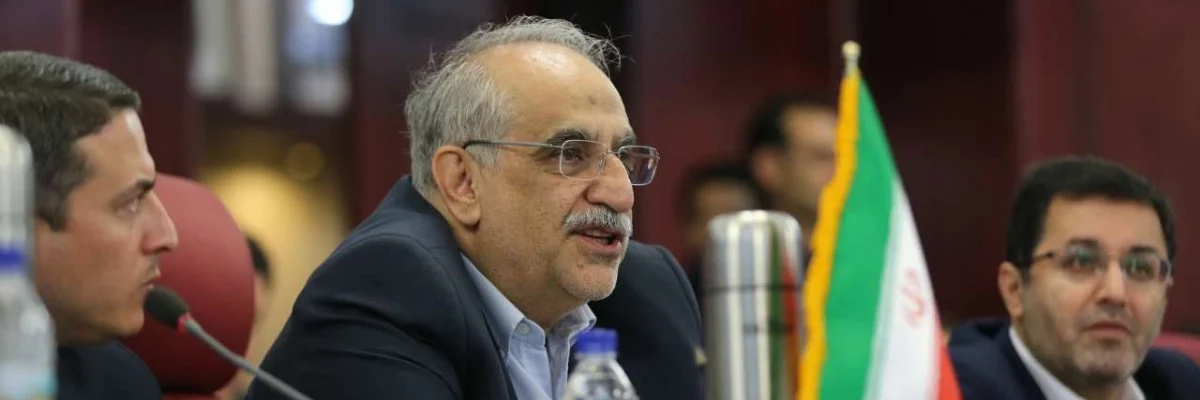
◢ Iran's former economy minister, impeached less than three months ago, will head the national oil company as it works to evade renewed US sanctions, local media reported Monday. Masoud Karbasian, 67, was impeached by parliament on August 26 after only a year in the job, over his handling of the country's economic downturn.
Iran's former economy minister, impeached less than three months ago, will head the national oil company as it works to evade renewed US sanctions, local media reported Monday.
Masoud Karbasian, 67, was impeached by parliament on August 26 after only a year in the job, over his handling of the country's economic downturn.
In a short statement run by the state-run Iran newspaper Monday, he vowed to "use four decades of experience... to overcome the sanctions crisis."
Karbasian takes over the National Iranian Oil Company (NIOC) at a crucial moment following the US oil embargo that was reimposed on November 5.
Although he kept a very low profile during his tenure as economy minister, he was praised in the reformist Sazandegi newspaper on Monday for his "anti-corruption" stance—particularly during an earlier stint as head of customs.
But there was some confusion over his appointment, since he is in breach of a new law barring anyone over 60—the age of retirement—from public office.
Parliament passed the law in September, and it was used to remove outgoing NIOC head Ali Kardor, who is three years younger than Karbasian, according to several newspapers.
The Iran daily said Karbasian's age was overlooked due to "sanctions and the gravity of sustaining oil sales.”
The US reimposed sanctions on Iran after deciding in May to abandon a landmark multi-lateral deal signed in 2015 over the Islamic Republic's nuclear program.
Temporary exemptions have been granted to several key customers of Iran's oil, including China and India.
But Iranian authorities are seeking alternative and clandestine methods to keep oil flowing as Washington remains determined to eventually force its exports down to zero.
The unaffiliated Haft-e Sobh newspaper described the new NIOC chief as "special agent: Masoud Karbasian".
It said his appointment was approved by the Council for Special Economic Measures, set up during the previous sanctions period between 2010 and 2015, headed by President Hassan Rouhani, and whose decisions are taken in consultation with supreme leader Ayatollah Ali Khamenei.
Photo Credit: IRNA
Four Arrested in Iran Sugar Protests
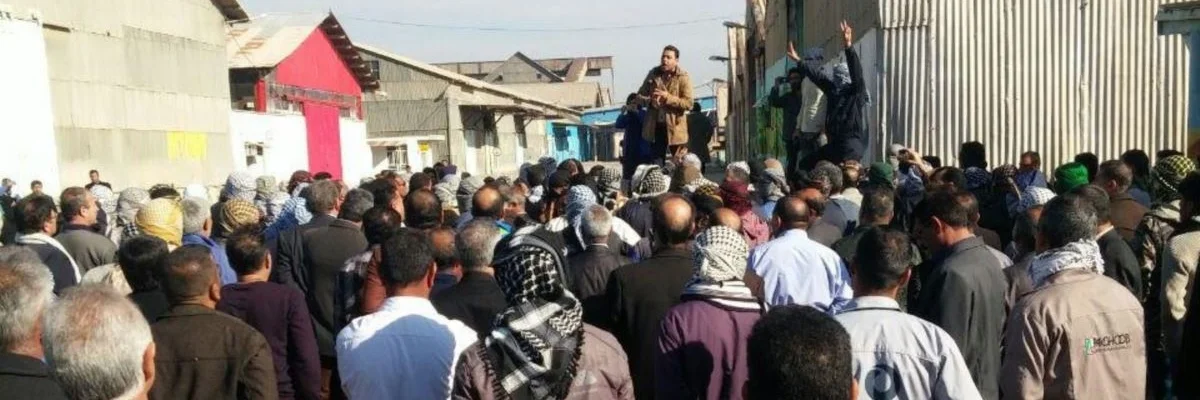
◢ Four people were arrested in southwestern Iran on Sunday as locals joined striking sugar workers in mounting protests over unpaid wages and alleged criminal activity by managers, the official IRNA news agency said. Protests by workers from the Haft Tapeh sugar company in Shush, a city in Khuzestan province, have been building in recent days.
Four people were arrested in southwestern Iran on Sunday as locals joined striking sugar workers in mounting protests over unpaid wages and alleged criminal activity by managers, the official IRNA news agency said.
Protests by workers from the Haft Tapeh sugar company in Shush, a city in Khuzestan province, have been building in recent days.
IRNA said locals had joined the demonstrations on Sunday, without giving numbers.
Those arrested included two local workers' representatives and a female reporter, it added.
Iran has seen multiple strikes and protests in recent months over working conditions and unpaid wages in a range of sectors, including steel, education, mining and transport.
Haft Tapeh, which employs about 4,000 people, has been hit with multiple protests over mismanagement and alleged criminality since the firm was privatised in 2016.
The head of Iran's privatization organization Mir Ali Ashraf Pouri-Hosseini said Sunday that several board members had been arrested "over forex issues and other ambiguities,” according to the Hamshahri newspaper.
Haft Tapeh's managing director is "on the run", lawmaker Hossein Naghavi-Hosseini said following a meeting with the judiciary, according to IRNA.
There were reports the government was preparing to pay two months of delayed wages, but workers remained sceptical.
"For years we have repeatedly heard officials saying that our demands have been met but nothing has happened. We will continue our gatherings until it happens," an unnamed protester told the semi-official ILNA news agency.
Photo Credit: Citizen Journalist
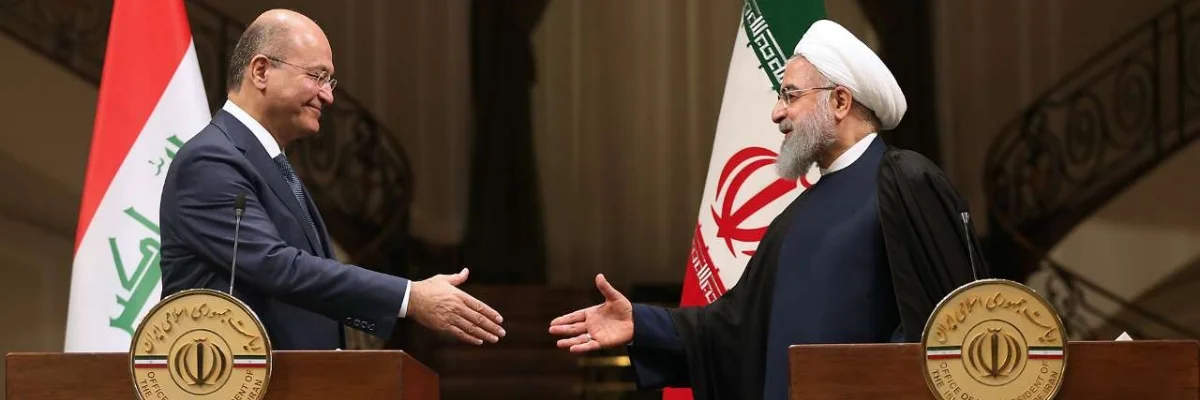
Iraq President Visits Iran
◢ Iraq's new President Barham Saleh made his first official visit to neighbouring Iran on Saturday, calling for "a new order in the region.” Saleh met his counterpart Hassan Rouhani to discuss trade, transport links and efforts to tackle dust pollution that plagues areas on both sides of the border.
Iraq's new President Barham Saleh made his first official visit to neighbouring Iran on Saturday, calling for "a new order in the region.”
Saleh met his counterpart Hassan Rouhani to discuss trade, transport links and efforts to tackle dust pollution that plagues areas on both sides of the border.
"It is now time for a new order in the region that would meet the interests of all countries in it," Saleh told a Tehran news conference, according to a translation provided by Iran's state broadcaster.
"We believe Iran has an important role to play in this new order," he added.
Saleh, a 58-year-old moderate Kurd, was elected last month to the largely ceremonial role of president.
Rouhani said the two countries aimed to boost trade from USD 12 billion to USD 20 billion.
"Security and stability in the whole region is to everyone's benefit. We do not need any foreign interference in the region," Rouhani said.
Iran has been highly influential in Iraq since the toppling of Saddam Hussein in 2003, and was a key partner in pushing back the Islamic State group in recent years.
But Iran has also been blamed for factionalism and poor governance in Iraq and its consulate in the southern city of Basra was burnt to the ground during violent protests earlier this year.
Photo Credit: IRNA
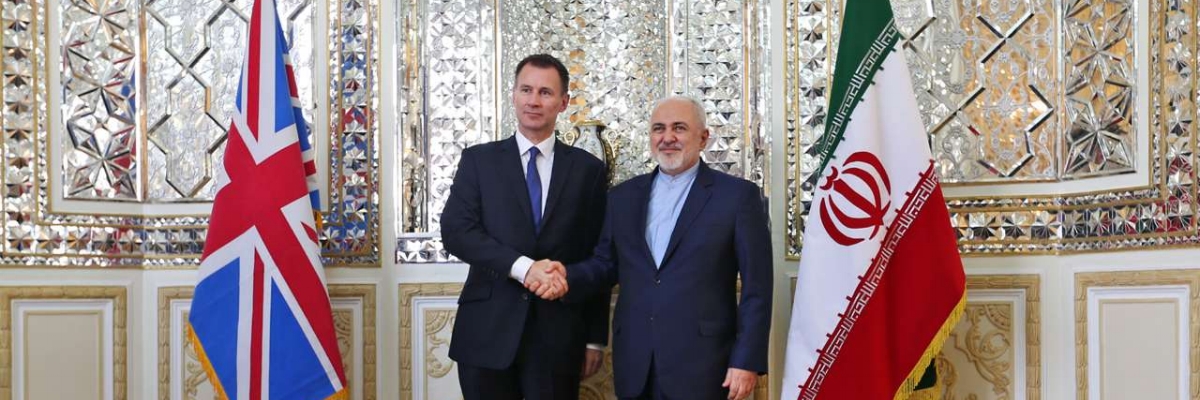
British Foreign Minister Visits Iran for Nuclear Talks
◢ British Foreign Secretary Jeremy Hunt was to visit Iran for the first time on Monday for talks about the nuclear deal and freeing UK nationals held in Iranian jails. Iran has been abiding by the terms of its nuclear deal with global powers, the latest report from the UN atomic watchdog indicated last week, days after fresh US sanctions hit the country.
British Foreign Secretary Jeremy Hunt was to visit Iran for the first time on Monday for talks about the nuclear deal and freeing UK nationals held in Iranian jails.
Iran has been abiding by the terms of its nuclear deal with global powers, the latest report from the UN atomic watchdog indicated last week, days after fresh US sanctions hit the country.
US President Donald Trump has dramatically increased pressure on Tehran, withdrawing from an international agreement aimed at ending its nuclear program and introducing several rounds of unilateral sanctions.
Hunt's visit is the first by a Western foreign minister since the United States withdrew from the nuclear deal.
"The Iran nuclear deal remains a vital component of stability in the Middle East by eliminating the threat of a nuclearized Iran," Hunt said, in a statement issued in London.
"It needs 100-percent compliance though to survive. We will stick to our side of the bargain as long as Iran does.
"But we also need to see an end to destabilizing activity by Iran in the rest of the region if we are going to tackle the root causes of the challenges the region faces."
Hunt was to meet Foreign Minister Mohammad Javad Zarif for talks on European efforts to maintain relief from nuclear-related sanctions.
Hunt was also due to discuss Iran's role in the conflicts in Syria and Yemen, and the ongoing cases of detained British-Iranian dual nationals.
One notable case is that of Nazanin Zaghari-Ratcliffe, who is serving a five-year jail sentence for alleged sedition.
"More than anything, we must see those innocent British-Iranian dual nationals imprisoned in Iran returned to their families in Britain," he said.
"I have just heard too many heartbreaking stories from families who have been forced to endure a terrible separation.
"So I arrive in Iran with a clear message for the country's leaders: putting innocent people in prison cannot and must not be used as a tool of diplomatic leverage."
On Yemen, Hunt was to stress concerns at reports that Iran has supplied ballistic missiles and weapons to the Huthi rebels, his ministry said.
Photo Credit: IRNA