

Iran Responds to Trump Over 'Absurd Insults'
◢ Iran's foreign minister on Tuesday lashed out at Donald Trump over the US president's message to the country on the occasion of its Nowruz Persian New Year celebrations. In his message released by the White House, Trump said: "The Iranian people face another challenge: rulers who serve themselves instead of serving their people."
Iran's foreign minister on Tuesday lashed out at Donald Trump over the US president's message to the country on the occasion of its Nowruz Persian New Year celebrations.
"With millennia of civilization, Iranians have the historical depth to ignore the absurd insults of an arriviste leader; one whose entire command of history, politics and diplomacy can be condensed into 280 characters - but even so, still superior to his juvenile royal stooge," Mohammad Javad Zarif wrote on Twitter, referring to Trump's own tweets.
In his message released by the White House, Trump said: "The Iranian people face another challenge: rulers who serve themselves instead of serving their people."
The US president also denounced Iran's elite Revolutionary Guard. "Twenty-five centuries ago, Darius the Great asked God to protect Iran from three dangers: hostile armies, drought, and falsehood. Today, the Iranian regime's Islamic Revolutionary Guard Corps (IRGC) represents all three."
Since taking office in January 2017, Trump has adopted a tough stance against Iran and repeatedly denounced a landmark deal that Tehran reached with world powers to curb its nuclear program.
Trump said in January that the 2015 deal between Iran and major powers must be "fixed" by May 12 or the United States will walk away.
Photo Credit: Wikicommons
France's Total To Seek Waiver If US Revives Iran Sanctions: CEO
◢ French energy giant Total will push ahead with a $4.8 billion deal to develop an Iranian gas field and will seek a waiver if Washington re-imposes sanctions, the firm's CEO has said. If Washington does walk away from the deal, Pouyanne said, Total will argue that as the project was "awarded prior to that decision during the period of time that we could sign."
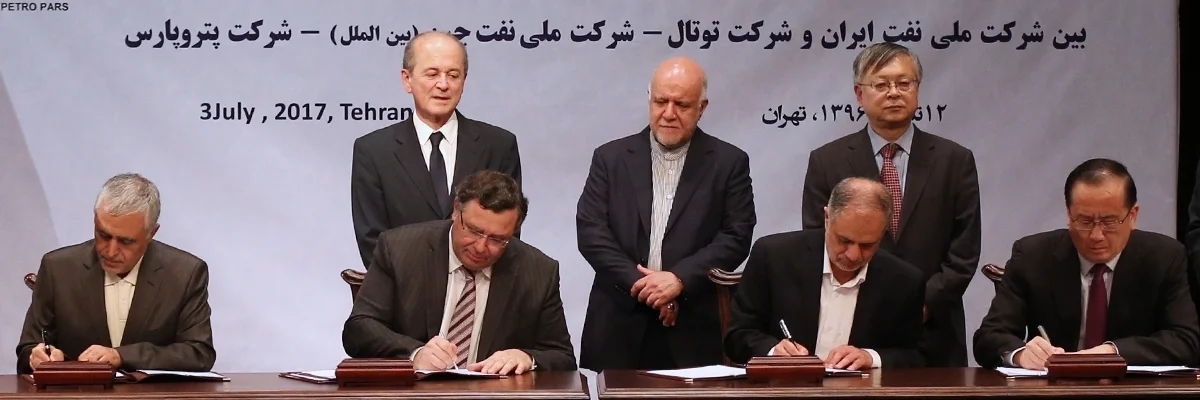
French energy giant Total will push ahead with a $4.8 billion deal to develop an Iranian gas field and will seek a waiver if Washington re-imposes sanctions, the firm's CEO has said.
US President Donald Trump has threatened to withdraw from a 2015 deal curtailing Iran's nuclear program in exchange for sanctions relief, unless it is "improved" by May 12.
"If the US decides to put back the sanctions, we have to look at what the consequences are," Total chief Patrick Pouyanne said in an interview with Abu Dhabi daily The National published Monday.
"Then we will see, either Donald Trump decides to maintain the waivers and we will move on with the project, (or) we will ask for a waiver from the US authorities."
Defying pressure from Washington, Total signed a deal with Iran in July to head up an international consortium to develop Iran's vast South Pars offshore gas field, alongside China National Petroleum Corporation (CNPC) and Iran's Petropars.
In January, Trump demanded changes to what he has called a "terrible" nuclear deal or the United States would withdraw. European parties to the agreement are desperate to save it and have been scrambling to find ways to persuade Trump not to rip it up.
If Washington does walk away from the deal, Pouyanne said, Total will argue that as the project was "awarded prior to that decision during the period of time that we could sign."
That could allow the firm to benefit from a clause allowing the gas agreement to stand.
Photo Credit: IRNA
Iran Rejects Any Change to Nuclear Deal
◢ Iran will not accept any changes to the nuclear deal, a senior official insisted Saturday, after the United States said it was seeking a "supplemental" accord with European powers. Shamkhani, secretary of the Supreme National Security Council, also warned European countries "against the temptation of playing at the same game as the Americans."
Iran will not accept any changes to the nuclear deal, a senior official insisted Saturday, after the United States said it was seeking a "supplemental" accord with European powers.
"We will not accept any changes, any interpretation or new measure aimed at limiting" the 2015 deal between Iran and major powers, said Ali Shamkhani in remarks carried by ISNA news agency.
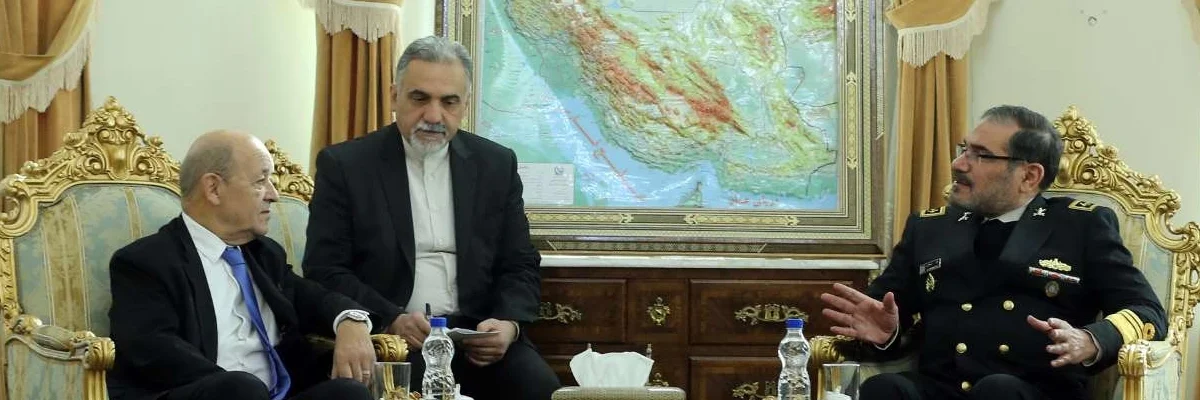
Shamkhani, secretary of the Supreme National Security Council, also warned European countries "against the temptation of playing at the same game as the Americans."
"The ballistic program of the Islamic Republic of Iran, which has a defensive nature, will steadfastly continue," said Shamkhani, who is a close ally of supreme leader Ali Khamenei.
On Friday senior US State Department official Brian Hook said that President Donald Trump wanted to reach a "supplemental" deal with the European signatories to the Iran nuclear deal.
This would cover Iran's ballistic missile programme, its regional activities, the expiration of parts of the nuclear deal in the mid-2020s and tighter UN inspections, Hook said.
"We are taking things one week at a time, we are having very good discussions in London, Paris and Berlin," Hook, recently ousted Secretary of State Rex Tillerson's chief of strategy, said.
"There is a lot we agree on and where we disagree we are working to bridge our differences," he said in Vienna.
The 2015 accord between Iran and the United States, Russia, China, France, Britain and Germany curtailed Iran's nuclear activities in exchange for sanctions relief.
Iran, which according to the UN atomic watchdog has been abiding by the deal since it came into force in January 2016, has repeatedly ruled out any changes to the agreement.
Trump said in January that the nuclear deal must be "fixed" by May 12 or the United States will walk away.
The European parties to the agreement are desperate to save it and have been scrambling to find ways to persuade Trump not to rip it up.
Shamkhani made the remarks as he met Saturday in Tehran with Yusuf bin Alawi, the minister responsible for foreign affairs in Oman, a key Gulf ally of the US with close ties to Iran.
Photo Credit: IRNA
US Seeking 'Supplemental' Iran Deal With European Powers
◢ The US and European powers have had "very good" discussions towards agreeing a "supplemental" accord beyond the Iran nuclear deal by May 12, a senior US official said Friday. This would cover Iran's ballistic missile program, its regional activities, the expiration of parts of the nuclear deal in the mid-2020s and tighter UN inspections.
The US and European powers have had "very good" discussions towards agreeing a "supplemental" accord beyond the Iran nuclear deal by May 12, a senior US official said Friday.
President Donald Trump said in January that the 2015 deal between Iran and major powers must be "fixed" by May 12 or the United States will walk away. Senior State Department official Brian Hook said on Friday after talks in Berlin and Vienna that Trump wants to reach a "supplemental" deal with the European signatories to the agreement by then. This would cover Iran's ballistic missile program, its regional activities, the expiration of parts of the nuclear deal in the mid-2020s and tighter UN inspections, Hook said.
"We are taking things one week at a time, we are having very good discussions in London, Paris and Berlin," Hook, recently ousted Secretary of State Rex Tillerson's chief of strategy, told reporters.
"There is a lot we agree on and where we disagree we are working to bridge our differences," Hook said.
He declined to indicate what would happen if and when such an agreement is reached, saying: "We are not under instructions from the president to go beyond seeking an agreement with our European allies."
The 2015 accord between Iran and the US, Russia, China, France, Britain and Germany curtailed Iran's nuclear activities in exchange for sanctions relief.
Iran, which according to the UN atomic watchdog has been abiding by the deal since it came into force in January 2016, has ruled out any changes to the agreement.
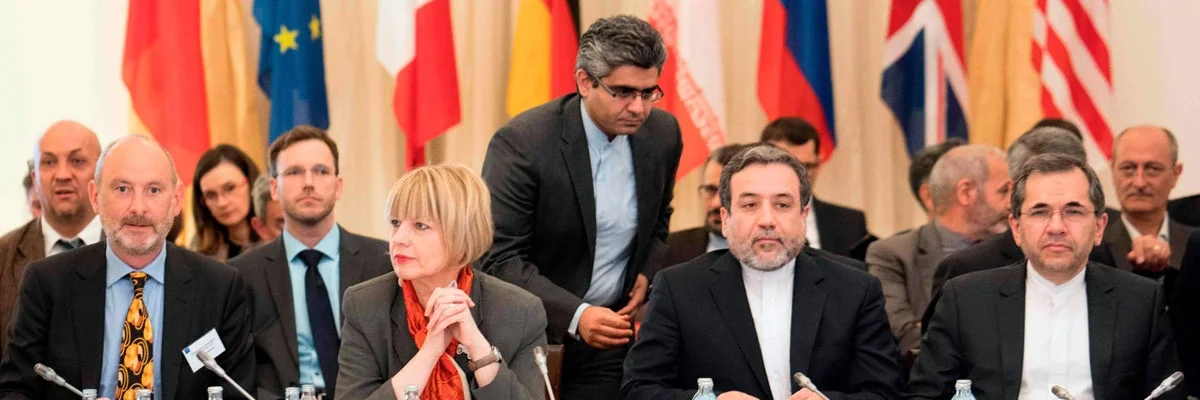
The talks in Vienna on Friday, a regular review of the accord, involved Iran and the six other signatories. Trump's decision this week to replace Tillerson with Mike Pompeo as secretary of state has been widely seen as another bad omen for the agreement.
Tillerson and his erstwhile cabinet ally Defence Secretary Jim Mattis had urged Trump to listen to the Europeans to preserve the agreement. Pompeo, head of the Central Intelligence Agency, is seen as taking a harder line on Iran.
Photo Credit: Wikicommons

If Iran Gets Nuclear Bomb, Saudi Arabia Will Follow: Crown Prince
◢ Saudi Crown Prince Mohammed bin Salman has said if Iran develops a nuclear weapon, Riyadh will follow suit—just days before he arrives in Washington for talks with US President Donald Trump.In an interview with CBS television, parts of which were released Thursday, the upstart Saudi royal likened Iran's supreme leader to Adolf Hitler, warning he could sweep through the Middle East like Germany's Nazis did at the start of World War II.
Saudi Crown Prince Mohammed bin Salman has said if Iran develops a nuclear weapon, Riyadh will follow suit—just days before he arrives in Washington for talks with US President Donald Trump.
In an interview with CBS television, parts of which were released Thursday, the upstart Saudi royal likened Iran's supreme leader to Adolf Hitler, warning he could sweep through the Middle East like Germany's Nazis did at the start of World War II.
"Saudi Arabia does not want to acquire any nuclear bomb, but without a doubt, if Iran developed a nuclear bomb, we will follow suit as soon as possible," Prince Mohammed said in the interview, which will air in full on CBS on Sunday.
Iran's supreme leader Ayatollah Ali Khamenei, he said, "wants to create his own project in the Middle East, very much like Hitler who wanted to expand at the time," said the 32-year-old heir to the throne.
"Many countries around the world and in Europe did not realize how dangerous Hitler was until what happened, happened. I don't want to see the same events happening in the Middle East."
His comments come as the Trump administration threatens to end the Iran nuclear deal, which could leave Tehran free to advance its development of atomic weapons.
Stoking Saudi-Iran Rivalry
Prince Mohammed, the son and heir of King Salman bin Abdulaziz Al Saud, is scheduled to arrive in Washington on Monday ahead of talks with Trump on Tuesday.
The brazen prince, dubbed "MBS", has rocked Saudi Arabia since his father became king in 2015 and named him defense minister.
Last year, he was elevated to crown prince, and is seen as the effective ruler under his 82-year-old father.
His moves have shaken up the kingdom—declaring a liberalization of social mores from the stifling ideology of Wahhabi Islam, and moving to modernize a heavily top-down economy.
But in a move to consolidate his power over rival royals, he also locked up many princes and top businessmen for months to force them to hand over fortunes and accept him as the country's future sovereign.
And he has also added fuel to largely Sunni Saudi Arabia's fight with Shiite Iran, miring the US-backed Saudi military in a disastrous confrontation with Tehran's proxies in a war that has destroyed much of Yemen, and launching a mostly failed effort by Gulf Arab states to isolate Qatar.
Trump however has repeatedly signaled his support for Saudi Arabia, visiting Riyadh in May 2017 on his first foreign trip as the US leader.
His son-in-law and senior aide Jared Kushner took the lead in building a relationship with Prince Mohammed, reportedly supporting his political offensive against Qatar—which the US Defense Department opposed.
Fast-Track Nuclear Energy Program
The new push by the kingdom to develop a nuclear energy capability has raised worries that, as in Iran, it could potentially underpin a weapons program.
Earlier this week, the Saudi cabinet officially put the atomic energy program on a fast track, saying it aims to lessen domestic use of oil to preserve the kingdom's huge hydrocarbon resources for export markets.
Saudi Arabia has for decades ranked as the world's leading crude oil exporter.
Prince Mohammed's visit comes less than two months before Trump must decide whether to continue sticking with the 2015 Joint Comprehensive Plan of Action (JCPOA), which removed sanctions on Iran in exchange for its pledge to halt its push toward developing nuclear weapons capability.
Trump has repeatedly condemned the deal, agreed by his predecessor Barack Obama together with Britain, China, France, Germany and Russia—all of which want to keep the agreement in place.
But Trump's sacking of Secretary of State Rex Tillerson, removing a defender of the deal, and naming CIA Director Mike Pompeo, an Iran hawk, to replace him could sound the death knell for the Iran accord when the May 12 deadline for Trump's decision arrives.
"The United States is determined to leave the nuclear deal, and changes at the State Department were made with that goal in mind—or at least it was one of the reasons," Iran's deputy foreign minister Abbas Araghchi said Wednesday.
Photo Credit: Wikicommons
US Navy Sees Better Iranian Behavior in Persian Gulf
◢ The Iranian military's behavior in the Gulf has changed "across the board" in recent months, the US Navy said on Thursday, after years of tensions in the busy waterway. Last year and in 2016, the US Navy complained repeatedly about the behaviour of Iranian Revolutionary Guard vessels, which would often shadow and steer towards US ships.
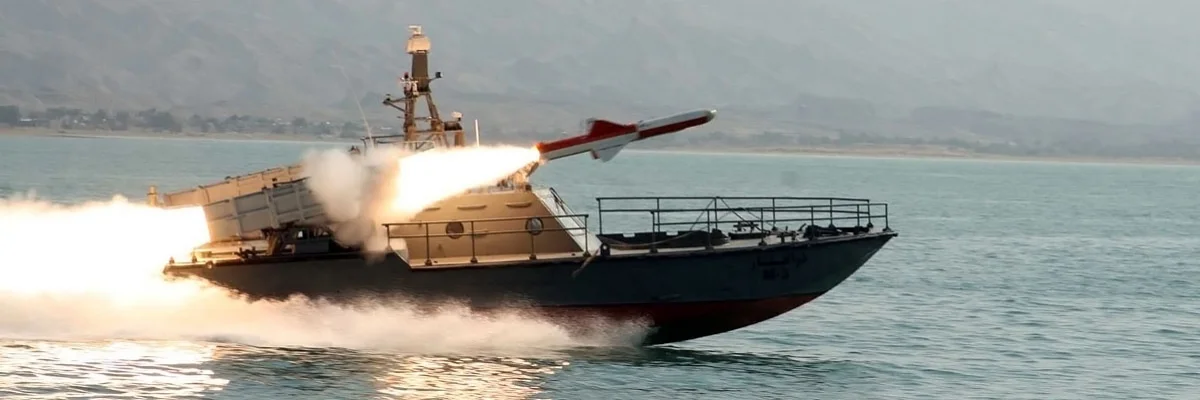
The Iranian military's behavior in the Persian Gulf has changed "across the board" in recent months, the US Navy said on Thursday, after years of tensions in the busy waterway.
Commander Bill Urban, spokesman for the Navy's Bahrain-based Fifth Fleet, said there had been no "unsafe or unprofessional" interactions with the Iranians at sea since August 14, 2017 when an Iranian drone with no lights on flew close to US aircraft operating in the Gulf.
It "is a substantial period time since then, and something that we think is great," Urban told reporters.
Last year and in 2016, the US Navy complained repeatedly about the behaviour of Iranian Revolutionary Guard vessels, which would often shadow and steer towards US ships.
In at least one incident, US sailors had to fire flares and warning shots before the Iranians turned away.
Urban said that since then, the Iranians have stopped approaching so closely.
"We have seen an across-the-board change in behaviour," Urban said. "I don't necessarily have a reason for that but it's pretty clear that it's something they are consciously doing."
The change comes amid increased rhetoric from Washington about Iran's "malign influence" in the region and US President Donald Trump's persistent railing against the 2015 Iran nuclear deal.
The Fifth Fleet and its associated task forces patrol the Gulf continuously and inspect some of the ships passing through.
In 2016, navy personnel seized weapons, including machine guns and rocket launchers, they suspected were headed from Iran to Yemen.
Urban said task forces this year have seized record amounts of heroin, some of which may have been from the Taliban, Afghanistan's biggest militant group. The Iranian Revolutionary Guards is a paramilitary force that answers directly to the Islamic republic's supreme leader Ayatollah Ali Khamenei.
In January 2016, the Iranians briefly captured the crew of two small US patrol boats that strayed into Iranian waters. The 10 US sailors were released 24 hours later.
Photo Credit: Global Military Review
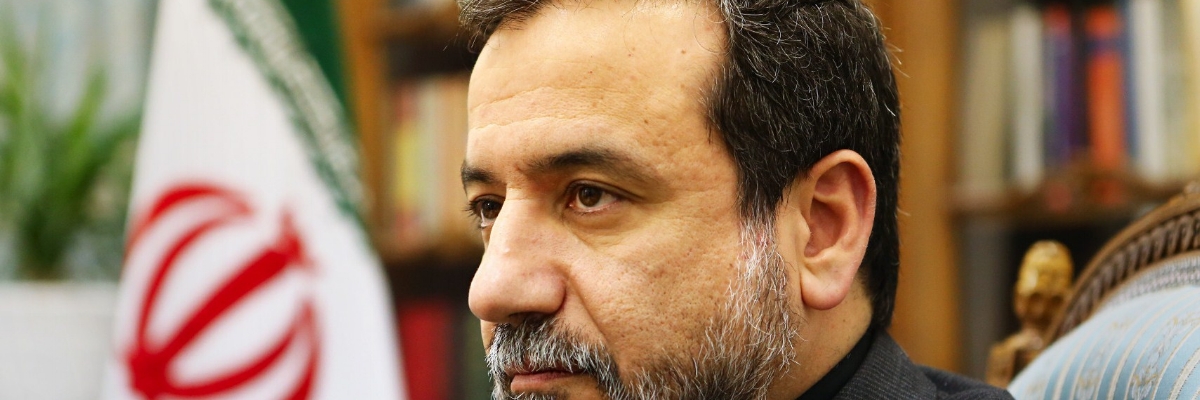
Iran Says Tillerson Firing Shows US 'Determined' to Quit Nuclear Deal
◢ US Secretary of State Rex Tillerson's sacking shows that Washington is set on quitting the nuclear deal between Tehran and world powers, Iran's deputy foreign minister said Wednesday. A US exit could kill the pact between Iran, Germany and the five permanent members of the United Nations Security Council.
US Secretary of State Rex Tillerson's sacking shows that Washington is set on quitting the nuclear deal between Tehran and world powers, Iran's deputy foreign minister said Wednesday.
"The United States is determined to leave the nuclear deal, and changes at the State Department were made with that goal in mind—or at least it was one of the reasons," Abbas Araghchi said in comments carried by state new agency ISNA.
US President Donald Trump announced Tillerson's departure in a tweet on Tuesday, saying he would be replaced by Central Intelligence Agency chief Mike Pompeo, who takes a much harder line on Iran than his predecessor.
Trump has repeatedly slammed the 2015 nuclear deal, under which Iran agreed to freeze its nuclear programme in return for the lifting of crippling international sanctions.
Despite Tillerson's determination to stick with the deal, Trump has threatened to scrap what he has dubbed a "terrible" agreement unless tough new restrictions were placed on Iran by May 12.
A US exit could kill the pact between Iran, Germany and the five permanent members of the United Nations Security Council.
The deal's backers have presented it as a victory for diplomacy and nuclear non-proliferation efforts. Tehran has repeatedly ruled out changing a single comma of the text. The UN's nuclear energy agency, the IAEA, confirmed in February that Tehran had met its obligations under the agreement.
"If the US quits the nuclear deal, we will also quit it," Araghchi said Wednesday. "We have told the Europeans that if they can't keep the US in the deal, Iran will also leave it."
His comments contrast with those of Iranian officials including President Hassan Rouhani, who has said Iran will stick with the agreement as long as it is beneficial for the country—even if the United States leaves.
While Iran has reaped massive economic benefits from the accord, notably by being able to resume oil exports, it is still constrained by US sanctions in other areas.
Photo Credit: Wikicommons
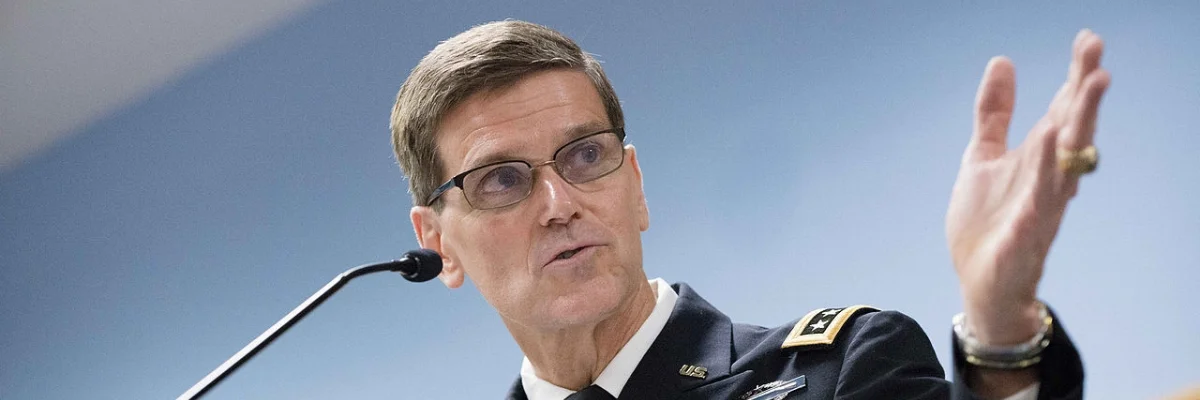
Pentagon Still Backs Iran Nuclear Deal: General
◢The Iranian nuclear deal is still in the best interests of the United States, a senior Pentagon official said Tuesday, going against President Donald Trump's claim that it's a "terrible" agreement. US Central Command chief General Joseph Votel told a Senate panel he shared the views of Defense Secretary Jim Mattis and Joe Dunford, the chairman of the
Joint Chiefs of Staff.
The Iranian nuclear deal is still in the best interests of the United States, a senior Pentagon official said Tuesday, going against President Donald Trump's claim that it's a "terrible" agreement.
US Central Command chief General Joseph Votel told a Senate panel he shared the views of Defense Secretary Jim Mattis and Joe Dunford, the chairman of the
Joint Chiefs of Staff.
"From my perspective, the JCPOA addresses one of the principal threats that we deal with from Iran," Votel said, using the deal's official acronym.
"So, if the JCPOA goes away, then we will have to have another way to deal with the nuclear weapons program."
Trump is threatening to scrap the international agreement unless tough new restrictions were placed on Iran before May 12.
He cited disagreements on the issue as a reason for his decision to fire on Tuesday his diplomatic chief Rex Tillerson and replace him with CIA Director Mike Pompeo, who is considered hawkish.
The president is concerned that parts of the deal start to expire from 2026 and that it fails to address Iran's missile program, its regional activities or its human rights abuses.
A US exit could kill the nuclear pact, which the Islamic republic has refused to re-negotiate.
Struck in 2015, it was signed by Iran with the five permanent members of the United Nations Security Council—Britain, China, France, Russia and the United States—plus Germany.
Under the agreement, Iran agreed to freeze its nuclear program in return for the lifting of punishing international sanctions.
While Iran has reaped massive economic benefits from the accord, notably by being able to resume oil exports, it is still constrained by US sanctions in other areas.
Photo Credit: Wikicommons
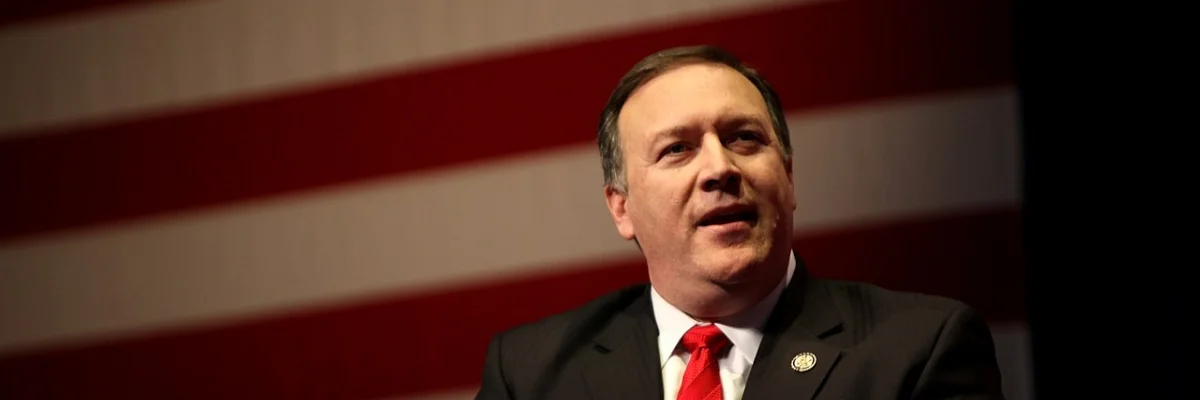
Tillerson Sacking Could Spell Doom for Iran Nuclear Deal
◢ President Donald Trump's sacking of Secretary of State Rex Tillerson could sound the death knell for the Iran nuclear deal and further strain US ties with key European allies. In explaining his decision to fire Tillerson, Trump said they had disagreed on many topics, but he specifically singled out one dispute: Whether or not to stay in the Iran pact.
President Donald Trump's sacking of Secretary of State Rex Tillerson could sound the death knell for the Iran nuclear deal and further strain US ties with key European allies.
In explaining his decision to fire Tillerson, Trump said they had disagreed on many topics, but he specifically singled out one dispute: Whether or not to stay in the Iran pact.
"When you look at the Iran deal. I thought it was terrible. He thought it was OK," Trump said. "I wanted to either break it or do something, he felt a little differently. So we were not really thinking the same."
On May 12, in exactly two months, the US leader is to pronounce on the fate of the Iran deal. If sacking Tillerson is any indicator of Trump's decision on the issue, it suggests the accord is in trouble.
If, as now appears likely, Trump indeed decides to drop out of the Joint Comprehensive Plan of Action (JCPOA), then the deal—and the hopes of a generation of European and US diplomats—will be dead.
"We're also working with allies and partners to block Iran's path to a nuclear weapon and confront its sponsorship of terror and bloodshed all around the world," Trump said later in a speech at Miramar Air Base in California.
"Everywhere we go in the Middle East it's Iran, Iran, Iran. Every problem is Iran. Well, we're dealing with it in a very serious fashion. One of the worst deals I've ever seen, was the Iran deal."
Under the JCPOA, adopted in October 18, Iran surrendered much of its nuclear infrastructure and opened the rest to international inspection in exchange for international sanctions relief.
The deal was signed between Tehran and six world powers: Britain, China, France, Germany, Russia and the United States.
First Instinct
The other signatories still regard the accord as a landmark victory in the battle to stop the spread of nuclear weapons. Iran denies it has sought such arms, but warns it could restart fuel enrichment quickly.
For his part, Trump campaigned condemning the accord as the "worst deal ever" and in office he has given ear to hawkish advisors who say it does not do enough to halt Iran's alleged quest for the bomb.
Tillerson and his cabinet ally Defense Secretary Jim Mattis have urged Trump to listen to his European allies and to preserve the deal intact, while seeking new measures to pressure Iran.
With Tillerson out of the picture -- and replaced by CIA director and Iran hawk Mike Pompeo -- Trump is all the more likely to follow his first instinct and blow up the entire accord.
For Thomas Countryman, who was assistant secretary of state for international security and nonproliferation from 2011 to 2017, the reshuffle could have catastrophic consequences for US national security.
Countryman argues that Tillerson "served as a Cabinet-level check on some of President Trump's worst impulses, such as wanting to 'break' the Iran nuclear agreement."
"Mr. Pompeo instead favors an aggressive Middle East policy that would undo
the diplomatic progress we made on nonproliferation and potentially embroil us
in a new conflict in that region."
Mark Dubowitz of the hawkish Foundation Foundation for Defense of
Democracies rarely agrees with Obama-era diplomats—but he does agree that
Pompeo's arrival is bad news for the deal.
"For those Europeans (and Americans) who think Trump is not serious about walking away on May 12th if there's no agreement to fix the Iran nuke deal, I give you Exhibit A: his soon-to-be Secretary of State Mike Pompeo," he tweeted.
For the moment, US diplomacy is carrying on as before.
Berlin Talks
State Department officials told AFP that Tillerson's chief of strategy Brian Hook will be in Berlin on Thursday to meet British, French and German officials about efforts to reform the deal.
This "fix" would expand the agreement to include restrictions on Iran's ballistic missile program and end the "sunset clauses" that allow Tehran to resume some enrichment within 10 years.
European leaders have expressed some sympathy for these ideas, if they would help bind Trump's America into a deal they regard as vital for their own national security and Middle East peace.
But they are looking at a possible "supplement" arrangement that would leave the core deal intact—and perhaps preserve Iranian support for it—while adding a separate annex to address Trump's concerns.
This in itself may not be possible, but even if it were, it might not go far enough for Trump and his new chief diplomat, Pompeo. At the weekend, respected Israeli journalist Barak Ravid of Channel 10 news reported that, last week, Trump promised Israeli Prime Minister Benjamin
Netanyahu that he would not accept a supplemental deal.
Israeli officials told Ravid that Trump opposes Europe's "cosmetic changes" and wants a "significant" rewriting of the Iran deal itself. This would almost certainly destroy the agreement.
Photo Credit: Wikicommons
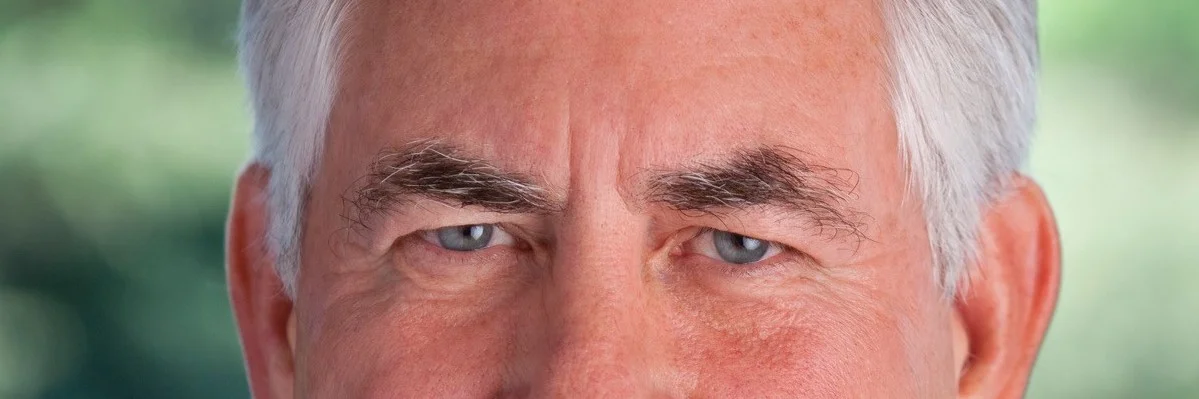
Trump Says 'Disagreed on Things' With Tillerson
◢ US President Donald Trump spoke of his disagreements Tuesday with ousted secretary of state Rex Tillerson, including over the Iran nuclear deal, as he explained his decision to replace him with Mike Pompeo.
US President Donald Trump spoke of his disagreements Tuesday with ousted secretary of state Rex Tillerson, including over the Iran nuclear deal, as he explained his decision to replace him with Mike Pompeo.
"We got along actually quite well but we disagreed on things," Trump told reporters.
"When you look at the Iran deal, I thought it was terrible, he thought it was okay. I wanted to either break it or do something, he felt a little differently. So we were not really thinking the same."
Photo Credit: Wikicommons
Iran, Serbia Resume Direct Flights After 27-Year Gap
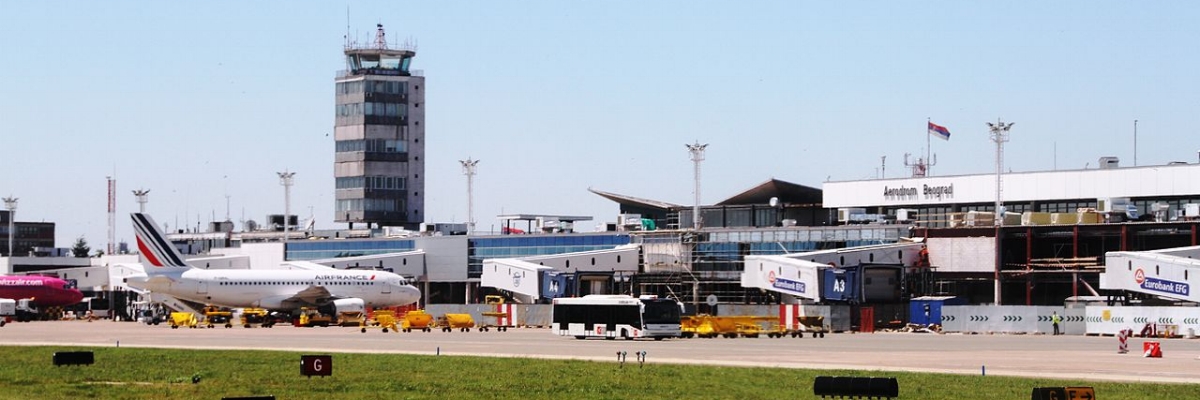
◢ After a gap of 27 years, direct flights between Iran and Serbia resumed on Saturday, when an IranAir jet touched down at Belgrade's Nikola Tesla airport, Serbian media reported. Iran Air is offering a direct service between Tehran and Belgrade twice weekly, with all flights fully booked until the end of the summer, the reports said.
After a gap of 27 years, direct flights between Iran and Serbia resumed on Saturday, when an IranAir jet touched down at Belgrade's Nikola Tesla airport, Serbian media reported.
Iran Air is offering a direct service between Tehran and Belgrade twice weekly, with all flights fully booked until the end of the summer, the reports said.
But the service, which was launched following a visa liberalization agreement between the two countries, has raised fears it could open up a new migrant route for those seeking to stay in the EU illegally, a Serbian charity has warned.
A second Iranian carrier, Qeshm Air, is also planning to launch a service between the two capitals starting from March 19. In August 2017, Iran and Serbia agreed to liberalize visas for travel between the two countries, sparking a surge in interest on the part of Iranians.
According to the Serbian non-governmental refugee support project Info Park, some Iranians are using the visa liberalization agreement to come to Europe and stay there illegally as migrants.
Last month, Info Park said a number of Iranians had arrived in Belgrade legally as tourists but had not returned home, proceeding instead to EU countries, notably France and Germany.
"Although they entered Serbia as tourists, interviews have revealed that many Iranians use their stay in Belgrade to establish connections with smugglers, who will transfer them to their desired destination, across the borders of Croatia, Bosnia and Herzegovina, Hungary or Romania," Info Park said at the time.
It said those interviewed said they were leaving for a variety of reasons including fears for their rights and freedoms, particularly linked to their political, religious or sexual orientation.
New Migrant Route?
Info Park said an estimated 600 Iranians could arrive in Belgrade in a single week, based on the current transport capacity. "Seeing as most of these new-arrivals do not intend to return, the migration systems in Europe must recalibrate for this new route and demographic among the migrant populaces," the NGO said.
Serbian Trade Minister Rasim Ljajic said authorities in the two countries would investigate possible abuses of the visa liberalization agreement.
Checks would be reinforced in Tehran and various bilateral deals would be signed with the aim of clamping down on illegal migration, the ministry said. Since the visa requirements were lifted, around 7,000 Iranians have travelled to Serbia, of which 485 have applied for asylum, the ministry said.
Serbia was one of the countries on the so-called Balkans route to western Europe, with hundreds of thousands of migrants passing through until the route was shut down at the start of 2016.
In January, the UN's Refugee Agency, UNHCR, said there were around 4,000 migrants currently in Serbia.
Photo Credit: Wikicommons
Iran Signs Deal with China to Connect Key Port to Rail Network
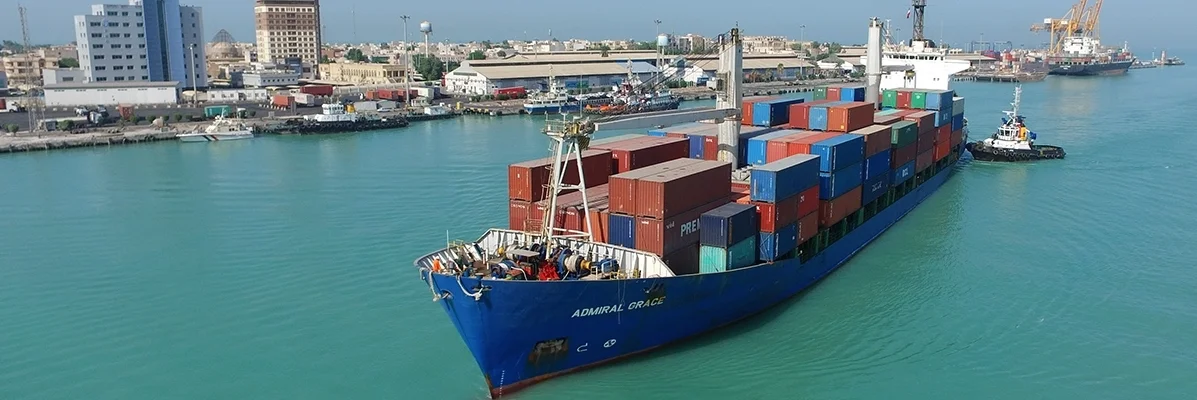
◢ China will build a train line connecting the Iranian port of Bushehr to the rest of the country's railway network under a $700 million deal signed on Wednesday. The agreement was inked in Tehran in the presence of Iranian Transport Minister Abbas Akhoundi and officials from China Machinery Industry Construction Group.
China will build a train line connecting the Iranian port of Bushehr to the rest of the country's railway network under a $700 million deal signed on Wednesday.
The agreement was inked in Tehran in the presence of Iranian Transport Minister Abbas Akhoundi and officials from China Machinery Industry Construction Group.
It will see the group build a 400-kilometre (250-mile) railway between the Gulf port and the southern city of Shiraz, IRNA state news agency cited officials as saying without specifying when construction would get underway. This would complete the "North-South Railway Corridor" in line with Iran's goal of becoming a transport hub for goods between the Gulf, the Indian subcontinent, Russia and Central Asia.
Products arriving at Bushehr, Iran's second biggest port after Bandar Abbas, also on the Gulf, currently have to be transported by road.
The Bushehr-Shiraz rail project is one of seven the government is working on totaling 2,300 kilometers in tracks, according to IRNA.
China is Iran's biggest economic and trading partner. In September, the Asian giant granted lines of credit worth $10 billion for five banks financing infrastructure projects.
Photo Credit: IRNA
Iranians Welcome Louvre Show Despite Tense Diplomacy
◢ Iranians gave a warm welcome to a new exhibition by France's Louvre on Tuesday -- the first major show by a foreign museum in the country. It features a number of treasures from the Paris museum's collection, including a 2,400-year-old Egyptian sphinx, a bust of Roman emperor Marcus Aurelius and drawings by Rembrandt and Delacroix.
Iranians gave a warm welcome to a new exhibition by France's Louvre on Tuesday—the first major show by a foreign museum in the country.
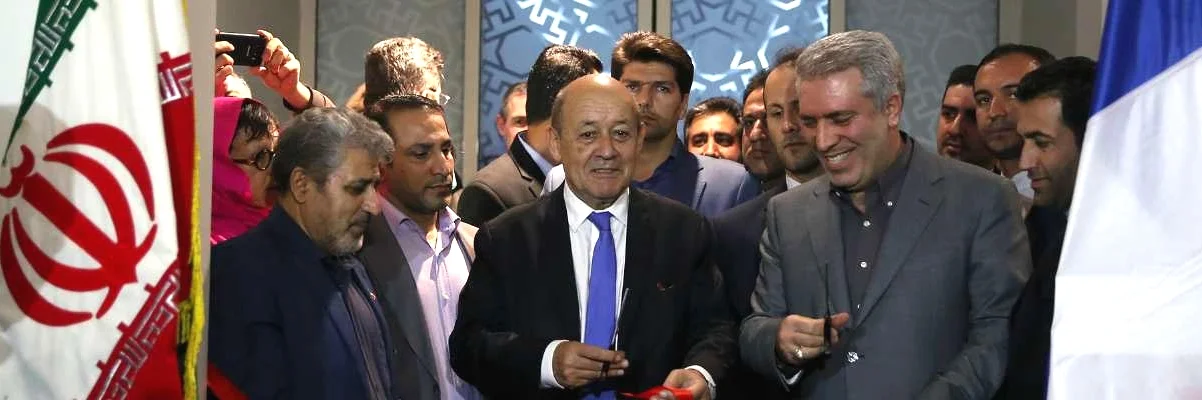
"It was great. I never thought I'd see such artworks in my life," said Mehdi, a 26-year-old student. The exhibition certainly appeared to go down better than Monday's visit by French Foreign Minister Jean-Yves Le Drian, who faced a day of tense discussions with Iranian officials before inaugurating the Louvre show.
The ever-combative Kayhan newspaper summed up the view of Le Drian's visit with the headline: "Impudent guest gets a dressing-down." Le Drian has angered Iran's leaders with his stern criticism of their missile program and foreign interventions.
"It was a tough trip, without concessions," he told reporters on the way back to Paris late Monday. The Louvre show returns the focus to the more positive aspects of France's relations with Iran, which include the rebuilding of trade ties through deals involving companies such as Peugeot, Renault and Total since world powers signed a 2015 nuclear accord with Tehran.
It features a number of treasures from the Paris museum's collection, including a 2,400-year-old Egyptian sphinx, a bust of Roman emperor Marcus Aurelius and drawings by Rembrandt and Delacroix.
"Very Good" Cooperation
"It was very good, though I was hoping to see more Iranian pieces," said Sorena, a young accountant. "But it was interesting and this sort of international cooperation is very good. Maybe it will lead to more economic relations with other countries."
Only two small pieces from what is now Iran came over from the Louvre collection—an axe dating back more than 3,000 years and an even older mysterious bronze ornament from Lorestan featuring two bulls and a circle of men that became the logo of the Tehran Stock Exchange when it was launched in the 1960s.
"I know there are lots of valuable Iranian pieces in the Louvre, but this is a good start," said Khashayar Tayar, a music teacher in his thirties. "I'm really grateful to the organizers for this show. I hope future exhibitions will have more Iranian pieces to make me even happier."
The exhibition marks the culmination of two years of work since a cultural exchange agreement was signed during a visit by President Hassan Rouhani to Paris in January 2016.
France has deep cultural ties with pre-revolutionary Iran, and the National Museum itself was built by a Frenchman, Andre Godard, in 1938.
"In the tumultuous ocean of international relations, cultural diplomacy is a flare that we should maintain together," Le Drian said at the ribbon-cutting ceremony on Monday night.
Photo Credit: IRNA
Louvre Brings "Unprecedented" Show to Tehran
◢ Journalists flooded Iran's National Museum on Monday for the arrival of more than 50 artworks from the Louvre—the first major show by a Western museum in the country's history. The show reflects France's determined use of cultural diplomacy as it seeks to rebuild traditional ties with Iran, even as their officials hold tense talks over political and security issues.
Journalists flooded Iran's National Museum on Monday for the arrival of more than 50 artworks from the Louvre—the first major show by a Western museum in the country's history.
The show reflects France's determined use of cultural diplomacy as it seeks to rebuild traditional ties with Iran, even as their officials hold tense talks over political and security issues.
The doors were unsealed for journalists at the National Museum in central Tehran, which is currently celebrating its 80th anniversary, a day ahead of the public opening.
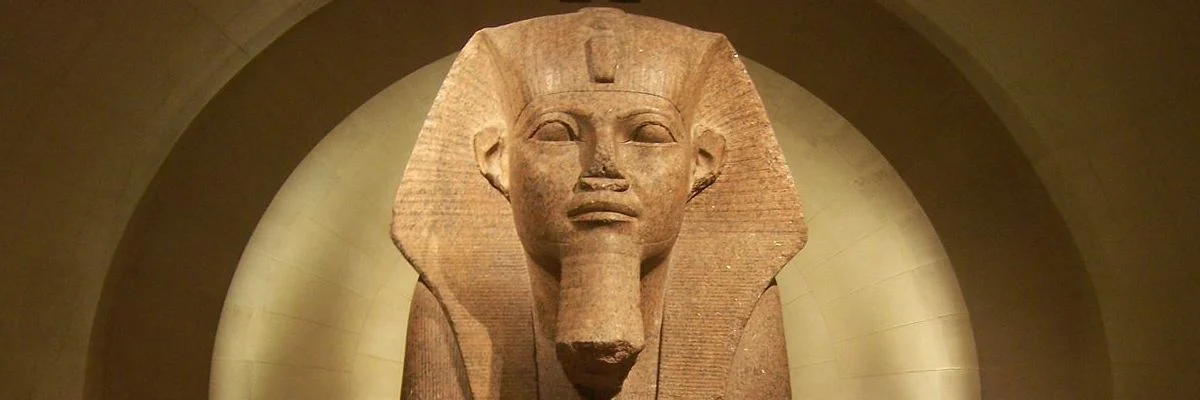
Among the items shipped over by cargo plane were a 2,400-year-old Egyptian sphinx, a bust of Roman emperor Marcus Aurelius and drawings by Rembrandt and Delacroix.
"Some were definitely easier to transport than others," said Judith Henon, one of the experts sent by the Louvre. "Our Iranian partners really liked the sphinx, but it weighs close to a tonne and was extremely complicated to put in place."
The show marks the culmination of two years of work since a cultural exchange agreement was signed during a visit by President Hassan Rouhani to Paris in January 2016.
"Relations between France and Iran are old and profound because France was a pioneer of archaeological exploration here," Jean-Luc Martinez, president of the Louvre, told AFP.
"This completely unprecedented exhibition... allows us to make the link between this glorious moment and relations that date back to the 19th century."
Cultural Ties
France has deep cultural ties with pre-revolutionary Iran, and the National Museum itself was built by a Frenchman, Andre Godard, in 1938. While Britain and Russia battled for political influence in 19th century Persia, it was the French who led the way in archaeological affairs.
"France had priority on cultural questions in the late 19th century and was the only one doing digs in Iran," said Julien Cuny, one of the Louvre's curators for the Tehran show, and an expert on Iran.
So as not to hand over everything to Britain and Russia, the Persian monarchs handed control of certain issues to other countries, and cultural affairs ended up largely with France.
"As a result of that, it was the French that set up the antiquities service here in 1930," said Cuny. That helped preserve France's reputation among Iranians even as that of Britain, the United States and Russia plummeted in the years ahead of the 1979 Islamic revolution.
"Back in the day, the British were looking for oil while we were doing archaeology, so our relations have focused on positive things. It's an image that has stuck," said a French diplomat.
The irony is that the show opens just as France and Iran find themselves in a tense diplomatic moment. French Foreign Minister Jean-Yves Le Drian was Monday in Tehran to inaugurate the Louvre show, but more importantly to hold difficult talks over ballistic missiles and interventions in the region.
Iran's conservative press accused him of insulting the Iranian people with his criticisms of the missile program and labelled him a "lackey" of US President Donald Trump.
The cultural domain offers a chance to focus on the positive re-engagement between France and Iran, which has also been seen in a number of trade and investment deals involving carmakers Peugeot and Renault as well as energy giant Total since the 2015 nuclear accord. University links are another branch, with some 1,700 Iranians currently studying in France.
"This exhibition reflects the shared ambition to bolster our relations. We want to say that Iran is coming back to international normalization," said a diplomat accompanying Le Drian.
Photo Credit: Wikicommons
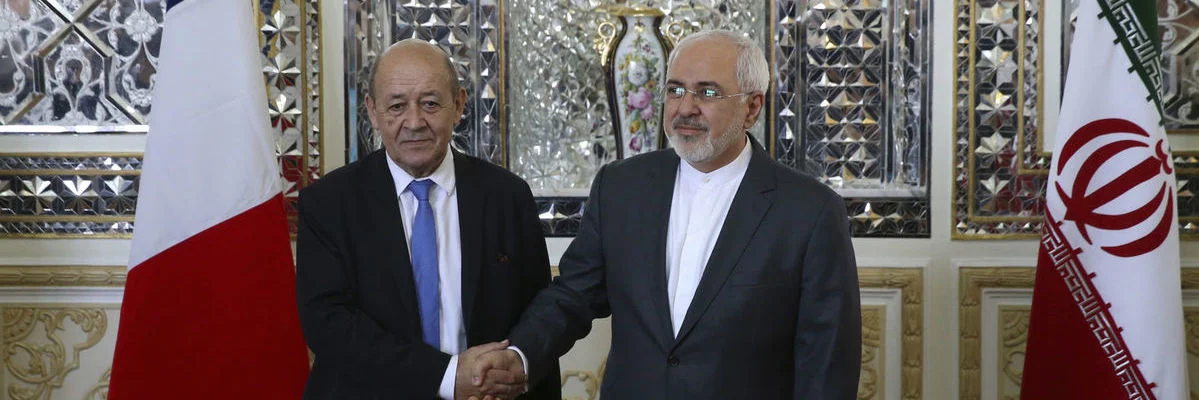
French Foreign Minister in Tehran for Tense Talks
◢ French Foreign Minister Jean-Yves Le Drian was in Tehran Monday to push for pledges on Iran's ballistic missile program in a bid to preserve the country's historic nuclear deal. Le Drian had promised a "frank dialogue" ahead of his arrival in Tehran early Monday, but faced an awkward reception given the anger generated by his comments on Iran's missile program and foreign policy.
French Foreign Minister Jean-Yves Le Drian was in Tehran Monday to push for pledges on Iran's ballistic missile program in a bid to preserve the country's historic nuclear deal.
It is the first visit by one of the European parties to the 2015 nuclear accord since US President Donald Trump set an ultimatum that he would abandon it in May if it was not "improved".
Le Drian had promised a "frank dialogue" ahead of his arrival in Tehran early Monday, but faced an awkward reception given the anger generated by his comments on Iran's missile program and foreign policy.
"In order to keep the United States in the Iran nuclear deal, European countries are suffering from extremism and this will ultimately undermine Europe's policy," Foreign Minister Mohammad Javad Zarif told the reformist newspaper Etemad ahead of his meeting with Le Drian.
It followed the French minister's interview with the Journal du Dimanche a day earlier, in which he warned that Tehran was "exposing itself to new sanctions" if it did not rein in its missile programme.
Conservative media in Iran hit back on Monday, with daily Kayhan writing: "French foreign minister insults people of Iran before visit to Tehran." The Javan newspaper headlined its story: "Trump's Parisian lackey in Tehran."
Le Drian headed into talks with Zarif shortly after meeting with Ali Shamkhani, secretary of the Supreme Council of National Security and a close ally of supreme leader Ayatollah Ali Khamenei. There were no public statements or news conferences -- reflecting the
sensitive moment in which the countries find themselves.
'No emissary of Trump'
Trump in January set a 120-day deadline for US lawmakers and European allies to "fix" the nuclear deal, the top foreign policy achievement of his predecessor Barack Obama.
But Iran has refused to re-negotiate the deal or add extra clauses, arguing that the United States has failed to keep up its end of the bargain on the existing accord.
Keen to appease Trump and save the deal, European countries have voiced increasing concern over the missile program, which Iran says is purely defensive and not up for negotiation. Le Drian has said that without an end to ballistic missile tests by Iran, it will "always be suspected, with reason, of wanting to develop nuclear weapons."
Nonetheless, Le Drian's team were keen to emphasise he was no "emissary of Donald Trump" and firmly supported the 2015 deal. "We want to preserve the nuclear deal because it is working, it's robust and because the Iranians are respecting it," the team told AFP.
The International Atomic Energy Agency has repeatedly found Iran is abiding by its commitments, which curbs its nuclear programme in exchange for a lifting of crippling international sanctions. IAEA director general Yukiya Amano said on Monday that losing the nuclear deal "would be a great loss for nuclear verification and for multilateralism".
France's Re-Engagement
If the political track looks tricky, France is at least hoping that its cultural diplomacy can offer a more positive flavour to the trip with Le Drian due to inaugurate an "unprecedented" show of items from the Louvre in Paris at Tehran's National Museum.
"Relations between France and Iran are old and profound because France was a pioneer of archaeological exploration here," said Jean-Luc Martinez, president of the Louvre.
"This international exhibition allows us to make the link between this glorious moment and the relations dating back to the 19th century." Despite their differences, Iran has broadly welcomed France's re-engagement with the country.
Last year's $5 billion gas exploration deal with French energy giant Total was the biggest in Iran since the nuclear accord, and showed French companies were willing to stand up to pressure from Washington to avoid all business relations with the Islamic republic.
Le Drian is also expected to push Tehran to put pressure on its Syrian ally to end the devastating assault on Eastern Ghouta near Damascus.
In a phone call on Sunday, French President Emmanuel Macron urged his Iranian counterpart Hassan Rouhani to put the "necessary pressure" on the Syrian government to halt "indiscriminate" attacks in the rebel enclave.
Photo Credit: MFA
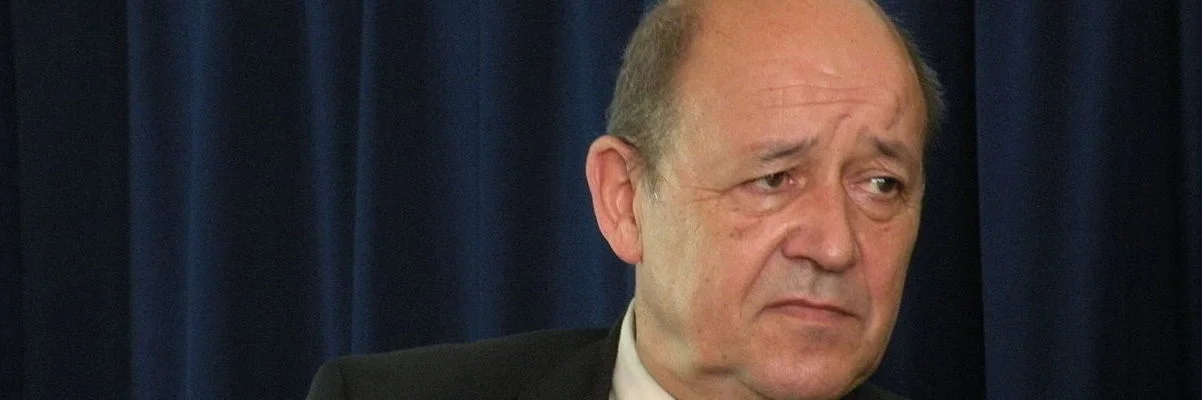
French Foreign Minister Visits Iran
◢ France's Foreign Minister Jean-Yves Le Drian arrived in Tehran early Monday for talks on the 2015 nuclear deal and Iran's role in the Syrian conflict. It is the first visit by one of the European signatories to the nuclear deal since US President Donald Trump set an ultimatum that he would abandon it in May if it was not "improved".
France's Foreign Minister Jean-Yves Le Drian arrived in Tehran early Monday for talks on the 2015 nuclear deal and Iran's role in the Syrian conflict.
It is the first visit by one of the European signatories to the nuclear deal since US President Donald Trump set an ultimatum that he would abandon it in May if it was not "improved".
Le Drian has made it clear to Tehran that he is no "emissary of Donald Trump", the foreign minister's team have told AFP. The visit was originally scheduled for January but postponed due to a week of violent protests in Iran.
"We want to preserve the nuclear deal because it is working, it's robust and because the Iranians are respecting it," Le Drian's team said. Le Drian, however, has said that without an end to ballistic missile tests by Iran, it will "always be suspected, with reason, of wanting to develop nuclear weapons."
Tehran denies seeking nuclear arms and says its missiles are purely defensive and not up for discussion. Iran has said it "will not accept any amendments in (the nuclear) agreement, be it now or in the future, and it will not allow any other issues to be linked to (it)".
Despite their differences, Iran has welcomed French efforts to re-engage economically and politically with the Islamic republic. Last year, Iran signed a $5-billion gas exploration deal with French energy giant Total, Tehran's biggest since the nuclear accord.
But political differences were on show on Sunday in a call between presidents Hassan Rouhani of Iran and France's Emmanuel Macron.
The French president called for Iran to put "the necessary pressure" on its Syrian ally, President Bashar al-Assad, to stop "indiscriminate" attacks on civilians.
For his part, Rouhani said countries exporting weapons to Saudi Arabia—France being one of the biggest suppliers—must answer for war crimes being committed by that country in Yemen.
Photo Credit: Wikicommons
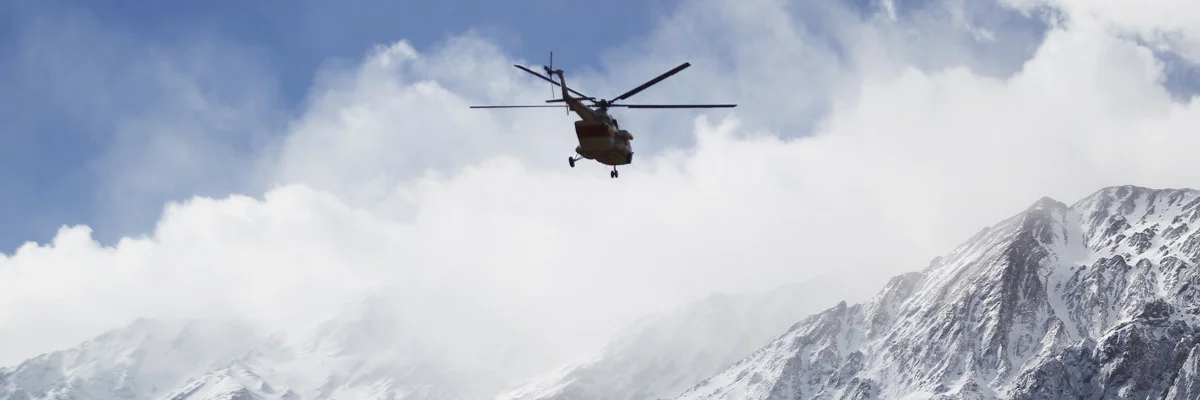
Rescue Teams Recover Black Boxes at Site of Iran Plane Crash
◢ Rescue teams have recovered the black boxes of a plane that crashed last month in the mountains of southwestern Iran leaving 66 people dead, official media reported on Sunday.
Rescue teams have recovered the black boxes of a plane that crashed last month in the mountains of southwestern Iran leaving 66 people dead, official media reported on Sunday.
"The box that recorded flight parameters and the one with conversations in the cockpit have been handed over to judicial authorities," Reza Jafarzadeh, the public relations director of Iran's civil aviation organization, told official news agency IRNA.
Jafarzadeh said the two black boxes of the Aseman Airlines ATR-72 were found on Saturday by rescue teams, who had resumed search operations in the Zagros mountains on Friday after bad weather forced them to halt efforts for nearly a week.
They were to be handed over to investigators seeking to determine the cause of the accident. The aircraft, on a domestic flight out of Tehran, went down in a snowstorm on February 18 and crashed at a height of about 4,000 metres (13,000 feet).
There have been no reported survivors from the plane's 66 passengers and crew. The crash site has been hit by heavy snowfall in recent days, making rescue operations particularly dangerous due to avalanche risks, according to officials quoted by local media.
So far, only body parts have been recovered from the scene of the crash. Forensic teams have performed tests on 51 samples of human tissue in attempts to identify the victims, IRNA reported.
Photo Credit: Tasnim
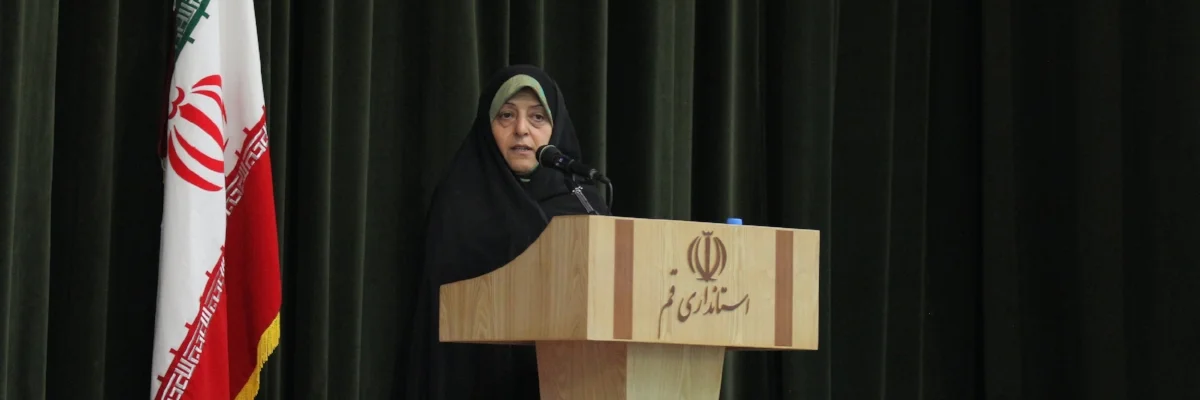
Iran VP Says Government Against Using Force Over Hijab
◢ Iran's vice president for women's affairs insisted Wednesday the government opposed using "force" to ensure women wear the hijab, after a spate of protests stirred debate over the mandatory headscarf.
Iran's vice president for women's affairs insisted Wednesday the government opposed using "force" to ensure women wear the hijab, after a spate of protests stirred debate over the mandatory headscarf.
Massoumeh Ebtekar told a press conference in Tehran that every country has a dress code: "There is no city in the world where you can walk naked in the streets and you won't be approached by a particular regulatory body."
She said Iran's hijab laws—which require women to wear a headscarf and long coat, as well as banning shorts for men—were a "social regulation."
"Our position is that it's a regulation but the use of force—we don't go along with that type of enforcement," she said.
"That is contrary to the basic principles and philosophy that the government of (President Hassan) Rouhani follows." Her comments follow a string of protests, mostly in Tehran, in which more than a dozen woman have stood in main thoroughfares without their headscarves.
The women risk prison sentences of up to two months for not wearing the headscarf, but up to 10 years if they are found to be encouraging others. Tehran police chief Hossein Rahimi took a rather tougher line than Ebtekar earlier this week, telling the conservative Fars news agency that Islamic laws were "obligatory for all citizens."
"These people will be firmly dealt with by the police," he said. He was responding to widespread criticism on social media after a video showed an officer shoving one of the women protesters off a plinth. "We have reminded our officers to comply with legal requirements when dealing with all people," said Rahimi.
In practice clothing rules have been steadily eroding for years, with many women wearing loose and colorful headscarves and letting them drop entirely, particularly in wealthier areas.
Since Rouhani came to power in 2013, the presence of the morality police who enforced clothing rules has been greatly reduced. Ebtekar said the government needs "this dialogue" with the younger generation, which no longer shares the same values as those who grew up during the 1979 revolution.
But she defended Iran's record on female empowerment, saying the Islamic republic had brought "true advancement" for women in higher education, politics and sports.
Iranian society is generally freer for women than many conservative Islamic countries, but activists complain they are still under-represented in government, particularly after Rouhani again failed to appoint a single female minister last summer.
Women also have less weight than men in Iran's Islamic legal system, including less right to inheritance and a ban on leaving the country without male permission.
Photo Credit: Wikicommons
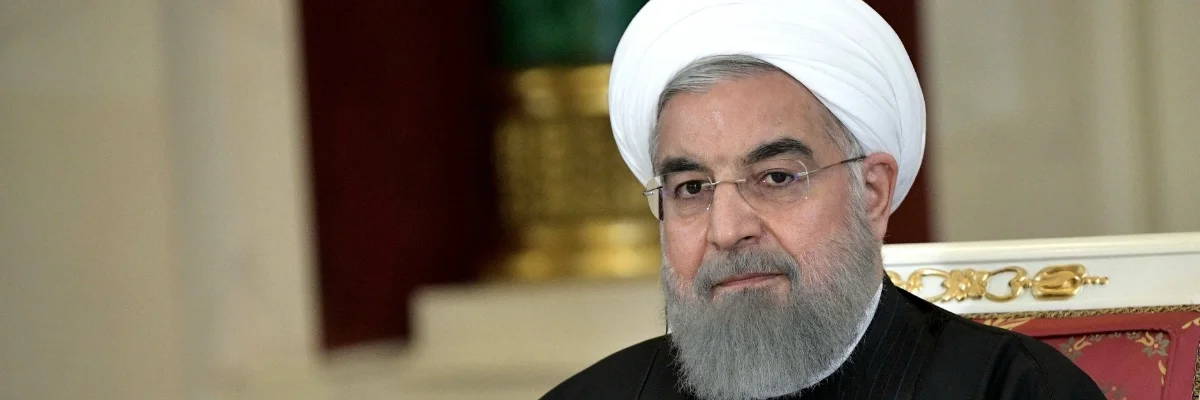
Rouhani Says Iran 'Ready' to Talk to Arab Neighbors
◢ President Hassan Rouhani on Wednesday said Iran is ready to discuss regional security issues with its Gulf Arab neighbors as long as foreign powers are kept out of any potential talks.
President Hassan Rouhani on Wednesday said Iran is ready to discuss regional security issues with its Gulf Arab neighbors as long as foreign powers are kept out of any potential talks.
"We don't need foreigners to guarantee the security of our region," Rouhani said in a speech broadcast on state television.
"When it comes to regional security arrangements, we are ready to talk to our neighbors and friends, without the presence of foreigners," he added.
"We are, have been and always will be good neighbors," Rouhani said, addressing Gulf Arab countries including Iran's regional rival Saudi Arabia.
Rouhani was speaking in the southern port city of Bandar Abbas overlooking the Gulf—a flashpoint of tensions between Iran and Saudi Arabia The two powers, who severed diplomatic ties in January 2016, have taken opposing sides in wars in Syria and Yemen.
Shiite-dominated Iran is the main regional backer of the government of Syrian President Bashar al-Assad against Sunni rebels supported by Saudi Arabia.
In Yemen, a Saudi-led coalition has been bombing since 2015 Iran-backed Shiite Huthi rebels opposed to the internationally recognized government.
Western powers and their Gulf Arab allies say Iran is a destabilizing influence in the Middle East. Tehran, however, has regularly called for dialogue with its neighbors free
of any foreign interference.
Rouhani's comments came a day after the United States and three European allies condemned Iran after the United Nations found Tehran had violated the arms embargo on Yemen by failing to block supplies of missiles and drones to Huthi rebels.
The condemnation came after Russia vetoed a British-drafted resolution renewing sanctions on Yemen and citing "particular concern" about a report's findings on Iran. Rouhani paid tribute to "Russia's just and intelligent stance".
Photo Credit: Russian MFA
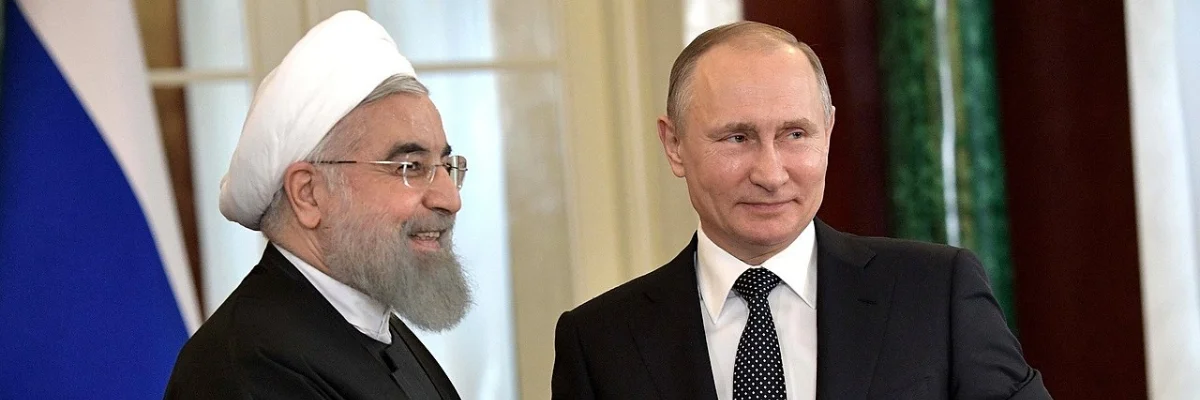
Iran's Eastern Shift Shows Patience Running Out With the West
◢ Iran's supreme leader has signaled a decisive shift in favor of relations with China and Russia, indicating that patience is running out with efforts to improve ties with the West. This suggest that the latest attempt at detente with the United States—as represented by the 2015 nuclear deal in which it agreed to curb its nuclear program in exchange for a lifting of sanctions— is running out of steam.
Iran's supreme leader has signaled a decisive shift in favor of relations with China and Russia, indicating that patience is running out with efforts to improve ties with the West.
One of the most popular slogans during the 1979 revolution was "Neither East nor West", a defiant vow that Iran would no longer favor either of the world's major forces at the time -- American-style capitalism or Soviet Communism.
It was therefore striking to hear its current leader, Ayatollah Ali Khamenei, declare on February 19 that: "In foreign policy, the top priorities for us today include preferring East to West."
Analysts say this does not change the basic idea that Iran refuses to fall under the sway of outside powers.
But it does suggest that the latest attempt at detente with the United States—as represented by the 2015 nuclear deal in which it agreed to curb its nuclear program in exchange for a lifting of sanctions— is running out of steam.
"Khamenei has repeatedly outlined that the 2015 nuclear deal was a test to see if negotiations with the West could yield positive results for Iran," said Ellie Geranmayeh, of the European Council on Foreign Relations. "The leadership perceives the US as acting in bad faith on the deal. Khamenei's statement signals a green light for the Iranian system to focus greater diplomatic effort on deepening ties with China and Russia," she said.
Khamenei's comments come at a critical moment, with US President Donald Trump threatening to tear up the deal and reimpose sanctions unless Iran agrees to rein in its missile program and "destabilizing activities" in the Middle East.
Even before Trump, Iran felt Washington was violating its side of the bargain as it became clear that remaining US sanctions would still hamper banking ties and foreign investments, even blocking Iranian tech start-ups from sharing their products on app stores.
Tehran argues this violates a clause stating the US must "refrain from any policy specifically intended to directly and adversely affect the normalization of trade and economic relations with Iran".
"From day one, the US, the Obama administration, started violating both the letter and the spirit of the agreement," said Mohammad Marandi, a political analyst at the University of Tehran.
He said Khamenei's latest statement recognized the simple fact that relations with eastern countries were much stronger, particularly since Iran and Russia allied over the Syrian war.
"It's a very different world now. Iran's relationship with Russia and China and an increasing number of Asian countries is much better than with the West because they treat us much better," he said. "We are partners with Russia in Syria. We are not subordinate."
‘A pragmatic approach'
Anger over foreign interference was a key driver of the 1979 revolution after more than a century of intrigues, coups and resource exploitation by the United States, Britain and Russia.
But despite being depicted by critics as dogmatic and uncompromising, the Islamic republic that emerged after the revolution has been surprisingly flexible in its foreign policy.
"At certain moments since 1979, Iran has taken a pragmatic approach to dealings with the United States when necessary or in its interest," said Geranmayeh.
She highlighted the infamous Iran-Contra arms deal in the 1980s and cooperation in Afghanistan in 2001, as well as the nuclear deal. Yet many hardliners in Washington refuse to accept that Iran has ever been serious about rapprochement.
The American Enterprise Institute, a think-tank, this month released a series of articles calling for "a more confrontational policy toward Iran", including the threat of regime change. Its main justification was that "the men who run Iran's foreign policy have no interest in a better relationship".
But speaking in April 2015, three months before the nuclear deal was finalized, Khamenei explicitly said it could lead to a broader improvement in ties. "If the other side stops its usual obstinacy, this will be an experience for us and we will find out that we can negotiate with it over other matters as well," he said in a speech.
Iran's oil sales have rebounded since the deal, and it has seen an uptick in trade with Europe. But the threat of US penalties has helped deter many foreign investors and major banks from re-engaging with Iran.
European firms and governments remain far more vulnerable to pressure from
Washington than their Chinese and Russian counterparts. "If the Europeans don't have the courage to stand up to the US then they shouldn't expect to be partners with us," said Marandi. "If some doors are closed and some doors are open, we are not going to wait outside the closed doors forever."
Photo Credit: