
Three More Iranian Environmentalists Arrested: Website
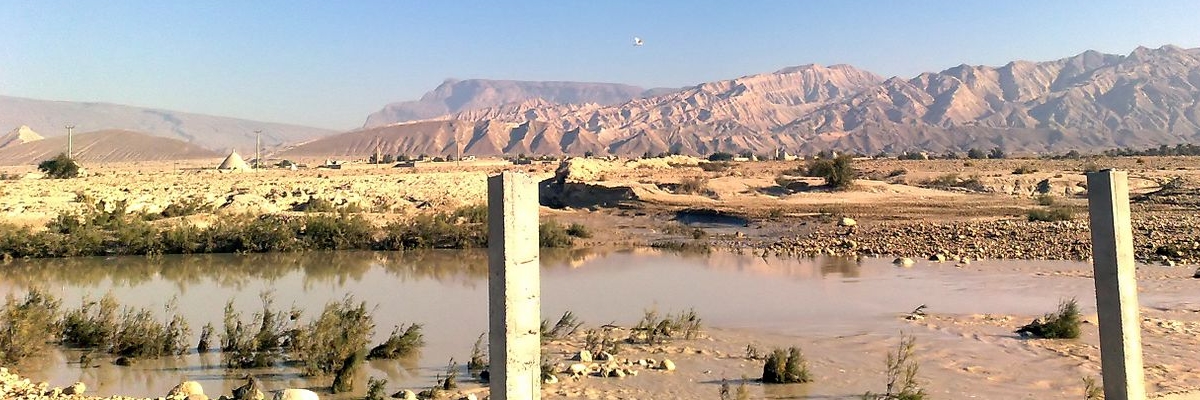
◢ Three environmentalists have been detained in Iran, a conservative-linked news website reported late Friday, the latest in a series of arrests of wildlife campaigners in the Islamic republic.
Three environmentalists have been detained in Iran, a conservative-linked news website reported late Friday, the latest in a series of arrests of wildlife campaigners in the Islamic republic.
"Members of the Association for the Protection of Nature in Lavardin were arrested by a security agency. The allegations against them are unknown," Tabnak reported.
It said they were arrested in Bandar Lengheh in the southern Hormuzgan province on the Gulf coast.
It follows the arrest of eight members of the Persian Heritage Wildlife Association, Iran's most prominent nature NGO, in January on espionage charges.
Its founder Kavous Seyed Emami, 63, died in prison around two weeks later. Officials say he committed suicide in his cell, but the family have questioned the verdict and say they were threatened by officials.
The deputy head of the government's Environment Protection Organisation,
renowned water campaigner Kaveh Madani, was also detained briefly this month.
Photo Credit: Wikicommons
Iran Grounds Airline's ATR Planes After Crash
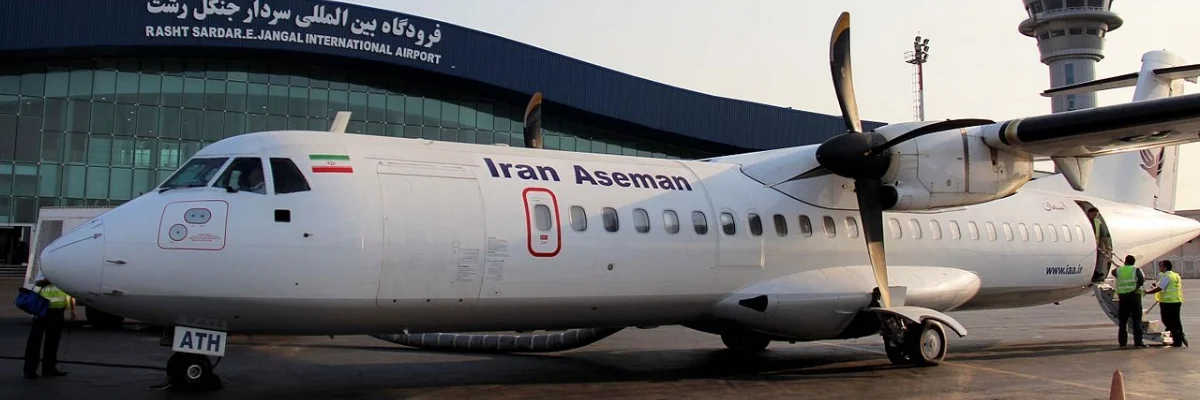
◢ Iran's civil aviation organization has grounded ATR planes belonging to Aseman Airlines after one of them crashed this week with 66 people on board, state television reported Friday.The measure is temporary as authorities investigate the cause of Sunday's accident, which saw an ATR-72 twin-engine plane, in service since 1993, crash in Iran's Zagros mountains.
Iran's civil aviation organization has grounded ATR planes belonging to Aseman Airlines after one of them crashed this week with 66 people on board, state television reported Friday.
The measure is temporary as authorities investigate the cause of Sunday's accident, which saw an ATR-72 twin-engine plane, in service since 1993, crash in Iran's Zagros mountains.
Aseman, which is banned from flying in the European Union, operates five ATR-72s, according to the company's website. Flight EP3704 disappeared from radar around 45 minutes after taking off from Tehran on a domestic flight. No survivors have been found.
The wreckage of the ATR, which is part-owned by Europe's Airbus, was discovered at a height of around 4,000 meters (13,000 feet) in the Dena range but bad weather has hampered recovery efforts.
Helicopters have been unable to access the site and an operation to bring bodies down the mountain on foot has been suspended until Monday.
The plane's "black box" flight recorders have also not yet been recovered.
Photo Credit: Wikicommons
Iran Sticking to Nuclear Deal: UN Watchdog
◢ Iran is still sticking to the 2015 nuclear accord, a UN atomic watchdog report showed Thursday, four months ahead of US President Donald Trump's deadline to fix its "disastrous flaws". The International Atomic Energy Agency document, the ninth since the deal came into force in January 2016, showed Iran complying with the accord's key parameters.
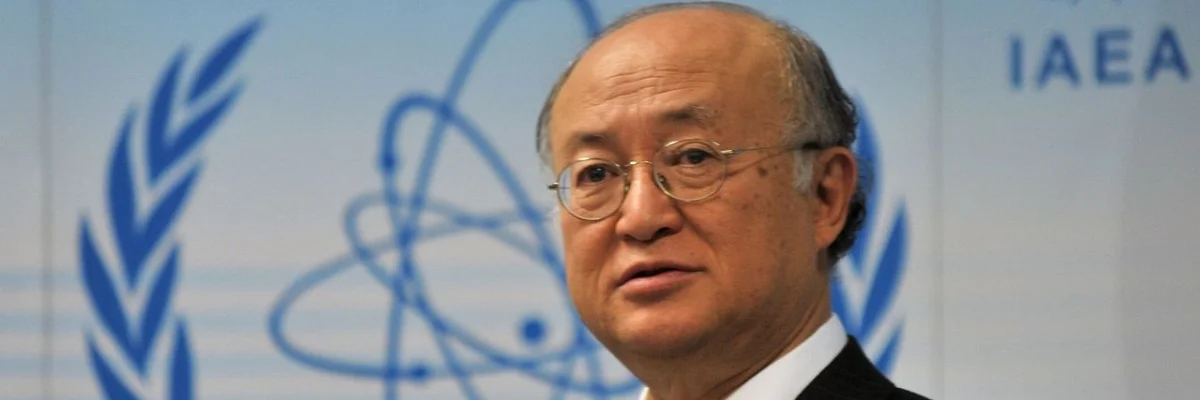
Iran is still sticking to the 2015 nuclear accord, a UN atomic watchdog report showed Thursday, four months ahead of US President Donald Trump's deadline to fix its "disastrous flaws".
The International Atomic Energy Agency document, the ninth since the deal came into force in January 2016, showed Iran complying with the accord's key parameters.
The number of centrifuges to enrich uranium was below the agreed level of 5,060, while Iran's total stockpile of low-enriched uranium "has not exceeded 300 kg", said the report seen by AFP.
Uranium when enriched to high purities can be used in a nuclear weapon. At low purities it can be used for peaceful applications such as power generation—Iran's stated aim.
The volume of heavy water, a reactor coolant, remained below the agreed maximum of 130 tonnes throughout the past three months.
Iran has inched above that ceiling twice since the accord took effect. It removed and rendered inoperable the core of the Arak reactor, which could in theory have produced weapons-grade plutonium, before the accord entered into force.
Aside from the relatively minor breach on heavy water, the IAEA reports have consistently shown Iran adhering to the deal in the two years since it took effect.
However, the future of the hard-won agreement between Iran and the five permanent members of the UN Security Council plus Germany is highly uncertain.
Trump in January set a 120-day deadline for US lawmakers and European
allies to "fix" his predecessor Barack Obama's main foreign policy achievement or face a US exit. He is concerned that parts of the deal start to expire from 2026 and that
it fails to address Iran's missile programme, its regional activities or its human rights abuses.
A US exit could kill the nuclear deal, which the Islamic Republic has refused to re-negotiate. While Iran has reaped massive economic benefits from the accord, notably by being able to resume oil exports, it is still constrained by US sanctions in other areas.
Russian Foreign Minister Sergei Lavrov has warned Europe signatories against compromising on the deal, saying it would be a "slippery slope in a very dangerous direction".
The IAEA report also said that Iran informed it in January of a decision to "construct naval nuclear propulsion in future". The IAEA has asked Tehran for further details. Press reports in the past have said that Tehran wants to develop nuclear-powered ships and/or submarines.
Photo Credit: Wikicommons
Iran's Ahmadinejad Calls for Immediate Free Elections
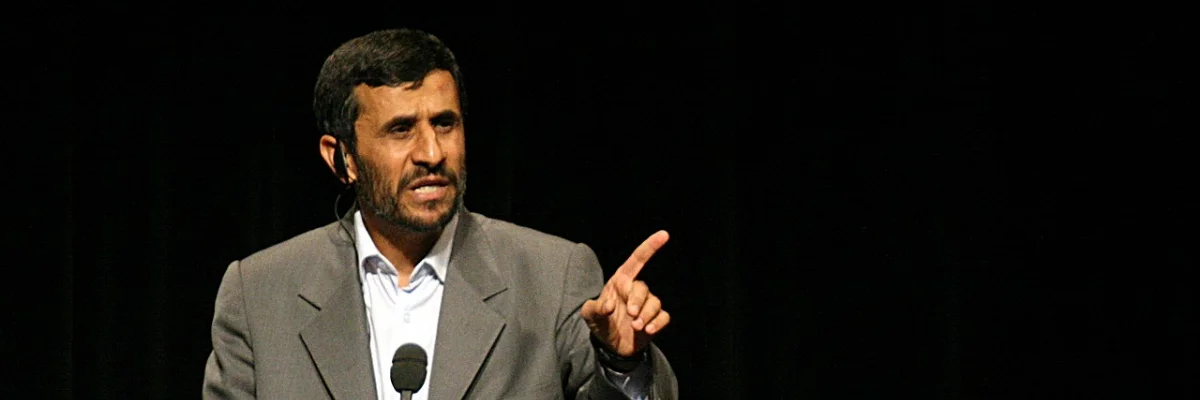
◢ Iran's hardline former president Mahmoud Ahmadinejad called for the immediate holding of free presidential and parliamentary elections in a letter to supreme leader Ayatollah Ali Khamenei published on Thursday.
Iran's hardline former president Mahmoud Ahmadinejad called for the immediate holding of free presidential and parliamentary elections in a letter to supreme leader Ayatollah Ali Khamenei published on Thursday.
The call, from a man whose name is synonymous with the bloody repression of mass protests against his controversial 2009 re-election, marked a new act of defiance against a political establishment that has long since turned against him.
Ahmadinejad made no specific reference in his letter to a wave of unrest that swept Iran over the new year but it comes as the country's divided political factions argue over how to respond. "The immediate holding of free presidential and parliamentary elections—of course without their being engineered by the Guardian Council and without interference by military or security bodies so that people have a free choice—is an urgent necessity," he wrote.
The Guardian Council is a powerful vetting body which oversees all elections in Iran and which barred Ahmadinejad, among others, from running for president last May.
The council rejected Ahmadinejad's call for early elections and hit back at his criticism of its supervisory procedures. "The country has no need for... elections right now because all elections are conducted in a legal and sustainable manner," council spokesman Ali Kadkhodai said. Parliamentary elections are not due before 2020 and the next presidential election is due in 2021. Kadkhodai charged that Ahmadinejad had himself sought to get round the rules in the 2009 election by pressing it to publish the results before the legal time-limit.
Injustices
The former president referred directly in his letter to a speech Khamenei delivered on Sunday in which he said that progress was needed in "the field of justice", acknowledging widespread criticism of the system.
"These clear comments from the leader can of course be understood" as an appeal for "urgent and concrete reforms that meet the demands of the people," he said.
Ahmadinejad called for the dismissal of judiciary chief Ayatollah Sadeq Larijani, a rival hardliner, on the grounds that the "injustices" of the judiciary were "one of the main causes of public discontent."
He also called for the release of all people arrested for criticizing the regime and the halting of any proceedings under way.
Ahmadinejad remains popular, particularly among poorer segments of society who recall the large-scale welfare schemes he implemented during his 2005-2013 presidency.
But he has fallen out with the establishment, especially since he ran for
president last year against Khamenei's advice. A number of his senior aides have been arrested on financial and corruption charges, and his protege Hamid Baghaie was sentenced to 15 years in December.
The demonstrations over the new year, during which at least 25 people died,
initially focused on economic problems but swiftly escalated into protests
against corruption and the regime itself.
During the 2009 protests against Ahmadinejad's re-election, dozens of people were killed as the regime deployed militia to back up police. Thousands of people were detained and his two reformist challengers—Mehdi Karoubi and Mir Hossein Mousavi—remain under house arrest.
Photo Credit: Wikicommons
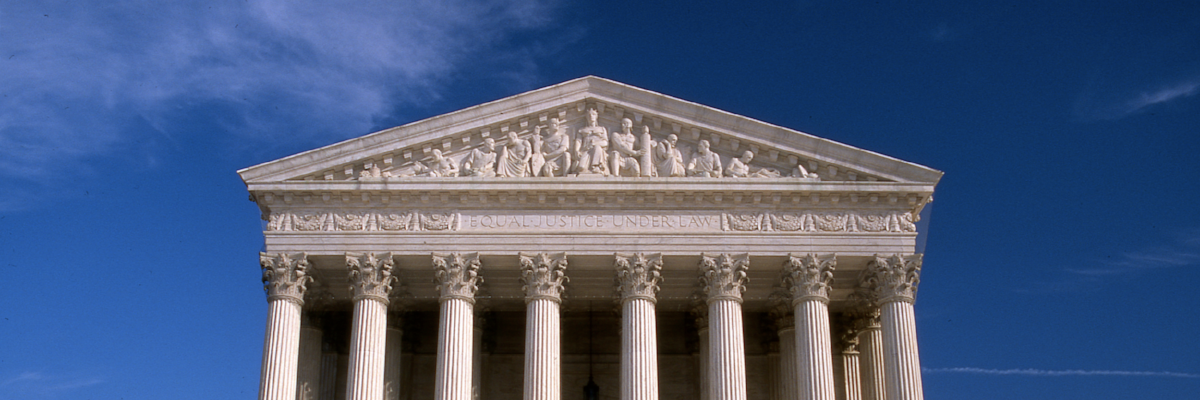
US Supreme Court Rejects Seizure of Iran Artefacts from Chicago Museum
◢The US Supreme Court on Wednesday rejected a claim by US citizens wounded in a suicide bombing in Israel in 1997, who were demanding the seizure of Iranian antiquities held in a Chicago museum as compensation.
The US Supreme Court on Wednesday rejected a claim by US citizens wounded in a suicide bombing in Israel in 1997, who were demanding the seizure of Iranian antiquities held in a Chicago museum as compensation.
The ruling, by eight judges to none, put an end to a long-running legal battle by nine Americans who wanted Iran to pay compensation for its backing of the Palestinian group Hamas, which claimed responsibility for the bomb attack that wounded them.
The decision confirmed an earlier appeals court ruling that the thousands of 2,500-year-old clay tablets on long-term loan to the University of Chicago's Oriental Institute could not be seized, because Iran was not using them for commercial purposes.
The plaintiffs had successfully sued Iran for $71.5 million in a US federal court, but the Islamic Republic has few assets frozen in the United States, so the Americans had turned to the tablets from the ancient Persian capital of Persepolis as a potential source of compensation.
The university and museum had feared losing their prized collection of artefacts if the judgement had gone against them.
The sensitive case reflected the difficulty victims have in obtaining compensation from sovereign states deemed as supporters of terrorism by Washington.
Photo Credit: Wikicommons
Iran Teams Carry Plane Crash Dead Down From Mountain
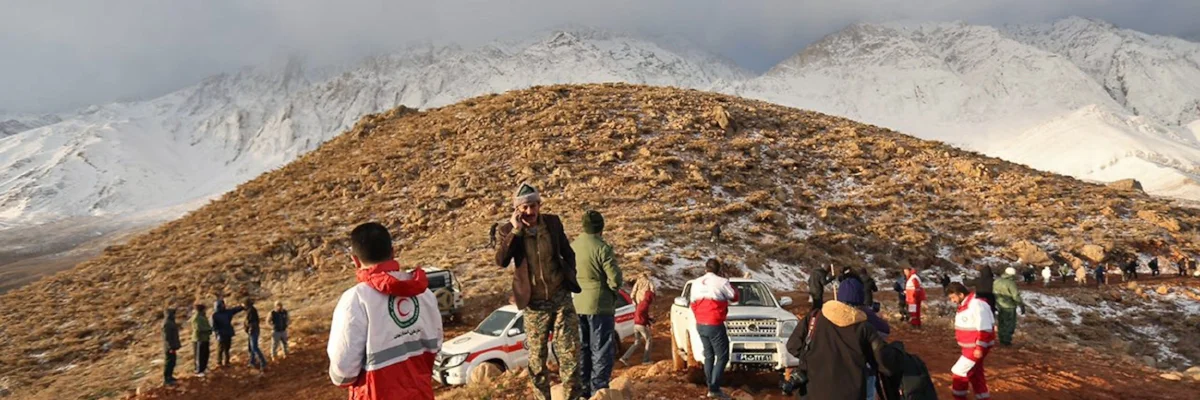
◢ Emergency teams on Wednesday began recovering bodies from a plane crash in Iran's Zagros mountains but the operation had to be suspended due to bad weather, officials said.
Emergency teams on Wednesday began recovering bodies from a plane crash in Iran's Zagros mountains but the operation had to be suspended due to bad weather, officials said.
Aseman Airlines flight EP3704, carrying 66 people, disappeared from radar on Sunday morning around 45 minutes after taking off from Tehran on a domestic flight. No survivors have been found.
Search helicopters located the crash site after a break in the weather on Tuesday at a height of around 4,000 metres (13,000 feet) in the Dena range.
Helicopters were unable to land but officials said a recovery operation had begun on Wednesday, with emergency personnel carrying bodies on their backs to a road at the foot of the mountain.
The Iranian Red Crescent later said the operation had to be suspended as the bad weather returned, news agency ISNA reported.
It was unclear how many bodies had been recovered. One official reported seven bodies recovered but the Red Crescent said 32 "packages" had been brought down from the mountain and that these were not necessarily entire bodies.
A local rescue official told news agency ILNA that it should be possible to identify most of the remains.
The crash of the ATR-72 twin-engine plane, which had been in service since 1993, reawakened concerns over aviation safety in Iran, which has been exacerbated by international sanctions over the years.
Aseman Airlines was blacklisted by the European Commission in December 2016. It was one of only three airlines barred over safety concerns -- the other 190 being blacklisted due to broader concerns over oversight in their
respective countries.
By Eric Randolph in Tehran
Photo Credit: Morteza Salehi
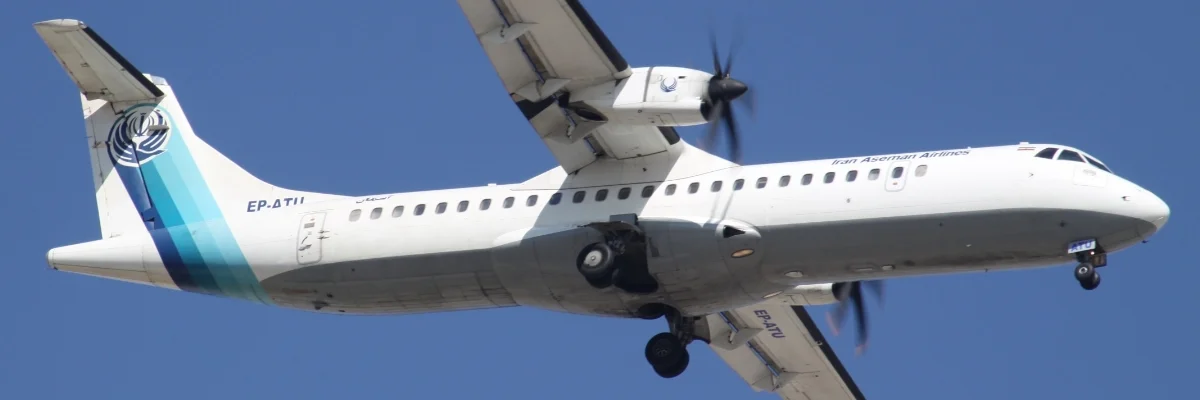
Hazardous Effort to Recover Bodies From Plane Crash in Iran Mountains
◢ Iranian rescue teams struggled to recover bodies on Tuesday from the wreckage of a plane that crashed in hazardous terrain near a mountain peak two days earlier with 66 people on board.
Iranian rescue teams struggled to recover bodies on Tuesday from the wreckage of a plane that crashed in hazardous terrain near a mountain peak two days earlier with 66 people on board.
"Deep and dangerous crevices in the area of the crash have made it impossible for helicopters to land," Ghafoor Rastinrooz, director of the regional medical centre, told official news agency IRNA. "The bodies must be transferred by hand to the foot of the mountain which will be time-consuming," he said.
Aseman Airlines flight EP3704 disappeared from radar as it flew over the Zagros mountain range on Sunday morning, around 45 minutes after taking off from Tehran on a domestic flight.
After two days of heavy snow and fog, the weather finally cleared on Tuesday morning, allowing a helicopter crew to spot a piece of the wreckage with the company's logo.
A pilot told state broadcaster IRIB he had seen "scattered bodies around the plane" and that it was located on one of the Dena mountains at a height of around 4,000 metres (13,000 feet).
Footage from the helicopter showed a glimpse of the wreckage in deep snow on a sheer mountain face, while officials warned that bad weather was due to return in a few hours.
Around 100 mountaineers have been making their way up the mountain since Monday and teams were being choppered to near the crash site. "Helicopters are dropping off the rescue and relief teams in the nearest spot possible, as accessing the site of the crash is very difficult," Ali Abedzadeh, head of the Civil Aviation Organisation, told state TV.
"Only highly professional and trained mountaineers can go there, get close to the plane and bring back the bodies," he said.
Aviation Safety
The ATR-72 twin-engine plane, in service since 1993, flew early Sunday from the capital's Mehrabad airport towards the city of Yasuj, some 500 kilometres (300 miles) to the south.
A team of crash investigators from French air safety agency BEA was due to arrive in Iran later on Tuesday. The incident has reawakened concerns over aviation safety in Iran, which has been exacerbated by international sanctions over the years.
Aseman Airlines was blacklisted by the European Commission in December 2016. It was one of only three airlines barred over safety concerns -- the other 190 being blacklisted due to broader concerns over oversight in their respective countries.
Iran has complained that sanctions imposed by the United States have jeopardised the safety of its airlines and made it difficult to maintain and modernise ageing fleets.
Aseman was forced to ground many of its planes at the height of the sanctions due to difficulties in obtaining spares. In a working paper presented to the United Nations' International Civil Aviation Organization (ICAO) in 2013, Iran said US sanctions were blocking "the acquisition of parts, services and support essential to aviation safety".
Iran has suffered multiple aviation disasters, most recently in 2014 when 39 people were killed as a Sepahan Airlines plane crashed just after take-off from Tehran, narrowly avoiding many more deaths when it plummeted near a busy market.
But figures from the Flight Safety Foundation, a US-based NGO, suggest Iran is nonetheless above-average in implementing ICAO safety standards.
Lifting sanctions on aviation purchases was a key clause in the nuclear deal that Iran signed with world powers in 2015. Following the deal, Aseman Airlines finalised an agreement to buy 30 Boeing 737 MAX jets for $3 billion (2.4 billion euros) last June, with an option to buy 30 more.
The sale could still be scuppered if US President Donald Trump chooses to reimpose sanctions in the coming months, as he has threatened to do.
By Eric Randolph in Tehran
Photo Credit: Ali Khodaei
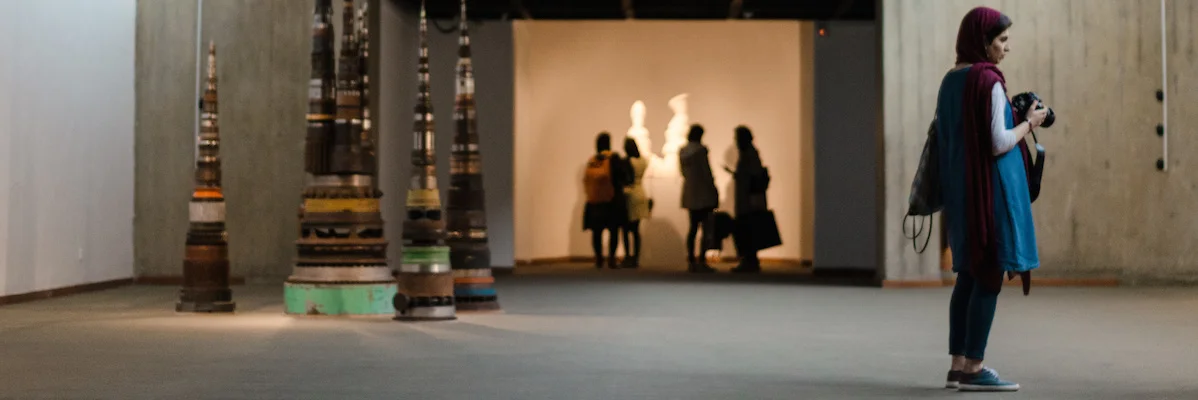
New Wave Of Iranian Globetrotters Hits The Road
◢ A travel frenzy is gripping young Iranians, who are inspiring each other through social media to overcome traditional constraints and expand their horizons.
A travel frenzy is gripping young Iranians, who are inspiring each other through social media to overcome traditional constraints and expand their horizons.
The exploits of young Iranian travelers, hitchhiking and backpacking their way around the globe, have become immensely popular on Instagram and Telegram, the most widely used apps in Iran, with some gathering more than 200,000 followers.
Iran has long had a globetrotting elite thanks to the large diaspora that fled to the United States and Europe after the 1979 revolution, but now it is the turn of the emerging middle class to stretch their wings, overcoming cultural barriers and parental worries in the process.
Sara Louee, 31, grew up thinking that holidays were a family trip to the northern coasts of Iran.
But two years ago, she met a group of foreigners through the website couchsurfing.com and joined them as they hitchhiked to the ancient city of Yazd.
She was unprepared: "I had absolutely no equipment. I was wearing flimsy girly shoes and had borrowed a backpack from a friend," she told AFP.
But her mind was opened to a world of possibility and she was soon saving for a 40-day trip around Europe, even if it meant battling with her conservative-minded parents.
"My family didn't accept it easily or overnight. I went through a lot of pain. But I gradually proved I could do it with shorter trips and gained their trust," said Louee, who now blogs regularly about her travels.
"These days, if I stay home at the weekend, my dad comes over and asks if something is wrong," she added, laughing.
'Strangers in your room?!'
Other young Iranians, particularly women, say they had been taught that travelling alone was dangerous.
"When I told people I stayed in a hostel in Europe, Iranians would be shocked and say 'You mean there were strangers in your room?! Didn't they do anything to you?'" said Mahzad Elyassi, another travel blogger.
She only heard about hitchhiking for the first time in 2015 but has since travelled to all 32 of Iran's provinces and 20 countries.
"We've proven that Iran is really safe for such trips. It's become a trend.
"One woman said she used my Instagram page to convince her husband, saying: 'If she can do it alone, so can we.'"
Last year, Iran recorded 9.2 million departures, a 38.5-percent increase on the previous year and almost double the numbers a decade ago.
The trend has been helped by President Hassan Rouhani, who came to power in 2013 promising to improve Iran's relations with the world.
Iranians are not welcome everywhere: the United States this year banned them from entry unless they have close family, and European countries have strict and laborious procedures for tourists designed to weed out poor people.
But much of the rest of the world is welcoming Iran's tourist boom, with 38 countries now waiving visas for Iranians.
They include Georgia, Russia, Turkey and Malaysia, and talks are reportedly under way with India.
Tech Support
That has helped encourage travel among those outside of the rich elite by putting the focus on cheaper countries.
"Maybe Iranians don't have enough dollars or euros to travel to Europe but they can explore places like southeast Asia," said Elyassi.
Technology has also been crucial.
"When I started, Google Maps didn't exist. People couldn't just easily travel and share their experiences," said Reza Pakravan, 43, one of Iran's best-known travelers after he broke the world record for crossing the Sahara on a bike.
Alireza Zafari, 38, has spent two years on the "Herculean task" of documenting the whole of Iran for travelers, a project he expects will take another eight years to complete.
He hopes to encourage more Iranians and foreigners to visit Iran's beauty spots rather than the default option of popping across the border to Turkey, still the top choice for Iranians with 2.1 million visits last year thanks to cheap package tours and the availability of booze.
"The reason behind the travel wave is that people have become aware of the world, and technology gives them easy access to the information they need," Zafari told AFP.
By Ali Noorani in Tehran
Photo Credit: Negar Ghaffari, Iran Open Album