
Relations Between France and Iran in the Biden Era
An enduring hawkishness shapes France-Iran relations and the French leadership may discourage Biden from making conciliatory gestures towards Iran.
The French government has welcomed the election of new US President Joe Biden, who disapproves of former President Donald Trump’s withdrawal from the Iran nuclear deal, formally known as the Joint Comprehensive Plan of Action (JCPOA), and has confirmed his desire to return to it. France, like the rest of Europe, is mostly pleased by Biden’s declared intent to rebuild transatlantic relations and consult European allies on Iranian matters, as well as on other regional tensions. Biden’s early steps to rejoin the Paris Agreement, the World Trade Organization and the World Health Organization confirm that he is following through on his campaign promises: that the United States is back and that it will play the multilateralism role, consulting allies and partners and ending the previous administration’s abrasive practices.
Against this backdrop, France, together with Germany and the United Kingdom—the E3 parties to the nuclear agreement—is facing several challenges with both Tehran and Washington. Paris seeks a clear understanding of Washington’s true intentions with Tehran, whilst also needing to realistically assess Iran’s posture and develop a European-wide vision for relations with Iran.
An Enduring Hawkishness
France’s current approach to Iran can be traced back to former President Nicolas Sarkozy, who introduced a new Middle East policy based on neoconservative intellectual visions shaped by a team of strategists nicknamed “The Sect” and led by the late Thérèse Delpech. Paris not only maintained its hawkish approach under François Hollande as president and Laurent Fabius as foreign minister, but it also hardened this approach during the painstaking negotiations leading to the Iran nuclear deal in 2015. At a series of tense meetings, Fabius endlessly added complexity to talks, claiming that US negotiators were naive and ready to make undue concessions to Iran while neglecting critical safeguarding details. The French felt that former US Secretary of State John Kerry and Iranian foreign minister Mohammad Javad Zarif were poised to strike a hurried, weak deal without taking France’s expert guidelines into consideration. Fabius nearly killed the negotiations.
Fabius and other members of The Sect also sympathised with Israeli Prime Minister Benjamin Netanyahu and included some Israeli priorities within French positions. Saudi Arabia has become a growing consumer of French weapons and Riyadh’s views were likewise taken into account, and Saudi pressures to prevent or slow Iran’s nuclear capacity have been considered. Some in France hoped for more pragmatic behaviour when Emmanuel Macron became president, but the new foreign affairs minister, Jean-Yves Le Drian, who previously worked as the defence minister, is the guardian of the hawkish line.
Macron occasionally distances himself from his more hawkish advisers. He opposed ousting Syrian President Bashar al-Assad by force before a political solution could be reached, and Macron has stated that he wants an end to a neocon policy. Macron showed his independent streak when he invited Zarif to the 2019 G7 Summit in Biarritz, bringing a four-point plan to Trump and genuinely attempting to arrange a phone conversation between the US president and Iranian President Hassan Rouhani on the sidelines of the UN general assembly later in the year. The conversation did not end up happening because Trump did not take the opportunity and Rouhani did not have the necessary political support. But the facilitation efforts were sincere and significant.
Short-Term Gains but Long-Term Costs?
French officials have repeatedly stated that they want to see the JCPOA survive. But their messages can appear to contradict that mission. In a phone call on Tuesday, Macron told Rouhani that Iran must make “clear gestures” to revive the nuclear deal. In an interview last month with the French weekly newspaper Journal du Dimanche, Le Drian said that tough discussions on ballistic proliferation and regional destabilisation by Iran will be necessary in the course of new negotiations. While the content of the message does not differ much from that set out by the Biden administration, the tone is more aggressive—an ultimatum rather than an offer to negotiate. Unsurprisingly, Iranian responses were harsh, but France’s top diplomats do not seem to understand—or do not want to understand—that posing diktats to a nationalist state is a big miscalculation.
Another miscalculation was made when Macron participated in an interview hosted by the Atlantic Council on February 4. Macron stated that Iran is closer to the atomic bomb now than before the 2015 agreement, that concerns about ballistic missiles, and the new negotiations should be global and inclusive—including even Saudi Arabia and Israel.
Macron added that the nuclear agreement cannot work if regional governments are not satisfied, but his vision of potential Saudi and Israeli involvement in the future of JCPOA is ambiguous. Is the involvement limited to consulting these “partners,” or will they be invited to the negotiation table? Biden will likely consult his regional partners without inviting them to the negotiation room—Washington is under no illusions as to the impact such a move would have. Officially inviting the Saudis and Israelis to be consulted is itself an affront to Iran. Unsurprisingly, Saeed Khatibzadeh, the spokesperson of the Iranian foreign ministry, immediately rejected the idea of new participants in nuclear deal talks after Macron’s comments were publicised.
Categoric opposition from Tehran was certain, so why did Macron make such a statement? According to Al-Quds Al-Arabi, a pan-Arab newspaper, the French president is set to visit the Saudi capital of Riyadh soon and may discuss the Iranian nuclear program with King Salman and Crown Prince Mohammed bin Salman. This will certainly please the Saudis, who will appreciate receiving France’s political support, but the Iranians see this move as deliberately provocative. On 9 February, François Nicoullaud, a highly respected expert and France’s former ambassador to Iran, commented on Macron’s proposals, saying that the mediator’s job is listening to and exploring opinions from both sides and then developing a step-by-step solution in a manner that’s as neutral as possible and that’s acceptable to everyone. Al-Quds Al-Arabi reports that talks would include reinforcing bilateral cooperation, notably military. If this is true, it might indicate that Paris is seeking advantages from Biden’s intention to review US military cooperation and weapons deliveries to the Saudis. France is likely to see this as an opportunity for juicier military contracts.
France’s flirtation with Saudi Arabia undermines its bilateral relations with Iran, depriving Macron of his claimed ambition of being a major facilitator of a “demanding dialogue” between Iran and the United States. During his interview with the Atlantic Council, Macron reiterated the role he is willing to play as a mediator. The French-Saudi alignment, even if France does not agree with all of the Kingdom’s actions and policies, will convince Iran that Paris cannot mediate impartially. If Le Drian distrusts Iran, the reciprocal is also true.
Repairing Bilateral Relations
Bilateral relations are in bad shape, and polite diplomatic language cannot hide the cracks. But it is not too late for a fix. The priority now is to safeguard the possibility of an orchestrated return to the JCPOA. Zarif has suggested that Josep Borrell, the European Union’s High Representative, could “choreograph the actions that need to be taken” by the United States and Iran. Here, France might play a role by showing that as a de facto leader of the E3, it can lend visible support to such an initiative. Macron would have the opportunity to implement its “honest broker” status. Another issue might allow France to gain credibility not only with Tehran but also with other Europeans. The Instrument in Support of Trade Exchanges (INSTEX), which facilitates transactions for European trade with Iran despite limitations in direct banking channels, deserves more attention. France, joined by other Europeans, should press Biden to quietly bless the operation of INSTEX. If France, supported by other EU member states, manages to persuade Biden to make such a step, the impact on bilateral trade between France and Iran could help repair some of the lost bilateral trust.
On regional issues, France should use its influence on Saudi Arabia, Iraq, Qatar and the United Arab Emirates to encourage direct dialogue with Iran. Paris could make suggestions both on confidence-building measures and on the practical steps for a dialogue with Iran on regional concerns, such as ballistic missile proliferation, and particularly Yemen, working in coordination with the UN envoy. First, France should try sharing these views and reactions with Tehran, and later it could present new ideas on a future region-wide security system. Excluding talks on nuclear issues would be more palatable to Tehran, unless all participants, including Saudi Arabia and Israel, start negotiating on regional denuclearisation. However, this move will likely not be seen enthusiastically by all.
France can have a fresh start with Iran, but it will take time, prudence, and humility. France’s policies towards Iran must use strategic criteria when assessing the field and devising a policy. Professional advice from governmental departments and agencies as well as from external experts, including the business sector, should not be neglected, and lessons must be drawn from past mistakes.
Photo: Wikicommons
Iran Sanctions Hopes Fly on Possible Delivery of Eight ATR Aircraft
◢ In a recent interview, French Economy Minister Bruno Le Maire expressed optimism for the delivery of eight ATR turboprops to Iran as part of a contract with Iran Air, the country’s national airline. Le Maire spoke of being “hopeful that the United States will provide authorization to deliver these aircraft.” The ATR deliveries, like the three Airbus deliveries made prior to President Trump’s withdrawal from the Iran nuclear deal, are highly symbolic of the hope and expectations for increased trade and investment following the implementation of the Joint Comprehensive Plan of Action (JCPOA).
In a recent interview, French Economy Minister Bruno Le Maire expressed optimism for the delivery of eight ATR turboprops to Iran as part of a contract with Iran Air, the country’s national airline.
The encouraging comments come after Le Maire disclosed two weeks ago that the United States had rejected a joint European letter requesting a broad range of waivers and exemptions that had been sent to Secretary of Treasury Steve Mnuchin and Secretary of State Mike Pompeo in June.
In a change of tone, Le Maire spoke of being “hopeful that the United States will provide authorization to deliver these aircraft.” The ATR deliveries, like the three Airbus deliveries made prior to President Trump’s withdrawal from the Iran nuclear deal, are highly symbolic of the hope and expectations for increased trade and investment following the implementation of the Joint Comprehensive Plan of Action (JCPOA).
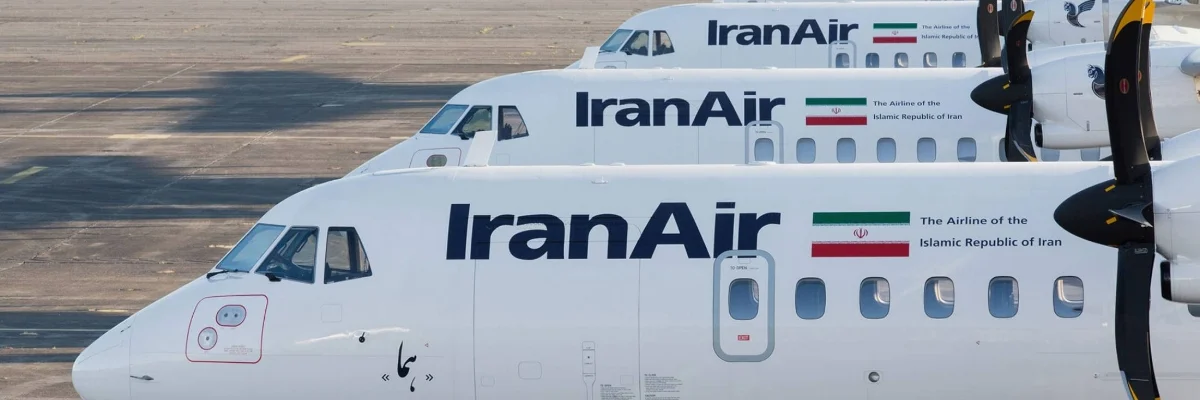
Le Maire described the intention for ATR to deliver eight aircraft prior to the August 6 sanctions deadline. At least four ATR 72-600 aircraft have been registered to Iran Air. A further four aircraft have been photographed in Iran Air livery, but have not yet had their registrations altered. These eight aircraft can be identified as follows:
- F-WWEP (now EP-ITI)
- F-WWEU (now EP-ITJ)
- F-WWEF (now EP-ITK)
- F-WWEG (now EP-ITL)
- F-WWEC
- F-WWED
- F-WWEE
- F-WWEX
To date, Iran Air has received an initial eight ATR aircraft, having signed a contract in April 2017 for 20 planes. Iran Air is using these planes as part of a new regional service.
The ATR contract, like so many others, was immediately put in doubt following President Trump's withdrawal from the nuclear deal on May 8 and the announcement that the US would be reimposing secondary sanctions that had been removed as part of the JCPOA. Having already manufactured the aircraft on specification for Iran Air, only to see delivery delayed by financing issues related to sanctions concerns, ATR announced it would seek a new license from the US Treasury to permit the delivery of the aircraft following the US withdrawal form the nuclear deal.
In July, US Department of Treasury assistant secretary of terrorist financing Marshall Billingslea downplayed the likeliness of any such licenses being granted, telling FlightGlobal, "At this stage, I think we are not in a position to suggest we would be issuing such licenses.” Billingslea cited an inability to “show flexibility on transactions.”
But Le Maire’s comments will give rise to new hope that the US authorities may be adopting a more flexible stance. The French minister disclosed that he has been “negotiating for weeks” with his counterpart, Mnuchin, “fighting so that in the health sector, in the agri-food sector, which are now sanctions exempt, there may be funding channels that remain open."
In the context of this fight, the delivery of the ATR aircraft will prove the most clear indication of US flexibility. There are three reasons US authorities might decide to issue a waiver. First, ATR’s smaller aircraft are used for regional routes. This limits concerns of possible “dual use” of the aircraft for military applications. US authorities have sanctioned Iranian airlines and aircraft for conducting “resupply” flights to the conflict in Syria. Such concerns clouded the Airbus and Boeing contracts for larger commercial aircraft.
Second, unlike Airbus aircraft, ATR turboprops, manufactured under a joint venture between Airbus and Italian aerospace company Leonardo, have limited US parts content. According to ATR executives, US components account for “slightly over 10%” of total parts content, or just above the sanctions threshold. Additionally, the aircraft are already manufactured, meaning that there is no further activities necessary with US entities along the supply chain.
Finally, there is a clear humanitarian justification. As shown by the tragic crash of an Aseman Airlines ATR 72 in February, smaller aircraft are especially vulnerable to accidents caused by aging and poor maintenance. Improving air safety has been a primary consideration for Iranian authorities as they sought to acquire new aircraft following the lifting of sanctions.
A focus on delivering eight turboprops and protecting banking channels for sanctions exempt sectors does not equate to a full-defense of French business interests in Iran. It is clear that Iran contracts of leading French enterprises such as Total, Peugeot, Alstom, and Airbus remain outside the scope of compromise with the US Treasury.
However, even a small victory would be important for Le Maire, as it would push the Trump administration into a mindset of negotiated compromise rather than blanket rejection. The Trump administration is unlikely to announce any softening in their position. So the clearest indicator will be whether the eight ATR aircraft make their long-awaited flights to Tehran. The eyes of a nation will be watching.
Photo Credit: ATR