

US Officials Warn of ‘Deceptive Web’ of Iran Business, But Hamper Transparency Efforts
◢ In a recent speech, Under Secretary of the Treasury Sigal Mandelker warned that foreign companies that maintain a presence in Iran must conduct “extra due diligence to keep them from being caught in Iran’s deceptive web.” But background conversations with several compliance specialists reveal that US sanctions are a major barrier to key AML/CTF reforms in Iran. Industry-standard compliance software is not accessible for Iranian end users, leaving some experts to conclude that Iran is being “set up to fail.”
In a recent speech, Under Secretary of the Treasury Sigal Mandelker warned that foreign companies that maintain a presence in Iran must conduct “extra due diligence to keep them from being caught in Iran’s deceptive web.” Mandelker has been touring countries in Europe, Asia, and the Middle East, engaging governments and businesses in order to “make clear the very significant risks of doing business with companies and persons” in Iran.
Many Iranian companies, particularly in the private sector, have long taken seriously the need to conduct enhanced due diligence, including on their own customers and partners. Improved transparency is a prerequisite of working with foreign companies, which remain wary of the wrath of US regulators for any inadvertent sanctions violations.
Since the implementation of the JCPOA nuclear deal, and in anticipation of new foreign trade and investment, many Iranian enterprises have hired specialist consultants to help establish internal compliance departments and institute robust anti-money laundering (AML) and counter-terrorist financing (CTF) processes. Technology solutions are central to any such transparency efforts.
While Iran is witnessing a wider push for transparency, particularly around Iran’s compliance with the Financial Action Task Force (FATF) action plan, there remains internal resistance to compliance reforms. As explained by one consultant who advises Iranian companies on compliance policies, "Elements of the Iranian government contribute to the problem by issuing instructions that foreign companies and technologies should not be engaged to assist the banks in their compliance efforts." These sensitiveness are especially acute for the Central Bank and Ministry of Economy, where Iranian officials fear that foreign technology could be used for espionage. Given that there are no homegrown compliance tools, system-wide implementation remains a distant prospect.
In the meantime, ambitious banks such as Middle East Bank and Saman Bank have been at the forefront of the effort to empower their compliance departments and to demonstrate competencies in know-your-customer (KYC) and know-your-transaction (KYT) due diligence.
However, conversations with several international compliance specialists, who agreed to describe their experiences on background, make clear that—counterintuitively—US sanctions pose the most significant challenges in the effort to improve sanction compliance within Iranian banks and companies. These sanctions prevent industry-standard technology, including software that enables the automated searches of companies and entities for hits against global sanctions lists, from being accessed by users with Iranian IP addresses.
For example, World-Check, a market-leading compliance tool from Thomson Reuters which allows users to “automatically and cost-effectively screen all of their customers, partners, employees, and business transactions for potential Iran sanction risk,” is inaccessible from Iran, despite the fact that the company advertises a specific “Iran Economic Interest Solution” comprised of World-Check and a second product called IntegraScreen. So while foreign companies can use the product to mitigate their sanctions risks, Iranian companies cannot do so for the benefit of their foreign clients or customers.
American companies such as Thomson Reuters are reluctant to enable use of their service from Iran due to primary sanctions prohibitions on exporting a service to Iranian companies, even if that service is intended to help Iranian firms improve their compliance with US and EU sanctions laws. Compliance professionals report that smaller European software companies, which could have filled the gap, are reluctant to do so due to the possible negative impact on their US business and difficulties in processing related licensing fees.
These circumstances leave some Iranian companies to pursue less-robust software solutions from markets such as India, which can contribute to screening failures. Alternatively, Iranian companies seek back office support “offshore,” in effect subcontracting their compliance work on an ad hoc basis. Neither of these solutions reflect the compliance best-practice that US officials insist upon for those companies that wish to pursue trade and investment in Iran. In the event of a compliance failure, such measures are unlikely to hold up to regulatory scrutiny.
US officials could remedy these issues through smarter sanctions policy. Given similar fears among consumer technology companies, the US government enshrined the accessibility of internet and communications tools in 2014 with the creation of General License D, which protects the provision of services and software “incident to the exchange of personal communications over the Internet, such as instant messaging, chat and email, social networking, sharing of photos and movies, web browsing, and blogging.” The license, which has been only partially successful at preserving access to technology products for Iranians, reflected an assessment on the part of US officials that protecting the free exchange of information was consistent with the aims of Iran policy.
Despite the consistent message from US Treasury Department and State Department officials that a lack of transparency in Iran’s economy represents a national security threat to the United States, particularly in regards to terrorist financing risks, there has been no similar effort to ensure the availability of compliance tools for Iranian end users. One compliance executive, who specializes in enhanced due diligence, wondered, “If Iran cannot access the very tools that it needs in order to reform, is it being set up to fail?”
Photo Credit: Wikicommons
Europeans Beat Back Americans as FATF Gives Iran More Time on Financial Reforms
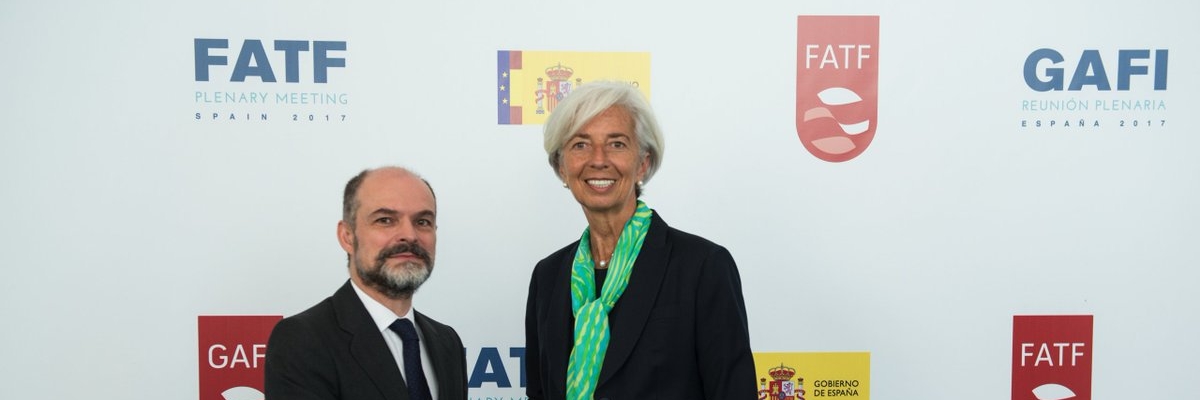
◢ At its plenary meeting in Paris, the Financial Action Task Force (FATF) opted “to continue the suspension of countermeasures” related to Iran’s inclusion in the so-called “blacklist” of countries with deficiencies in anti-money laundering (AML) and combating financing of terrorism (CFT) standards. The suspension will be in place until October 2018. The suspension can be seen as a victory for European and Iranian multilateral cooperation in the face of the increasingly hostile American posture.
At its plenary meeting in Paris, the Financial Action Task Force (FATF) opted “to continue the suspension of countermeasures” related to Iran’s inclusion in the so-called “blacklist” of countries with deficiencies in anti-money laundering (AML) and combating financing of terrorism (CFT) standards. The suspension will be in place until October 2018 and in this period jurisdictions will continue to “advise their financial institutions to apply enhanced due diligence to business relationships and transactions with natural and legal persons from Iran.”
The outcome of the plenary was the subject of great anticipation. Progress on the FATF action plan is critical for Iran’s reintegration in the global financial system. The FATF expressed its “disappointed with Iran’s failure to implement its action plan to address its significant AML/CFT deficiencies” noting in a public statement that “a majority of the action items remaining incomplete.”
Iran’s slow implementation of the Action Plan reflects in part the considerable political scrutiny that has been placed on the process in Iran. Political leaders opposed to President Hassan Rouhani have decried the action plan reforms as an effort by international actors to exert undue influence over the Iranian financial system. They have also questioned the value of the reforms given the pending snapback of US secondary sanctions following President Trump's May 8 withdrawal from the JCPOA nuclear deal.
Iran’s hardliners were not alone in their disapproval of Iran's FATF efforts. American officials had made it clear in the run-up to the plenary that they would be pushing for the resumption of countermeasures against Iran. Congressmen Rob Portman (R-OH) and Ed Royce (R-CA) sent a letter to Treasury Secrtary Steven Mnuchin last week to “ to ensure action next week by the Financial Action Task Force (FATF) against Iran. For many in Washington, resumption of countermeasures is seen as a way to further hobble Iran’s financial system, given that banks that might otherwise be structured to work with Iran under secondary sanctions would likely refuse to do so if the FATF action plan had failed to be implemented outright.
Officials from the European members of FATF, noting that the resumption of countermeasures would effectively end the tenuous political support for financial sector reforms in Iran, coordinated in order to ensure that Iran’s case would receive a fair evaluation. Active dialogue with Iranian stakeholders at the Ministry of Foreign Affairs and the Central Bank of Iran helped European officials gauge the likely tides of political support for the action plan reforms, especially given outstanding legislative requirements such as the ratifying and implementing the Palermo and TF Conventions.
Iranian officials were keen to impress on their European counterparts that Iran’s compliance with FATF’s recommendations is presently commensurate with many countries, which are not currently blacklisted. An appeal was made for Iran’s case to be evaluated on a technical, rather than political basis, particularly as American antipathy towards the continued suspension of countermeasures has been understood as part of the Trump administration’s broader pressure campaign against Iran.
In addition, Iranian officials noted that the FATF issue was now a matter of direct discussion between President Rouhani and Ayatollah Ali Khamenei, Iran's supreme leader. Despite the contentiousness of the issues, there is some suggestion that a political consensus around AML/CFT reforms is achievable. Such a consensus may see reforms characterized as a national endeavor rather than one pursued at the behest of FATF. Overall, within the domestic and international political context, the suspension of countermeasures should be seen as a victory for European and Iranian multilateral cooperation in the face of an increasingly hostile American posture.
Photo Credit: FATF

FATF Faces Test of Fairness on Iran at Plenary Meeting
◢ Iran is facing the end of a four month extension given by the Financial Action Task Force (FATF) for the reform of the country’s AML/CFT regulations. Iran will be hoping for a further extension of the suspension of countermeasures at the June plenary of the FATF. Some FATF members have sought to characterize such extensions as exceptional. However, extensions are a common procedure, and FATF ought to treat Iran’s case in fair recognition of this fact.
Next week, Iran is facing the end of a four month extension given by the Financial Action Task Force (FATF), a global standard-setting body, for the reform of the country’s AML/CFT regulations. Beginning in June 2016, Iran gave its political commitment to the action plan, accepting technical assistance in order to effectively implement the action plan. This political commitment saw Iran removed from the so called “black list,” the informal name given to the list of Non-Cooperative Countries and Territories (NCCT). The common practice in recent years has been to apply "countermeasures" against non-cooperative countries. With countermeasures suspended, Iran was moved to a list of “high-risk” countries subject to “enhanced due diligence.”
As per the FATF procedure, Iran can only be returned to the countermeasure list if it proves to be non-cooperative. It should be noted that no country has been added to countermeasure list merely because of less-than-perfect compliance; if that was the case, in this world which is full of corruption and terrorism, the list of countries against which countermeasures should apply would be far more extensive. No country has managed to achieve perfect compliance with all forty recommendations that form the basis of FATF’s guidelines.
Iran will be hoping for a further extension of suspension of countermeasures at next week's plenary of the FATF, as it is in the process of amending its national laws. Some FATF members have sought to characterize such extensions as exceptional. However, a quick glance at the list of countries currently in the gray list or those which managed to get delisted, points to the fact that extensions are a common procedure.
Countries such as Iraq, Syria, Vanuatu, and Yemen have remained on the gray list for many years. Countries such as Bosnia and Herzegovina, Uganda, Afghanistan, and Myanmar were all eventually delisted in recognition of progress in enacting the recommended reforms, but were given between two and six years in order to proceed with their action plans. Iran has been under much more significant pressure, opening FATF to charges of unfair treatment.
For the purposes of a closer comparison, we can look to the case of one country delisted from the so-called gray list in 2017. Based on FATF’s latest evaluation, this country is non-compliant with numerous recommendations outlined in Iran’s action plan. First, the country is non-compliant in terms of “criminalizing terrorist financing.” Second, the country is non-compliant in terms of “Targeted financial sanctions related to terrorism and terrorist financing (identifying and freezing terrorist assets in line with the relevant United Nations Security Council resolutions).” Third, the country is only partially compliant with measures for “customer due diligence.” Fourth, the country is only partially compliant with establishing an effective “Financial Intelligence Unit.” Fifth, the country is non-compliant with wire transfer controls. Finally, the country is only partially compliant with recommendations on criminalizing anti-money laundering.
It is clear that this particular country has deficiencies equal-to or greater-than those of Iran as measured by Iran’s action plan. Yet the country was never included in the FATF blacklist and even managed to be delisted from the gray list as well. This raises the question—is FATF applying double standards against Iran?
FATF emphasizes that it is a technical and not a political body and that all countries are treated equally. Impartiality is important for a global standard-setting body, which seeks to ensure that countries cannot seek to politically undermine one another.
Iran has attended FATF’s face-to-face meetings and answered extensive questions. Moreover, the FATF recommendations call for the enacting of six laws: criminalizing money laundering (i.e. the AML law), criminalizing financing of terrorism (i.e. the CFT law) and four other laws regarding joining four UN conventions. Of these four laws, two had already been approved by the parliament—Iran has joined the UN Anti-Corruption and Vienna conventions. The remaining laws are being deliberated. These legislative measures are among the most difficult recommendations to enact, as they require the coordination of government agencies, parliamentarians, and other supervisory bodies and therefore it seems that the action plan of Iran has been a difficult one with a rather short deadline provided.
Passing a single law may require 18 months of work, as it needs to be reviewed by the committees of the government and the cabinet, parliamentary commissions and then the parliament itself, and finally the powerful Guardian Council. Iran has achieved a degree of compliance with some aspects of the action plan, a fact acknowledged by FATF itself. Therefore, it would be illogical for the country to be considered non-cooperative.
The authority of FATF derives from the number of countries that have trusted it as a technical body. Therefore, this is not only a sensitive juncture for Iran, but also for the legitimacy of FATF, which must strive to preserve its reputation as an impartial technical body that treats all countries equally.
Photo Credit: FATF Twitter

High Stakes for Iran in Upcoming FATF Meeting
◢ A few days ahead of an international meeting in which Iran’s efforts to improve anti-money laundering and counter-terrorist financing (AML/CFT) standards will be reviewed, Ayatollah Ali Khamenei appeared to pour cold water on the reform process. Yet, it is premature to assume that Iran’s consultations with the Financial Action Task Force (FATF) are suddenly over after two years of close coordination. As the FATF’s plenary meeting approaches, the stakes are high for Iran, which is seeking another extension for implementation of its action plan.
A few days ahead of an international meeting in which Iran’s efforts to improve anti-money laundering and counter-terrorist financing (AML/CFT) standards will be reviewed, Ayatollah Ali Khamenei appeared to pour cold water on the reform process. Yet, it is premature to assume that Iran’s consultations with the Financial Action Task Force (FATF) are suddenly over after two years of close coordination. FATF, a financial crime watchdog that develops and monitors international AML/CFT standards, faces an important decision on Iran. The stakes are high for Iran, which is seeking to reintegrate into the global economy and there are reasons to believe that FATF’s decision may have repercussions that go far beyond its June 24-29 plenary in Paris.
Consequences of Iran's AML/CFT Deficiencies
If FATF believes that Iran is not adhering to its action plan to upgrade AML/CFT standards, the intergovernmental body could call on its 37 members to reimpose strict financial safeguards. These so-called "countermeasures" would discourage or even lead to the termination of relationships between Iranian and foreign banks, and possibly include Iran losing access to global bank messaging service SWIFT. Alternatively, FATF may decide Iran has made sufficient progress to warrant an extension to the two-year suspension of the countermeasures. Regardless, there are no indications that Iran will be removed from FATF’s black list of high-risk jurisdictions and financial institutions will continue to be urged to conduct enhanced due diligence (EDD) on Iranian-related business relationships and transactions.
This type of guidance places a significant risk management burden on global banks. Through customer due diligence, banks collect information to identify and verify customers in order to comply with regulations and report suspicious activity. EDD comprises several extra steps, such as probing sources of funds, scrutinizing financial statements, and conducting thorough investigations of relevant businesses or individuals. Because of the high level of scrutiny required for the Iranian market, most foreign banks did not return even after the international nuclear deal was implemented in 2016.
Foreign financial institutions, especially those with a US presence, are unlikely to change this calculation without an improvement to transparency and governance in the local banking sector. In particular, foreign banks are worried about unwittingly facilitating transactions with sanctioned entities. Due to ongoing fears of reputational and legal liabilities, Iran’s access to the international financial system is diminished by de-risking practices of global banks for the foreseeable future.
How Iran Stands to Benefit from Reform
Although the chance to be removed from FATF’s black list is a clear reason for Iran to complete the organization’s action plan, the long-term economic impact of reforms provides another vital incentive. Mismanagement, corruption, and fragmentation in the banking sector dampens economic potential. Iran’s bad debt, estimated to be in the tens of billions of dollars, fuels fears of an imminent banking crisis. Strengthening Iran’s banking sector to align with international standards, a priority highlighted by the IMF, would lay the foundation for a more stable economy and promote reintegration with the international financial system.
FATF-related reforms will not be a panacea for Iran’s economy. This year the currency lost over 20 percent of its value against the US dollar (and much more on the black market) between January and June, foreign companies are considering plans to wind down billion-dollar investments, and a drop in oil revenue looms because of the impending renewal of US secondary sanctions. Nevertheless, if reforms convince some foreign banks to stay even after US sanctions are re-imposed, it could offer a lifeline to an economy under tremendous pressure. Moreover, new rules that improve Iranian banks’ transparency are vital to address a major grievance from protests late last year: the need to root out financial sector corruption that enriches elites and undercuts economic opportunities for the working class.
Iran’s Progress To Date
Despite Iran’s recent decision to delay vital CFT legislation, the government is taking several steps to satisfy the terms of its action plan. The Rouhani administration regularly engages with FATF experts even though there is fierce internal opposition from many of the same political, religious, and military actors who opposed the nuclear deal. In February, FATF credited Iran for establishing a cash declaration regime. In June, a draft bill to amend the AML law was approved by parliament’s judiciary commission and legislators ratified Iran’s accession to an international convention on combating transnational crime. Similarly, Iranian officials are working to implement several technical AML rules that FATF cited in a statement following the organization’s February plenary. Although full implementation will not be realized within two years of beginning the reform process, Iran continues to work toward compliance with international standards across several areas.
The widest gulf between Iran’s commitments and FATF’s expectations remains on criminalizing terrorist financing. To fully comply with FATF standards, text would need to be changed in Iran’s legislation for amending the counter-terrorist financing law and acceding to a related international convention. Both bills contain CFT exemptions for certain types of militant groups, but there is no precedent for FATF accepting legislation with such conditions. Resolving these issues will not be easy, but the political will to be removed from FATF’s black list (if not eventually acceding to FATF) should prompt ongoing discussions.
It is in this context that Khamenei’s June 20 statements, intimating that parliament should abandon the FATF process, are important. Just like in the run up to the international nuclear deal, Khamenei’s maximalist comments are open to interpretation because they may be intended for several distinctive audiences. Domestically, Khamenei is trying to assuage fears from his traditional allies who believe the FATF process is a foreign ploy to weaken the IRGC and hamper Iran’s support for Hamas and Hezbollah. However, this sentiment must be balanced against palpable angst among Iranians that believe the troubled banking sector threatens their livelihoods. This could be why Khamenei mentioned that “some of the provisions of the international treaties may be good” before suggesting that Iran legislate on money laundering and terrorist financing issues independently.
From an international perspective, Khamenei is seeking to increase pressure on European countries to receive the most favorable economic terms possible after the US pulled out of the nuclear deal. Initially, Iran cited ongoing negotiations to salvage the nuclear deal as the primary reason for delaying by two months FATF-related legislation. Only three weeks ago, Khamenei indicated strong support for Iran’s newly established High Council for Economic Coordination. This council, which is composed of leaders from the country’s executive, legislative, and judiciary branches of government, is coordinating a unified response to US sanctions. That is why it should not be overlooked that their first decision was to speed up the process for implementing the FATF action plan. Khamenei may be fed up with the FATF process, but he also may be negotiating.
FATF and Trans-Atlantic Tensions
Leading up to FATF’s plenary session in February, there were indications that the US strongly supported reprimanding Pakistan for its failure to combat terrorist financing. Yet, the decision was delayed until at least the June meeting after three FATF members (China, Turkey, and Saudi Arabia) allegedly intervened on Pakistan’s behalf. The decision exposed a potential break from strong US influence within FATF. It was also a radical departure from the intergovernmental body’s typical decision-making process that relies on consensus rulings.
Coupled with rising trans-Atlantic tensions on foreign policy and trade issues, this calls into question whether the US will be able to build consensus should it seek to reimpose countermeasures against Iran. Furthermore, it is hard to imagine European governments supporting FATF action that further constrains their efforts to salvage the nuclear deal. Beyond European countries, there are several FATF members (China, India, Russia, Turkey) that will be even less inclined to support countermeasures that hurt the foreign investment strategies of their banks, state-run entities, and private companies.
It is possible that neither the US nor Iran will be satisfied with the FATF meeting’s outcome. Still, Iran’s FATF process offers clear benefits to both. For Iran, staying engaged provides much-needed support for a weakened banking sector and a path to reintegration with the global economy. For the US, it provides a global forum to keep pressure on Iran to do more to combat money laundering and terrorist financing.
From an international AML/CFT perspective, it also makes sense to keep Iran engaged in the FATF process. Certain Iranian actors, including some banks, grew quite adept at facilitating transactions to evade sanctions over the past several decades. With the return of stringent US sanctions, these vested local interests stand to benefit once again. Re-imposing countermeasures now will reduce vital coordination to protect the global financial system from new money laundering threats. There may come a time when FATF countermeasures are viewed as the only viable option to combat AML/CFT threats emanating from Iran. However, more time is needed to support Iranian efforts to bring about legislative and regulatory reforms. For now, this is the best way to fulfill FATF’s mission to counter threats to the integrity of the international financial system.
Photo Credit: Financial Services Commission
Iran’s Currency Crisis Spurs Action in Financial Reform Efforts
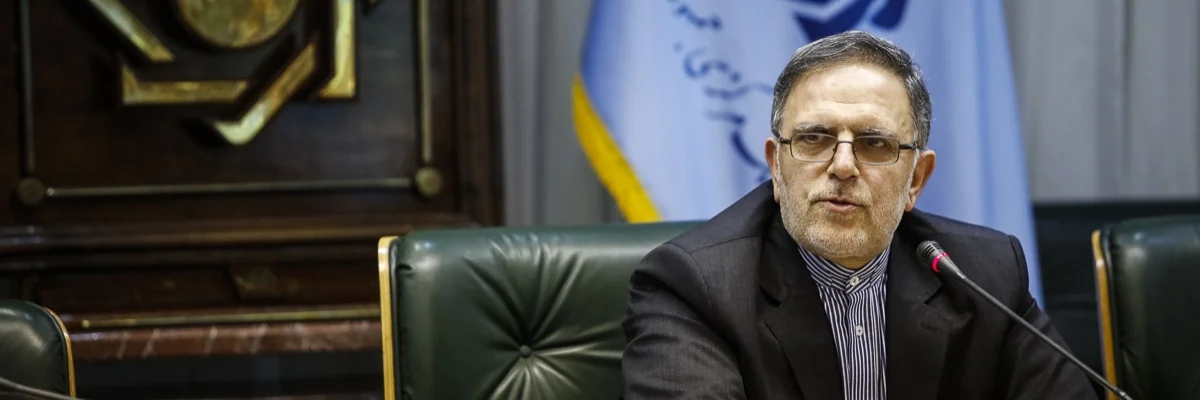
◢ Forced to respond by Iran’s recent currency crisis, the Central Bank of Iran is approaching regulatory reform in the financial sector with new energy. A critical deadline to meet standards set by the Financial Action Task Force is forthcoming in June. Iran needs to demonstrate progress in tackling financial crime estimated to include at least USD 27 billion in transactions annually.
In the 2017 anti-money laundering (AML) index report published by the Basel Institute on Governance, which develops standards for financial regulations and compliance, Iran topped the list of the world’s 10 highest-risk countries failing to comply with AML standards. This index, published since 2007, ranks 140 countries in terms of their efforts combatting dirty money transactions and countering terrorist financing (CTF). Iran has made little progress to date in improving its standing. Yet, the recent reunification of Iran’s exchange rates by central bank is seen to be an effective step toward more economic transparency and part of wider efforts against smuggling and rent seeking in their diverse forms.
The high-risk assessment of Iran highlighted in the Basel Institute report is primarily due to weak AML/CFT regimes practiced in the jurisdiction. High rates of perceived corruption combined with poor financial sector regulations are major drivers of the structural and functional failures in the Iranian economy. Importantly, these are among the critical issues, which the Financial Action Task Force (FATF), an intergovernmental organization which develops politics to combat financial crime, had mandated Iran to address as part of its "action plan."
Following an extension granted in February, the deadline for Iran’s compliance with FATF’s action plans is set for June 2018. This means that Iranian authorities have limited time at their disposal to earn the continued suspension of counter measures against Iran. Lack of membership in organizations such as the World Trade Organization and the FATF, in particular, has led to a myriad of problems in the implementation of the Joint Comprehensive Plan of Action (JCPOA) nuclear deal agreed by Iran and E3+3 in 2015. Due to shortcomings in meeting FATF technical requirements and Basel II and III banking regulations, Iran has failed to expand its business and correspondent banking ties with International financial institutions, with significant consequences. For example, the number of letters of credit opened since “Implementation Day” has been far lower than expected.
As such, financial reform in Iran is motivated by the need to spur economic growth. The mandate that the Supreme Leader of Iran Ali Khamenei gave to the Rouhani government to start negotiations with world powers over Iran’s nuclear program reflects the wider policy of the state to continue interacting with the international bodies on economic matters. To that end, cooperation with the FATF is set to carry on unless that authorization is withdrawn. Yet given the importance of such reforms, this authorization may remain in place regardless of what happens on May 12 with respect to President Trump’s decision to extend sanctions waivers issued as part of the JCPOA.
According to some estimates, the magnitude of organized money laundering in Iran amounts to some USD 26 billion per year. Transacting such sizeable amount of money outside the official financial system is impractical and requires that criminals abuse the conventional financial system to support their illegal activities. The Central Bank of Iran is seeking to increase its powers of supervision to monitor and prevent suspicious money transfers and smuggling of goods, ensuring the integrity of Iran’s financial system.
The central bank's recent moves to stem currency market volatility will make financing of illegal businesses in the economy more difficult. CBI’s new policies prohibit purchasing or holding of more than USD 10,000 or its equivalent in international currencies. In the same parallel, any bank account that whose aggregate debits and credits exceed IRR 50 billion rials will be subject to anti-money laundering probes to monitor for suspicious activities.
Although it will remain possible to find loopholes in the new regulations, these moves reflect significant progress after years of unfulfilled promises to unify the dual foreign exchange rate regime. The move is also viewed as an important step towards obtaining approval from FATF in respect to countering money laundering and removing the rentierism prevalent in the country’s largely state-controlled economy.
In addition, based on the new legislation, revenues from petrochemical exports that are not repatriated to the country will be subject to greater supervision. Firms in the industry will now be required to report their trade transactions in the same system used to record the oil companies’ export revenues. Previously earnings from petrochemical products sales were kept outside Iran in offshore bank accounts in the absence of proper supervision over their transactions and trades.
Interestingly, to further reinforce its oversight, the central bank has launched the an integrated system for monitoring foreign exchange deals or known as NIMA. This is a system which will monitor the activities of four groups of actors who shape the currency market: merchandise and service importers who purchase foreign currency, exporters of goods and services who earn foreign currency, banks and brokerages who act as intermediaries, and the policymakers who seek to manage supply and demand.
According to CBI governor, Valiollah Seif, the operationalization of the NIMA, will change CBI’s current reactionary response mechanism to one that is more proactive and will make controlling hazardous speculative or systematic fluctuations in foreign exchange markets possible by enabling the calculation of the effective demand so that the bank can aptly manage the available foreign exchange reserves.
In sum, the implementation of these targeted measures by CBI is expected to gradually put an end to capital flight and massive conversion of rial to other hard currencies. These moves can also undercut crimes such as smuggling and money laundering by increasing oversight and the likelihood of penalties for their perpetrators. But the effectiveness of CBI’s mandate will be determined by the political will of both the government and the state to fully enforce the letter and spirit of the new regulations and laws. A great deal is at stake. If the Rouhani government can continue to persist in its long-awaited macroeconomic policies and resist pressure from vested interests, then it remains possible that Iran’s economy could find new momentum after years of recession.
Photo Credit: Tasnim