
The Secretive Election of the World’s Top Nuclear Peacekeeper
◢ When the head of the world’s nuclear watchdog died in July, his death was kept secret for four days. Many people didn’t even know Yukiya Amano was sick. The process that will see his post finally filled this week is shrouded in just as much mystery.
By Jonathan Tirone
When the head of the world’s nuclear watchdog died in July, his death was kept secret for four days. Many people didn’t even know Yukiya Amano was sick. The process that will see his post finally filled this week is shrouded in just as much mystery.
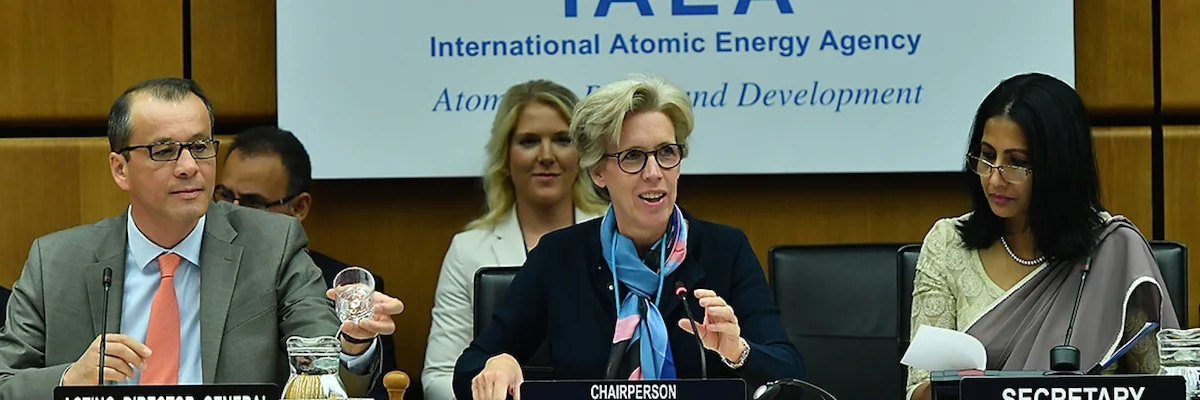
The ambassadors of the 35 nations on the International Atomic Energy Agency’s board will enter a sealed chamber at its headquarters in Vienna on Monday. Two lawyers acting as witnesses will stand guard as one-by-one each envoy slips a paper ballot into a wooden box. Votes are counted and if nobody receives two thirds, the process is repeated.
It will be only the sixth time since the dawn of the nuclear age that the IAEA’s board of governors convenes for the odd ritual, which has been compared to the conclave, the gathering of Catholic cardinals who select the new pope.
“It’s a somber occasion, almost like those meetings in the Sistine Chapel,” said former IAEA policy coordinator Tariq Rauf.
The agency’s wood-paneled halls may lack the grandeur of being in the presence of Michelangelo’s Last Judgement, but whoever is chosen can wield significant power in some of the world’s most vexing hotspots.
The new leader will oversee inspections in Iran as well as the clean-up of Japan’s Fukushima meltdowns and negotiate a safeguards agreement with Saudi Arabia. And then there’s President Recep Tayyip Erdogan wondering why Turkey shouldn’t have nuclear weapons and North Korea still holding tight to its arsenal.
Argentine diplomat Rafael Grossi is the slight favorite to succeed Amano, according to two informal straw polls. He’s facing off against acting Director General Cornel Feruta from Romania and Burkina Faso’s Lassina Zerbo.
The winner inherits a built-in conflict at the core of this Cold war-era institution. It’s won a Nobel Peace Prize for helping prevent nuclear power from being misused for weapons -- but its diplomats, lawyers and scientists are still promoting the spread of nuclear technology at at time when the mood has swung toward renewable energy.
“There are a lot of challenges out there right now,” said U.S. Secretary of Energy Rick Perry last month in Vienna, who tabbed Grossi as a good fit for the job. “Our message to other countries is ‘don’t drag this out.’ To not have a director general in place is problematic.”
U.S. President Dwight Eisenhower founded the agency in 1957 just months before the Soviet Union launched its Sputnik satellite into orbit, prompting concern the U.S. could lose the technology race. Choosing the capital of a neutral country to host its headquarters appealed to actors on either side of the Iron Curtain who used it as a base for espionage.
Unlike the International Monetary Fund or World Health Organization, the IAEA’s board doesn’t publish a job description outlining the minimum qualifications to become its chief. Four IAEA director generals have been lawyers and just one, Sigvard Eklund of Sweden, was a scientist.
The Cardinals
Western countries that dominate the agency want it to strictly keep watch over other nations investigating the mysteries of the atom, according to Britain’s former IAEA ambassador, Peter Jenkins, who added “the cardinals don’t like to be hemmed in by other objective criteria in choosing a leader.”
The language of religion often infuses the atomic Jesuit cabal. The agency’s so-called Safeguards codes are referred to as “the bible” atop which all other activity rests, said one senior diplomat who asked not to be named. IAEA information circulars are to heads of state what Papal encyclicals are to Catholic souls, said another official. Altogether, the rules allow inspectors to track gram-levels of nuclear materials stored in secretive sites around the world.
Rauf, the former IAEA policy coordinator, held court during the 2009 vote when Amano was elected after a record six rounds of balloting. That race was characterized by intense behind-the-scenes lobbying to elect the Japanese diplomat, who was perceived as “solidly in the U.S. court,” according to State Department cables published at the time by WikiLeaks.
Now Rauf’s advocating for more transparency in the selection process to avoid any appearance of “diplomatic corruption and deal making.” The agency’s future could hinge on building trust over how its 377 million euros ($419 million) is administered, he said.
The IAEA has taken some steps to appear less secretive and lessen the legacy of a bygone era, publishing video clips of candidate speeches and pictures of preliminary voting.
“We live in 2019, so I think it was a natural thing,” said Sweden’s Ambassador Mikaela Kumlin Granit, who’s in charge of organizing the voting. “The IAEA should be an organization that keeps up with the times.”
Photo: IAEA
Halkbank Charged in U.S. Indictment With Fraud, Laundering
◢ U.S. prosecutors filed criminal charges against Turkey’s Halkbank, accusing it of fraud, money laundering and violating U.S. sanctions against Iran, in a case that Turkish President Recep Erdogan had pressed both President Donald Trump and President Barack Obama to dismiss.
By David Glovin
U.S. prosecutors filed criminal charges against Turkey’s Halkbank, accusing it of fraud, money laundering and violating U.S. sanctions against Iran, in a case that Turkish President Recep Erdogan had pressed both President Donald Trump and President Barack Obama to dismiss.
Prosecutors accused the bank of participating in a sweeping scheme to violate prohibitions on Iran’s access to the U.S. financial system, involving high-ranking government officials in Iran and Turkey.
The indictment was filed Tuesday in Manhattan federal court.
Senior Halkbank management’s participated “in this brazen scheme to circumvent our nation’s Iran sanctions regime,” U.S. Attorney Geoffrey Berman said in a statement. “Halkbank’s systemic participation in the illicit movement of billions of dollars’ worth of Iranian oil revenue was designed and executed by senior bank officials.”
Two people were previously convicted in the case, which led to the airing in a Manhattan courtroom of many of Halkbank’s activities.
At the center of the U.S. case was Reza Zarrab, a flamboyant Turkish gold trader who said he’d helped Iran tap funds from overseas oil sales that was frozen in foreign accounts. He became the star witness in the case against a Halkbank executive, Mehmet Hakan Atilla, who was convicted in early 2018.
The proceedings gripped Turkey. Some testimony sent its markets into gyrations, in part because prosecutors aired evidence that tied the scheme to Turkish officials and their families. An ex-finance minister was charged in absentia.
Zarrab, who’s married to a Turkish pop star, had a tabloid lifestyle of yachts, fast cars and an office in a Trump Tower in Istanbul. After he was detained during a 2016 trip to the U.S., he added Rudy Giuliani, Trump’s confidante, to his legal team.
Giuliani attempted to broker a diplomatic deal with Turkey to extract Zarrab from U.S. custody, attempting to swap him for an American pastor, Andrew Brunson, who was in Turkish custody.
Giuliani’s role apparently went deeper. At Giuliani’s urging, in the second half of 2017, Trump asked then-Secretary of State Rex Tillerson to press the Justice Department to drop its case against Zarrab, Bloomberg News reported last week.
Giuliani, in an interview last week, said he talked to the State Department in his role as Zarrab’s lawyer and said he behaved ethically and legally. He would have been a hero had he arranged the swap with Brunson, he said.
Photo: Halkbank
IMF Sharply Cuts Iran, Saudi Growth Forecasts
◢ The IMF has sharply downgraded growth projections for Saudi Arabia and Iran, the two largest Mideast economies, citing the impact of US sanctions, geopolitical tensions and low oil prices. Iran has "been or continues to be experiencing very severe macroeconomic distress," the IMF said, adding that growth in 2020 will be flat.
By Omar Hassan
The International Monetary Fund on Tuesday sharply downgraded growth projections for Saudi Arabia and Iran, the two largest Mideast economies, citing the impact of US sanctions, geopolitical tensions and low oil prices.
In its World Economic Outlook, the global lender cut forecasts for almost all countries in the Middle East and North Africa (MENA) as the region is buffeted by biting sanctions on Iran and nail-biting anxiety over last month's attacks on Saudi oil facilities.
The IMF said Iran's economy will contract by a massive 9.5 percent this year, its worst performance since 1984 when the Islamic republic was at war with neighboring Iraq.
The figure is 3.5 percentage points lower than the IMF's April projections, reflecting a rapid deterioration in Tehran's economy after the US implemented tighter sanctions on its oil exports, the nation's main source of income.
This is the second year in a row that Iran's economy is mired in recession, after it shrank by 4.8 percent in 2018.
Iran has "been or continues to be experiencing very severe macroeconomic distress," the IMF said, adding that growth in 2020 will be flat.
The forecast for Saudi Arabia, the region's largest economy, was also cut to just 0.2 percent for 2019, a substantial 1.6 percentage points lower than April's projections.
The outlook is the worst since 2017 when the kingdom's economy contracted by 0.7 percent.
But the IMF raised its Saudi growth forecast for next year to 2.2 percent, slightly above April's projections, on expectations that the non-oil sectors will strengthen following subsidy reforms.
The oil giant has substantially cut power and fuel subsidies as well as imposed fees on expatriate visas and a five-percent value added tax as part of a reform programme to decrease its dependence on oil.
Fitch Ratings in September downgraded Saudi Arabia's credit rating by one notch following the devastating attacks on key oil facilities that knocked out half its production -- a strike that has been blamed on Iran.
Gloomy Regional Outlook
The IMF also cut its forecast for MENA growth to a meagre 0.1 percent this year, 1.2 percentage points lower than April projections, reflecting weakening economies in a region rattled by conflict.
The cut to MENA growth is "largely due to the downward forecast revision for Iran and Saudi Arabia," it said.
"Civil strife in some other economies, including Libya, Syria, and Yemen, weigh on the region's outlook."
The global lender said that the price of oil and gas, the main source of income for the region, dropped 13 percent between April and October and that oil prices will continue to decline until 2023.
It said the September 14 attacks on Saudi oil facilities have stoked tension and uncertainty in the region, especially following tanker attacks in the strategic Strait of Hormuz through which 20 percent of oil trade passes.
Growth projections for the United Arab Emirates, the most diversified economy in the region, was cut sharply to 1.6 percent from 2.8 percent in April, due to weak oil growth in Abu Dhabi and a general slowdown in Dubai.
The IMF also cut forecasts for other hydrocarbon exporters Qatar, Kuwait and Oman but raised the outlook for Iraq, the region's second largest crude exporter, following a 0.6 percent contraction last year.
Photo: IRNA
British Experts in Iran to Upgrade Arak Reactor
◢ A team of British experts arrived in Iran on Monday to begin work to upgrade the Arak heavy water nuclear reactor, the UK embassy in Tehran said. Iran removed the core of the Arak facility and filled part of it with cement as part of a 2015 deal that gave the country relief from sanctions in return for curbs on its nuclear program.
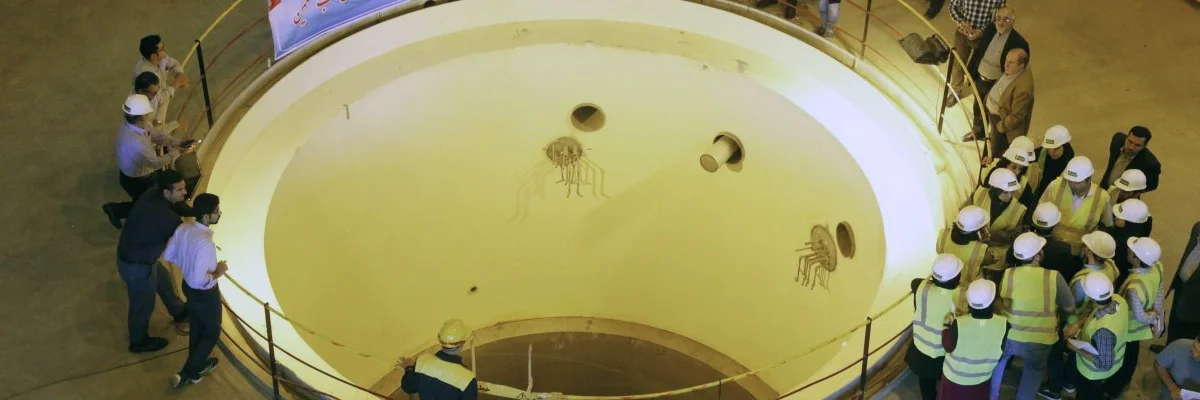
A team of British experts arrived in Iran on Monday to begin work to upgrade the Arak heavy water nuclear reactor, the UK embassy in Tehran said.
Iran removed the core of the Arak facility and filled part of it with cement as part of a 2015 deal that gave the country relief from sanctions in return for curbs on its nuclear program.
Located southwest of Tehran, the reactor is to be modernized with the help of foreign experts under the deal known as the Joint Comprehensive Plan of Action.
"A team of British nuclear experts led by UK Chief Scientific Adviser Professor Robin Grimes arrived in Tehran today to take forward the next stages of the modernization of the Arak reactor, alongside a team of Chinese experts," said the British embassy.
"The experts will hold talks with the Atomic Energy Organisation of Iran on international technical assistance to the reactor construction," it said in a statement.
The British experts would remain in Iran for three days, the embassy told AFP.
"This visit forms part of our commitment to ensuring that the Joint Comprehensive Plan of Action (JCPOA) provides benefits for both Iran and the wider international community," said the statement.
"That is why we are upholding our obligations to cooperate with Iran to modernise the Arak reactor, helping Iran to develop a modern and up to date civil nuclear programme.
"Our work with Iran on the Arak project has made important progress in the past year," it said.
Tensions have been escalating between Iran and the United States since May last year when President Donald Trump pulled out of the nuclear accord and began reimposing sanctions.
The remaining partners in the deal with Iran include Britain, China, France, Germany and Russia.
The European parties have repeatedly said they are committed to saving the accord, but their efforts have so far borne little fruit.
Tehran has already hit back three times with countermeasures in response to the US withdrawal from the nuclear deal.
On July 1, Iran said it had increased its stockpile of enriched uranium to beyond a 300-kilogramme maximum set by the deal, and a week later, it announced it had exceeded a 3.67-percent cap on the purity of its uranium stocks.
In its latest move it fired up advanced centrifuges to boost its enriched uranium stockpiles on September 7.
Photo: IRNA
Iran’s Rouhani Vows Response to Oil Tanker Attack
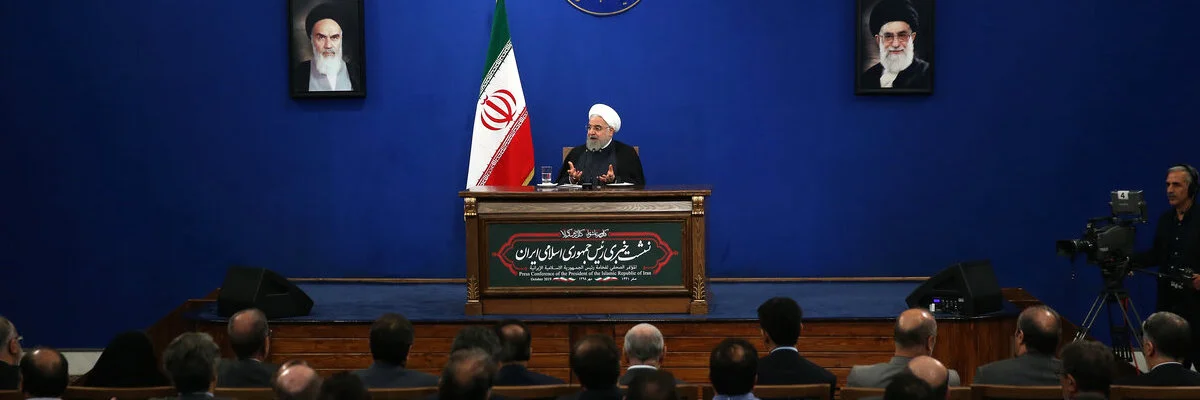
◢ President Hassan Rouhani vowed Monday that Iran would respond to an attack on one of its oil tankers in the Red Sea. “This wasn’t a terrorist move, nor was it carried out by an individual. It was carried out by a government,” Rouhani said, adding that officials were also assessing rocket fragments.
By Golnar Motavelli and Arsalan Shahla
President Hassan Rouhani vowed Monday that Iran would respond to an attack on one of its oil tankers in the Red Sea, saying the evidence suggested it was the work of a government not a terrorist group.
Addressing reporters in his first news conference since the U.S. abandoned the 2015 nuclear deal last year, Rouhani said officials in Tehran had seen footage of the incident and it was likely that several rockets were aimed at the tanker. He stopped short of assigning blame, but the vessel was sailing near the Saudi port of Jeddah at the time of the attack.
“This wasn’t a terrorist move, nor was it carried out by an individual. It was carried out by a government,” Rouhani said, adding that officials were also assessing rocket fragments.
The Gulf has seen a surge in tit-for-tat attacks on oil facilities, drones and shipping traffic since Donald Trump’s administration tightened sanctions on Iran’s oil exports earlier this year. The measures are part of Trump’s “maximum pressure” policy aimed at forcing Iran to curb its ballistic missile program and support for proxy militia around the Middle East, but have been met with defiance by the Iranian government, which has, instead, rolled back its own compliance with the nuclear accord.
Although all sides have said they want to avoid war, repeated incidents pose a growing risk to supplies from the world’s most important oil-producing region.
The attack on the Sabiti tanker came weeks after a drone strike on a major Saudi oil facility which the kingdom blamed on Iran. Iranian officials have said they weren’t involved in the attack, which rattled global oil markets, and was claimed by Iranian-backed Houthi rebels in Yemen.
Photo: IRNA
Iran Discovers Gas Field Near Persian Gulf
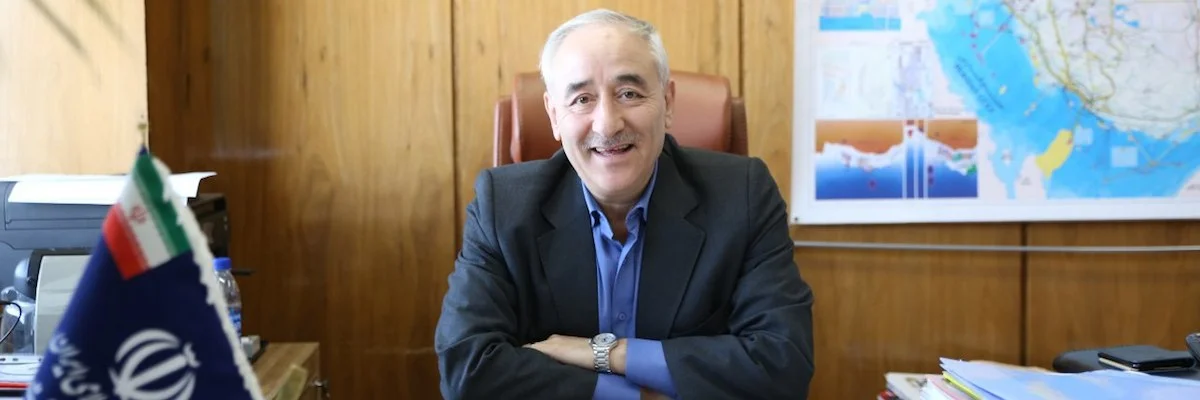
◢ Iran has discovered a gas field near the Gulf with enough reserves to supply the capital for 16 years, state media reported on Sunday. The Eram field contained 19 trillion cubic feet, the National Iranian Oil Company said, cited by official news agency IRNA.
Iran has discovered a gas field near the Gulf with enough reserves to supply the capital for 16 years, state media reported on Sunday. The Eram field contained 19 trillion cubic feet (538 billion cubic meters) of natural gas, the National Iranian Oil Company said, cited by official news agency IRNA.
The oil ministry's Shana website said the field was located in Fars province, about 200 kilometres (125 miles) south of Shiraz.
"Given the volume of 19 trillion cubic feet reserves of in-situ gas and 385 million barrels of gas condensate in Eram field, the revenue from this field will be $40 billion," IRNA quoted an NIOC official as saying.
The amount of gas in the newly discovered field was enough to supply Tehran—a city with an estimated population of around eight million—for 16 years, the official said.
Iran is a member of OPEC which says the country has proven natural gas reserves of 1,197 trillion cubic feet (33.9 trillion cubic meters), the second highest in the world.
Photo: IRNA
Pakistan PM in Tehran on Mission to 'Facilitate' Iran-Saudi Talks
◢ Pakistan Prime Minister Imran Khan visited Iran on Sunday on a mission to act as a "facilitator" between Tehran and Riyadh and try to defuse rising tensions in the Persian Gulf. "The reason for this trip is that we do not want a conflict between Saudi Arabia and Iran," Khan told reporters as he stood alongside Rouhani.
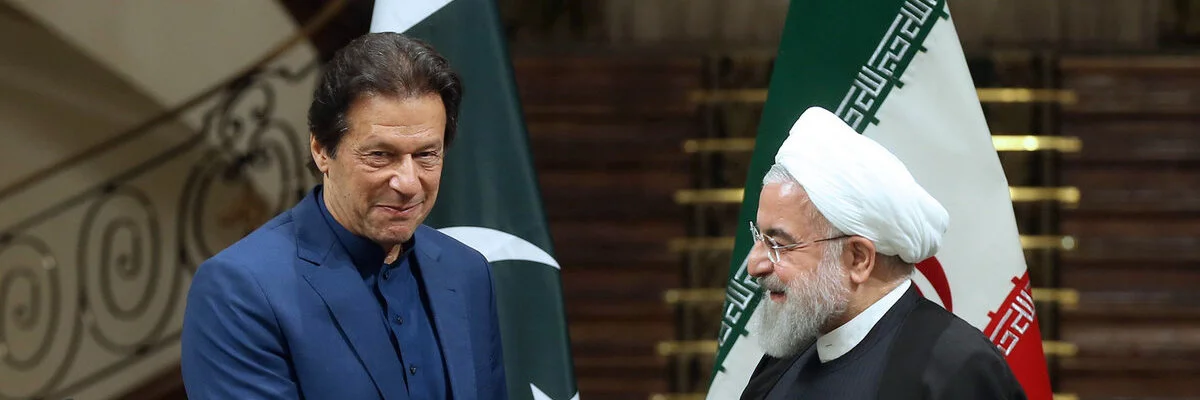
Pakistan Prime Minister Imran Khan visited Iran on Sunday on a mission to act as a "facilitator" between Tehran and Riyadh and try to defuse rising tensions in the Persian Gulf.
Khan landed in Tehran around midday and met with President Hassan Rouhani at the presidential palace.
He was also scheduled to hold talks with Iran's supreme leader Ayatollah Ali Khamenei, before traveling to Riyadh on Tuesday.
"The reason for this trip is that we do not want a conflict between Saudi Arabia and Iran," Khan told reporters as he stood alongside Rouhani.
"Whatever it takes we must never allow this conflict to take place, because we know, Mr. President, that there is a vested interest that wants this to take place," he told Rouhani.
Noting that it was a "complex" issue that can be resolved through talks, Khan warned that any conflict between Iran and Saudi Arabia would "cause poverty in the world".
Pakistan has strong relations with Saudi Arabia, with more than 2.5 million of its nationals living and working in the kingdom, but it also maintains good relations with Iran and represents Tehran's consular interests in the United States.
This is Khan's second visit this year to Iran, which shares a border of about 1,000 kilometres (620 miles) with Pakistan.
Emphasising that the visits to Tehran and Riyadh were Pakistan's "initiative", Khan said he was also approached by US President Donald Trump to "facilitate some sort of dialogue between Iran and the United States".
Tehran and Washington have been at loggerheads since the US withdrew from the 2015 Iran nuclear deal in May last year and reimposed sanctions on the Islamic republic.
Rouhani repeated Iran's official line that the United States must return to the deal and lift sanctions before any talks can take place.
"Any goodwill gesture and good words will be reciprocated with a goodwill gesture and good words," he said.
Tanker Attacks
Rouhani said he had expressed Iran's concern about Gulf security and especially a "missile attack" Friday on an Iranian vessel off the Saudi coast.
"We expressed our concerns to the prime minister about the incidents happening to oil tankers, especially the Iranian oil tanker in the Red Sea on Friday," he said.
Tehran says the Iranian-flagged Sabiti tanker was hit by two separate explosions off the Saudi port of Jeddah, making it the first Iranian vessel targeted since a spate of attacks in the Gulf that Washington has blamed on Tehran.
Rouhani said he had presented Khan with evidence from the incident and that investigations were ongoing.
"If a country thinks that it can cause insecurity in the region and not receive a proper response, it is mistaken," Rouhani said, without elaborating.
There has been a series of still-unexplained attacks on shipping in and around the vital seaway involving Iran and Western powers, as well as drone attacks on Saudi oil installations.
Washington has accused Tehran of attacking the vessels with mines and of being behind the drone assault, something it strongly denies.
Khan met both Rouhani and Trump at the United Nations General Assembly last month, shortly after he visited Crown Prince Mohammed bin Salman in Saudi Arabia.
The Pakistan premier said he was "very encouraged" by talking to Rouhani and will go to Saudi Arabia "in a very positive frame of mind", hoping the two countries can "iron out their differences."
Photo: IRNA
Iran FM Pitches Persian Gulf Security Plan to Neighbors
◢ Iran's Foreign Minister Mohammad Javad Zarif pitched the Islamic Republic's Persian Gulf security plan to neighboring nations on Thursday. Zarif said that the plan, named Hormuz Peace Endeavor, offered the chance of "expansive security" and cooperation between Iran, Saudi Arabia, Iraq, Oman, the United Arab Emirates, Kuwait, Qatar and Bahrain.
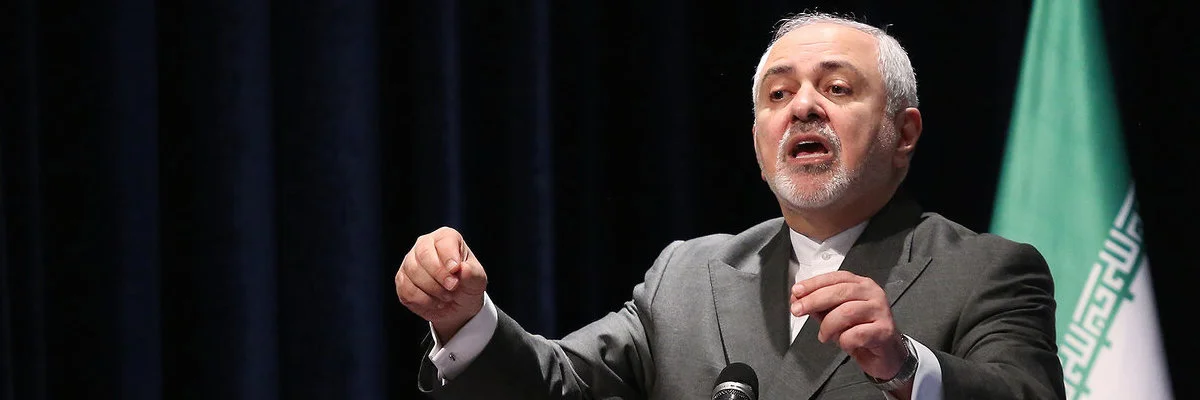
Iran's Foreign Minister Mohammad Javad Zarif pitched the Islamic Republic's Persian Gulf security plan to neighboring nations on Thursday, saying regional security cannot be provided by foreign powers.
Iranian President Hassan Rouhani announced the plan at the UN General Assembly last month, calling on Gulf nations including arch-rival Saudi Arabia to join it but without giving details.
In an article published on Thursday in Arabic by Kuwait's Al Rai daily, Zarif said that the plan, named Hormuz Peace Endeavor, offered the chance of "expansive security" and cooperation between Iran, Saudi Arabia, Iraq, Oman, the United Arab Emirates, Kuwait, Qatar and Bahrain.
Cooperation could include areas such as a regional non-aggression pact, combatting terrorism, cybersecurity, energy and freedom of navigation, Zarif said.
"In order to save the region from the edge of ruin, we feel the necessity of realising a new discourse more than ever," he wrote in the article, a translation of which was provided by his ministry.
"The fate of the people and nations of the Persian Gulf is entwined ... either everyone benefits from security in the region or everyone will be deprived of it," Zarif said.
Tensions have risen in the Gulf since last year when US President Donald Trump unilaterally abandoned a 2015 nuclear deal between major powers and Iran and began reimposing crippling sanctions.
They flared again this May when Iran began reducing its own commitments under the deal and the US deployed military assets to the region. Since then, ships have been attacked, drones downed and oil tankers seized.
In June, Trump called off air strikes against Iran at the last minute after the Islamic republic's forces shot down a US drone.
Last month, twin attacks on Saudi oil infrastructure, which knocked out half the kingdom's production, drew accusations of blame against Iran not only from the US but also from its European allies.
Tehran has denied any involvement in the attacks, which were claimed by Iran-backed rebels fighting a Saudi-led coalition in Yemen.
The US has since formed a coalition with its allies Australia, Bahrain, Britain, Saudi Arabia and the UAE to escort commercial shipping in the Gulf.
Tehran has warned that the planned US-led International Maritime Security Construct will only increase instability.
Photo: IRNA
China to Ask U.S. to End Sanctions on Its Biggest Shipping Company
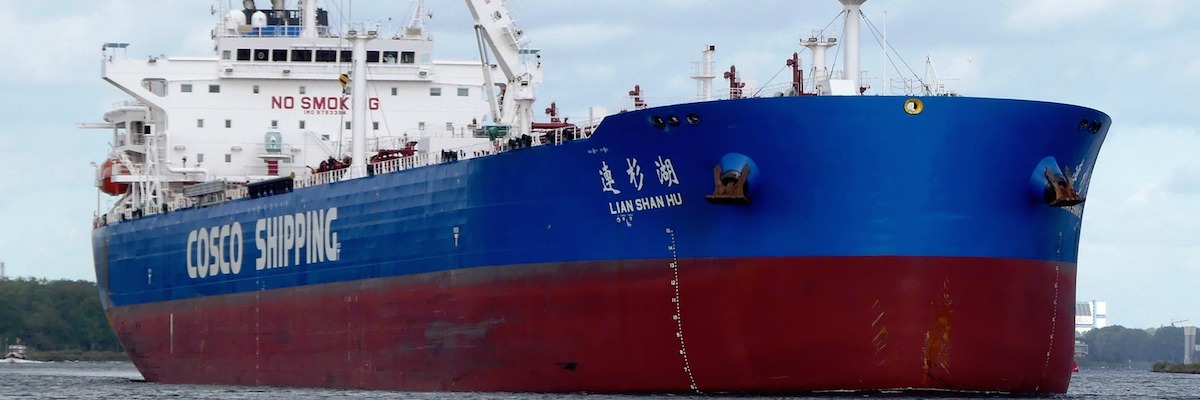
◢ China plans to ask the U.S. to lift sanctions on its biggest shipping company at high-level trade negotiations in Washington this week, people familiar with the matter said. Officials plan to raise the issue of penalties against the Dalian units of China COSCO Shipping Corp., which the U.S. accuses of knowingly violating restrictions on carrying Iranian oil.
By Sarah Chen
China plans to ask the U.S. to lift sanctions on its biggest shipping company at high-level trade negotiations in Washington this week, people familiar with the matter said.
Officials plan to raise the issue of penalties against the Dalian units of China COSCO Shipping Corp., which the U.S. accuses of knowingly violating restrictions on carrying Iranian petroleum, said the people, who asked not to be identified discussing a private matter. Four other Chinese entities were also sanctioned last month along with Cosco. The people did not say if the Chinese delegation planned to seek relief for those companies.
The U.S. decision to impose sanctions on Chinese shipowners including COSCO Shipping Energy Transportation Co. prompted a bidding war as charterers scrambled to replace vessels owned by targeted companies. It sent costs for ships with oil-carry capacities ranging from 650,000 to 2 million barrels to a 2019-high, while supertanker day rates for the Middle East to China route surged to its highest in probably 11 years.
The penalties against the Chinese companies bar U.S. citizens and entities from dealing with the firms, effectively blocking them from American banks at the heart of the global financial system. China’s National Development and Reform Commission and Ministry of Commerce didn’t immediately respond to faxes seeking comment on the request. China Cosco Shipping did not respond to an email and fax.
Top negotiators from both sides are scheduled to meet on Thursday and Friday for the first face-to-face talks between senior officials since July. A Chinese official said earlier the country was open to reaching a partial deal. People familiar said separately the U.S. is seeking to include a previously-agreed currency pact in any agreement reached.
While the sanctions specifically targeted COSCO’s Dalian subsidiary, charterers indiscriminately shunned all tankers owned by its parent company and other units for fear of running afoul of the rules. This week, however, some oil traders once again started booking tankers operated by COSCO, although the charters are not expected to immediately bring calm to markets.
Photo: Fleetmon
Iran Women to See Football Freely for First Time in Decades
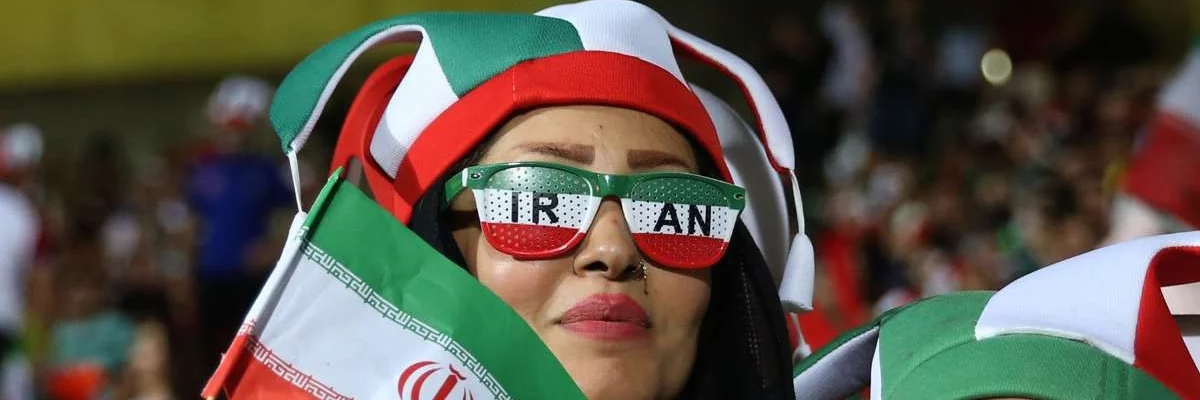
◢ Iranian women fans are free to enter a football stadium Thursday for the first time in decades, after FIFA threatened to suspend the Islamic republic over its controversial male-only policy. Women were quick to get their hands on tickets to attend Iran's 2022 World Cup qualifier against Cambodia at Tehran's Azadi Stadium on Thursday.
By Amir Havasi
Iranian women fans are free to enter a football stadium Thursday for the first time in decades, after FIFA threatened to suspend the Islamic republic over its controversial male-only policy.
Iran has barred female spectators from football and other stadiums for around 40 years, with clerics arguing they must be shielded from the masculine atmosphere and sight of semi-clad men.
World football's governing body FIFA last month ordered Iran to allow women access to stadiums without restrictions and in numbers determined by demand for tickets.
The directive came after a fan dubbed "Blue Girl" died after setting
herself on fire in fear of being jailed for dressing up as a boy in order to
attend a match.
Women were quick to get their hands on tickets to attend Iran's 2022 World Cup qualifier against Cambodia at Tehran's Azadi Stadium on Thursday.
The first batch sold out in under an hour, and additional seats were also snapped up in short order, state media said.
A sports ministry official said the 100,000-capacity stadium—whose name means "Freedom" in Farsi—was ready to host even more women.
One of the 3,500 women to have secured a ticket was Raha Poorbakhsh, a football journalist.
"I still can't believe this is going to happen because after all these years of working in this field, watching everything on television, now I can experience everything in person," she told AFP.
'Blue Girl'
But Poorbakhsh said she was aware of many other women without tickets and some were expected to travel from as far away as Ahvaz in southern Iran in the hope of still getting one.
Those lucky enough to attend will be segregated from men and watched over by 150 female police officers, according to Fars news agency.
People on the streets of Tehran said they supported the decision to allow women into stadiums.
"I would like there to be freedom for women, like men, to go freely and even sit side by side without any restrictions, like other countries," said a woman who only gave her name as Hasti.
Nader Fathi, who runs a clothing business, said the presence of women could improve the atmosphere in stadiums.
But he said "they will regret it" if they are exposed to "really bad swear words" and "bad behavior".
The bumpy road Iranian women have travelled in order to gain free access to stadiums has not been without tragedy.
Sahar Khodayari died last month after setting herself ablaze outside a court in fear of being jailed for attending a match.
Dubbed "blue girl" because of the colors of the club she supported, Esteghlal FC, she had reportedly been detained last year when trying to enter a stadium dressed as a boy.
Her death sparked an outcry, with many calling on FIFA to ban Iran and for fans to boycott matches.
Judiciary spokesman Gholamhossein Esmaili at the time dismissed reports she had been told she would be jailed for six months as "fabricated rumours and hearsay.”
And Khodayari's father told Mehr news agency that she did not "sacrifice" herself for any cause.
Shadow of FIFA
Ahead of Qatar 2022, Iran has come under pressure from FIFA to allow women to attend this round of World Cup qualifiers.
The ban on women in stadiums is not written into law or regulations, but it has been strictly enforced.
Since the 1979 Islamic revolution, women have only had rare access to stadiums in Iran.
About 20 Irish women attended a World Cup qualifier in 2001, and four years later a few dozen Iranian women were allowed to watch the national "Team Melli" take on Bahrain.
In October, as many as 100 Iranian "handpicked" women entered Azadi for a friendly against Bolivia.
But the day after, the prosecutor general warned there would be no repeat, saying it would "lead to sin.”
The issue has been divisive in Iran.
The reformist camp has welcomed the decision to allow women into Thursday's match, while conservatives have argued that football is not a priority for women.
The Donya-e-Eqtesad financial newspaper called it "a step to weaken a taboo and also free Iran's football of the looming shadow of FIFA's punishment.”
But the ultra-conservative Keyhan daily said women were more concerned about economic issues
"There are many girls still single and at home, afraid of the cost of marriage. The government should be thinking of this, not sending them to stadiums," it quoted a mother as saying.
Photo: IRNA
Iran Says China's CNPC Pulls Out of Gas Project
◢ Iran's oil minister said Sunday that China's CNPC has withdrawn from the development of an offshore gas field and that state-owned Petropars will take over the entire project. The South Pars gas field was to be developed jointly by France's Total, China National Petroleum Corporation and Petropars under a $4.8-billion deal signed in July 2017.
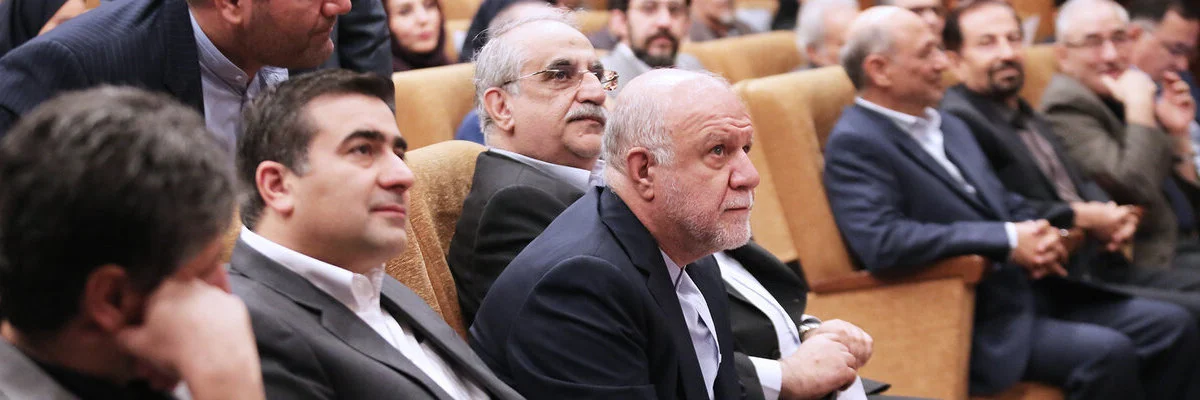
Iran's oil minister said Sunday that China's CNPC has withdrawn from the development of an offshore gas field and that state-owned Petropars will take over the entire project.
The South Pars gas field was to be developed jointly by France's Total, China National Petroleum Corporation and Petropars under a $4.8-billion deal signed in July 2017.
The deal came after Iran reached a 2015 agreement with world powers that gave it relief from sanctions in exchange for limits on its nuclear program, ending years of economic isolation.
Total left the project three months after US President Donald Trump's administration withdrew from the nuclear accord in May last year and reimposed sanctions on Iran's oil industry and other key sectors of the economy.
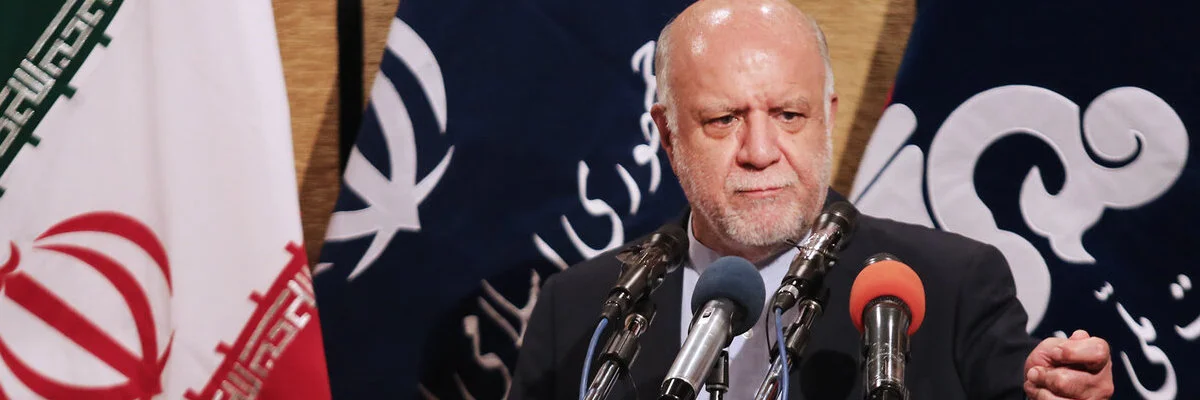
"Phase 11 (of South Pars) will be entirely developed by Petropars company," Iran's Oil Minister Bijan Namdar Zanganeh was quoted as saying by the ministry's official website.
Asked whether CNPC International had abandoned the project, Zanganeh said:
“Yes, they have.”
The other parties to the Iran nuclear deal—Britain, France, Germany, China and Russia—have vowed to stay in the accord despite the US withdrawal, but their efforts have so far borne no fruit.
Zanganeh said that Petropars did not take the lead on South Pars from the outset because "we wanted to attract foreign investment for this project" and that Petropars was "supposed to learn alongside these (foreign) companies".
He added that the development of a pressure booster platform would depend on talks between Iran's MAPNA Group and other companies.
Petropars signed a $440 million agreement in September with another state-owned firm, Pars Oil and Gas Company, to develop the Balal field in the Persian Gulf.
Photo: IRNA
Iran Boosts Nuclear Cooperation Following Diplomatic Push
◢ Iran boosted its cooperation with the international nuclear agency that’s trying to determine whether the government in Tehran failed to provide adequate information to monitors. Following meetings with Foreign Minister Mohammad Javad Zarif in New York, Iran started to provide more detailed information to IAEA officials.
By Jonathan Tirone
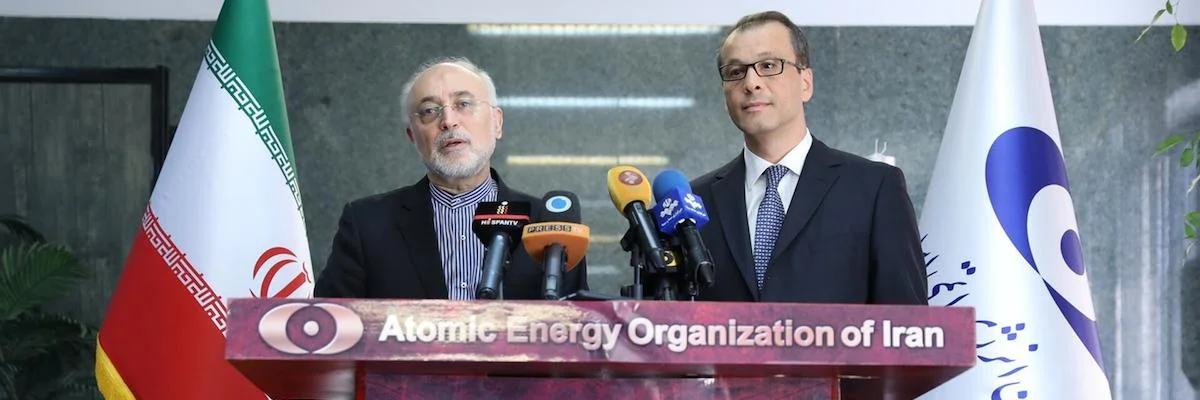
Iran boosted its cooperation with the international nuclear agency that’s trying to determine whether the government in Tehran failed to provide adequate information to monitors.
Following meetings with Foreign Minister Mohammad Javad Zarif in New York, Iran started to provide more detailed information to International Atomic Energy Agency officials charged with reviewing the country’s uranium stockpiles.
“Engagement doesn’t mean that the issues are completely addressed but this is a step in the right direction,” IAEA acting Director General Cornel Feruta said Friday at a briefing in Vienna. “The message that we sent out in September, and my visit to Tehran, was understood by Iranian officials.”
Feruta had warned Iran that “time is of the essence” in answering IAEA questions. The IAEA has come under increased pressure from the U.S. and Israel to report analysis of environmental samples that detected trace levels of radioactivity at a Tehran warehouse.
Scores of inspectors monitor Iran, both on the ground at the country’s nuclear sites as well as remotely using surveillance technologies, looking for any breach of its compliance with safeguards obligations.
The suggestion that Iran could be providing incomplete information was a warning with potentially serious consequences. The entire international apparatus of rules that the IAEA enforces is based on verifying the correctness and completeness of nations’ declared nuclear material and nuclear-related activities. Countries that don’t adequately provide gram-level accounts of fissile material can be referred to the United Nations Security Council for possible sanction.
The radioactive samples were taken from the Turquz-Abad site earlier this year and have been authenticated by the agency’s network of analytical laboratories, according to a senior diplomat familiar with the agency’s work in Iran, who asked not to be named in line with rules to discuss confidential information.
The site in the Iranian capital was flagged to IAEA inspectors by Israel last year, after Prime Minister Benjamin Netanyahu announced his intelligence agencies had retrieved documents indicating a secret program to build nuclear bombs. Iran said the claims were recycled from events that the IAEA had already “dealt with.”
Photo: IRNA
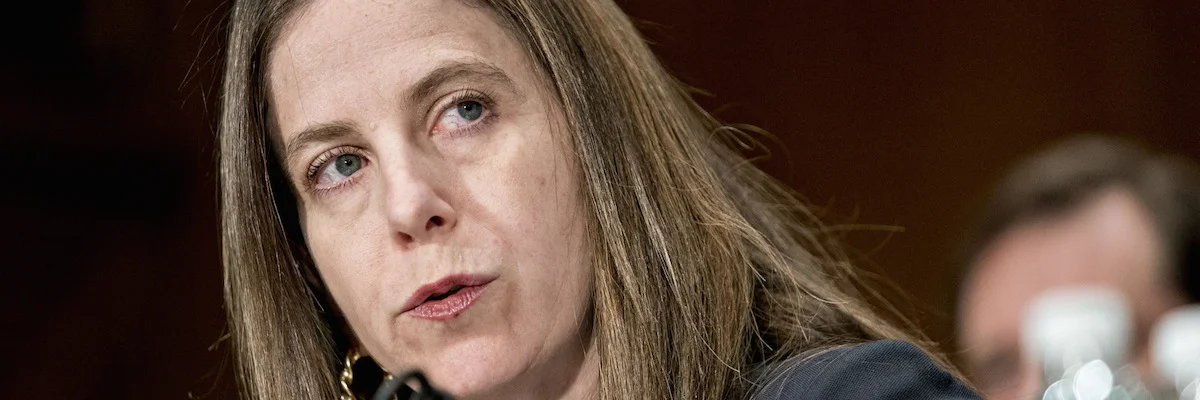
Trump’s Top Sanctions Official Departing for Private Sector
◢ The U.S. Treasury Department’s top sanctions official, Sigal Mandelker, plans to leave the Trump administration after helping to increase the pace of economic penalties against American adversaries. Mandelker, who joined the Treasury Department in June 2017, has helped lead new sanctions on countries including North Korea, Russia, Venezuela, and Iran.
By Saleha Mohsin
The U.S. Treasury Department’s top sanctions official, Sigal Mandelker, plans to leave the Trump administration after helping to increase the pace of economic penalties against American adversaries.
Mandelker, who joined the Treasury Department in June 2017, has helped lead new sanctions on countries including North Korea, Russia, Venezuela, and Iran. She plans to take a job in the private sector.
She moved to Washington from New York to work in the Trump administration.
The Wall Street Journal first reported her plans for departure, citing Treasury Secretary Steven Mnuchin and Mandelker.
“She is a fierce advocate for effectively leveraging our powerful economic tools to make an impact for a safer world,” Mnuchin said in a statement. “Sigal’s steadfast devotion to mission will be missed, as she is truly a unique talent.”
Mandelker plans to depart in coming weeks and will leave Mnuchin with one of three undersecretary jobs filled.
Deputy Treasury Secretary Justin Muzinich will take Mandelker’s portfolio after she departs in the next few weeks, a Treasury spokesman said. Muzinich also oversees the domestic finance unit, leaving two of the agency’s three offices under his purview while the undersecretary seats remain open.
Mnuchin has struggled to fill top jobs at the department since the start of the Trump administration. The Treasury chief hasn’t replaced Eli Miller, who left as chief of staff in April, or Craig Phillips, who served as a counselor leading the domestic finance unit until May.
Photo: Bloomberg
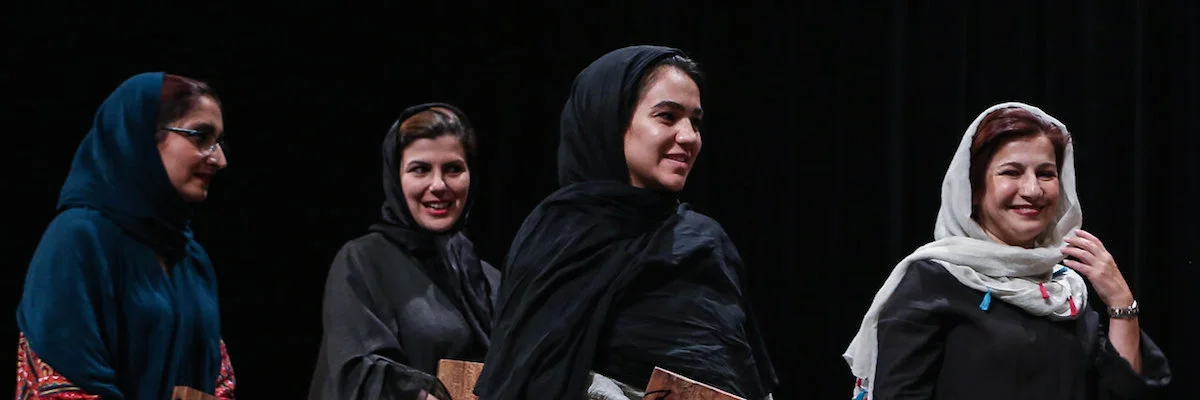
Victory for Iran’s Women as Breakthrough Citizenship Law Passed
◢ Iran will for the first time grant citizenship to children born to an Iranian mother and foreign father after a long-awaited bill was signed into law by the powerful Guardian Council in a significant victory for women’s rights. The law was passed by parliament with an overwhelming majority in May, and ratified on Wednesday.
By Yasna Haghdoost
Iran will for the first time grant citizenship to children born to an Iranian mother and foreign father after a long-awaited bill was signed into law by the powerful Guardian Council in a significant victory for women’s rights.
The law was passed by parliament with an overwhelming majority in May, and ratified on Wednesday by the panel of senior clerics and judges, the state-run Islamic Republic News Agency reported, citing council spokesman Abbas Ali Kadkhodaee.
The measure is significant in the Middle East, where many countries don’t allow mothers to pass their nationality onto their children if the father is a foreign national. In Iran, the new law will give tens of thousands of children access to social and health-care services previously denied them on the basis that they were foreigners.
Photo: IRNA
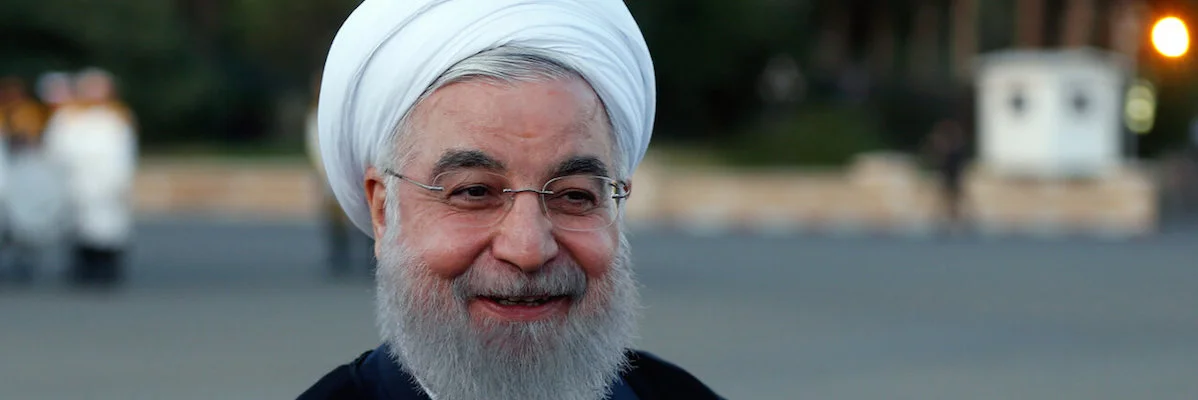
Iran’s Rouhani Upbeat on European Plan to Save Nuclear Deal
◢ Iranian President Hassan Rouhani said he agrees with the general outlines and basic terms of a European-led plan to revive the 2015 nuclear agreement. “The plan was acceptable in a sense, in terms of its outlines, as it called for Iran not to pursue nuclear weapons and to contribute to peace in the region and regional waterways,” Rouhani was cited as saying.
By Arsalan Shahla
Iran’s president gave an upbeat assessment of a European plan to ease the crisis over the 2015 nuclear deal that has threatened to tip the Gulf region into war.
In a cabinet meeting on Wednesday, Hassan Rouhani said he found the main terms of a four-point proposal, spearheaded by his French counterpart Emmanuel Macron, to revive the embattled accord “acceptable.”
The plan calls for Washington to remove sanctions on Iran, allowing the Islamic Republic to export its oil and collect the revenue, in return for an Iranian commitment not to pursue nuclear weapons and help ensure Gulf security, he said. The original framework of nations that signed the deal would be reconstituted, including the U.S.
The comments are the strongest signal yet from Iran that discussions with Europe to find a way out of the nuclear crisis are making progress after months of deadlock. But major challenges remain, especially over sequencing. In public at least, Iran insists it won’t talk until sanctions are lifted, while President Donald Trump has said Tehran must offer concessions to get the penalties eased.
The U.S. wants a more comprehensive agreement that also covers Iran’s missile program and support for Middle East proxy forces.
‘Risk Worth Taking’
To make progress, “either the U.S. accepts that some degree of sanctions relaxation is necessary at first,” said Ellie Geranmayeh, deputy head of the Middle East and North Africa program at the European Council of Foreign Relations. “Or the Iranians come to the conclusion that there’s a risk worth taking in having some degree of direct contact” with a U.S. administration they don’t trust.
Rouhani, who’s under intense pressure from hardliners in Tehran to abandon an accord that’s not delivering the hoped-for economic benefits, said more work was needed on the wording of the plan during expected negotiations with European countries.
Since Trump ended U.S. participation in the deal last year and reimposed sweeping sanctions, tensions have risen in the oil-rich Gulf. Tankers have been attacked and seized, drone aircraft downed by either side and there’s been an escalation in fighting between Iranian and U.S. allies involved in the Yemen war.
Macron and other world powers made frantic but ultimately unsuccessful efforts to broker some sort of meeting between Rouhani and Trump at the United Nations General Assembly last week.
In a speech to commanders of Iran’s Islamic Revolutionary Guards, Supreme Leader Ayatollah Ali Khamenei again admonished U.S. officials, saying their so-called “maximum pressure” strategy against Iran had failed.
Iran would carry on scaling back its compliance with the nuclear deal’s limits on enrichment while Europe attempts to meet Tehran’s demands, he said.
“We will continue to reduce our commitments and we should do so resolutely,” Khamenei said, according to his official website.
UN Meeting
The Macron plan includes a $15 billion credit line that would enable Iran to export oil and would also restore the P5+1 framework of nations -- France, the U.K., Russia, China, Germany and the U.S. -- that were signatories to the nuclear accord.
Rouhani said his European counterparts had asked him at the UN summit to offer alternative suggestions for the plan’s phrasing so that they could be discussed and negotiated by European and Iranian ministers.
Speaking to reporters as he left cabinet with Rouhani, Foreign Minister Javad Zarif appeared more cautious. Macron’s proposal “doesn’t reflect our viewpoints” and needed “negotiations to precisely discuss the issues,” he said.
Zarif praised the French president’s enthusiasm for a deal, though, and said he’s been sent a formal invitation to visit Tehran.
“We will continue to maintain contacts, including the calls with France,” Zarif said, according to the state-run Islamic Republic News Agency.
Ahead of the UN meeting, there had been growing speculation that Trump would meet Rouhani in New York. But talks never materialized amid heightened tensions between Washington and Tehran after an attack on Saudi Arabian oil facilities.
The U.S. and leading European nations blamed the strike on Iran, which in turn pointed to the Yemeni Houthi rebels it assists in their four-year war with a Saudi-led coalition.
Impoverished and shattered Yemen is currently the top battleground in the tussle for influence between Shiite Muslim Iran and Sunni-ruled Saudi Arabia.
The oil-facility attacks rammed home the dangers of letting the war fester on, spurring attempts to build on recent cease-fire pledges and move to talks.
Photo: IRNA
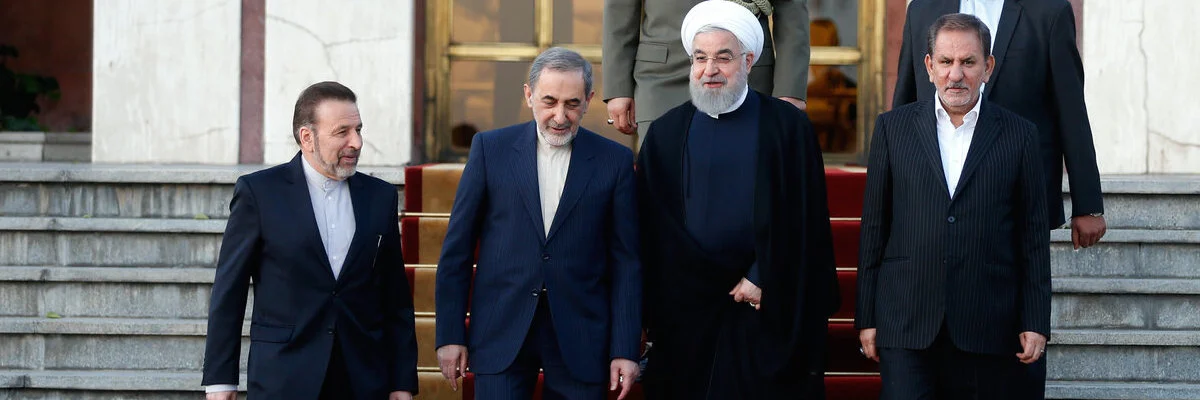
Rouhani Would Not Take Trump's Call, Says French Diplomatic Source
◢ US President Donald Trump phoned his Iranian counterpart Hassan Rouhani on the sidelines of the UN summit last month but he refused to take the call, a French diplomatic source said on Tuesday. "In New York, up to the last moment, Emmanuel Macron tried to broker contact, as his talks with presidents Trump and Rouhani led him to think contact was possible," the diplomatic source said.
US President Donald Trump phoned his Iranian counterpart Hassan Rouhani on the sidelines of the UN summit last month but he refused to take the call, a French diplomatic source said on Tuesday.
The call happened on September 24, the source said, after French President Emmanuel Macron had shuttled between the US and Iranian leaders in a bid to arrange a historic encounter that he hoped would reduce the risk of all-out war in the Middle East.
"In New York, up to the last moment, Emmanuel Macron tried to broker contact, as his talks with presidents Trump and Rouhani led him to think contact was possible," the diplomatic source said.
Speculation was abuzz last month that the leaders could meet on the sidelines of the General Assembly.
But Rouhani said he would only hold talks with the US if Trump lifted economic sanctions on Tehran.
Macron used his 48 hours in New York to see Trump three times and Rouhani twice, urging them to engage directly.
The source said Macron made a last-ditch attempt before flying back to Paris, with French technicians installing a secure phone line linking Trump's Lotte hotel and the Millennium, hosting the Iranian delegation.
The plan involved Trump calling at 9pm despite doubts over the Iranian reaction.
Macron went to the Millennium to ensure the phone call took place. Trump made the call, but Rouhani informed the French president he would not take it, the source said.
"The discussion continued to founder on the Iranians first wanting US sanctions lifted. Donald Trump wants Iran first to make commitments on its nuclear (ambitions) and ballistic and regional activities," the source said.
The French diplomatic source comments come after US reports emerged earlier this week about Macron's initiative to get the leaders to talk.
Tensions have been escalating between Iran and the United States since May last year when President Donald Trump pulled out of the nuclear accord and began reimposing sanctions that have crippled the Iranian economy.
Britain, France and Germany have repeatedly said they are committed to saving the deal that gave Iran relief from sanctions in exchange for curbs on its nuclear programme, but their efforts have so far borne little fruit.
Photo: IRNA
Iran on Track to Open New Oil Terminal Outside Persian Gulf
◢ Iran said on Monday that it is on track to create a new oil terminal on the Sea of Oman that would open a new export route for its crude and allow tankers to bypass the strategic Strait of Hormuz. The National Iranian Oil Company signed a contract worth around $52 million Monday with three local companies to supply 50 pumps for the pipeline project.
Iran said on Monday that it is on track to create a new oil terminal on the Sea of Oman that would open a new export route for its crude and allow tankers to bypass the strategic Strait of Hormuz.
The National Iranian Oil Company signed a contract worth around $52 million Monday with three local companies to supply 50 pumps for the pipeline project, according to the Iranian oil ministry's Shana website.
The pipeline will run from Bushehr province on the Gulf to Bandar-e-Jask on the Sea of Oman, on the other side of the Strait of Hormuz.
"Construction of the Goreh-Jask pipeline and the crude oil export terminal at Jask Port are among the priority plans," Shana reported.
The approximately 1,000-kilometre (620-mile) pipeline will bring oil from Goreh in Bushehr to Jask, making it "strategically important as the country's second-largest crude oil export terminal," Shana reported.
According to Tehran's official IRNA news agency, Jask will export its first crude within 18 months.
In September 2018, Iranian President Hassan Rouhani announced "a major part" of Iran's exports would be shifted to Jask from the Kharg Island terminal -- deep in the Gulf.
He said the project would be completed by the end of his term in summer 2021.
To reach the oil terminal on Kharg Island, tankers must pass the chokepoint Strait of Hormuz—through which most Persian Gulf oil passes—slowing deliveries by several days.
Iran has in the past repeatedly threatened to block the strait—which is used by its Gulf rivals including Saudi Arabia—when faced with sanctions on its oil exports and possible military action by the US.
Washington and Tehran came close to armed conflict in June following a military escalation in the Gulf.
Tension has grown since May 2018 when the United States withdrew from a landmark 2015 nuclear deal with Iran and reimposed sanctions aimed at stopping it from exporting oil.
Washington, Riyadh, Berlin, London and Paris blamed Iran for attacks that damaged the Saudi oil sector on September 14.
Photo: IRNA
Erdogan Vows to Continue Oil, Natural Gas Trade With Iran
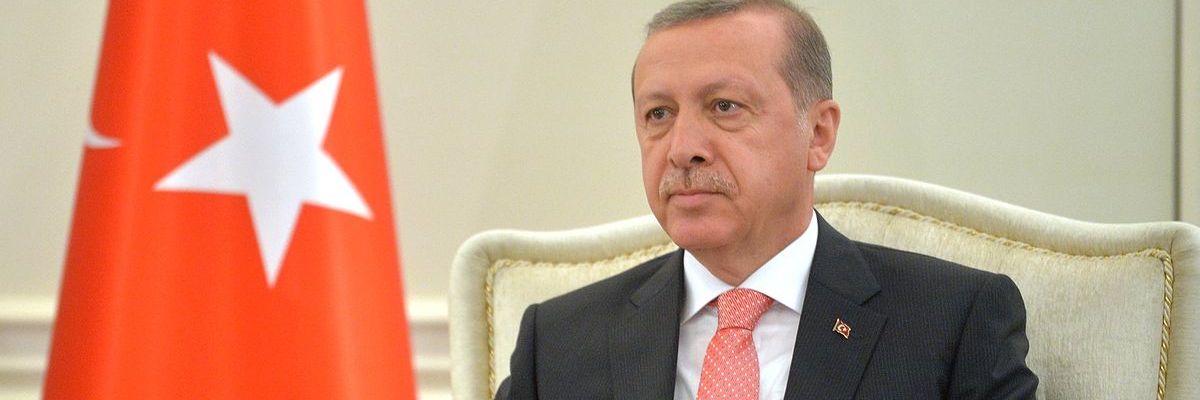
◢ Turkish President Recep Tayyip Erdogan vowed Ankara would continue to purchase oil and natural gas from Iran despite US sanctions in comments published on Friday. "It is impossible for us to cancel relations with Iran with regards to oil and natural gas. We will continue to buy our natural gas from there," Erdogan told Turkish reporters.
Turkish President Recep Tayyip Erdogan vowed Ankara would continue to purchase oil and natural gas from Iran despite US sanctions in comments published on Friday.
The United States reimposed sanctions on Iran after pulling out of the landmark 2015 nuclear deal, and says it aims to reduce Tehran's energy sales to zero.
"It is impossible for us to cancel relations with Iran with regards to oil and natural gas. We will continue to buy our natural gas from there," Erdogan told Turkish reporters before leaving New York where he was attending the UN General Assembly.
Despite this vow, Erdogan admitted Turkey faced difficulty in purchasing oil since the private sector "pulled back because of US threats", NTV broadcaster reported.
"But on this issue especially and many other issues, we will continue our relations with Iran," he promised, adding that Ankara still sought to increase trade volume with Tehran.
He previously criticized sanctions against Iran, insisting that they achieved nothing.
Turkey and Iran have been working closely together with Russia to resolve the eight-year conflict in Syria despite being on opposing sides of the war.
Photo: Wikicommons
Seized Oil Tanker Sets Sail: Iran Authorities
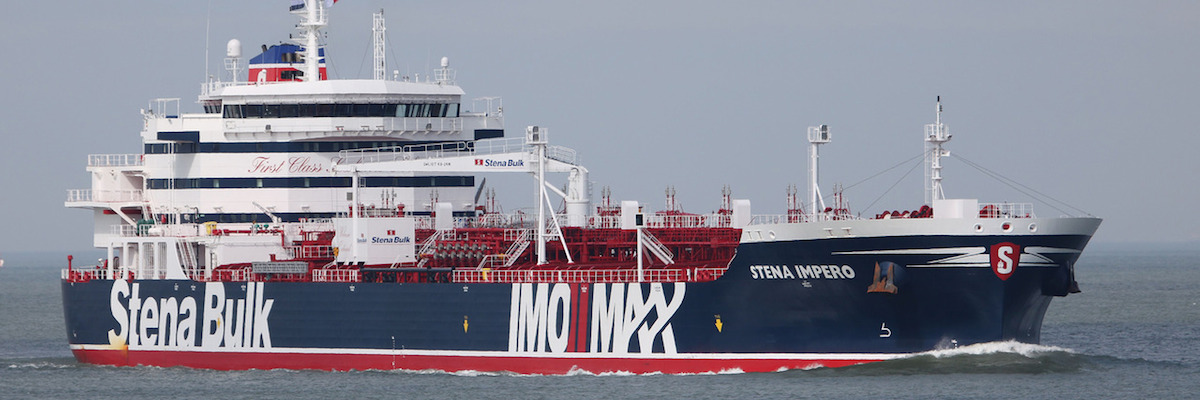
◢ The British-flagged oil tanker Stena Impero, which had been held off the Iranian port of Bandar Abbas for more than two months, set sail Friday, an Iranian shipping organization said. The ship's seizure was widely seen as a tit-for-tat move after authorities in the British overseas territory of Gibraltar detained an Iranian tanker.
The British-flagged oil tanker Stena Impero, which had been held off the Iranian port of Bandar Abbas for more than two months, set sail Friday, an Iranian shipping organization said.
The ship's seizure was widely seen as a tit-for-tat move after authorities in the British overseas territory of Gibraltar detained an Iranian tanker on suspicion it was shipping oil to Syria in breach of EU sanctions.
Tehran repeatedly denied the cases were related but a Gibraltar last month ordered the Iranian tanker's release despite an 11th-hour US legal bid to keep it in detention.
"The Stena Impero started sailing from the mooring towards the Persian Gulf's international waters as of 9:00 am (0530 GMT) today," Hormozgan province's maritime organisation said on its website.
"Despite the vessel's clearance, its legal case is still open in Iran's courts," it added.
The tanker's captain and crew have also "given a written, official statement that they have no claims."
Iran's Revolutionary Guards seized the tanker in the Strait of Hormuz on July 19 after surrounding the vessel with attack boats and rappelling onto its deck.
It was impounded off the port of Bandar Abbas for allegedly failing to respond to distress calls and turning off its transponder after hitting a fishing boat.
Seven of its 23 crew members were released on September 4.
Photo: Fleetmon
Iran Raises Nuclear Capacity Even Further, Inspectors Report
◢ Iran has installed powerful new centrifuges in contravention of its 2015 agreement with world powers and is preparing new measures that will allow it to reconstitute its stockpile of enriched uranium. IAEA inspectors circulated the findings to member states on Thursday in a two-page restricted report.
By Jonathan Tirone
Iran has installed powerful new centrifuges in contravention of its 2015 agreement with world powers and is preparing new measures that will allow it to reconstitute its stockpile of enriched uranium.
International Atomic Energy Agency inspectors circulated the findings to member states on Thursday in a two-page restricted report seen by Bloomberg. The document references a pledge by Iranian President Hassan Rouhani to break more research and development limits imposed by the deal.
In addition to new advanced centrifuges being fed with uranium at a testing facility at Natanz, Iran is also reconstituting machines and infrastructure that will allow it to ramp up its program even further within a matter of weeks.