
Iran Makes Big Diplomatic Push to Find Fix for Nuclear Staredown
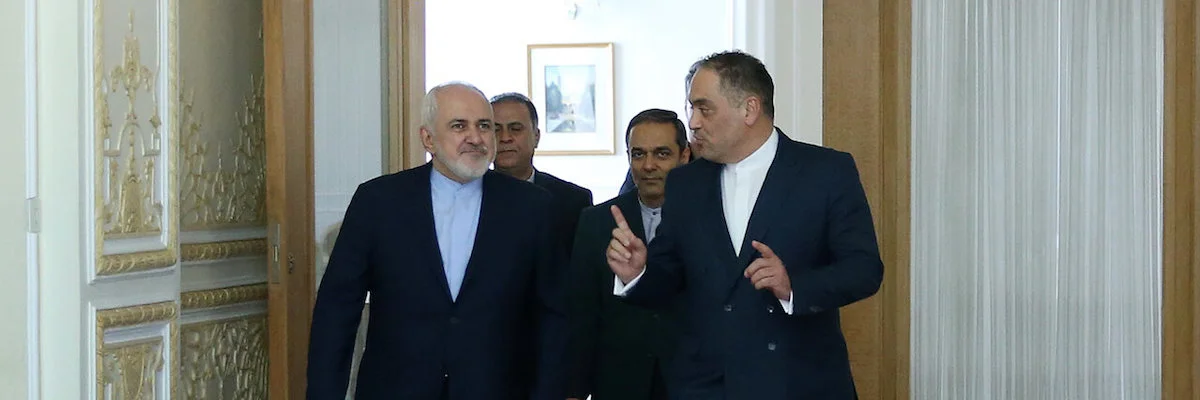
◢ Iran’s top envoy Mohammad Javad Zarif held talks in Moscow with counterpart Sergei Lavrov as the threat of another erosion of Iran’s compliance with the accord looms. His deputy Abbas Araghchi went to Paris with a team of economists and central bank officials to discuss a French proposal to help restore Iran’s oil exports, the backbone of its economy.
By Abbas Al Lawati and Arsalan Shahla
Iran is ramping up negotiations as signs gather that it’s closer to ending a showdown with Europe over the wobbling 2015 nuclear deal and easing a security crisis in the Persian Gulf.
Iran’s top envoy Mohammad Javad Zarif held talks in Moscow with counterpart Sergei Lavrov as the threat of another erosion of Iran’s compliance with the accord looms. His deputy Abbas Araghchi went to Paris with a team of economists and central bank officials to discuss a French proposal to help restore Iran’s oil exports, the backbone of its economy.
The talks in Paris lasted 10 hours, state-run Islamic Republic News Agency reported, without giving details. It was Araghchi’s second trip to the French capital in less than six weeks, continuing the most substantive negotiations between Iran and a Western power since U.S. President Donald Trump exited the nuclear accord last year and slapped a slew of crippling sanctions on Iranian oil and other sectors.
Talks related to the agreement also took place in Vienna, Zarif’s spokesman Abbas Mousavi said.
According to an Iranian lawmaker, the French proposal—hammered out in hours of telephone negotiations between Iranian President Hassan Rouhani and French President Emmanuel Macron, and at a recent meeting with Zarif—includes a $15 billion credit line to Iran for oil “pre-purchases,” the semi-official Tasnim news reported, citing an interview with conservative lawmaker Ali Motahari.
France has suggested the money be paid in three installments and in return, Iran would lift its threat to ramp up atomic activities on Sept. 6 and eventually revert back to full compliance with the accord, Motahari said.
“Iran’s and France’s points of view have grown closer,” Iranian government spokesman Ali Rabiei told reporters at a news conference in Tehran, adding that Iran was “moving forward and advancing” in its efforts to resolve the crisis through talks.
Araghchi said Saturday that discussions between Trump and Macron at the Group of Seven summit last week “have shown flexibility with regard to Iran’s oil,” according to the semi-official Iranian Students’ News Agency. Trump said at the meeting in Biarritz that he’d agree to have other countries extend a letter of credit to Iran, secured against oil sales.
The U.S. withdrawal from the nuclear deal, formally known as the Joint Comprehensive Plan of Action, in May 2018 and crippling sanctioning of Iran’s economy triggered a security crisis that has rocked the Persian Gulf region with tanker attacks, tit-for-tat vessel seizures and the downing of military drones.
Washington’s actions also left Europe scrambling for an effective way to keep the deal alive without running afoul of U.S. sanctions.
“The French initiative is the last best hope for salvaging” the deal, said Ali Vaez at the International Crisis Group. “The key for its success is to provide Iran with some economic reprieve in the form of increased oil exports in return for compliance with the JCPOA and commitment to engage in new negotiations.”
Photo: IRNA
Iran's Rouhani Warns Macron of Looming Nuclear Step
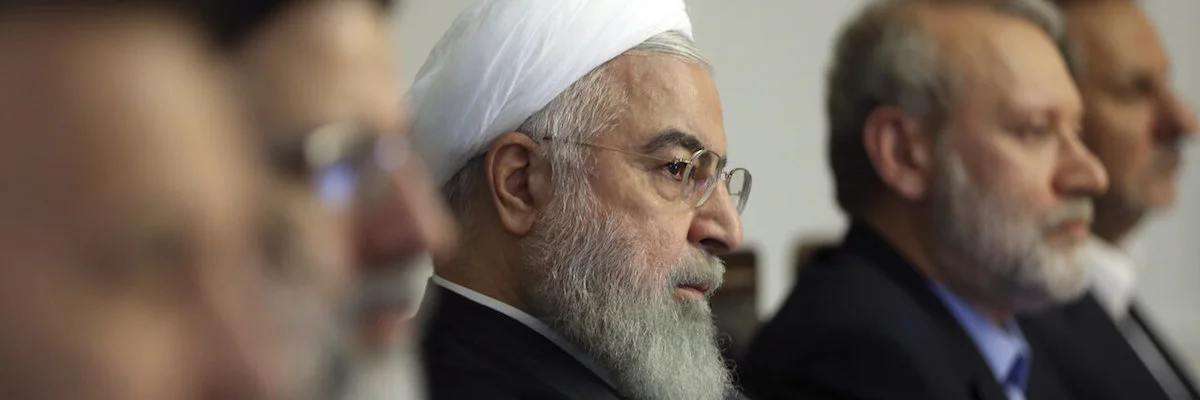
◢ President Hassan Rouhani spoke with French counterpart Emmanuel Macron on Saturday, warning him Iran would take the next step in reducing its nuclear commitments unless Europe lives up to its own undertakings. "If Europe cannot operationalize its commitments, Iran will take its third step to reduce its JCPOA commitments," Rouhani told Macron in a phone call, quoted by the government website.
By David Vujanovic
President Hassan Rouhani spoke with French counterpart Emmanuel Macron on Saturday, warning him Iran would take the next step in reducing its nuclear commitments unless Europe lives up to its own undertakings.
Tensions have spiked in the Gulf since May last year when President Donald Trump unilaterally withdrew the US from a nuclear deal between Iran and world powers—known formally as the Joint Comprehensive Plan of Action (JCPOA).
The escalation has seen ships attacked, drones downed and tankers seized in the Strait of Hormuz, a chokepoint for around a third of the world's sea-borne oil.
At the height of the crisis, Trump ordered strikes against Iran on June 21 before cancelling them at the last minute.
Macron has been leading efforts to de-escalate the situation, and expressed hopes at a G7 meeting last week of bringing Rouhani and Trump together for a meeting.
But Rouhani has played down the likelihood of that happening unless the United States first lifts crippling sanctions that it has slapped on Iran since pulling out of the deal.
"If Europe cannot operationalize its commitments, Iran will take its third step to reduce its JCPOA commitments," Rouhani told Macron in a phone call, quoted by the government website.
However, "this step, just like the other ones, will be reversible," he added.
"Unfortunately after this unilateral move by the US, European countries did not take concrete measures to implement their commitments.
"The contents of JCPOA are unchangeable and all parties must be committed to its contents," he said.
Rouhani said Iran had two priorities: for all parties to the JCPOA to fully implement their obligations and "securing the safety of all free maritime transportation in all waterways including the Persian Gulf and Strait of Hormuz.”
Economic Delegation
In a statement from his office, Macron stressed the importance of "the current dynamic to create the conditions for a de-escalation through dialogue and building a durable solution in the region".
A French diplomatic source said it was important, after recent discussions between Paris and Tehran, to establish that Rouhani was "still ready to negotiate. And that is the case".
Twelve months after the US pulled out of the nuclear deal, Iran began reducing its commitments under the accord.
The UN nuclear watchdog, the International Atomic Energy Agency, said Friday that just over 10 percent of Iran's uranium stockpile was now enriched up to 4.5 percent, above the 3.67 percent limit stipulated in the 2015 deal.
It also said Iran's total stockpile of uranium, which under the accord should be no more than the equivalent of 300 kilograms (661 pounds) of uranium hexafluoride, now stood at roughly 360 kilograms.
Iran has not specified what its third step might be in reducing its commitments to the deal.
Foreign Minister Mohammad Javad Zarif said on Tuesday in an interview with the Sueddeutsche Zeitung newspaper that the step would be taken on September 6.
Rouhani's chief of staff Mahmoud Vaezi said the third step would be taken "in the event Iran's demands are not met.”
"A committee decides the third step and we will decide... two or three days prior to the deadline," he said late Saturday, quoted by state news agency IRNA.
Vaezi said Deputy Foreign Minister Abbas Araghchi would head an Iranian economic delegation travelling to France on Monday to discuss proposals aimed at salvaging the nuclear deal.
Macron has urged the US to offer some sort of relief to Iran, such as lifting sanctions on oil sales to China and India, or a new credit line to enable exports in return for its compliance with the nuclear deal.
Photo: IRNA
Iran Continues Breaching Uranium Stockpile and Enrichment Limits
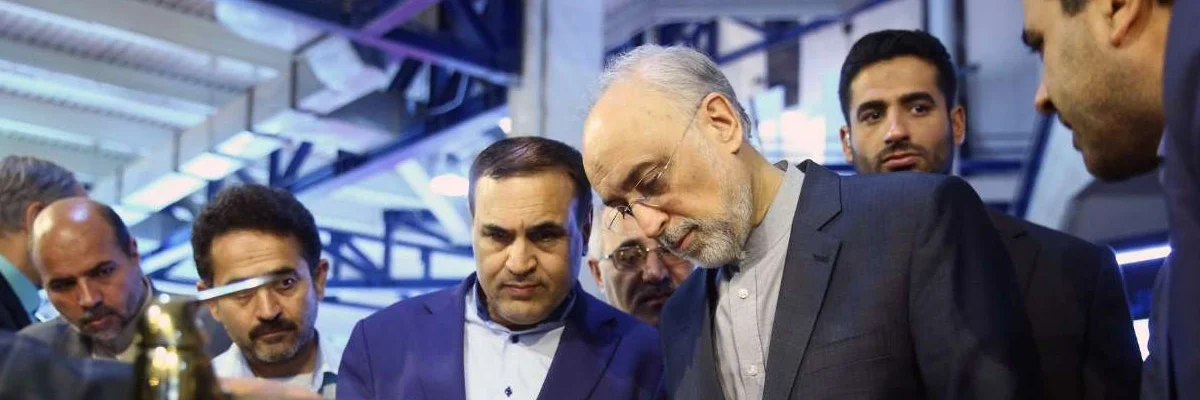
◢ International inspectors reported that Iran continued to exceed nuclear limits imposed under its landmark deal with world powers, a breach that has complicated European efforts to salvage the accord abandoned by U.S. President Donald Trump.
By Jonathan Tirone
International inspectors reported that Iran continued to exceed nuclear limits imposed under its landmark deal with world powers, a breach that has complicated European efforts to salvage the accord abandoned by U.S. President Donald Trump.
The International Atomic Energy Agency said Friday that Iran’s enriched uranium stockpile stood at 357 kilograms (787 pounds) and that it had enriched the heavy metal to a maximum purity of 4.5%, according to the six-page restricted document seen by Bloomberg News. The 2015 deal allows Iran to accumulate only 300kg of uranium enriched to 3.67%.
“The agency has continued to evaluate Iran’s declarations,” acting Director General Cornel Feruta wrote in the quarterly assessment sent to the IAEA’s board. “The agency continues to verify the non-diversion of declared nuclear material” while assessments of potential “undeclared nuclear material and activities for Iran remain ongoing,” Feruta said.
It’s the first inspections report since the death of IAEA Director Yukiya Amano in July and arrives at a sensitive diplomatic juncture. Monitors have come under intense U.S. and Israeli pressure to re-activate a probe into Iran’s past work on military uses for its nuclear know-how, an act that Tehran’s government says is unnecessary and would be antagonistic.
‘All Sites’
The report reiterated that over the last three months the IAEA had been allowed access “to all the sites and locations in Iran which it needed to visit.” The Vienna-based agency has hundreds of inspectors monitoring Iran, both on the ground daily at the country’s nuclear sites, as well as remotely using surveillance technologies.
Monitors urged Iran to provide “timely and proactive cooperation” regarding all sites. They said “technical discussions” continue on new, advanced nuclear equipment undergoing testing.
Ensuring the IAEA keeps wider inspections powers granted under the agreement is one reason top European foreign ministers met Friday in Helsinki. “The nuclear deal is the only deal on the table that prevents Iran from getting a nuclear weapon,” U.K. Foreign Secretary Dominic Raab said before meeting his French and German counterparts.
While Iran acknowledges it’s breached limits set under the so-called Joint Comprehensive Plan of Action, it rejects that it has violated the accord. That’s because the document allows participants to cease meeting commitments “in whole or in part” in the event of an unresolved dispute. Tehran’s government argues that Europe has an obligation to help it avoid reimposed U.S. sanctions, something the bloc has so far struggled to do.
Iran has warned that if it’s not able to resume oil sales, it’s prepared to escalate the nuclear dispute even further by enriching uranium to levels closer to what would be needed for military purposes.
The standoff over oil exports, that’s included the tit-for-tat seizing of tankers by U.K. and Iranian authorities, has also fueled concerns of a military confrontation in the Persian Gulf.
Photo: IRNA
Britain, France, Germany to Hold Iran Talks
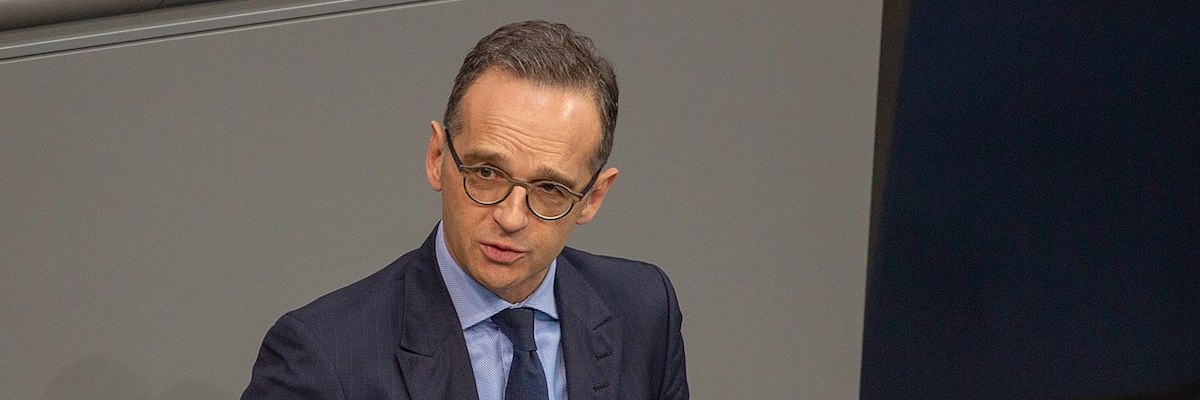
◢ Britain, France and Germany will hold talks Friday on how to preserve the beleaguered Iran nuclear deal and protect shipping in the Persian Gulf. Ahead of the meeting, British foreign minister Dominic Raab said they would aim to "build on the momentum of the positive G7 talks on Iran.”
By Damon Wake
Britain, France and Germany will hold talks Friday on how to preserve the beleaguered Iran nuclear deal and protect shipping in the Persian Gulf.
Tensions have spiked recently in the strategic shipping lane where Iran has seized Western tankers as Tehran and Washington have locked horns over the 2015 deal.
US President Donald Trump last year unilaterally pulled out of the accord that handed Iran relief from sanctions in return for curbs on its atomic programme.
The move alarmed European powers, which see the deal as the best way to stop Iran acquiring nuclear weapons, and infuriated the Islamic republic.
The foreign ministers of Britain, France and Germany -- the three European parties to the deal -- will be joined by EU diplomatic chief Federica Mogherini for talks on the sidelines of an EU meeting in Helsinki
All have repeatedly said they are committed to saving the deal, but efforts to shield Iran's economy from the reimposition of US sanctions have so far borne little fruit.
The G7 summit last weekend brought a glimmer of hope as Trump indicated willingness to talk to Iran and Mogherini said the EU would support such a move -- provided the current deal was preserved.
'Build on Momentum'
Ahead of the meeting, British foreign minister Dominic Raab said they would aim to "build on the momentum of the positive G7 talks on Iran.”
As well as mooting the summit with his Iranian counterpart Hassan Rouhani, Trump also appeared open to a French suggestion that Iran be given a line of credit to help stabilise its economy.
"The nuclear deal is the only deal on the table that prevents Iran from getting a nuclear weapon and we will continue working together to encourage Iran to uphold the agreement in full," Raab said.
"We also need the broadest international support possible to tackle the threats to international shipping in the Strait of Hormuz."
Britain, along with Australia and Bahrain, has joined Washington's Operation Sentinel mission to protect commercial shipping on the crucial oil trade routes through the Gulf, in particular at the Strait of Hormuz.
Other European countries have been cool on the idea, fearing greater naval presence in the region could risk escalating an already febrile situation still further.
The idea has been floated of a European observation mission in the Strait of Hormuz, a strategic choke point at the mouth of the Gulf, but a number of EU countries have voiced reservations.
Mogherini on Thursday gave a cautious welcome to the idea of US-Iran talks but stressed that "first and foremost what is existing needs to be preserved" -- including the 2015 deal.
In response to the US pulling out of the deal and reimposing sanctions, Tehran has breached certain limits on its nuclear production imposed by the accord, but the EU insists Iran has so far not taken any irreversible steps.
Photo: Wikicommons
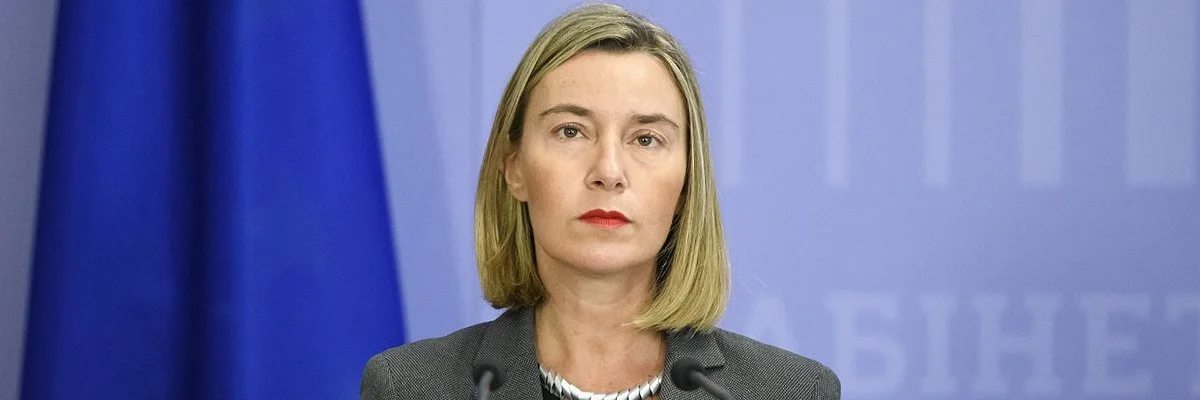
EU Backs US-Iran Talks But Says Nuclear Deal Must Stay
◢ EU diplomatic chief Federica Mogherini gave a cautious welcome to the idea of negotiations, after Trump said Monday he was ready to meet Iran's President Hassan Rouhani within weeks. "We are always in favor of talks, the more people talk, the more people understand each other better, on the basis of clarity and on the basis of respect," Mogherini said as she arrived for the Helsinki meeting.
By Damon Wake
The EU's diplomatic chief said Thursday the bloc would support talks between the United States and Iran, but only if the current nuclear deal with Tehran is preserved.
Washington and Tehran have been locked in a bitter standoff since last year when US President Donald Trump unilaterally pulled out of the 2015 deal that gave Iran relief from sanctions in return for curbs on its atomic programme.
Tensions have risen dramatically in the Gulf, where Iran has seized tankers, but EU countries are reluctant to join a US-led operation to protect commercial shipping.
Instead, EU foreign and defense ministers meeting in Helsinki discussed the possibility of launching their own observation mission in the Strait of Hormuz, a strategically important choke point at the entrance to the Gulf.
The idea of direct talks between Washington and Tehran as a way out of the crisis grew this week after Trump mooted the idea and the new US defence secretary urged Iran's leaders to engage.
The European Union has desperately sought to prevent the deal from collapsing completely, arguing it is the best way to stop Iran developing nuclear bombs.
EU diplomatic chief Federica Mogherini gave a cautious welcome to the idea of negotiations, after Trump said Monday he was ready to meet Iran's President Hassan Rouhani within weeks.
"We are always in favor of talks, the more people talk, the more people understand each other better, on the basis of clarity and on the basis of respect," Mogherini said as she arrived for the Helsinki meeting.
But she added that "first and foremost what is existing needs to be preserved"—referring to UN Security Council resolutions and specifically the 2015 deal known formally as the Joint Comprehensive Plan of Action or JCPOA.
"We will always advocate for the full respect by all sides of the UNSC resolutions and that includes the JCPOA," she said.
At the recent G7 summit in Biarritz, Trump showed openness to French President Emmanuel Macron's proposal of a summit with Rouhani.
US Defense Secretary Mark Esper followed up on Wednesday by urging Tehran to negotiate, but Iranian Foreign Minister Mohammad Javad Zarif insisted Washington must respect the deal and halt what he called "economic terrorism" against his country.
German Foreign Minister Heiko Maas welcomed the "greater willingness for dialogue" seen since the G7 and urged Iran to engage.
"It is now a matter of operationalizing this and ensuring that everyone makes a contribution -- including Iran—which leads to de-escalation in the region," Maas said.
Persian Gulf Missions
Maritime security and the Middle East are on the agenda in Helsinki, but apart from Britain, there has been little European enthusiasm for Washington's Operation Sentinel in the Gulf.
Esper said the effort to protect shipping on crucial oil trade routes was now "up and running" with help from Britain, Australia and Bahrain.
French Defence Minister Florence Parly said that up to five countries had signed up for a potential EU observation mission.
"We must guarantee free navigation and security in the Strait of Hormuz, a vital region for the transport of hydrocarbons," she told AFP.
"But there is no question of creating an escort force -- rather a dissuasive presence with an exchange of information."
France, which already has a warship in the region, is keen to avoid any perception that it is aligning itself to Trump's strategy of "maximum pressure" on Iran.
A report by the German Council on Foreign Relations think tank assessing the options for an observer mission suggested it could require significant resources: five frigates or destroyers with helicopters, three maritime reconnaissance aircraft and at least one supply ship.
Iran has said that sending a "European fleet" to the Gulf would be a provocative move and other EU countries struck a more cautious note.
"If we speak about whatever operation there we need to be careful to avoid any kind of military escalation," said Edgars Rinkevics, foreign minister of Latvia, which currently has one of its seamen in Iranian custody.
"In my own country we are very far away from any kind of position that would be supportive of any kind of engagement there."
In response to the US pulling out of the deal and reimposing sanctions, Tehran has breached certain limits on its nuclear production imposed by the accord.
An EU official said the focus now was on ensuring these breaches do not become irreversible.
An Iranian delegation is expected in Paris next week and a meeting between senior Iranian and EU officials is planned soon.
Photo: Wikicommons
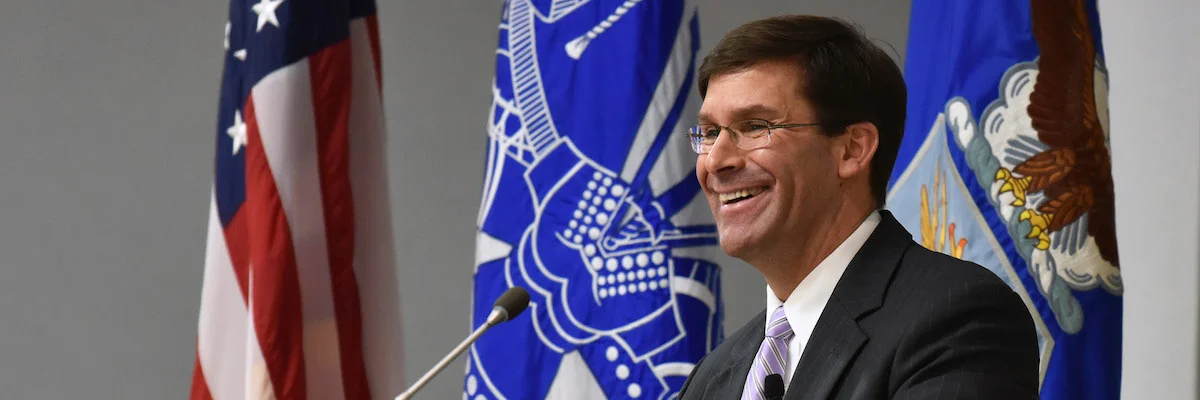
US Defense Chief Urges Iran to Hold Talks with US
◢ US Defense Secretary Mark Esper urged Iran Wednesday to enter discussions with the United States in order to ease tensions in the Persian Gulf region. "We are not seeking conflict with Iran. We want to engage with them diplomatically," Esper said in his first formal press conference after being confirmed last month.
US Defense Secretary Mark Esper urged Iran Wednesday to enter discussions with the United States in order to ease tensions in the Persian Gulf region.
"We are not seeking conflict with Iran. We want to engage with them diplomatically," Esper said in his first formal press conference after being confirmed last month.
"The president said once again he is willing to meet with Iran's leaders," he said.
"We hope that the Iranians would agree to meet and talk and help us resolve these issues."
At the G7 meeting in Biarritz, France on Monday, Trump, whose government has aggressively sought to pressure Tehran, showed openness to French President Emmanuel Macron's proposal of a summit with his Iranian counterpart Hassan Rouhani.
"If the circumstances were correct, I would certainly agree to that," Trump said at a joint press conference with Macron.
That could be the ice-breaker needed to end more than two years of heightened hostilities between the two countries.
Breaking with his predecessor Barack Obama, Trump enacted a policy of "maximum pressure" on Tehran over its disputed nuclear program and last year unilaterally withdrew from the landmark 2015 international deal that placed limits on Tehran's nuclear activities.
Tensions over that move have gradually risen, with Iran seizing tankers in the Gulf in recent months and Britain detaining an Iranian tanker off of Gibraltar.
In the wake of that, the US launched its "Operation Sentinel," a naval operation to protect commercial shipping in the Gulf.
"I am pleased to report that Operation Sentinel is up and running, with the UK, Australia and Bahrain joining us in this effort," Esper said.
He said other countries would likely soon join, and that the operation had helped calm the region.
"Between our presence and the presence of our allies and partners in the region, I think so far, further bad, provocative behavior has been deterred," Esper said.
"We want to talk to Iran, and talk about a diplomatic path forward," he said, adding: "I'm not sure I'm ready to call the crisis over yet. So far, so good."
Photo: Wikicommons
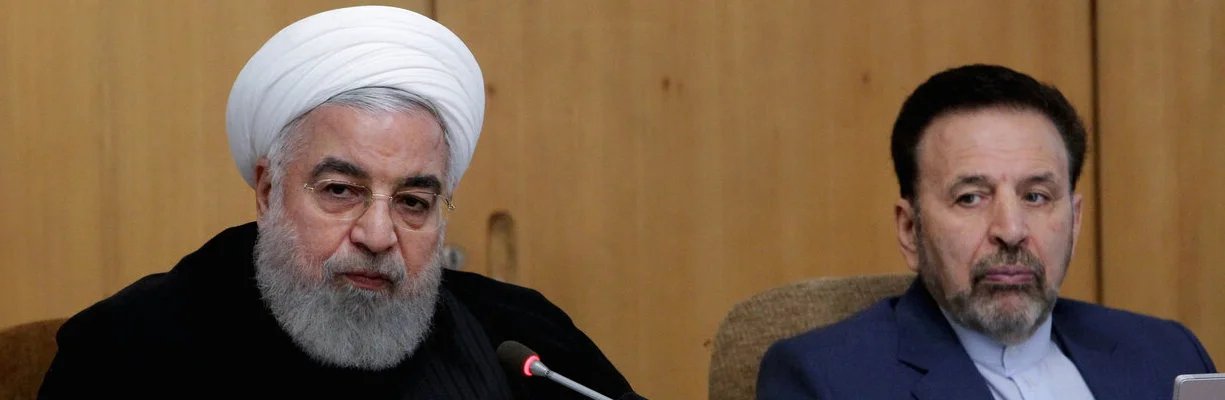
Iran Says Delegation to Visit France as Talks Progress
◢ Iran is sending a delegation to France next week after progress was made in talks to defuse tensions since the US withdrew from a landmark nuclear deal, a senior official said Wednesday. “A delegation is going to France next week and they will negotiate... issues," said Mahmoud Vaezi, the chief of staff of Iran's President Hassan Rouhani.
Iran is sending a delegation to France next week after progress was made in talks to defuse tensions since the US withdrew from a landmark nuclear deal, a senior official said Wednesday.
Tehran and Washington have been locked in a bitter standoff since last year when US President Donald Trump unilaterally pulled out of the deal that gave Iran relief from sanctions in return for curbs on its atomic program.
At the height of the crisis in June, Iran shot down a US drone in the Gulf and Trump approved a retaliatory strike against the Islamic republic before canceling it at the last minute.
“A delegation is going to France next week and they will negotiate... issues," said Mahmoud Vaezi, the chief of staff of Iran's President Hassan Rouhani.
"These negotiations have made relatively good progress since last week," Vaezi was quoted as saying by state news agency IRNA.
The newly announced visit comes after Iran's top diplomat Mohammad Javad Zarif travelled to France on Sunday for the second time in a matter of days
Zarif held meetings on the sidelines of the G7 summit in Biarritz after which Trump said he was open to meeting his Iranian counterpart.
Rouhani has since played down the prospect of meeting Trump, however, saying the Americans would have to take the first step and lift all sanctions against Iran.
In response to the US withdrawal and its imposition of crippling sanctions, Iran has hit back by abandoning commitments under the nuclear deal known formally as the Joint Comprehensive Plan of Action (JCPOA).
French President Emmanuel Macron has been leading efforts to ease the situation, urging the United States to allow Iran to sell oil to China or India or give it access to a new line of credit
Vaezi refused to reveal details on any package in his remarks on Wednesday.
"Until the issue is finalised, no details will be announced," he said, according to IRNA.
"What we have been doing with France... is restoring Iran's rights under the JCPOA and lifting unjust sanctions," he added.
Photo; IRNA
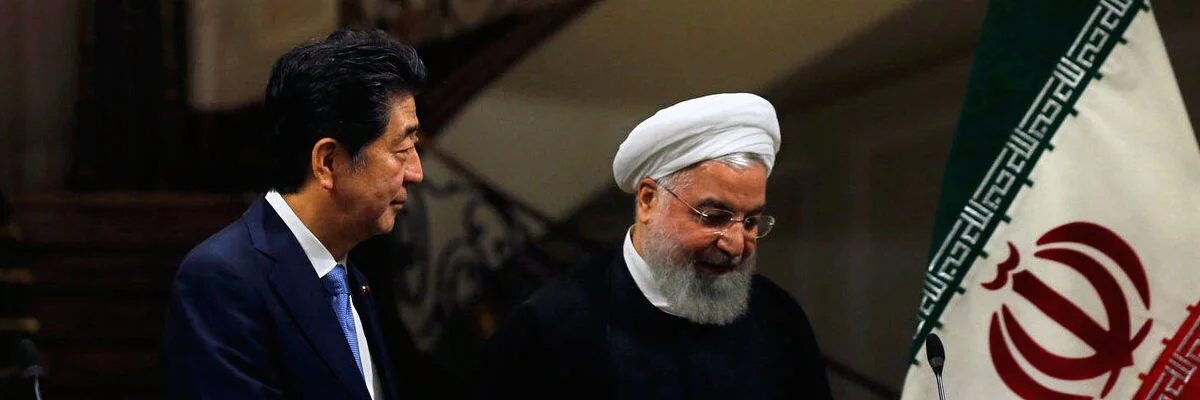
Japan PM Abe to Meet Iran's Rouhani in New York
◢ Japan’s Prime Minister Shinzo Abe plans to meet Iranian President Hassan Rouhani in New York next month as Tokyo continues to seek a leading role in attempts to defuse rising tension in the Middle East. Japan's foreign ministry said Wednesday the meeting was arranged during Iranian Foreign Minister Mohammad Javad Zarif's visit to Tokyo.
Japan's Prime Minister Shinzo Abe plans to meet Iranian President Hassan Rouhani in New York next month as Tokyo continues to seek a leading role in attempts to defuse rising tension in the Middle East.
Japan's foreign ministry said Wednesday the meeting was arranged during Iranian Foreign Minister Mohammad Javad Zarif's visit to Tokyo on Tuesday, and would take place on the sidelines of the UN General Assembly.
Japan has long been a major importer of Iranian oil and was one of eight countries given a waiver by Washington on buying directly from Tehran.
Sanctions were imposed after the US President Donald Trump abandoned the Iranian nuclear agreement struck by his predecessor Barack Obama.
Other signatories—including major European nations—disagreed with Trump's action.
"I have received clear words from Supreme Leader Khamenei that he does not wish to build, possess and to use nuclear weapons," Abe told Zarif during Tuesday's meeting.
“Japan wishes to continue diplomatic efforts toward stabilizing the situation," Abe said.
Abe travelled to Iran in June and met Supreme Leader Ayatollah Ali Khamenei as well as Rouhani in a bid to ease tension between Tehran and Washington.
Zarif made an unannounced appearance at the G7 in France, with the global elite group hoping the surprise visit would help ease friction between Iran and the US.
US President Donald Trump did not meet Zarif, but said he would be willing to hold talks with Rouhani in the near future.
Rouhani said a meeting could only take place if the US first scrapped the sanctions.
Photo: IRNA
Iran Tells US to Take 'First Step' by Ending Sanctions
◢ President Hassan Rouhani Tuesday told the United States to "take the first step" by lifting all sanctions against Iran, a day after US President Donald Trump said he was open to meeting. Trump said on Monday he was ready to meet with his Iranian counterpart within weeks, in a potential breakthrough reached during a G7 summit in the French seaside resort of Biarritz.
By David Vujanovic
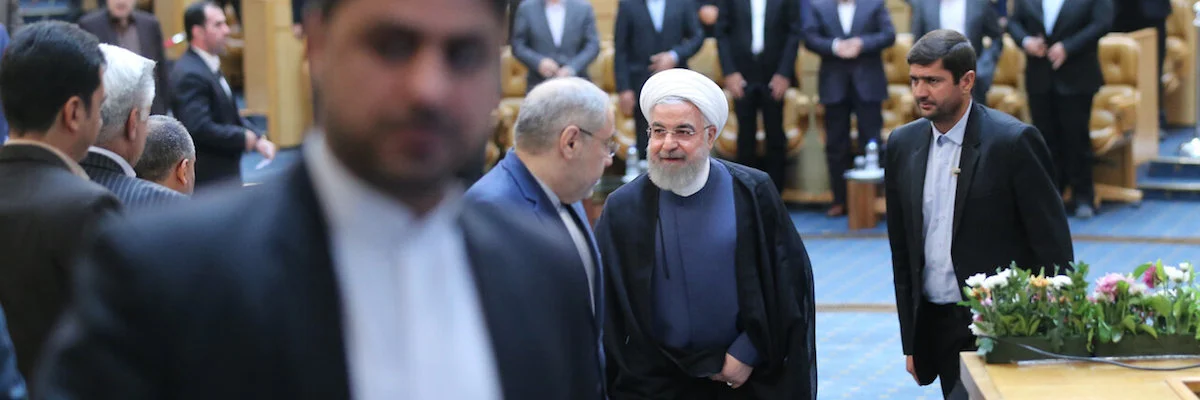
President Hassan Rouhani Tuesday told the United States to "take the first step" by lifting all sanctions against Iran, a day after US President Donald Trump said he was open to meeting.
Trump said on Monday he was ready to meet with his Iranian counterpart within weeks, in a potential breakthrough reached during a G7 summit in the French seaside resort of Biarritz.
Iran's economy has been battered by US sanctions imposed after Trump unilaterally withdrew the United States in May last year from a landmark 2015 nuclear deal between the Islamic republic and world powers.
"The step is to retreat from sanctions. You must retreat from all illegal, unjust and wrong sanctions against the nation of Iran," Rouhani said in a speech aired live on state television.
"The key for positive change is in the hands of Washington," he said, because Iran had already ruled out ever doing what worries the US the most -- building an atomic bomb.
"If honestly this is your only concern, this concern has already been removed" through a fatwa issued by supreme leader Ayatollah Ali Khamenei, said the Iranian president.
"We don't (intend to) make an atomic bomb... our military doctrine is based on conventional arms."
Khamenei issued a fatwa against nuclear weapons in 2003 and has reiterated it several times since.
"So take the first step. Without this step, this lock will not be unlocked," Rouhani said at a Tehran event marking the start of work on a housing project.
No Photo Opportunities
In Biarritz, French President Emmanuel Macron said the "conditions for a meeting" between Trump and Rouhani "in the next few weeks" had been created through intensive diplomacy and consultations.
Trump, speaking at the final news conference of the G7 summit, said he "would certainly agree to that.
He added that the timeline proposed by Macron was realistic.
Trump was equally confident that Rouhani would be in favour.
"I think he's going to want to meet. I think Iran wants to get this situation straightened out," he added.
But Zarif said on Tuesday that he had made it known during the G7 summit that a meeting between Rouhani and Trump would be highly improbable even if the United States returned to the nuclear deal.
"On my trip to Biarritz I said that a meeting between Iran's president and Trump is not imaginable" until America rejoins the nuclear pact, said Zarif.
"Even at that time, we will not have a bilateral negotiation," added Zarif, who is now on a tour of Asia, in remarks aired on state television.
Rouhani has indicated he is open to holding talks with the Americans, but it is an approach that has faced criticism from ultra-conservatives in the Islamic republic.
In his speech on Tuesday, Rouhani said his government's policy of "constructive interaction" with the world was in line with the supreme leader's approach of "extensive interaction".
But he stressed the United States had to "retreat from their mistakes" and return to commitments made under the nuclear deal.
"Our path is clear if they come back to their commitments, we too will fully act on our commitments. If they do not come back to their commitments, we will continue our path," said Rouhani.
But the Iranian president said he was not just looking for photo opportunities.
"We seek to resolve issues and problems in a rational way but we are not after photos. For anyone wanting to take a picture with Hassan Rouhani, this is not possible," he said.
The possible meeting between Rouhani and Trump was blasted as a photo opportunity Tuesday on the front page of the Javan newspaper close to Iran's Islamic Revolutionary Guard Corps.
Trump has put in place a policy of "maximum pressure" on Iran through crippling sanctions that critics see as raising the risk of conflict in the Middle East between the US and Iran.
Both Rouhani and Trump are scheduled to be in New York for the UN General Assembly at the end of September which could provide a stage for talks.
Photo; IRNA
Trump Says Talks with Rouhani Within Weeks Sounds Realistic
◢ US President Donald Trump said he believed it was realistic he could meet his Iranian counterpart Hassan Rouhani within weeks, following a series of diplomatic initiatives by France. Asked by reporters if he thought the timeline proposed by French President Emmanuel Macron was realistic, Trump said: "It does", adding he thought Rouhani would also be in favor.
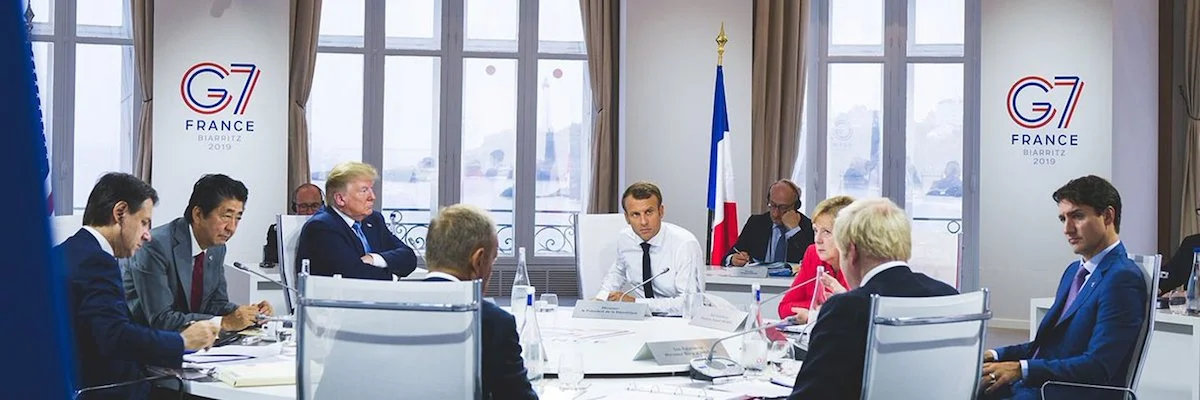
US President Donald Trump said he was prepared to meet his Iranian counterpart Hassan Rouhani in the next few weeks after talks over Tehran's nuclear program at a G7 summit in France.
Iranian Foreign Minister Mohammad Javad Zarif made a surprise appearance on the sidelines of the summit in Biarritz on Sunday at the invitation of French President Emmanuel Macron.
Macron said that the "conditions for a meeting" between Trump and Rouhani to take place "in the next few weeks" had been created through intensive diplomacy and consultations.
"If the circumstances were correct, I would certainly agree to that," Trump said at a joint press conference with Macron.
Asked by reporters if he thought the timeline proposed by his French counterpart sounded realistic, Trump replied: "It does", adding he thought Rouhani would also be in favor.
"I think he's going to want to meet. I think Iran wants to get this situation straightened out," Trump added.
Trump has put in place a policy of "maximum pressure" on Tehran over its disputed nuclear program via crippling sanctions that are seen as raising the risk of conflict in the Middle East.
The US president last year unilaterally pulled out of a landmark 2015 international deal that placed limits on Tehran's nuclear activities in exchange for trade, investment and sanctions relief.
Rouhani defended Zarif's Biarritz visit in a speech aired live on state television on Monday.
"I believe that for our country's national interests we must use any tool," he said.
But hardliners have criticized the initiative, with the ultra-conservative Kayhan newspaper saying the trip was "improper" and sent "a message of weakness and desperation."
Macron has urged the US administration to offer some sort of sanctions relief to Iran, such as lifting sanctions on oil sales to China and India, or a new credit line to enable exports.
In return, Iran would return to complying with the 2015 deal.
Commenting on the talks about Iran at the G7, German Chancellor Angela Merkel said: "It's a big step forward. Now there is an atmosphere in which talks are welcomed."
Photo: G7
Iran Sold Oil Wanted by U.S. But Doesn't Know Where It Is Going
◢ Iran said it sold an oil cargo on board a contested tanker sailing the Mediterranean Sea but didn’t know where the vessel was going amid U.S. efforts to block delivery of the crude. The Adrian Darya 1, the tanker that the U.S. sought to seize in Gibraltar last week, was sailing more than halfway into the Mediterranean Sea on Monday without declaring any destination.
By Arsalan Shahla and Mahmoud Habboush
Iran said it sold an oil cargo on board a contested tanker sailing the Mediterranean Sea but didn’t know where the vessel was going amid U.S. efforts to block delivery of the crude.
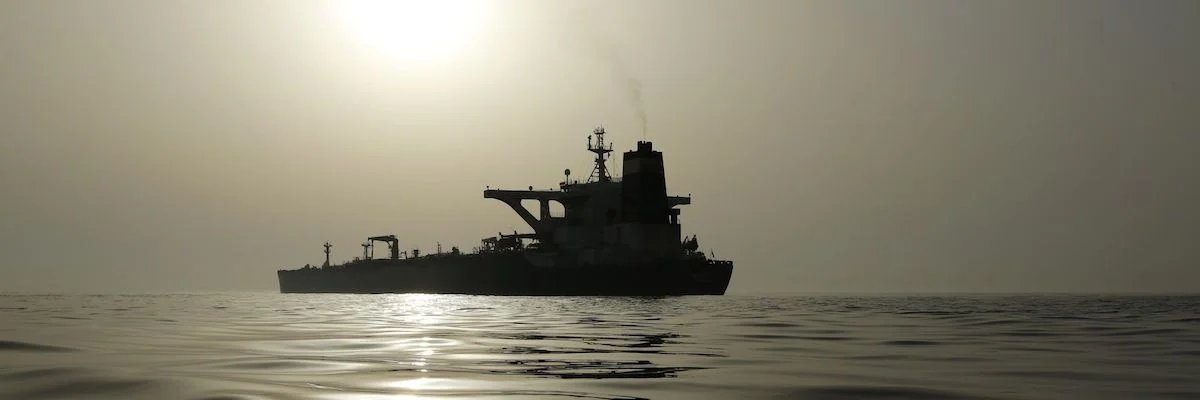
The Adrian Darya 1, the tanker that the U.S. sought to seize in Gibraltar last week, was sailing more than halfway into the Mediterranean Sea on Monday without declaring any destination. Iran didn’t identify the buyer of the roughly 2 million-barrel cargo.
The buyer will determine where the oil is delivered, Iranian government spokesman Ali Rabiei said announcing the sale. He didn’t say when Iran sold the crude in comments carried by state-run IRNA news agency.
Iran’s tanker fleet is under intense scrutiny as the U.S. seeks to cut off the Islamic republic’s ability to sell crude, normally the country’s main export earner. Iran’s oil sales have tumbled under U.S. sanctions threatening to punish most interactions with the Iranian government over its nuclear program.
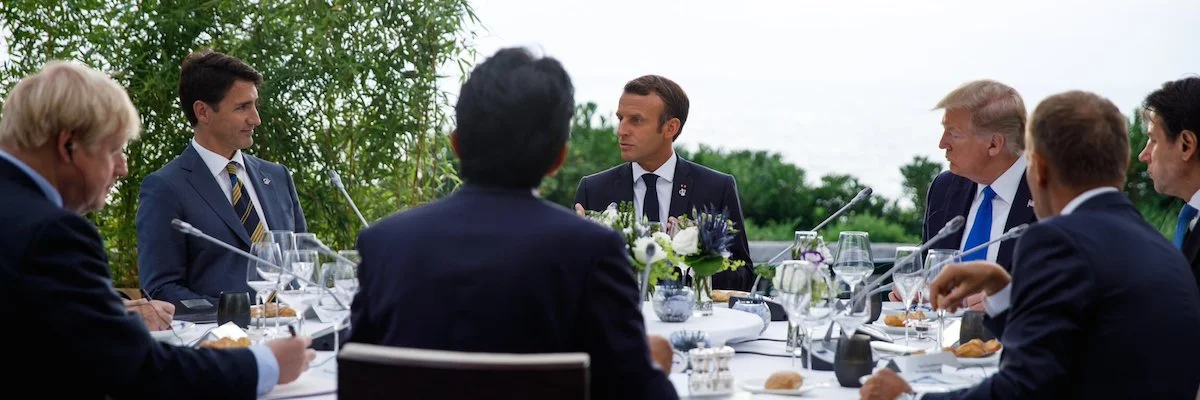
French President Emmanuel Macron renewed efforts over the weekend to save the 2015 nuclear agreement with the Islamic Republic. Both Iran and other signatories to the deal oppose the U.S. President Donald Trump’s tougher measures and Macron proposed allowing the Middle Eastern producer to sell more crude in exchange for returning to full compliance with the agreement. Macron discussed the idea in meetings with Trump and Iranian Foreign Minister Javad Zarif in Biarritz, the site of the Group of Seven summit.
Those discussions would likely do little to solve the immediate problem of the Adrian Darya 1. The Trump Administration is seeking to block the tanker’s voyage by threatening sanctions to stop the ship from being able to call in any port or offload any oil.
The tanker on Sunday changed the signal sent from the vessel’s satellite transponder to “For Order,” a designation meaning the ship isn’t disclosing any destination, according to Bloomberg tanker-tracking data. The Adrian Darya 1, which last week changed names from Grace 1, was sailing south of the Greek mainland, according to tanker-tracking data.
The ship had on Saturday signaled Turkey’s port of Mersin, switching from the previous target of Kalamata in Greece. Greek officials said the ship would be unwelcome after the U.S. threatened sanctions against anyone aiding the tanker, while a stop in Turkey would also pose complications in an already fraught relationship.
The vessel may seek to transfer the crude to smaller ships for delivery to Turkey or Syria and could “go dark,” turning off its satellite transponder to mask the location of any unloading. The vessel’s current trajectory could lead to any of the ports in the eastern Mediterranean or, potentially, to the Suez Canal.
The Aryan Darya 1 wouldn’t be able to transit Suez without offloading some of the oil on board since a fully laden tanker of that size would sit too deep in the water to make the passage. The Suez Canal leads to the Red Sea and from there the vessel could sail on to the Persian Gulf and Iran.
A U.S. attempt to seize the tanker before leaving Gibraltar was denied by a court in Gibraltar. A court in the territory refused the petition from the American government since, while European Union rules prohibit dealing with sanctioned entities in Syria, they are less comprehensive than U.S. sanctions law with regards to Iranian oil sales.
Photo: Bloomberg
Iran President Makes Case for Talks as G7 Gambit Slammed
◢ Iran's President Hassan Rouhani came out strongly in favor of talks Monday as his top diplomat came under fire from ultra-conservative media for a surprise visit to a G7 summit. "I believe that for our country's national interests we must use any tool," Rouhani said in a speech aired live on state television.
By David Vujanovic
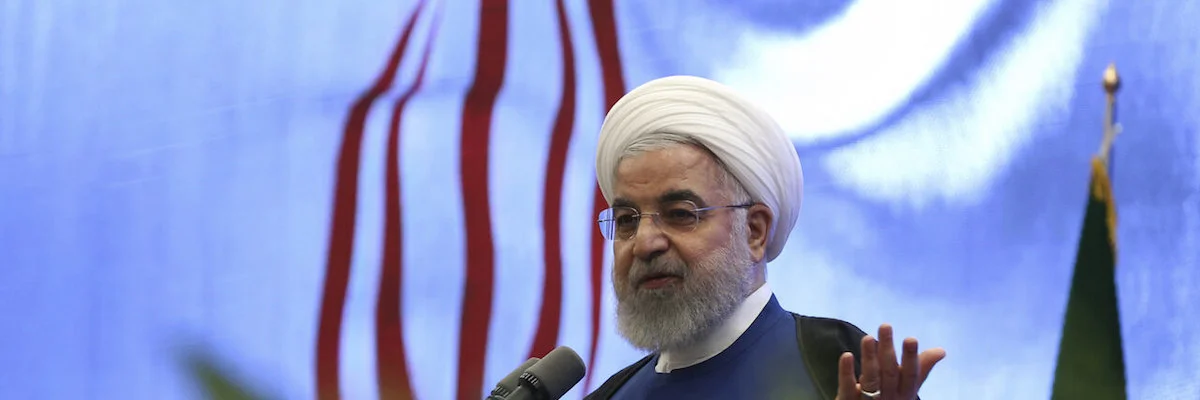
Iran's President Hassan Rouhani came out strongly in favor of talks Monday as his top diplomat came under fire from ultra-conservative media for a surprise visit to a G7 summit.
Foreign Minister Mohammad Javad Zarif flew in to the French seaside resort of Biarritz on Sunday for meetings on the sidelines of the G7 gathering.
"I believe that for our country's national interests we must use any tool," Rouhani said in a speech aired live on state television.
"And if I knew that I was going to have a meeting with someone that would (lead to) prosperity for my country and people's problems would be resolved, I would not hesitate.
"The main thing is our country's national interests," he said to a round of applause from those gathered at an event marking government achievements in rural areas.
Rouhani's remarks came as his government faced criticism over Zarif's visit to Biarritz at the invitation of French President Emmanuel Macron.
Macron has been leading diplomatic efforts to de-escalate tensions between Iran and its arch-enemy the United States.
Iran's economy has been battered by US sanctions imposed since last year when President Donald Trump unilaterally withdrew the United States from a landmark 2015 nuclear deal between the Islamic republic and world powers.
The ultra-conservative Kayhan newspaper strongly criticised Zarif's visit on Monday in an article that called the trip "improper".
Kayhan said the fact that the minister's visit was the second to France in a matter of days sent "a message of weakness and desperation".
"These improper measures are taken in the fantasy of an opening but it will definitely have no outcome other than more insolence and pressure," it added.
'Weakness and Desperation'
Supreme leader Ayatollah Ali Khamenei's representative in the Islamic Revolutionary Guards Corps also criticised engagement with Iran's foes.
Their "hostility and confrontation with the Islamic Revolution is endless and it cannot be resolved or reconciled through negotiation and dialogue," said Abdollah Haji-Sadeghi.
"We should not expect anything else but aggression, attacks, sedition and hostility" from the enemy, he was quoted as saying by the semi-official ISNA news agency.
The reformist Etemad newspaper, however, described Zarif's trip to France as "the most hopeful moment" for Iran in the 15 months since the US withdrew from the nuclear deal.
"Given Macron's attempts over the last two months, one can be hopeful that Trump's response to Macron's ideas has been the main reason for Zarif's... trip to Biarritz," it said.
The spike in tensions between Iran and the United States has threatened to spiral out of control in the past few weeks, with ships mysteriously attacked, drones downed and tankers seized.
Rouhani said his government was ready to use "both hands" of power and diplomacy.
"They may seize our ship somewhere... we will both negotiate... and we may seize their ship for legal reasons," he said, referring to an Iranian oil tanker seized off Gibraltar that has since been released and a British-flagged vessel still impounded by Iran in the Gulf.
"We can work with two hands... the hand of power and the hand of diplomacy," said the Iranian president.
"We must use both our power, our military and security power, economic and cultural power and our political power. We must negotiate. We must find solutions. We must reduce problems.
"Even if the probability of success... is 10 percent, we must endeavor and go ahead. We must not lose opportunities."
Photo: IRNA
Iran Turns to Asian Allies to Seek Relief from US Sanctions
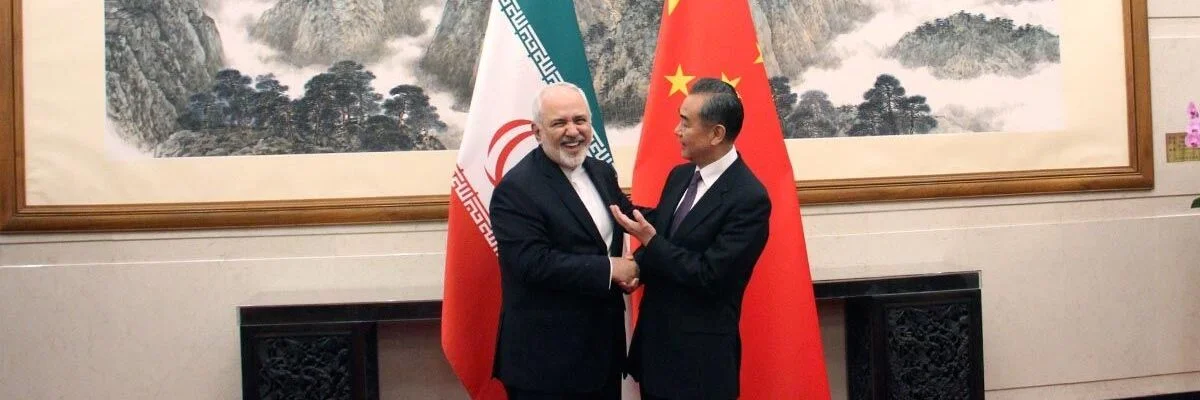
◢ Iranian foreign minister Mohammad Javad Zarif kicked off his Asian tour in Beijing Monday, presenting a 25-year plan to cement Iran's ties with its biggest Asian trading partner amid biting US sanctions. Zarif's Asian tour—which also includes stopovers in Japan and Malaysia—comes fresh on the heels of a surprise visit to the G7 summit in France over the weekend.
Iranian foreign minister Mohammad Javad Zarif kicked off his Asian tour in Beijing Monday, presenting a 25-year plan to cement Iran's ties with its biggest Asian trading partner amid biting US sanctions.
Zarif's Asian tour—which also includes stopovers in Japan and Malaysia—comes fresh on the heels of a surprise visit to the G7 summit in France over the weekend.
The summit in Biarritz saw a dramatic shift of focus when Zarif flew in at the invitation of French President Emmanuel Macron to discuss the diplomatic deadlock on Tehran's disputed nuclear programme.
Iran's top diplomat didn't meet US President Donald Trump, French diplomats said, but the presence of the two men in the same place at least sparked hopes of detente.
Zarif was a key architect of the 2015 nuclear deal reached between Iran, the United States, European powers, Russia and China.
In Beijing, Zarif met with Chinese foreign minister Wang Yi and said the pair had discussed a 25-year road map to strengthen economic cooperation between the two countries.
China has continued to purchase Iranian crude despite sanctions.
"We reject actions of interference by others in the affairs of progressive countries including Iran and China," China's foreign minister told reporters after the meeting with Zarif.
"We have stood together in dealing with these interventions and interferences and rejecting them as a major threat to international peace and security and friendly relations among countries."
Trump's policy of applying "maximum pressure" on Tehran via crippling sanctions has been criticised by European powers and China and is seen as raising the risk of conflict in the Middle East.
In July, the US government imposed heavy sanctions seeking to hamper Zarif's travel, and effectively banning him from the United States.
Zarif tweeted that he was heading to Japan and Malaysia in the next leg of his Asian tour without offering details.
Photo: Javad Zarif Twitter
Trump Switches Tone on Iran, Raising Hopes at G7
◢ US President Donald Trump said Monday that he had agreed to the Iranian foreign minister flying in for a G7 summit and insisted he was not seeking regime change in Tehran—a change of tone that could lower tensions. "I knew everything he (Macron) was doing and I approved everything he was doing," Trump said, adding that the French president "asked for my approval,”
By Sebastian Smith, Adam Plowright and Stuart Williams
US President Donald Trump said Monday that he had agreed to the Iranian foreign minister flying in for a G7 summit and insisted he was not seeking regime change in Tehran—a change of tone that could lower tensions.
Mohammad Javad Zarif made a surprise appearance at the summit in Biarritz on Sunday for talks with French President Emmanuel Macron, who is seeking to broker a deal between Iran and the United States.
Zarif also met with French and other European diplomats, but Trump said it was "too soon" for him to meet Zarif.
"I knew everything he (Macron) was doing and I approved everything he was doing," Trump said, adding that the French president "asked for my approval.”
In early August, Trump lambasted Macron for sending "mixed signals" on Iran, and at the end of July the US administration imposed sanctions on Zarif.
Trump has put in place a policy of "maximum pressure" on Tehran over its disputed nuclear programme via crippling sanctions that are seen as raising the risk of conflict in the Middle East.
The US president unilaterally pulled out of a landmark 2015 international deal that placed limits on Tehran's nuclear activities in exchange for trade, investment and sanctions relief.
"I believe that for our country's national interests we must use any tool," Iran's President Hassan Rouhani said of his top diplomat's Biarritz visit in a speech aired live on state television on Monday.
But hardliners criticised the initiative, with the ultra-conservative Kayhan newspaper saying the trip was "improper" and sent "a message of weakness and desperation."
Some analysts also cautioned against optimism about Macron's mediation efforts.
"There is considerable room between what President Trump says and what he thinks one day, and what he says and thinks the next," Robert Malley, head of the International Crisis Group, told AFP.
Photo: Elysée
Iran Foreign Minister Makes Surprise Visit to G7 Summit
◢ A top Iranian official paid an unannounced visit Sunday to the G-7 summit and headed straight to the building where leaders of the world's major democracies have been debating how to handle the country's nuclear ambitions. The surprise arrival of Iranian Foreign Minister Mohammad Javad Zarif came just two days after his meeting with France's president, who is the host of the Group of Seven gathering in Biarritz.
By Helene Fouquet and Josh Wingrove
Emmanuel Macron has thrown his G-7 guests a mid-summit curveball—inviting Iran’s foreign minister for a surprise visit in a move that risks infuriating Donald Trump’s administration.
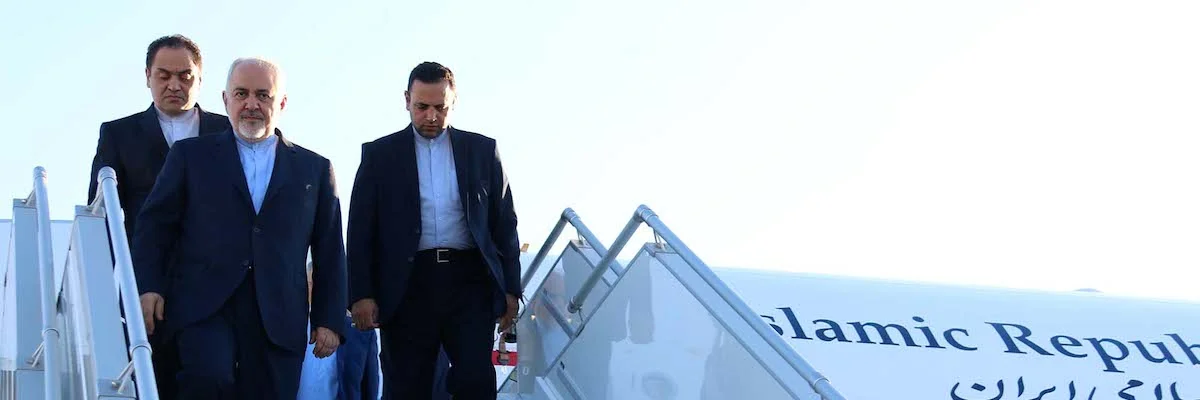
Iranian Foreign Minister Mohammad Javad Zarif flew to Biarritz, the French seaside resort town that’s the site of the summit, on Sunday as leaders met nearby. The French government insisted he wasn’t in the town to join the G-7, but instead to meet nearby with the French foreign minister as part of a bid by Macron to deescalate the crisis.
Still, the arrival came as a stunning development, and several delegations appear to have been caught off-guard—the Americans and Canadians declined to say if they had advance notice, while the Italians found out from French news wire AFP. Iran already has dominated the discussions at the G-7, with Macron and Trump sparring over Macron’s outreach to the Islamic Republic.
Zarif was in Paris only last week, meeting with Macron about the future of the landmark 2015 nuclear deal. Zarif described the talks as “constructive and good”, the semi-official Iranian Students’ News Agency reported.
Zarif is a lightning rod for the Trump administration, which sanctioned him personally just recently and heavily restricted his movements during a recent visit to New York. Macron had wanted to shake up the summit, and he has already angered the American side, which accused him of trying to manipulate the agenda to embarrass Trump.
The French president is trying to show that he’s achieved something on the geopolitical issues he’s raised, and he has led the European effort to salvage the Iran nuclear deal, after Trump pulled out in 2018. Macron told TF1 television Sunday that leaders agreed they need to stop Iran developing nuclear weapons and destabilizing the region -- though that was the state of play before talks began.
Macron also touted an agreement to send a joint message from the G-7 to Iran as one of his victories from a dinner among the leaders. "We’ve enacted a common communication, which in my view has a lot of value,” he said this morning in a French television interview.
But Trump immediately pushed back on the idea that Macron was speaking for the whole G-7, and therefore Trump as well. “We’ll do our own outreach,” he said. “But I can’t stop people from talking.”
One person familiar with the situation says Trump does not agree that Macron can convey a message from the G-7 to Iran since the leaders didn’t all settle on what the message should be.
Trump has pursued a “maximum pressure” campaign against Iran, using sanctions to cut off their sales of oil in a way that’s hurting that nation’s economy. White House officials say the G-7 countries agreed Trump’s pressure campaign on Iran is having an impact, and that it should continue.
Photo: IRNA
Trump Unlikely to Support Macron’s Plan to Revive Iran Deal
◢ French President Emmanuel Macron pitched U.S. President Donald Trump on a plan to end the standoff over the Iran nuclear deal—by allowing Iran to sell oil for a limited period of time in exchange for returning to talks and to compliance with the agreement. A senior U.S. official termed the plan a non-starter.
By Helene Fouquet and Nick Wadhams
French President Emmanuel Macron pitched U.S. President Donald Trump on a plan to end the standoff over the Iran nuclear deal—by allowing Iran to sell oil for a limited period of time in exchange for returning to talks and to compliance with the agreement.
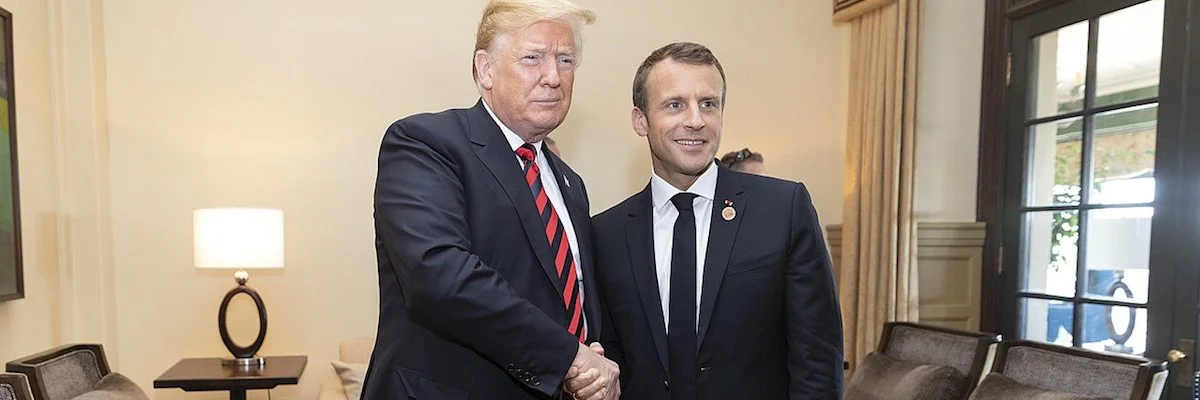
The proposal was described by a French official after Macron and Trump sat down to an impromptu lunch that stretched for two hours at the Group of Seven Summit in Biarritz, France. A senior U.S. official termed the plan a non-starter.
The U.S. in the past has resisted any compromise that allowed Iran to resume selling oil, which is sharply restricted by U.S. sanctions. That’s why ending the impasse and putting the deal back together is so difficult: Iran’s No. 1 demand to come back to the bargaining table is that it be allowed to sell oil to help its struggling economy.
The French official described a plan that would occur in two phases. Iran would be allowed to sell some volume of its oil in exchange for a series of commitments: return to compliance with the existing agreement, find ways to lower tensions in the Persian Gulf amid a spate of tanker seizures, and return to structured talks on missiles, regional issues and what happens after 2025, when the current agreement is set to expire.
The hope, this official said, is that this could create a de-escalation that allows the two sides to begin talking again, particularly knowing that both Trump and the Iranians have said they don’t want war. Macron met with an Iranian delegation on Friday, including Foreign Minister Javad Zarif, to discuss this proposal.
Trump pulled out of the deal in May 2018, saying it didn’t do enough to prevent Iran from getting a nuclear weapon. Iran remained in compliance with the deal for a time, but recently said it was enriching uranium at higher levels than allowed in the deal—meaning it’s no longer in line with the agreement, known as the Joint Comprehensive Plan of Action, or JCPOA.
Macron has led a European effort to find a compromise that would get Trump back to the table with the Iranians. One struggle has been finding incentives for Iran to renegotiate a deal that took effect so recently, this time surely at worse terms for Iran.
Salvaging the Iran nuclear accord is one of the key topics of the summit at this beach resort town, which sees Trump in his customary role as the outlier to the European nations that still think the deal can be saved. Another potential stumbling block to compromise in Biarritz: Trump brought with him national security adviser John Bolton, the leading Iran hawk in his administration.
Photo: Wikicommons
Europe Has Dug In Against Trump’s Iran ‘Maximum Pressure’ Campaign
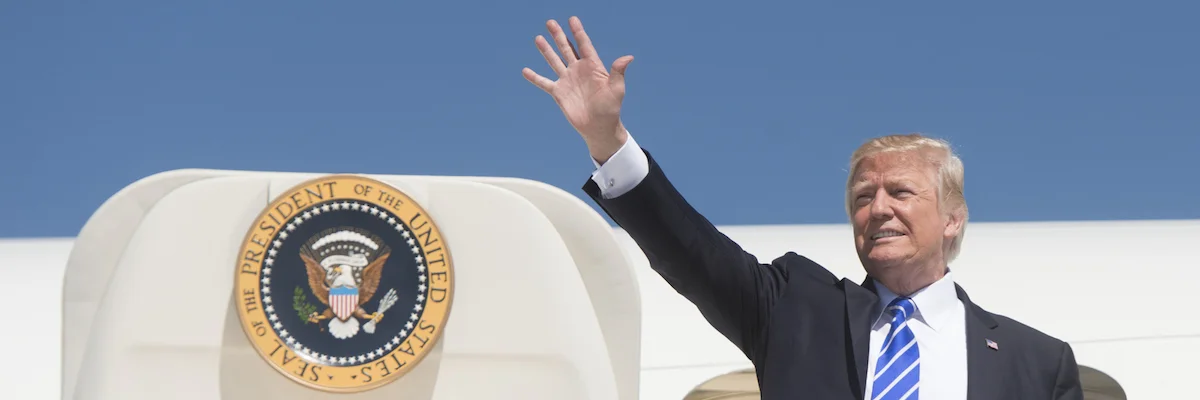
◢ President Donald Trump wants America’s closest allies to ratchet up the pressure on Iran. But this weekend in France he’ll find they’re still reluctant to join him. Divisions over Iran will be on full display when Trump meets his European peers at a Group of Seven meeting starting Saturday in the coastal city of Biarritz.
By Nick Wadhams
President Donald Trump wants America’s closest allies to ratchet up the pressure on Iran. But this weekend in France he’ll find they’re still reluctant to join him.
Divisions over Iran will be on full display when Trump meets his European peers at a Group of Seven meeting starting Saturday in the coastal city of Biarritz. While the agenda will focus on the global economy, the most pressing security challenge will be navigating the wreckage of Trump’s decision last year to abandon the 2015 deal constraining Tehran’s nuclear program.
Even with Iran downing an American drone and being accused of a spate of tanker attacks in the Persian Gulf, European nations want to preserve the Joint Comprehensive Plan of Action they say kept a rein on Iran’s nuclear program. But they’ve failed to find a way to help Tehran get the economic benefits promised under the deal. Iran is desperate to get its oil back on world markets, but that’s a non-starter for the U.S.
No compromise has emerged.
The Iran debate—and the distrust it has fueled—reflects the strains between the U.S. and Europe in the Trump era: displeasure over his maximalist approach, umbrage over his scorn for allies and, beneath it all, wariness about his intentions. In the case of Iran, allies can’t shake the suspicion that Trump, or his more hawkish advisers, want to provoke a war, no matter his insistence otherwise.
“I’ve heard several folks in Europe say, ‘Look, all of us were serving as diplomats during the Iraq War, so we’ve seen the beginnings of this movie before and we’re not going to get dragged into it again,”’ said Ellie Geranmayeh, a senior policy fellow at the European Council on Foreign Relations. “The Europeans will not want to side with the administration on issues that could lead to military conflict.”
The president hasn’t laid the groundwork for a productive summit. He’s arriving in France on the warpath over trade, allied contributions to NATO and a self-inflicted feud with Denmark over what appeared at first to be a joke: a suggestion the U.S. buy Greenland.
Trump’s best shot at winning some European support will come by working his personal rapport with U.K. Prime Minister Boris Johnson. The two unconventional leaders will meet for breakfast on Sunday, and Johnson may want to straddle European backing for the JCPOA with the need to keep Trump on his side for an eventual trade deal following Brexit.
A U.S. official, who asked not to be identified discussing internal deliberations, said the administration is “optimistic” that Johnson could bring the U.K. closer to the U.S. position on isolating Iran.
A U.K. official, speaking on condition of anonymity, pushed back on expectations that Johnson could be swayed. The new prime minister doesn’t want to rock the boat for French President Emmanuel Macron, who is the host of the G-7, the official said. The U.K. is sticking to its support for the nuclear deal.
But that too has its dangers. One person familiar with the White House thinking on the matter, who also asked not to be identified, said the administration realizes it needs to be careful calibrating its attitude toward Johnson, who may be wary of being seen as too close to Trump ahead of a possible election later this year.
“The president wants to give Boris Johnson a big boost -- he sees Johnson as Britain’s Trump, a like-minded model,” said Heather Conley, director of the Europe Program at the Center for Strategic and International Studies in Washington. “The challenge is Boris Johnson is winding up for an election and he’s got to walk a very fine line on what the domestic instinct is toward Trump.”
U.S. officials are playing down the disagreements between Washington and European capitals, arguing that all sides agree on the threat posed by Iran’s sponsorship of terrorist groups, its development of ballistic missiles and its attacks on tanker traffic around the Strait of Hormuz.
‘Tactical Disagreements’
“We have had tactical disagreements but there isn’t any disagreement on end states,” Brian Hook, the State Department’s Iran envoy, told Bloomberg TV on Aug. 21. “We share the same threat assessment. The Islamic Republic of Iran is the principle driver of instability in today’s Middle East.”
Anxiety is growing in Europe about a growing list of Iranian violations of the 2015 nuclear accord, which the Islamic Republic had obeyed until Trump quit the deal. Angry that the Europeans haven’t been able to deliver economic benefits in defiance of Trump’s sanctions, Iran now has exceeded enriched-uranium limits set by the agreement and is threatening further violations if Europe doesn’t find a way around the American restrictions.
Zarif’s Diplomacy
Iranian Foreign Minister Javad Zarif—who was recently sanctioned by the U.S.—will be in France ahead of the summit on Friday to urge the Europeans to stick to the nuclear deal.
According to press reports and a person familiar with Emmanuel Macron’s thinking, the French president is also circulating a proposal under which the U.S. would ease some restrictions on Iranian oil exports in exchange for the start of a diplomatic dialogue.
U.S. officials say Iran would need to make far bigger concessions for them to entertain such an offer. The idea flies in the face of the administration’s approach, which is to keep ramping up its “maximum pressure” campaign, under the belief that sanctions will so ruin Iran’s economy that its leaders will have no choice but to negotiate.
Two recent cases show just how different the U.S. and European approaches to Iran have become, and how wary U.S. allies are in being associated with the Trump administration’s stance.
Gibraltar Court
The U.K. rebuffed a demand from the White House to keep holding an Iranian oil tanker laden with $130 million in crude allegedly bound for Syria in Gibraltar. A court in the territory deemed it could no longer keep the ship after Iran offered assurances it wouldn’t go to Syria.
Senior U.S. officials had conveyed “grave disappointment” over the decision to let the tanker go, even raising the possibility that an eventual U.S.-U.K. trade deal might be in jeopardy. The Justice Department filed a complaint aimed at blocking the ruling. But the Grace 1—renamed the Adrian Darya 1—left as planned.
Even more embarrassing to the U.S. has been Europe’s shunning of the plan the Americans call Project Sentinel—a bid to protect ships passing through the Strait of Hormuz. In July, the U.K. signed up but was careful to portray its participation as a European-led initiative that was getting help from—and not being led by—the U.S. France and Germany flatly refused to join, leaving the U.S. with two partners: Australia and the U.A.E.
“It’s absolutely necessary to keep the Gulf open, but the fact that they won’t do it tells you something about how toxic President Trump is in European politics,” said Nicholas Burns, a former senior State Department official and professor at the Harvard Kennedy School. “The Europeans don’t trust that Trump will keep his word that he won’t attack Iran.”
Photo: White House
Macron Meets Iran FM to Push for G7 Detente
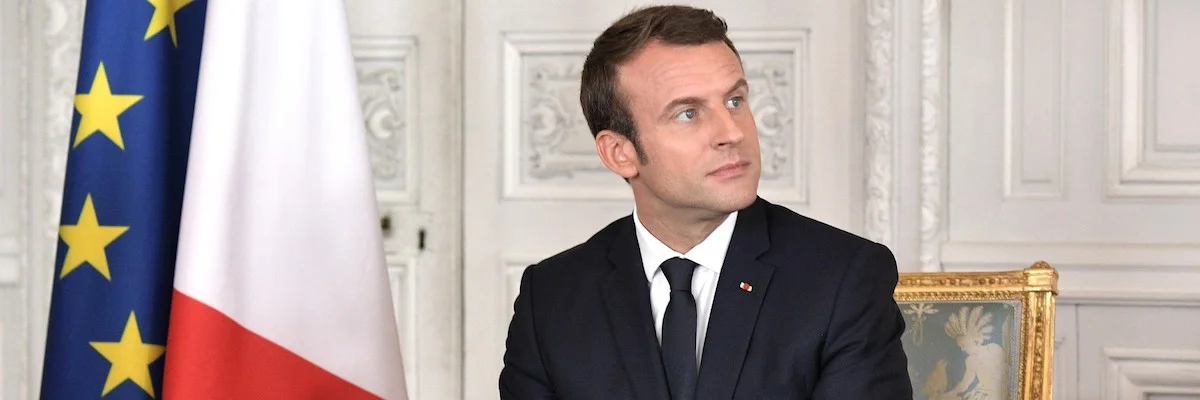
◢ French President Emmanuel Macron was to hold talks Friday with Iran's foreign minister ahead of a G7 meeting where he will attempt to soothe tensions between Tehran and Washington at what risks being a stormy summit. "We're at a critical moment," Macron warned on Wednesday, acknowledging that Iran is "laying out a strategy for exiting the JCPOA," the name of the 2015 accord reining in the country's nuclear ambitions.
By Valérie Leroux
French President Emmanuel Macron was to hold talks Friday with Iran's foreign minister ahead of a G7 meeting where he will attempt to soothe tensions between Tehran and Washington at what risks being a stormy summit.
"We're at a critical moment," Macron warned on Wednesday, acknowledging that Iran is "laying out a strategy for exiting the JCPOA," the name of the 2015 accord reining in the country's nuclear ambitions.
He admitted this week there were "true disagreements" over Iran within the G7 club of rich nations, which are meeting in France this weekend.
But Macron said he would "try to propose things" in the talks with Foreign Minister Mohammad Javad Zarif at the Elysee Palace in Paris on Friday.
Tensions have soared in recent months over Iran's disputed nuclear programme, with both Tehran and Washington claiming to have shot down rival drones in the Mideast.
Iran has also locked horns with Britain, with Iran's Revolutionary Guards seizing a British tanker in July after Britain detained an Iranian tanker off Gibraltar.
France has stepped up its outreach to Iran's President Hassan Rouhani, with Macron twice dispatching his diplomatic advisor Emmanuel Bonne to Tehran in recent months.
"President Rouhani instructed me to go and meet with President Macron (to see) whether we can finalise some of these proposals in order to be able to have everybody comply with their obligations under the JCPOA," Zarif said in Norway on Thursday.
"It's an opportunity to review the proposal by President Macron and to present the views of President Rouhani and see if we can find more common ground. We already have some common ground."
But the nuclear deal has all but collapsed after US President Donald Trump pulled the US out unilaterally in May 2018 and re-imposed sanctions that have wreaked havoc on the Iranian economy.
The European signatories vowed to find a workaround and have implored Tehran to respect the deal nonetheless.
But in July, it announced its nuclear programme would no longer be bound by some of the deal's key restrictions.
"They can be reversed as soon as Europe comes into compliance with its own obligations under the JCPOA," Zarif said Thursday.
Maximum Pressure
Macron's diplomacy is a delicate task, with France seeking a rollback on some of the US measures imposed on Iran as part of Trump's "maximum pressure" policy towards the Islamic republic.
French diplomats have raised the idea of US waivers on sanctions affecting Iranian oil exports to India and China, or a new credit line for Tehran that could help the struggling economy.
US President Donald Trump has accused Macron of sending Tehran "mixed signals", a charge rejected by the French government, which says its role is "to make every effort to ensure that all parties agree to a break and open negotiations."
On a host of issues, G7 members France, the United States, Canada, Britain, Germany, Italy and Japan find themselves at loggerheads, upending what used to be a cosy club of rich nations.
Trump left the last summit in Quebec in June 2018 accusing his host, Canadian Prime Minister Justin Trudeau, of being "very dishonest and weak".
The US leader is set to arrive for the French summit in the town of Biarritz on Saturday already riled by a new French law that will increase taxes on US internet giants such as Google and Facebook.
Trump is also threatening tariffs on the European automobile sector, while the climate change sceptic is not expected to contribute to Macron's official agenda of fighting global warming.
The fierce fires devouring thousands of acres in the Brazil's Amazon rainforest could spark further disputes, with both Macron and German Chancellor Angela Merkel saying the crisis demands a collective G7 response.
That garnered a furious response from Brazilian President Jair Bolsonaro—often called "South America's Trump"—who denounced any such G7 talks on the fires a display as "colonialist mentality."
Faced with the multiple G7 divisions, French officials have scrapped the idea of a final joint statement -- seen as an admission of the summit's lowered ambitions.
Photo: Wikicommons
Macron to Host Iran Top Diplomat for Nuclear Talks Friday
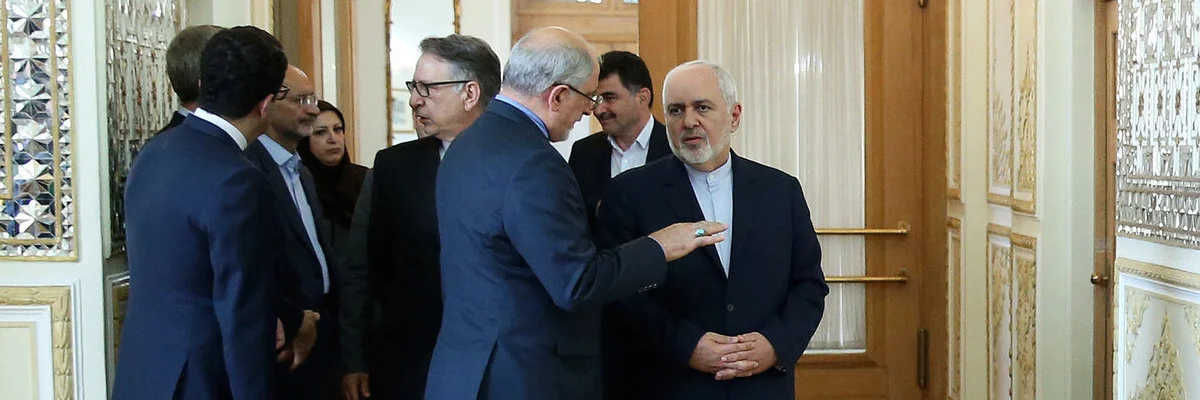
◢ President Emmanuel Macron will on Friday hold talks on Iran's contested nuclear program with Foreign Minister Mohammad Javad Zarif, the French presidency said, in a rare encounter between a Western head of state and a senior Iranian official. Macron will meet Zarif just one day before France chairs a three-day summit of leaders of Group of Seven (G7) countries, including President Donald Trump, in the southern resort of Biarritz.
President Emmanuel Macron will on Friday hold talks on Iran's contested nuclear program with Foreign Minister Mohammad Javad Zarif, the French presidency said, in a rare encounter between a Western head of state and a senior Iranian official.
Macron will meet Zarif just one day before France chairs a three-day summit of leaders of Group of Seven (G7) countries, including President Donald Trump, in the southern resort of Biarritz.
Zarif, who has been on a tour of Scandinavia, had earlier this week said he planned to hold talks in Paris.
The discussions between Zarif and Macron will come at a critical time for relations between Tehran and the West as Iran ramps up its nuclear programme in response to Trump's decision to pull out of the 2015 deal over its atomic drive.
France and other EU powers have insisted they want to keep the nuclear deal alive, although many analysts warn the US pullout dealt it a near-fatal blow.
Macron has insisted that diplomacy is the only way to solve the standoff and twice in the last months despatched his diplomatic advisor Emmanuel Bonne to Tehran.
A presidential official, who asked not to be named, said the talks would continue this channel.
Macron admitted in comments Wednesday there were "true disagreements" within the G7 over Iran but said he would "try to propose things" in the talks.
The French foreign ministry said earlier this month that it "needs no permission" to talk to Iran after Trump accused Macron of sending "mixed signals" to the Islamic Republic.
Zarif said in Norway Thursday that Macron had made proposals to President Hassan Rouhani who had despatched him to Paris "to see if we can finalise some of these ideas so each party can fulfil its obligations" under the nuclear deal.
"It will be a chance to see if we can find ground for understanding. We already have points of agreement," Zarif said.
The Iranian foreign minister, a suave fluent English speaker, was earlier this month slapped with sanctions by the United States. But the EU insisted it would continue to work with him.
Zarif's talks in Paris may also see the case raised of French-Iranian academic Fariba Adelkhah who was detained in Iran earlier this year and is one of many Western-Iranian dual nationals to be held behind bars there.
Photo: IRNA
US Urges UN to Extend Iran Arms Embargo, Travel Ban
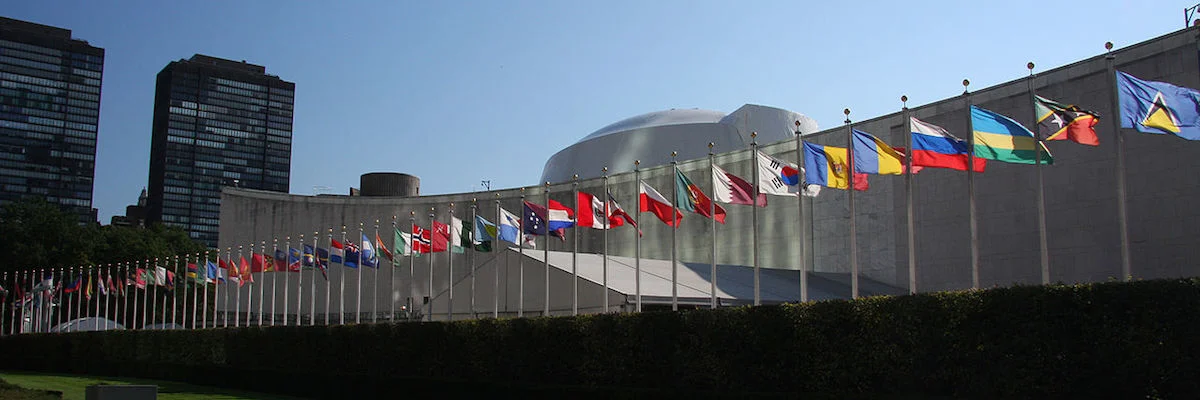
◢ The US urged the United Nations Tuesday to extend an arms embargo on Tehran that is due to expire next year as part of the embattled Iran nuclear deal. Secretary of State Mike Pompeo told the UN Security Council that the clock was ticking on a resolution restricting weapons sales to Iran that is due to end in October 2020.
The US urged the United Nations Tuesday to extend an arms embargo on Tehran that is due to expire next year as part of the embattled Iran nuclear deal.
Secretary of State Mike Pompeo told the UN Security Council that the clock was ticking on a resolution restricting weapons sales to Iran that is due to end in October 2020.
Pompeo warned that the expiration of provisions in Security Council Resolution 2231 would also see a travel ban on a key Iranian commander lifted.
"Time is drawing short to continue this activity of restricting Iran's capacity to foment its terror regime," he said.
"The international community will have plenty of time to see how long it has until Iran is unshackled to create new turmoil, and figure out what it must do to prevent that from happening," Pompeo added.
The resolution was passed as part of the Joint Comprehensive Plan of Action, otherwise known as the Iran nuclear deal which the US, Russia, China, France, Germany and Britain agreed with Tehran in 2015.
The landmark deal was designed to curb Iran's nuclear programme in exchange for sanctions relief.
President Donald Trump unilaterally withdrew the US from the deal last year and reinstated economic sanctions, sending tensions between Washington and Tehran soaring.
When the resolution expires next year, travel restrictions on Qasem Soleimani, the commander of Iran's Quds Force, which operates abroad, and 23 other Iranians will be lifted.
"We believe that the UNSC has an important role to play to ensure that the arms embargo and the travel ban are continued," Brian Hook, the US Special Representative for Iran told reporters in New York ahead of Pompeo's remarks.
Trump's administration is currently pursuing a "maximum pressure" campaign designed to force the Islamic republic to limit its nuclear programme and military activities.
Iran has responded by suspending some of its commitments under the nuclear deal.
The situation has threatened to spiral out of control with ships attacked, drones downed and oil tankers seized.
Meanwhile, the US has been struggling to piece together an international coalition to protect cargo ships travelling through the Gulf.
Allies are concerned about being dragged into conflict with Iran while European countries are trying to keep the nuclear deal alive.
Photo: Wikicommons