
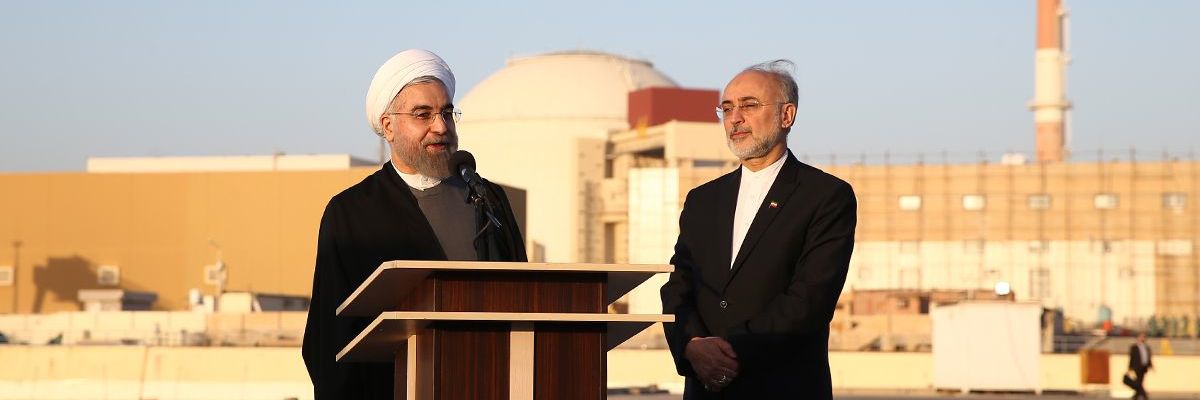
US Renews Waivers for Iran Civil Nuclear Projects
◢ The United States said Wednesday it was extending waivers for three civilian nuclear projects in Iran, despite Washington's withdrawal from the 2015 nuclear agreement. "This is a short 90 day extension," said White House National Security Advisor John Bolton, a champion of the hawkish policy towards Tehran.
The United States said Wednesday it was extending waivers for three civilian nuclear projects in Iran, despite Washington's withdrawal from the 2015 nuclear agreement.
"This is a short 90 day extension," said White House National Security Advisor John Bolton, a champion of the hawkish policy towards Tehran.
"We are watching those nuclear activities very, very closely, they remain under daily scrutiny," he told Fox Business.
The projects include the Bushehr nuclear power plant, the Arak heavy water reactor, which has been modified under the supervision of the international community to render it impossible to produce plutonium for military use, and the Fordow fuel enrichment plant.
The State Department downplayed the move, as it did when it last granted an extension in May, describing the waivers as "continued restrictions on the Iranian regime's nuclear program".
"The action today will help preserve oversight of Iran's civil nuclear program, reduce proliferation risks, constrain Iran's ability to shorten its 'breakout time' to a nuclear weapon, and prevent the regime from
reconstituting sites for proliferation-sensitive purposes," Secretary of State Mike Pompeo's spokeswoman Morgan Ortagus said in a statement.
In reality, the move extends exemptions for the three Iranian civil nuclear projects, the State Department confirmed to AFP.
There was debate in President Donald Trump's administration about these exemptions, with hawks saying that after Washington's withdrawal from the Iran nuclear deal in 2018, it would have been logical to stop them in order to further increase the pressure on Tehran.
But the more moderate line has prevailed for the moment, so as not to upset the other signatories to the 2015 deal—China, Russia, Germany, France and Britain—amid escalating tensions between the US and Iran.
The 2015 agreement promised that world powers would assist Iran in developing civilian nuclear energy -- the clerical regime's stated goal for its atomic program.
The waiver announcement came as Washington imposed sanctions Wednesday on Iranian Foreign Minister Mohammad Javad Zarif.
Photo: President.ir
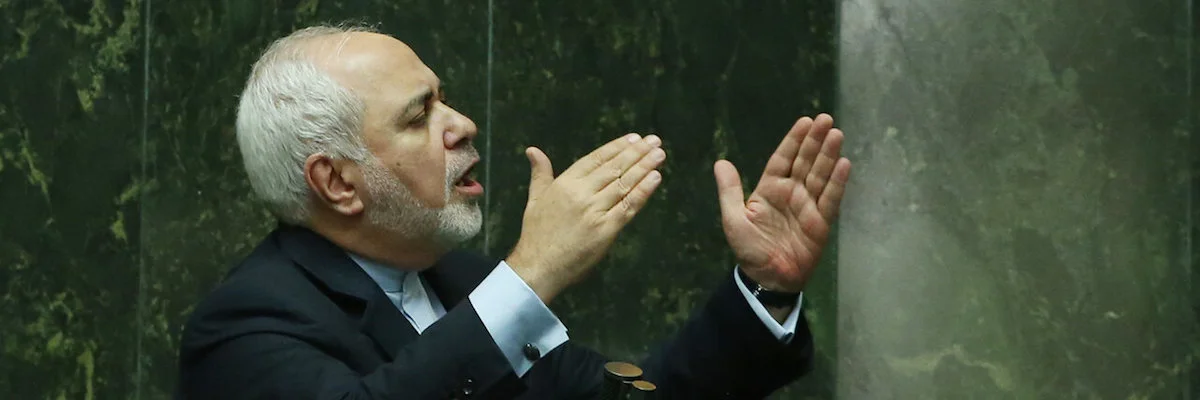
U.S. Sanctions Iranian Foreign Minister Zarif as Tensions Rise
◢ The Trump administration on Wednesday imposed sanctions against Iranian Foreign Minister Javad Zarif in a provocative move that diminishes the prospects for a diplomatic solution to rising tensions that have brought the U.S. and Tehran to the brink of war. The U.S. said Zarif, viewed as Iran’s most skilled diplomat, acts on behalf of Ayatollah Ali Khamenei, who was previously sanctioned.
By Saleha Mohsin and Justin Sink
The Trump administration on Wednesday imposed sanctions against Iranian Foreign Minister Javad Zarif in a provocative move that diminishes the prospects for a diplomatic solution to rising tensions that have brought the U.S. and Tehran to the brink of war.
The U.S. said Zarif, viewed as Iran’s most skilled diplomat, acts on behalf of Ayatollah Ali Khamenei, who was previously sanctioned.
“Javad Zarif implements the reckless agenda of Iran’s Supreme Leader and is the regime’s primary spokesperson around the world,” Treasury Secretary Steven Mnuchin said in a statement. “The United States is sending a clear message to the Iranian regime that its recent behavior is completely unacceptable.”
Tensions have been flaring around the Strait of Hormuz in recent weeks as Iran lashes out against U.S. sanctions that are crippling its oil exports. Iran is producing oil at the slowest clip since 1986, making U.S. sanctions one of the toughest challenges confronting Iran’s economy since the 1979 revolution.
The largely symbolic sanctions won’t prevent Zarif from traveling to the United Nations in New York for official business. The penalties would block Zarif’s access to any property the has in the U.S., though he said in a tweet that he has none so the sanctions will have no effect.
Zarif, who has been Iran’s foreign minister since 2013, was the lead negotiator in the multinational nuclear deal known as the Joint Comprehensive Plan of Action. It was supposed to yield economic advantages for Iran, but instead renewed U.S. sanctions have shattered that expectation since President Donald Trump quit the accord last year.
The U.S. sanctions may bolster Zarif’s standing in Iran, where hard-liners have long blamed him for helping to craft the nuclear accord. “Thank you for considering me such a huge threat to your agenda,” Zarif said in his tweet.
Zarif oversees a Foreign Ministry that has “coordinated with one of the Iranian regime’s most nefarious state entities, the IRGC-Qods Force (IRGC-QF), which is designated pursuant to terrorism and human rights authorities,” according to a statement from the Treasury Department.
The Trump administration said last month it was planning to sanction Zarif, who received his bachelor’s and advanced degrees at U.S. universities.
Secretary of State Mike Pompeo has dismissed Zarif’s role in setting the government’s policy, which he said is driven by Khamenei and the Islamic Revolutionary Guard Corps.
“Foreign Minister Zarif is no more in charge of what’s going on in Iran than a man in the moon,” Pompeo said on Bloomberg Television last week. “At the end of the day, this is driven by the ayatollah. He will be the ultimate decision-maker here.”
Zarif said earlier this month that Iran’s leaders know they can’t count on Trump losing his 2020 re-election bid.
“There is a better than 50% chance that he might still be in office, so we will need to deal with him for another six years,” Zarif said in an interview on Bloomberg Television.
Photo: IRNA
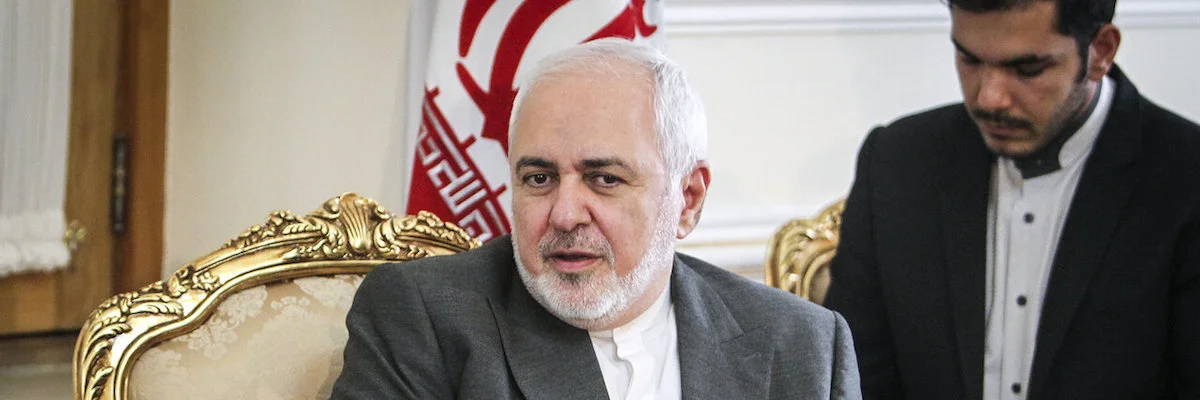
Iran Says Europe 'Obliged' to Let it Sell and Ship Oil
◢ Iran said Wednesday that European nations still party to the 2015 nuclear deal are "obliged" to allow it to sell and ship oil, amid a standoff with Britain over the seizure of tankers. "They (the European parties) have set out their commitments and announced them, they (include) the sale of Iran's oil, the transportation of Iran's oil, and the return of Iran's oil income," said Iranian Foreign Minister Mohammad Javad Zarif.
Iran said Wednesday that European nations still party to the 2015 nuclear deal are "obliged" to allow it to sell and ship oil, amid a standoff with Britain over the seizure of tankers.
The deal over Iran's nuclear programme has begun to unravel since President Donald Trump announced the United States was withdrawing from the agreement last year and reimposing sanctions.
Iran has been pushing the European parties to the deal—Britain, France and Germany—to adhere to their commitments under the agreement despite US pressure.
British authorities seized a tanker carrying Iranian oil off its territory Gibraltar on July 4, a move Spain's foreign minister said was carried out at the request of the United States.
"They (the European parties) have set out their commitments and announced them, they (include) the sale of Iran's oil, the transportation of Iran's oil, and the return of Iran's oil income," said Iranian Foreign Minister Mohammad Javad Zarif.
"It is clear that today's tensions and problems are due to America's economic terrorism and Europe's inability to fulfil its commitments which means going along with America's economic terrorism," he said, quoted by state media.
Zarif's remarks come after a meeting in Vienna on Sunday of the remaining parties to the nuclear deal -- the three European nations plus China and Russia.
In remarks broadcast on state television, the top Iranian diplomat described the talks as "challenging".
"We raised our stance and the importance of the fulfilment of the commitments of other parties to the JCPOA, in particular European countries," he said, referring to the deal by its formal name, the Joint Comprehensive Plan of Action.
Europeans 'Must Have Courage'
"We clearly explained to them that these commitments that have been raised have not been implemented and that INSTEX... still isn't fully operational," said Zarif.
INSTEX was a mechanism set up by Britain, France and Germany to facilitate trade with Iran in the face of US sanctions.
"It should not be the case that INSTEX becomes a tool for implementing America's orders," the foreign minister said.
"INSTEX must be considered as a European measure.
"They (the Europeans) must have the courage to act according to their commitments and not according to America's demands," he said.
One year after the US pullout, Iran said in May it would begin scaling back its commitments, and it has since started increasing its stockpile of enriched uranium and the level of enrichment beyond the deal's limits.
Zarif said Iran was ready to take a third step to reduce its commitments under the deal unless the remaining parties fulfil theirs, as they reiterated in Vienna.
"Now we'll have to see how they are going to act," he said.
"But in the current circumstances and as long as necessary measures are not taken, the Islamic Republic of Iran's third step will certainly be operational."
Photo: IRNA
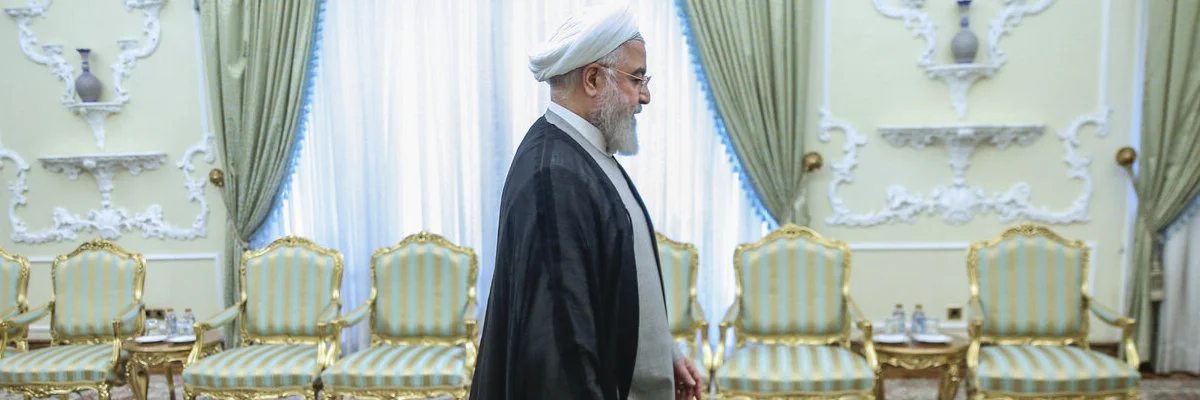
Macron, Rouhani Hold Talks Over Iran-US Tensions
◢ French President Emmanuel Macron on Tuesday spoke with his Iranian counterpart Hassan Rouhani and reiterated his call for a de-escalation of tensions between Iran and the United States, the Elysee said. "It is France´s role to make every effort to ensure that all parties agree to a break and open negotiations," the French presidency said.
French President Emmanuel Macron on Tuesday spoke with his Iranian counterpart Hassan Rouhani and reiterated his call for a de-escalation of tensions between Iran and the United States, the Elysee said.
"It is France´s role to make every effort to ensure that all parties agree to a break and open negotiations," the French presidency said.
The 2015 deal over Iran´s nuclear programme has begun to unravel since US President Donald Trump announced Washington was pulling out of the agreement last year and reimposed sanctions, to the dismay of European allies.
France, Britain and Germany were among the key players in the pact.
Macron had a "long" discussion with Rouhani during the French leader´s annual holiday at his summer retreat, the medieval fort of Bregancon on France´s Mediterranean coast, the Elysee said.
Macron "recalled the need to initiate a de-escalation of tensions," it added.
Paris has engaged in intense diplomacy seeking to solve the current tensions, with Macron´s foreign policy advisor Emmanuel Bonne twice visiting Tehran.
Russian President Vladimir Putin is due to visit Macron in Bregancon in mid-August ahead of a G7 summit in Biarritz which will present "new opportunities to discuss the Iranian issue", according to the Elysee.
Photo: IRNA
US Says Has Asked Germany to 'Help Secure' Strait of Hormuz
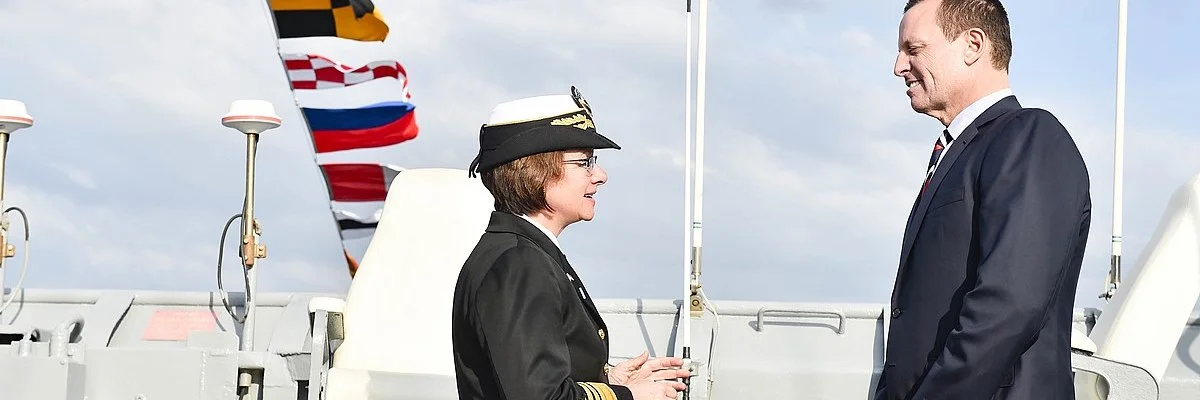
◢ The United States has asked Germany to join an international naval mission to help secure the strategic Strait of Hormuz, the US embassy in Berlin said on Tuesday. "We've formally asked Germany to join France and the UK to help secure the Strait of Hormuz and combat Iranian aggression," said a statement by embassy spokeswoman Tamara Sternberg-Greller.
The United States has asked Germany to join an international naval mission to help secure the strategic Strait of Hormuz, the US embassy in Berlin said on Tuesday, as tensions mount between Washington and Iran.
The request comes after Britain last week ordered its navy to escort UK-flagged ships in the world's busiest oil shipping lane in response to Iranian soldiers seizing a tanker in the flashpoint entrance to the Gulf.
"We've formally asked Germany to join France and the UK to help secure the Strait of Hormuz and combat Iranian aggression," said a statement by embassy spokeswoman Tamara Sternberg-Greller.
"Members of the German government have been clear that freedom of navigation should be protected... Our question is, protected by whom?"
Long-simmering tensions have spiked between Tehran and Washington since US President Donald Trump unilaterally withdrew from the Iran nuclear deal last year and reimposed biting sanctions on the Islamic republic.
The US and Gulf powerhouse Saudi Arabia have since accused Iran of being behind multiple mysterious attacks on tankers in the Gulf in June, which Iran denies.
Iran also shot down an unmanned US aircraft in June, after which Trump announced that he had called off retaliatory air strikes at the last minute because the resulting death toll would have been too high.
Since then a series of incidents involving oil tankers have heightened tensions.
The US request to NATO ally Germany is highly controversial in the country, where many politicians fear any naval mission, especially one led by the United States, could heighten the risk of conflict and drag European powers into a war.
Berlin has been clear it rejects Trump's strategy of "maximum pressure" on Iran.
Britain detained an Iranian tanker off its overseas territory of Gibraltar in early July on allegations it was breaching EU sanctions on Syria.
In what many read as a tit-for-tat move, Iran's Revolutionary Guards two weeks later impounded a British-flagged tanker in the Strait of Hormuz.
Britain said last week it was planning a European-led protection force there, but has since suggested such a mission should involve the United States.
Photo: Wikicommons
Britain Rules Out Seized Tanker Swap With Iran
◢ Britain on Monday ruled out swapping seized oil tankers with Iran as a second UK warship arrived in the Gulf to conduct convoys that have irritated Tehran. A sense of crisis in the world's busiest oil shipping lane has been building up for weeks as Iran responds to US President Donald Trump's "maximum pressure" campaign.
By Dmitry Zaks
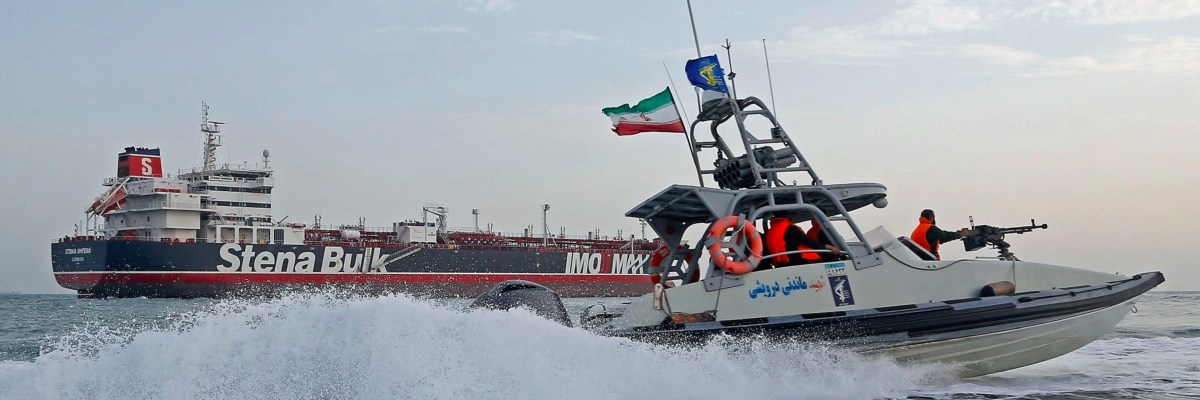
Britain on Monday ruled out swapping seized oil tankers with Iran as a second UK warship arrived in the Gulf to conduct convoys that have irritated Tehran.
A sense of crisis in the world's busiest oil shipping lane has been building up for weeks as Iran responds to US President Donald Trump's "maximum pressure" campaign.
The US economic sanctions and stepped-up military presence are designed to force Iran to renegotiate a landmark 2015 nuclear pact from which Trump pulled out last year.
Britain further outraged Iran by seizing one of its tankers—the Grace 1—on July 4 on suspicion of it carrying oil to Syria in violation of EU sanctions.
Iran vowed to retaliate and its Revolutionary Guards stormed and detained the UK-flagged Stena Impero and its 23 crew as they sailed through the Strait of Hormuz on July 20.
New British Foreign Secretary Dominic Raab flatly rejected the idea of the two tankers being exchanged or simultaneously released in a bid to dial back the tensions.
"There is no quid pro quo," Raab told BBC radio.
"This is not about some kind of barter. This is about international law and the rules of the international legal system being upheld," he said.
"That is what we will insist on."
Iranian President Hassan Rouhani had hinted earlier that he was open to a tanker swap.
'Geopolitical Tussle'
Iran said on Sunday that its ship's seizure was also a violation of the 2015 nuclear pact that Britain co-signed and is trying to keep alive with EU allies.
Its remaining participants met in Vienna over the weekend for heated talks that also saw Iran lash out at Britain's proposal for European nations to lead a naval and air Gulf escort mission.
Britain's HMS Montrose frigate began helping UK-flagged tankers enter into and out of the Gulf last week.
Its naval presence near Iran grew to two with the arrival on Sunday of the HMS Duncan destroyer -- the most advanced warship Britain currently has.
The UK defence ministry said the two will conduct escorts together for the next month.
The Montrose will then go in for scheduled maintenance and be replaced by the HMS Kent frigate later this year.
"Freedom of navigation in the Strait of Hormuz is vital not just to the UK, but also our international partners and allies," UK Defence Secretary Ben Wallace said.
Yet Britain's European force proposal is running up one already being prepared by the United States.
Both plans have strongly angered Tehran.
Iranian government spokesman Ali Rabiei said on Sunday that the proposed European fleet "carries a hostile message, is provocative and will increase tensions".
Britain's Raab said London was still insisting on a European force -- despite the potential conflict with Washington.
"This shouldn’t be some sort of geopolitical, EU versus US tussle," he said in the radio interview.
"It should be (about) what puts us in the best position with the widest group of international actors to uphold the rule of law."
He added that "it would be important for the European-led initiative to have US support to make it viable".
European nations have responded to Britain's proposal with caution.
Photo: Mizan
Iran Says US Rejected Offer as 'Not Seeking Dialogue'
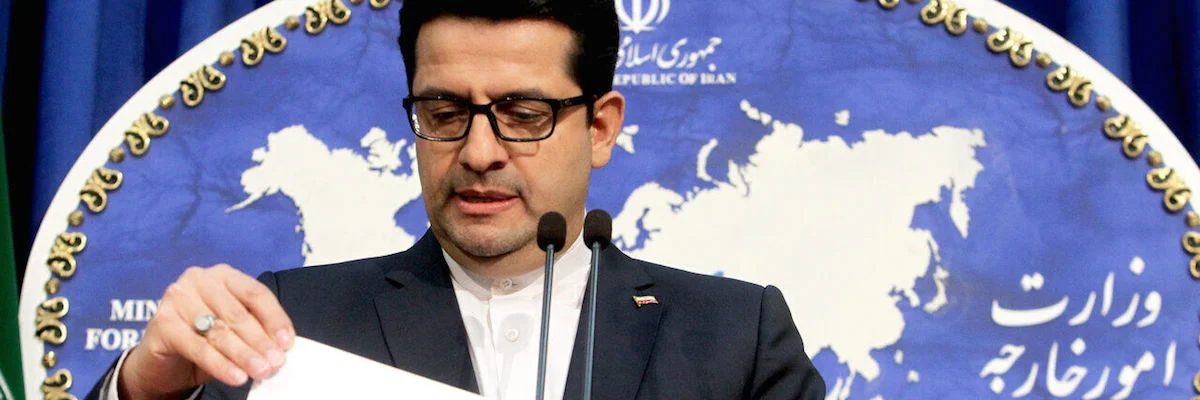
◢ Iran said on Monday the US had rejected an offer from Tehran for more robust nuclear inspections in exchange for lifting sanctions because Washington is "not seeking dialogue.” According to foreign ministry spokesman Abbas Mousavi, the proposal was made by Foreign Minister Mohammad Javad Zarif during a visit this month in New York to dismiss the idea of "Iran being against talks... (while) America is for dialogue.”
Iran said on Monday the US had rejected an offer from Tehran for more robust nuclear inspections in exchange for lifting sanctions because Washington is "not seeking dialogue.”
Under the 2015 nuclear deal agreed to by Tehran, Iran must ratify a document, known as the additional protocol, prescribing more intrusive inspections of its nuclear program eight years after the deal was adopted.
"If the US is really seeking an agreement... Iran can make the additional protocol into law (in 2019) and (the US) at the same time bring a plan to the Congress and lift all illegal sanctions," said foreign ministry spokesman Abbas Mousavi.
"But as we predicted it was rejected by them, because we knew that they are not for talks or an agreement that would yield a proper result," he told a news conference.
According to Mousavi, the proposal was made by Foreign Minister Mohammad Javad Zarif during a visit this month in New York to dismiss the idea of "Iran being against talks... (while) America is for dialogue".
Tehran and Washington have been at loggerheads ever since President Donald Trump unilaterally withdrew the US form the nuclear deal last year and reimposed biting sanctions on Iran.
Iran announced in May it would no longer respect some deal limits set on its nuclear program in retaliation for US sanctions and threatened to go even further if the deal's remaining parties—Britain, China, France, Germany and Russia—do not help it circumvent them, especially to sell its oil.
Envoys from the four countries and Iran met in Vienna on Sunday to discuss ways to stop the deal collapsing amid escalating tensions.
Mousavi said that during the meeting Iran strongly protested the Europeans' "attitude, inactivity and the arrest of some Iranians in Europe at America's behest" as well as the seizure of a tanker carrying Iranian crude oil off Gibraltar in early July.
Despite the disagreements the talks were "frank and decisive" and "cleared the air" for continuing the process, he added.
Photo: IRNA
Iran Tells Oman Neighbors Have Made Talks Impossible
◢ Iran's neighbors have made talks impossible through their "hasty and arrogant moves", a top security official told Oman's foreign minister in Tehran on Saturday amid a tanker crisis. Oman, a past mediator between Iran and its foes, sent its top diplomat to the Islamic republic amid amplified tensions between Iran and the United States and its allies, including in the Persian Gulf.
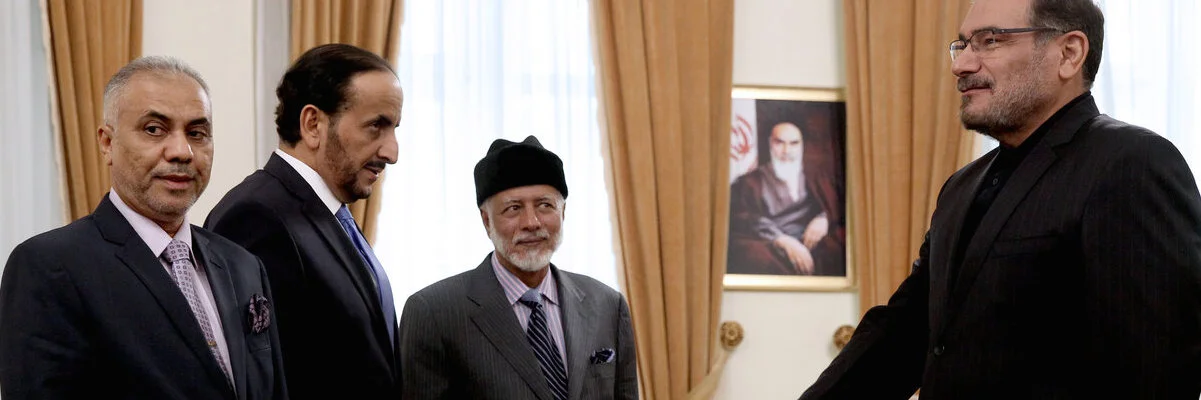
Iran's neighbors have made talks impossible through their "hasty and arrogant moves", a top security official told Oman's foreign minister in Tehran on Saturday amid a tanker crisis.
Oman, a past mediator between Iran and its foes, sent its top diplomat to the Islamic republic amid amplified tensions between Iran and the United States and its allies, including in the Persian Gulf.
"Some of the region's countries have not only removed the possibility of talks because of hasty and arrogant moves and behavior, but have also made managing regional crises a serious challenge," said Rear Admiral Ali Shamkhani, secretary of Iran's Supreme National Security Council.
Shamkhani, who spoke after meeting with Omani Foreign Minister Yusuf Bin Alawi, also hit out at a British plan for a European coalition to escort tankers in the Gulf.
"Security measures for the region must use local capabilities and cooperation between regional countries, and foreign countries' interference will achieve nothing but increase problems", he said, quoted by the website of Iran's state television.
Tensions in the Gulf have soared since last year when President Donald Trump withdrew the United States from a landmark 2015 nuclear deal with Iran and reimposed sanctions on the country.
In retaliation, Iran said in May it would disregard certain limits the deal set on its nuclear programme and threatened to take further measures if remaining parties to the accord, especially European nations, did not help it circumvent US sanctions.
Tensions have escalated further in the region with a string of incidents involving tankers and drones.
The United States and Gulf powerhouse Saudi Arabia accused Iran of being behind multiple attacks on tankers in the Gulf in June, which Iran denies.
On July 19, a British-flagged tanker was impounded by Iran’s Revolutionary Guards with its 23 crew aboard in the Strait of Hormuz.
The seizure was seen by London as a tit-for-tat move for British authorities detaining an Iranian tanker off the UK overseas territory of Gibraltar in early July.
Shamkhani called on all countries to “respect international maritime law in order to maintain security”.
“In contrast to the British maritime piracy, who illegally detained an Iranian oil shipment in Gibraltar, Iran’s move was completely legal and was made in order to implement maritime rules and maintain maritime security,” he said.
Bin Alawi also held talks with Iran’s foreign minister, Mohammad Javad Zarif, in Tehran on Saturday.
Oman has called for the release of the UK-flagged Stena Impero and for London and Tehran to resolve their dispute diplomatically.
Photo: IRNA
Iran Links Tanker Row to Ailing Nuclear Deal
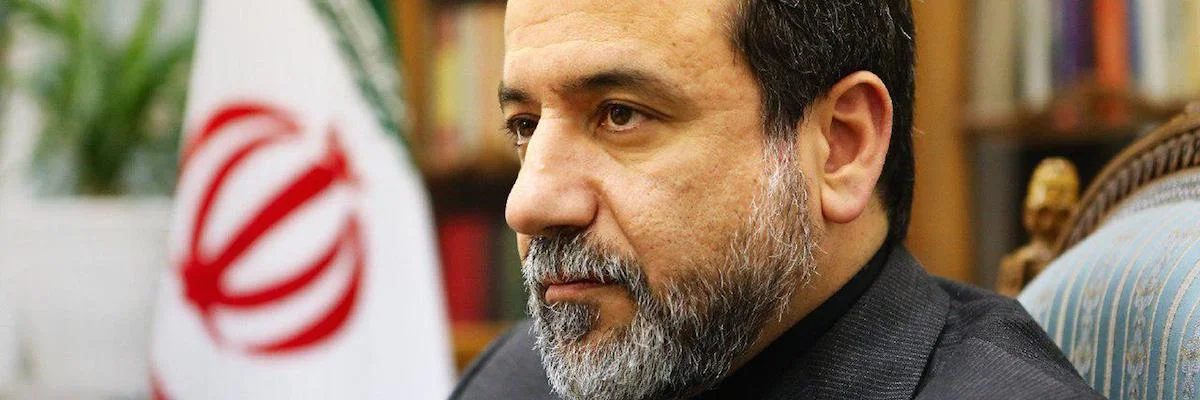
◢ Iran on Sunday called Britain's seizure of an Iranian oil tanker a breach of an ailing 2015 nuclear deal, after remaining parties to the accord met in Vienna in a bid to keep it alive. "Since Iran is entitled to export its oil according to the JCPOA, any impediment in the way of Iran's export of oil is actually against the JCPOA," Deputy Foreign Minister Abbas Araghchi said.
By Philippe Schwab and Jastinder Khera
Iran on Sunday called Britain's seizure of an Iranian oil tanker a breach of an ailing 2015 nuclear deal, after remaining parties to the accord met in Vienna in a bid to keep it alive.
British authorities detained an Iranian tanker off the UK overseas territory of Gibraltar in early July on allegations it was breaching EU sanctions on Syria.
A British-flagged tanker was then impounded by Iran's Revolutionary Guards with its 23 crew aboard in the Strait of Hormuz on July 19, which was seen by the UK as a tit-for-tat move.
In comments to journalists after the meeting in Vienna, Iranian Deputy Foreign Minister Abbas Araghchi linked the tanker row to discussions over the nuclear deal, formally known as the Joint Comprehensive Plan of Action (JCPOA). "Since Iran is entitled to export its oil according to the JCPOA, any impediment in the way of Iran's export of oil is actually against the JCPOA," Araghchi said.
He added that the issue of Iran's oil exports—including US attempts to prevent them completely—was raised at the meeting.
"I think the atmosphere was constructive and the discussions were good, I cannot say that we resolved everything," he said.
Envoys from Britain, France, Germany, China, Russia and Iran had gathered for talks in the Austrian capital, a month after a similar meeting failed to achieve a breakthrough.
Chair of the meeting secretary general of the European External Action Service Helga Schmid suggested in a statement that a stalemate still prevailed, saying only that "participants reaffirmed their continued commitment to preserving the JCPOA."
The statement added that Iranian nuclear projects in Arak and Fordow had the participants' "strong support", and said another meeting "would be convened in the near future."
'Tense Moments'
The head of the Chinese delegation, Fu Cong, said the talks had taken place in a "very good" and "professional" atmosphere but also admitted there had been some "tense moments" between the participants.
Tensions between Tehran and Washington have escalated since last year when US President Donald Trump pulled out of the accord that was aimed at curbing Iran's nuclear program, and imposed punishing sanctions. Iran said in May it would disregard certain limits the JCPOA set on its nuclear program and threatened to take further measures if remaining parties to the deal, especially European nations, did not help it circumvent US sanctions.
Even before the latest tanker seizures, pressure had been mounting in the region with a string of incidents involving tankers and drones.
The US has said it brought down one and possibly two Iranian drones last week.Iran shot down an unmanned US aircraft in June, after which Trump announced that he had called off retaliatory air strikes at the last minute because the resulting death toll would have been too high.
The US and Gulf powerhouse Saudi Arabia have accused Iran of being behind multiple mysterious attacks on tankers in the Gulf in June, which Iran denies.
Efforts by European powers, notably France's President Emmanuel Macron, to salvage the nuclear deal have so far come to nothing.
Araghchi repeated after Sunday's meeting that the remaining parties to the JCPOA wanted to meet "soon" at ministerial level. He said preparation for such a meeting was ongoing and that JCPOA partners were also convening "expert meetings on different areas to find practical solution for Iran to enjoy its benefits of sanctions lifting".
He admitted that INSTEX, a mechanism set up by the JCPOA's European partners to facilitate trade with Iran in the face of US sanctions, was "not functioning yet but it is in its final stages".
Photo: IRNA
Brazil Judge Orders Petrobras to Refuel Iran Ships
◢ A Supreme Court judge on Thursday ordered Brazil's state oil giant Petrobras to refuel two Iranian ships stranded off the country's coast, a source involved in the dispute and a report said. The order came after Iran's top envoy to Brazil told Bloomberg that Tehran could suspend imports from the Latin American country if the issue was not resolved.
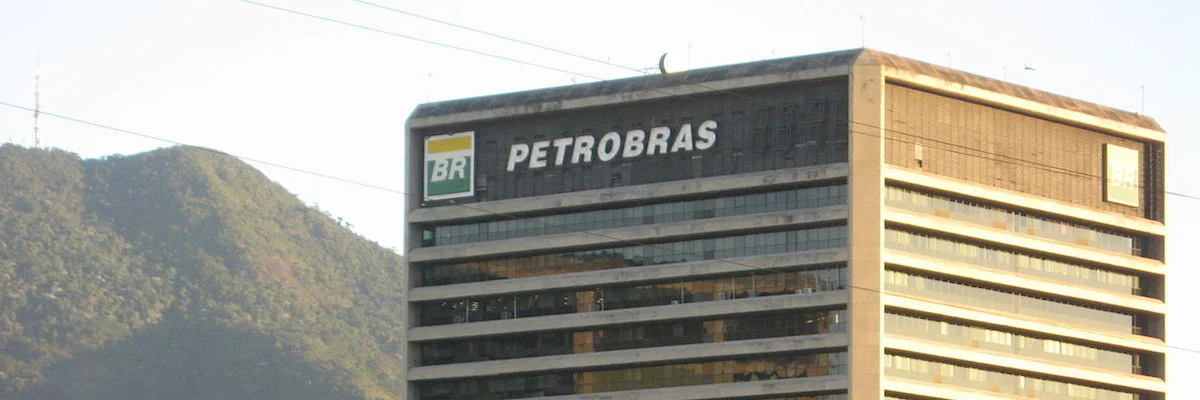
A Supreme Court judge on Thursday ordered Brazil's state oil giant Petrobras to refuel two Iranian ships stranded off the country's coast, a source involved in the dispute and a report said.
The order came after Iran's top envoy to Brazil told Bloomberg that Tehran could suspend imports from the Latin American country if the issue was not resolved.
Petrobras has refused to provide fuel to the vessels, which have been stuck at Paranagua port in the southern state of Parana since early last month, for fear of breaching US sanctions.
Washington has imposed a raft of punitive measures on Tehran and companies with ties to the Islamic republic since President Donald Trump pulled the United States out of a landmark multinational nuclear pact last year.
The vessels had reportedly brought urea, which is used to make fertilizer, to Brazil and were to transport corn back to Iran.
Supreme Court Justice Dias Toffoli issued the refueling order behind closed doors Thursday, G1 news site reported, overturning an earlier decision.
AFP was not able to confirm the ruling with the court, but a source involved in the dispute who is not authorized to speak to the media confirmed Petrobras had been ordered to refuel the ships.
Petrobras said it had not yet received the court order when contacted by AFP.
Iran's ambassador to Brazil, Seyed Ali Saghaeyan, told Bloomberg it was up to Brazil to solve the issue, "not the Iranians."
"If it's not solved, maybe the authorities in Tehran may want to take some decision because this is a free market and other countries are available."
The ships Bavand and Termeh reportedly belong to Iranian company Sapid Shipping.
Petrobras said last week it had refused to provide fuel "to the exporting company because the Iranian vessels it contracted and the Iranian company that owns those vessels are sanctioned by the United States."
"If Petrobras were to supply these vessels, it would be subject to the risk of being included in the same list, which could cause serious damages to the company," it said in a statement.
"It should be noted that there are other fuel suppliers in the country," it added.
Petrobras is listed in New York and Sao Paulo.
Photo: Wikicommons
European Allies Spurn U.S. Effort to Protect Ships From Iran
◢ Soaring tensions with Iran following attacks on tankers and drones prompted the Trump administration to call for a coalition of allies to protect ships passing through the Persian Gulf. This week, U.S. partners including the U.K. and France essentially asked to be counted out.
By Nick Wadhams
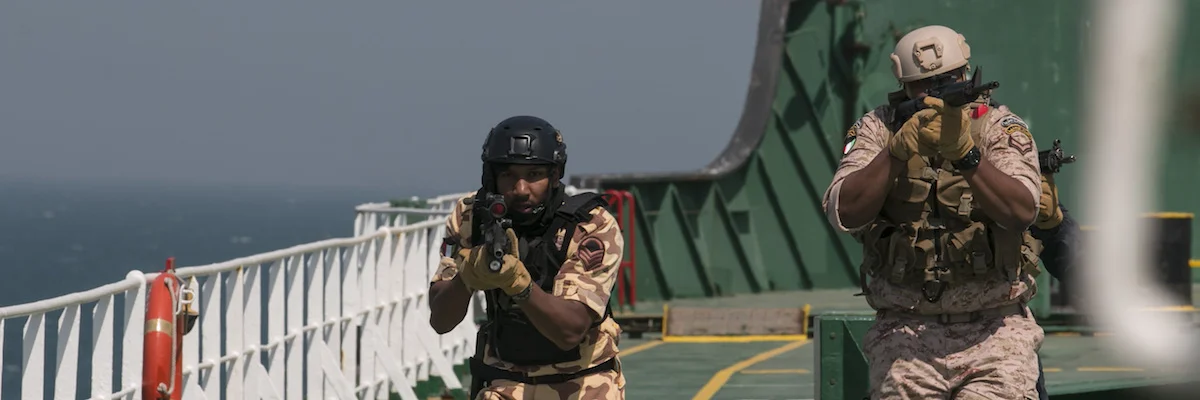
Soaring tensions with Iran following attacks on tankers and drones prompted the Trump administration to call for a coalition of allies to protect ships passing through the Persian Gulf.
This week, U.S. partners including the U.K. and France essentially asked to be counted out.
Rather than signing on to the Trump administration’s “Operation Sentinel,” those countries want to establish a European maritime security initiative nearly identical to -- but separate from -- the American project. The split reflects just how uneasy key allies have become about the U.S. “maximum pressure” campaign toward Iran.
“The move to establish a European initiative is a clear signal that Europe is bending over backwards to dissociate itself from U.S. policy toward Iran,” said Jonathan Alterman, director of the Middle East Program at the Center for Strategic and International Studies. “Europe wants some real daylight.”
That thinking was echoed by French Foreign Minister Jean-Yves Le Drian, who said Europe wanted to take measures to clear the way for de-escalation of tensions with Iran.
“On the diplomatic front we want to create the conditions for inclusive regional talks on maritime security,” Le Drian said. “This is the opposite of the U.S. policy of maximum pressure.”
Trump administration officials have privately downplayed the dueling initiatives. Defense Secretary Mark Esper said Wednesday he sees the efforts as “complementary.” But there is little question the European move presents new evidence of just how battered the so-called “special relationship” between the U.S. and the U.K., as well as Europe more broadly, has become.
Trump’s withdrawal from the 2015 nuclear accord with Iran has sparked frantic European efforts to keep that agreement alive. The U.S. continues tightening sanctions designed to choke off Iran’s economy in a bid to force it to the negotiating table and agree to what Trump says would be a stronger accord. Many countries see that approach -- not Iranian actions -- as the original source of rising tensions between the Tehran government and the West.
The biggest flashpoint has been over tanker traffic in the Persian Gulf, a critical passageway for global oil supplies.
Tanker Seizures
In May and June, a series of attacks on tankers were blamed by the U.S. and some allies on Iran, a charge officials in Tehran denied. In June, Iran shot down an American drone it said was over its territorial waters, prompting Trump to consider military strikes before ultimately backing down.
Then, following the U.K.’s seizure of a tanker carrying Iranian oil near Gibraltar, Iran last week seized the British ship Stena Impero. The U.K. has subsequently threatened “serious consequences” if the ship and its crew are not released.
In response, the U.S. deployed additional forces to the region and announced Operation Sentinel.
A senior State Department official, speaking to reporters on condition of anonymity when the initiative was announced last month, said the operation isn’t military in nature, but aimed at keeping track of Iran by equipping ships with more cameras and other observation equipment. It’s focused on observing ships, not escorting them, the person said.
Wary of Conflict
When European leaders announced their own proposal this week, they suggested they were wary of joining an American-led effort that could drag them into conflict, or associate them with a policy they don’t support.
Then-U.K. Foreign Secretary Jeremy Hunt said Monday that the European maritime initiative was intended to reduce tensions while also sending a strong message to Iran to stop harassing ships in the region. Hunt was replaced on Wednesday by Dominic Raab after Prime Minister Boris Johnson took office.
Read More: Champagne and Magic Complete Johnson’s Rebranding as U.K. Leader
An administration official, asking not to be identified, said the U.S. would work with its partners and allies to safeguard freedom of navigation. Secretary of State Michael Pompeo, speaking on Fox News before the announcement, made clear the U.S. wanted European nations to play a larger role protecting vessels.
“The responsibility in the first instance falls to the United Kingdom to take care of their ships,” he said.
Coordinating Efforts
Officials on both sides of the Atlantic say there will almost certainly be information sharing and other coordination and that the two initiatives could be merged. Yet for some European politicians, the irony of the split is too much to ignore. The U.K., where Johnson has vowed to press ahead with a split from the European Union, is so circumspect about American policy toward Iran that it would rather partner with other European nations than the Trump administration.
“Apparently a government that is attempting to exit the European Union is not willing to undertake military action with the U.S. but actually with the European Union, because they’re more comfortable with it,” German lawmaker Rolf Muetzenich said Wednesday.
Analysts argue that the separate efforts will only fuel confusion in an already volatile region even if the two maritime efforts eventually become one. They say it reflects a fear—which the U.S. denies—that the Trump administration is prepared to further escalate tensions with Iran.
“U.S. allies are increasingly concerned about participating in joint operations under American command,” said Adam Mount, director of the Defense Posture Project at the Federation of American Scientists. “If American allies lose faith that the U.S. is committed to peaceful resolution of the Iran issue, they won’t want to get caught up in an operation with an objective they don’t support.”
Photo: CENTCOM

Iran Poses Loyalty Test for 'British Trump' Johnson
◢ Iran’s seizure and continued detention of a UK-flagged tanker deals Boris Johnson an immediate loyalty test: Britain's new prime minister may have to choose between Persian Gulf escorts led by Europe or by the United States. Which way Johnson leans could set the tone for a complex agenda that includes withdrawing from the European Union and striking a trade deal with the United States.
By Dmitry Zaks
Iran's seizure and continued detention of a UK-flagged tanker deals Boris Johnson an immediate loyalty test: Britain's new prime minister may have to choose between Persian Gulf escorts led by Europe or by the United States.
Which way Johnson leans could set the tone for a complex agenda that includes withdrawing from the European Union and striking a trade deal with the United States.
It could also maintain or break European efforts to keep alive the deal curbing Iran's nuclear ambitions that Washington pulled out of last year.
Some US commentators see this is a make-or-break moment for Europe's policy on Iran as a whole.
"Johnson could simply announce that the UK is joining America's maximum-pressure campaign and calls for a new (Iran) deal," the editorial board of The Wall Street Journal wrote.
"The rest of Europe would likely have no choice but to join its Anglophone partners—and finally present a united front."
"The rest of Europe would likely have no choice but to join its Anglophone partners—and finally present a united front."
Persian Gulf Mission
The idea of a European-led mission in the Persian Gulf is carried over from a meeting chaired by Johnson's predecessor Theresa May this week.
Britain has proposed that European partners join together in a "naval protection mission" to ensure commercial ships can safely navigate in the Gulf.
But such an operation would expose Britain's continued reliance on EU allies at the very same time that Johnson is determined to yank his country out of the bloc on October 31.
Johnson's other option is to sign Britain up to a US-led alliance outlined by Donald Trump's administration at NATO last month.
That decision could boost London's chances of reviving stalled efforts to strike a post-Brexit trade deal with Washington.
The downside risk is that British warships could be caught up in more aggressive US rules of engagement that London currently does not support.
Both Johnson and Trump played up their friendship during the British leadership race.
The US president cheered Johnson's election—referring to him as "Britain Trump"—and a source close to Johnson told The Daily Mail it was time to "reset" US-UK ties.
Yet that might doom British efforts to salvage the remnants of the 2015 deal with Iran that Trump pulled out of last year.
Tehran's ultra-conservative Resaalat newspaper published a cartoon Wednesday of Johnson as a British butler being patted on the head by Trump in the Oval Office.
"British Trump," the banner of the reformist Sazandegi said.
Winning Trump's Favor
Johnson is yet to publicly comment on last Friday's capture by masked Iranian soldiers of the Stena Impero oil tanker in the Strait of Hormuz that leads into the Gulf.
He will be expected to do so now.
New Foreign Secretary Dominic Raab said moments after his appointment Wednesday that it was "obviously a very sensitive issue" on which he was going to be "fully briefed".
Johnson's decision to push ahead with a European effort to secure the world's busiest oil shipping lane would still need to be coordinated with US forces in proximity to Iran.
Centre for European Reform foreign policy director Ian Bond said Johnson might actually win Trump's favour by shepherding European navies to the Gulf.
"Based on the fact that Trump is always complaining about how little the Europeans do for their own defence, he ought actually to think that it was a good thing that the Europeans were taking care of this," Bond told AFP.
"But whether that is, in fact, how (Trump) will react I find it hard to say."
'Post-Brexit Relevance'
Bond said Johnson's Brexit credentials might also be saved by the likely inclusion in this "coalition of the willing" of non-EU members such as Norway.
"This would be a practical implementation of what Theresa May was saying—that we are leaving the EU, we are not leaving Europe," Bond said.
But Chatham House's Middle East researcher Sanam Vakil advised Britain's new leader to "avoid the temptation to align completely with Washington on Iran".
"Rather than conflating the ships and the nuclear crisis, a direct UK-Iran bilateral negotiation on the tankers could provide both sides with a face-saving outcome," Vakil wrote.
"The UK could position itself as a bridge between the EU and US, and in the process boost its post-Brexit relevance," he said.
Photo: Wikicommons
Swedish Owner of Tanker Seized by Iran Says Crew 'Safe'
◢ The Swedish company that owns the UK-flagged oil tanker seized by Iran said Wednesday it had finally been able to contact its crew being held on board and they declared themselves "safe.” Stena Bulk said in a statement that the ship's captain "advised that everyone was safe with good cooperation with the Iranian personnel onboard.”
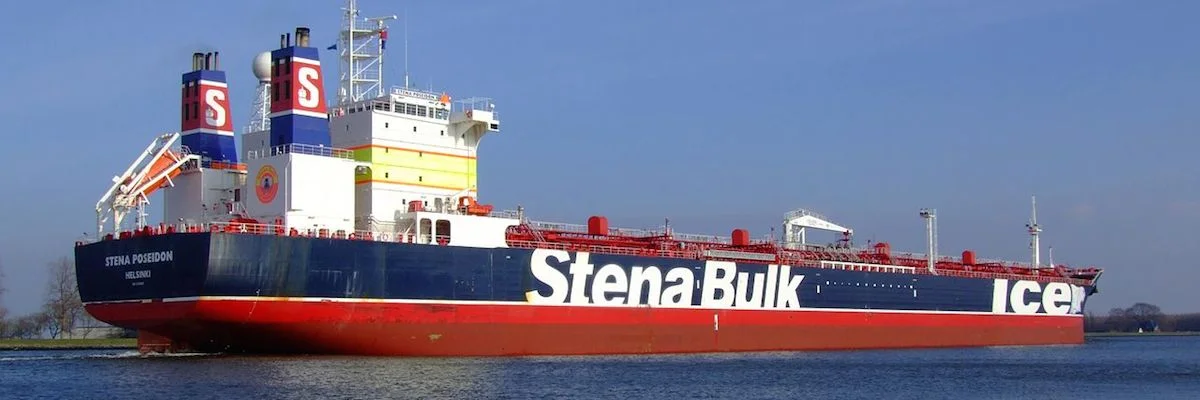
The Swedish company that owns the UK-flagged oil tanker seized by Iran said Wednesday it had finally been able to contact its crew being held on board and they declared themselves "safe.”
Stena Bulk said in a statement that the ship's captain "advised that everyone was safe with good cooperation with the Iranian personnel onboard".
Iran's Islamic Revolutionary Guard Corps seized control of the Stena Impero tanker last Friday as it was navigating through an international passage in the middle of the Strait of Hormuz, a narrow chokepoint at the entrance of the Gulf.
The ship has since been held off shore near Iran's southern port of Bandar Abbas.
Iranian officials have given varying reasons for its seizure and continued detention.
Some, such as Foreign Minister Mohammad Javad Zarif, said it was for breaching maritime regulations.
It has also been variously claimed that its transponder was turned off, it was going the wrong way along a shipping channel or had collided with an unidentified fishing vessel.
Others, such as parliamentary speaker Ali Larijani, said it was a tit-for-tat move responding to British commandos seizing an Iranian oil tanker on July 4 as it passed through Gibraltar's waters, under suspicion it was breaking EU sanctions on oil deliveries to Syria.
Iran has hinted it was open to a tanker swap, releasing the Stena Impero in exchange for its tanker, Grace 1, being allowed on its way.
Stena Bulk has been trying for days to have its representatives visit the Stena Impero and see the 23 detained crew members—who hail from India, Russia, Latvia and the Philippines—to verify their wellbeing and press for their release.
On Tuesday it insisted in a statement that the vessel was "in compliance with maritime regulations" when it was seized, with transponders functioning and using the right shipping traffic passage. "We can confirm that we are not aware of, and nor is there any evidence of a collision involving the Stena Impero," it said.
Seeking 'Progress' from Iran
While its representatives have not been able to physically see the crew, Stena Bulk said in its statement Wednesday that it had had "direct communication" with the ship's captain since late Tuesday.
The CEO of Stena Bulk, Erik Hanell, said the company appreciated the ability to speak to the crew remotely and expressed hope "that this is a first sign that we will soon see more positive progress from the Iranian authorities.”
Britain has slammed the seizure of the Stena Impero as "state piracy" that threatened freedom of navigation in the Strait of Hormuz.
It has called for a European naval mission to be set up in the Gulf, separate from US patrols, to ensure the safety of shipping there. France has expressed willingness to take part in an "observer" mission, with efforts being made to de-escalate the situation.
Photo: Wikicommons
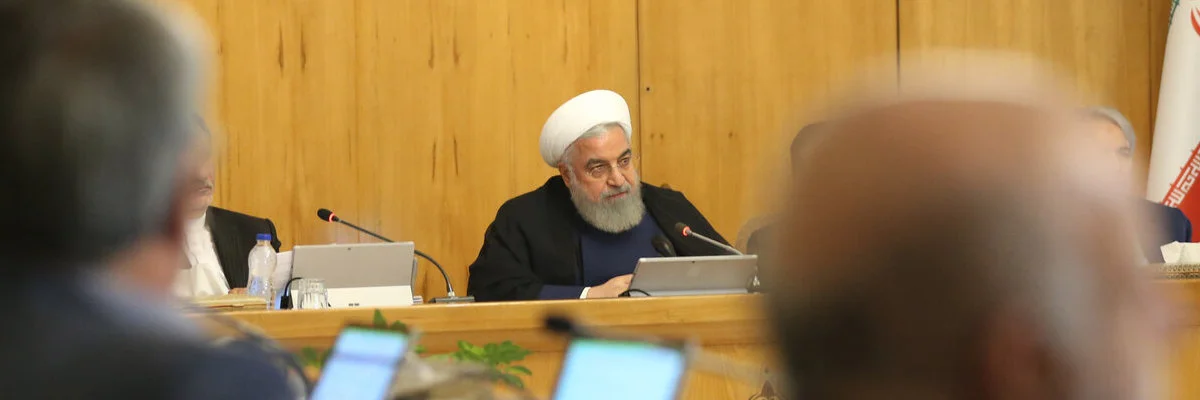
Iran Hints Open to Possible Tanker Swap, Nuclear Talks
◢ President Hassan Rouhani hinted on Wednesday that Iran is open to a possible tanker swap with Britain and indirect talks with the United States over its nuclear program and sanctions. "We don't want tensions with some European countries," Rouhani said in comments to a cabinet meeting posted on the official website of his government.
President Hassan Rouhani hinted on Wednesday that Iran is open to a possible tanker swap with Britain and indirect talks with the United States over its nuclear program and sanctions.
"We don't want tensions with some European countries," Rouhani said in comments to a cabinet meeting posted on the official website of his government.
n a clear reference to the British, Rouhani said if they were to "cease the incorrect acts that they have done, including that of Gibraltar, Iran's response would be" appropriate to their actions.
Iran and the United Kingdom are in the midst of a tense standoff over British authorities' seizure of an Iranian tanker off Gibraltar in early July and Iran's detention of a UK-flagged ship in Gulf waters last week.
Rouhani also said Iran would be open to talks should there be a "ceasefire" in US economic sanctions against the Islamic republic.
Hostilities between Iran and the United States have risen since last year when President Donald Trump withdrew the US from the 2015 nuclear deal aimed at limiting Tehran's nuclear programme and began reimposing sanctions.
"In this regard some countries are intermediaries, though they themselves say they are not mediators and are just expressing their own views," said Rouhani.
"There has been correspondence from both sides on this issue and we are continuing this," he added.
Japanese Prime Minister Shinzo Abe visited Tehran in June for talks aimed at defusing tensions between Iran and the United States.
Earlier this month French President Emmanuel Macron sent his top diplomatic adviser, Emmanuel Bonne, to Iran "to piece together a deescalation" strategy.
Both Japan and France have denied acting as intermediaries between Iran and the United States.
Photo: IRNA
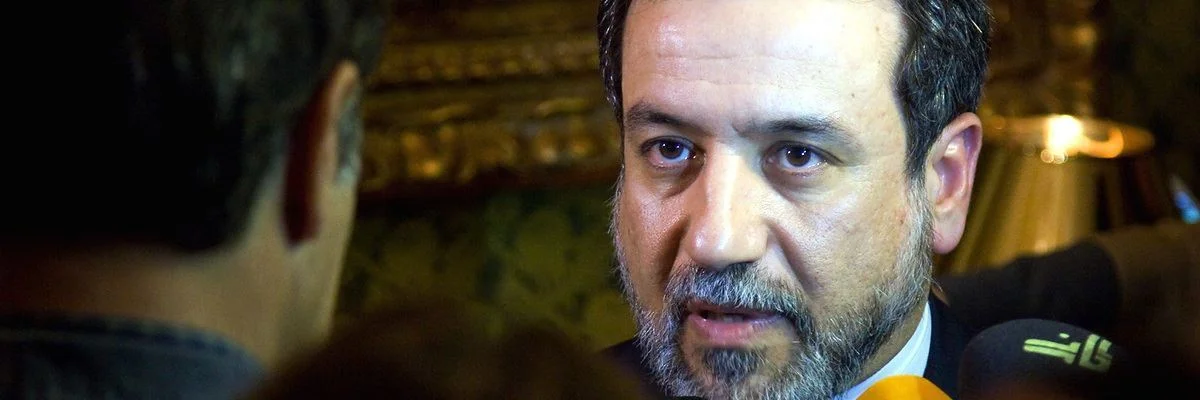
Diplomatic Efforts Multiply to Ease Tangled Frictions With Iran
◢ Deputy Foreign Minister Abbas Araghchi has traveled to France to meet with President Emmanuel Macron. Oman’s foreign minister will head for Tehran on Saturday as tensions soar in the oil chokepoint it shares with Iran. The prime minister of Iraq, whose country has security ties with the U.S. and political and religious links to Iran, has been in Tehran since Monday.
By Zoya Khan and Golnar Motevalli
A diplomatic flurry is underway to try to defuse layers of international tensions centering on Iran and its increasingly tangled showdown with the West.
European efforts to salvage the multipower nuclear deal with Iran from months of brinkmanship between Washington and Tehran have grown more complicated with the seizure of a U.K. oil tanker, and officials are crisscrossing the skies t keep seething frictions from worsening.
Iran’s Deputy Foreign Minister Abbas Araghchi has traveled to France to meet with President Emmanuel Macron. Oman’s foreign minister will head for Tehran on Saturday as tensions soar in the oil chokepoint it shares with Iran. The prime minister of Iraq, whose country has security ties with the U.S. and political and religious links to Iran, has been in Tehran since Monday.
Araghchi intends to pass on a letter from President Hassan Rouhani to Macron that will address France’s advice to suspend nuclear activities Iran recently resumed, in an effort to ease the standoff with Washington, a Foreign Ministry official said, speaking on condition of anonymity to discuss its contents.
Salvaging Efforts
Macron, along with German and U.K. leaders, has been at the forefront of European Union efforts to keep the nuclear deal from from collapsing after President Donald Trump pulled the U.S. out last year.
The European powers have developed a financial channel meant to let European companies trade with Iran without using dollars or U.S. banks, or moving money across the border. But Iran has been disappointed by the tool because it won’t process oil sales, its economic lifeline. Earlier this month, in an effort to pressure the Europeans to do more to take on Washington, it abandoned the nuclear deal’s limitations on uranium enrichment, a potentially vital component of bombmaking. Iran says it has no interest in pursuing nuclear weapons.
Regional frictions shot up in May after the Trump administration imposed new sanctions on the crippled Iranian economy in an effort to force Tehran to negotiate a new nuclear deal that would address areas of concern to the U.S. beyond Iran’s atomic program. Iran, refusing to be cowed by Washington’s so-called campaign of “maximum pressure” against it, has intensified its nuclear activities.
Tankers Seized
A back-to-back seizure of oil tankers has made European efforts to keep the accord alive all the more difficult. The U.K., while working to defuse the nuclear crisis as a member of the EU, has become embroiled in a diplomatic feud with Tehran after seizing an Iranian oil tanker in Gibraltar earlier this month, saying it carried contraband cargo. Iran retaliated by holding a British tanker on Friday near the Strait of Hormuz, through which about 40% of the world’s seaborne oil travels.
On Monday, U.K. Foreign Secretary Jeremy Hunt said Britain didn’t want to escalate tensions with Iran and won’t take part in Washington’s “maximum pressure” policy. But he called on Iran to release the tanker and announced that European governments will assemble a naval mission to provide safe passage for ships through the Gulf. The U.S. has also called for a military coalition to protect vessels in the area.
“There is no need to form a coalition to protect the region,” Iranian Vice President Eshaq Jahangiri said on Tuesday, according to state-run Tasnim news agency. “The enemies should enter talks without coercing Iran and they will then see that calm can be restored for all in the region.”
Amid the turbulence, Iran announced in a show of force Monday that it has handed down death sentences to several nationals accused of being part of a CIA-trained spy network. Trump dismissed the allegations as “totally false.”
Photo: YJC

US Sanctions on Chinese Oil Trader 'Illegal': Beijing
◢ China on Tuesday called US sanctions against Chinese companies "illegal", a day after US Secretary of State Mike Pompeo announced he was putting a leading oil importer on a blacklist. Pompeo said Monday that the US was imposing sanctions on Zhuhai Zhenrong and its chief executive Li Youmin as part of a "maximum pressure campaign" for trading in Iranian crude oil.
China on Tuesday called US sanctions against Chinese companies "illegal", a day after US Secretary of State Mike Pompeo announced he was putting a leading oil importer on a blacklist.
Pompeo said Monday that the US was imposing sanctions on Zhuhai Zhenrong and its chief executive Li Youmin as part of a "maximum pressure campaign" for trading in Iranian crude oil.
"They violated US law by accepting crude oil," he said.
But Beijing said Tuesday it has "consistently and resolutely opposed unilateral sanctions imposed by the United States," slamming the sanctions as "illegal".
"The Chinese side has expressed firm opposition and strong condemnation of the relevant US authorities that have sanctioned Chinese enterprises," said foreign ministry spokeswoman Hua Chunying at a regular press briefing.
"The Chinese side has repeatedly stressed that energy cooperation between Iran and the international community, which includes China, falls within the framework of international law and is reasonable and legitimate, and must be respected and protected."
Pompeo's announcement over the sanctions was the latest move by Washington to ratchet up economic pressure on Tehran over its alleged military activities in the Middle East and its nuclear programme by taking aim at business partners.
But Hua said the US was disregarding "the legitimate rights and interests of all parties".
Between them, Zhuhai Zhenrong and Chinese state refiner Sinopec are responsible for nearly all the Iranian crude that China imports.
"We strongly urge the US to immediately correct wrong practices and stop illegal sanctions against Chinese companies and individuals," said Hua.
"China will take all necessary measures to firmly safeguard the legitimate rights and interests of its enterprises and individuals."
Photo: Wikicommons
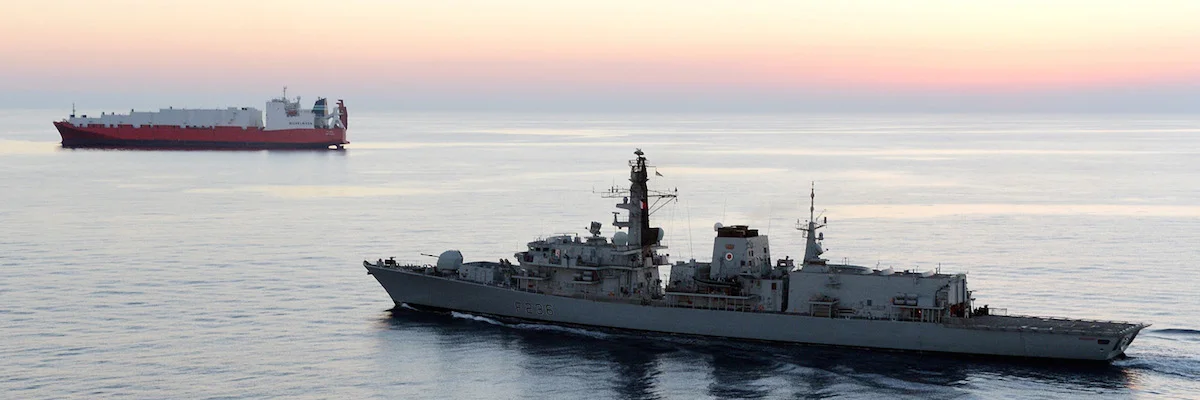
Europeans Plan Naval Mission to Protect Ships in Persian Gulf
◢ European governments will assemble a naval mission to provide safe passage for ships through the Persian Gulf, after Iran seized a British oil tanker in the region last week, an act that U.K. Foreign Secretary Jeremy Hunt described as “state piracy.” Hunt announced a “European-led maritime protection mission to support safe passage of crew and cargo” in a statement to Britain’s Parliament in London on Monday.
By Alex Morales and Robert Hutton
European governments will assemble a naval mission to provide safe passage for ships through the Persian Gulf, after Iran seized a British oil tanker in the region last week, an act that U.K. Foreign Secretary Jeremy Hunt described as “state piracy.”
Hunt announced a “European-led maritime protection mission to support safe passage of crew and cargo” in a statement to Britain’s Parliament in London on Monday.
The U.K. demanded the immediate release of the Stena Impero, and summoned Iran’s charge d’affaires in London, Mohsen Omidzamani, following the incident in one of the world’s critical shipping chokepoints. The government threatened Iran with “serious consequences” and advised U.K. vessels to avoid the area, and to inform the government if they planned to travel there.
“Let us be clear, under international law Iran had no right to obstruct the ship’s passage, let alone board her,” Hunt told the House of Commons. “It was therefore an act of state piracy.”
The Foreign Secretary said the U.K. didn’t want to escalate tensions with Iran, which have been rising after the U.S. pulled out of the international nuclear deal and imposed new sanctions. Hunt said Britain won’t be taking part in the Trump administration’s “maximum pressure” policy, because the London government remains committed to the 2015 multi-nation pact to limit Iran’s nuclear program.
“If Iran continues on this dangerous path, they must accept the price will be a larger Western military presence in the waters along their coastline,” Hunt said. “Not because we wish to increase tensions but simply because freedom of navigation is a principle Britain and its allies will always defend.”
Tensions have flared in the Strait of Hormuz in recent weeks as Iran lashes out against U.S. sanctions that are crippling its oil exports and after the seizure of one of its tankers near Gibraltar. The Strait accounts for about a third of the world’s seaborne oil flows.
With Theresa May set to leave office on Wednesday, the latest clash with Iran presents a diplomatic headache for her successor, either Boris Johnson, the front-runner, or Hunt, his rival.
U.S. Central Command has announced a “multinational maritime effort” called Operation Sentinel to “increase surveillance of and security in key waterways in the Middle East to ensure freedom of navigation in light of recent events in the Arabian Gulf region.”
Iran’s Revolutionary Guards said on Saturday that the British ship entered the strait from the wrong direction, wasn’t paying heed to maritime regulations and could potentially have collided with other vessels. State television said the ship will be held until judicial assessments are complete.
On Sunday, the Iranian flag was seen flying over the bridge of the tanker in the Bandar Abbas port, according to images aired by state-run Press TV.
Iran has also suggested its actions are in retaliation for Britain’s seizure of the Grace 1 tanker off Gibraltar. A court in Gibraltar ordered the continued detention of the vessel for another 30 days, after it was held on suspicion of taking oil to Syria. Iran denies that was the destination.
In recent weeks the U.K. Navy has escorted some tankers out of the region, while the U.S. said it downed an Iranian drone just days ago. The latest incident cooled hopes that the U.S. and Iran would soothe tensions by entering into negotiations.
Photo: Royal Navy
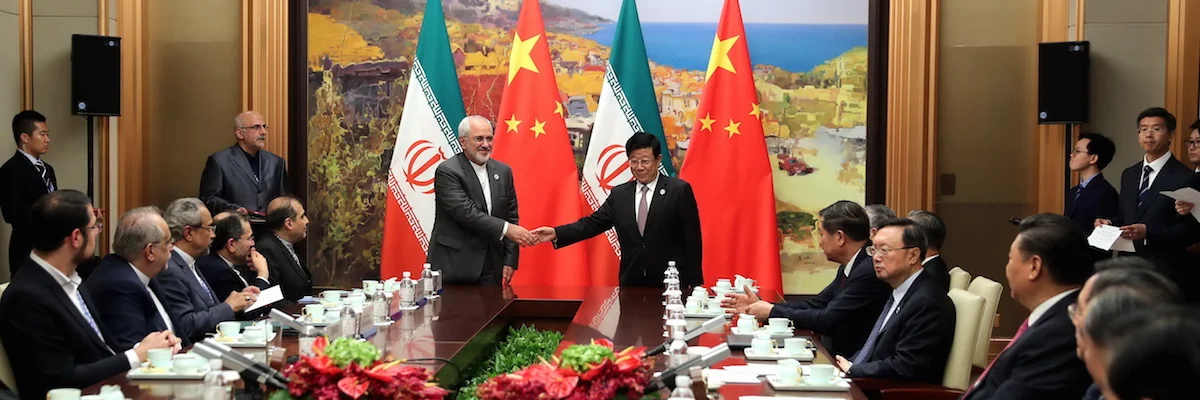
US Sanctions Chinese Oil trader for Violating Iran Restrictions: Pompeo
◢ The United States is placing a leading Chinese oil importer on its sanctions blacklist for trading in Iranian crude, Secretary of State Mike Pompeo announced Monday. "As part of that maximum pressure campaign, I am announcing that the United States is imposing sanctions on the Chinese entity Zhuhai Zhenrong and its chief executive Youmin Li, Pompeo said in a speech.
"As part of that maximum pressure campaign, I am announcing that the United States is imposing sanctions on the Chinese entity Zhuhai Zhenrong and its chief executive Youmin Li," Pompeo said in a speech.
“They violated US law by accepting crude oil," he said.
The announcement was the latest step by Washington to ratchet up economic pressure on Tehran over its alleged military activities in the Middle East and its nuclear program by taking aim at business partners.
"We've said all along that any sanction will indeed be enforced. We can't tolerate more money going to ayatollahs, putting American soldiers, sailors, airmen, marines, putting their lives at risk. It's too important."
Zhuhai Zhenrong along with Chinese state refiner Sinopec are responsible for nearly all the Iranian crude that China imports.
Bloomberg reported that China took in about 12 million tonnes of Iranian crude in the first five months of this year.
It said that some of that crude is being held in "bonded storage" and not passing through Chinese customs, possibly to avoid the application of
Photo: President.ir
Unable to Buy Iran Oil, New Turkish Refinery Turns to Russia
◢ Azerbaijan’s state oil company is turning to Russia to supply a new $6.3 billion refinery it built in Turkey because shipments from one of its preferred suppliers—Iran—are off the table due to U.S. sanctions. “If there were no restrictions, we would buy Iranian crude,” he said, adding that the refinery can purchase oil from anywhere “as long as our model supports it,” although in practice Azerbaijan’s own light crude isn’t really suitable.
By Ercan Ersoy and Baris Balci
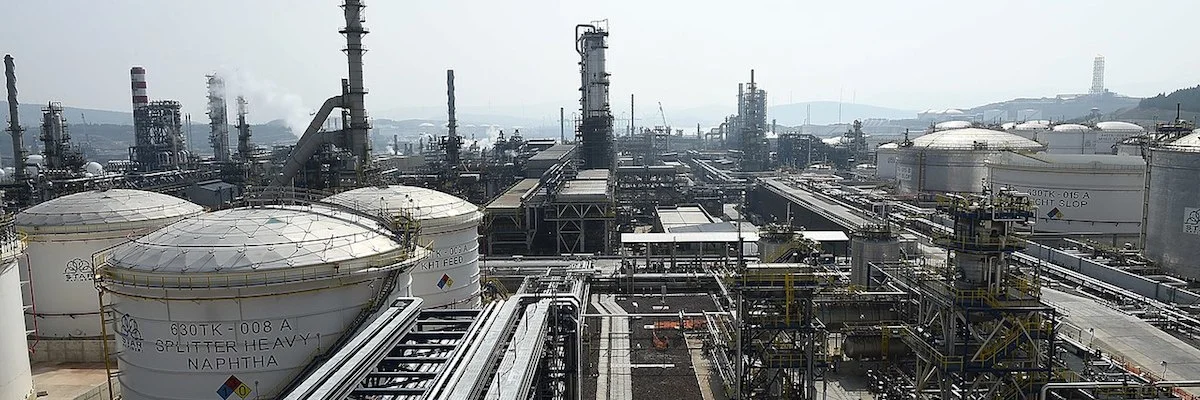
Azerbaijan’s state oil company is turning to Russia to supply a new $6.3 billion refinery it built in Turkey because shipments from one of its preferred suppliers—Iran—are off the table due to U.S. sanctions.
The Star Refinery in Aliaga on the Aegean coast agreed to buy an initial 1 million tons of Urals crude—about one tenth of the plant’s annual processing—from Russia’s Rosneft PJSC, Mesut Ilter, the facility’s chief executive officer, said in an interview.
“If there were no restrictions, we would buy Iranian crude,” he said, adding that the refinery can purchase oil from anywhere “as long as our model supports it,” although in practice Azerbaijan’s own light crude isn’t really suitable.
The Trump administration this year ended waivers that allowed a handful of countries including Turkey to continue importing Iranian oil. Turkey has long opposed U.S. sanctions on Iran, with President Recep Tayyip Erdogan saying the measures violate international law and diplomacy. Tracking shipments from Iran toward Turkey has become trickier since the sanctions ramped up, making it hard to know how much, if any, Iranian oil Turkey is buying.
The State Oil Co. of Azerbaijan, or Socar, started operating the 200,000 barrel-a-day Star Refinery in October, helping to meet Turkey’s growing appetite for processed fuels while curbing imports. The project marked a growing energy interdependence between the two countries, with Turkey already a major destination for Azeri natural gas.
Turkey’s Tupras Turkiye Petrol Rafinerileri AS, owned by Koc Holding AS, was the country’s sole refiner until the Star plant came on stream. The new facility now accounts for a quarter of the nation’s refining capacity.
Product Range
The refinery, which is expanding storage capacity by more than 50% to 2.5 million cubic meters, will process almost 8 million tons of crude this year and 10 million tons thereafter, Ilter said. Refining margins range from $5 to $8 a barrel, he said.
At full capacity, the plant will produce 5 million tons of diesel a year, 2.5 million tons of petrochemical raw materials such as naphtha, and 1.5 million tons of jet fuel.
Turkey will cut its diesel imports to 40% of annual demand from 60% thanks to the new refinery, Ilter said. Along with Tupras, the Star facility will be able to meet all the nation’s domestic jet-fuel demand, even once Istanbul’s new airport reaches full capacity, he said.
However, future growth in demand for oil products will be centered on petrochemicals rather than transportation, according to the CEO.
“We have built this refinery considering Turkey’s long-term dynamics and petrochemical needs.”
Photo: Wikicommons
Yukiya Amano, Japanese Diplomat Who Led Iran Probe, Dies at 72
◢ Yukiya Amano, the Japanese diplomat who led the International Atomic Energy Agency for a decade, handling the investigation of Iran and the aftermath of the Fukushima meltdowns, has died at the age of 72. Amano had planned on resigning from the agency because of poor health, which had interfered with his day-to-day duties over the last year.
By Jonathan Tirone
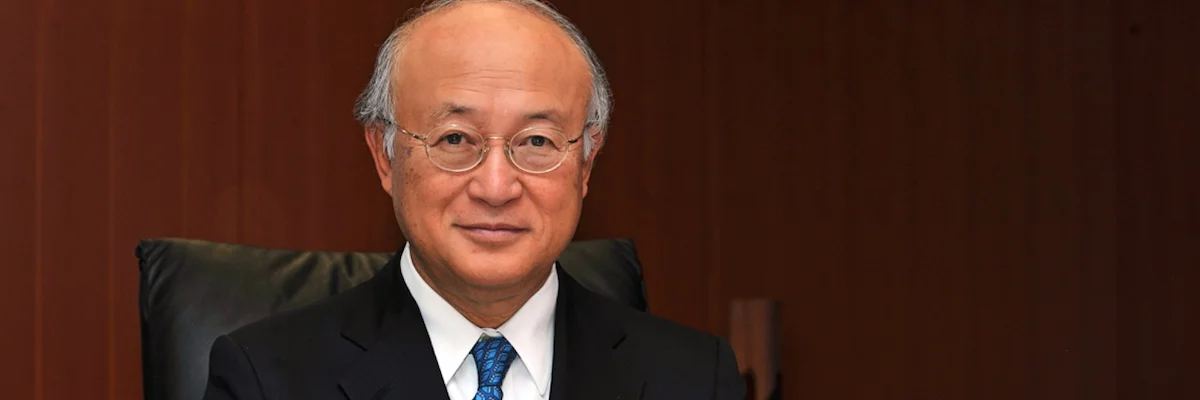
Yukiya Amano, the Japanese diplomat who led the International Atomic Energy Agency for a decade, handling the investigation of Iran and the aftermath of the Fukushima meltdowns, has died at the age of 72.
The IAEA confirmed his death in a written statement without elaborating on the cause or location. Amano’s poor health had begun to interfere with his day-to-day duties over the last year and he had planned to resign from the agency.
The IAEA published a message Amano had intended to include in a letter to the Board of Governors announcing his decision to step down: “During the past decade, the Agency delivered concrete results to achieve the objective of ’Atoms for Peace and Development’. I am very proud of our achievements, and grateful to member states and agency staff.”
Amano played an instrumental role in several of the most consequential international developments over the last decade. He led the IAEA’s investigation into Iran’s nuclear history after he assumed office in 2009. After the Fukushima nuclear meltdowns two years later, Amano’s agency was charged with assessing the accident’s international impact and drafting new safety standards.
“So saddened by the loss,” wrote European Union foreign policy chief Federica Mogherini wrote via Twitter. He was “a man of extraordinary dedication and professionalism, always at the service of the global community in the most impartial way.”
Amano oversaw the probes that detailed the military dimensions of Iran’s nuclear work before issuing the report that ended the IAEA’s active investigation and allowed the 2015 nuclear agreement with world powers to come into force. That accord between Iran and world powers gave IAEA inspectors the most robust verification system in existence anywhere in the world, he often repeated.
His death will thrust the agency into an unexpected leadership battle as nuclear tensions with Iran increase. His deputies will assume some duties while the IAEA board organizes elections. The IAEA’s 35-member board is scheduled to convene Sept. 9 in the Austrian capital.
Photo: IAEA