

Pompeo Says Iran Tied to Al-Qaeda, Declines to Say if War Legal
◢ US Secretary of State Mike Pompeo on Wednesday accused Iran of ties to Al-Qaeda and declined to say whether the Trump administration had legal authority to invade the country. Testifying before the Senate Foreign Relations Committee, Pompeo hedged on whether the authorization of force by the US Congress days after the September 11, 2001 attacks would allow the United States to strike Iran.
US Secretary of State Mike Pompeo on Wednesday accused Iran of ties to Al-Qaeda and declined to say whether the Trump administration had legal authority to invade the country.
Testifying before the Senate Foreign Relations Committee, Pompeo hedged on whether the authorization of force by the US Congress days after the September 11, 2001 attacks would allow the United States to strike Iran.
"I would prefer just to leave that to lawyers," Pompeo told Senator Rand Paul, a Republican who is critical of US foreign interventions.
"The factual question with respect to Iran's connections to Al-Qaeda is very real. They have hosted Al-Qaeda, they have permitted Al-Qaeda to transit their country," he said.
"There is no doubt there is a connection between the Islamic Republic of Iran and Al-Qaeda. Period, full stop," he said.
But Pompeo denied Paul's suggestion that President Donald Trump's designation Monday of Iran's elite Revolutionary Guards was aimed at making a legal case for war.
"It was not part of the decision-making process. The designation was a simple recognition of reality," Pompeo said, citing US figures that Iran was behind more than 600 deaths of US troops in Iraq after the 2003 invasion when Tehran backed Shiite forces.
Trump has piled pressure on Iran after last year withdrawing from a nuclear accord negotiated under previous president Barack Obama, slapping sweeping sanctions as Washington seeks to roll back the clerical regime's regional influence.
Paul voiced concern that Pompeo had not rejected war with Iran under the 2001 authorization, which has been used to back the war in Afghanistan as well as attacks on Al-Qaeda in countries as diverse as Yemen and the Philippines.
"I am troubled that the administration can't unequivocally say that you haven't been given power or authority by Congress to have war with Iran," Paul said.
"In any kind of semblance of a sane world, you would have to come back and ask us before you go into Iran," Paul said. The US Constitution gives the power to declare war to Congress.
Paul also rejected the idea that Iran, a Shiite clerical regime, would ally with Al-Qaeda, Sunnis whose ranks have denounced Shiites as heretics.
"I don't think that dog hunts very well," Paul said of Pompeo's statement. "They actually would just as soon eradicate Sunni extremists."
Iran is believed to have been the longtime base of Hamza bin Laden, the son of late Al-Qaeda founder Osama bin Laden.
But some experts say Tehran kept him under house arrest as a way to maintain pressure on rival Saudi Arabia and dissuade Al-Qaeda attacks inside Iran.
Photo Credit: State Department
Iran Orders More Than 60,000 to Evacuate Food-Hit Oil City
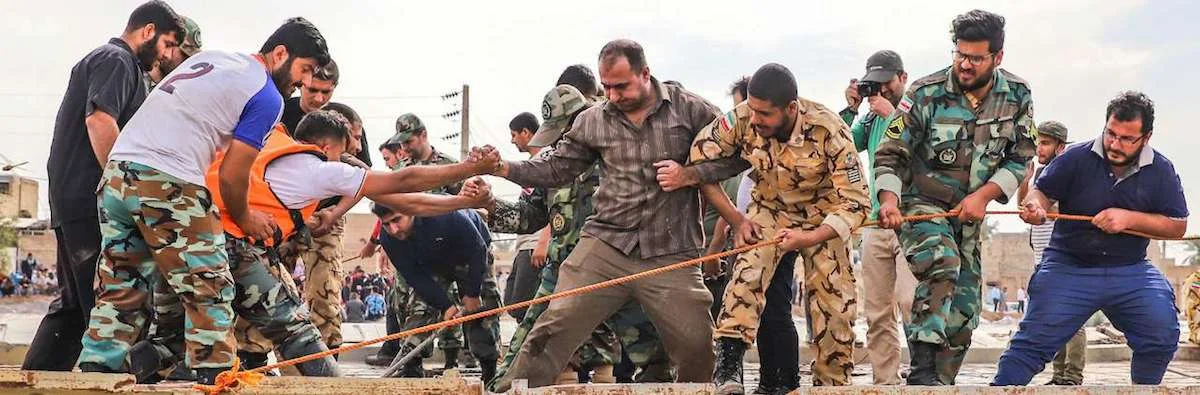
◢ Authorities ordered tens of thousands of residents of the southwestern Iranian city of Ahvaz to evacuate immediately on Wednesday as floodwaters entered the capital of oil-rich Khuzestan province, state television reported. The province's governor, Gholamreza Shariati, said he ordered the evacuation of five districts as a "precautionary and preventive move to avert any danger.”
Authorities ordered tens of thousands of residents of the southwestern Iranian city of Ahvaz to evacuate immediately on Wednesday as floodwaters entered the capital of oil-rich Khuzestan province, state television reported.
The province's governor, Gholamreza Shariati, said he ordered the evacuation of five districts as a "precautionary and preventive move to avert any danger", Iran's Tasnim news agency reported.
The districts have an estimated population of between 60,000 and 70,000.
Shariati asked young men to "help us in building dykes and to assist in the evacuation of women, children and the elderly."
"The Dez and Karkheh rivers have for the first time joined each other near Ahvaz and are now flowing towards the city," Shariati told state TV, adding this was unprecedented.
"These two rivers are far away from each other, but the huge volume of floodwater caused them to join up.”
Shariati said a sixth district was also put on standby for possible evacuation.
Khuzestan province has been struggling with major floods due to heavy rains as well as floodwater coming from the north.
It is the latest in a series of unprecedented floods that have hit the normally arid country since March 19, killing at least 70 people in 20 of Iran's 31 provinces.
The country's northeast was first swamped on March 19 before the west and southwest of the country were hit on March 25.
Food is Priority
On April 1 the west and southwest were again swamped by floods when heavy rains returned.
The huge inflow of water forced authorities to release large volumes of water from the province's largest dams, which is now threatening some of the cities downstream including the Ahvaz region, home to 1.3 million.
Authorities ordered the evacuation of six new cities along the Karkheh river on Saturday as the situation neared "critical" status.
"We've been trying to manage the water ... most of it has been diverted toward other channels," Ahvaz Mayor Mansour Katanbaf told ISNA on Sunday.
But on Monday a hospital in danger of being flooded was evacuated in Ahvaz as officials battled to contain the rising waters.
Emergency services have been left scrambling to prevent further loss of life and to provide relief to flood-stricken residents.
"Delivering food and hygienic goods to (shelter) camps is our primary priority and we have provided emergency accommodations for about 44,000 people," Iran Red Crescent's head of Relief and Rescue Organization Morteza Salimi told AFP on Tuesday.
In the city of Susangerd, swamped by floodwaters, an AFP team dispatched to the region saw residents living in tents setup on the roofs of their homes as what had previously been roads had become canals marked by the palm trees lining the streets.
Red Crescent choppers were providing food and basic goods to regions cutoff by floods, with villagers rushing to receive the help as they approached.
The flooding across Iran has caused damage worth IRR 150 trillion—more than USD 1 billion at the free market rate—according to an official estimate given by lawmaker Mehrdad Lahooti.
Photo Credit: IRNA
Lies, Coaching at StanChart Kept Iran Cash Moving, U.S. Says
◢ A pair of Standard Chartered Plc bankers in Dubai went a long way to protect the lucrative business of a prized Iranian client. Now the cost of their actions is clear: The London-based bank just agreed to fines and penalties of more than USD 1 billion for failing to stop and disclose its work with the Iranian and several others.
A pair of Standard Chartered Plc bankers in Dubai went a long way to protect the lucrative business of a prized Iranian client.
Now the cost of their actions is clear: The London-based bank just agreed to fines and penalties of more than USD 1 billion for failing to stop and disclose its work with the Iranian and several others.
U.S. court filings on Tuesday revealed how little some Standard Chartered employees heeded U.S. sanctions, and how they dissembled in order to hold onto profitable clients. When it came to the Iranian, Mahmoud Reza Elyassi, it was clear from the start that his company was linked closely to Iran. He submitted his Iranian passport as he opened an account in 2006. He routinely faxed payment instructions to the bank from a number originating in Iran.
The two Standard Chartered employees—a relationship banker and a foreign-exchange sales manager -- assured other bank executives that Elyassi’s business wasn’t prohibited by U.S. sanctions against Iran. After the bank moved to close Elyassi’s account because of too many rejected payments, the banker allegedly helped him open a new account in another company’s name.
Overall, the Standard Chartered employees helped Elyassi, 49, move USD 240 million through the U.S. financial system from 2007 to 2011, prosecutors say. Standard Chartered failed to disclose the activity to U.S. authorities even as it negotiated a settlement over other Iran-related violations in 2012, resulting in a sealed criminal charge against the banker, who pleaded guilty to conspiring to defraud the U.S. but wasn’t identified.
The bank’s resolution comes as President Donald Trump reasserts a hard line against Iran, most recently by designating an arm of Iran’s military as a terror organization.
Blacklisted Customers
The case involving Elyassi and the two bankers document the most egregious conduct cited by U.S. authorities amid a broad array of new evidence that the bank facilitated illicit business for blacklisted operators over the better part of a decade. The total value of the transactions exceeded USD 400 million, the vast majority for Iranian interests.
The court documents made public Tuesday make clear that while the Dubai branch was the locus of the misconduct, it was not limited to the employees who helped Elyassi. Another relationship banker helped an Iran-linked petrochemical company conduct extensive business through Standard Chartered. Others, including business and legal personnel, hesitated for more than a year to block online transactions originating from sanctioned countries despite warnings—and having the technological capability to do so.
The bank said Tuesday that it accepted “full responsibility” for the misconduct and faulted two former junior employees “who were aware of certain customers’ Iranian connections and conspired with them to break the law.”
The filings say that bank executives changed identifying information on customer accounts to hide Iranian ties for a petrochemical company and allowed thousands of fax and online transactions originating from IP addresses in Iran. It also facilitated hundreds of transactions in U.S. dollars involving Sudan, Syria, Cuba and Burma.
Charging Individuals
Through dozens of sanctions cases, some of them involving billions of dollars in prohibited transactions, the U.S. has rarely, if ever, charged an individual banker with facilitating the violations. In major cases, including those against HSBC Holdings Plc and BNP Paribas SA, the Justice Department faced intense criticism for extracting multibillion-dollar punishments from banks while failing to hold any individuals culpable.
The latest charges—albeit against an anonymous, low-level banker in a foreign country—represent an incremental step toward calling bank executives to account for financial misdeeds.
“Very few charges have been brought against individuals in the financial services sector and, more specifically, in anti-money laundering and sanctions related cases” since the Justice Department in 2015 started encouraging prosecutors to pursue individuals in corporate cases, said Jesse Morton, a fraud investigator at the Stout consulting firm in Atlanta.
It’s not clear whether the prosecution of individuals in the Standard Chartered case “is the result of the actions of these two being so blatant and egregious, the huge dollar amount and number of transactions at issue, the primary country at issue being Iran or the start of a new trend in these types of cases,” Morton said.
The banker, referred to only as Person A in court papers, and the foreign-exchange sales manager left Standard Chartered in 2014, in the middle of the Justice Department investigation.
Avoiding Detection
Prosecutors said the pair counseled Elyassi on ways to structure transactions in ways that wouldn’t raise suspicions about Iranian connections. They also provided false and misleading information to disguise his Iranian connections and lied to other bank executives, including compliance officials, when questioned about rejected payments, the U.S. says.
In the settlement with Standard Chartered, prosecutors said the two employees were motivated by their intent to generate revenue for the bank and keep their jobs.
Based on representations made by the two bank employees, Standard Chartered’s U.S. operation told the Treasury Department in 2010 that Elyassi’s company was based in Dubai and that it traded in power tools and circuits for the printing, diamond and car industries in China, Europe and the Middle East. In fact, according to Elyassi’s indictment, the trading companies were a front for an Iran-based currency-exchange business meant to provide covert access to the U.S. financial system for Iranian people and companies.
But even as Elyassi’s transactions washed through the global financial system, they began to set off alarms at European and U.S. banks that detected Iranian links. Several banks rejected the transactions, and even Standard Chartered’s own internal alerts flagged dozens of the payments for scrutiny.
Banker Coaching
When bank executives finally ordered the account shut down in 2011, Elyassi persuaded the banker in a telephone conversation to delay the closure for a few weeks while they opened a new account in a new company name so Elyassi could continue doing business, prosecutors said. The banker coached Elyassi on structuring payments to hide Iranian ties—telling him to stop sending payments directly from the account to Iranian entities and instead to transfer them through a personal account first, the U.S. says.
The new account was opened a day after the old one was closed, and remained open for nine more months—processing more than 200 transactions during that time, even after it immediately began generating a new series of red flags, according to the filings.
Elyassi was charged with conspiracy and money laundering. His whereabouts are unclear from court documents, but as an Iranian national operating in Iran and the United Arab Emirates, he probably won’t stand trial in the U.S. unless he’s apprehended in a third country with stronger U.S. ties. The U.A.E. has no extradition treaty with the U.S., and the U.S. and Iran have no diplomatic relations.
It’s unclear whether the second bank employee, identified in court filings as Person B, has been charged. The case of the banker who pleaded guilty remains under seal, suggesting he or she is continuing to cooperate with U.S. authorities.
Photo Credit: Bloomberg
Macron Urges Iran's Rouhani to Avoid 'Escalation' of Tensions
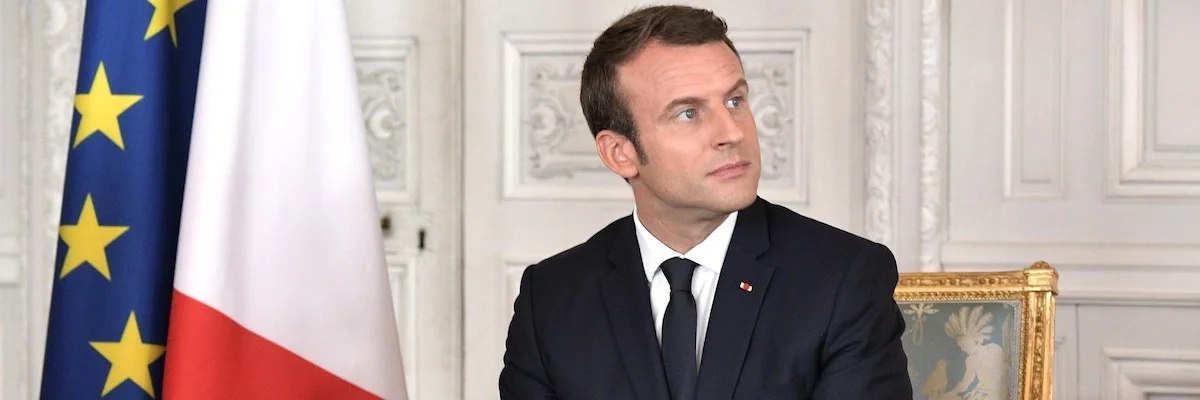
◢ French leader Emmanuel Macron on Tuesday urged his Iranian counterpart Hassan Rouhani to avoid an escalation of tensions after Washington blacklisted Iran's elite Revolutionary Guards as a terrorist organization. In a telephone conversation, Macron urged Rouhani to "avoid any escalation or destabilization of the region," the French presidency said in a statement.
French leader Emmanuel Macron on Tuesday urged his Iranian counterpart Hassan Rouhani to avoid an escalation of tensions after Washington blacklisted Iran's elite Revolutionary Guards as a terrorist organization.
In a telephone conversation, Macron urged Rouhani to "avoid any escalation or destabilization of the region," the French presidency said in a statement.
President Donald Trump called the unit—which has some 125,000 troops and vast interests across the Iranian economy—Tehran's "primary means of directing and implementing its global terrorist campaign."
It was the first time that the United States has branded part of a foreign government a terrorist group.
In response, Rouhani on Tuesday accused the United States of being the real "leader of world terrorism".
The Revolutionary Guards are the ideological arm of Iran's military and deeply embedded in the country's political and economic life.
Photo Credit: Wikicommons
Iraq Says Tried to Stop US Blacklist of Iran Revolutionary Guard
◢ Baghdad tried to stop Washington from blacklisting Iran's Revolutionary Guards as a "terrorist organization," Iraqi Prime Minister Adel Abdel Mahdi said Tuesday, warning that the decision could further destabilize the region. The United States declared the Islamic Revolutionary Guard Corps a "terrorist" group on Monday, prompting Tehran to quickly slap US troops with the same designation.
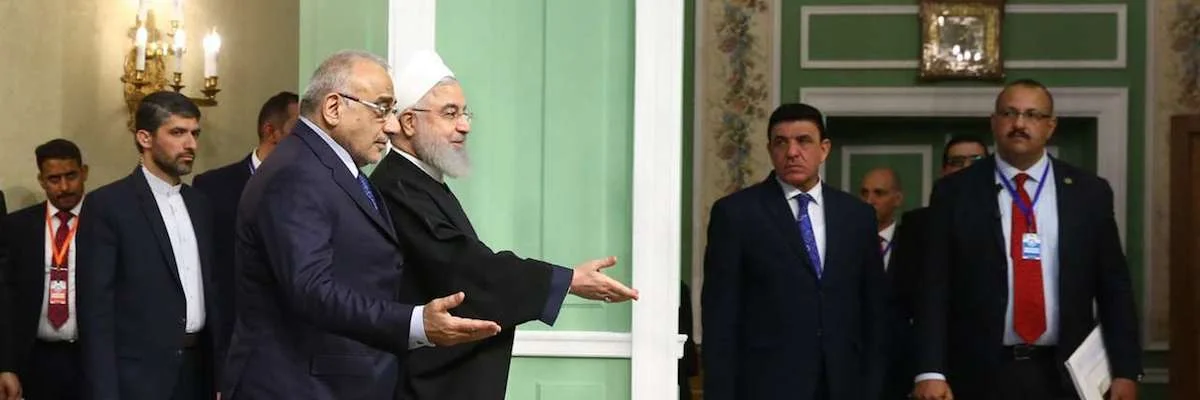
Baghdad tried to stop Washington from blacklisting Iran's Revolutionary Guards as a "terrorist organization," Iraqi Prime Minister Adel Abdel Mahdi said Tuesday, warning that the decision could further destabilize the region.
The United States declared the Islamic Revolutionary Guard Corps a "terrorist" group on Monday, prompting Tehran to quickly slap US troops with the same designation.
"We tried to stop the American decision. We reached out to all sides, to the US and the Saudis," Abdel Mahdi said during a weekly press conference on Tuesday.
He said he had warned Washington and its ally Riyadh that the move would have "negative repercussions in Iraq and in the region,” but stopped short of denouncing it.
Any escalation, he said, "would make us all losers.”
The premier has repeatedly said Baghdad would seek good ties with both Tehran and Washington, and the new sanctions have forced it to walk an even tighter rope.
They mark the first time Washington has branded part of a foreign government a terrorist group, meaning anyone who deals with the Revolutionary Guard could face US prison.
The IRGC was integral during Iraq's years of fighting against the Islamic State group, with the head of its foreign wing Major General Qassem Suleimani coordinating fighting across various Iraqi battlefields.
Since the battle against IS ended in late 2017, Suleimani has continued to meet with Iraq's top political brass.
Officially, the IRGC has no presence in Iraq, and it remains unclear whether these sanctions impact Iraqi figures, institutions or military groups.
Washington reimposed tough sanctions on Tehran's energy and finance industries last year, but granted Iraq several temporary waivers to continue importing Iranian gas and electricity to prop up its frail power sector.
At the same time, Iraq and Iran seem to be deepening trade ties, with Iranian President Hassan Rouhani visiting Baghdad in March and Abdel Mahdi returning the visit at the weekend.
The premier has also said he is planning trips soon to both Riyadh and Washington, Tehran's main foes.
Photo Credit: IRNA
Iran President Says US 'Leader of World Terrorism'
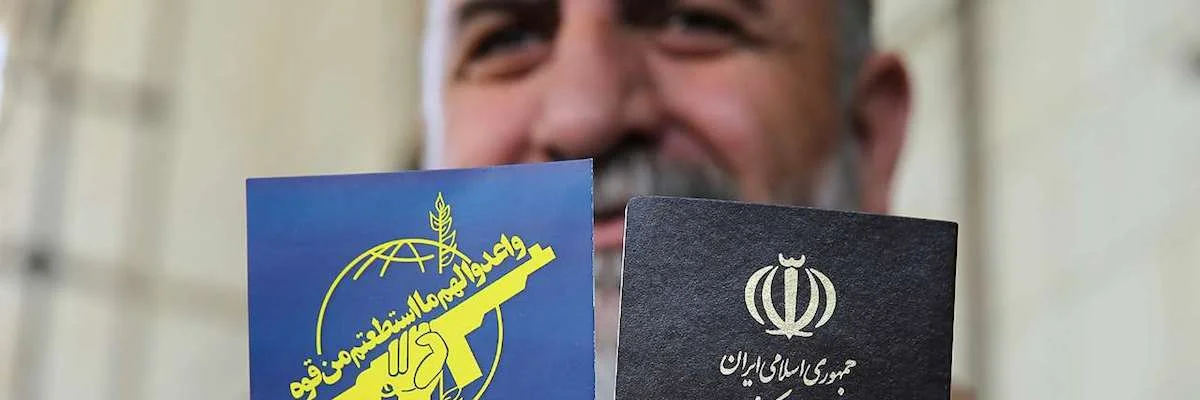
◢ Iranian President Hassan Rouhani on Tuesday accused the United States of being the real "leader of world terrorism", hitting back after Washington blacklisted Iran's Revolutionary Guards as a terrorist organization. Tehran was quick to retaliate on Monday by declaring US troops "terrorists" following Washington's move, which was welcomed by Iran's regional arch-rivals Israel and Saudi Arabia.
Iranian President Hassan Rouhani on Tuesday accused the United States of being the real "leader of world terrorism", hitting back after Washington blacklisted Iran's Revolutionary Guards as a terrorist organization.
Tehran was quick to retaliate on Monday by declaring US troops "terrorists" following Washington's move, which was welcomed by Iran's regional arch-rivals Israel and Saudi Arabia.
It was the first time that Washington has branded part of a foreign government a terrorist group, meaning that anyone who deals with the Islamic Revolutionary Guard Corps could face prison in the United States.
"Who are you to label revolutionary institutions as terrorists?" an angry Rouhani demanded in a speech broadcast live by state television.
Rouhani hailed the Guards for fighting terrorism since their creation in 1979, and accused US forces of having always been involved with terrorist groups or acts of terrorism.
“You want to use terrorist groups as tools against the nations of the region... you are the leader of world terrorism.”
"Who is propagating and encouraging terrorism in today's world? Who wanted to use ISIS (the Islamic State group) as a tool?" Rouhani asked, saying that the US is "hiding" the leaders of the jihadist organization.
The Revolutionary Guards are the ideological arm of the country's military and deeply embedded in Iranian political and economic life.
Iran's supreme leader Ayatollah Ali Khamenei praised the Guards on their National Day, saying they were at the "forefront' of defending the country and its interests, according to his official website.
He lashed out at US officials, saying: "Their vice and deceit will return boomerang on them, leading the enemies of the Islamic Republic such as (US President Donald) Trump and those around him at the US ruling apparatus to go down the drain."
'Everything Imaginable'
To support his accusations, Rouhani cited the downing of Iran Air Flight 655 in July 1988 by missiles fired from the US naval ship the USS Vincennes.
"You have done everything imaginable. Which force was it that shot down our civil airliner in the waters of the Persian Gulf?" he said, adding that it was aimed at intimidating Iran.
"You wanted to tell the Iranian nation that we do not have any red lines, you wanted to say that we also kill children, you wanted to say that we also kill women," Rouhani said, concluding that the US was transmitting "a message of terrorism in the whole world."
The US move comes on top of Trump's decision last year to pull the United States out of an international deal with Iran that was meant to lift crippling economic sanctions in return for curbs on its nuclear program.
Washington had been encouraged to blacklist the Guards by Trump's allies Saudi Arabia and Israel, which both cheered the declaration.
"The US decision (follows) the kingdom's repeated demands to the international community to address the issue of Iranian-backed terrorism," the official Saudi Press Agency quoted a foreign ministry source as saying on Tuesday.
The source welcomed the US move as a "practical and serious step" in curbing what the kingdom describes as Iranian meddling in the region.
The US decision came hours before an Israeli election in which Prime Minister Benjamin Netanyahu faces a close race for re-election.
In a statement, Netanyahu thanked his "dear friend" Trump who he said had responded to a "request of mine.”
In a statement carried by the Iranian official news agency IRNA, the Supreme National Security Council declared the United States a "state sponsor of terrorism" and its forces in the region "terror groups.”
Quickly adapting to the decision, the semi-official Fars News Agency, close to ultra-conservatives, described the US casualties in the latest suicide bombing on a military convoy in Afghanistan as "terrorists."
In a report on the attack, Fars said Tuesday: "American army terrorists killed in Afghanistan."
NATO announced on Monday that a suicide car bomb on a convoy in Iran's eastern neighbor had killed three US troops and a military contractor and wounded three more.
Photo Credit: IRNA
IMF Sees Deeper Iran Recession Hitting Regional Growth
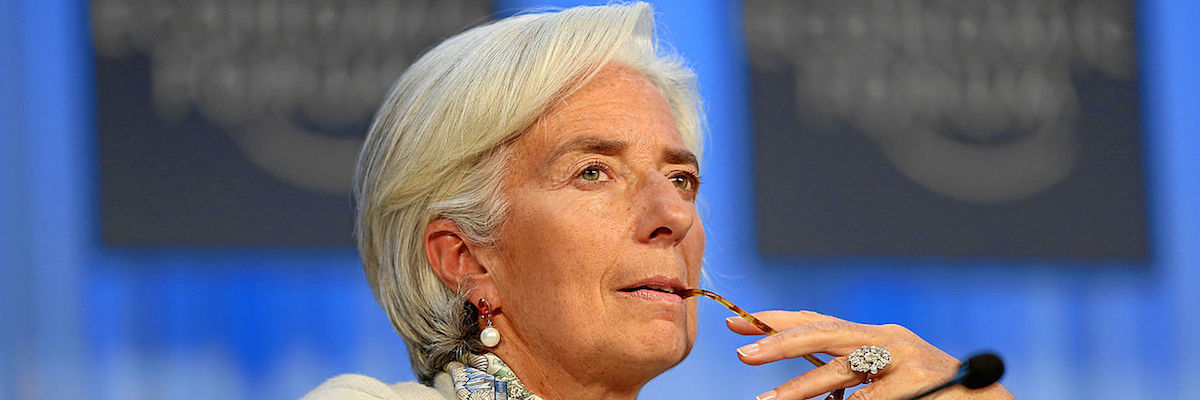
◢ The International Monetary Fund on Tuesday worsened its forecast for Iran's recession as US sanctions bite, with Tehran's slump denting overall growth in the Middle East and North Africa. The global lender's World Economic Outlook projected Iran's economy will shrink by a massive 6.0 percent this year, its worst performance since it contracted by 7.7 percent in 2012.
The International Monetary Fund on Tuesday worsened its forecast for Iran's recession as US sanctions bite, with Tehran's slump denting overall growth in the Middle East and North Africa.
The global lender's World Economic Outlook projected Iran's economy will shrink by a massive 6.0 percent this year, its worst performance since it contracted by 7.7 percent in 2012.
The latest figure represented a sharp deterioration from October's prediction of a 3.6 percent contraction, as US sanctions batter the Islamic Republic's crucial oil sector.
The report also estimated that Iran's economy, the second largest in the region behind Saudi Arabia, shrunk by 3.9 percent in 2018, as opposed to 1.5 percent projected earlier.
The prediction of deeper pain for Iran, lower oil growth and civil strife saw the IMF cut its overall forecast for the Middle East and North Africa to 1.3 percent, down 0.9 percent from January.
"The outlook for the region is weighed down by multiple factors, including slower oil GDP growth in Saudi Arabia... US sanctions in Iran and civil tensions and conflict across several other economies, including Iraq, Syria, and Yemen," the IMF said.
It maintained its projections for Saudi Arabia, saying the region's leading economy is expected to grow by a muted 1.8 percent this year and 2.1 percent in 2020.
The IMF said it expected the kingdom's growth, which reached 2.2 percent last year, to stabilize at a modest rate in the medium term due to the subdued outlook for oil prices and output.
Overall the wider regional economy is projected to improve in 2020 to a healthy growth rate of 3.2 percent, the IMF said.
The international lender expects oil prices to average around $59 a barrel this year and next, down from its October projections of above $65 a barrel.
Photo Credit: Wikicommons
Standard Chartered Reaches $1.1 bn US Settlement on Iran Sanctions
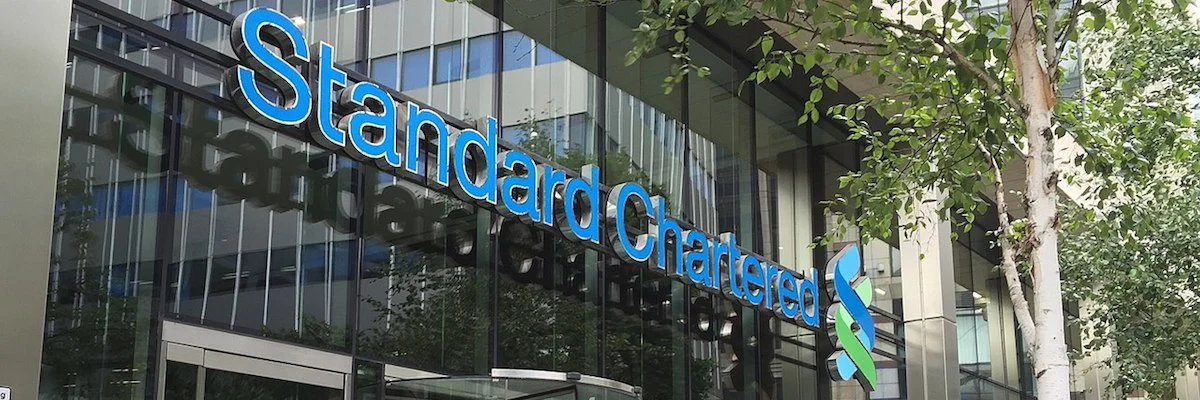
◢ Standard Chartered will pay USD 1.1 billion to settle charges it processed transactions that violated US sanctions on Iran and other prohibited countries, US regulators announced Tuesday. The penalty covers some USD 600 million in US transactions from 2008 to 2014 that originated at Standard Chartered's London and Dubai offices.
Standard Chartered will pay USD 1.1 billion to settle charges it processed transactions that violated US sanctions on Iran and flouted anti-money laundering requirements, US and British regulators announced Tuesday.
The British bank moved through hundreds of millions of dollars of US transactions from Iran and other sanctioned countries, said US Treasury officials, who were joined in the action by other federal and state agencies.
Britain's Financial Conduct Authority—which worked with the US bodies—punished the bank for doing little to detect and counter the laundering of funds that may have come from crimes or which could have been used to finance terrorism
"Standard Chartered's oversight of its financial crime controls was narrow, slow and reactive," said FCA Director of Enforcement and Market Oversight Mark Steward, who said the fine would have been "even higher" if the bank had not cooperated with the probes.
The British portion of the fine amounted to GBP 102.2 million (USD 133.7 million).
A statement from the bank described the violations as "historical," adding that the "vast majority" of the problems predated 2012 and that none occurred since 2014.
"The circumstances that led to today's resolutions are completely unacceptable and not representative of the Standard Chartered I am proud to lead today," said Standard Chartered Group Chief Executive Bill Winters.
"Fighting financial crime is central to what we do and who we are; we do not tolerate misconduct or lax controls and we will continue to root out any issues that threaten the trust we have built over more than 160 years."
Blindly accepting deposits?
The FCA listed a number of flagrant instances in which the bank's money laundering controls fell short.
In one case, the Dubai branch opened an account for a customer with 3 million UAE Dirham (USD 815,000) in cash, apparently without investigating the source of the funds.
The bank also did not sufficiently question a customer who exported a commercial product with potential military application to 75 countries, including two that had armed conflicts or where conflict was likely, the FCA said.
The penalties also cover some USD 600 million in US transactions from 2008 to 2014 that originated at Standard Chartered's London and Dubai offices and went through its US branch, the New York State Department of Financial Services said in a statement.
US regulators said a majority of the problem transactions violated US sanctions on Iran, with a smaller number involving Syria, Sudan, Cuba and Burma.
The US Treasury Department said the agreement requires the bank to conduct regular risk assessments and provide ongoing sanctions compliance training.
Other US bodies joining the agreement included the Federal Reserve and the Department of Justice, which extended a previously-written deferred prosecution agreement with the bank for two years.
"Global financial institutions serve as the first line of defense against money laundering and the financing of terrorist activities and those that fail to foster a strong compliance culture will be held accountable," said Linda Lacewell, acting superintendent of the New York agency.
Photo Credit: Wikicommons
Zarif Calls for US Forces to be Put on Iran 'Terror' List
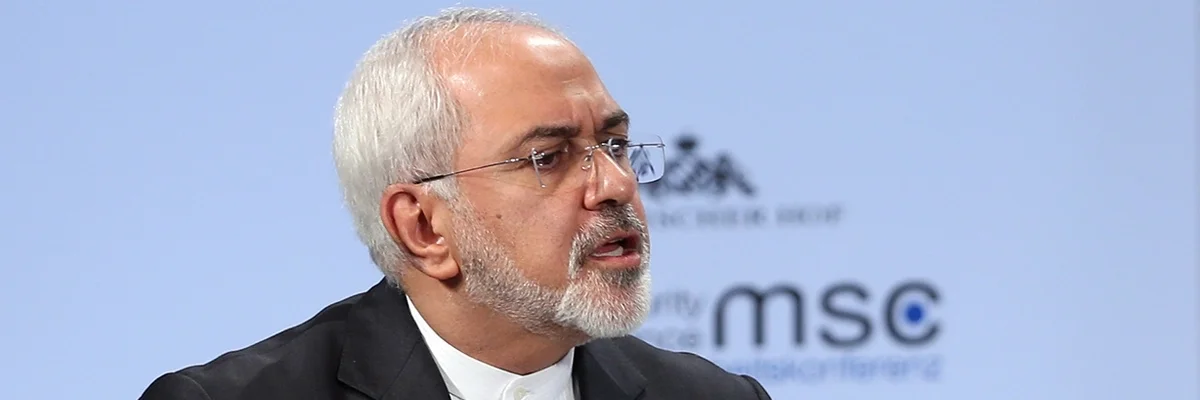
◢ Iran's top diplomat Mohammad Javad Zarif on Monday urged President Hassan Rouhani to place US forces in the region on Tehran's list of "terrorist" groups, the foreign ministry said. The foreign minister requested the move against US Central Command (CENTCOM), which has forces stationed from Central Asia to Egypt, shortly after Washington announced it was designating Iran's Revolutionary Guards a terrorist organization.
Iran's top diplomat Mohammad Javad Zarif on Monday urged President Hassan Rouhani to place US forces in the region on Tehran's list of "terrorist" groups, the foreign ministry said.
The foreign minister requested the move against US Central Command (CENTCOM), which has forces stationed from Central Asia to Egypt, shortly after Washington announced it was designating Iran's Revolutionary Guards a terrorist organization.
The Iranian foreign minister wrote to Rouhani asking him "to put the American Forces in Western Asia known as CENTCOM on the Islamic Republic of Iran's list of terrorist groups", the ministry said.
Zarif also blasted the US move on Twitter, saying it was done to support Israeli Prime Minister Benjamin Netanyahu ahead of Tuesday's parliamentary election in the Jewish state.
"A(nother) misguided election-eve gift to Netanyahu. A(nother) dangerous U.S. misadventure in the region," he wrote.
Part of America's vast military presence around the globe, CENTCOM's area of command covers multiple war zones and hotspots including Afghanistan, Iraq, Syria, Yemen and the Gulf.
The US decision came as part of already far-reaching attempts to undermine the Iranian government.
President Donald Trump said the "unprecedented" move "recognizes the reality that Iran is not only a State Sponsor of Terrorism, but that the IRGC actively participates in, finances, and promotes terrorism as a tool of statecraft."
"The IRGC is the Iranian government's primary means of directing and implementing its global terrorist campaign," Trump said in a statement.
It is the first time the United States has applied the designation to part of a foreign government, rather than guerrilla groups or other more informal entities.
The move follows Trump's decision to pull the United States out of a multilateral deal with Iran that was meant to lift crippling economic sanctions in return curbs on Tehran's nuclear program.
Photo Credit: IRNA
US Designates Iran's Revolutionary Guards as Terrorist Organization
◢ President Donald Trump on Monday announced the United States is designating Iran's elite military force, the Islamic Revolutionary Guard Corps, a terrorist organization. Trump said in a statement that the "unprecedented" move "recognizes the reality that Iran is not only a State Sponsor of Terrorism, but that the IRGC actively participates in, finances, and promotes terrorism as a tool of statecraft."
The United States on Monday designated Iran's elite Revolutionary Guards as a terrorist organization, ramping up already far-reaching efforts to undermine the clerical government in Tehran—which swiftly retaliated by calling US troops terrorists.
It is the first time that Washington has branded part of a foreign government a terrorist group, meaning that anyone who deals with the Islamic Revolutionary Guard Corps could face prison in the United States.
President Donald Trump called the unit—which has some 125,000 troops and vast interests across the Iranian economy—Tehran's "primary means of directing and implementing its global terrorist campaign."
"This action will significantly expand the scope and scale of our maximum pressure on the Iranian regime," Trump said in a statement.
Secretary of State Mike Pompeo, addressing reporters, said that all businesses and banks around the world "now have a clear duty" to cut off all dealings that involve the Revolutionary Guards.
"The leaders of Iran are racketeers, not revolutionaries," Pompeo said.
The move comes on top of Trump's decision last year to pull the United States out of an international deal with Iran that was meant to lift crippling economic sanctions in return for the government allowing its nuclear technology to be restricted and kept under close supervision.
The United States has long debated the terrorist designation and has been encouraged to do so by Saudi Arabia and Israel, arch-rivals of Iran which enjoy close relationships with Trump.
The decision comes hours before Israeli Prime Minister Benjamin Netanyahu faces re-election in tight polls. In a statement, he thanked his "dear friend" Trump.
Swift Retaliation
Iran swiftly took retaliatory action. The Supreme National Security Council, in a statement carried by the official news agency IRNA, declared the United States to be a state sponsor of terrorism and both called the US Central Command and forces underneath it terrorist groups.
Part of America's vast military presence around the globe, CENTCOM's area of command covers multiple conflict zones and hotspots including Afghanistan, Iraq, Syria, Yemen and the Gulf.
Foreign Minister Mohammad Javad Zarif, who recommended the CENTCOM designation, denounced the move against the Revolutionary Guards as a way to sway the Israeli election.
"A(nother) misguided election-eve gift to Netanyahu. A(nother) dangerous US misadventure in the region," Zarif tweeted.
The Revolutionary Guards were formed after the 1979 Islamic revolution with a mission to defend the religious regime, in contrast to more traditional military units that protect borders.
Abroad, the Guards' prized Quds Force, named for the Arabic word for Jerusalem, supports Iranian allies including Syrian President Bashar al-Assad, Lebanon's Hezbollah and militias from Iraq's Shiite majority.
At home, the Guards have amassed sweeping political and economic influence, with Brian Hook, the State Department's representative on Iran, citing estimates that they control up to half of the Iranian economy.
Pompeo and Hook said that 603 troops killed in Iraq since the United States invaded in 2003—or 17 percent of the total US death toll—could be attributed to Iran.
The Revolutionary Guards were also at the forefront of assisting Iraqi forces in defeating Islamic State extremists.
Criminalizing Contact With Guards
The United States has long mulled designating the Revolutionary Guards as terrorists but held off, fearing threats to US troops and questioning whether the move would do much to pressure a force already under a raft of sanctions.
US officials said the terrorist label, which takes effect on April 15, would make it a criminal offense in the United States to provide "material support" to the Revolutionary Guards, with violators subject to up to 20 years in prison.
Pompeo set his sights directly on Qassem Soleimani, the major general who leads the Quds Force.
"We are sending... a clear message to Iran's leaders, including Qassem Soleimani and his band of thugs, that the United States is bringing all pressure to bear to stop the regime's outlaw behavior," Pompeo said.
The United States insists that its goal is not regime change but several of Trump's top advisers have long been close to Iranian exiles seeking to topple the Islamic republic.
Critics in the United States said that the Trump administration was seeking to stir up a crisis that could lead to confrontation or at least push Iran to violate the 2015 nuclear accord. Europeans strongly support preserving the agreement and UN inspectors say that Iran remains in compliance.
"This is yet another dangerous escalation of conflict with Iran that is disturbingly reminiscent of the lead-up to the failed war in Iraq," said Tom Udall, a Democratic senator from New Mexico.
"The Trump administration is ratcheting up confrontation, undercutting diplomacy and putting American troops at risk," he said.
Photo Credit: IRNA

Floods Force Evacuation of Hospital in Southwest Iran
◢ Iranian authorities on Monday evacuated patients from a hospital threatened by floodwaters in the southwestern city of Ahvaz, the semi-official news agency ISNA reported. Iran has been hit by several weeks of unprecedented flooding across most of the usually arid country that has killed 70 people, according to the emergency services.
Iranian authorities on Monday evacuated patients from a hospital threatened by floodwaters in the southwestern city of Ahvaz, the semi-official news agency ISNA reported.
Iran has been hit by several weeks of unprecedented flooding across most of the usually arid country that has killed 70 people, according to the emergency services.
On Monday, authorities were battling to prevent floods reaching Ahvaz, which is the capital of Khuzestan province and home to about 1.3 million people.
The advancing waters sparked fears that a hospital on the city's northern outskirts would be submerged after the nearby Karkheh river burst its banks.
“Salamat hospital has been evacuated and all patients transferred to Golestan hospital on the orders of the crisis management authorities due to the risk of the hospital being flooded," the head of Golestan hospital, Meysam Moazi, told ISNA.
The huge floods have forced authorities to release water from one of the largest dams in the area, which has left some of the cities downstream under threat.
A "significant amount" of floodwater from Karkheh started moving toward Ahvaz on Sunday, according to city mayor Mansour Katanbaf.
"We've been trying to manage the water ... most of it has been diverted toward other channels and what's left is being handled," Katanbaf told ISNA.
Authorities ordered the evacuation of six new cities along the Karkheh river on Saturday as the situation neared "critical" status.
According to ISNA, a total of 210 villages along the river have been evacuated, 61 of which are now flooded.
Flooding swamped northeast Iran in mid March before spreading to the west and southwest of the country later in the month.
Heavy rains brought more floods to the west and southwest at the start of April.
The flooding has caused damage worth IRR 150 trillion—more than USD 1 billion at the free market rate, according to an official estimate given by lawmaker Mehrdad Lahooti.
Photo Credit: IRNA
Iran Leader Urges Iraq to Demand US Withdraw Troops
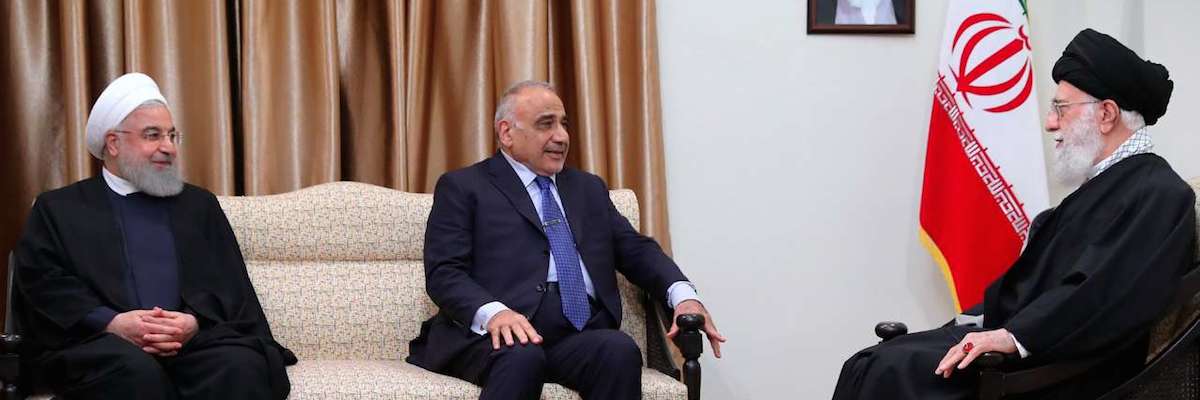
◢ Iran's supreme leader Ayatollah Ali Khamenei has called on Iraq to demand US troops leave "as soon as possible", warning that Washington is plotting to remove the Iraqi government. The remarks came during a visit to Tehran on Saturday by Iraqi Prime Minister Adel Abdel Mahdi, whose country is under pressure from the United States to distance itself from Iran.
Iran's supreme leader Ayatollah Ali Khamenei has called on Iraq to demand US troops leave "as soon as possible", warning that Washington is plotting to remove the Iraqi government.
The remarks came during a visit to Tehran on Saturday by Iraqi Prime Minister Adel Abdel Mahdi, whose country is under pressure from the United States to distance itself from Iran.
"You should take actions to make sure the Americans withdraw their troops from Iraq as soon as possible because wherever they have had an enduring presence, forcing them out has become problematic," Khamenei told Abdel Mahdi.
"The current government and parliament in Iraq and the political figures are not what the US desires; they plot to remove them from the political scene of Iraq," he said, according to his official website.
Abdel Mahdi, on his first official trip to Iran, also met Saturday with President Hassan Rouhani, who visited Iraq last month.
Baghdad is under pressure from Washington to limit ties with its neighbor, particularly after the United States withdrew from the Iran nuclear deal last year and hit Tehran with sanctions.
Iran has close but complicated ties with Iraq, with significant influence among its Shiite political groups.
The two countries fought a bloody war from 1980 to 1988 and Tehran's influence in Baghdad grew after the 2003 US-led invasion of Iraq toppled the government of Saddam Hussein.
Iran was the first country to respond to Iraqi calls for help after Islamic State group jihadists captured Mosul in 2014 and threatened to overrun Baghdad and Kirkuk.
Tehran dispatched "military advisors" and equipment overnight along with the Revolutionary Guards elite Qods Force commander Qasem Soleimani to prevent IS jihadists from approaching its western borders.
Terrorism Blacklist
According to the Wall Street Journal, Washington is planning to designate the Revolutionary Guards as a terrorist organization, an unprecedented move that would escalate tensions between the two countries.
The newspaper, quoting unnamed officials, said President Donald Trump's administration would announce the long-mulled decision as soon as Monday.
But it said that the Pentagon and the CIA were concerned the move would increase risks for US troops without doing much more to damage the Iranian economy.
Iran's parliament has vowed to retaliate by passing an urgent bill putting American troops on a terrorism blacklist alongside the Islamic State group, the semi-official news agency ISNA reported.
“Even though we believe one should not play along with America's extreme acts, the reality is that we must retaliate," the head of Iran's influential national security and foreign policy commission, Heshmatollah Falahatpisheh, told ISNA.
A statement signed by a majority of MPs in support of the bill said any action against Iran's national security and its armed forces was "crossing a red line" and the US administration would "regret" its decision.
The Islamic Revolutionary Guards Corp was formed after the 1979 Islamic revolution with a mission to defend the new system.
Designating the Guards as a terrorist organization would "effectively be a service to terrorists," Falahatpisheh said, since they have "the biggest role in combatting terrorism" in the region.
Photo Credit: IRNA
Iran Will Need to Tap Wealth Fund for Flood Damage
◢ Flood damage in western Iran exceeds the government’s budget for disaster relief and officials will have to tap the country’s sovereign wealth fund to cover reconstruction costs, the semi-official Iranian Students’ News Agency reported. Around IRR 9.5 trillion—equivalent to USD 230 million at Iran’s official exchange rate—of damage has been caused to agricultural fields in the southwestern province of Khuzestan alone.
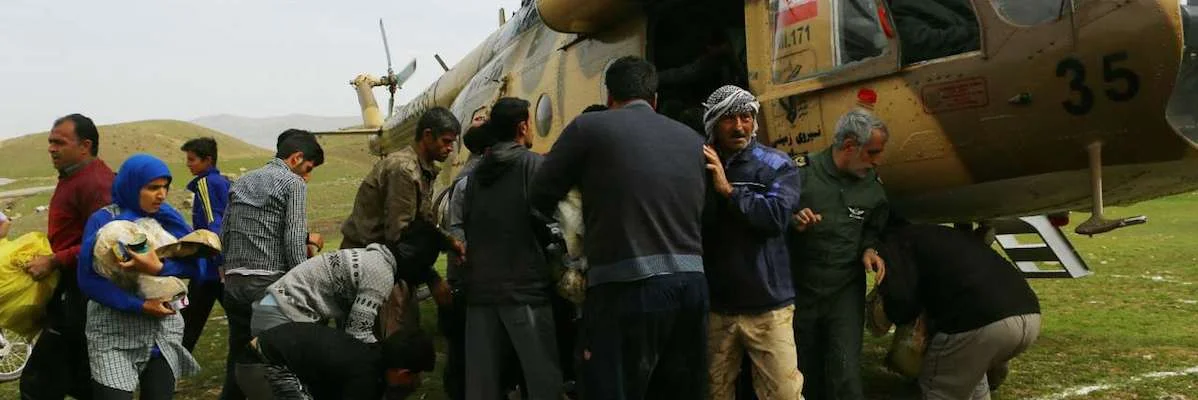
Flood damage in western Iran exceeds the government’s budget for disaster relief and officials will have to tap the country’s sovereign wealth fund to cover reconstruction costs, the semi-official Iranian Students’ News Agency reported.
Around IRR 9.5 trillion—equivalent to USD 230 million at Iran’s official exchange rate—of damage has been caused to agricultural fields in the southwestern province of Khuzestan alone, Keykhosro Changlavaee, head of the Agricultural Administration of Khustanestan said, according to ISNA.
The floods that started last month have killed 70 people, according to the state-run Islamic Republic News Agency, and devastated swathes of Western Iran. The waters have destroyed towns and villages, mostly in the provinces of Lorestan and Khuzestan, prompting mass evacuations throughout the area.
“The government cannot finance the heavy cost of the damage alone,” Gholamreza Tajgerdoun, head of the parliamentary commission for budget affairs was cited as saying in the ISNA report. “There needs to be help from elsewhere. The overall cost of the damage hasn’t yet been finalized, but what’s clear is that the damage is greater than the annual budget has allowed for.”
Tajgerdoun said the government will probably have to dip into the National Development Fund, Iran’s sovereign wealth fund, which consists largely of income from oil exports. Iran’s oil sales have declined steeply in the past six months following the U.S. government’s decision to reimpose sanctions on the Islamic Republic’s economy and energy industry after abrogating the 2015 nuclear deal.
Earlier on Saturday, officials said some 36 villages in and around the city of Sushtar in Khuzestan were being evacuated before an expected increase in rainfall that’s anticipated to cause rivers to overflow further in the coming days.
One of the major dams serving Khuzestan, which borders Iraq and the site of several major oil fields, is at risk of overspilling and filled beyond normal capacity, Hamidreza Lashgari, deputy head of Khuzestan’s Water and Electricity Administration, told ISNA. Lashgari warned that authorities may not be able to control the dam if water levels continue to climb.
Photo Credit: IRNA
Iran Orders New Evacuations Amid Fresh Flood Fears
◢ Iranian authorities ordered the evacuation of six cities along the Karkheh river in southwestern Khuzestan province on Saturday after more rain sparked fears of new flooding, state news agency IRNA said. Floods in Iran since March have killed 70 people the head of the emergency services said on Friday according to the official IRNA News Agency.
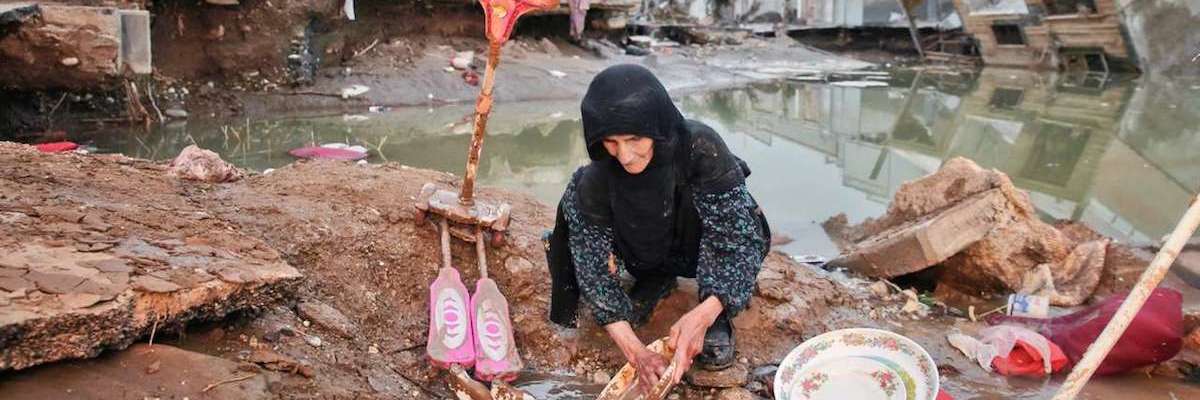
Iranian authorities ordered the evacuation of six cities along the Karkheh river in southwestern Khuzestan province on Saturday after more rain sparked fears of new flooding, state news agency IRNA said.
Floods in Iran since March have killed 70 people the head of the emergency services said on Friday according to the official IRNA News Agency.
Six cities alongside Karkheh river in southwestern Iran "must be evacuated as soon as possible," Khuzestan governor Gholamreza Shariati told IRNA.
The oil-rich province of Khuzestan has an extensive range of dams, which have swelled upstream due to fresh downpours.
The floodwater's intensity has forced authorities to open emergency discharges at Karkheh dam, one of the largest in the area, thus sparking fears of fresh flooding.
The situation appears to be "critical", he said. "We advise all women and children to be evacuated to shelters and youngsters to remain and help," he added.
Interior Minister Abdolreza Rahmani Fazli warned that up to 400,000 people in Khuzestan could be exposed to the floods, IRNA reported.
Iran, a usually arid country, has been hit by unprecedented flooding across most of the country since mid-March with 70 people killed, according to the country's emergency services.
Heavy rain was forecast for Saturday in Khuzestan.
The country's northeast was swamped on March 19 before the west and southwest of the country were inundated on March 25, killing a total of 45people.
On April 1 the west and southwest were again swamped by floods when heavy rains returned to the area.
The government said the flooding had damaged nearly 12,000 kilometers (7,500 miles) of roads, or 36 percent of the country's entire network.
The worst hit in the latest deluge was Lorestan Province where in some cities whole neighborhoods were washed away and many villages are still cut off.
Fourteen deaths have been reported from Lorestan so far.
Photo Credit: IRNA
Schlumberger Workers Sought by U.S. on Iran, Sudan Sanctions
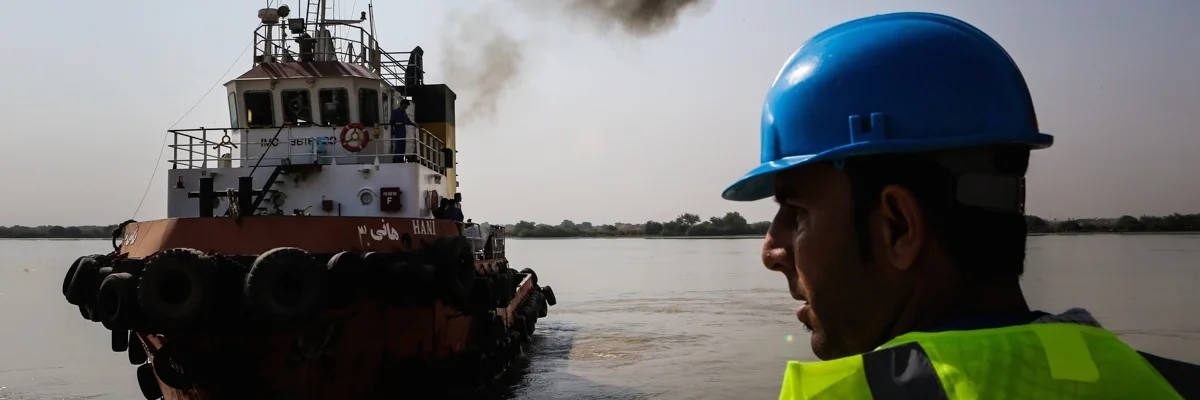
◢ The US government has interviewed one Schlumberger Ltd. worker and wants access to four other current and former employees as part of a probe into potential sanctions violations in Iran and Sudan, according to federal court documents. The unnamed worker for the world’s biggest oil-services provider was interviewed on March 8 about a matter related to a company Schlumberger acquired in 2014.
The US government has interviewed one Schlumberger Ltd. worker and wants access to four other current and former employees as part of a probe into potential sanctions violations in Iran and Sudan, according to federal court documents.
The unnamed worker for the world’s biggest oil-services provider was interviewed on March 8 about a matter related to a company Schlumberger acquired in 2014. That undisclosed company was under investigation by the Justice Department, and Schlumberger later disclosed a potential “matter” related to the International Emergency Economic Powers Act, according to filings.
Schlumberger “understands that the government remains interested in interviewing two current company employees and two former company employees,” according to an April 1 federal court filing by the company in Washington D.C. “The company is committed to continuing to work with counsel for the employees, where applicable, to schedule these interviews according to the government’s preferences.”
In 2015, Schlumberger pleaded guilty to sanctions violations in Iran and Sudan and was put on three-year probation. That probation was extended for another year so the government could investigate whether the company violated terms of its plea agreement. The Financial Times first reported that the government interviewed a Schlumberger worker.
Schlumberger has said in court filings it voluntarily reported four separate matters related to the Powers Act over the past two years, including the issue related to the company it acquired in 2014. Joao Felix, a spokesman for Schlumberger, declined to comment beyond the company’s most recent court filings.
“The company provided detail to the government regarding the substantial remediation it has undertaken in response to lessons learned from its investigation of the matters,” Schlumberger said in this week’s filing. It expects the term of the probation to expire at the end of this month “without issue.”
Photo Credit: Wikicommons
EU Provides €1.2 Million in Emergency Support Following Iran Floods
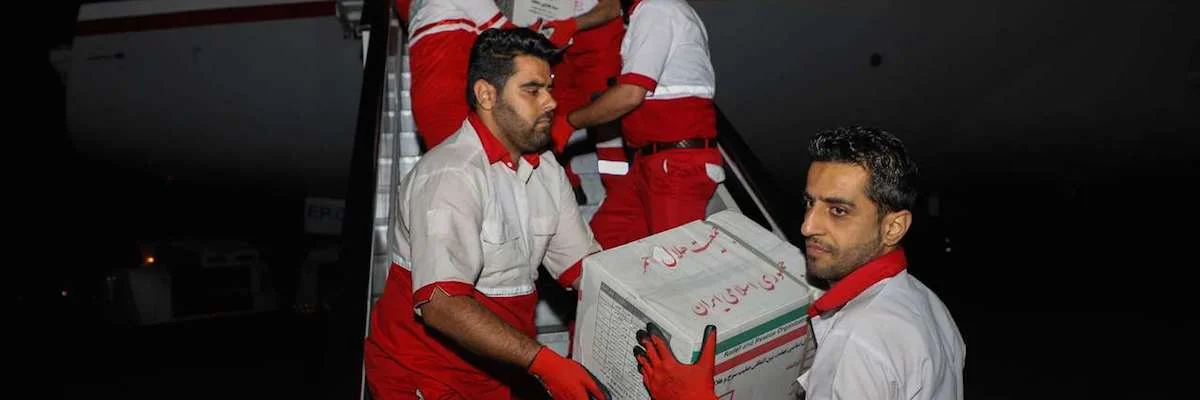
◢ Responding to the devastating floods that have recently affected northern and south western parts of Iran, the European Commission has announced an initial amount of EUR 1.2 million of emergency funding to assist the most vulnerable communities.
Responding to the devastating floods that have recently affected northern and south western parts of Iran, the European Commission has announced an initial amount of EUR 1.2 million of emergency funding to assist the most vulnerable communities.
In a statement released on Thursday, Commissioner for Humanitarian Aid and Crisis Management, Christos Stylianides declared, “We stand in full solidarity with the Iranian people at this difficult time. Our thoughts are with the thousands of families affected by the deadly floods as well as with the brave responders on the ground. The EU will help deliver essential support in the impacted areas.”
The commissioner added, “The new funding will support humanitarian partners, including the International Federation of Red Cross and Red Crescent Societies (IFRC) in delivering much needed relief assistance which will allow the most in need to cover their urgent needs. For over 20 years the EU has funded humanitarian operations in Iran, providing assistance to the most vulnerable refugees, including protection, shelter, water and sanitation, food security, and access to basic education and healthcare services.”
Photo Credit: IRNA
Iran FM Says Europe Incapable of Bypassing US Sanctions
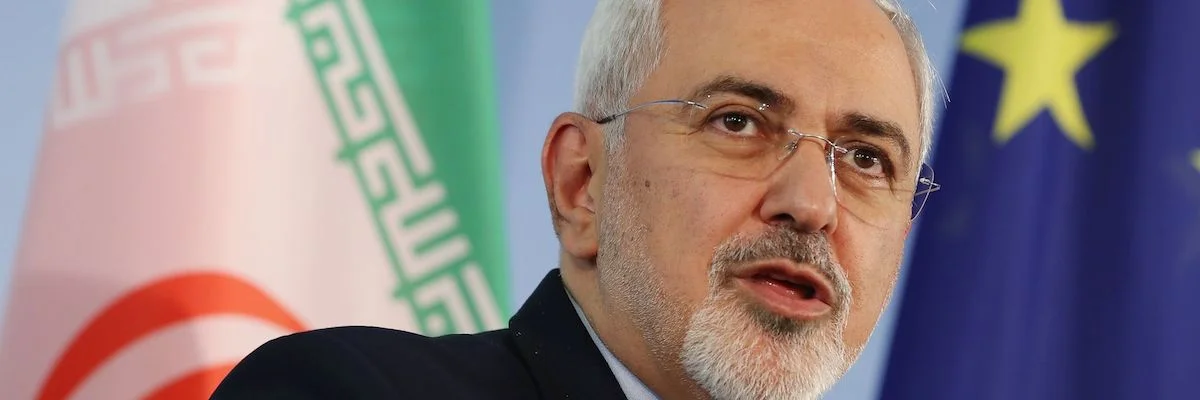
◢ Iranian Foreign Minister Javad Zarif said on Wednesday European powers were incapable of bypassing sanctions imposed on Tehran by the US after it withdrew from the Iran nuclear deal. Iran and six world powers agreed on a deal in 2015 that severely restricted Tehran's nuclear activities in return for sanctions relief and economic incentives.
Iranian Foreign Minister Javad Zarif said on Wednesday European powers were incapable of bypassing sanctions imposed on Tehran by the US after it withdrew from the Iran nuclear deal.
Iran and six world powers agreed on a deal in 2015 that severely restricted Tehran's nuclear activities in return for sanctions relief and economic incentives.
However President Donald Trump withdrew Washington from the deal—technically called the Joint Comprehensive Plan of Action (JCPOA)—last May, reimposing punishing sanctions on the Islamic republic.
The other parties to the nuclear deal—Britain, China, France, Germany and Russia along with the European Union—however insist they remain committed to making the deal work.
"The Europeans at first viewed the JCPOA (nuclear deal) as an achievement, but maybe they were not prepared to, and certainly they were not capable of standing up against U.S sanctions," Zarif said in an interview with Khamenei.ir, the official website of Iran's Supreme Leader Ayatollah Ali Khamenei.
“We will continue pressing the Europeans to implement their commitments. Europe must know that they cannot shy away from their responsibilities with a few statements and some unaccomplished plans," he added.
Zarif, who was his country's chief negotiator in the negotiations leading to the deal, said that Iran would continue to pressure the Europeans to act on their obligations within the deal but added that "we never had any hopes" in them.
Instead of the western powers the Islamic republic has turned to its traditional partners such as Russia and China, Zarif said, adding "the future of our foreign policy lies in that way."
Photo Credit: IRNA
Iran Flood Death Toll Reaches 62
◢ The death toll from major floods swamping much of Iran over the past 15 days has risen to 62, the head of the Iranian Legal Medicine Organization told local media Wednesday. Ahmad Shojaee told the semi-official Fars news agency the southern province of Fars has been hit the hardest with 21 dead.
The death toll from major floods swamping much of Iran over the past 15 days has risen to 62, the head of the Iranian Legal Medicine Organization told local media Wednesday.
Ahmad Shojaee told the semi-official Fars news agency the southern province of Fars has been hit the hardest with 21 dead.
The western province of Lorestan and the northern province of Golestan followed with 14 and 8 dead respectively, he said.
Flood-related deaths have been reported in 11 out of Iran's 31 provinces, Shojaee added.
The semi-official ISNA news agency said the current toll was a tally of the victims whose bodies have been transferred to coroner offices across the country—indicating the count could still rise.
Iran has been hit by flooding across most of the country since March.
The country's northeast was swamped on March 19 before the west and southwest of the country were inundated on March 25, killing a total 45 people.
Flooding in the west and southwest continued on April 1 when heavy rains returned to the area.
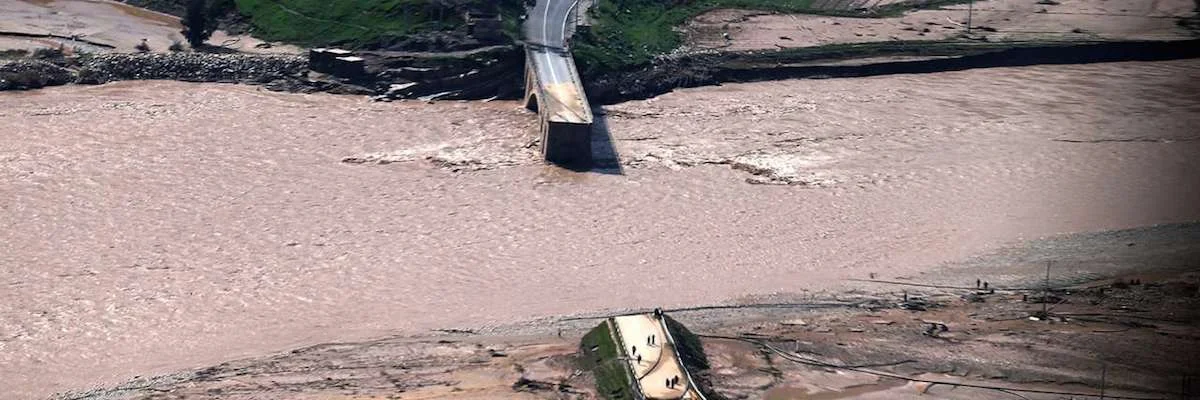
"Seventy-eight intercity roads have been blocked, as many as 2,199 rural roads and 84 bridges have been washed away," said Behnam Saeedi, spokesman for the National Disaster Management Organisation.
"Across 15 provinces, 141 rivers burst their banks and around 400 land slides were reported," he told state TV.
The government said the flooding had damaged nearly 12,000 kilometers (7,500 miles) of roads, or 36 percent of the country's entire street network.
Photo Credit: IRNA
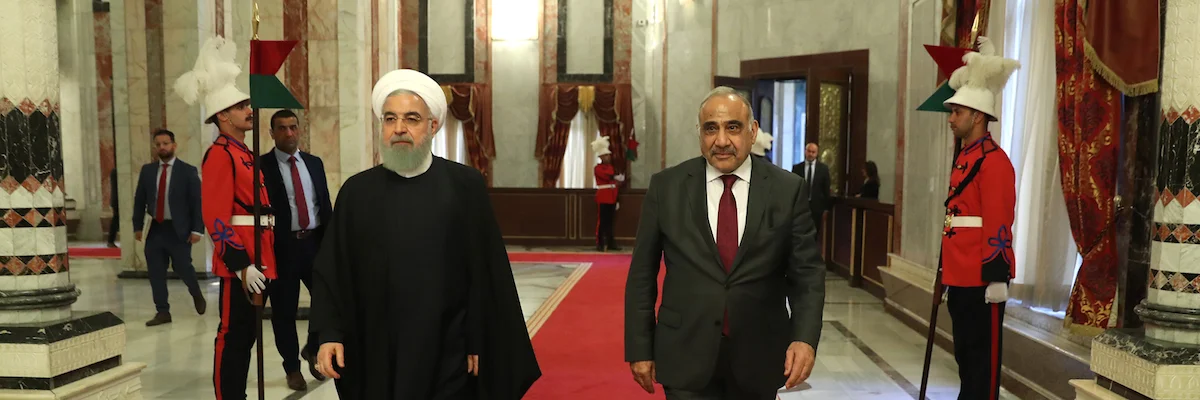
Iraq PM to Make First Official Iran Visit Saturday
◢ Iraqi premier Adel Abdel Mahdi will travel to Iran on Saturday, a member of his office said, in his first official visit to the country rivalling Washington for influence over Baghdad. The US reimposed tough sanctions on Tehran's energy and finance sectors last year but has granted Baghdad several exemptions to keep temporarily importing Iranian gas and electricity, crucial to Iraq's faltering power sector.
Iraqi premier Adel Abdel Mahdi will travel to Iran on Saturday, a member of his office said, in his first official visit to the country rivaling Washington for influence over Baghdad.
The US reimposed tough sanctions on Tehran's energy and finance sectors last year but has granted Baghdad several exemptions to keep temporarily importing Iranian gas and electricity, crucial to Iraq's faltering power sector.
Abdel Mahdi, 77, has repeatedly said Iraq wants good ties with both the US and Iran.
The prime minister would spend two days in the Islamic republic, a member of his office told AFP on condition of anonymity because he was not authorized to speak to press.
He was expected to discuss "the issue of trade outside the framework of sanctions" in addition to "the rapprochement and the convergence of views between Iran and Arab countries", the official said.
Iran is the second-largest supplier of imported goods to Iraq and also enjoys vast political influence in the country, particularly among Iraq's Shiite parties.
Those factions credit Iran for helping Iraqi armed forces defeat the Islamic State group in a fierce three-year battle that ravaged much of the country.
Since declaring victory over IS in 2017, Iraq has strived to make a diplomatic comeback as a mediator among regional rivals.
A string of top officials have visited the Iraqi capital in recent months, including Iranian President Hassan Rouhani in March, US Secretary of State Mike Pompeo in January, and a host of Arab leaders.
During his weekly press conference on Tuesday, Abdel Mahdi said he was planning trips to Saudi Arabia, Turkey and the United States, without specifying dates.
The premier has rarely travelled since coming to power in October, making his first trip abroad in late March to Egypt.
There, he met Egyptian President Abdel Fattah al-Sisi and King Abdullah II of Jordan to discuss economic and security cooperation among the three countries.
Last month, Iraq's speaker of parliament Mohammed al-Halbusi travelled to the US, where he said his country would need to rely on Iranian gas and electricity for another three years.
Photo Credit: President.ir
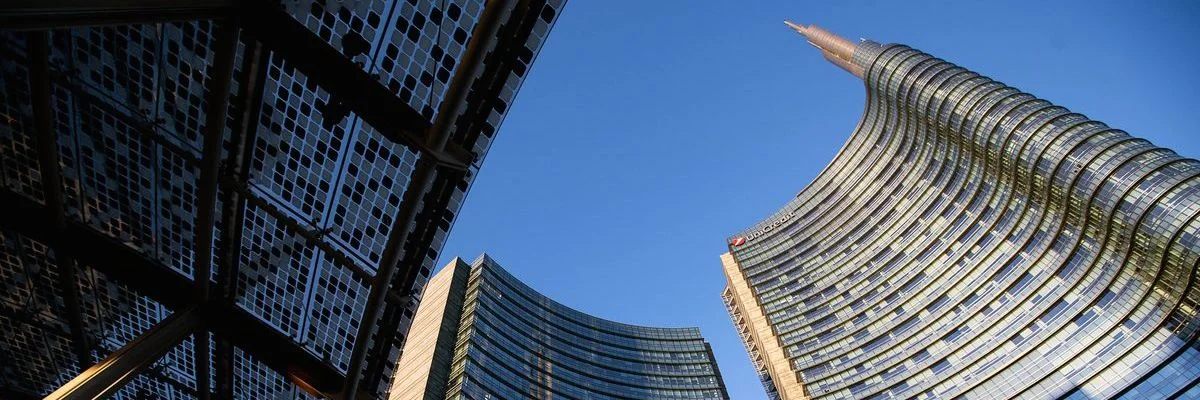
UniCredit Said Near $900 Million Sanctions Accord With U.S.
◢ UniCredit SpA is nearing an agreement with US authorities over allegations that the bank provided dollar-clearing services to Iranian clients in violation of US sanctions, people with the knowledge of the matter said. The deal would cost the Italian lender about USD 900 million but spare it from criminal prosecution, the people said.
UniCredit SpA is nearing an agreement with US authorities over allegations that the bank provided dollar-clearing services to Iranian clients in violation of US sanctions, people with the knowledge of the matter said. The deal would cost the Italian lender about USD 900 million but spare it from criminal prosecution, the people said.
A settlement of that size would be one of the largest for violations of U.S. sanctions laws, exceeded only by agreements reached with Societe Generale SA, Commerzbank AG, HSBC Holdings Plc and BNP Paribas SA. Among them, only BNP Paribas admitted guilt. The others entered into deferred-prosecution agreements.
“This is very positive for UniCredit because it eliminates one of the remaining pending risks for the bank,” said Fidentiis Equities analyst Fabrizio Bernardi. “This can improve UniCredit’s valuation for the future.
Chief Executive Officer Jean Pierre Mustier inherited the case from previous management when he took the who took the helm in July 2016. He announced provisions for related to the probe in November and said he didn’t expect it to have a material impact on the bank’s accounts.
A deal is expected in the coming weeks, the people said. It would resolve investigations of UniCredit by the U.S. Justice Department, the Treasury Department’s Office of Foreign Assets Control, the Federal Reserve, the Manhattan district attorney’s office and New York’s Department of Financial Services.
Representatives from those offices declined to comment or didn’t immediately respond to messages. A UniCredit spokesman declined to comment.
UniCredit rose as much as 2.3 percent in Milan trading and was priced at 12.10 euros as of 9:14 a.m. The stock has gained 21 percent this year, boosting the company’s market value to about 26 billion euros.
UniCredit’s German unit, HypoVereinsbank, was subpoenaed in March 2011 by the New York district attorney’s office over transactions with certain Iranian entities that were subject to U.S. sanctions. The lender set aside 741 million euros (USD 831 million) in provisions and charges, including funds to eventually settle the allegations in the third quarter. Additional funds were provisioned by HVB in the first half, according to the unit’s financial report.
UniCredit has declined to disclose the total amount of provisioning related to the sanctions. The bank’s provisions for the settlement are expected to fully cover the fine, one of the people familiar with the matter said.
Italy’s biggest bank, UniCredit is one of several European financial institutions settling cases for alleged sanctions-busting. Fifteen European banks have paid more than USD 18.5 billion over the last 15 years for violating U.S. sanctions on certain countries, particularly Iran. BNP Paribas’ USD 18.97 billion penalty in 2014 was by far the largest.
Standard Chartered Plc may also be getting close to settling allegations that it violated Iran sanctions. On Monday, it agreed to a short extension of its non-prosecution agreement with supervising authorities to “allow for additional time to resolve the outstanding investigation into our historical U.S. sanctions compliance.”
The UniCredit settlement would be the second by an Italian bank. Intesa Sanpaolo SpA, the country’s second-biggest bank, agreed to pay USD 235 million in December 2016 to resolve a New York regulator’s allegations that it flouted money-laundering controls for a decade.
Photo Credit: Bloomberg