
US Extends Iraq Waiver Over Iran Sanctions
◢ The United States is extending a waiver to let energy-hungry Iraq keep buying power from Iran, despite Washington's campaign of sanctions aimed at curbing Tehran, an official said. "While this waiver is intended to help Iraq mitigate energy shortages, we continue to discuss our Iran-related sanctions with our partners in Iraq," a State Department official said.
The United States is extending a waiver to let energy-hungry Iraq keep buying power from Iran, despite Washington's campaign of sanctions aimed at curbing Tehran, an official said.
The State Department issued a second three-month exemption from Iran sanctions for Iraq, mindful not to destabilize the war-torn country increasingly reliant on Iranian gas and electricity to cope with chronic blackouts that have triggered unrest.
"While this waiver is intended to help Iraq mitigate energy shortages, we continue to discuss our Iran-related sanctions with our partners in Iraq," a State Department official said.
The official said that increasing Iraq's capacities and diversifying imports "will strengthen Iraq's economy and development as well as encourage a united, democratic and prosperous Iraq free from malign Iranian influence."
Despite Washington's repeated warnings, Iraq since the fall of Saddam Hussein has walked a fine line and maintained warm ties with Iran, with which Iraq's majority Shiite community shares religious affinities.
Iranian President Hassan Rouhani paid a visit last week to Iraq, where he highlighted Tehran's support in battling the Islamic State extremist movement and said that the United States was "despised" in the region.
Last year, US President Donald Trump pulled out of an international deal on curbing Iran's nuclear program that was negotiated by his predecessor Barack Obama.
Trump instead imposed sweeping sanctions on Iran as he seeks to reduce the regional role of the Shiite clerical state, a foe of US allies Saudi Arabia and Israel.
But the US approach has met strong opposition, with European powers encouraging their companies to stay present in Iran so as to safeguard the denuclearization accord.
Photo Credit: IRNA
Iran's Mahan Air Cancels Paris Flights Over 'Sanctions'
◢ Iran's Mahan Air has been forced to cancel its Paris flights over "sanctions", its customer services team said Tuesday weeks after Germany banned the airline. "We have been told that (flights to France) have been cancelled... as of the first of April," an operator at the airline's office in Tehran's Imam Khomeini Airport told AFP.
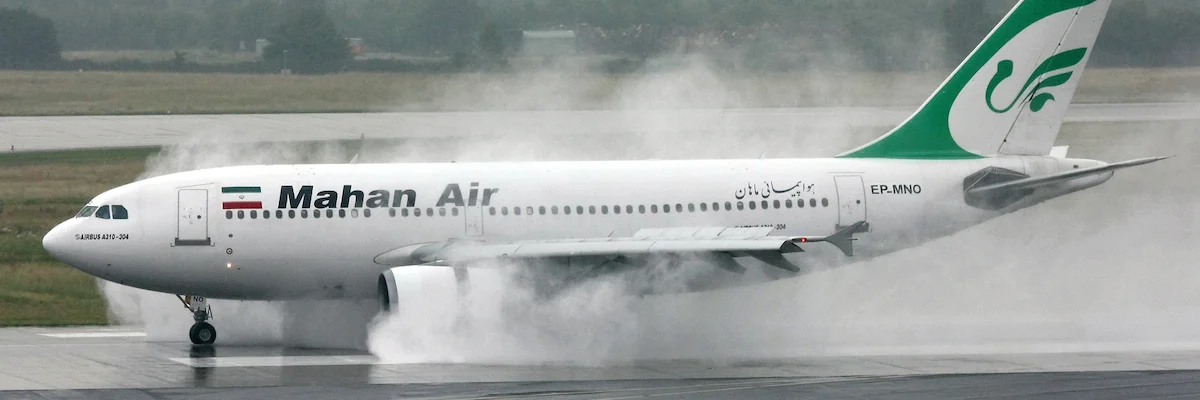
Iran's Mahan Air has been forced to cancel its Paris flights over "sanctions", its customer services team said Tuesday weeks after Germany banned the airline.
"We have been told that (flights to France) have been cancelled... as of the first of April," an operator at the airline's office in Tehran's Imam Khomeini Airport told AFP.
The Paris schedule will be scrapped "because of sanctions" by the French, the source said by phone without elaborating.
Two of the airline's French customers in Iran were notified by email that their flights booked for next month were cancelled.
Mahan, the Islamic republic's second-largest carrier after Iran Air, flies up to four services a week between Tehran and Paris.
Germany imposed a ban on Mahan in January, which the foreign ministry said was necessary to protect Berlin's "foreign and security policy interests.”
That decision came amid broader sanctions adopted by the European Union against Tehran over attacks on opponents in the bloc.
Iran has denied any involvement in the alleged plots and described Germany's move as "hasty and unjustifiable."
Mahan Air was blacklisted by the US in 2011, as Washington said the carrier was providing technical and material support to an elite unit of Iran's Revolutionary Guards known as the Quds Force.
Photo Credit: Wikicommons
Iranians Line Up at Dawn for a Sanctions Meal They Can Afford
◢ Iran isn’t facing a Venezuela-style collapse, but renewed U.S. sanctions have slashed oil revenue, battered the rial and pushed prices beyond the reach of many. Shortages, in meat, medicine, even gasoline in some regions, are spreading; proof, say hardline conservatives, that President Hassan Rouhani’s engagement with the West has failed.
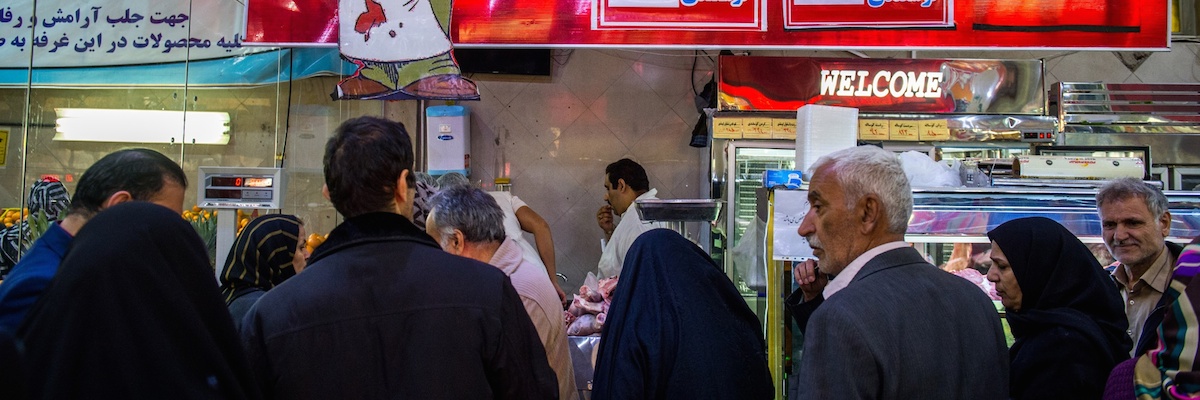
Just after dawn Fatemeh Ansari Mokhtari stood alone outside Tehran’s Shahid Baharloo supermarket, gripping the edge of her black chador.
Hours later she was still there, now at the head of a long queue, as a refrigerated van pulled up and the driver unloaded Australian-reared lamb wrapped in white muslin. The 69-year-old was eligible for 3 kilograms of state-subsidized meat, her monthly allotment. “It’s good we have this at least, otherwise what would we do?” she said. “It’s bread and milk, too—the pressure is immense.”
The sidewalk where Mokhtari spent most of that Saturday morning is a front line in what’s increasingly resembling a war economy, with red meat rationed while profiteers and smugglers thrive. Iran isn’t facing a Venezuela-style collapse, but renewed U.S. sanctions have slashed oil revenue, battered the rial and pushed prices beyond the reach of many. Shortages, in meat, medicine, even gasoline in some regions, are spreading; proof, say hardline conservatives, that President Hassan Rouhani’s engagement with the West has failed.
“Each day there’s about a hundred people waiting, but we usually only have enough for about 50 or 60,” said butcher Amir Hossein Siapoush, waiting to cut up the lamb. “It’s like this every day.” The cost of red meat and poultry has surged more than 90 percent from a year ago. US sanctions don’t apply to humanitarian supplies like food but their re-imposition last year froze banking channels and alarmed foreign companies doing even permitted business in Iran. The rial went into free fall and has only partially recovered. Imports, when Iran can afford them, are vastly more expensive. Ministers are prioritizing food and medicines, and last week parliament approved USD 14 billion of Iran’s dwindling resources to support domestic producers and fund “electronic coupons” for the poor that can be exchanged for essential goods. Importers already had access to cheaper foreign currency to ensure a flow of goods, but that policy is blamed for fanning price rises, with companies not passing savings onto customers despite threats of prosecution.
The government banned livestock exports last August to avoid shortages at home as sanctions came into force, but farmers instead smuggled animals abroad to obtain foreign currency. To stem public discontent, it has airlifted in hundreds of thousands of cows and sheep, as well as extra supplies of beef and lamb from Romania, Australia and Brazil for cut-price sale to low-income families like Mokhtari’s.
Djavad Salehi-Isfahani, a non-resident senior fellow at the Brookings Institution, said the government shared some of the blame for Iran’s difficulties, describing its policy of providing subsidized dollars to importers as misguided.Instead, authorities should boost monthly cash transfers to poorer Iranians and let them decide how to spend the money, he said. “They’re trying to maintain consumption by the poor at a level that’s unrealistic given the environment that Iran finds itself in today.”
Attacks Escalate
For Iranians who recall the privations of the 1980s, when their country was mired in a grinding war with Iraq, or the coordinated international sanctions that isolated their economy prior to the 2015 nuclear deal, rationing is nothing new. Things are not as bad yet as they have been in only recent memory. The Islamic Republic shows little sign of buckling, but a bout of protests that swept through provincial cities even before sanctions resumed show how quickly the tide can turn. What began then as anger over the government’s handling of the economy, quickly escalated into a display of frustration with the political establishment. Rouhani’s attempts to claw more of the economy away from the military and other state institutions have been set back by U.S. President Donald Trump’s decision last year to withdraw from the 2015 international accord that curbs Iran’s nuclear program in return for an end to some sanctions. The economic crisis means Rouhani is facing pressure from the U.S. on one side, and hardliners, who say Iran is being punished for its concessions, on the other.
With U.S. officials pledging to tighten curbs on Iran’s oil sales, and import waivers for several of the nation’s oil buyers set to expire in May, life is only getting harder. It’s a grim backdrop as Iran this week celebrates Persian new year, or Nowruz, a festival normally characterized by feasts, sweets and gifts. Central bank chief Abdolnaser Hemmati said last month families should adjust spending habits and prepare to see fewer foreign brands on the shelves. In an address to supporters in the oil-exporting region of Bushehr, Rouhani promised to expand welfare programs that already target 11 million poor Iranians. “You have to persevere, I guess. Tolerate things a little,” said Ali Sabaghi, a 53-year-old worker at a state-run garment factory who was in the meat queue with his wife. Their monthly income would cover just two weeks of expenses if they hadn’t cut back.
Another Day
Talk of belt-tightening does little to mitigate the frustration among those who’d hoped the nuclear accord would finally ease their isolation. “The U.S. has its own objectives. What they are, God only knows,” said Jaleh, 37, asking not be identified talking to foreign media. The value of her husband’s monthly pension, the sole income for a family of six, has slumped by more than half in hard-currency terms to USD 184. “We won’t starve or go hungry, but this still isn’t right, lining up like this.” The arrival of the store manager didn’t improve the mood. He turned away those who’d arrived too late for a numbered ticket or hadn’t realized they needed their ID card to buy the cheaper meat. They’d have to come back another day.
Photo Credit: Bloomberg

Tehran Aims to Sue US Individuals Over Sanctions
◢ Tehran is preparing a lawsuit in Iran against US individuals involved with economic sanctions imposed by Washington, President Hassan Rouhani said Monday. Rouhani said the presidency's legal affairs office as well as the justice and foreign ministers have been tasked with "drawing up a lawsuit against all those within America involved with designing and executing these sanctions.”
Tehran is preparing a lawsuit in Iran against US individuals involved with economic sanctions imposed by Washington, President Hassan Rouhani said Monday.
Rouhani said the presidency's legal affairs office as well as the justice and foreign ministers have been tasked with "drawing up a lawsuit against all those within America involved with designing and executing these sanctions.”
The case would be lodged in a "competent court inside Iran," he said, quoted by state television.
Speaking after the last cabinet meeting of Iran's calendar year which ends on March 20, Rouhani condemned the sanctions as a "crime against humanity" that was hitting ordinary Iranians.
"The world should know that what America has done was not against the Iranian state, it was not against Iran's nuclear program, it was against the wellbeing of the Iranian people," he said.
Rouhani said the sanctions targeted "the normal life of the people... the food supply... the medical supply of the people.”
Last May, US President Donald Trump withdrew from the 2015 nuclear deal between Iran and world powers.
The renewal of American sanctions, which had been eased in exchange for curbs on Tehran's nuclear program, sent shockwaves through Iran's economy.
The IMF reported that the Iranian economy slumped into recession in 2018 and has forecast a 3.6 percent decline in GDP for 2019.
The sanctions have indirectly impacted medical and food supplies, and a steep decline in the value of the rial has pushed up prices of basic goods.
In October, the International Court of Justice (ICJ) ordered the United States to lift sanctions affecting imports of "humanitarian" goods to Iran.
The court said sanctions "may have a serious detrimental impact on the health and lives of individuals on the territory of Iran.”
Photo Credit: IRNA
Oil Market Can Weather Zero Iranian Exports: U.S. Officials
◢ US officials said the global oil market can withstand the removal of all Iranian crude exports this year, a conclusion that could be pivotal in the coming weeks as President Donald Trump weighs whether to end sanctions waivers granted to several nations. The message from American officials comes as OPEC and its allies prepare for a ministerial meeting in Baku, Azerbaijan.
US officials said the global oil market can withstand the removal of all Iranian crude exports this year, a conclusion that could be pivotal in the coming weeks as President Donald Trump weighs whether to end sanctions waivers granted to several nations.
Based on current oil supply and the potential of the US and Saudis to ramp up production, “going to zero” could happen this year without compromising affordable crude supplies, according to four officials who spoke on condition of anonymity to discuss internal deliberations. The officials emphasized that the discussions are still underway and no final decision has been made.
The message from American officials comes as OPEC and its allies prepare for a ministerial meeting in Baku, Azerbaijan, this weekend to discuss whether the cartel and its allies should continue cutting global output.
President Donald Trump re-imposed sanctions on Iran in November, with the goal of choking off the Islamic Republic’s oil revenue. The administration granted eight countries full or partial waivers allowing them to continue buying the nation’s crude: China, India, Italy, Greece, Japan, South Korea, Taiwan and Turkey. The waivers, which last for 180 days, were meant to be temporary measures to ease their transition from Iranian oil and avoid unsettling the energy market.
As the waivers near their expiration date, the officials said that sufficient spare capacity exists to make up for the loss of all Iranian oil barrels. They cited OPEC’s ability to ramp up production as well as booming U.S. output, among other possibilities.
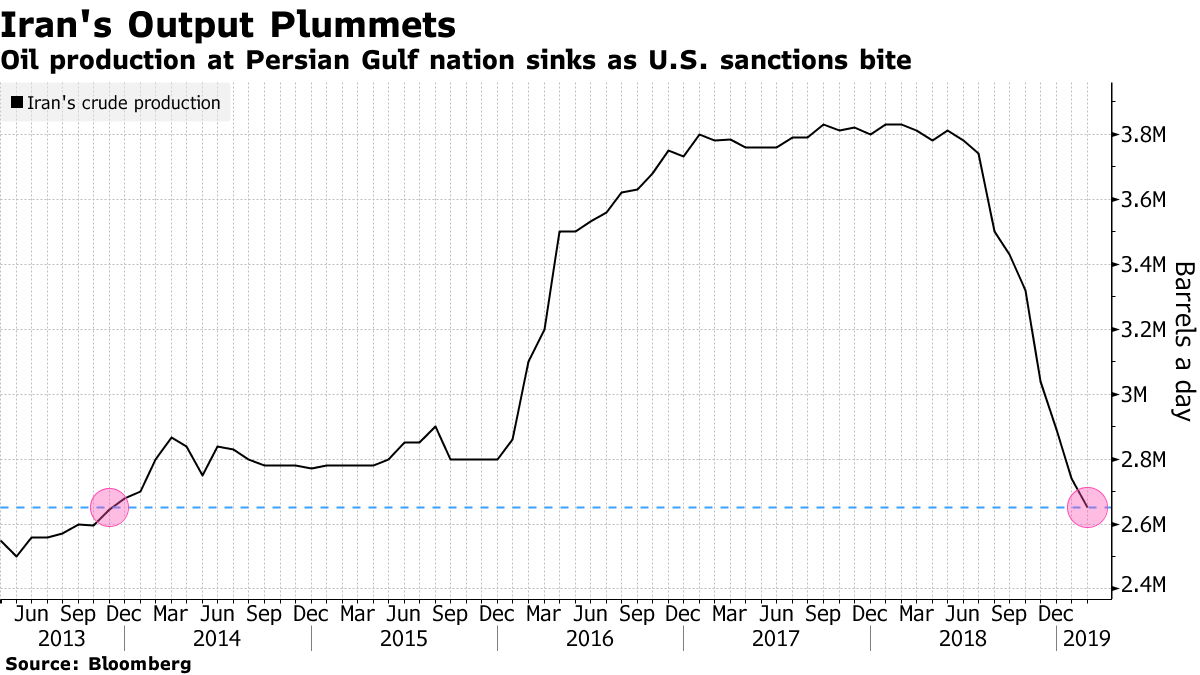
According to the International Energy Agency, OPEC has 2.8 million barrels a day of spare capacity, more than enough to offset Iranian supply losses. Iran exported 1.17 million barrels a day in February, up from a multiyear low of 629,000 barrels a day in December, according to Bloomberg tanker tracking. Meanwhile, the U.S. Energy Information Administration estimates that global crude supply this year will exceed demand by 180,000 barrel a day, according to its Short-Term Energy Outlook.
But future supply losses from Venezuela muddy the picture. The politically beleaguered country saw oil production decline by 100,000 barrels a day in February to 1.14 million, the IEA said. Deeper declines are likely in March, the group said.
“We’re committed to bringing Iranian crude oil exports to zero as quickly as market conditions will permit,” U.S. Secretary of State Mike Pompeo said Tuesday at the CERAWeek by IHS Markit conference in Houston.
Photo Credit: State Department
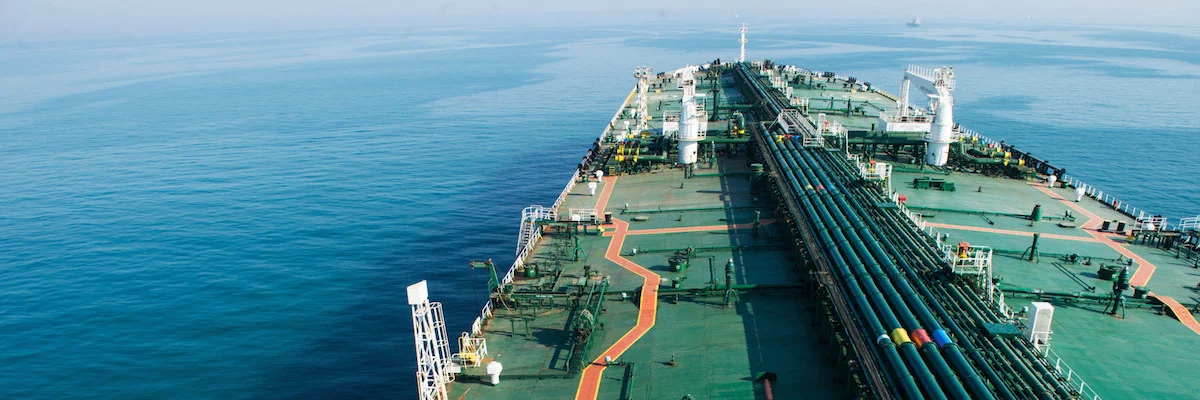
U.S. Oil Waivers That Rocked Market in 2018 Coming Back to Focus
◢ Uncertainty over U.S. waivers for buyers of Iranian oil is starting to grip the market again, under very different circumstances than when American sanctions were set to go into effect last year. The Trump administration, for its part, says the aim is still to completely halt Iran’s oil shipments as it seeks to increase economic pressure on Tehran.
Uncertainty over U.S. waivers for buyers of Iranian oil is starting to grip the market again, under very different circumstances than when American sanctions were set to go into effect last year.
Before existing exemptions were granted in early November, Saudi Arabia was pumping at record levels, benchmark Brent futures rose to a four-year high, traders were predicting USD 100 oil, and Donald Trump was seeking lower fuel prices ahead of U.S. mid-term elections. The waivers blindsided the market, which had assumed America would bring Iranian exports to zero, and sparked a 40 percent collapse in crude.
Now, as the six-month waivers allowing buyers to ship limited quantities approach their expiry, the Saudis are pursuing aggressive output cuts, U.S. sanctions on Venezuela have further squeezed supplies and OPEC producers burned by last quarter’s oil slump are defying Trump’s call for lower prices. Iran’s customers, meanwhile, are making plans -- with some betting the exemptions will be extended and others expecting an end.
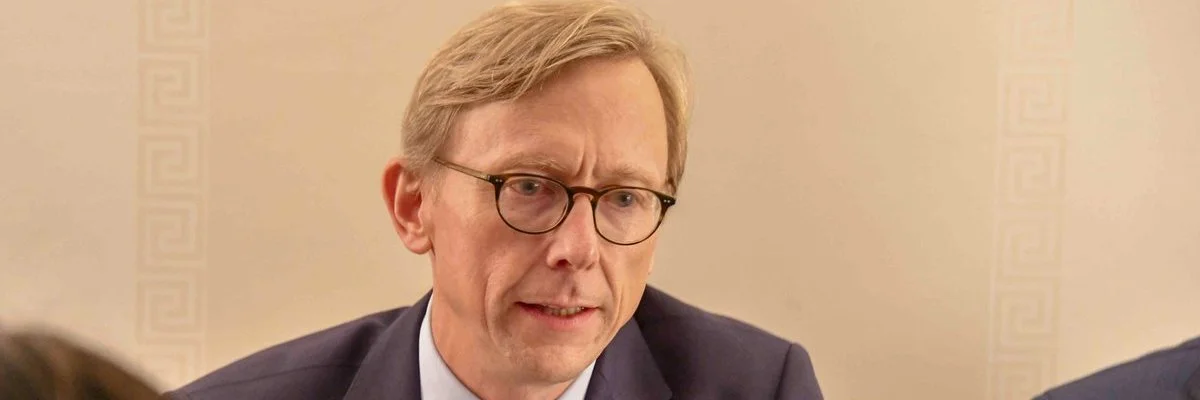
The Trump administration, for its part, says the aim is still to completely halt Iran’s oil shipments as it seeks to increase economic pressure on Tehran. In February, Japanese broadcaster NHK cited the State Department’s Brian Hook as saying the U.S. doesn’t plan to extend the waivers. More recently, Secretary of State Mike Pompeo said America wants to bring the Islamic Republic’s exports to zero “as quickly as market conditions will permit.”
Iran’s customers, meanwhile, are making plans—with some assuming the waivers will be renewed while others foreseeing some cuts to permitted purchases. Here’s a round-up of plans by major buyers, based on information from traders who participate in the market, refinery officials, data compiled by Bloomberg and analysts.
South Korea
Waiver: Up to 200,000 barrels a day of condensate
Nation purchased 179,000 b/d from Iran in February, tanker tracking data show
Refineries built to turn ultra-light oil known as condensate into petrochemicals have stepped up purchases of alternative supply due to mounting uncertainty around future cargoes from Iran. Hanwha Total Petrochemical Co. and SK Innovation Co. have bought several spot cargoes of Qatari shipments for loading in April after a months-long hiatus, just as the U.S.-issued waiver is set to expire.
The companies had slashed their spot purchases in February and March as they rushed to import the maximum permitted volume of Iran’s South Pars condensate. While they are now turning to Qatari cargoes, they are being aided by a glut in the market for such supply.
Additionally, the relatively low cost of other feedstock such as heavy full-range naphtha offers another viable replacement for some. Overall demand is also muted due to planned maintenance shutdown at Hyundai Chemical Co.
China
Waiver: 360,000 b/d over six months
Nation purchased 569,000 b/d from Iran in February, based on tanker tracking data
The nation’s largest refiners, state-run Sinopec and PetroChina Co., are preparing for a scenario where U.S.-issued waivers are renewed with some cuts to permitted purchase volumes, according to company officials with knowledge of procurement plans, who asked not to be identified because the information is private.
Chinese buyers may choose to secure at least some alternatives in the spot market ahead of time, according to a Bloomberg survey of traders who participate in the market. That’s because allocations for Iranian cargoes tend to take place three to four weeks before shipments are due to load, leaving refiners with the risk of insufficient supplies if there are hurdles related to the waivers.
With Atlantic Basin benchmarks Brent crude and West Texas Intermediate prices weakening relative to the Middle East’s Dubai marker, China is seen sustaining high levels of African oil imports while also considering shipments of Russian Urals and American crude as trade tensions between the U.S. and China ease.
Japan
Waiver: Unknown volume
Nation purchased 167,000 b/d from Iran in February, based on tanker tracking data
After receiving its first cargo under the waivers only in February, the close U.S. ally is now already scaling back purchases even though the waivers expire only in early May. A cargo that loaded this month from Iran for Cosmo Oil Co. will be the company’s last. Fuji Oil Co. halted lifting shipments at the end of February.
Other refiners that have purchased volumes include JXTG Holdings Inc. and Showa Shell Sekiyu KK. Japan’s purchases from Iran typically drop during March due to uncertainty around the prospect of an annual renewal of government-issued freight insurance for the Islamic Republic’s cargoes for the following fiscal year starting in April.
The nation’s refiners are highly reliant on Middle East producers for crude supply, and the Saudi-led output curbs by the Organization of Petroleum Exporting Countries and its allies could increase the risk of disruptions if the U.S. waiver on Iran isn’t renewed. Japanese firms have already purchased more spot cargoes of Abu Dhabi’s Murban and Das for April loading, according to traders who participate in the market.
India
Waiver: Up to 300,000 b/d
Four Indian refiners took nine million barrels of Iranian crude in March
Buyers of Iranian crude such as Indian Oil Corp. and Bharat Petroleum Corp. plan to continue importing oil from the Persian Gulf producer in April, even as the availability of May supplies remains uncertain as refiners await the Trump administration’s decision on waivers.
While an IOC official said the company is mulling alternative plans should supplies be halted, the top Indian importer of Iranian crude remains confident that it can lean on flexible terms in its supply contracts with Saudi Arabia and Iraq to make up for any loss in shipments.
BPCL, meanwhile, has booked 1 million barrels of Iranian oil for April and had yet to decide on its purchases for May, Director of Refineries R. Ramachandran said.
“Beyond May 4, we don’t know what will happen. We are waiting,” he said, adding that the company has the option of purchasing other grades from the Middle East. “We feel the extension of waivers may not happen easily, so we have alternative plans,” he added.
Photo Credit: Bloomberg
Iran's Rouhani Meets Iraq's Top Shiite Cleric
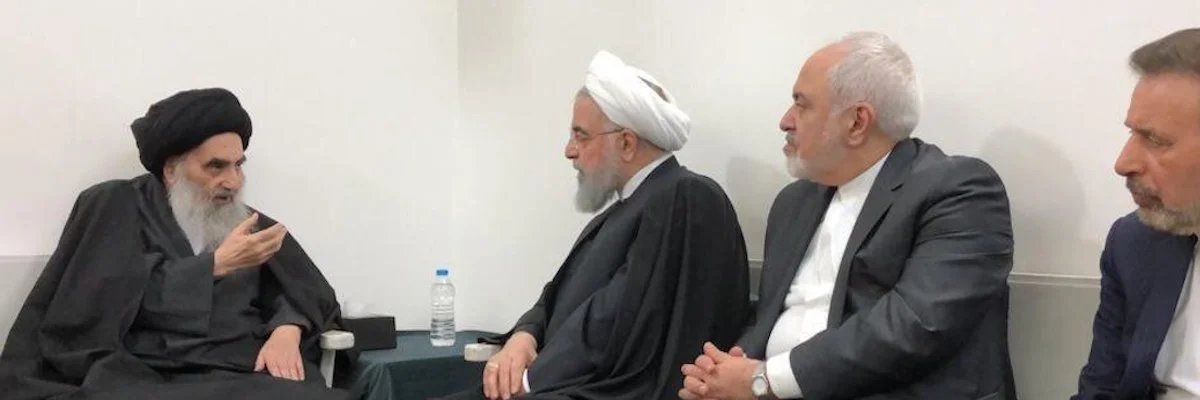
◢ Iran's Hassan Rouhani met Grand Ayatollah Ali Sistani in Iraq's Najaf on Wednesday, an AFP photographer reported, in the first encounter between an Iranian president and the country's chief Shiite cleric. Sistani famously called Iraqis to arms against the Islamic State group in 2014, giving rise to the Hashd al-Shaabi paramilitary alliance, which includes Iran-backed Shiite groups.
Iran's Hassan Rouhani met Grand Ayatollah Ali Sistani in Iraq's Najaf on Wednesday, an AFP photographer reported, in the first encounter between an Iranian president and the country's chief Shiite cleric.
Sistani famously called Iraqis to arms against the Islamic State group in 2014, giving rise to the Hashd al-Shaabi paramilitary alliance, which includes Iran-backed Shiite groups.
Those forces have since been placed under the command of regular Iraqi forces and several former fighters are now members of the Iraqi parliament.
Sistani rejects foreign influence in Iraq.
Iran and Iraq fought a devastating eight-year war in the 1980s but their relations shifted drastically with the American-led overthrow of Sunni Iraqi dictator Saddam Hussein in 2003.
Iran, which like its neighbor has a mainly Shiite population, is now one of oil-rich Iraq's main trading partners and has close ties to many of its political actors.
Shiite-majority Iraq is walking a fine line to maintain good relations with Iran and its other key ally, the United States, an arch-foe of Iran.
Both have played a major role in the battle against IS jihadists.
Sistani, a spiritual leader to most of Iraq's Shiites and some in Iran, heads the religious establishment of Najaf, a Shiite holy city in Iraq that rivals Iran's Qom.
In 2013, the octogenarian leader refused to meet then-president of Iran, Mahmoud Ahmadinejad.
Rouhani, who is on his first trip to Iraq since becoming president in 2013, hailed his country's "special" ties with its neighbor, saying they could not be prepared to relations "with an aggressor country like America.”
Photo Credit: IRNA
Iraq and Iran Build Economic Ties as a Sidelined U.S. Looks On
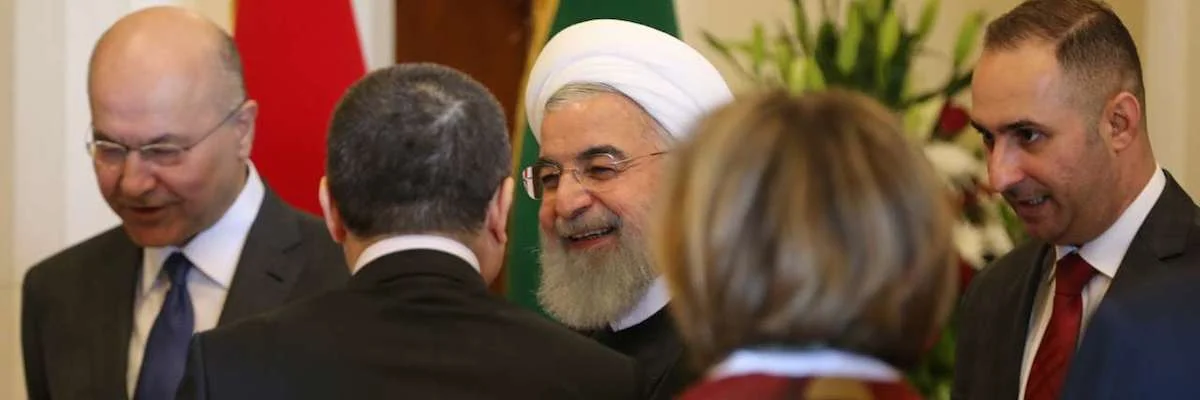
◢ In the contest for Iraq’s loyalty, geography is proving irresistible. Baghdad is being urged to take sides in the U.S.-Iran confrontation that’s escalated into one of the Middle East’s top flash-points. President Donald Trump is pushing Iraq to stop buying natural gas and electricity from its neighbor. President Hassan Rouhani wants it to purchase more to ease the pain imposed by American sanctions.
In the contest for Iraq’s loyalty, geography is proving irresistible. Baghdad is being urged to take sides in the U.S.-Iran confrontation that’s escalated into one of the Middle East’s top flash-points. President Donald Trump is pushing Iraq to stop buying natural gas and electricity from its neighbor. President Hassan Rouhani wants it to purchase more to ease the pain imposed by American sanctions.
So far, Rouhani’s winning. On a three-day state that ends Wednesday, he’s held a press conference alongside his Iraqi counterpart, addressed businessmen, visited important Muslim shrines and chatted with tribal leaders. In December, after a 16-year American military presence, Trump caused a diplomatic furor by arriving unannounced in the middle of the night at a U.S. base, speaking to troops and leaving without meeting top officials.
“The essential part of Rouhani’s message is addressed to the U.S.—Iran’s on the ground in a major way,” said Ihsan Al-Shammari, an Iraqi political analyst. Tehran “is bolstering its relations in a broad way to support its political position inside Iraq.”
Visas, Trade
The two countries signed transportation and trade agreements, including one for the construction of a railroad link between the Iranian city of Shalamcheh and Iraq’s oil-hub at Basra. From next month, the neighbors will drop visa charges for each other’s citizens, Iran’s state-run Press TV reported. And Rouhani said officials planned to boost bilateral trade to $20 billion from the current $12 billion.
Obstacles to banking between the two nations have also been cleared, Secretary of the Iran-Iraq Chamber of Commerce Hamid Hosseini told state-run Tasnim news agency. Respective central bank governors signed an accord last month to make payments for oil and gas trade through non-U.S. dollar bank accounts, using euros and Iraqi dinars to skirt U.S. sanctions.
Shiite Muslim Iran’s influence in Iraq has been deepening ever since the U.S. invasion of 2003 removed Sunni Muslim dictator, Saddam Hussein, and precipitated a shift in power to the country’s majority Shiites.
Iranian militias played a significant role in pushing Islamic State jihadists out of Iraqi territory—a victory made possible by U.S. air power. And undeterred by an undercurrent of Iraqi nationalism, the three Shiite front-runners for the post of prime minister in last year’s elections trumpeted their good relations with the Islamic Republic.
Vague Offers
“We were standing by the Iraqi nation when times were hard and at a time of peace and security, we are at their side too,” Rouhani said in comments on Monday, according to Iranian state media.
Secretary of State Mike Pompeo visited Iraq in January amid Arab doubts over the U.S. commitment to their region following Trump’s announcement that he wanted to pull troops from Syria. While those talks focused on security issues, Pompeo also spoke about reducing Iraq’s reliance on imported energy that mostly comes from Iran.
He didn’t get far, it seems. In a February interview in Moscow, Abdulkarim Hashim Mustafa, special adviser to Iraq’s prime minister, put the record straight. “These are American sanctions and we have the right to protect our national interests,” he said. “We tell them always: we are your friends but we are not part of your policies in the region.”
Sunni Allies
Trump has made isolating Iran’s economy and curbing its military potential the cornerstone of his Middle East policy, finding grateful allies in Israel and among Sunni Gulf states led by Saudi Arabia.
Iranian oil production is languishing as foreign investors steer clear of the world’s fourth-largest holder of crude. Pledges by U.S. officials to tighten curbs on Iran’s oil sales and the expiration of waivers for several of the nation’s customers in early May are set to further restrict its exports.
Dhafir Al-Ani, an Iraqi Sunni lawmaker, regretted that his nation was caught in the middle of the standoff. “The U.S. has the ability to punish countries helping Iran bypass sanctions,” he said. “I hope Iraq will not be the victim of the U.S.-Iran conflict.”
Photo Credit: IRNA
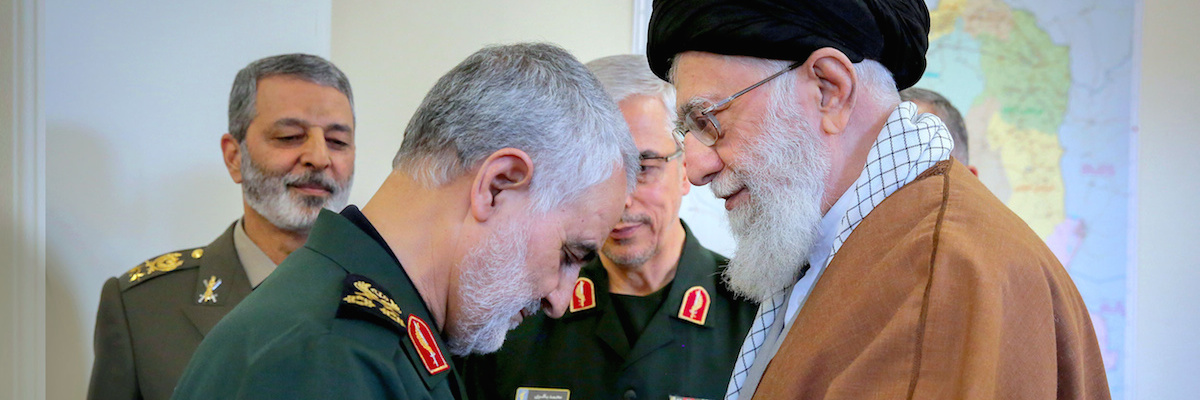
Iran Awards Highest Honor to Guards Elite Force Chief
◢ The commander of the Revolutionary Guards' elite Quds Force, Qassem Soleimani, a key figure in the battle against the Islamic State group, has received Iran's highest military award, the country's supreme leader announced Monday.
The commander of the Revolutionary Guards' elite Quds Force, Qassem Soleimani, a key figure in the battle against the Islamic State group, has received Iran's highest military award, the country's supreme leader announced Monday.
The major general, whose unit runs foreign operations, is regarded as the mastermind of Iran's military strategy in the region.
Ayatollah Ali Khamenei awarded him with the "Order of Zulfaqar", the leader's office tweeted.
Soleimani became the first to receive the award since the 1979 Islamic revolution, according to Tasnim news agency.
The general has been the public face of Iran's support for the Iraqi and Syrian governments in their battles with Islamic State group jihadists.
He reportedly landed in Baghdad only hours after IS captured Iraq's second city Mosul in 2014 and threatened to overrun the capital.
In Islamic tradition, Zulfaqar is the name of the double-pointed sword said to have been given by Prophet Mohammed to his son-in-law Ali.
Photo Credit: Khamenei.ir
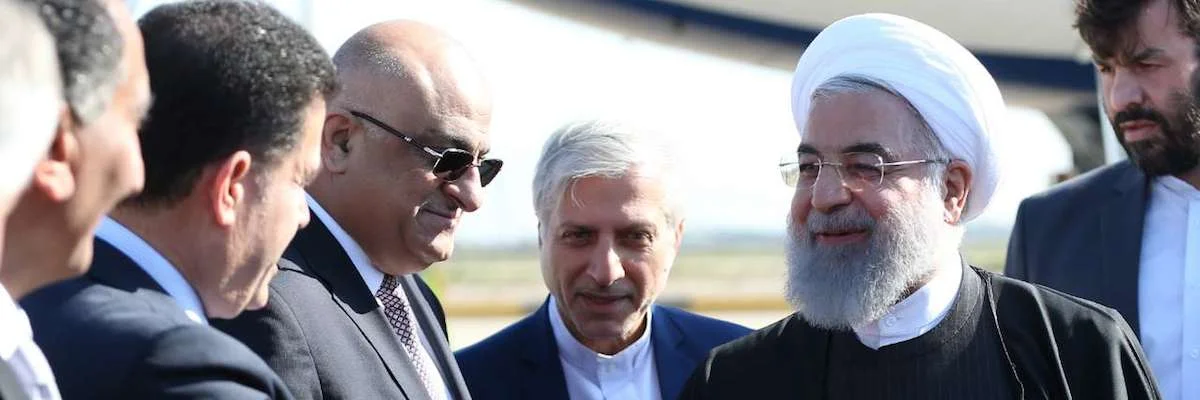
Iran's Rouhani Makes First Official Visit to Iraq
◢ Iran's President Hassan Rouhani arrived Monday in Iraq for his first official visit, as Baghdad comes under pressure from Washington to limit political and trade ties with its neighbor. Shiite-majority Iraq is walking a fine line to maintain good relations with its key partners Iran and the United States who themselves are arch-foes.
Iran's President Hassan Rouhani arrived Monday in Iraq for his first official visit, as Baghdad comes under pressure from Washington to limit political and trade ties with its neighbor.
Shiite-majority Iraq is walking a fine line to maintain good relations with its key partners Iran and the United States who themselves are arch-foes.
It has been under pressure from Washington not to get too close to its neighbor, particularly after the United States last year withdrew from the 2015 nuclear deal with Iran and hit Tehran with sanctions.
Baghdad was given limited waivers to continue buying electricity and natural gas from Iran, but Washington has urged Iraq to partner with US companies to become energy independent.
After Turkey, Iran is the top supplier of imported goods to Iraq, including cars, gas, home appliances and vegetables.
Rouhani, who is on his first trip to Iraq since becoming president in 2013, hailed the Islamic republic's "special" ties with its neighbor.
These relations could not be compared to Baghdad's ties "with an aggressor country like America", he said before flying Monday to Baghdad for the three-day visit.
"America is despised in the region. The bombs that the Americans dropped on Iraqis, Syrian people and other countries cannot be forgotten," he added.
Iran is always ready to help its neighbors, he said, in a nod to the role Tehran played to help Iraq battle the Islamic State group (IS).
Iran was the first country to respond to Iraqi calls for help after IS jihadists in June 2014 captured the main northern city of Mosul as they threatened to overrun the capital Baghdad and the oil-rich region of Kirkuk.
It dispatched "military advisors" and equipment along with the famous Revolutionary Guards elite Quds Force commander General Qassem Soleimani.
Rouhani on Monday said Iran has supported the Iraqi people "during difficult times" and would continue to back them "through times of peace and security.”
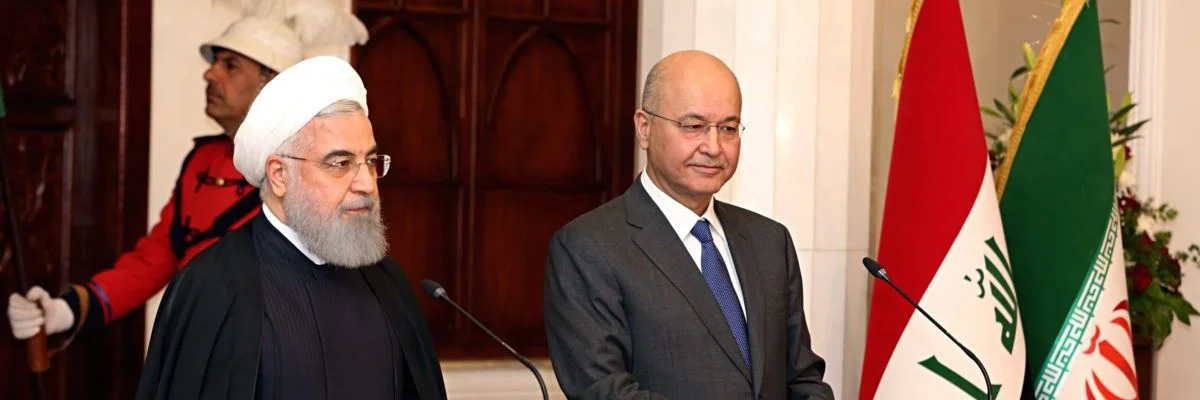
Iraq's President Barham Saleh, at a joint news conference with Rouhani in Baghdad, thanked Iran for its "support" and said he was "lucky" to have it as a neighbor, without making any reference to the US.
Rouhani, who is heading a large political and economic delegation, said relations between the two countries should be further "reinforced and developed.”
Shiite Bonds
Relations between the two countries were not always close—they fought a bloody war from 1980 to 1988.
Tehran's influence in Baghdad grew after the 2003 US-led invasion of Iraq toppled the government of Saddam Hussein.
Iran now has significant leverage over Iraq's Shiite political groups.
Rouhani is set to meet Iraqi Prime Minister Adel Abdel Mahdi and President Barham Saleh, as well as the country's chief Shiite cleric Grand Ayatollah Ali Sistani, who is also revered by many Iranians.
The meeting in the Shiite shrine city of Najaf will be the first between the top cleric and an Iranian president. In 2013 the grand ayatollah refused to receive Rouhani's controversial predecessor Mahmoud Ahmadinejad.
Analysts say talks between Sistani and Rouhani are aimed at bolstering the ranks of Shiite Muslims in the face of Iraq's warming ties with Iran's Sunni-ruled rival Saudi Arabia.
The meeting could "prevent Saudi Arabia and its allies from sowing discord" between Iran and Iraq, a Shiite cleric from the Iranian holy city of Qom was recently quoted as saying in Iran's Ebtekar newspaper.
Saudi Arabia is keen to develop relations with Baghdad to counter the influence of Iran in Iraq, which is seeking economic benefits to rebuild after the defeat of IS.
'Circumventing' US Sanctions
Iraqi political analyst Hisham al-Hashemi said Rouhani is seeking to bolster trade with Baghdad and discuss ways "to circumvent US sanctions".
"In addition, there are electricity, water and other files," he said.
Iran's Foreign Minister Mohammad Javad Zarif, who travelled to Iraq ahead of Rouhani, on Sunday thanked Baghdad for having "refused the unjust and illegal (US) sanctions imposed on the Iranian people".
Trade between Iran and Iraq now stands at around USD 12 billion a year—tilted toward Iran with gas and energy exports—and Rouhani has said he would like to see it rise to USD 20 billion.
Iraq, which faces a chronic power shortage that was a key driving factor behind mass protests last year, has been piping in up to 28 million cubic meters of Iranian gas a day for power generation.
It also directly imports up to 1,300 megawatts of Iranian electricity—a dependence that is also uncomfortable for Washington.
Photo Credit: IRNA
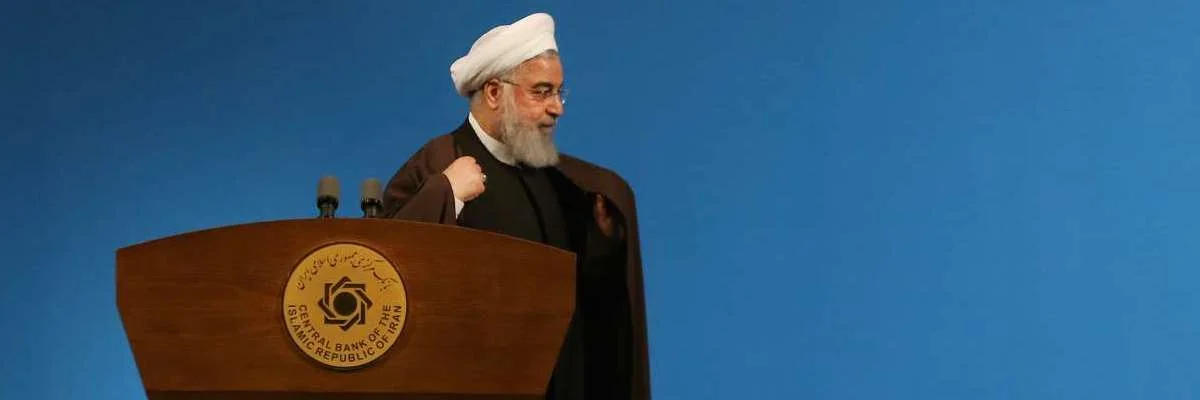
Iran Demands Pakistan Acts 'Decisively Against Terrorists'
◢ Iran's President Hassan Rouhani has demanded Pakistan act "decisively against anti-Iranian terrorists" in a phone call with the country's premier, Tehran said, a month after a bloody attack on security forces. Iran says a Pakistani suicide bomber was behind the February 13 attack that killed 27 Revolutionary Guards in its volatile southeastern province of Sistan-Baluchistan.
Iran's President Hassan Rouhani has demanded Pakistan act "decisively against anti-Iranian terrorists" in a phone call with the country's premier, Tehran said, a month after a bloody attack on security forces.
Iran says a Pakistani suicide bomber was behind the February 13 attack that killed 27 Revolutionary Guards in its volatile southeastern province of Sistan-Baluchistan.
A Sunni jihadist group, Jaish al-Adl (Army of Justice), which Tehran says operates mostly out of bases in neighboring Pakistan, claimed responsibility for the blast.
Iran has accused Pakistan's army and intelligence agency of sheltering the jihadists and summoned the country's ambassador in the wake of the attack.
Rouhani in the phone conversation Saturday evening with Pakistani Prime Minister Imran Khan called to maintain good ties and pointed the finger of blame at Tehran's traditional regional and international foes.
"We shouldn't allow decades of friendship and brotherhood between the two countries be affected by terrorist groups that we both know from where they are being armed and financed," Rouhani said, according to a government statement.
The Iranian president was alluding to the United States and Israel, as well as Saudi Arabia and the United Arab Emirates, which it accuses of aiding jihadist groups responsible for attacks from Pakistani soil.
February's bombing was the latest of numerous attacks on Iran's security forces and officials in Sistan-Baluchistan, where the minority Sunni Baluchis accuse the authorities of discrimination.
Photo Credit: IRNA
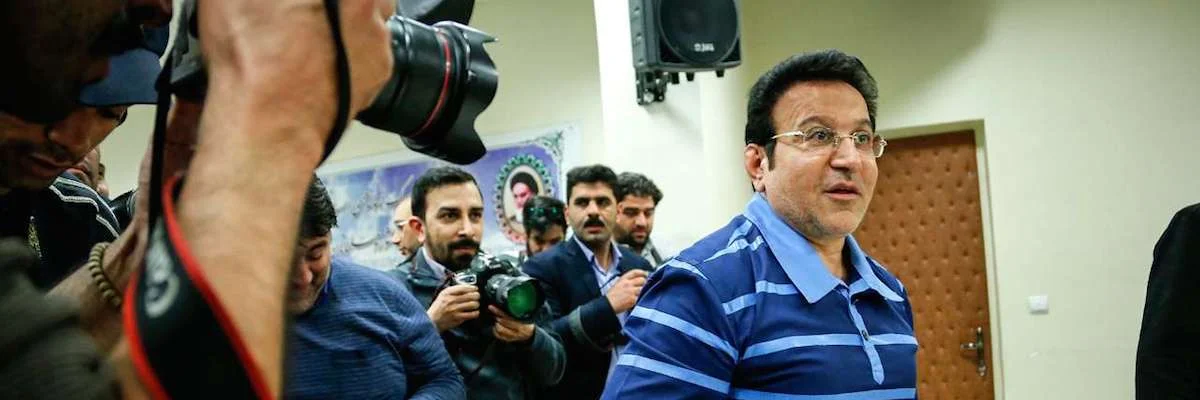
Iran Court Tries 13 in $7 Billion Petrochemical Fraud Case
◢ The trial has started in an Iranian court for 13 petrochemical industry executives charged with embezzling EUR 6.6 billion USD 7.4 billion) in one of the nation’s biggest corruption cases, the state-run Islamic Republic News Agency reported.
The trial has started in an Iranian court for 13 petrochemical industry executives charged with embezzling EUR 6.6 billion USD 7.4 billion) in one of the nation’s biggest corruption cases, the state-run Islamic Republic News Agency reported.
The defendants, most either chief executives or board members of Iranian petrochemical producers and exporters, are accused of “causing a great economic disturbance” by establishing shell companies overseas to circumvent sanctions imposed while Mahmoud Ahmadinejad was president, judge Assadollah Masoudi Magham said, according to IRNA.
Reading from a 700-page indictment, another judicial official added that billions of euros worth of sales from petrochemical exports were funneled to the companies as purchases, the Mehr news agency reported on Thursday.
The case, described by IRNA as “record-breaking” for its monetary value, is the latest in a series of trials and investigations started after the government of President Hassan Rouhani and the hardline judiciary vowed to root-out corruption in response to rising public anger over levels of cronyism and economic nepotism within industry and government.
The return in August of U.S. sanctions, the most punitive ever imposed on the Islamic Republic by Washington, has brought fresh urgency to the efforts as people are being forced to cope with steep increases in prices and a collapse in the rial, which have cut the value of their paychecks and spending power.
Photo Credit: IRNA
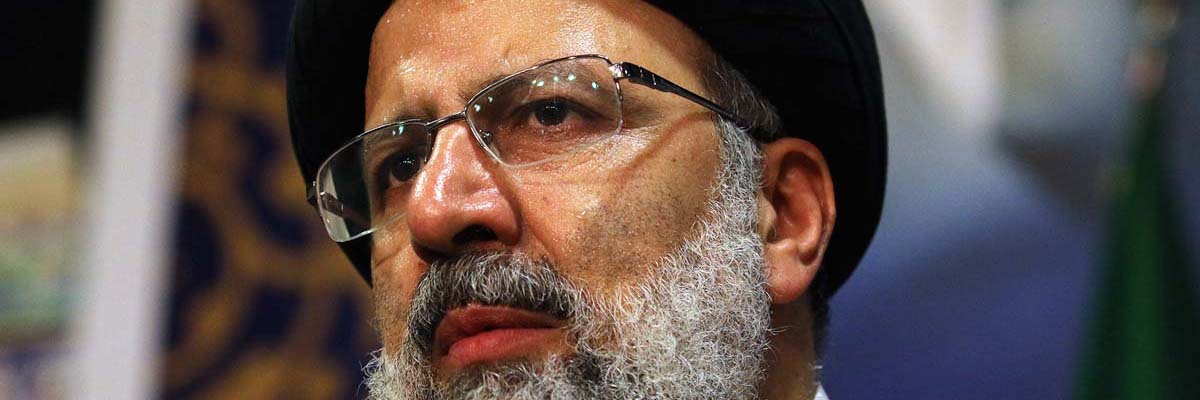
Ultra-Conservative Cleric Appointed Head of Iran's Judiciary
◢ Iran's Supreme Leader Ayatollah Ali Khamenei on Thursday appointed ultra-conservative cleric Ebrahim Raisi, a one-time presidential hopeful, as head of the judiciary, the leader's website said. Former judge Raisi, who currently heads the holy shrine of Imam Reza, was the leading rival to President Hassan Rouhani at Iran's 2017 election and has close ties to the supreme leader.
Iran's Supreme Leader Ayatollah Ali Khamenei on Thursday appointed ultra-conservative cleric Ebrahim Raisi, a one-time presidential hopeful, as head of the judiciary, the leader's website said.
Former judge Raisi, who currently heads the holy shrine of Imam Reza, was the leading rival to President Hassan Rouhani at Iran's 2017 election and has close ties to the supreme leader.
Khamenei said in a statement that he appointed Raisi to bring about a "transformation (in the judiciary) in line with (its) needs, advancements and challenges" on the 40th year of the 1979 Islamic Revolution.
“For carrying out this crucial act, I have chosen you who have a long track record in different levels of the judiciary and are in touch with its nuances," he said in the statement.
He called on Raisi to be "with the people, the revolution and against corruption" in his new role.
Raisi is a mainstay of the conservative establishment, having served as attorney general, supervisor of state broadcaster IRIB and prosecutor in the Special Court for Clerics.
He bears the title of Hojjat al-Islam, which is a rank under Ayatollah in the Shiite cleric hierarchy.
Raisi became deputy prosecutor at the Revolutionary Court of Tehran during the 1980-88 Iran-Iraq war.
Human rights organisations, opposition members and dissidents have accused the tribunal of overseeing the execution of political prisoners without due legal process during his tenure.
He was chosen by Khamenei in 2016 to head Iran's Imam Reza Shrine and lead its huge business conglomerate, Astan Qods Razavi, with interests in everything from IT and banking to construction and agriculture.
During his 2017 campaign, Raisi took a tough line on Rouhani's "weak efforts" in negotiating the 2015 nuclear deal with world powers that brought the Islamic republic sanctions relief in exchange for limiting its nuclear program.
US President Donald Trump last year withdrew Washington from the pact and reimposed sanctions on Tehran.
Photo Credit: IRNA
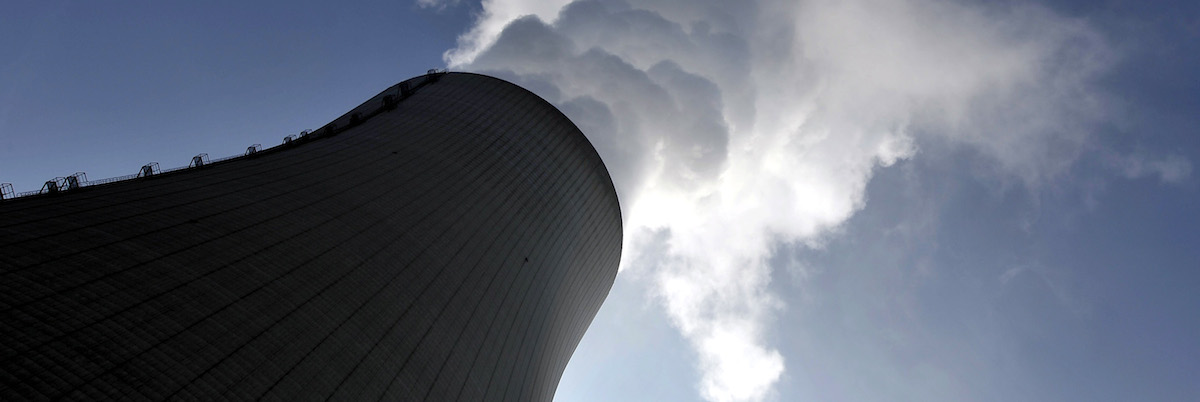
Before Saudis Go Nuclear, They May Have to Follow Iran's Lead
◢ International monitors reminded Saudi Arabia this week that it still has work to do before delving deeper into an ambitious nuclear program that could transform how the kingdom generates its energy. Focus on Saudi Arabia’s nuclear program has risen in the last month after the U.S. Congress opened an investigation into the potentially illegal transfer of sensitive technologies to the kingdom.
International monitors reminded Saudi Arabia this week that it still has work to do before delving deeper into an ambitious nuclear program that could transform how the kingdom generates its energy.
Focus on Saudi Arabia’s nuclear program has risen in the last month after the U.S. Congress opened an investigation into the potentially illegal transfer of sensitive technologies to the kingdom. This week the International Atomic Energy Agency, responsible for verifying that countries don’t divert material for weapons, weighed in on what its inspectors need before the kingdom can start generating nuclear power.
Riyadh’s nuclear program is developing “based on an old text” of safeguard rules, even as it expects to complete its first research reactor this year and plans to tap uranium reserves, according to IAEA Director General Yukiya Amano, who told journalists this week in Vienna that he’s “appealing to all countries to rescind” those old ways of doing business.
“We’re encouraging all countries to conclude and implement an additional protocol and that includes Saudi Arabia,” said Amano, who’s also in charge of enforcing the 2015 nuclear deal struck between Iran and world powers. The Japanese career diplomat has called the set of rules established by that accord, which U.S. President Donald Trump withdrew from in May, as “the most rigorous monitoring mechanism ever negotiated.”
Rising power consumption and desalination costs are pushing Saudi Arabia to look at nuclear energy. The world’s top crude exporter currently burns oil to generate most of its power and provide drinking water. Pivoting toward nuclear would reduce greenhouse gas emissions and free up more crude to sell on world markets.
But the IAEA comments could strike a precautionary note among vendors lining up to service the kingdom’s nuclear ambitions. Receiving the imprimatur of IAEA inspectors, who account for gram-level quantities of nuclear material worldwide, is a precondition for receiving technologies and fuel. Without reaching a new understanding with monitors, Saudi plans for 3.2 gigawatts of atomic power by the end next decade could flounder.
Saudi Arabia didn’t respond to emails and phone calls placed to its IAEA mission in the Austrian capital.
In order to get its nuclear program on track, Saudi Arabia may need to look at the allowances made by its regional rivals in Iran, according to Robert Kelley, a U.S. nuclear engineer and former IAEA director.
The Iran deal “is unprecedented in terms of previous monitoring regimes,” according to Kelley, who worked in the Department of Energy’s nuclear-weapons complex before overseeing inspections in countries including Libya, South Africa and Iraq.
Maintaining that level of IAEA access to Iran’s nuclear program is the reason that China, France, Germany, Russia and the U.K. continue to defy U.S. calls to abandon the 2015 deal and reimpose sanctions. Diplomats from those countries convened Wednesday in Vienna in their first meeting since the European Union established a trade channel to skirt U.S. threats.
For Saudi Arabia, which threatened a year ago to develop nuclear weapons if Iran did, aligning its atomic rule book with current best practices may be the best option for it to accelerate its nuclear program.
“It has a ridiculously weak agreement right now,” Kelley said. “The additional protocol is the gold standard and has some teeth to it. Getting that in place should be straightforward.”
Photo Credit: Bloomberg
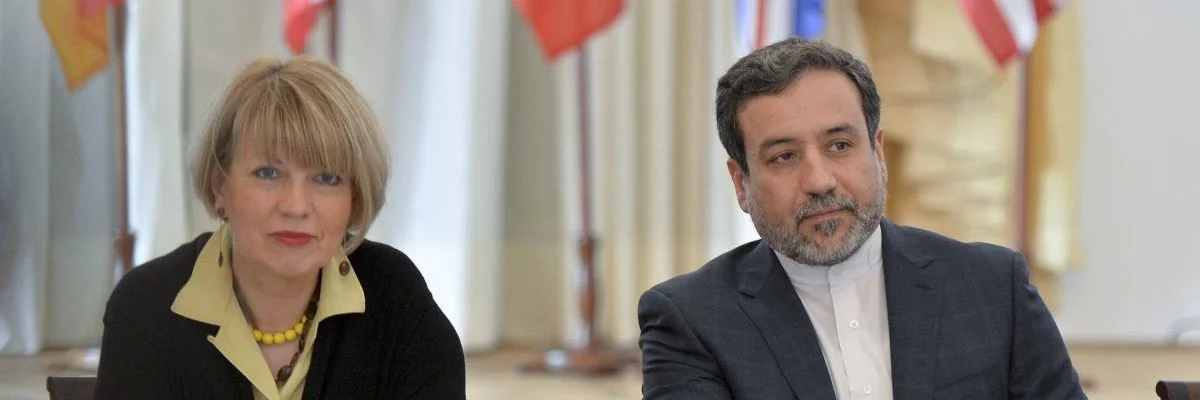
Iran to Set Up its Part of Nuclear Deal Mechanism 'This Month'
◢ Iran hopes to have its part of a new payments vehicle—devised to bypass US sanctions—ready within a fortnight, its Deputy Foreign Minister Abbas Araghchi said on Wednesday. "We hope it will be before the end of the Iranian calendar year," Araghchi told reporters in Vienna, referring to March 20 when the Iranian year ends.
Iran hopes to have its part of a new payments vehicle —devised to bypass US sanctions—ready within a fortnight, Deputy Foreign Minister Abbas Araghchi said on Wednesday.
"We hope it will be before the end of the Iranian calendar year," Araghchi told reporters in Vienna, referring to March 20.
He said that Iran now had a "clearer picture" of how the new vehicle, known as INSTEX, would work and that its managing director would visit Tehran for discussions "very soon.”
But he added that only when the mechanism was fully operational would Iran be able to assess whether it "can work properly and can produce results, (and) can do payments between Iran and European countries".
Araghchi was in the Austrian capital for a "joint commission" with representatives from China, Russia, Britain, Germany and France—all signatories of the international deal on Iran's nuclear programme.
INSTEX is seen as key to European Union efforts to preserve the deal struck in 2015 between world powers and Iran over its nuclear program, the Joint Comprehensive Plan of Action (JCPOA).
The US was also a signatory but last May President Donald Trump withdrew from the deal and in November imposed sweeping new sanctions on Iran.
Remaining Members 'United'
Araghchi said there was "very strong support" for the deal from all participants at the meeting.
He emphasized that Iran expected INSTEX to work "for all goods and commodities, not only humanitarian goods", but that it could start with humanitarian goods "in order to set the patterns for doing business with Iran.”
"Once the patterns are set, then other goods, including sanctioned goods—and oil of course—would be added to this mechanism," he added.
"It is late but still a move in the right direction," Araghchi said.
INSTEX was launched at the end of January by Britain, France and Germany, who sit on a supervisory board chaired by a UK national. It is registered in Paris.
Russia's ambassador to Vienna's UN organizations, Mikhail Ulyanov, who was also at the meeting, told AFP the remaining signatories to the deal were "united in the need to save the JCPOA.”
"There are some problems, particularly in the economic field but we are aimed at overcoming them as soon as possible," Ulyanov said.
He said the speed with which INSTEX became fully operational was up to Germany, France, Britain and Iran.
But Ulyanov added: "I believe it may take a rather long time, at least a few months; most likely even more."
In February the UN's International Atomic Energy Agency watchdog said Iran was adhering to the terms of the JCPOA, under which Tehran drastically scaled back its nuclear program in return for sanctions relief.
Washington has urged European signatories to the JCPOA to follow Trump's example and withdraw, but this has been rejected by the Europeans.
Photo Credit: IRNA
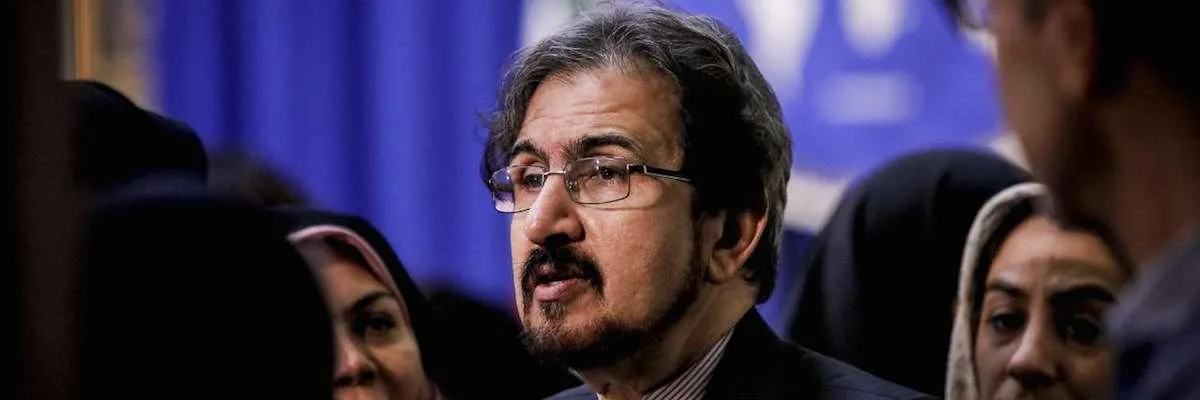
Iran, France to Swap Ambassadors After Strained Ties
◢ Iran and France are set to exchange ambassadors, officials said on Wednesday, after months of tensions including over an alleged Iranian plot to bomb an opposition rally near Paris. Bahram Ghasemi, a former envoy to Spain and Italy and current spokesman of the foreign ministry, has been appointed as Iran's new ambassador to France, an official source in Tehran told AFP.
Iran and France are set to exchange ambassadors, officials said on Wednesday, after months of tensions including over an alleged Iranian plot to bomb an opposition rally near Paris.
Bahram Ghasemi, a former envoy to Spain and Italy and current spokesman of the foreign ministry, has been appointed as Iran's new ambassador to France, an official source in Tehran told AFP.
In Paris, the Official Gazette on Wednesday said that Philippe Thiebaud, a former envoy to Pakistan who once represented France at the UN atomic watchdog, had been appointed as ambassador to the Islamic republic of Iran.
Ghasemi and Thiebaud will fill posts that had been vacant for more than six months after a series of diplomatic fallouts between France and Iran broke out last year.
The previous French ambassador left Iran at the end of his mandate in August while Tehran's envoy left Paris last summer before finishing his term. No official reason was given for his abrupt departure.
In June, France accused a branch of Iran's intelligence ministry of attempting to bomb a meeting of the People's Mujahedin, an Iranian opposition group, near Paris.
Tehran vehemently denied the accusations and in return slammed France for hosting the group which it calls a "terrorist cult of hypocrites".
Relations between France and Iran have also been strained over demands by Paris that Iran limits its ballistic missiles program—which Tehran says is purely defensive.
Iran reined in most of its nuclear program under a landmark 2015 deal with major powers—Britain, China, France, Germany, Russia and the United States—that lifted sanctions on the Iran.
In May the United States withdrew from the deal and re-imposed sanctions on Tehran.
France and the other European partners to the deal, have been trying to salvage the nuclear accord and set up a payment mechanism to maintain trade and business ties with Iran that would circumvent the US sanctions.
But Tehran has accused them of dragging their feet, it has also criticized France for selling advanced warplanes and other weapons to its regional rivals Saudi Arabia and the United Arab Emirates.
News that Iran and France will exchange ambassadors came a day after the ultraconservative Iranian newspaper Kayhan called for the expulsion of French diplomats from the country.
Kayhan claimed that Paris had expelled an Iranian diplomat last autumn. Neither the Iranian nor the French foreign ministries have denied or confirmed the expulsion.
Photo Credit: IRNA
Iran Thrown a Nuclear-Medicine Lifeline Ahead of Vienna Meeting
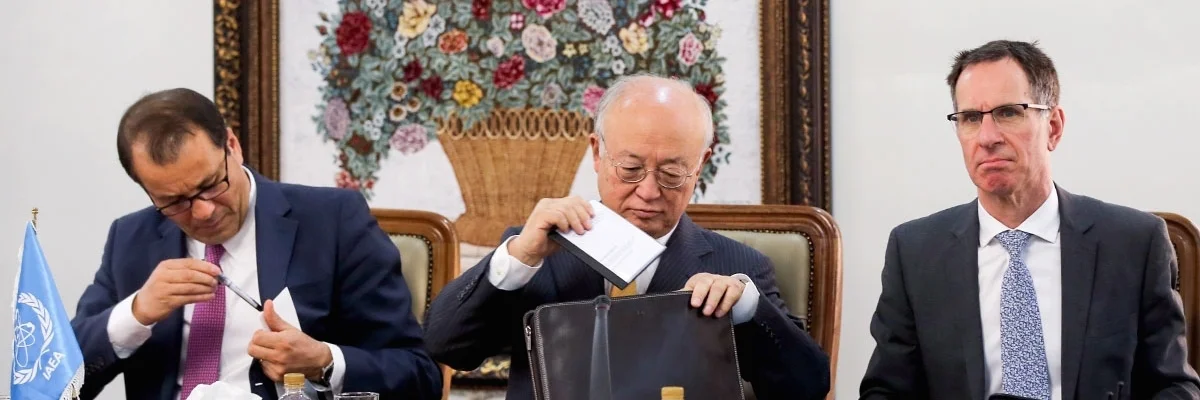
◢ The world’s atomic watchdog said it’s ready to meet shortages of nuclear medicines in Iran created by the re-imposition of U.S. sanctions, as top diplomats gather to salvage a 2015 deal with Tehran. The Islamic Republic has struggled to obtain some humanitarian goods as suppliers worry over contravening U.S. penalties, prompting Switzerland and the European Union to open new trade channels.
The world’s atomic watchdog said it’s ready to meet shortages of nuclear medicines in Iran created by the re-imposition of U.S. sanctions, as top diplomats gather to salvage a 2015 deal with Tehran.
The International Atomic Energy Agency is “willing to help” meet Iran’s nuclear therapy and medicine needs, Director General Yukiya Amano told reporters Monday in Vienna. The Islamic Republic has struggled to obtain some humanitarian goods as suppliers worry over contravening U.S. penalties, prompting Switzerland and the European Union to open new trade channels.
IAEA inspectors have repeatedly confirmed that Iran’s sticking to the landmark deal signed three years ago, which capped nuclear activities for sanctions relief. President Donald Trump’s decision to abandon the accord in May forced the remaining powers -- China, France, Germany, Russia and the U.K. -- to take new measures to ensure its survival. Their so-called Joint Commission convenes Wednesday in the Austrian capital.
In addition to its monitoring activities, the IAEA helps countries around the world to develop medicine used for the diagnosis and treatment of cancer.
Leading up to this week’s meeting, American officials had been ratcheting up pressure by threatening new sanctions and advocating for more aggressive inspections. Countries providing technical cooperation to Iran under IAEA auspices were warned they could run afoul of U.S. sanctions. Washington’s efforts, however, have struggled to gain traction among international officials.
“Iran is implementing its nuclear-related commitments,” Amano said. “The agency continues to verify the non-diversion of nuclear material.”
Photo Credit: IRNA
Dutch Recall Envoy From Iran in Murder Plot Row: Minister
◢ The Netherlands has recalled its ambassador from Tehran in a dispute over an alleged Iranian plot to
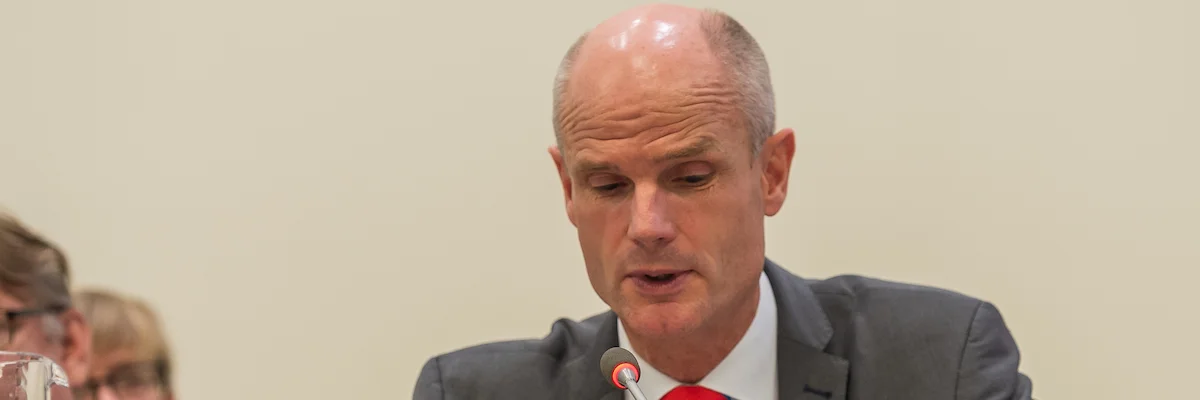
assassinate regime opponents on Dutch soil, the Dutch foreign minister said Monday. Foreign Minister Stef Blok said the envoy was called back "for consultations" after Iran expelled two Dutch diplomats in February in a row over the murders of two Iranian dissidents in 2015 and 2017.
The Netherlands said Monday it had recalled its ambassador from Tehran after Iran expelled two Dutch diplomats in an dispute over an alleged plot to assassinate regime opponents.
Dutch authorities accused Iran in January of involvement in the murder of two dissidents on Dutch soil in 2015 and 2017, and the EU slapped sanctions on Tehran over the killings.
Foreign Minister Stef Blok said in a letter to parliament that the government "has decided to recall the Netherlands' ambassador to Tehran for consultations" over the row.
Iran's decision to expel the Dutch officials—which was not previously announced in public—was "not acceptable and is negative for the development of the bilateral relationship," Blok said.
He said Iran's move was itself a tit-for-tat response to the Netherlands' expulsion of two Iranian embassy workers in June 2018 "due to strong indications from (Dutch intelligence) that Iran has been involved in the liquidations on Dutch territory of two Dutch people of Iranian origin."
Iran had informed Dutch authorities of the decision to expel the two diplomats on February 20 and they were deported back to the Netherlands on Sunday, Blok said.
The Dutch had also summoned the Iranian ambassador over the issue, Blok said.
Dutch police have previously named the two murder victims as Ali Motamed, 56, who was killed in the central city of Almere in 2015, and Ahmad Molla Nissi, 52, murdered in The Hague in 2017.
Photo Credit: Wikicommons
Iran and Armenia Propose Gas Transit to Georgia
◢ A state visit by Armenian Prime Minister Nikol Pashinyan to Iran has resulted in an agreement between the two countries to cooperate on the potential transiting of Iranian gas through Armenia to Georgia. The possible export of Iranian gas to Georgia was first raised in 2016 with the National Iranian Gas Company (NIGC) making successive claims of a deal with both the Georgian state and an unnamed private sector company.
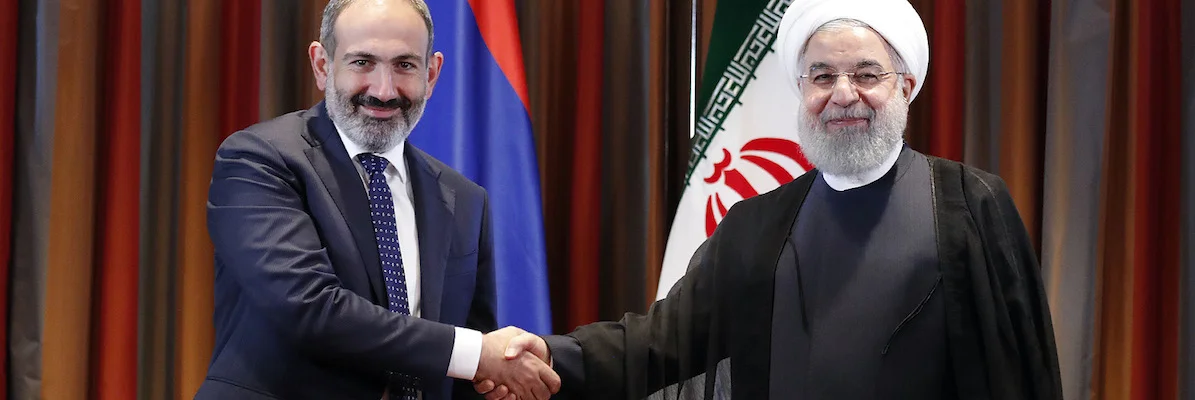
A state visit by Armenian Prime Minister Nikol Pashinyan to Iran has resulted in an agreement between the two countries to cooperate on the potential transiting of Iranian gas through Armenia to Georgia.
If implemented, the agreement promises to be controversial, not least because it would involve Armenia challenging Russian control of its gas distribution sector, and potentially pitching both Armenia and Georgia into conflict with the United States, which last November re-imposed its stringent sanctions against Iran.
The suggestion for the transit deal appears to have come from Iranian President Hassan Rouhani, who brought up the issue in a Tehran press conference following his February 27 meeting with Pashinyan.
"As to cooperation in the field of gas supply, we expressed the Iranian side’s readiness to step up supplies,” Rouhani said. “We are likewise prepared to launch tripartite cooperation to export gas to Georgia."
Pashinyan said he was amenable. "Armenia is ready to cooperate with Iran and become a transit country for Iranian gas,” he said following Rouhani’s remarks. “The establishment of an energy corridor is also of great importance both in terms of bilateral and regional dimensions and in broader terms."
Neither commented on whether Georgia has yet been involved in discussions on the possible trade and an Armenian foreign ministry spokesperson was unable to confirm to Eurasianet whether Georgia had been consulted.
The possible export of Iranian gas to Georgia was first raised in 2016 with the National Iranian Gas Company (NIGC) making successive claims of a deal with both the Georgian state and an unnamed private sector company.
However, these reports were subsequently denied by Tbilisi, which has yet to confirm any form of gas agreement with Iran.
If implemented, the plan would introduce some competition into the Georgian gas market. Georgia is currently supplied entirely from Azerbaijan.
Transit of gas from Iran through Armenia to Georgia is technically possible, as pipelines with sufficient spare capacity linking the three countries already exist. But there are a number of technical and political hurdles that would have to be overcome to make it work.
The line linking Georgia and Armenia is part of a Soviet-era pipeline that currently delivers Russian gas to Armenia. Exporting Iranian gas to Georgia through this line would require its flow to be reversed, and for Armenia to halt its imports of Russian gas. That in turn would require Armenia to replace that gas with increased imports from its only other source of supply, Iran.
That, then, could see the volume of gas needed to supply both Armenia and Georgia exceed the current capacity of the Iran-Armenia pipeline, requiring the line to be expanded, a move which would be both expensive and time consuming.
In theory, gas trade between Iran and Georgia could also be managed by a swap deal, under which Russia would supply a given volume of gas to Georgia, and Iran would supply the same volume to Armenia in exchange.
This would not require the flow through the Georgia-Armenia pipeline to be reversed, and would see Armenia only reducing, and not ending, its gas imports from Russia.
Both options are technically possible but would require support from both Moscow and Washington, either of which could block gas trade between Iran and Georgia or at the very least make it difficult to realize.
Yerevan is already at loggerheads with Gazprom, which owns Armenia's gas distribution network and controls around 80 percent of the country's gas market, after the company hiked gas prices for Armenia at the start of the year.
Gazprom would be unlikely to welcome further competition in the Armenian market, although the possibility of increased Iranian gas exports to Armenia could persuade the Russians back to the negotiating table.
Ultimately, though, the final decision on whether an Iran-Georgia gas trade could go ahead appears to lie with Washington and the terms of its re-imposed sanctions regime against Iran.
The situation regarding Iran's gas exports is "not so straightforward,” Erika Olson, economic counsellor at the U.S. embassy in Ankara, said February 16 at a regional energy conference in Istanbul.
While Iran's gas exports are currently exempt from sanctions, financial transactions to pay for the gas are sanctioned, Olson said. Payments for gas are to be deposited into a local bank account where it can be used only in payment for the exports of sanctions-exempt goods back to Iran.
As such, Armenia's gas imports from Iran under the existing barter agreement are exempt from U.S. sanctions, and swap deals for Georgian gas could also be ruled exempt.
However, Olson also cautioned that the situation for any new gas deals involving Iran could face uncertain prospects depending on a number of “variables.”
Photo Credit: Press Office of the Government of Armenia
Iran to Merge Five Financial Lenders Linked With Military
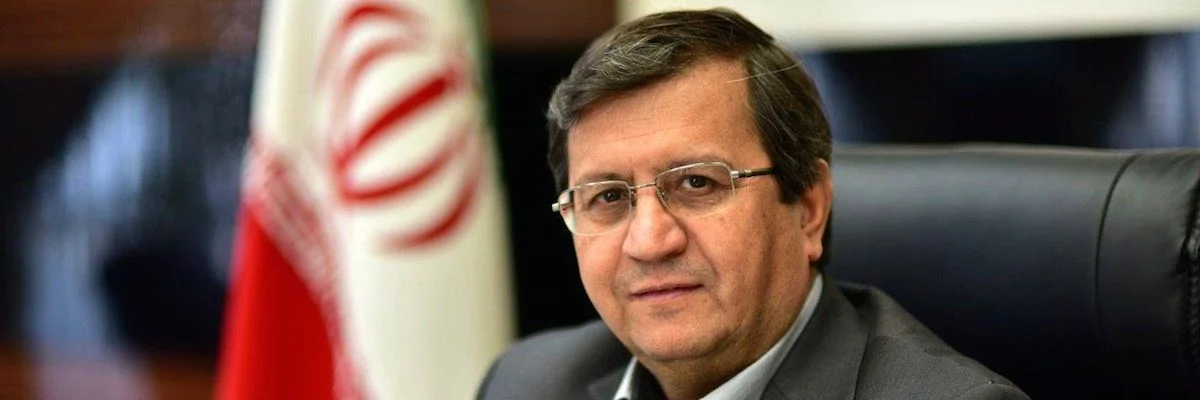
◢ Iran will merge five lenders linked with military institutions into state-run Bank Sepah amid a wider push by President Hassan Rouhani for the armed forces to divest from businesses. The entities being consolidated include Ansar Bank, Ghavamin Bank, Hekmat Iranian Bank, Mehr Eqtesad and the Kowsar financial credit institution, the Central Bank of Iran said in a report on its website Saturday.
Iran is combining six local banks as President Hassan Rouhani looks to curb the military’s role in the economy and bolster the country’s financial industry.
State-run Bank Sepah will take over five lenders linked with the security forces—Ansar Bank, Ghavamin Bank, Hekmat Iranian Bank, Mehr Eqtesad and the Kowsar financial credit institution. This is “an important step with a view to maintaining stability and the health of the banking system,” Iran’s central bank said on its website Saturday.
With the economy under strain after the re-imposition of U.S. sanctions, the merger is a step forward for Rouhani in his efforts to reduce the security forces’ footprint. The Revolutionary Guard Corps, a powerful military organization, controls local businesses in industries ranging from energy and telecommunications to infrastructure.
“By consolidating these banks, it becomes easier for the central bank to enforce regulations on investment activities and financial transparency,” said Esfandyar Batmanghelidj, founder of Bourse & Bazaar, a news website that tracks Iran’s economy. It’s “a positive development that reflects the serious debate taking place in Iran about the perils of mixing money and politics.”
The central bank has also been calling for a number of lenders to merge with healthier ones to clean up the industry and help tackle a high ratio of bad loans.
Iran is making less headway on Rouhani’s efforts to implement legislation to counter terrorism funding and money laundering.
The measures are urgently needed to keep Iran off the Paris-based Financial Action Task Force’s blacklist. The European Union said it expected Iran to follow through on its plans when the bloc launched the INSTEX special investment vehicle. INSTEX is a new payments arrangement that the U.K., France and Germany opened on Jan. 31 to help continue trade with Iran without running afoul of U.S. sanctions.
Hardliners in Iran have been mounting a media campaign against the FATF measures, likening them to a capitulation to the West similar to the 2015 nuclear agreement.
Nuclear Deal
Rouhani championed Iran’s negotiations with world powers that culminated in the deal, which lifted some sanctions on the Islamic Republic in return for restrictions on its enrichment program. Domestic critics warned at the time that no good could come from engagement with the US, a view they say was vindicated by President Donald Trump’s decision to withdraw from the accord and reimpose sanctions last year.
On Saturday the Discernment and Expediency Council—a top consultative body that resolves political disputes and is appointed by Supreme Leader Ayatollah Ali Khamenei—said it had failed, for a fourth time, to reach an agreement over whether to approve the FATF legislation. Rouhani is himself a member of the council but wasn’t present at the meeting.
The council said there’s no plan to discuss the issue again until after the end of the Persian new year break in early April, keeping the law in limbo for at least another month, according to the state-run Islamic Republic News Agency.
‘10 or 20 People’
Rouhani has rebuked the council and other unelected legal bodies for holding back policy by monopolizing the decision-making process. According to the president, Khamenei has said repeatedly that he doesn’t oppose the legislation.
“The country can’t be in the hands of 10 or 20 people and then claim that every decision they make is ours,” Rouhani said in a speech last week. “The decision maker in this country is either the government, parliament or the supreme leader.”
Photo Credit: IRNA