
Iran, India Move Closer on Trade as EU Stalls
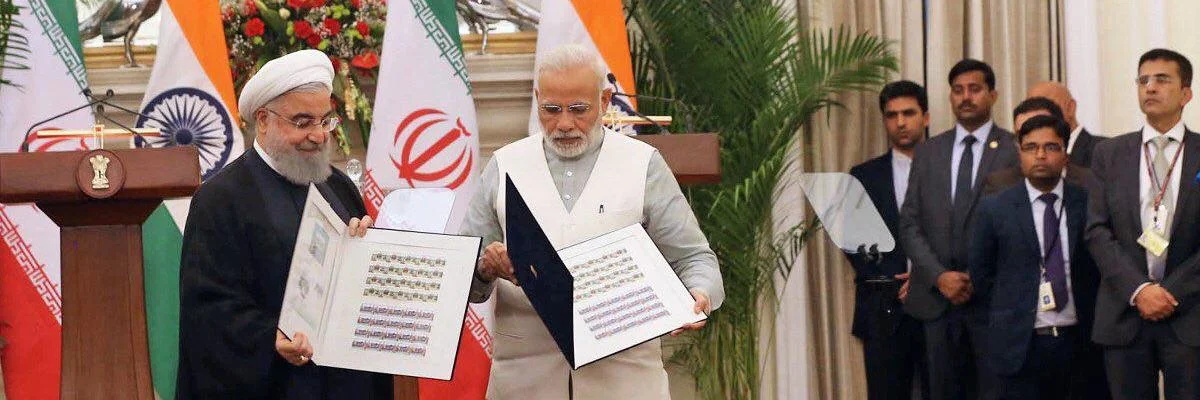
◢ Iran will boost trade with India as the European Union struggles to find a way to circumvent a fresh US embargo on Tehran, Iranian Foreign Minister Javad Zarif said Tuesday. Brussels is working on a payment mechanism to keep financial transactions flowing with Iran, after the US ditched the 2015 nuclear deal with Tehran earlier this year and reintroduced a raft of sanctions on the country.
Iran will boost trade with India as the European Union struggles to find a way to circumvent a fresh US embargo on Tehran, Iranian Foreign Minister Javad Zarif said Tuesday.
Brussels is working on a payment mechanism to keep financial transactions flowing with Iran, after the US ditched the 2015 nuclear deal with Tehran earlier this year and reintroduced a raft of sanctions on the country.
But Zarif told reporters in New Delhi that the EU's delay in implementing the system meant Iran would look elsewhere.
"Europeans have made efforts but couldn't... progress up to our expectations. We will expand our cooperation via various channels such as India," Zarif said after meeting India's transport minister, as quoted by Iran's semi-official news agency ISNA.
The EU hopes its "special purpose vehicle" (SPV) announced in September will keep the nuclear deal alive and persuade Tehran to stay on board by giving companies a way of trading with Iran without violating Washington's sanctions.
But Brussels is struggling to find a host for the SPV and many EU companies are fearful of repercussions from US President Donald Trump's administration.
India, which imports around 80 percent of its oil needs, recently signed a deal with Iran to buy crude in rupees rather than US dollars, helping it get around the sanctions.
Zarif added that Iran was "very happy" that the Indian government was allowing the Iranian Bank Pasargad to open a branch in India's financial capital of Mumbai.
India also recently took over the running of part of Iran's Chabahar Port, in the Gulf of Oman, as the countries build closer ties.
“We hope, despite US sanctions, Iran and India will have more cooperation in line with the interests of the people and the two countries," said Zarif.
Photo Credit: IRNA
Iran MPs to Investigate Protester Torture Claims
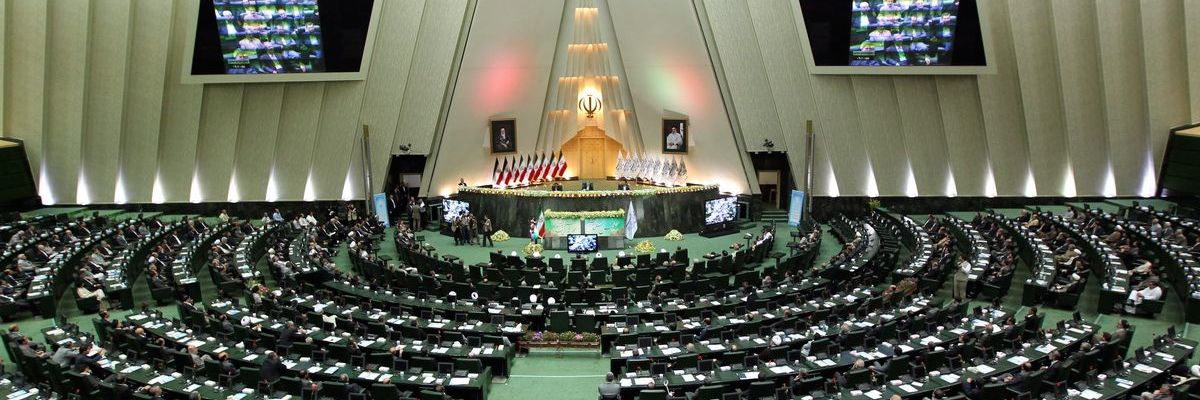
◢ Iran's parliament will investigate claims by a labor protest leader that he was tortured in prison following strikes at a sugar factory, the semi-official ISNA news agency reported on Sunday. Alireza Rahimi, a member of parliament's presiding board, said his request for an investigation had been accepted by speaker Ali Larijani, according to ISNA.
Iran's parliament will investigate claims by a labor protest leader that he was tortured in prison following strikes at a sugar factory, the semi-official ISNA news agency reported on Sunday.
Alireza Rahimi, a member of parliament's presiding board, said his request for an investigation had been accepted by speaker Ali Larijani, according to ISNA.
It followed claims by Esmail Bakhshi, written on his Instagram account and reported by the reformist Etemad newspaper, that he was tortured during 25 days in detention in southwestern Khuzestan province late last year.
Bakhshi was one of the organizers of weeks-long protests at the Haft Tapeh sugar factory in Shush over unpaid wages and alleged criminal activity by new private owners.
Ali Motahari, an outspoken member of parliament, wrote a column in Etemad on Sunday titled "Source of shame", demanding answers from the intelligence ministry.
The governor of Khuzestan, Gholamreza Shariati, denied Bakhshi's claims.
"I checked with the relevant bodies and the claim of torture was strongly denied," he told the Jamaran news site.
Rahimi said Intelligence Minister Mahmoud Alavi will attend the commission hearings in parliament, according to ISNA.
The strike at Haft Tapeh, which has around 4,000 workers, largely ended in December after the workers received their wages.
Iran has been hit by strikes over working conditions in several key sectors this year, including education, mines, transport and the steel industry, mainly outside Tehran.
In November the head of Iran's judiciary warned restive workers against creating "disorder.”
"Workers should not allow their demands to become an excuse and an instrument for the enemy," Ayatollah Sadegh Larijani said, quoted by the judiciary's news agency Mizan Online.
Photo Credit: IRNA
Iran Approves Anti-Money Laundering Bill
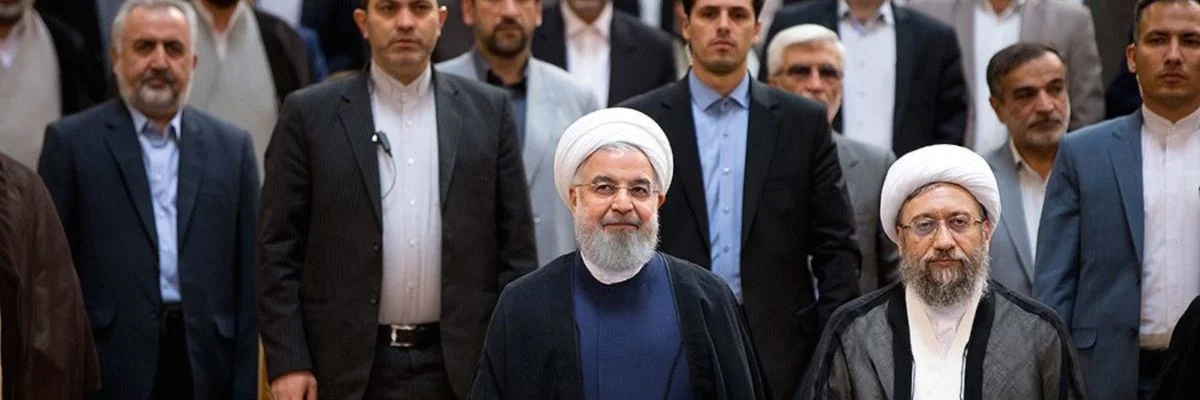
◢ An Iranian arbitration body gave its approval on Saturday to an anti-money laundering bill seen as crucial to maintaining international trade and banking ties, the official IRNA news agency reported. "The bill on amending the law to counter money laundering was approved with certain changes and will be sent to the parliament speaker to be communicated to the government," Expediency Council member Gholamreza Mesbahi-Moghadam told IRNA.
An Iranian arbitration body gave its approval on Saturday to an anti-money laundering bill seen as crucial to maintaining international trade and banking ties, the official IRNA news agency reported.
"The bill on amending the law to counter money laundering was approved with certain changes and will be sent to the parliament speaker to be communicated to the government," Expediency Council member Gholamreza Mesbahi-Moghadam told IRNA.
The Expediency Council settles disputes between parliament, which approved the bill last year, and the conservative-dominated Guardian Council, which vets all legislation and had rejected it.
Conservatives have argued that new legislation on money laundering and terrorist financing will provide Western powers with leverage over Iran's economy and how it funds regional allies such as Lebanon's Hezbollah.
But the government of President Hassan Rouhani says the laws are needed to meet demands set by by the international Financial Action Task Force (FATF), which monitors countries' efforts to tackle financial crime.
Iran is alone with North Korea on the FATF's blacklist—although the Paris-based organization has suspended counter-measures since June 2017 while Iran works on reforms.
The FATF will meet again in February to discuss Iran's progress.
The government is hoping to salvage banking and trade ties after the United States walked out of a landmark 2015 nuclear deal between major powers and Iran and reimposed crippling unilateral sanctions.
The other parties to the deal—Britain, France, Germany, China and Russia—have sought to salvage the agreement and maintain trade with Iran, but have called on Tehran to meet FATF requirements.
The anti-money laundering bill is one of four pieces of legislation put forward by the government to that end.
A previous bill on the mechanics of monitoring and preventing terrorist financing was signed into law in August.
Two others—allowing Iran to join UN conventions against terrorist-financing and organized crime—have been approved by parliament but are still being delayed by higher authorities, including the Guardian Council.
The Expediency Council currently has 38 members, all appointed by supreme leader Ayatollah Ali Khamenei.
Photo Credit: Fars

Boeing Stuck in Iran Creates Headaches for Norwegian Airline
◢ Norwegian Air Shuttle said Friday one of its Boeing 737s has been stuck in Iran for three weeks after an unscheduled landing due to engine problems, as US restrictions reportedly create headaches for the airline and possibly passengers. The aircraft was en route from Dubai to Oslo with 192 passengers and crew members on board when it carried out a "safety landing" in Shiraz in southwestern Iran because of engine trouble.
Norwegian Air Shuttle said Friday one of its Boeing 737s has been stuck in Iran for three weeks after an unscheduled landing due to engine problems, as US restrictions reportedly create headaches for the airline and possibly passengers.
The aircraft was en route from Dubai to Oslo with 192 passengers and crew members on board when it carried out a "safety landing" in Shiraz in southwestern Iran because of engine trouble on December 14, a Norwegian Air Shuttle spokesman, Andreas Hjornholm, told AFP.
While passengers were able to fly on to Oslo the following day on another aircraft, the Boeing 737 Max has been stuck on Iranian soil where the airline's mechanics are trying to repair it, Hjornholm said.
According to specialized sites such as www.airlive.net, the repair work has encountered problems because international sanctions bar the airline from sending spare parts to Iran.
With the US withdrawal from the Iran nuclear deal, the Trump administration decided to reimpose sanctions on Tehran.
Norwegian Air Shuttle refused to comment on those reports.
"I can only say that we are working with several options to get the plane back on the wings, and right now we are waiting for our technicians to be able to service the plane and to get it working," Hjornholm said.
The incident has fueled jokes on social media.
"Iran has become a Bermuda Triangle that feeds on planes," one Iranian Twitter user wrote.
It could also pose problems for the plane's passengers and crew members if they want to travel to the US in future.
Since 2015, anyone who has travelled to seven countries considered at risk (Iran, Iraq, Libya, Somalia, Sudan, Syria and Yemen) since March 2011 is excluded from the US visa waiver programme applied to most Europeans.
According to Hjornholm, the passengers and crew on the Dubai-Oslo flight officially entered Iran and stayed overnight at a hotel on December 14-15.
The US embassy in Oslo was not available for comment.
Last year, former NATO secretary general Javier Solana was refused entry to the US because he had visited Iran for the inauguration ceremony of President Hassan Rouhani in 2013.
Photo Credit: Peder Mathisen
US Warns Iran Against Space Launch
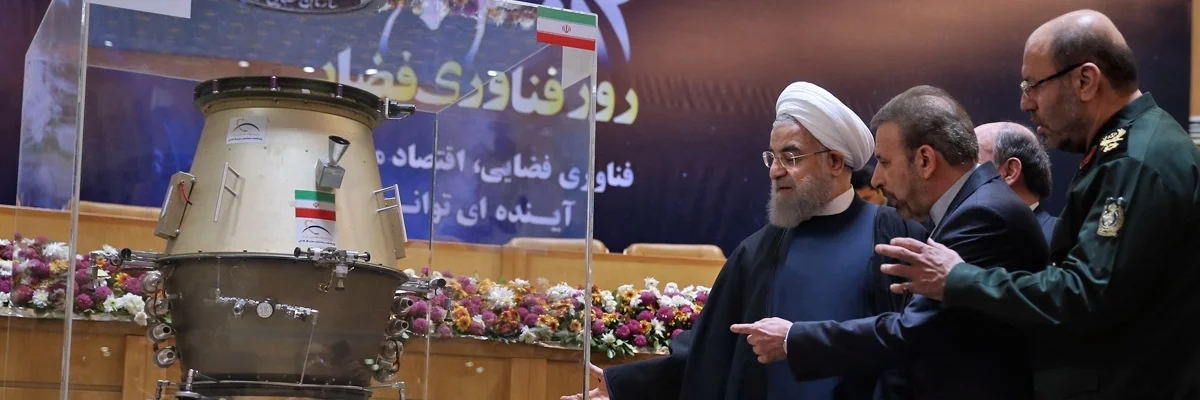
◢ The United States on Thursday warned Iran of consequences if it goes ahead with plans to send off three space launch vehicles, charging despite Tehran's denials that the move would violate a UN resolution. Secretary of State Mike Pompeo said that Iran's satellite-delivery rockets used technology "virtually identical" to nuclear-capable ballistic missiles, which could eventually include long-range missiles capable of reaching the United States.
The United States on Thursday warned Iran of consequences if it goes ahead with plans to send off three space launch vehicles, charging despite Tehran's denials that the move would violate a UN resolution.
Secretary of State Mike Pompeo said that Iran's satellite-delivery rockets used technology "virtually identical" to nuclear-capable ballistic missiles, which could eventually include long-range missiles capable of reaching the United States.
"The United States will not stand by and watch the Iranian regime's destructive policies place international stability and security at risk," Pompeo said in a statement.
"We advise the regime to reconsider these provocative launches and cease all activities related to ballistic missiles in order to avoid deeper economic and diplomatic isolation," he said.
Pompeo said that an Iranian launch would defy UN Security Council Resolution 2231 of 2015, which endorsed an international accord on ending the clerical regime's nuclear program and called on Tehran "not to undertake any activity related to ballistic missiles designed to be capable of delivering nuclear weapons."
US President Donald Trump last year walked out of the Iran deal, which was negotiated by his predecessor Barack Obama, instead reimposing sweeping sanctions aimed at crippling the country's economy.
Iranian Foreign Minister Mohammad Javad Zarif denied Pompeo's charges, saying that neither space launches nor missile tests—which Iran says are vital for defense and not nuclear in nature—violated Resolution 2231.
"The US is in material breach of same, & as such it is in no position to lecture anyone on it," he tweeted, referring to the US rejection of the UN-endorsed denuclearization pact.
Iran's deputy defense minister, Brigadier General Ghasem Taghizadeh, said in November that Tehran would launch three satellites into space "in the coming months."
"These satellites have been built with native know-how and will be positioned in different altitudes," he said, as quoted by the semi-official ISNA news agency.
Iran has seen economic potential in developing a satellite program, which could build a needed revenue source and also be used for espionage.
But US intelligence has said that the technology could easily be converted to long-range missiles.
Photo Credit: IRNA

Broadway Hits Iran With Unique Take on 'Les Miserables'
◢ Iranian theatre director Hossein Parsaee calls Victor Hugo's classic a "masterpiece without borders" but his groundbreaking production of "Les Miserables" that has hit the stage in Tehran has a few unique twists. It was a mainly young, well-heeled crowd when AFP visited recently, and they could barely control their excitement at a rare chance to attend a musical in their home city.
Iranian theatre director Hossein Parsaee calls Victor Hugo's classic a "masterpiece without borders" but his groundbreaking production of "Les Miserables" that has hit the stage in Tehran has a few unique twists.
For a start, none of the actresses are allowed to reveal their own hair, and in case their wigs look too natural, the poster advertising the show carries a bright red notice underscoring that their locks are fake.
Nor do the actors and actresses touch hands, or have any other physical contact throughout the musical.
This is, after all, the capital of the Islamic republic, even if the blockbuster show in the luxurious Espinas Hotel feels a world away from the usual stereotypes about Iran.
The concessions to the government's view of Islamic rules are often subtle.
There is, for instance, always at least one other voice accompanying an actress when she sings—since female solos are taboo—although spotting the second voice can be tricky.
All the other staples of a big-budget musical are here: a live orchestra, billowing dry ice and dazzling light displays.
With a cast, crew and orchestra of over 450, the production has played to sold-out 2,500-strong crowds for six nights a week since it debuted in November.
’It Was All Perfect'
It was a mainly young, well-heeled crowd when AFP visited recently, and they could barely control their excitement at a rare chance to attend a musical in their home city.
"It was so much more than I expected," gushed Maryam Taheri, a 45-year-old housewife, after the show.
"The acting, the music, the lighting—it was all perfect."
Foreign-made TV, film and cartoon versions of "Les Miserables"—a French 19th-century epic on sociopolitical tumult, crime and punishment—have been frequently shown in Iran, where the book has also been translated.
The classic work even has the stamp of approval from supreme leader Ayatollah Ali Khamenei, who has described Victor Hugo's book as "a miracle among novels... a book of kindness, affection and love."
The new production is being hailed as the most spectacular play yet staged in Iran, and arrives at a topical moment with the ongoing "yellow vest" protests in France.
"After 200 years you see it happening again in France," contends businessman Mehdi Hooshyar.
"This is good, it shows whenever their society stagnates, something like this happens to move it forward," he said.
"The revolution is still alive."
'No Miserables Allowed In'
The lavishness of the production has brought its share of criticism, however.
The play has come at a volatile moment in Iran, when anger at economic inequality and corruption dominates political debate.
Tickets, priced between IRR 500,000 and IRR 1.85 million (roughly USD 5 to USD 20), are beyond the means of most Iranians.
“No Miserables allowed in," said a conservative daily, Javan.
Director Parsaee said connecting with Tehran's elite was part of the point.
"This story is relevant to all times, and all places, and that includes today's Tehran. It's about the class divide, the social breakdown and the poverty that exists today," he told AFP.
"It's a reminder to the audience that other classes exist and we need to see them and know about them. It's a serious warning."
'No Taboos Broken'
Much of the show seems to run against Iranian taboos, not least the mixed dancing and drinking in brothels and inns.
But Parsaee, who used to head the performing arts department at the Ministry of Culture and Islamic Guidance, knows the red lines well.
“The review board saw the play in its entirety before we were allowed to begin our run," he said.
"They found it completely compatible with the rules and regulations. No taboos were broken."
The director's love for musicals started around a decade ago when he saw "Oliver Twist", based on the Charles Dickens classic, in London.
"I was depressed for days, thinking why can't we do this? I vowed to myself that I would one day make a musical in Iran."
He did precisely that, bringing "Oliver Twist" to the stage in Tehran last year.
And now he has established a production company to train a new generation of musical directors.
"I've opened the door on musicals in Iran, and now, like a relay race, others must advance it to a point that there won't be any difference between Iran and Broadway."
Photo Credit: IRNA
Iran Arrests 11 Who Stole $400m Earmarked for Imports
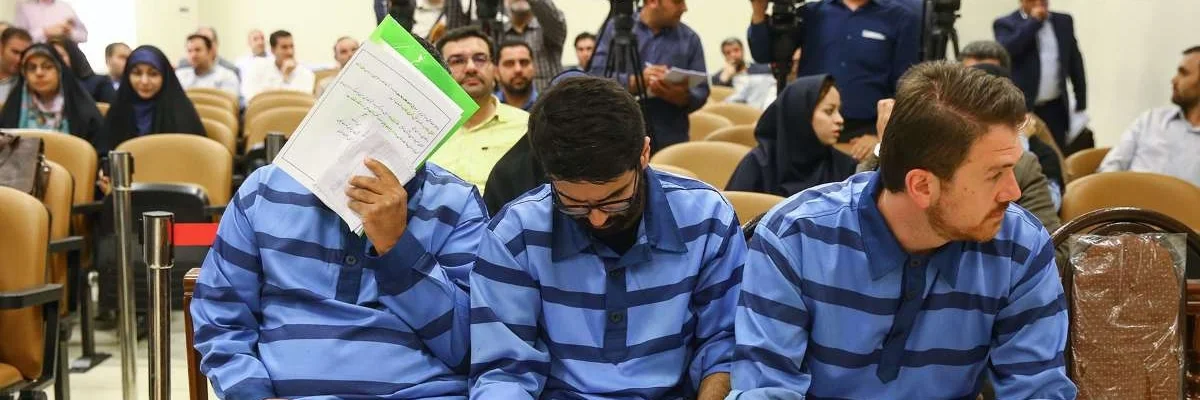
◢ Iran's intelligence ministry said Monday it had arrested 11 "economic disruptors" who misappropriated some USD 400 million earmarked for essential goods and smuggled the money out of the country. Authorities have been cracking down on those seeking to exploit the collapsing rial, which has lost around half its value against the dollar this year, in part due to the return of US sanctions.
Iran's intelligence ministry said Monday it had arrested 11 "economic disruptors" who misappropriated some USD 400 million earmarked for essential goods and smuggled the money out of the country.
Authorities have been cracking down on those seeking to exploit the collapsing rial, which has lost around half its value against the dollar this year, in part due to the return of US sanctions.
"During these sensitive economic times, this network received IRR 47 trillion rials (USD 416 million at Monday's open market rate) of subsidized foreign exchange to import essential goods but instead invested them in some other countries," the intelligence ministry said in a statement published on its website.
The group, based in the western Kurdistan province, used "bogus companies, forged documents and bribery" to receive subsidized dollars from state banks, it said.
The Islamic republic has multiple exchange rates, with the government offering a subsidized rate of IRR 42,000 per dollar to importers of vital goods. Most Iranians must buy dollars on the open market, where the rate stood at IRR 110,000 on Monday, according to currency tracking site Bonbast.
At one point in September, the rial had fallen to IRR 190,000 per dollar, but the central bank has been pumping cash into the market in recent weeks to stabilize the currency.
Dozens of other "economic disruptors" have been arrested in recent months, and in November, a trader dubbed the "Sultan of Coins" and his accomplice were executed for exploiting the surge in demand for dollars and gold.
Many panicked Iranians rushed to secure their savings by buying foreign currency and precious metals in response to US President Donald Trump's decision in May to withdraw from the 2015 nuclear deal and to reimpose sanctions.
Photo Credit: IRNA
Netanyahu Says Israel is Arabs' 'Ally' Against Iran
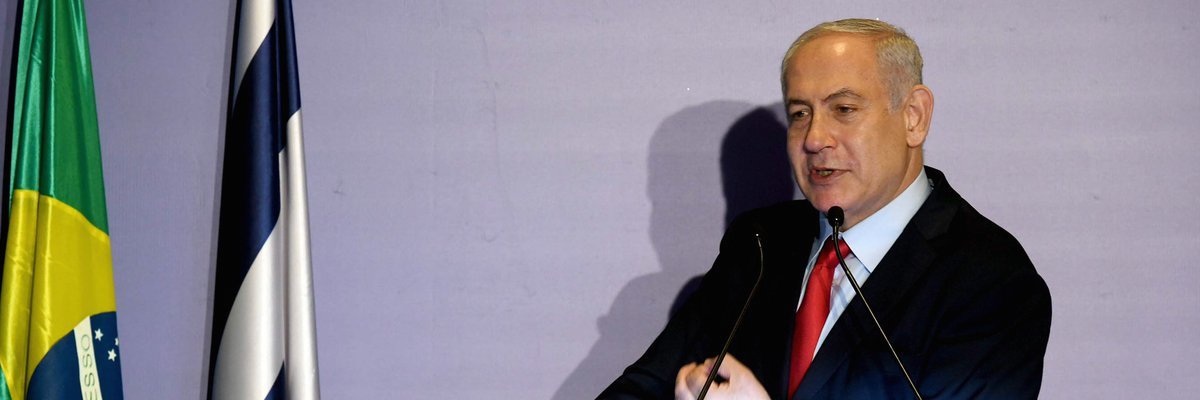
◢ Prime Minister Benjamin Netanyahu said Monday that Arab countries viewed Israel as an "indispensable ally" fighting Iran and the Islamic State group. That evaluation, he told Brazil's Globo TV during a visit to Rio, has caused "a revolution in relations with the Arab world."
Prime Minister Benjamin Netanyahu said Monday that Arab countries viewed Israel as an "indispensable ally" fighting Iran and the Islamic State group.
That evaluation, he told Brazil's Globo TV during a visit to Rio, has caused "a revolution in relations with the Arab world."
The comments came as Israel has stepped up air strikes on Iranian positions in neighboring Syria, and as Israel digested an abrupt decision by President Donald Trump to withdraw US troops from Syria.
Netanyahu has repeatedly warned that Iran is trying to develop nuclear weapons to destroy his country.
Israel, he said, had shown itself to be active in battling "radical Islam, violent Islam—either the one led by radical Shiites led by Iran, or the one led by the radical Sunnis led by Daesh (IS) and Al-Qaeda."
"Unfortunately we have not made any advance with the Palestinians. Half of them are already under the gun of Iran and of radical Islam," Netanyahu added.
Asked if he could ever contemplate sitting down with an Iranian leader to talk peace, Netanyahu replied: "If Iran remains committed to our destruction the answer is no."
The only way, he said, would be "if Iran undergoes a total transformation."
Netanyahu was in Brazil to attend Tuesday's inauguration of the Latin American country's new, pro-Israel president, Jair Bolsonaro.
On the sidelines of the ceremony, Netanyahu was to hold talks with US Secretary of State Mike Pompeo, who is also among the visiting dignitaries.
They were expected to discuss the US troop pullout from Syria and Iranian activities in the Middle East.
Photo Credit: Netanyahu Twitter
Iran Judiciary Chief to Head Powerful Expediency Council
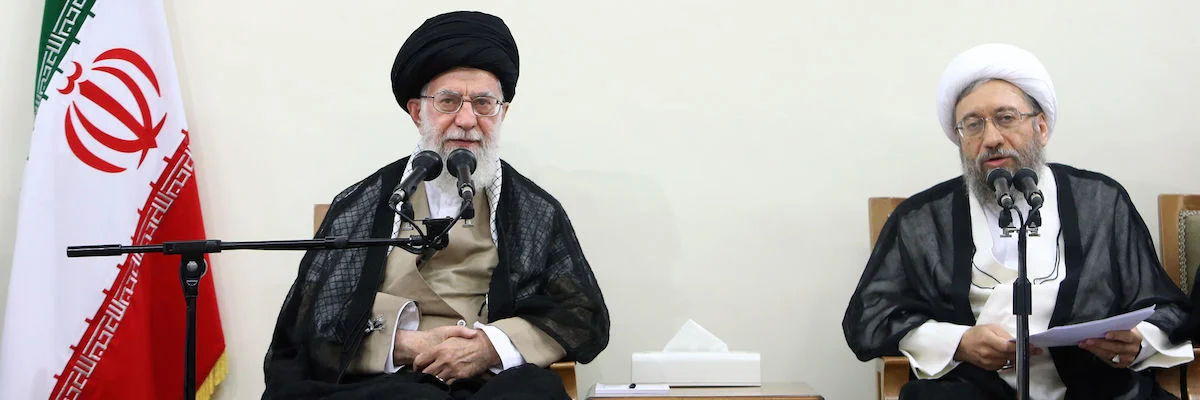
◢ Iran's supreme leader Ayatollah Ali Khamenei appointed the head of the judiciary, Sadegh Amoli Larijani, as chairman of the powerful Expediency Council on Sunday, according to his website. The Expediency Council is a key behind-the-scenes institution, settling disputes between different branches of government.
Iran's supreme leader Ayatollah Ali Khamenei appointed the head of the judiciary, Sadegh Amoli Larijani, as chairman of the powerful Expediency Council on Sunday, according to his website.
The Expediency Council is a key behind-the-scenes institution, settling disputes between different branches of government.
It was led for many years by one of the Islamic republic's founding figures, Akbar Hashemi Rafsanjani, until his death in early 2017.
Larijani, 58, was personally sanctioned by the United States in January 2018 for "human rights abuses" and "supporting Iranian weapons programs", according to the US Treasury.
He was also appointed to the 12-man Guardian Council—a post he previously held—that vets legislation and election candidates, according to a statement on Khamenei's website.
A new judiciary chief was expected to be named shortly.
Larijani takes over the Expediency and Guardian council posts from Ayatollah Hashemi Shahroudi, who died last week.
He is one of five Larijani brothers who all hold powerful positions within the establishment, most notably his eldest sibling Ali Larijani who is speaker of parliament.
Khamenei's statement said "critical changes" were expected within the Expediency Council in the near future, without giving details.
Photo Credit: IRNA
Iran Students in Rare Protest Over Deadly Campus Bus Crash
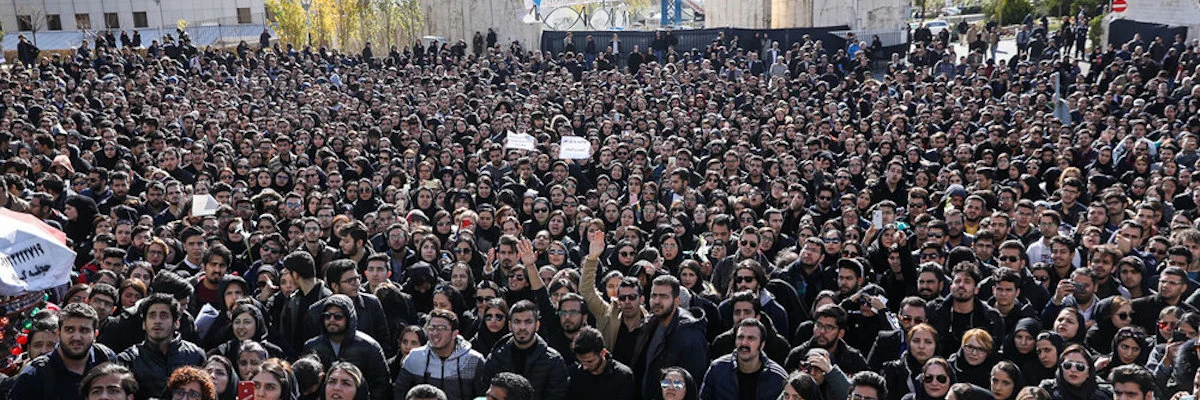
◢ Hundreds of Iranian students held protests for a second day on Sunday, calling for university officials to resign over a bus crash that killed 10, state news agency IRNA said. The demonstrating students reportedly carried photos of victims of Tuesday's crash at a square leading to the university, in a rare display of dissent at Tehran's Islamic Azad University.
Hundreds of Iranian students held protests for a second day on Sunday, calling for university officials to resign over a bus crash that killed 10, state news agency IRNA said.
The demonstrating students reportedly carried photos of victims of Tuesday's crash at a square leading to the university, in a rare display of dissent at Tehran's Islamic Azad University.
They demanded the university's chairman of the board of trustees Ali-Akbar Velayati resign, the sports and youth ministry's news agency Borna reported.
The bus was carrying 30 students along a mountainous road within the university's science and research campus in northwestern Tehran when it veered off the road and hit a concrete column.
Seven were killed instantly, state TV said, while an updated death toll of 10 was reported by the conservative Tasnim news agency the day after the crash.
The university initially blamed Tuesday's crash on the driver having a stroke, which was later denied by the coroner's office.
On social media, the public and students have pointed to the university's ageing bus fleet and poor maintenance.
Several mid-tier managers were fired in the wake of the accident and some arrested, the university told semi-official news agency ISNA on Wednesday.
Students have called for the university's bus fleet to be replaced.
They want an emergency centre to be set up on-campus and for guard rails to be erected along the entire mountainous road where the accident happened.
Iran's prosecutor general Mohammad-Jafar Montazeri visited the protesting students and called for calm.
He promised them he would follow up on the case personally and punish wrongdoers "if they were found guilty."
Iran is the world's seventh deadliest country per capita for road accidents, according to 2013 data—the latest available—published by the World Health Organization.
Efforts to modernize Iran's ageing and highly polluting vehicle fleet have been hampered by a lack of investment.
Foreign companies Peugeot and Renault were forced to withdraw this year due to the return of US sanctions.
Photo Credit: ISNA
Iran TV Boss Fired Over Jackie Chan Sex Scene
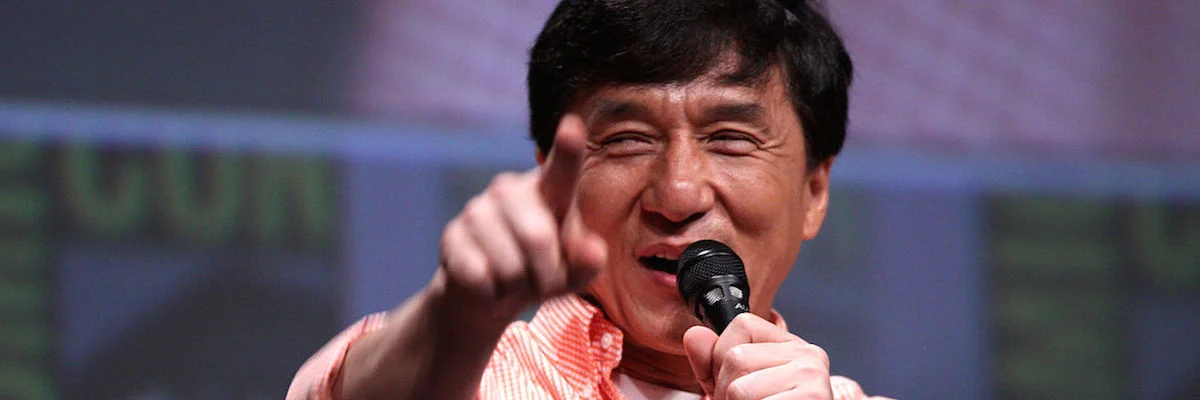
◢ A regional boss of Iran's state broadcaster IRIB has been fired after inadvertently letting a Jackie Chan sex scene slip through its tight censorship rules, local media reported on Monday. Viewers on Iran's Kish Island were shocked when their local TV station showed the martial arts star having sex with a prostitute in one of his films.
A regional boss of Iran's state broadcaster IRIB has been fired after inadvertently letting a Jackie Chan sex scene slip through its tight censorship rules, local media reported on Monday.
Viewers on Iran's Kish Island were shocked when their local TV station showed the martial arts star having sex with a prostitute in one of his films.
That is far beyond the usual limits in Iran, where men and women are not even allowed to shake hands on screen.
There was a quick response after a viewer posted the clip online.
"Clips of immoral scenes of a film featuring Jackie Chan have been circulating on social media which was apparently shown by Kish IRIB," the semi-official ISNA news agency reported.
“These scenes which are in total contradiction with the principles of IRIB has ultimately led to the dismissal and reprimand of some of the employees of IRIB in Kish," it said, adding this included IRIB's director-general for Kish.
There were angry responses from some Iranians pointing out that no one had been fired over a fatal bus crash that killed 10 students at Tehran's Azad University last week.
"Buses turn over, planes crash, ships sink... no one is dismissed... A few seconds of Jackie Chan making love on IRIB and immediately all staff in that section are sacked," wrote one Twitter user.
IRIB TV presenter Reza Rashidpoor joked on his morning talk show that the controversy could have been avoided if IRIB had included a caption saying Chan was married to the actress playing the prostitute.
He was referring to a program last week in which IRIB added a caption to say a couple holding hands on screen were married in real life.
Photo Credit: Wikicommons
Iran Sees 'Revival' of Imperilled Lake Urmia
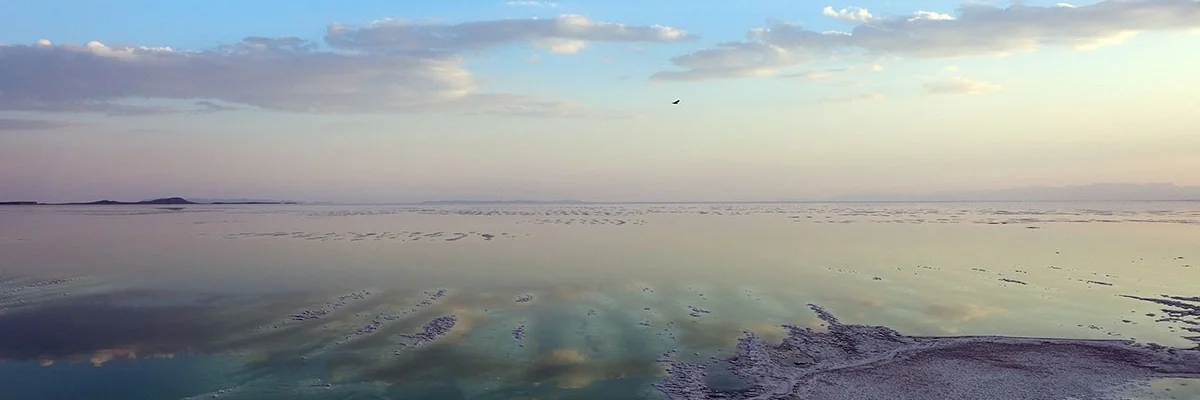
◢ It is one of the worst ecological disasters of recent decades, but the shrinking of Iran's great Lake Urmia finally appears to be stabilizing and officials see the start of a revival. A rusty cargo ship and a row of colorful pedal boats lying untouched on the bone-dry basin are a sign of the devastating loss of water in what was once the largest lake in the Middle East.
It is one of the worst ecological disasters of recent decades, but the shrinking of Iran's great Lake Urmia finally appears to be stabilizing and officials see the start of a revival.
A rusty cargo ship and a row of colorful pedal boats lying untouched on the bone-dry basin are a sign of the devastating loss of water in what was once the largest lake in the Middle East.
Situated in the mountains of northwest Iran, Lake Urmia is fed by 13 rivers and designated as a site of international importance under the UN Convention on Wetlands that was signed in the Iranian city of Ramsar in 1971.
The lake has been shrinking since 1995, according to the UN Environment Program, due to a combination of prolonged drought, over-farming and dams.
By August 2011 the lake's surface was 2,366 square kilometres (914 square miles) and shrank drastically to just 700 km2 in 2013, according to the United Nations.
The catastrophe has threatened the habitat of shrimp, flamingos, deers and wild sheep and caused salt storms that pollute nearby cities and farms.
That finally triggered a coordinated effort to save the lake in 2013—with a joint program between Iran and the UN Development Program funded by the Japanese government.
The project became a priority for the incoming administration of President Hassan Rouhani.
"One of my promises was to revive Urmia lake, and I am still committed to that promise," Rouhani said during a recent visit to the region.
Some positive results are finally emerging and the lake's surface area reached 2,300 km2 last year, according to UN Development Program figures.
"This is the beginning of the lake's revival," said Abolfazl Abesht, who heads the wetlands unit of Iran's environment department.
He warned it would take "decades" to return to the 5,000 km2 it once covered, but at least "now the trend has stopped".
Sustainable Farming
Rising temperatures and reduced rainfall have been a major factor in the lake's decline, experts say.
So, too, was the construction of a causeway in 2008 to shorten driving times between Urmia and the nearby city of Tabriz that cut the lake in two.
But people were also a major part of the problem due to a rapid rise in the population and farming around the lake, which provides a livelihood to some six million people.
The rejuvenation effort therefore focused on redirecting rivers to irrigate farmland, thus avoiding use of water from the lake, and the promotion of more sustainable farming methods.
“Almost 85 percent of the water is used for agriculture, and we are trying to help farmers reduce usage through cheap and effective techniques," said Abesht.
Measures such as using natural instead of chemical fertilizers, or leveling the land to avoid run-off, have shown major improvements for local farmer Afshin Medadi.
The 47-year-old had to invest in new equipment, but says "things are more cost-effective now", with his farm using a tenth of the water.
There has also been a noticeable reduction in the salt and dust pollution whipped up from the desiccated lake floor during storms, he added.
Others have launched their own green initiatives.
One group of 20 women set up a collective to raise awareness among lakeside communities about water waste, and encourage the production of handicrafts to boost sustainable employment.
One of the organisers, 39-year-old Kobra Asghari from the village of Gharehgozlou, hopes industries such as carpet and doll-making can gradually overtake traditional farming.
They are also encouraging women to plant less thirsty crops such as saffron and olives.
“We gradually managed to encourage the men to do the same," she said.
"People are paying more attention to their environment and the dying ecosystem."
Photo Credit: IRNA
10 Dead in Bus Crash at Iran University
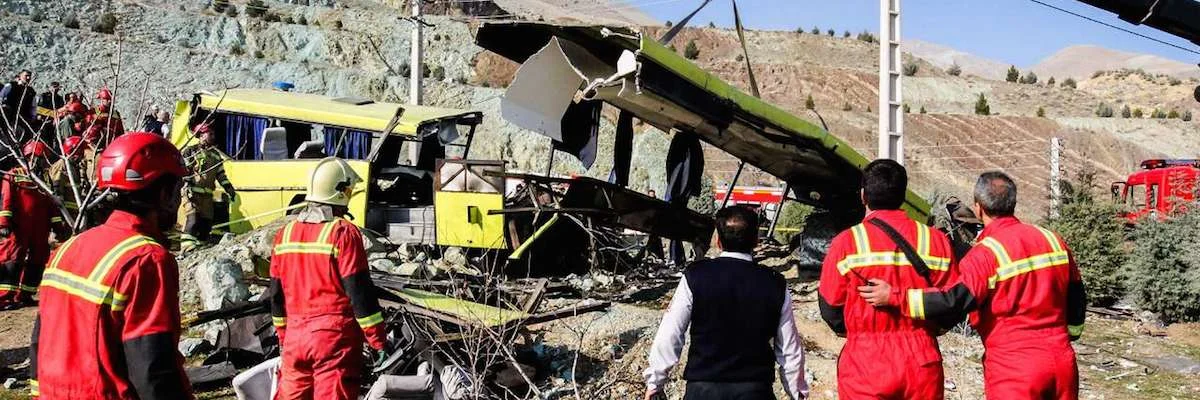
◢ Ten people have been killed in a bus accident at one of Tehran's largest universities, Iran's conservative news agency Tasnim reported Wednesday. The bus was carrying 30 students along a mountainous road within the science research campus of Islamic Azad University in northwestern Tehran when it came off the road and hit a concrete column on Tuesday.
Ten people have been killed in a bus accident at one of Tehran's largest universities, Iran's conservative news agency Tasnim reported Wednesday.
The bus was carrying 30 students along a mountainous road within the science research campus of Islamic Azad University in northwestern Tehran when it came off the road and hit a concrete column on Tuesday.
Seven were killed instantly, state TV said, while an updated death toll of 10 was reported by Tasnim the day after the crash.
Iran was the world's seventh deadliest country for drivers per capita, according to the World Health Organization's latest figures from 2013, and the only non-African country apart from Thailand in the top 10.
Iranian authorities say over 16,000 died on the road in the last Iranian year (2017-18).
Efforts to modernize Iran's aging and highly polluting cars have been hampered by a lack of investment, and foreign companies such as Peugeot and Renault were again forced to withdraw this year by the return of US sanctions.
The university blamed Tuesday's crash on the driver having a stroke, but many on social media pointed to its aging bus fleet and lack of road maintenance.
Journalist Mahmoud Sadri tweeted that the university's use of a "ramshackle bus in a mountainous region" amounted to "manslaughter".
Supreme leader Ayatollah Ali Khamenei offered his condolences over the "tragic accident" in a statement on Tuesday.
Photo Credit: IRNA
Shahroudi, Powerful Iran Cleric, Dies
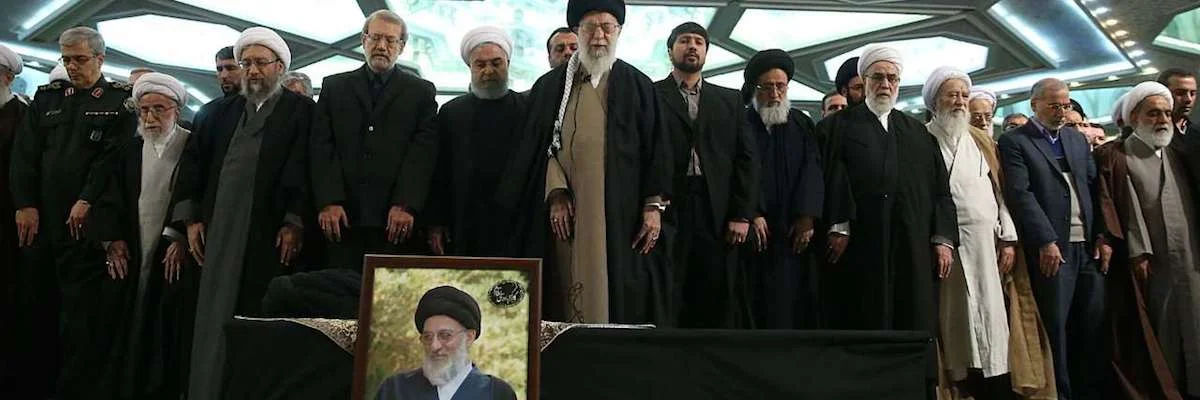
◢ Mahmoud Hashemi Shahroudi, a grand ayatollah who headed Iran's judiciary during fierce crackdowns on dissidents, journalists and activists, died on Monday at the age of 70 according to the state news agency IRNA. Shahroudi was a student of Iran's revolutionary founder Ruhollah Khomeini who went on to hold some of the most powerful positions in the Islamic republic.
Mahmoud Hashemi Shahroudi, a grand ayatollah who headed Iran's judiciary during fierce crackdowns on dissidents, journalists and activists, died on Monday at the age of 70 according to the state news agency IRNA.
Shahroudi was a student of Iran's revolutionary founder Ruhollah Khomeini who went on to hold some of the most powerful positions in the Islamic republic.
At the time of his death he was head of the Expediency Council and a member of the 12-man Guardian Council—two key institutions in shaping legislation and vetting election candidates.
He was also deputy head of the Assembly of Experts which has the power to choose the successor to supreme leader Ayatollah Ali Khamenei—a position to which Shahroudi himself was occasionally linked.
Shahroudi had not been seen in public for several months, and there were reports last year that he underwent surgery for an unspecified cancer in Germany.
A German lawmaker filed a complaint against Shahroudi during his stay, calling for him to be charged for crimes against humanity, but a judge found no grounds to hold him.
Shahroudi headed the judiciary between 1999 and 2009—a period that saw hundreds of executions and a concerted crackdown on activists, dissidents and the reformist media.
His tenure concluded with the mass protests over allegations of rigging in the 2009 presidential election, which led to thousands being arrested and allegations of severe prisoner abuse.
Some measures nonetheless marked him as a relative moderate within the judiciary, particularly his moratorium on stoning as a method of execution which other clerics saw as sanctioned under sharia law.
But the prosecution in 2001 of reformist lawmakers—despite their parliamentary immunity—was heavily critiized by the government of the time.
Shahroudi was born in Najaf in Iraq on August 18, 1948, and met Khomeini when the latter was exiled to Iraq in the 1960s.
He fled to Kuwait and then Iran after Iraqi dictator Saddam Hussein cracked down on Shiite clerics in the wake of the 1979 Iranian revolution, the conservative Tasnim news agency said in its obituary.
Photo Credit: IRNA

Iran Executes Trader Dubbed 'Sultan of Bitumen'
◢ Iran executed a trader known as the "Sultan of Bitumen" on Saturday over charges of fraud and large-scale smuggling of the oil product, the judiciary's news agency Mizan online reported. Hamidreza Bagheri Dermani is the third businessman to be executed since an anti-corruption drive was launched over the summer.
Iran executed a trader known as the "Sultan of Bitumen" on Saturday over charges of fraud and large-scale smuggling of the oil product, the judiciary's news agency Mizan online reported.
Hamidreza Bagheri Dermani is the third businessman to be executed since an anti-corruption drive was launched over the summer.
He was convicted of "corruption on earth", Iran's most serious offense, after swindling over 10 trillion rials (around USD 100 million at the current rate) through "fraud, forgery and bribery", Mizan reported. Dermani, first arrested in August 2014, reportedly forged dozens of documents of fake real estate to acquire bank loans.
He then used front companies to procure more than 300,000 tonnes of bitumen —an oil-based substance used in asphalt and other products and one of Iran's most profitable businesses—Mizan said.
Dermani was also accused of ties to business magnate Babak Morteza Zanjani, who is awaiting execution after being convicted in 2016 of embezzling USD 2.7 billion while helping the government circumvent international sanctions.
The judiciary said Dermani's loans were facilitated by former central bank governor Mahmoud Reza Khavari, who was convicted in absentia last year after fleeing to Canada in the wake of yet another major embezzlement scandal.
News of Dermani's execution was presented in dramatic fashion on state television on Saturday, with an action-movie soundtrack and full documentary about his crimes.
The footage showed documents claiming Iranian journalist and women's rights activist Hengameh Shahidi, sentenced earlier this month to 12 years in prison on unspecified charges, had tried to pay Dermani's bail last year.
The authorities have been keen to show they are cracking down on "economic disruptors" accused of exploiting shortages and fluctuations in gold and currency prices.
Dozens have been tried and in November a trader dubbed the "Sultan of Coins" and his accomplice were executed for exploiting a surge in gold demand from savers spooked by this year's currency crisis.
Iran has seen a sharp economic downturn this year, fuelled in part by US President Donald Trump's decision in May to withdraw from a landmark 2015 nuclear deal and reimpose crippling unilateral sanctions.
Photo Credit: Mizan

Iran Releases British-Iranian Academic: London
◢ A British-Iranian scientist detained in Tehran in April for his alleged role in an "infiltration network" has returned to London, the Foreign Office said Tuesday. "We can confirm that a British-Iranian dual national who was detained in Tehran has returned to the UK," the Foreign Office said in a statement, when asked about Abbas Edalat.
A British-Iranian scientist detained in Tehran in April for his alleged role in an "infiltration network" has returned to London, the Foreign Office said Tuesday.
"We can confirm that a British-Iranian dual national who was detained in Tehran has returned to the UK," the Foreign Office said in a statement, when asked about Abbas Edalat.
Edalat, a professor of computer science and mathematics at Imperial College London, was arrested by Iran's Revolutionary Guards, which raided his home and confiscated his computer, according to the New York-based Center for Human Rights in Iran.
The Campaign Against Sanctions and Military Intervention in Iran (CASMII) charity that Edalat founded said he returned to Britain last week.
Edalat's arrest and jailing was "a case of misinformation and misunderstanding by the Iranian security apparatus," CASMII said on its website.
The Foreign Office did not disclose details of the academic's release.
British-Iranian charity worker Nazanin Zaghari-Ratcliffe was arrested in Tehran in April 2016 and is serving a five-year jail sentence for sedition—a charge she has denied.
"We continue to take action on all our consular cases in Iran in line with what we believe will produce the best outcomes in their cases," the Foreign Office said.
Photo Credit: Vimeo
Iran Presents Budget to Counter 'Cruel' US Sanctions
◢ President Hassan Rouhani on Tuesday unveiled Iran's first annual budget since the return of US sanctions, saying it had been adjusted to take account of Washington's "cruel" measures. The president announced a 20 percent increase in public sector wages in a sign of the economic challenges the Islamic republic has faced since the United States pulled out of the 2015 nuclear deal earlier this year.
President Hassan Rouhani on Tuesday unveiled Iran's first annual budget since the return of US sanctions, saying it had been adjusted to take account of Washington's "cruel" measures.
The president announced a 20 percent increase in public sector wages in a sign of the economic challenges the Islamic republic has faced since the United States pulled out of the 2015 nuclear deal earlier this year.
The speech gave only a few general points of the budget—which will now be scrutinized and voted on by parliament—but acknowledged the pressure Iran was under.
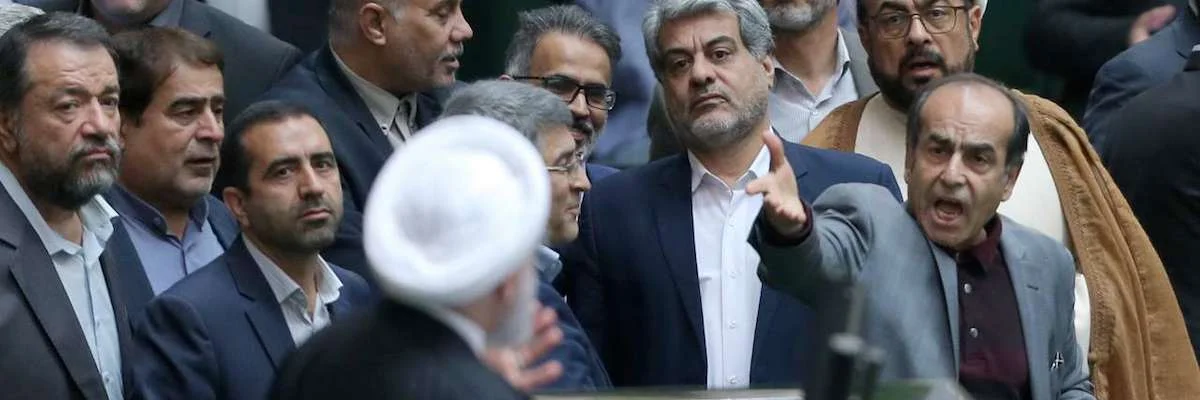
"Last year we faced some problems," Rouhani told parliament in a televised speech, referring to the widespread protests that hit the country almost exactly a year ago, sparked by anger over economic and political conditions.
"Those events caused the Americans to change their position regarding the Islamic republic and the nuclear deal," he said.
"The real objective of the US in all of this conspiracy and sanction and pressure... is to bring the powerful Islamic republic of Iran to its knees," he said, vowing that the US "will definitely be defeated."
The renewed US sanctions include an embargo on Iran's crucial oil sector.
The new budget did not say how many barrels of oil Iran hopes to sell in the next financial year, which starts in late March, but analysts believe it will be considerably less than the approximately 2.5 million it sold per day prior to Trump's withdrawal.
The US granted waivers to eight key buyers of Iranian oil—including China, India and Turkey—though this has been a double-edged sword for Iran since it also helped push down the global price.
Forex 'Practically Zero'
Rouhani came to power in 2013 representing the more moderate side of Iran's ruling elite, hoping a compromise on the country's nuclear program would reduce tensions with the West and allow foreign investment to boost the stunted private sector.
The return of sanctions has ended that hope, and forced Rouhani more towards the self-sufficient "resistance economy" preferred by supreme leader Ayatollah Ali Khamenei.
Concern over the economy pushed many Iranians to secure their savings in dollars and gold, triggering a run on the Iranian rial, which has lost around half its value since Trump announced the pullout.
"At one point early this year our foreign exchange cash reserve was practically zero, forcing the government to take hard decisions to save the country," Rouhani told parliament.
The government has pressured exporters to return their dollars to Iran, and Rouhani said they would lose tax incentives if they failed to repatriate their cash.
The central bank has used the returning dollars to shore up the collapsing rial, which has recovered to around 110,000 per dollar on unofficial exchanges.
The rial's fall drove up prices across the board, with food and drink costs up 60 percent in the year to November according to the central bank.
The judiciary launched a fierce crackdown on currency speculators, dubbed "economic disruptors" that has seen dozens of traders put on trial and at least three businessmen executed.
The so-called "sultan of coins", Vahid Mazloomin, was hanged in October after being found guilty of amassing two tonnes of gold coins.
But sanctions and fraud are only part of the story in an economy with many long-standing problems.
Its banking sector is riddled with bad loans, while many key industries from oil and gas to construction are dominated by semi-state groups with opaque links to the government and military.
The budget was delayed several times in recent weeks, with reports that Khamenei had demanded unspecified changes to the final document.
Photo Credit: IRNA
French Oil Giant Total Found Guilty of Corruption in 1997 Iran Gas Deal
◢ A French court on Friday fined oil giant Total EUR 500,000 for corruption after finding it guilty of paying bribes while bidding for a huge gas contract in Iran in 1997. The French company was accused of paying USD 30 million in bribes to middlemen, in return for help in securing the lucrative South Pars gas concession. In 2013 the company paid USD 398 million in the US to settle a similar case before it went to trial.
A French court on Friday fined oil giant Total EUR 500,000 for corruption after finding it guilty of paying bribes while bidding for a huge gas contract in Iran in 1997.
The French company was accused of paying USD 30 million in bribes in return for help in securing the rights to the South Pars natural gas field in the Persian Gulf, the world's largest.
The Paris criminal court found it guilty of "corruption of a foreign public agent" for payments made to former president Akbar Hashemi Rafsanjani's son Mehdi Hashemi, a senior energy official at the time, among others.
But it dismissed prosecutors' call for it to seize EUR 250 million in Total assets—investigators' estimate of the value of the proceeds of the corruption.
The fine represents a fraction of the EUR 398 million that Total paid in the US in 2013 to settle similar charges arising out of the joint French-US investigation.
It also represents a drop in the ocean of Total's net profits in 2017 of USD 8.6 billion.
'Business Development'
By admitting responsibility in the US, Total avoided the embarrassment of a trial for violations of the Foreign Corrupt Practices Act (FCPA), which seeks to stop bribery in foreign countries by companies with a significant US presence.
The company cited its deal with US authorities in refusing to answer questions about its Iran dealings at its Paris trial.
The French part of the probe, which was launched back in 2006, initially covered both the 1997 South Pars deal, worth USD 2 billion, and the 1995 concession for the Sirri A and E oil fields.
Total was accused of paying a total of $60 million in bribes between 1995 and 2004 to obtain the concessions.
The US Justice Department said that Total attempted to pass off the payments as "business development expenses.”
The company argued that its behavior was "completely legal under French law.”
In the end the multinational was tried only over the USD 30 million it paid in connection with the South Pars field after 2000, when a new French law on "corruption of foreign public officials" came into effect.
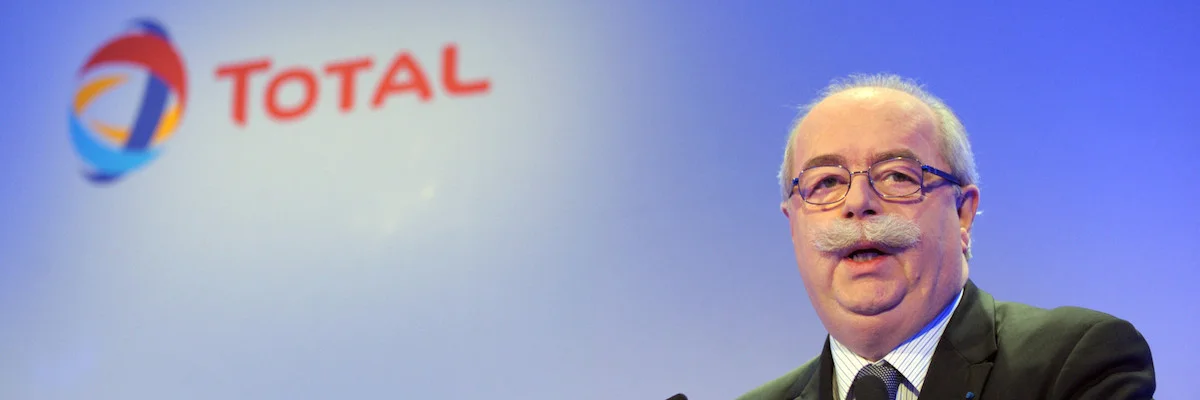
Total's late CEO Christophe de Margerie, who was head of Middle East exploration at the time of the payments, was also being investigated before his sudden death in a plane crash in Moscow in 2014.
In a statement Friday, Total's current CEO Patrick Pouyanne said anyone who knew de Margerie "knows that he would never be involved in any type of corruption.”
A Iranian businessman Bijan Dadfar and an oil industry consultant, Abbas Yazdi, were also named as suspects in the case.
Dadfar has died since the probe began while Yazdi, who is also believed to be dead, was sentenced to four years imprisonment in the absence of any death certificate.
The ruling comes four months after Total announced that it was pulling out of the South Pars project for fear of being caught out by US sanctions after US President Donald Trump pulled out of an international nuclear deal with Tehran.
Photo Credit: Total
US Grants Iraq 90-Day Extension to Iran Sanctions Waiver: Source
◢ The United States has granted Iraq a 90-day extension to an exemption from reimposed sanctions on Iran to keep on importing energy, a government source said on Thursday. President Donald Trump reimposed crippling unilateral sanctions on Iran's energy and finance sectors on November 5 following his May decision to abandon a landmark 2015 nuclear deal between major powers and Tehran.
The United States has granted Iraq a 90-day extension to an exemption from reimposed sanctions on Iran to keep on importing energy, a government source said on Thursday.
President Donald Trump reimposed crippling unilateral sanctions on Iran's energy and finance sectors on November 5 following his May decision to abandon a landmark 2015 nuclear deal between major powers and Tehran.
But he gave Iraq a 45-day waiver to continue buying electricity and natural gas to generate it from its eastern neighbor.
Iraq was expected to use that time to submit a plan on how it would wean itself off Iranian supplies.
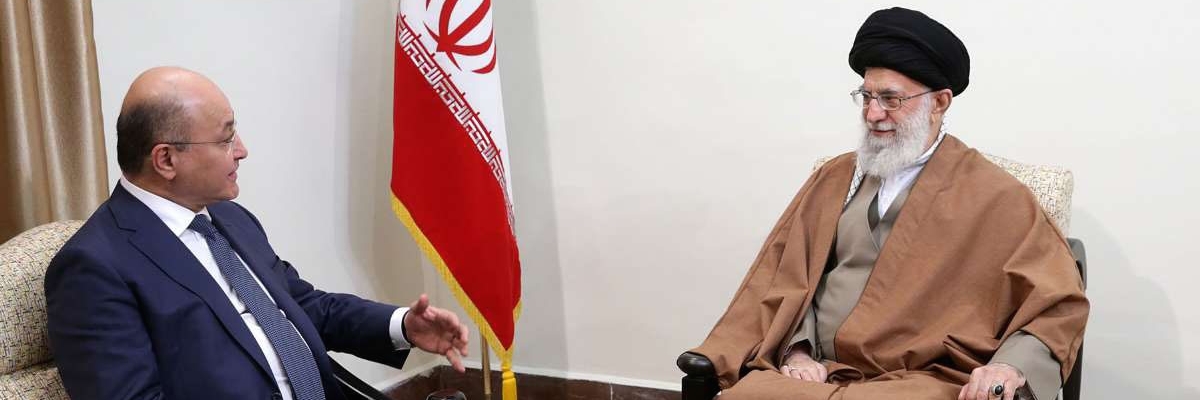
In the days leading up to the deadline Thursday, Prime Minister Adel Abdel Mahdi said a delegation of Iraqi officials would travel to Washington to discuss sanctions.
And on Thursday, a government source involved in the talks, told AFP the delegation had secured a 90-day extension so Iraq could keep buying both Iranian electricity and gas.
Asked whether the US had pressured the Iraqi delegation to partner with US companies to fill the eventual gap, the source said the issue was part of "complicated discussions.”
Iraq faces a chronic power shortage that often leave homes without mains electricity for as much 20 hours a day and was a key driving factor behind mass protests this summer.
To cope with the shortages, Iraq pipes in up to 28 million cubic meters of Iranian gas a day for power generation and also directly imports up to 1,300 megawatts of Iranian electricity.
That dependence is uncomfortable for Washington, which sees Tehran as its top regional foe.
Last week, US Energy Secretary Rick Perry discussed sanctions with Iraq's ministers of oil and electricity in Baghdad, and said Iraq should partner with US companies to become energy independent.
"Working together, the US and Iraq can develop Iraq's oil, gas and water industries," Perry said.
Iraq's electricity ministry said it could stop relying on Iranian electricity within two years, but that halting gas imports would be much more difficult.
One solution would be developing Iraq's ability to capture gas flares, the gas set alight during oil extraction.
The World Bank estimates that wasted flares represent an annual loss of about USD 2.5 billion—enough to fill the gap in Iraq's gas-based power generation.
A second source with close knowledge of the negotiations told AFP Washington was trying to convince Iraq to partner with American firms General Electric, Baker Hughes and Orion to capture flares.
“The US tells Iraqi officials it's a win-win-win: they stop relying on Iran, they capture their own gas and they benefit US companies in the process," the source said.
Neither Iraq's electricity ministry nor the US embassy in Baghdad responded to AFP requests for comment.
Photo Credit: IRNA

Albania Expels Iranian Diplomats for 'Harming Security'
◢ Albania has expelled two Iranian diplomats, including the ambassador according to a US official, who are suspected of "involvement in activities that harm the country's security," the Balkan state said Wednesday. "The decision to declare them 'persona non grata' was taken after consultations with countries allied to Albania," Foreign Ministry's spokeswoman Edlira Prendi told reporters.
Albania has expelled two Iranian diplomats, including the ambassador according to a US official, who are suspected of "involvement in activities that harm the country's security," the Balkan state said Wednesday.
"The decision to declare them 'persona non grata' was taken after consultations with countries allied to Albania," Foreign Ministry's spokeswoman Edlira Prendi told reporters.
She declined to provide the diplomats' names or elaborate on the nature of their alleged offence.
But in welcoming the news on Twitter, US National Security Adviser John Bolton identified one of the diplomats as the ambassador.
"Prime Minister Edi Rama of Albania just expelled the Iranian ambassador, signaling to Iran's leaders that their support for terrorism will not be tolerated," Bolton wrote.
He added: "We stand with PM Rama and the Albanian people as they stand up to Iran's reckless behavior in Europe and across the globe."
An Albanian TV station, Top Channel, reported that the Iranians were suspected of links to an alleged plot to attack a 2016 World Cup match between Albania and Israel.
After the match some 20 people were arrested in Albania and Kosovo in connection with the alleged plot.
At the request of US authorities and the UN in 2013, Albania agreed to take in some 3,000 members of Iranian opposition group known as The People's Mujahedin Organisation of Iran (PMOI).
Their relocation from a camp in Iraq was completed in 2016 when the last 280 people left for Albania. They currently live in a compound in the northwest of the country.
Photo Credit: IRNA