

US to Lead Security Council Talks on Iran in Late September: Haley
◢ US President Donald Trump plans to lead a meeting of heads of state of the United Nations Security Council meeting on Iran in late September, his envoy Nikki Haley announced Tuesday. With the United States now holding the presidency of the Security Council, Haley said the aim is to further pressure on Tehran over its alleged violations of council resolutions.
US President Donald Trump plans to lead a meeting of heads of state of the United Nations Security Council meeting on Iran in late September, his envoy Nikki Haley announced Tuesday.
With the United States now holding the presidency of the Security Council, Haley said the aim is to further pressure on Tehran over its alleged violations of council resolutions.
"President (Donald) Trump is very adamant that we have to start making sure that Iran is falling in line with international order," Haley told reporters.
"If you continue to look at the spread Iran has had in supporting terrorism, if you continue to look at the ballistic missile testing that they are doing, if you continue to look at the sales of weapons we see with the Huthis in Yemen—these are all violations of security council resolutions,"
she said.
"These are all threats to the region, and these are all things that the international community needs to talk about."
During a rare public meeting on Tuesday to discuss the proposed U.S. agenda for the council, Russia’s Deputy U.N. Ambassador Dmitry Polyanskiy said the Iran meeting should focus on the implementation of a 2015 resolution on Iran.
“We very much hope that there will be views voiced in connection with the U.S. withdrawal” from a 2015 international nuclear deal, Polyanskiy told the council.
Photo Credit: Wikicommons
Iran Moving Main Oil Export Terminal Out of Persian Gulf
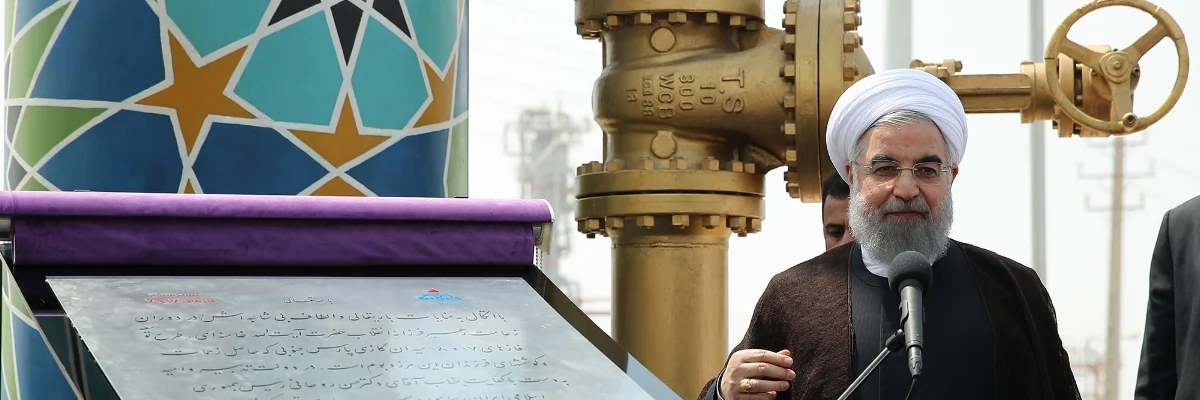
◢ Iran is to move its main oil export terminal from the Persian Gulf to the Oman Sea, President Hassan Rouhani announced on Tuesday, sparing its tankers from using the strategic Strait of Hormuz. Rouhani said exports were already being shifted from the Kharg Island terminal, deep in the Persian Gulf, to Bandar-e-Jask in the Oman Sea and would be completed by the end of his term in 2021.
Iran is to move its main oil export terminal from the Persian Gulf to the Oman Sea, President Hassan Rouhani announced on Tuesday, sparing its tankers from using the strategic Strait of Hormuz.
Rouhani said exports were already being shifted from the Khark Island terminal, deep in the Persian Gulf, to Bandar-e-Jask in the Oman Sea and would be completed by the end of his term in 2021.
"This is very important for me, it is a very strategic issue for me. A major part of our oil sales must move from Khark to Jask," Rouhani said in a televised speech as he inaugurated three new petrochemical plants in the southern energy hub of Asaluyeh.
To reach the oil terminal on Kharg Island, tankers must currently pass through the narrow Strait of Hormuz, slowing down deliveries.
Iran has in the past repeatedly threatened to block the Strait of Hormuz—which is used by its Gulf rivals including Saudi Arabia—when faced with sanctions on its oil exports and possible military action by the US.
The latest threat was in July when Rouhani said Iran has always guaranteed the security of the strait but warned the US "should not play with the lion's tale."
Moving its terminal to the Oman Sea would in theory allow Iran to continue exporting oil even if the strait was closed.
The US pulled out of the 2015 nuclear deal in May and will reimpose sanctions on Iran's oil sector in November.
The last time there was a major disruption in the flow of oil through Hormuz was in 1984 during the Iran-Iraq war when both sides attacked each other's oil facilities and tankers.
The strait is the world's most important oil chokepoint with roughly 35 percent of all seaborne oil passing through it, according to the US Energy Information Administration.
Bloomberg reported that Iran exported 2.1 million barrels per day (bpd) of oil in August, but analysts say US sanctions could reduce sales to around 1 million bpd.
Photo Credit: IRNA
Iran Currency Hits All-Time Low Against Dollar
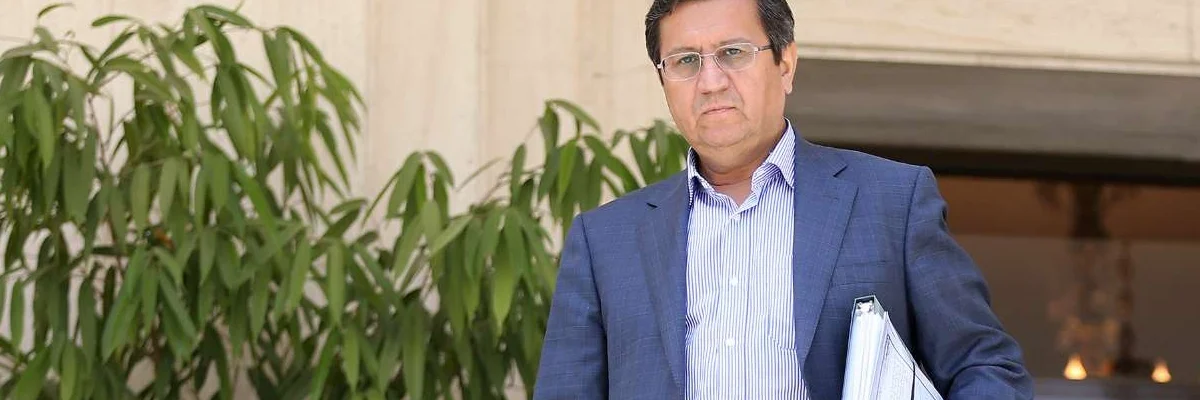
◢ The Iranian rial hit another all-time low against the US dollar on Monday in spite of central bank efforts to stem the decline. The rial has lost around 15 percent of its value on the open market in the past three days, bottoming at 128,500 to the dollar by Monday evening, according to Bonbast.com, which monitors Iran's rates.
The Iranian rial hit another all-time low against the US dollar on Monday in spite of central bank efforts to stem the decline.
The rial has lost around 15 percent of its value on the open market in the past three days, bottoming at 128,500 to the dollar by Monday evening, according to Bonbast.com, which monitors Iran's rates.
The drop followed a speech by central bank governor Abdolnaser Hemmati on Saturday, in which he announced tighter restrictions on allocating foreign exchange reserves, said financial journalist Maziar Motamedi.
"Hemmati said that he wishes to be much more careful in allocating foreign currencies at government rates, signalling a potential forthcoming shortage of hard currency," he told AFP.
The rial has lost 70 percent of its value in the past year, primarily due to increased hostility from the United States and its withdrawal from the 2015 nuclear deal in May.
Official statements have done little to calm the markets.
Hemmati, who took over in August after his predecessor was sacked, "seems to have had a point when he said in (his inaugural speech) that he will try to minimise public remarks, as every comment coming from high-ranking officials aiming to calm the market has spurred negative reactions," said Motamedi.
The central bank puts tight controls on how much foreign currency is pumped into the system, and hands out a special government rate of 42,000 to certain importers, such as those buying essential goods like medicines.
Another factor may be demand from pilgrims heading to Iraq for the upcoming Arbaeen religious festival, attended by some two million Iranians last year.
The central bank has tried to calm the market, first by trying to end open-market trading in April, fixing the rate at 42,000 and shutting down exchange shops.
But that only sparked huge speculation and corruption on the black market, leading the government to sack the central bank chief and reverse the April measures.
Photo Credit: IRNA
Iran Parliament Drops Plan to Impeach Education Minister
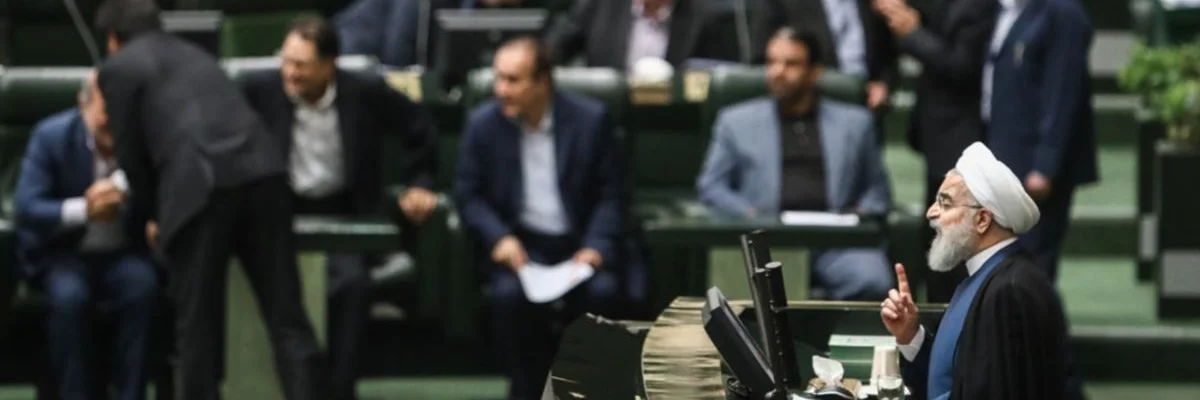
◢ Iran's parliament called off a planned vote to impeach the education minister on Sunday, Iranian media reported, offering some respite for the embattled government of President Hassan Rouhani. Twenty-nine lawmakers signed a motion last Wednesday to impeach the minister, Mohammad Bathaei, but all of them withdrew their signatures.
Iran's parliament called off a planned vote to impeach the education minister on Sunday, Iranian media reported, offering some respite for the embattled government of President Hassan Rouhani.
Twenty-nine lawmakers signed a motion last Wednesday to impeach the minister, Mohammad Bathaei, but all of them withdrew their signatures.
"Given the imminent opening of schools (on September 23), those requesting the impeachment have withdrawn their request," said Ahmad Amirabadi, a member of parliament's presiding board, according to the semi-official news agency ISNA.
Rouhani has faced mounting pressure from lawmakers over his handling of an economic crisis, partly triggered by the withdrawal of the United States from the 2015 nuclear deal and reimposition of sanctions.
Parliament sacked his labour and economy ministers last month, and industries minister Mohammad Shariatmadari has also been targeted for impeachment, though it is not clear if that will still go ahead.
Rouhani himself was summoned to parliament to answer questions from lawmakers last Tuesday, a first in his five years in power, and only the second time for a sitting president.
Economic grievances played a role in Bathaei's planned impeachment, with lawmakers criticizing the reduced budget for education and school renovation, though senior officials pointed out that the minister has no power over budgets.
Supreme leader Ayatollah Ali Khamenei last week welcomed the pressure on Rouhani's cabinet, saying it was a sign of the strength of Iran's democracy.
But he also warned that differences between officials should not be overly emphasized "because the people would become worried."
Photo Credit: Mehr
Iran Still Abiding By Nuclear Deal Terms: IAEA
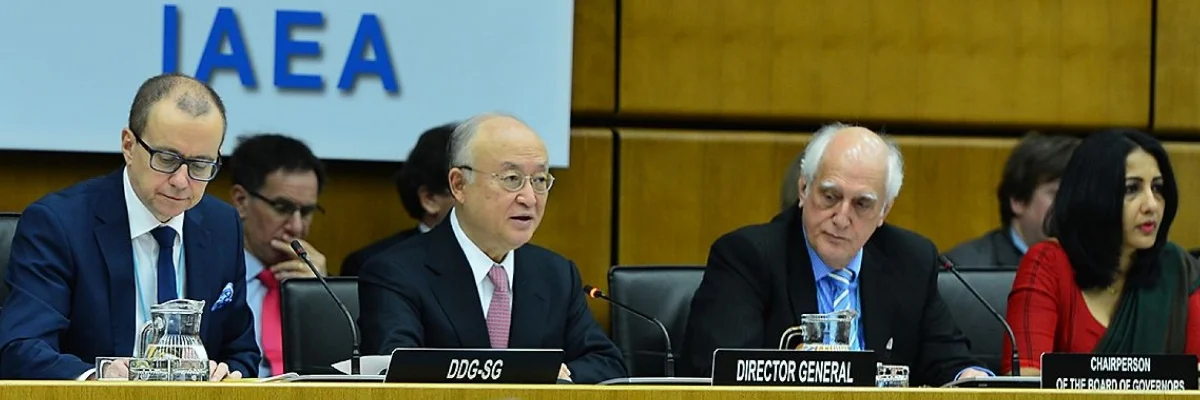
◢ Iran is sticking to the terms of its nuclear deal with world powers, a UN atomic watchdog report showed Thursday, despite ongoing uncertainty over its future. The report from the International Atomic Energy Agency showed that Iran was still complying with the key parameters of the Joint Comprehensive Plan of Action (JCPOA), agreed in 2015 by Iran and the US, China, Russia, Britain, France and Germany.
Iran is sticking to the terms of its nuclear deal with world powers, a UN atomic watchdog report showed Thursday, despite ongoing uncertainty over its future.
The report from the International Atomic Energy Agency showed that Iran was still complying with the key parameters of the Joint Comprehensive Plan of Action (JCPOA), agreed in 2015 by Iran and the US, China, Russia, Britain, France and Germany.
It comes despite the future of the deal being thrown into doubt after US President Donald Trump withdrew from the pact in May and re-imposed US
sanctions.
The latest report says the IAEA had had access "to all the sites and locations in Iran which it needed to visit."
The agency repeated language in its previous report emphasizing the importance of "timely and proactive cooperation in providing such access" on Iran's part.
A senior diplomat with knowledge of the issue said that the language was a way "to send a message to Iran to prevent potential problems" rather than being caused by any particular behavior on the part of the Iranians.
The report said Iran's stockpiles of low-enriched uranium and heavy water had both slightly increased since the last report in May, but were still under the limits agreed in the deal.
Iran's economy has been battered by the return of US sanctions following Trump's decision, undermining support for the deal within Iran.
'No avoiding' Further Talks
On Wednesday Iran's supreme leader Ayatollah Ali Khamenei said Tehran should be ready to "set aside" the JCPOA if it is no longer in the country's national interests.
However, Khamenei said talks should continue with European states, who have been trying to find a way to salvage the agreement.
Last week, the EU agreed an EUR 18 million package of assistance to Iran "for projects in support of sustainable economic and social development" in the Islamic Republic, the first tranche of a wider package worth EUR 50 million."
Most foreign firms have abandoned investment projects in Iran, and the next phase of renewed US sanctions in November will hit the crucial oil sector.
Speaking on Thursday while attending meetings of EU foreign and defense ministers, the EU's foreign policy chief Federica Mogherini said that despite disagreements with Iran over other issues, "we believe that addressing regional disagreements with Iran can be done in a more effective manner if we maintain the nuclear deal in place".
French Foreign Minister Jean-Yves Le Drian, also speaking in Vienna, said that in his opinion Iran was respecting "the fundamentals of the JCPOA."
However, he added that "Iran cannot avoid discussions, negotiations on three other major subjects that worry us," namely Iran's ballistic missile program, the long-term future of its nuclear program and its role in conflicts in the wider region.
In June, in a bid to mount pressure on the Europeans, Iran announced a plan to increase its uranium enrichment capacity with new centrifuges in the event that the agreement collapses, while still denying any desire to build a nuclear weapon.
Under the 2015 agreement, Iran can only enrich uranium to 3.67 percent—far below the roughly 90-percent level needed for nuclear weapons.
Photo Credit: IAEA

Iran 'Cannot Avoid' Expanded Talks on Nuclear Issue: France
◢ Iran "cannot avoid" talks on thorny issues like its ballistic missile program and role in Middle East conflicts, French Foreign Minister Jean-Yves Le Drian warned Thursday, as European powers work to rescue the beleaguered nuclear deal with Tehran. France, Germany and Britain are leading European efforts to save the landmark 2015 deal to curb Iran's nuclear program, which was thrown into crisis in May when US President Donald Trump withdrew and reimposed sanctions.
Iran "cannot avoid" talks on thorny issues like its ballistic missile program and role in Middle East conflicts, French Foreign Minister Jean-Yves Le Drian warned Thursday, as European powers work to rescue the beleaguered nuclear deal with Tehran.
France, Germany and Britain are leading European efforts to save the landmark 2015 deal to curb Iran's nuclear program, which was thrown into crisis in May when US President Donald Trump withdrew and reimposed sanctions.
Critics of the accord—which was also signed by Russia and China—say it is too narrowly focused on the nuclear issue and does nothing to curb Iran's meddling in regional conflicts or its program to develop conventional ballistic missiles.
The European Union is trying to find ways to maintain oil and banking ties with Iran after the second phase of US sanctions kicks in in November, and Le Drian said it was important to find ways to keep the Islamic republic trading.
But he warned that Tehran must keep up its side of the deal, and be prepared to expand talks.
"Iran must respect the fundamentals of the JCPOA (nuclear deal) and I think that is the case," Le Drian said as he arrived for a meeting of EU foreign ministers in Vienna.
"But Iran cannot avoid discussions, negotiations on three other major subjects that worry us—the future of Iran's nuclear commitments after 2025, the ballistic question and the fact there is a sort of ballistic proliferation on the part of Iran... and the role Iran plays to stabilize the whole region.
"We must talk about these three subjects, Iran must be aware of this and that's the message I send to them from Vienna."
Despite European pledges to keep providing Iran with the economic benefits it received from the nuclear deal, many major companies have already pulled out of the country for fear of US penalties.
Photo Credit: Wikicommons
US Accuses Iran of Bad Faith Over Sanctions Lawsuit
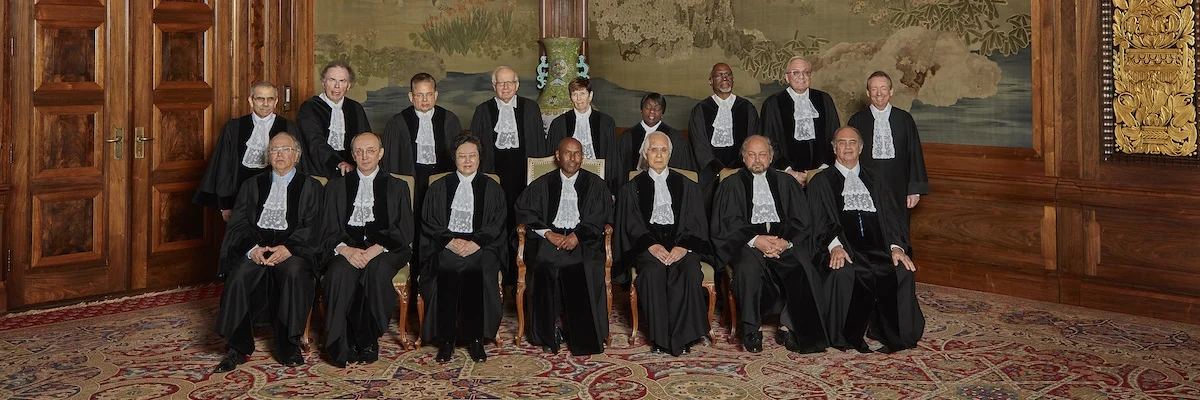
◢ The United States on Wednesday accused Iran of bad faith for challenging Washington's renewed nuclear-linked sanctions against it at the UN's top court. Iran has asked the International Court of Justice to order the United States to lift the sanctions, reimposed after US President Donald Trump pulled out of a multilateral 2015 accord.
The United States on Wednesday accused Iran of bad faith for challenging Washington's renewed nuclear-linked sanctions against it at the UN's top court.
Iran has asked the International Court of Justice to order the United States to lift the sanctions, reimposed after US President Donald Trump pulled out of a multilateral 2015 accord.
Iran brought the case at the court in The Hague under a 1955 friendship treaty that predates the country's Islamic Revolution.
Washington told the court it had no jurisdiction to rule on the case, which it said was a matter of national security.
"Iran is not invoking the treaty of amity in good faith in this proceeding," US State Department lawyer Jennifer Newstead said in her closing argument.
"Iran cannot be permitted to draw this court into a political and psychological campaign" against the United States, she added.
During four days of hearings, Iran said the sanctions reintroduced this month are causing economic suffering for its citizens.
The US lawyers retorted that economic mismanagement was at the root of Iran's woes.
A second wave of US measures is due to hit Iran in early November, targeting its vital oil exports.
Closing the hearings, ICJ president Abdulqawi Yusuf said the court would issue a ruling "as soon as possible" but did not set a date.
"The judges are well aware of the political stakes," said Eric De Brabandere, professor of international dispute settlement at Leiden University in the Netherlands.
But "in principle the court will focus strictly on the legal aspects of the case", he told AFP.
Despite their 1955 Treaty of Amity and Economic Relations, Iran and the United States have not had diplomatic ties since 1980.
The ICJ was set up in 1946 to rule in disputes between countries.
The court is tasked with deciding only whether it has jurisdiction over Iran's request, De Brabandere said.
But he noted that "the political consequences of the decision are of course important," since either state would see a favorable outcome as "a huge victory."
Photo Credit: ICJ
Iran's Khamenei Says Ready to Abandon Nuclear Deal if Needed
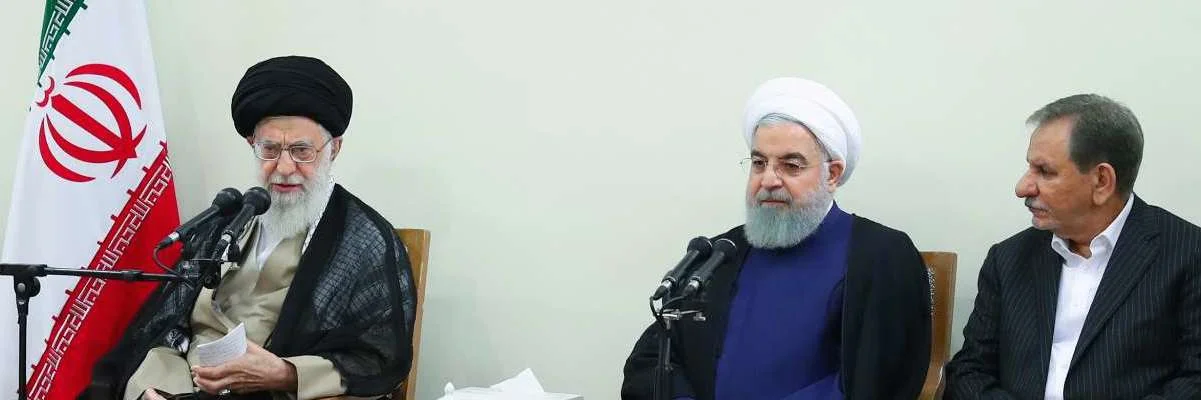
◢ Iran's supreme leader Ayatollah Ali Khamenei said Wednesday that his government should be ready to "set aside" the 2015 nuclear deal if it is no longer in the country's national interests. "The JCPOA (nuclear deal) is not the objective, it is only a means," he said in a meeting with the cabinet, according to his website.
Iran's supreme leader Ayatollah Ali Khamenei said Wednesday that his government should be ready to "set aside" the 2015 nuclear deal if it is no longer in the country's national interests.
"The JCPOA (nuclear deal) is not the objective, it is only a means," he said in a meeting with the cabinet, according to his website.
"Naturally, if we reach the conclusion that it is no longer maintaining our national interests, we will put it aside."
Khamenei said talks should continue with Europe, which is trying to salvage the 2015 agreement despite the withdrawal of the United States.
But he said the Iranian government "must not pin hope on the Europeans for issues such as the JCPOA or the economy".
"We must examine their promises with scepticism," he added.
Khamenei reiterated that Iran would not engage in any negotiations with the administration of US President Donald Trump, despite his offer of unconditional talks.
"(The Americans) want to say they can bring anyone, even the Islamic republic, to the negotiating table.
"But as I have previously said in detail, no negotiations with them will take place," Khamenei said.
Photo Credit: IRNA
UN Court Has No Jurisdiction in Iran Sanctions Case: US
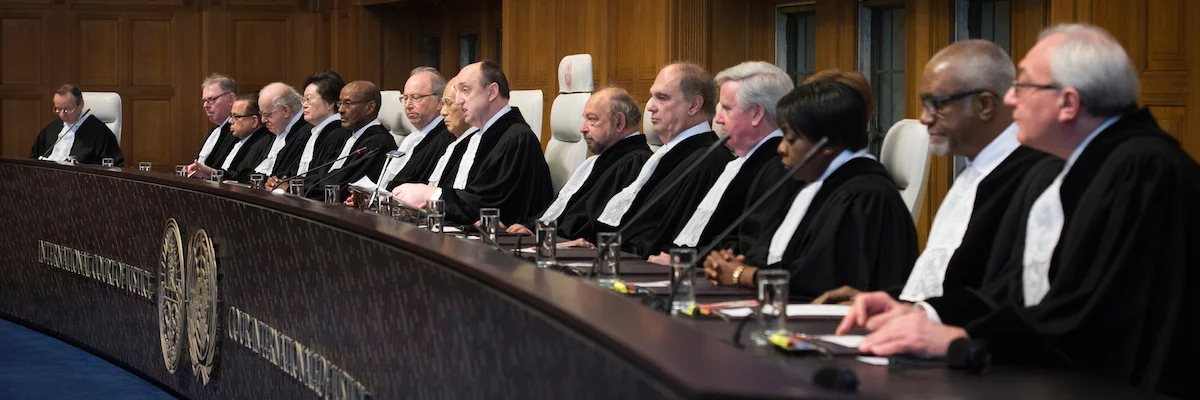
◢ The United States told UN judges Tuesday they had no jurisdiction to rule on Tehran's demand for them to order the suspension of debilitating nuclear-related sanctions against Iran. US State Department lawyer Jennifer Newstead told the court in The Hague that the 1955 treaty under which Iran has challenged the sanctions "cannot... provide a basis for this court's jurisdiction."
The United States told UN judges Tuesday they had no jurisdiction to rule on Tehran's demand for them to order the suspension of debilitating nuclear-related sanctions against Iran.
Iran has argued that US President Donald Trump breached a 1955 treaty with his decision to reimpose the sanctions after withdrawing from a multilateral nuclear accord.
But US State Department lawyer Jennifer Newstead told the court in The Hague that it "lacks prima facie jurisdiction to hear Iran's claims".
But Newstead argued that the United States had the right to protect its national security and other interests.
The treaty "cannot therefore provide a basis for this court's jurisdiction" in the case, she said.
The United States and several other world powers lifted sanctions on Iran under a 2015 accord after years of diplomacy. In return, Tehran made commitments not to seek to build nuclear weapons.
Trump said the 2015 accord did not do enough to curb the threat from Iran. He pulled out of the accord in May and began reimposing sanctions this month.
In the first day of hearings at the ICJ on Monday, Iran's lawyers said the sanctions were threatening the welfare of its citizens and disrupting tens of billions of dollars' worth of business deals.
Photo Credit: ICJ
Iran Lawmakers Reject Rouhani Answers on Economic Woes
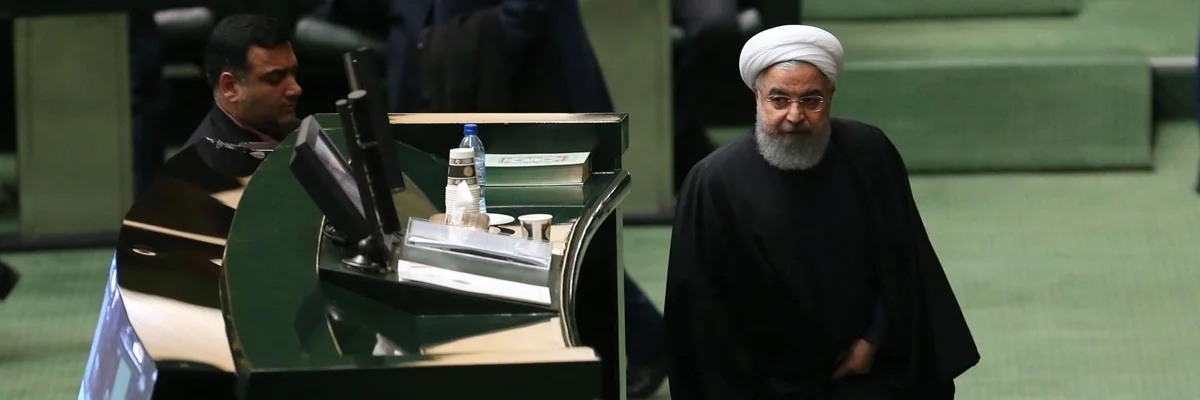
◢ Iran's parliament voted its dissatisfaction with President Hassan Rouhani on Tuesday after grilling him over the deteriorating economy. It was the first time Rouhani had been summoned by parliament in his five years in power, and MPs demanded answers on unemployment, rising prices and the sharp depreciation of the rial, which has lost more than half of its value since April.
Iran's parliament voted its dissatisfaction with President Hassan Rouhani on Tuesday after grilling him over the deteriorating economy.
It was the first time Rouhani had been summoned by parliament in his five years in power, and MPs demanded answers on unemployment, rising prices and the sharp depreciation of the rial, which has lost more than half of its value since April.
The lawmakers, who have already impeached his labour and economy ministers this month, were unimpressed.
In votes at the end of the session, they expressed dissatisfaction with Rouhani's responses to four of their five questions on the economy.
Rouhani trod a difficult line, seeking to acknowledge the problems facing ordinary Iranians without admitting to a full-blown crisis.
"It should not be said we are facing a crisis. There is no crisis. If we say there is, it will become a problem for society and then a threat," he told parliament.
Under parliamentary rules, the issues on which lawmakers expressed dissatisfaction will now be referred to the judiciary for review.
As usual, Rouhani offered no concrete policy proposals, instead saying repeatedly that the answer lay in showing the people that the establishment was united.
"You may talk about employment, foreign currency, recession, smuggling... I think the problem is in people's view of the future," he said.
"The people are not afraid of the United States, they are afraid of our disagreements. If the people see we are united, they will realize the problems will be resolved."
But Rouhani's government—which pushed a "moderate" line of improved relations with the West—has been badly weakened by Washington's May decision to withdraw from a landmark 2015 nuclear deal between Iran and major powers and reimpose sanctions.
Most foreign firms have abandoned investment projects in Iran, and the next phase of renewed US sanctions in November will hit the crucial oil sector.
'Palace of wishes'
Rouhani sought to shift the blame to the administration of US President Donald Trump, saying: "We will not allow a bunch of anti-Iranians who have gathered in the White House to conspire against us."
But most Iranians blame their own government for failing to capitalize on the nuclear deal while it had the chance, and for raising people's expectations without delivering results.
"You created a palace of wishes called the JCPOA," said Mojtaba Zolnour, an MP for the shrine city of Qom, using the technical name for the nuclear deal.
"With one kick from Trump, this palace was demolished, and you didn't have an alternative," he said.
Despite the impeachment of two of his ministers, Rouhani himself is protected by supreme leader Ayatollah Ali Khamenei, who said recently that removing the president would "play into the hands of the enemy."
That may explain the soft line taken by several speakers, with one conservative MP, Hossein Naghavi-Hosseini, emphasising: "We will stand by your government for the sake of protecting the system of the Islamic republic."
But when it came to the votes, lawmakers accepted only one of Rouhani's answers—related to international banking sanctions, which they agreed were beyond his government's control.
Even after the nuclear deal, major foreign banks continued to refuse to work with Iran, fearing the lack of transparency in its financial sector could lead them into legal trouble.
Rouhani has even lost support among reformists who had supported him as the best option after their own leaders were either locked up or barred from standing for office.
"What have we done with this nation? We made them miserable and wretched," said leading reformist MP Elias Hazrati as he voted in favour of impeaching economy minister Masoud Karbasian on Sunday.
Photo Credit: IRNA
Iran Urges UN Court to Halt 'Economic Strangulation' by US
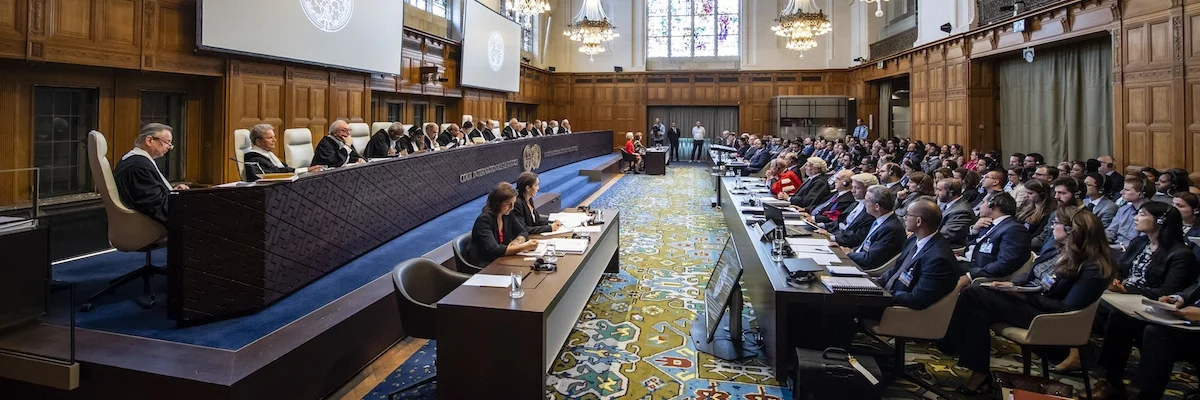
◢ Iran on Monday demanded the UN's top court suspend US nuclear-linked sanctions against Tehran, accusing Washington of plotting its "economic strangulation.” The Islamic Republic launched a suit at the International Court of Justice in The Hague over US President Donald Trump's decision to reimpose the sanctions that had been lifted in a 2015 accord.
Iran on Monday demanded the UN's top court suspend US nuclear-linked sanctions against Tehran, accusing Washington of plotting its "economic strangulation".
The Islamic Republic launched a suit at the International Court of Justice in The Hague over US President Donald Trump's decision to reimpose the sanctions that had been lifted in a 2015 accord.
Iran says Trump's move breaches a 1955 treaty. It told the court the measures were already devastating its economy and threatening the welfare of its citizens.
"The United States is publicly propagating a policy intended to damage as severely as possible Iran's economy and Iranian nationals and companies," Iran's lawyer Mohsen Mohebi told the court.
"This policy is nothing but naked economic aggression against my country," he added.
"Iran will put up the strongest resistance to the US economic strangulation, by all peaceful means."
US lawyers are due to give their response in arguments before the court on Tuesday.
Sanctions had been lifted under a 2015 multilateral agreement in return for Iran committing not to pursue nuclear weapons.
But Trump reimposed unilateral sanctions three weeks ago. He said they were needed to ensure Iran never builds a nuclear bomb.
A second wave of punitive measures are due to hit Iran in early November, targeting its vital energy sector including oil exports.
'Irreparable prejudice'
The US measures have added to Iran's economic woes, helping to fuel strikes and protests from across the country and political spectrum.
In the latest blow, Iran's parliament impeached Economy Minister Masoud Karbasian on Sunday.
Tehran filed its case before the ICJ in late July, calling on the Hague-based tribunal's judges to order the immediate lifting of sanctions pending a definitive ruling.
It said the sanctions would cause it "irreparable prejudice". It argues they breach the 1955 Treaty of Amity and Economic Relations between Iran and the United States.
'One-sided deal'
The ICJ is expected to take a couple of months to decide whether to grant Tehran's request for a provisional ruling. A final decision in the case may take years.
The 2015 deal was signed by Iran and the five permanent members of the United Nations Security Council plus Germany.
Trump, who took office in 2016, called it a "horrible one-sided deal."
He said it "failed to achieve the fundamental objective of blocking all paths to a Iranian nuclear bomb."
To the horror of the other signatories, Trump pulled out and announced in May that he would reinstate sanctions.
'Neither war, nor negotiations' -
Tehran says that the new sanctions are already hurting its economy. Iran's currency the rial has lost around half its value since April.
In a court filing at the ICJ, Iran's lawyers said the US sanctions threaten tens of billions of dollars' worth of business deals with foreign companies.
International companies including France's Total, Peugeot and Renault, and Germany's Siemens and Daimler, have suspended operations in Iran since Trump announced the US withdrawal from the nuclear deal in May.
Air France and British Airways announced Thursday they would halt flights to Tehran next month, saying they were not commercially viable. The British carrier added however that the decision was unrelated to the fresh sanctions.
Trump said the sanctions would turn up the financial pressure on Tehran to come to a "comprehensive and lasting solution" regarding its activities such as its "ballistic missile program and its support for terrorism."
Iran's supreme leader Ayatollah Ali Khamenei this month appeared to rule out any immediate prospect of talks, saying "there will be neither war, nor negotiations," with the US.
Washington's lawyers will present their case on Tuesday, with a second round of arguments on Wednesday and Thursday. Experts expect the US to challenge the ICJ's jurisdiction.
The ICJ was set up in 1946 to rule in disputes between countries.
Photo Credit: ICJ
Rouhani's Woes Mount as Iran Economy Minister Impeached
◢ Iran's parliament impeached Economy Minister Masoud Karbasian on Sunday in the latest blow to embattled President Hassan Rouhani as he struggles to face down a mounting economic crisis. Karbasian is the second cabinet minister to be sacked this month, following the impeachment of Labour Minister Ali Rabiei on August 8. Critics say the government squandered the opportunities presented by the 2015 nuclear deal and have failed to tackle high rates of inflation and joblessness.
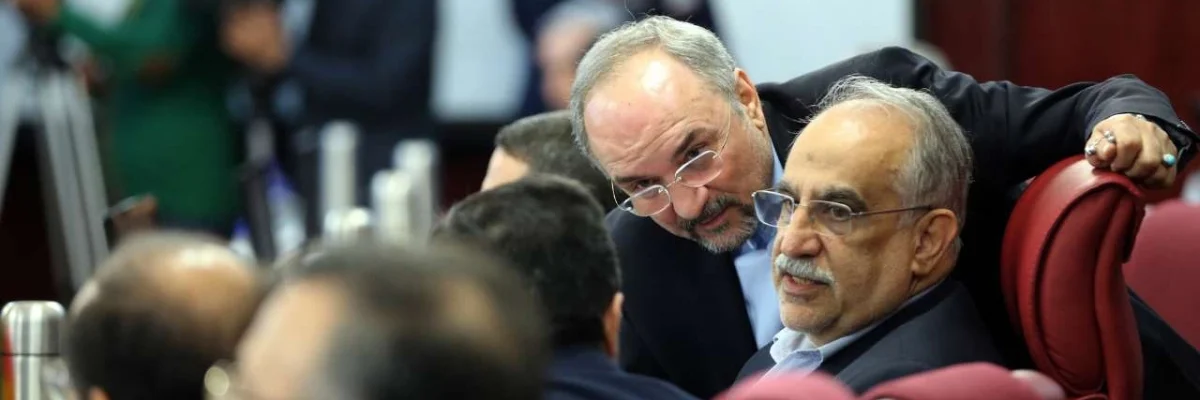
Iran's parliament impeached Economy Minister Masoud Karbasian on Sunday in the latest blow to embattled President Hassan Rouhani as he struggles to face down a mounting economic crisis.
Karbasian is the second cabinet minister to be sacked this month, following the impeachment of Labour Minister Ali Rabiei on August 8.
Critics say the government squandered the opportunities presented by the 2015 nuclear deal and have failed to tackle high rates of inflation and joblessness.
With the United States abandoning the nuclear deal in May and reimposing sanctions, Rouhani's hopes of attracting vast sums of foreign investment appear dead in the water.
Major European firms, including France's Total, Peugeot and Renault, and Germany's Siemens and Daimler, have all announced their departure since the US announcement.
Rouhani's conservative opponents—who long-opposed his outreach to the West and efforts to improve civil liberties—say the primary blame lies with government corruption and mismanagement.
"Inefficiency and lack of planning have nothing to do with sanctions," said one lawmaker, Abbas Payizadeh, in a speech ahead of the vote.
"Wrong decisions have harmed the people and led to individuals looting public assets," he added.
Rouhani, a political moderate, can still count on the support of a sizable reformist bloc in parliament, but even some of its key figures have grown disillusioned.
"What have we done with this nation? We made them miserable and wretched," said Elias Hazrati, of the reformist Hope faction in parliament.
"The middle class are moving towards poverty," added Hazrati, who broke ranks to vote in favor of the impeachment.
Karbasian lost the vote of confidence, which was carried live on state radio, by 137 votes to 121, with two abstentions.
The outcome sees him stripped of his post with immediate effect, leaving Rouhani to pick a replacement.
'We are not prepared'
Hazrati said the government had failed to plan for the real pain of sanctions, which will hit when a second phase of US measures is reintroduced in November targeting Iran's crucial oil sector.
"We haven't been prepared and we are not prepared now," said Hazrati.
"The only person we could get our hands on was the economy minister. Otherwise, the president should have been impeached," he added.
For now, Rouhani remains protected by supreme leader Ayatollah Ali Khamenei, who said this month that removing the president would "play into the hands of the enemy".
But parliament has summoned the president for the first time to answer questions on the crisis, and he is expected to appear on Tuesday.
One of the key markers of Iran's economic crisis has been the collapse in the currency, which has lost around half its value since April.
That was partly owing to US hostility, but also due to a disastrous decision to fix the value of the rial and shut down currency traders. The move triggered a boom in the black market and widespread corruption, before the decision was finally reversed this month.
Business people in Iran point to other deep-rooted problems, from the debt-ridden banking sector to the outsized and opaque role of military-linked organizations in the economy.
Rouhani has taken small steps to resolve these issues, but most Iranians are dissatisfied with his progress.
There have been persistent, low-level strikes and demonstrations across the country for months over high prices and unpaid wages that have occasionally turned into violent protests against the system as a whole.
Figures released by the central bank on Saturday showed huge jumps in the cost of essential goods compared with a year ago.
Dairy products are up by a third, chicken by more than 20 percent and fresh fruit by 71 percent.
Photo Credit: IRNA
Washington Criticizes European Aid Package for Iran
◢ A European Union aid plan for Iran sends "the wrong message at the wrong time" to the government in Tehran, the US State Department said Friday. The USD 20.7 million EU assistance package "perpetuates the regime's ability to neglect the needs of its people and stifles meaningful policy changes," read a statement Friday signed by US special representative for Iran Brian Hook.
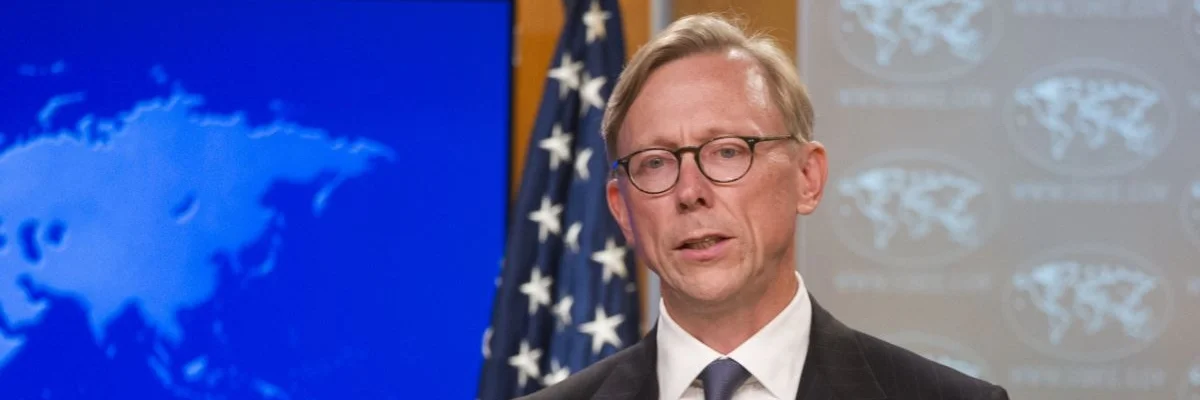
A European Union aid plan for Iran sends "the wrong message at the wrong time" to the government in Tehran, the US State Department said Friday.
The USD 20.7 million EU assistance package "perpetuates the regime's ability to neglect the needs of its people and stifles meaningful policy changes," read a statement Friday signed by US special representative for Iran Brian Hook.
"More money in the hands of the Ayatollah means more money to conduct assassinations in those very European countries."
According to Hook, the Iranian people "face very real economic pressures caused by their government's corruption, mismanagement, and deep investment in terrorism and foreign conflicts."
He said that the United States and the European Union "should be working together... to find lasting solutions that truly support Iran's people and end the regime's threats to regional and global stability."
The package of assistance offered to Iran, announced on Thursday, is "for projects in support of sustainable economic and social development" in the Islamic Republic, and includes funds to help develop the private sector, according to a statement from the European Commission.
The funds "are the first of a wider package of 50 million euros for Iran, aiming to support the country to address key economic and social challenges," the statement read.
"They are part of the renewed cooperation and engagement between the European Union and Iran following the conclusion of the Joint Comprehensive Plan of Action (JCPOA)."
After withdrawing from the 2015 nuclear deal between Tehran and the major powers, Washington in early August reinstated sanctions against Tehran and issued a warning to countries that continued trading with Iran.
Photo Credit: VOA
Four Questions on Iran's Legal Challenge to US Sanctions
◢ Iran's legal challenge against renewed sanctions by the United States goes before the UN's International Court of Justice on Monday. The case has two elements, said Eric De Brabandere, professor of international dispute settlement at Leiden University in the Netherlands. Firstly, "Iran genuinely considers the re-imposition of sanctions a violation of international law." Secondly, "Iran has the support of many European states on the question of sanctions, politically speaking.”
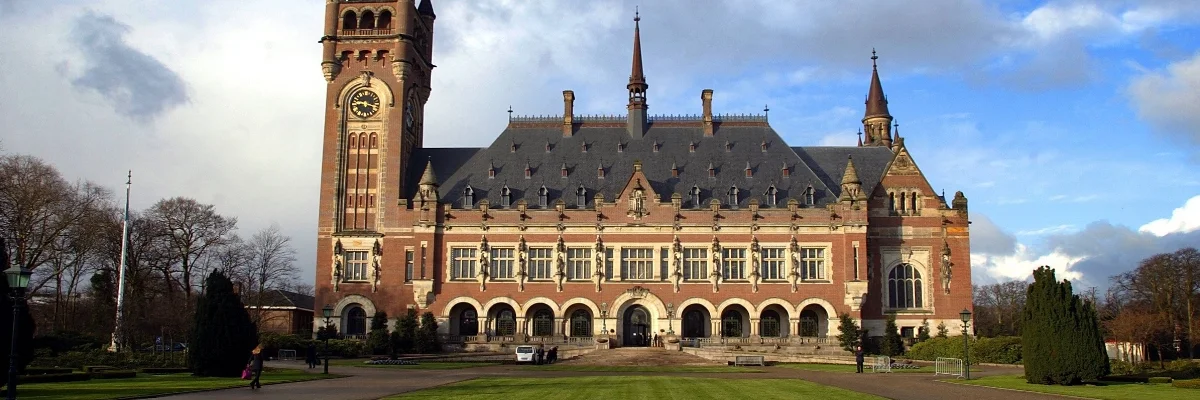
Iran's legal challenge against renewed sanctions by the United States goes before the UN's International Court of Justice on Monday.
Here are four key questions regarding the case:
What is the case about?
Iran's attempt to block the reinstatement of sanctions, announced by US President Donald Trump earlier this year, is the latest in a series of court battles that Tehran and Washington are fighting at the ICJ.
Trump announced on May 8 that he was pulling out of a landmark deal between Iran and major powers aimed at preventing Tehran from acquiring a nuclear weapon.
The deal agreed with the UN's five permanent Security Council members and Germany in 2015 limits Tehran's stockpile of enriched uranium until 2031 in exchange for sanctions relief.
Blasting the accord as a "horrible, one-sided deal", Trump reimposed a wave of tough, unilateral sanctions.
Tehran now accuses Washington of "besieging" its economy and wants the Hague-based court—which rules in disputes between countries—to order the US to temporarily halt punitive measures, while the judges mull the deeper merits of the case.
Does Tehran have a case?
The case has two elements, said Eric De Brabandere, professor of international dispute settlement at Leiden University in the Netherlands.
Firstly, "Iran genuinely considers the re-imposition of sanctions a violation of international law."
Secondly, "Iran has the support of many European states on the question of sanctions, politically speaking," De Brabandere argued.
Iran's representatives need to convince the ICJ that its 15 permanent judges indeed have the jurisdiction to hear the case.
Tehran bases its arguments on a little-known 1955 treaty between Iran and the United States. The treaty provides for "friendly relations" between the two countries, encourages mutual trade and investment and regulates consular relations.
However, there has been no formal diplomatic ties between Tehran and Washington since the regime of the US-back Shah was deposed by Iran's Islamic revolution in 1979.
What will Washington argue?
"My guess is that for this case they will argue that the court has no jurisdiction, as they did in a separate case launched against the US two years ago," said De Brabandere.
Washington could invoke two arguments.
One is that the 1955 treaty is no longer in force, because it is a "treaty of friendship" between two nations which have been adversaries for the last four decades.
Secondly, US representatives could say that the dispute was "not about the treaty, but about sanctions and Iran's alleged terrorist activities," De Brabandere said.
"The US is likely to argue that the dispute is about something much broader than a treaty," for instance Tehran's nuclear ambitions, the expert said.
Furthermore, there is a clause in the 1955 treaty which allows the states to take "any measures to protect essential security interests."
Can Iran's case succeed?
"I think it's very likely that the ICJ will, based on the 1955 treaty, decide to hear the case," said De Brabandere.
However, whether the case will be successful on its own merits—in other words whether the United States indeed breached its obligations—is more difficult to establish.
"For one, the 1955 treaty is relatively narrow in scope. It means that the ICJ can only rule whether the US violated its obligations under the specific treaty," De Brabandere said.
This means that the ICJ's judges will not rule in what they may consider any broader dispute between Iran and the United States.
The outcome of the case—which could still take years before being handed down—"is very difficult to predict," said De Brabandere.
Photo Credit: ICJ
Iran Unveils First Domestic Fighter Jet
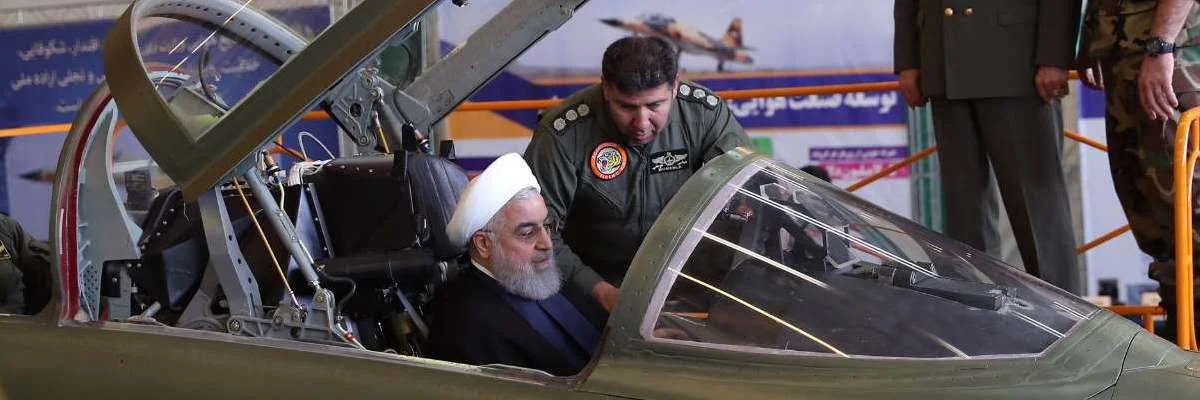
◢ Iran unveiled its first domestic fighter jet on Tuesday, with President Hassan Rouhani insisting that Tehran's military strength was only designed to deter enemies and create "lasting peace.” Images on state television showed Rouhani sitting in the cockpit of the new "Kowsar" fourth-generation fighter at the National Defence Industry exhibition in Tehran. State media said it had "advanced avionics" and multi-purpose radar, and that it was "100-percent indigenously made" for the first time.
Iran unveiled its first domestic fighter jet on Tuesday, with President Hassan Rouhani insisting that Tehran's military strength was only designed to deter enemies and create "lasting peace".
Images on state television showed Rouhani sitting in the cockpit of the new "Kowsar" fourth-generation fighter at the National Defence Industry exhibition in Tehran.
State media said it had "advanced avionics" and multi-purpose radar, and that it was "100-percent indigenously made" for the first time.
Footage of the Kowsar's test flights was circulated by various official media.
But live footage of the plane taxiing along a runway at the defense show was cut before it could take off.
"When I speak of our readiness to defend, it means we seek lasting peace. If we lack readiness, we welcome war," Rouhani said in a televised speech shortly after.
"Some think when we increase our military power, this means we seek war. (But) this is peace-seeking because we don't want war to happen," he added.
"If we don't have a deterrent... it gives a green light for others to enter this country."
The plane was first publicly announced on Saturday by Defense Minister Amir Hatami, who had said it would be unveiled on Wednesday.
He gave few details of the project, focusing instead on Iran's efforts to upgrade its missile defenses.
Hatami said the defence programme was motivated by memories of the missile attacks Iran suffered during its eight-year war with Iraq in the 1980s, and by repeated threats from Israel and the United States that "all options are on the table" in dealing with the Islamic republic.
"We have learned in the (Iran-Iraq) war that we cannot rely on anyone but ourselves," he said in a televised interview.
The US has sold hundreds of billions of dollars of weapons to Iran's regional rivals, but has demanded that Tehran curb its defense programs, and is in the process of reimposing crippling sanctions in a bid to force its capitulation.
Rouhani said Iran must show restraint as well as deterrence, in an apparent swipe at his hardline opponents who seek to provoke the US with aggressive slogans.
"With a couple of sentences one can start a fight. With a couple of military moves one can enter confrontation. But then it will be costly," he said.
"The skill is to protect the country with minimum cost," he said
That mirrored a line from the defence minister, who said on Saturday: "Our resources are limited and we are committed to establishing security at a minimum cost."
Following the withdrawal of the United States from the 2015 nuclear deal in May, Iran has avoided an aggressive response and sought to maintain its good will with other international partners who oppose Washington's move.
Rouhani said US pressure was also a spur to action.
"Why does America impose economic sanctions on us? Why does it impose them on Turkey? Why does it drag China into an economic war? Because it feels each one of them has a weak point. We must fix our weak points."
Photo Credit: IRNA
Netanyahu and Top Trump Aide Call on Europe to Pressure Iran
◢ Israeli Prime Minister Benjamin Netanyahu and US President Donald Trump's national security adviser met in Jerusalem Monday and called on European nations to do more to pressure Iran. John Bolton arrived in Israel on Sunday for three days of talks expected to focus mainly on Iran and its presence in Syria. Netanyahu strongly urged Trump to withdraw from the nuclear deal between Israel's main enemy Iran and world powers, and the US president did so in May, resulting in the reimposition of sanctions.
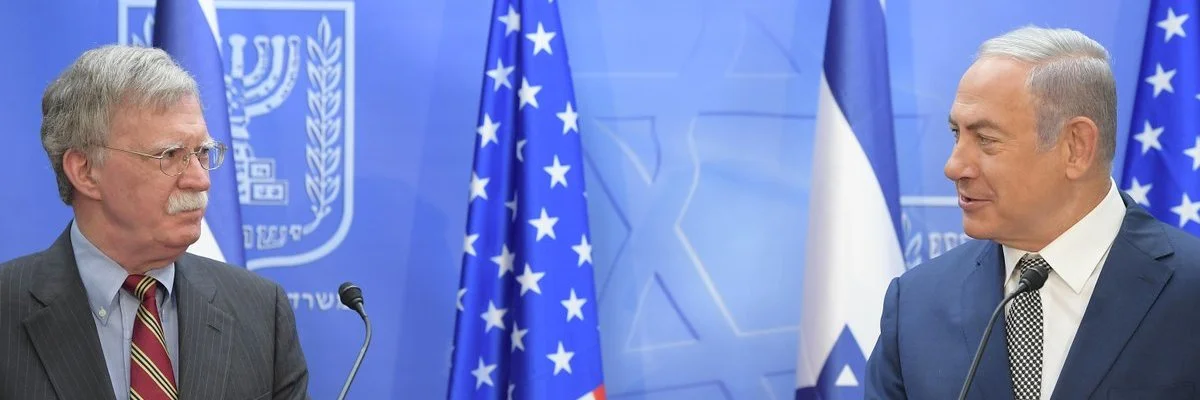
Israeli Prime Minister Benjamin Netanyahu and US President Donald Trump's national security adviser met in Jerusalem Monday and called on European nations to do more to pressure Iran.
John Bolton arrived in Israel on Sunday for three days of talks expected to focus mainly on Iran and its presence in Syria.
Netanyahu strongly urged Trump to withdraw from the nuclear deal between Israel's main enemy Iran and world powers, and the US president did so in May, resulting in the reimposition of sanctions.
Israel and the United States have been closely aligned on their approach to Iran since Trump took office.
"I frankly believe that all countries who care about peace and security in the Middle East should follow America's lead and ratchet up the pressure on Iran," Netanyahu told journalists.
"Because the greater the pressure on Iran, the greater the chance that the regime will roll back its aggression. And everybody should join this effort."
The comments were a veiled reference to European countries, which are seeking to save the nuclear deal and have vowed to keep providing Iran with the economic benefits it received from the accord.
They argue that the nuclear deal is working as intended in keeping Iran from obtaining nuclear weapons for now.
Bolton said "it's a question of the highest importance for the United States that Iran never get a deliverable nuclear weapons capability."
"It's why President Trump withdrew from the wretched Iran nuclear deal," he said, speaking alongside Netanyahu.
"It's why we've worked with our friends in Europe to convince them of the need to take stronger steps against the Iranian nuclear weapons and ballistic missile program."
The United States and Israel argue the deal was too limited in scope and timeframe while also allowing Iran to finance militant activities in the region due to the lifting of sanctions.
Bolton's trip will also take him later in the week to Ukraine and Geneva, where he will meet with his Russian counterpart Nikolai Patrushev on Thursday.
The meeting in Geneva is a follow-up to Trump's highly controversial July summit with Russian President Vladimir Putin in Helsinki, according to the White House.
Iran is backing Syrian President Bashar al-Assad in his country's civil war along with Russia and Lebanese Shiite militant group Hezbollah.
Netanyahu has pledged to prevent Iran from entrenching itself militarily in neighboring Syria, and a series of recent strikes that have killed Iranians.there have been attributed to Israel.
He has also pressed Putin to guarantee that Iranian forces in Syria and their allies, such as Hezbollah, will be kept far away from the Israeli-occupied Golan Heights.
Photo Credit: PM Israel
France's Total Has Officially Left Iran: Oil Minister
◢ French energy giant Total has officially quit its multi-billion-dollar gas project in Iran, Oil Minister Bijan Namdar Zanganeh said on Monday, following the reimposition of US sanctions. "Total has officially left the agreement for the development of phase 11 of South Pars (gas field)," he told parliament's news agency ICANA, adding that it had been more than two months since the French firm announced it would leave.
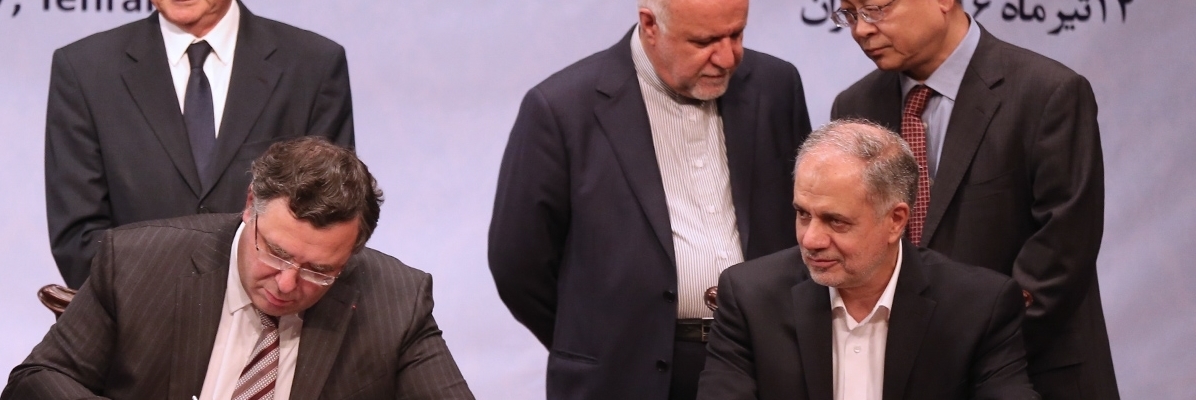
French energy giant Total has officially quit its multi-billion-dollar gas project in Iran, Oil Minister Bijan Namdar Zanganeh said on Monday, following the reimposition of US sanctions.
"Total has officially left the agreement for the development of phase 11 of South Pars (gas field)," he told parliament's news agency ICANA, adding that it had been more than two months since the French firm announced it would leave.
Zanganeh also appeared before parliament to underline the dire state of Iran's oil and gas facilities, which he said were "worn out" and in need of renovation that Iran could not afford.
The United States said in May that it was abandoning the 2015 nuclear deal and reimposing sanctions on Iran in two phases in August and November, with the second targeting the country's vital oil and gas sector.
The other parties to the nuclear deal—Britain, France, Germany, China and Russia—have vowed to stay in the accord but their companies risk huge penalties if they keep doing business in Iran.
Total had already said it would be impossible to remain in Iran unless it received a specific waiver from Washington, which was not granted.
The French firm signed up in July 2017 for the USD 4.8 billion project to develop the field off Iran's southern coast, as the lead partner alongside the China National Petroleum Corporation (CNPC) and Iran's Petropars.
It was due to bring state-of-the-art technology to create the pressure needed to tap the gas field, which Iran could then replicate for surrounding fields where pressure has been declining.
Total was due to make an initial USD 1 billion investment, but the company said in May that it had spent less than 40 million euros on the project to date, as uncertainty over US actions mounted.
The company would have been highly vulnerable to US penalties for remaining in Iran.
It has USD 10 billion of capital employed in its US assets, and US banks are involved in 90 percent of its financing operations, Total said in May.
Technology Needed
Zanganeh said the process to find a replacement for Total was underway.
But it is unlikely that CNPC or Iran's own firms can take over the project, said Homayoun Falakshahi, an energy analyst for Wood Mackenzie in London.
"The technology Total was hoping to implement would have been world-first, using electricity to compress the gas," he told AFP.
"The other complication is that it needs huge platforms. Iran can build 5,000- to 7,000-tonne platforms. This would have been 20,000 tonnes," he added.
CNPC was suspended from the project once before, in 2011, for failing to make progress.
The urgent need for investment to upgrade Iran's dilapidated energy infrastructure was a key motivator behind its decision to join the 2015 nuclear deal.
Zanganeh appeared in parliament on Monday to answer questions on safety concerns following a number of recent fires at refineries.
"A big part of the oil industry has been worn out and the necessary renovation has not taken place," he told parliament, according to the official IRNA news agency.
He said there were 10 cases per day of tubes perforating in Iran's southern facilities, and that some refineries were up to 80 years old, "whereas the useful life of an industrial unit is 30 years".
"We have no resources for renovating them," he added.
But some conservatives in Iran oppose foreign involvement in the strategic energy sector, and have frustrated plans to develop attractive investment contracts.
As a result, the Total deal was the only major investment project finalized after the nuclear deal came into force.
The only other deal was a smaller project with Russia's Zarubezhneft, worth EUR 600 million, to develop two oil fields in western Iran.
Photo Credit: IRNA
Europe Must 'Pay Price' to Save Nuclear Deal: Iran FM
◢ Iran's Foreign Minister Mohammad Javad Zarif said Sunday that Europe had not yet shown it was willing to "pay the price" of defying Washington in order to save the nuclear deal. Zarif said European governments had put forward proposals to maintain oil and banking ties with Iran after the second phase of US sanctions return in November. But he told Iran's Young Journalist Club website that these measures were more "a statement of their position than practical measures".
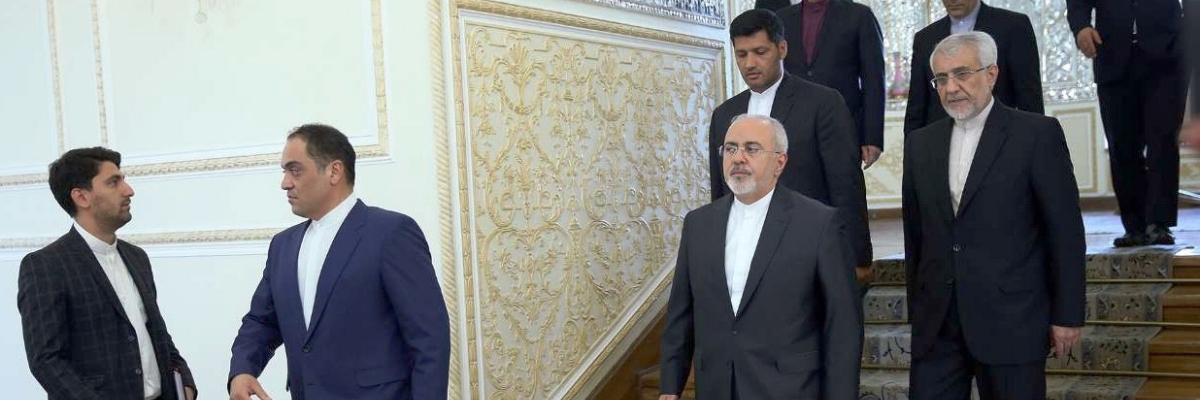
Iran's Foreign Minister Mohammad Javad Zarif said Sunday that Europe had not yet shown it was willing to "pay the price" of defying Washington in order to save the nuclear deal.
Zarif said European governments had put forward proposals to maintain oil and banking ties with Iran after the second phase of US sanctions return in November.
But he told Iran's Young Journalist Club website that these measures were more "a statement of their position than practical measures".
"Although they have moved forward, we believe that Europe is not yet ready to pay the price (of truly defying the US)," Zarif said.
US President Donald Trump pulled out of the 2015 nuclear deal in May, and began reimposing sanctions earlier this month that block other countries from trading with Iran.
A second phase of sanctions targeting Iran's crucial oil industry and banking relations will return on November 5.
Europe has vowed to keep providing Iran with the economic benefits it received from the nuclear deal, but many of its bigger companies have already pulled out of the country for fear of US penalties.
"Iran can respond to Europe's political will when it is accompanied by practical measures," said Zarif.
"Europeans say the JCPOA (nuclear deal) is a security achievement for them. Naturally each country must invest and pay the price for its security. We must see them paying this price in the coming months."
Photo Credit: IRNA
US Creates 'Iran Action Group' to Up Pressure on Tehran
◢ US Secretary of State Mike Pompeo announced a new high-level team to focus US and international efforts to increase diplomatic and economic pressure on Iran. The Iran Action Group will drive Washington's "maximum pressure" strategy to change Tehran's behavior, including potentially sanctioning other countries which trade with the country. The group will be headed by Brian Hook as the State Department's Special Representative for Iran.
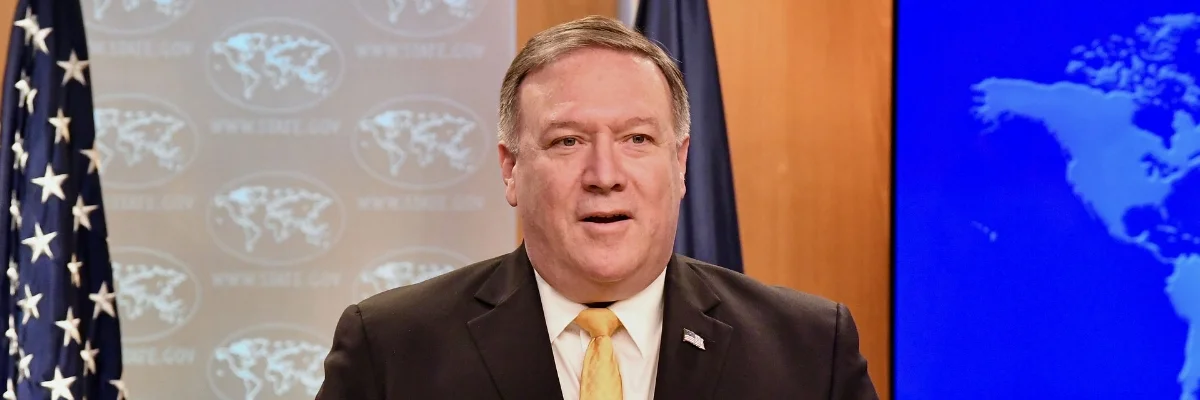
US Secretary of State Mike Pompeo announced a new high-level team to focus US and international efforts to increase diplomatic and economic pressure on Iran.
The Iran Action Group will drive Washington's "maximum pressure" strategy to change Tehran's behavior, including potentially sanctioning other countries which trade with the country.
The group will be headed by Brian Hook as the State Department's Special
Representative for Iran.
Hook, currently director of policy planning at the State Department, was in charge of the failed effort to get support from US allies for Washington's decision in May to pull out of the Iran nuclear deal.
"For nearly 40 years the regime in Tehran has been responsible for a torrent of violence and destabilizing behavior against the United States, our allies, our partners and indeed the Iranian people themselves," said Pompeo.
"Our hope is that one day soon we can reach a new agreement with Iran. But we must see major changes in the regime's behavior both inside and outside its borders."
The US has laid out a long list of activities it demands Tehran changes, including halting support for the Syrian government and the Lebanese Hezbollah movement, shutting down its nuclear development program, and freeing detained Americans.
"This team is committed to a strong global effort to change the Iranian regime's behavior," Hook said.
"We want to be closely synchronized with our allies and partners around the world."
Hook, who met with officials from Britain, France and Germany on Iran policy in London on Wednesday, held out the possibility of the US engaging directly with Iranian leaders if they demonstrate a "commitment" to changing their behavior.
But he was not specific on what would be the minimum required to make that impression.
He also said that Washington is stepping up its effort to get other countries to fall in line with economic pressure on Tehran, including the crackdown on Iran's oil trade, financial sector and shipping industry announced for early November.
"Our goal is to reduce every country's import of Iranian oil to zero by November 4."
"We are prepared to impose secondary sanctions on other governments that continue this sort of trade with Iran."
Last week Trump warned the world about doing business with Iran, as European allies continued to grumble about the US policy and China, India and Turkey appeared poised to continue importing Iranian oil, providing the Iranian government crucial foreign exchange.
But the US sanctions appear to have had effect, tightening the country's supply of dollars and sending its currency in a tailspin—with the result a jump in inflation that has hurt Iranian consumers.
In Monday Iran's supreme leader Ayatollah Ali Khamenei's said there would be neither war nor negotiations with the United States, and put the blame for mounting domestic economic turmoil on the shoulder of President Hassan Rouhani.
US officials have repeatedly said they only pressuring for a change in Iranian behavior and not change in the regime itself.
Asked whether the announcement of the Iran Action Group was purposely timed with 65th anniversary of the CIA-engineered overthrow of ex-prime minister Mohammad Mossadegh—which took place in mid-August 1953—Hook labelled it "pure coincidence."
Photo Credit: State Department
Iraq Religious Tourism Squeezed by Iran Sanctions
◢ With hotels facing mass cancellations, Iraqis in the holy city of Najaf are being hit hard by US sanctions on neighboring Iran, which have forced cash-strapped pilgrims to stay home. At the city's edge, surrounded by mosaic-covered walls and topped by a golden dome, sits the shrine of Imam Ali, son-in-law of the Prophet Mohammed and a revered figure among Shiite Muslims.
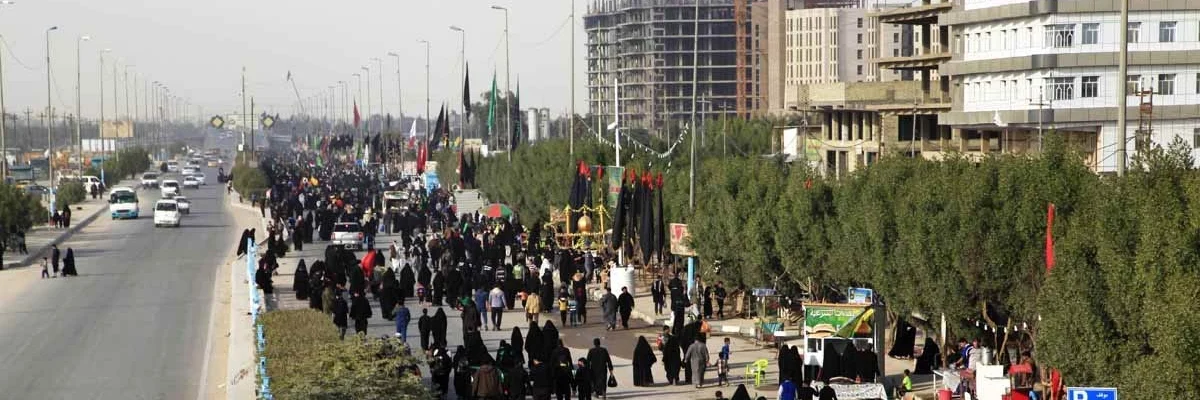
With hotels facing mass cancellations, Iraqis in the holy city of Najaf are being hit hard by US sanctions on neighboring Iran, which have forced cash-strapped pilgrims to stay home.
At the city's edge, surrounded by mosaic-covered walls and topped by a golden dome, sits the shrine of Imam Ali, son-in-law of the Prophet Mohammed and a revered figure among Shiite Muslims.
The shrine draws a million and a half Shiite pilgrims to Najaf each year, in addition to those who travel to the holy city for the huge annual Arbaeen commemoration.
The vast majority hail from neighboring Iran, whose population is overwhelmingly Shiite.
"More than 85 percent are Iranians," said Saeb Abu Ghoneim, president of the hoteliers' union in the city.
Signs throughout the city, 150 kilometres (95 miles) south of Baghdad, are translated into Farsi.
Iran's national language can be heard across Najaf, spoken by women in full-length black veils and by male pilgrims, walking in the shade to avoid the searing sunlight.
But just days after Washington this month re-imposed sanctions on Iran, following President Donald Trump's decision to pull the US out of a landmark 2015 nuclear accord with Tehran, the impact is already being felt in Najaf.
Currency Crisis
The Iranian rial has been severely hit by internal economic woes and the US measures, losing around half of its value against the dollar since April.
Farzad Reza Ali, an Iranian who did manage to fund his trip to Najaf, said the drop in pilgrim numbers was a direct result of the currency crisis.
"(It's) because the rial is worth nothing," he said, a travel company badge tied to a ribbon around his neck in the colors of the Iranian flag.
The first round of sanctions against Iran covers financial transactions and imports of raw materials.
Further measures due to hit in November will affect Iran's central bank and the vital hydrocarbon industry.
At the start of the year the dollar exchange rate was 42,900 rials. It has since hit nearly 120,000 rials on the black market.
To get the USD 40 needed for a visa to Iraq, Mokdabandeh Mehrban said he had to go to the black market.
"Now the market fluctuates and it's not supported by the government, so there are fewer Iranian pilgrims," he said, wearing large sunglasses and a striped shirt.
Market in 'Free Fall'
Cancellations by Iranian pilgrims could have dramatic consequences for Iraq's tourism sector, which last year directly or indirectly employed some 544,500 people.
It also contributed three percent of GDP, nearly $5 billion dollars, according to the World Travel and Tourism Council.
Tourism is almost exclusively religious in Iraq and is concentrated in Najaf and nearly Karbala, the country's other holy Shiite city.
As Najaf prepares to welcome pilgrims for numerous religious festivals this month, there is a notable lack of Iranian arrivals.
Transport links have been slashed -- Najaf airport, which used to offer 35 flights a day between the two countries, now operates just 12.
Officials say most of the passengers on the flights leaving Najaf for Iran are Iraqi pilgrims heading for Iranian holy sites.
"A lot of hotel reservations have been cancelled and the number of pilgrims to Najaf is very fragile," said Abu Ghoneim, although he was unable to provide precise figures from the city's 285 hotels.
To counter the trend, hoteliers have been forced to offer rooms at bargain basement prices.
"Prices have been slashed, to less than 50 percent sometimes," said Youssef Abu Al-Tabouk, owner of Najaf's Al Balad Al Amine hotel.
But discounted stays and other special offers are not enough to make up for the impact of sanctions, the 85-year-old said, his head covered with a traditional black and white keffiyeh scarf. Without Iranian pilgrims, he said, "the market is in free fall."
Photo Credit: IRNA