
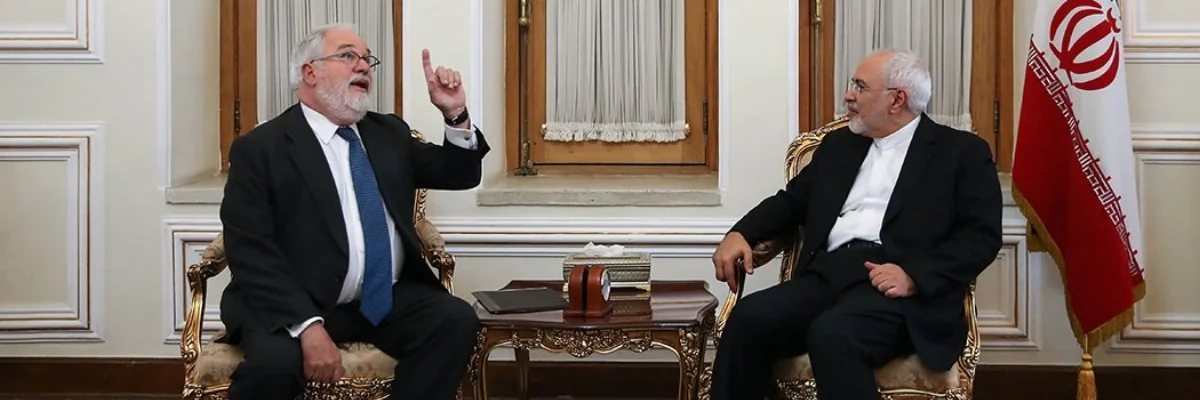
Iran's Zarif Says EU Efforts to Save Nuke Deal 'Not Sufficient'
◢ Iran's Foreign Minister Mohammad Javad Zarif said Sunday that European efforts to save the nuclear deal after the exit of the United States were not sufficient. "The cascade of decisions by EU companies to end their activities in Iran makes things much more complicated," Zarif told reporters.
Iran's Foreign Minister Mohammad Javad Zarif said Sunday that European efforts to save the nuclear deal after the exit of the United States were not sufficient.
"The cascade of decisions by EU companies to end their activities in Iran makes things much more complicated," Zarif told reporters.
He spoke after meeting with EU energy commissioner Miguel Arias Canete, who has been on a two-day visit to Tehran—the first by a Western official since Washington announced its withdrawal from the 2015 nuclear deal earlier this month.
"With the exit of the United States from the nuclear deal, the expectations of the Iranian public towards the European Union have increased... and the EU's political support for the nuclear agreement is not sufficient," Zarif added in comments carried by state broadcaster IRIB.
Several foreign firms have already halted their Iranian operations while they wait to see how talks within the EU will play out.
French oil major Total said last week it would abandon its $4.8-billion investment project in Iran unless it was granted a waiver from Washington.
Another French energy giant, Engie, said Saturday it would cease engineering work in Iran before November, when US sanctions are due to be reimposed.
"The European Union must take concrete supplementary steps to increase its investments in Iran. The commitments of the EU to apply the nuclear deal are not compatible with the announcement of probable withdrawal by major European companies," Zarif said.
Canete said he recognised that time was short and that clear measures were needed from Europe to protect investments and oil purchases.
Iran has threatened to resume industrial uranium enrichment "without limit"
if its interests are not protected.
Photo Credit: Fars
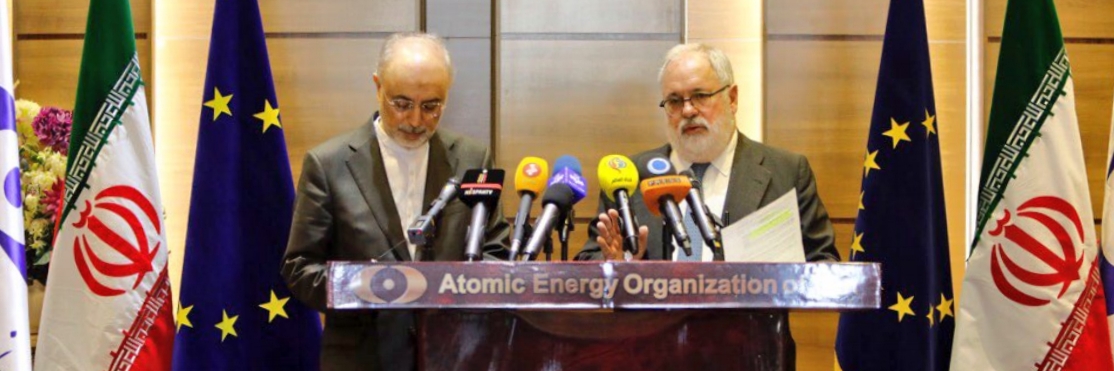
Iran Wary as EU Presents Measures to Save Nuclear Deal
◢ Iran said Saturday it would wait to see whether Europe produces tangible results in overcoming US sanctions before deciding whether to stay in the nuclear deal, as a top EU official visited Tehran to present plans to maintain trade ties. "The ball is in the court of the EU. They have presented different proposals, we will see if they materialize," Iran's Atomic Energy Organization head Ali Akbar Salehi told reporters.
Iran said Saturday it would wait to see whether Europe produces tangible results in overcoming US sanctions before deciding whether to stay in the nuclear deal, as a top EU official visited Tehran to present plans to maintain trade ties.
"The ball is in the court of the EU. They have presented different proposals, we will see if they materialize," Iran's Atomic Energy Organization head Ali Akbar Salehi told reporters.
He was speaking after a meeting with EU Energy Commissioner Miguel Arias Canete, the first high-level Western official to visit Iran since the US withdrew from the 2015 nuclear deal earlier this month.
Canete called the nuclear deal "fundamental for peace in the region" as he outlined EU plans to continue oil and gas purchases and protect European companies, despite renewed US sanctions on Iran that are set to be phased in over the next six months.
"For sure there are clear difficulties with the sanctions," Canete said at a press conference alongside Salehi.
"We will have to ask for waivers, for carve-outs for the companies that make investments."
Salehi acknowledged Europe's efforts but said: "We want tangible results, otherwise we take our own decisions. I personally don't want to see such decisions being taken."
EU Firms Eye Exit
Iran has threatened to resume industrial uranium enrichment "without limit" unless its interests are preserved.
Salehi said the Iranian people had lost trust in the nuclear agreement, and if trade benefits were not protected "they will lose more confidence... and we will be forced to leave."
European leaders have outlined measures to protect EU firms from US sanctions.
But several of their companies—including France's Total and Holland's Maersk -- have already said it will be impossible to stay in Iran once US sanctions are reimposed unless they receive explicit exemptions from Washington.
Canete was due to meet Iran's Environment Minister Isa Kalantari and Oil Minister Bijan Namdar Zanganeh later on Saturday, and Foreign Minister Mohammad Javad Zarif on Sunday.
Iran's trade with the European Union is around 20 billion euros, evenly split between imports and exports.
The vast majority of EU purchases from Iran—90 percent—are oil purchases, going primarily to Spain, France, Italy, Greece, the Netherlands and Germany.
Iran, which has the world's fourth-biggest oil reserves, produces some 3.8 million barrels of oil per day, 70 percent of which goes to China and other Asian countries, and 20 percent to Europe.
It also has the second-biggest gas reserves in the world, but limited infrastructure means little is exported.
Russia and China—the other parties to the nuclear deal—have also vowed to maintain trade with Iran and are less vulnerable to economic pressure from Washington.
Photo Credit: EU MAC

U.S. Trying to Move Forward After Quitting Iran Nuclear Deal
◢ After leaving the Iran nuclear deal, Washington wants to move forward by offering to build a "coalition" to counter the multiple "threats" posed by the Tehran regime—but Europeans intent on saving the 2015 accord may thwart that effort. US Secretary of State Mike Pompeo on Monday will unveil a new "diplomatic roadmap" for Iran.
After leaving the Iran nuclear deal, Washington wants to move forward by offering to build a "coalition" to counter the multiple "threats" posed by the Tehran regime—but Europeans intent on saving the 2015 accord may thwart that effort.
US Secretary of State Mike Pompeo on Monday will unveil a new "diplomatic roadmap" for Iran—how America plans to "address the totality of Iran's threats," according to the State Department's director of policy planning, Brian Hook.
Washington is looking to draft a "new security architecture and a better security framework, a better deal," Hook told reporters ahead of the speech, the first major policy address by Pompeo since he became America's top diplomat.
"The US will be working hard to put together a coalition," State Department spokeswoman Heather Nauert said, flagging Washington's bid for a multilateral approach after its unilateral withdrawal from the accord.
President Donald Trump has long trashed the deal with Iran—concluded under his predecessor Barack Obama, together with Britain, China, France, Germany and Russia—saying it did not do enough to curtail Tehran's nuclear ambitions.
The Republican leader also said it did not go far enough in restricting Iran's ballistic missile program, or its intervention in regional conflicts from Yemen to Iraq and Syria.
"We need a new—a framework that's going to address the totality of Iran's threats," Hook said.
So far, the guidelines of this new strategy are unclear.
The big unknown is whether European leaders, who were bitterly disappointed by Trump's decision to ditch the deal, would be willing to return to talks with his administration any time soon.
For now, the European Union is trying to persuade Iran to stay in the 2015 agreement, even without Washington's participation.
Punishment Strategy
The re-establishment of the US sanctions that were lifted after the Iran nuclear deal was signed will force European companies to choose between investing in Iran or trading with the United States.
In reality, there is no choice—European companies cannot afford to forsake the US market And with investment from Europe—which had been the main carrot dangled before the Iranians to right their struggling economy—now stymied, Tehran may have little incentive to hold up its end of the bargain.
The Europeans have tried to squeeze a little flexibility out of Washington to help out their firms, but to no avail.
"They tell us, 'We want the sanctions to hurt, there won't be any exemptions,'" said one European official.
Some in the US administration are calling for a "North Korea scenario," meaning the imposition of sanctions so severe that they force Iran back to the negotiating table.
By reimposing the sanctions, Washington aims to "bring economic pressure to bear on Iran," Hook said.
"It was economic pressure that brought the Iranians to the table a few years ago."
But Jake Sullivan, a former Obama administration official who is now a researcher at the Carnegie Endowment for International Peace, said "the idea that we are going to be able to reconstruct sanctions at the same level (as 2015) is a flawed concept."
"The more aggressive the US is in telling the Europeans basically, 'We have you under our thumbs,' the more the Europeans are going to say: 'We will find any means we possibly can to not let you do that to us,'" he said Friday.
Washington has meanwhile sought to downplay the differences with its allies.
"We agree with the Europeans on much, much more than we disagree on," said Hook, citing "a lot of progress" during talks with Paris, London and Berlin that aimed to find solutions to Trump's concerns. The US official also mentioned French President Emmanuel Macron's proposal of a "new deal," based on the 2015 accord, but offering a broader strategy on
Iran.
But those negotiations, and Macron's proposal, pre-dated the abrupt US withdrawal from the accord. Are they still on the table? And how could an accord be reached now if it was impossible 10 days ago?
"We are waiting to see more details," said a European official.
Another European official warned: "But if it is a question of building a coalition to push for regime change in Iran, the Europeans won't be on board."
For Sullivan, the next phase is one in which "the punishment is the strategy—squeezing Iran and keeping them in the penalty box for as long as possible, and as much as possible, with the hope of regime change, but if it's not regime change, (then) a weaker regime."
Photo Credit: Wikicommons

EU Moves to Shield EU Firms From US Sanctions Against Iran
◢ The EU launched formal steps Friday aimed at sparing European firms fallout from US sanctions on Iran as part of efforts to preserve the nuclear deal with Tehran. The move to invoke the "blocking statute" had received the all-clear at a meeting of European Union leaders in Sofia on Thursday as the transatlantic rift deepened.
The EU launched formal steps Friday aimed at sparing European firms fallout from US sanctions on Iran as part of efforts to preserve the nuclear deal with Tehran.
The move to invoke the "blocking statute" had received the all-clear at a meeting of European Union leaders in Sofia on Thursday as the transatlantic rift deepened.
The European Commission, the EU executive, said Friday it "launched the formal process to activate the blocking statute by updating the list of US sanctions on Iran falling within its scope."
US President Donald Trump last week controversially pulled Washington out of the 2015 international deal with Iran that placed limits on its nuclear program in return for easing economic sanctions.
The "blocking statute," which EU member states and the European Parliament must still endorse, is aimed at easing the fears of European companies that invested in Iran after the deal.
"The blocking statute forbids EU companies from complying with the extraterritorial effects of US sanctions, allows companies to recover damages arising from such sanctions from the person causing them, and nullifies the effect in the EU of any foreign court judgements based on them," the commission said.
The commission said it hopes to have the measure in force before August 6 when the first batch of US sanctions take effect.
The commission also launched "the formal process to remove obstacles for the European Investment Bank (EIB) to decide under the EU budget guarantee to finance activities outside the European Union, in Iran," the executive said.
"This will allow the EIB to support EU investment in Iran," it added, noting the measure could help small and medium-sized companies.
The "blocking statute" is a 1996 regulation originally created to get around Washington's trade embargo on Cuba, which prohibits EU companies and courts from complying with specific foreign sanction laws, and says no foreign court judgments based on these laws have any effect in the European Union.
However, the Cuba row was settled politically, so the blocking regulation's effectiveness was never put to the test, and its value may lie more in becoming a bargaining chip with Washington.
Photo Credit: Wikicommons
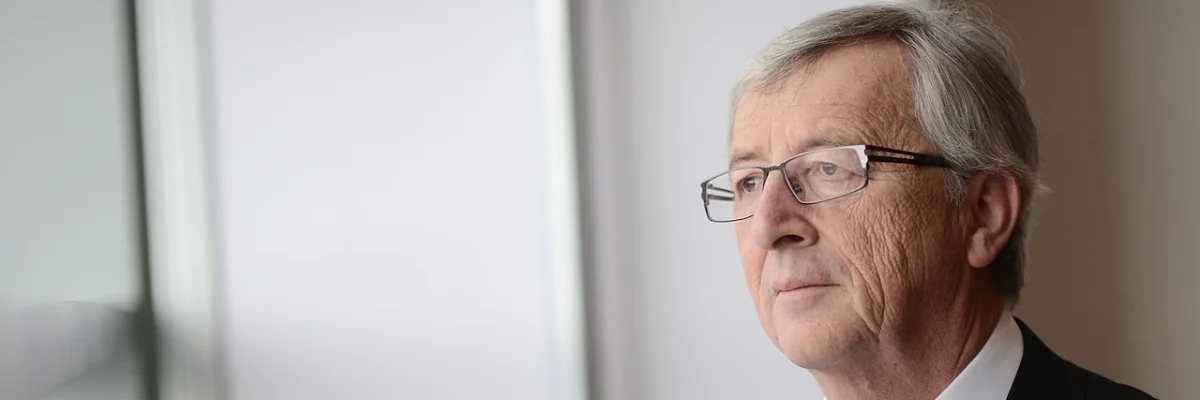
EU to Launch Moves to Block US Sanctions on Iran Friday: Juncker
◢ The EU will on Friday begin moves to block the effect of US sanctions on Iran in the bloc, European Commission chief Jean-Claude Juncker said, as part of efforts to preserve the nuclear deal with Tehran. The "blocking statute" is a 1996 regulation originally created to get around Washington's trade embargo on Cuba.
The EU will on Friday begin moves to block the effect of US sanctions on Iran in the bloc, European Commission chief Jean-Claude Juncker said, as part of efforts to preserve the nuclear deal with Tehran.
"We will begin the 'blocking statute' process, which aims to neutralize the extraterritorial effects of US sanctions in the EU. We must do it and we will do it tomorrow morning at 10:30," Juncker said at a summit in Sofia on Thursday.
The European Union is trying to find ways to keep Iran in the 2015 accord by safeguarding the economic benefits Tehran gained in return for giving up its nuclear program, after US President Donald Trump abruptly pulled out of the deal.
The "blocking statute" is a 1996 regulation originally created to get around Washington's trade embargo on Cuba.
It prohibits EU companies and courts from complying with specific foreign sanctions laws and says no foreign court judgments based on these laws have any effect in the EU.
But the row with the United States over the Cuba embargo was settled politically, so the effectiveness of the blocking regulation has never been put to the test.
Its value may lie more as a bargaining chip with Washington than its legal effectiveness, and last week an EU source acknowledged that the "political symbolic effect is potentially bigger than the economic effect."
Photo Credit: Wikicommons
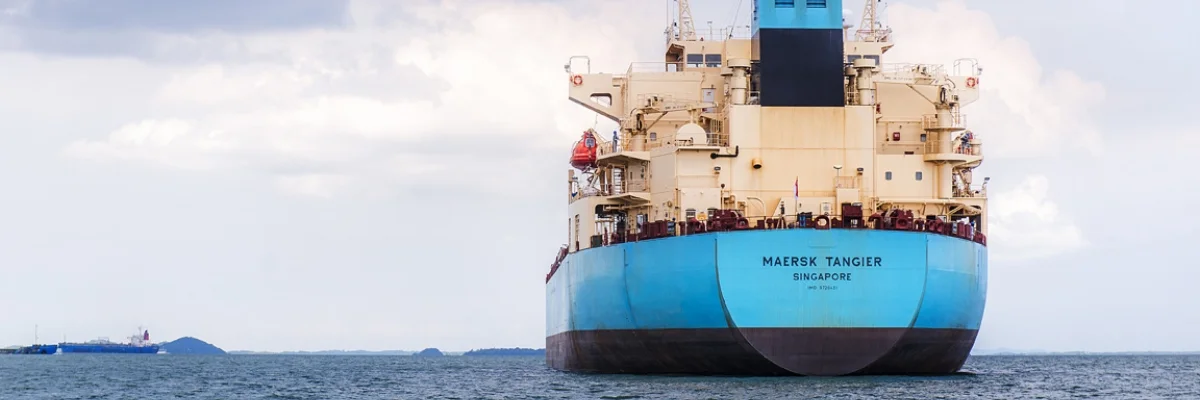
Denmark's Maersk Tankers Ends Iran Shipping After US Reimpose Sanctions
◢ Danish shipping group Maersk Tankers on Thursday said it would cease its activities in Iran due to the US's decision to leave a landmark nuclear deal and reimpose sanctions against Tehran. Maersk Tankers would honor customer agreements entered into before May 8, but then wind them down by November 4, "as required by the re-imposed US sanctions.”
Danish shipping group Maersk Tankers on Thursday said it would cease its activities in Iran due to the US's decision to leave a landmark nuclear deal and reimpose sanctions against Tehran.
Maersk Tankers would honor customer agreements entered into before May 8, but then wind them down by November 4, "as required by the re-imposed US sanctions," the company told AFP.
A former subsidiary of the Danish maritime group AP Moller-Maersk, Maersk Tankers was in October 2017 sold for $1.17 billion to APMH Invest, a subsidiary of the investment A.P. Moller Holding.
The nuclear deal, reached in July 2015 between Iran and Germany, China, the US, France, Britain and Russia, called for Tehran to freeze its nuclear program in exchange for getting some international sanctions against the Islamic Republic lifted.
Washington announced in early May that it would withdraw from the agreement and reimpose sanctions against Tehran.
Iran's oil exports amounted to one million barrels a day, mostly to Asia and some European countries, before sanctions were lifted. They have since climbed to 2.5 million barrels.
Photo Credit: Maersk
Russia-Led Trade Bloc Seeks Free Trade Area With Iran
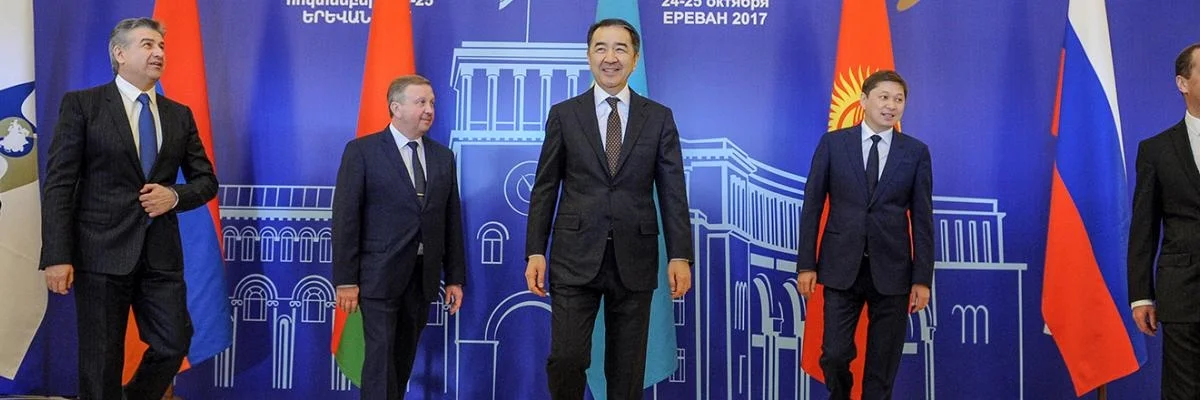
◢ The Russia-led Eurasian Economic Union trade bloc signed an interim trade deal with Iran on Thursday and plans to negotiate a free trade zone, said Kazakhstan which hosted the talks. The agreement signed in the Kazakh capital Astana comes as the United States is snapping economic sanctions on Tehran back into place and warned companies not to do business with Iran.
The Russia-led Eurasian Economic Union trade bloc signed an interim trade deal with Iran on Thursday and plans to negotiate a free trade zone, said Kazakhstan which hosted the talks.
The agreement signed in the Kazakh capital Astana comes as the United States is snapping economic sanctions on Tehran back into place and warned companies not to do business with Iran.
The interim deal lowers tariffs on hundreds of goods and set a three-year negotiating period to thrash out a free trade deal.
"Our negotiators are now set a task for the future," said Tigran Sargsyan, who chairs the commission managing the bloc.
The deal is a demonstration by Moscow and its allies in the region that they do not intend to play along with Washington's efforts to isolate Iran economically.
Earlier this month US President Donald Trump's controversially pulled Washington out of an international deal with Iran that placed limits on its nuclear program in return for easing economic sanctions.
Companies around the world face a difficult choice as Washington has previously slapped huge fines on firms which bust US sanctions.
The proposed free trade agreement with the EEU will not make Iran a fully-fledged member of the bloc that also comprises Armenia, Belarus, Kazakhstan and Kyrgyzstan, but would bring Tehran further into the Kremlin's orbit.
The interim deal covers a range of goods, with Iran lowering tariffs on 246 goods ranging from foodstuffs to industrial goods while EEU members made concessions on 175 goods, the Kazakh economy ministry said.
According to Russia's Interfax news agency China also signed on Thursday a cooperation deal with the EEU. The terms of the deal were not immediately clear.
A free trade agreement between the EEU and Vietnam entered into force in 2016.
Photo Credit: Kyrgyzstan PM
Iran Says China Group Ready to Replace Total on Gas Deal
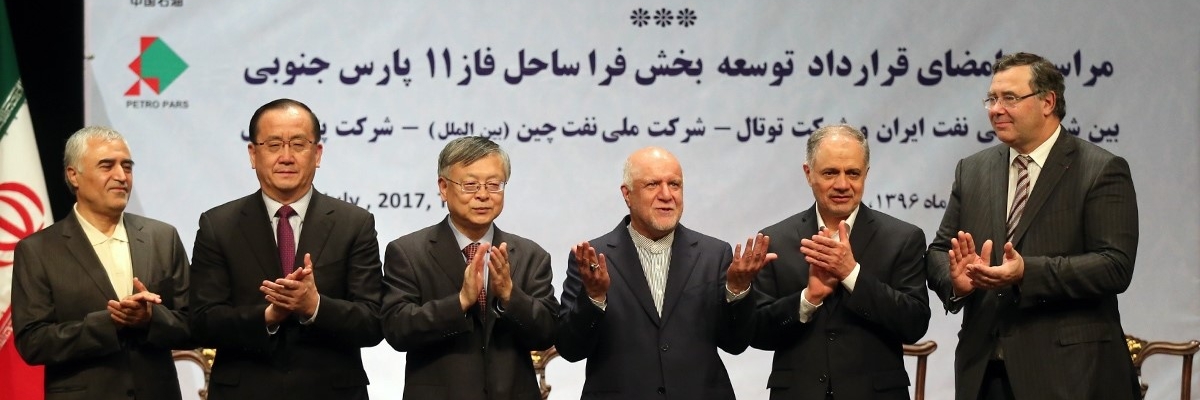
◢ Chinese state-owned oil company CNPC will replace Total on a major gas field project in Iran if the French energy giant pulls out over renewed US sanctions against Tehran, Iran's oil minister has said. Total started the USD 4.8-billion South Pars 11 project in July 2017, two years after Western powers signed a nuclear deal with Tehran prompting the return of many businesses to Iran.
Chinese state-owned oil company CNPC will replace Total on a major gas field project in Iran if the French energy giant pulls out over renewed US sanctions against Tehran, Iran's oil minister has said.
"Total has said that if it doesn't get an exemption from the United States to continue its work, it will begin to pull out of the deal," Bijan Namdar Zanganeh was quoted as saying by his ministry's Shana news service.
"If that happens, the Chinese firm CNPC will replace Total."
Total started the USD 4.8-billion South Pars 11 project in July 2017, two years after Western powers signed a nuclear deal with Tehran prompting the return of many businesses to Iran.
But earlier this month, US President Donald Trump announced his withdrawal from the deal, and warned companies that they face sanctions if they do business with Iran.
The French group said Wednesday it has USD 10 billion of capital employed in its US assets, and US banks are involved in 90 percent of its financing operations, making Total highly vulnerable if targeted by any US actions.
By contrast, Total said it had spent less than EUR 40 million euros on the Iranian project, which it runs with its partner Petrochina and which is dedicated to the supply of domestic gas inside Iran.
Zanganeh said on Wednesday that were CNPC, which was part of the Total deal, unable to carry out the work in South Pars due to US sanctions it would fall to Iran's Petropars.
Iran possesses the second-largest gas reserves on the planet, after Russia, and the fourth largest oil supplies.
Photo Credit: IRNA
EU Leaders Agree 'United Approach' on Iran Deal, Trade
◢ European Union leaders agreed on a "united EU approach" to keeping the Iran nuclear deal alive after US President Donald Trump withdrew from the pact, a European source said after talks in Bulgaria. The 28 EU leaders also backed a plan for dealing with trade tariffs that Trump is imposing on European metals, saying that the "EU will not negotiate with a gun at its head.”
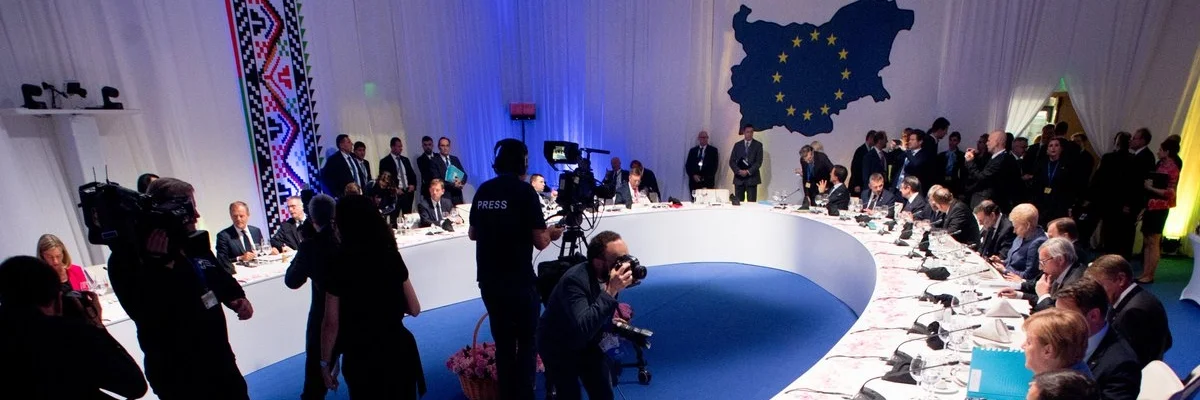
European Union leaders agreed on a "united EU approach" to keeping the Iran nuclear deal alive after US President Donald Trump withdrew from the pact, a European source said after talks in Bulgaria.
The 28 EU leaders also backed a plan for dealing with trade tariffs that Trump is imposing on European metals, saying that the "EU will not negotiate with a gun at its head", the source told AFP.
"The EU will continue fighting for a rules-based international system despite recent decisions on climate change, tariffs and Iran," the source said after the leaders met over dinner in Sofia.
Their show of unity comes after EU president Donald Tusk lashed out at Trump, saying that "looking at the latest decisions of President Trump, someone could even think with friends like that who needs enemies."
On Iran, the leaders expressed backing for a plan including "EU support for
JCPOA, as long as Iran respects the deal," the source said, referring to the deal's formal name, the Joint Comprehensive Plan of Action.
They also agreed to "initiate work to protect European companies negatively affected by the US decision," which involves Washington reimposing sanctions on Iran.
But with the US saying it had pulled out of the deal because of broader worries about Tehran's actions, the leaders said they would also "address concerns about Iran's role in the region, Iran's ballistic missile program and what happens after 2025."
On trade, the EU leaders agreed to "strengthen" the European Commission as it seeks to negotiate a permanent exemption from US tariffs on metal and aluminum that are due to take effect on June 1, the source said.
If it gets the exemption, the source said the EU was ready to take steps including "voluntary regulatory cooperation" with the US, and working on reform of the World Trade Organization, after Trump claimed the US was unfairly treated.
It was also ready to "improve reciprocal market access, for industrial products, including amongst others cars, and liberalization of public procurement."
Photo Credit: EU AV Service
EU's Tusk Hits Out at Trump's 'Capricious Assertiveness'
◢ EU chief Donald Tusk hit out at US President Donald Trump on Wednesday, accusing Washington of "capricious assertiveness" in abandoning the Iran nuclear deal and imposing trade tariffs on Europe. The 28 European Union leaders are meeting for dinner on the eve of a summit to discuss closer ties with the Western Balkans, but tensions with Trump have hijacked the agenda.
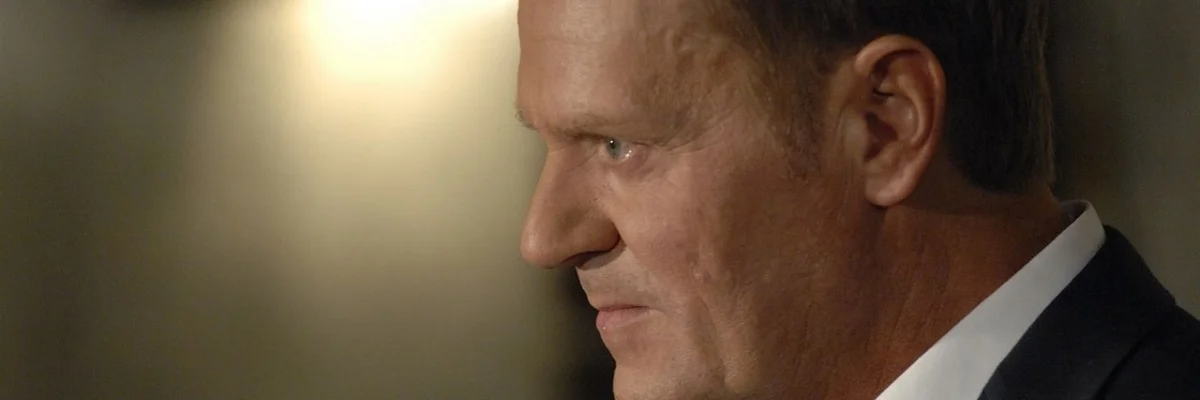
EU chief Donald Tusk hit out at US President Donald Trump on Wednesday, accusing Washington of "capricious assertiveness" in abandoning the Iran nuclear deal and imposing trade tariffs on Europe.
"Looking at the latest decisions of President Trump, someone could even think with friends like that who needs enemies," Tusk told reporters in the Bulgarian capital Sofia before EU leaders met to discuss a "united front" on Trump.
"But frankly speaking, Europe should be grateful to President Trump, because thanks to him we have got rid of all illusions. He has made us realize that if you need a helping hand you will find one at the end of your arm," the European Council president added.
The 28 European Union leaders are meeting for dinner on the eve of a summit to discuss closer ties with the Western Balkans, but tensions with Trump have hijacked the agenda.
European ministers met with a top Iranian official in Brussels on Tuesday in a bid to save the Iranian nuclear accord after Trump decided to pull out. Meanwhile the EU is still trying to win exemptions from tariffs on steel and aluminum exports.
In a scathing attack, former Polish prime minister Tusk compared the Trump administration with Europe's long-time adversaries, Moscow and Beijing.
"Besides the traditional political challenges such as the rise of China or the aggressive stance of Russia, we are witnessing today a new phenomenon: the capricious assertiveness of the American administration," Tusk said.
e called for more unity in the divided EU—which is set to lose Britain as a member next year—to face the growing challenges.
"I have no doubt that in the new global game, Europe will either be one of the major players, or a pawn. This is the only real alternative."
Photo Credit: Wikicommons
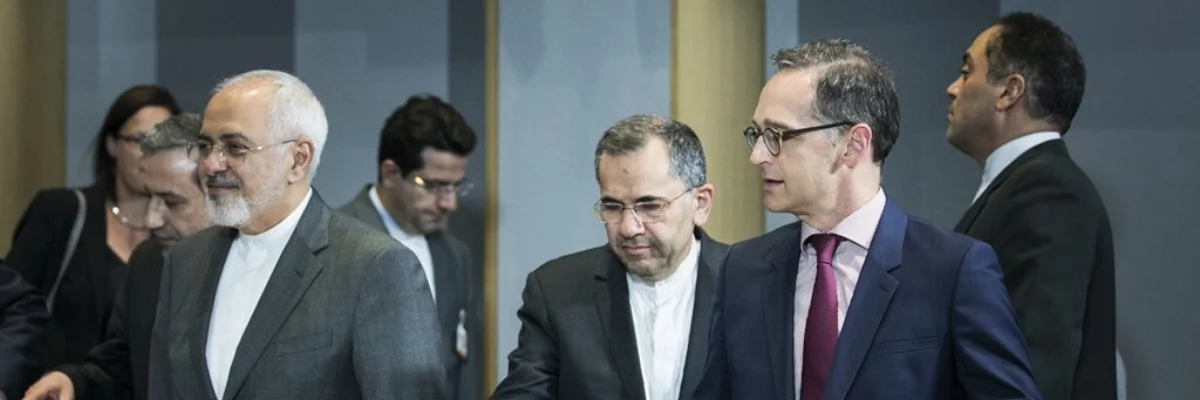
Iran's Zarif says EU Meetings Must be Turned Into Action
◢ Iran's foreign minister said Wednesday that meetings with EU leaders on salvaging the nuclear deal sent a strong political message but must now be turned into action. Zarif was returning from a diplomatic tour of the remaining parties to the 2015 nuclear agreement—Britain, France, Germany, China and Russia—following the US decision last week to pull out.
Iran's foreign minister said Wednesday that meetings with EU leaders on salvaging the nuclear deal sent a strong political message but must now be turned into action.
"If the JCPOA (nuclear deal) is supposed to continue, it was a good start and it has sent an important political message, but this is not the end of the work," Mohammad Javad Zarif told reporters on his flight back to Tehran, according to state news agency IRNA.
"From next week, intensive expert meetings will start in Europe. They must do the work, but they will consult us so that we are sure the actions they take are sufficient from our point of view," he added.
Zarif was returning from a diplomatic tour of the remaining parties to the 2015 nuclear agreement—Britain, France, Germany, China and Russia—following the US decision last week to pull out.
He met his European counterparts in Brussels on Tuesday.
"They said that they would ensure Iran enjoys the benefits of the JCPOA and they accepted that the implementation of the JCPOA has nothing to do with other issues," he said, referring to Iran's demand that talks on saving the deal must not be linked to pressure on its missile program and regional interventions.
EU foreign policy chief Federica Mogherini said Tuesday that experts had already begun work on measures to get round US sanctions, focusing on nine key areas including Iran's ability to continue selling oil and gas products, and how to protect European companies doing business in the country.
"We are not fantasizing that Europe will break its relations with America... but we want Europeans to defend their own interests," Zarif added.
He said the negative global reaction to Washington's withdrawal from the nuclear agreement —and the new sanctions it announced Tuesday on Iran's central bank—reflected US isolation on the Iran issue.
"America is not in charge of everything in the world. Of course, Americans would like the whole world to think this way and when the world doesn't think this way, they take some angry actions such as sanctioning the head of the central bank without any reason," Zarif said.
"We must expect more such moves by the Americans. These moves are against
the law, contrary to conventional international relations and indicate their
weakness."
Photo Credit: GermanyInEU
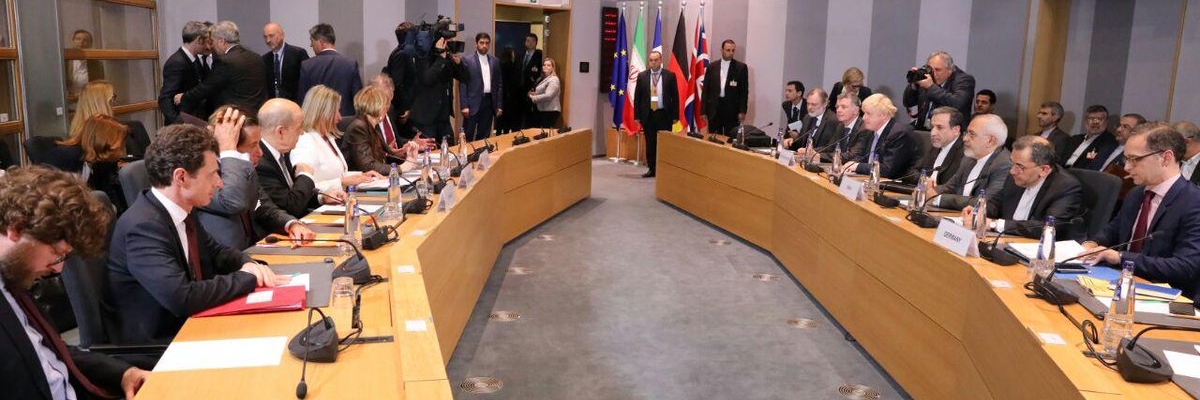
EU Launches Economic Plan to Save Iran Nuclear Deal
◢ The European Union on Tuesday launched work on a nine-point economic plan to keep the Iran nuclear deal alive after the abrupt withdrawal of the US. Their efforts focus on maintaining economic ties with Iran, continuing Iran's ability to sell oil and gas products and protecting EU companies.
The European Union on Tuesday launched work on a nine-point economic plan to keep the Iran nuclear deal alive after the abrupt withdrawal of the United States.
Europe is scrambling to come up with ways to persuade Iran to stick with the landmark 2015 agreement despite US President Donald Trump ditching it a week ago.
Tehran has warned it is prepared to resume "industrial-scale" uranium enrichment "without any restrictions" unless Europe can provide solid guarantees that it can maintain the economic benefits it gained from the nuclear agreement despite Washington reimposing sanctions.
Iranian Foreign Minister Mohammad Javad Zarif met EU foreign policy chief Federica Mogherini and his counterparts from Britain, France and Germany—the three European signatories to pact—in Brussels on the last leg of a whirlwind diplomatic tour that also took in Russia and China, the two other signatory nations.
Mogherini said EU experts were aiming to come up with concrete proposals in the coming weeks on nine key issues including ensuring Iran could sell its oil and gas products and have access to international finance.
"I believe it's a good start. We're not there, we're beginning the process," Zarif told reporters after the talks. But he warned that Tehran expected to see progress towards the guarantees it wants "within the next few weeks".
Mogherini acknowledged the enormous challenge of finding a way around US sanctions punishing businesses trading with Iran, which apply all around the world.
"We know it's a difficult task but we are determined to do it and we have started to work to put in place measures that help ensure this happens," she told reporters.
EU experts have already started work on measures to get round US sanctions on Iran, Mogherini said.
Their efforts focus on nine key areas including maintaining economic ties with Iran, continuing Iran's ability to sell oil and gas products and protecting EU companies doing business in Iran. The EU is also looking at how it could develop special financing vehicles for doing business with Iran.
'Respect the Deal'
The European Union insists the deal is working, pointing to repeated UN inspections verifying the Islamic republic's compliance with its side of the bargain.
EU leaders aim to show a united front on preserving the Iran deal when they meet for a pre-summit dinner in Sofia on Wednesday, European Council President Donald Tusk said.
"I would like our debate to reconfirm without any doubt that as long as Iran respects the provisions of the deal, the EU will also respect it," Tusk said in a letter to the leaders on the eve of the summit.
European firms, especially those from France and Germany, rushed to invest in Iran following the 2015 accord, under which Tehran agreed to freeze its nuclear program in return for an end to punishing international sanctions.
'No Illusion'
When he quit the deal last week, US President Donald Trump gave businesses a maximum of six months to wind up operations in Iran or face swingeing penalties under American sanctions.
"We have to be realistic about the electrified rail, the live wire of American extra-territoriality and how that can serve as a deterrent to business," said British Foreign Secretary Boris Johnson.
French President Emmanuel Macron held phone talks with his Russian counterpart Vladimir Putin on Tuesday, and the Kremlin said they had "confirmed Russia and France's commitment to make the deal work."
Washington has long complained that the nuclear deal does nothing to stop Iran's ballistic missile program or its interference in conflicts across the Middle East from Syria to Yemen.
On Sunday, US Secretary of State Mike Pompeo said Washington still wants to work with Europe to counter Iran's "malign behavior" and was working hard to thrash out a more wide-ranging deal with its European partners.
But Mogherini cast doubt on the idea on Tuesday, saying the deal "doesn't need to be changed, modified or have any addition".
"We're not talking about annexes or modifications of the agreement at all, we're talking about setting up concrete measures" to preserve the deal, Mogherini said.
Photo Credit: EEAS
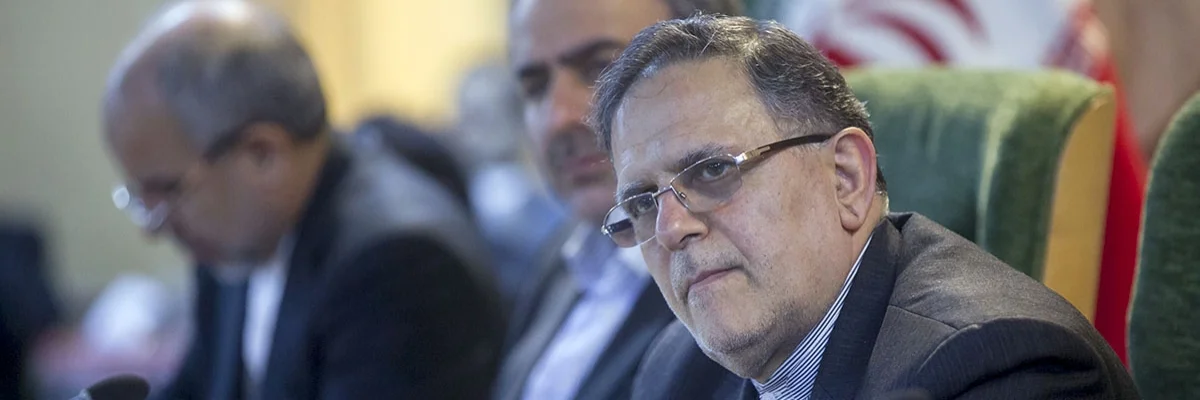
US Hits Iran Central Bank Governor with Sanctions
◢ The United States slapped sanctions Tuesday on Valiollah Seif, the governor of the Central Bank of Iran, accusing him of helping the country's Revolutionary Guard Corps transfer millions of dollars to Lebanon's Hezbollah.
The United States slapped sanctions Tuesday on Valiollah Seif, the governor of the Central Bank of Iran, accusing him of helping the country's Revolutionary Guard Corps transfer millions of dollars to Lebanon's Hezbollah.
In the second move in a week taking aim at the money networks of the Revolutionary Guards, or IRGC, the US Treasury also blacklisted a second central bank official, Iraq's Al-Bilad Islamic Bank and its top two executives, and a liaison between IRGC and Hezbollah, which Washington has designated an international terrorist group.
The Treasury said Seif covertly moved "hundreds of millions of dollars" to Hezbollah from IRGC via Al-Bilad Islamic Bank.
Tuesday's action seeks to cut off what the US called a "critical" banking network for Iran, and deny those blacklisted access to the global financial system.
"The United States will not permit Iran's increasingly brazen abuse of the international financial system," said US Treasury Secretary Steven Mnuchin.
"The global community must remain vigilant against Iran's deceptive efforts to provide financial support to its terrorist proxies."
On Thursday, the Treasury announced sanctions against a "large scale" currency exchange network serving the Revolutionary Guards, hitting six individuals and three companies at the center of the network.
At the time, the US singled out the Central Bank of Iran as "complicit" in the operation, foreshadowing Tuesday's action.
The move against Seif came one week after President Donald Trump withdrew from the Iran nuclear accord and signalled plans to ratchet up pressure on the Iranian economy, and especially on the economic power of the Revolutionary Guards.
Photo Credit: Mehr
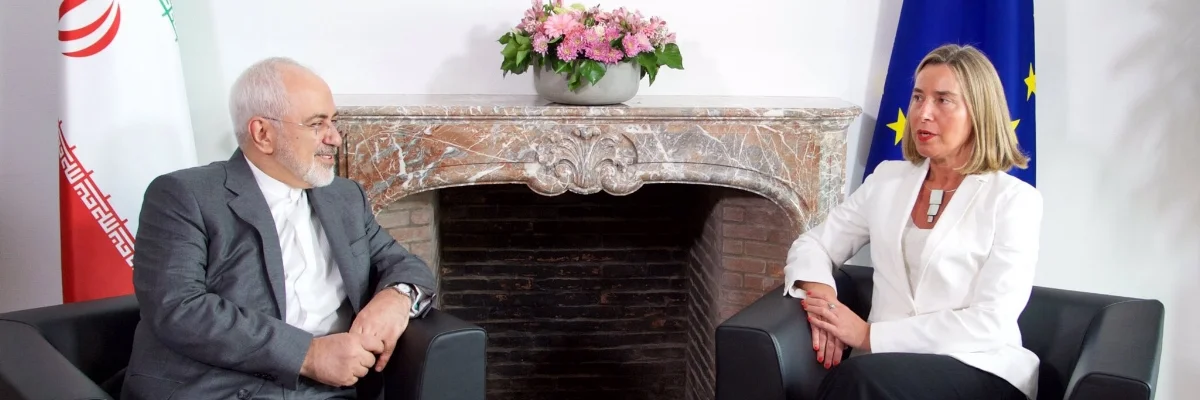
Iran Upbeat on Nuclear Deal Hopes After EU Talks
◢ Iran's foreign minister said Tuesday that efforts to save the nuclear deal after the abrupt US withdrawal were "on the right track" as he began talks with European powers in Brussels. Mohammad Javad Zarif met EU foreign policy chief Federica Mogherini ahead of evening talks with his counterparts from Britain, France and Germany—the three European signatories to the 2015 landmark deal who are scrambling to preserve it.
Iran's foreign minister said Tuesday that efforts to save the nuclear deal after the abrupt US withdrawal were "on the right track" as he began talks with European powers in Brussels.
Mohammad Javad Zarif met EU foreign policy chief Federica Mogherini ahead of evening talks with his counterparts from Britain, France and Germany—the three European signatories to the 2015 landmark deal who are scrambling to preserve it.
Tehran has warned it is preparing to resume "industrial-scale" uranium enrichment "without any restrictions" unless Europe can provide solid guarantees that it can maintain the economic benefits it gained from the nuclear agreement despite the United States reimposing sanctions.
Zarif gave an upbeat assessment after a "good and constructive" meeting with Mogherini.
"I believe we're on the right track to move forward in order to ensure that interests of all the JCPOA remaining participants, particularly Iran, will be preserved and guaranteed," he told reporters. The deal's official name is the Joint Comprehensive Plan of Action, or JCPOA.
But European diplomats have sought to play down expectations of Tuesday's meeting, stressing the enormous challenge of finding a way around US sanctions punishing foreign businesses trading with Iran, which have global reach.
"There is no one magic solution—there will be a complicated, comprehensive series of options at both the EU and national level, therefore it will take some time," a senior EU official said.
The European Union insists the deal is working, pointing to repeated UN inspections verifying the Islamic republic's compliance with its side of the bargain, and Mogherini's spokeswoman Maja Kocijancic told AFP ahead of Zarif's arrival that "we must do our utmost to preserve it."
Sanctions Threat
EU leaders aim to show a united front on preserving the Iran deal when they meet for a pre-summit dinner in Sofia on Wednesday, officials said.
Mogherini and European Commission chief Jean-Claude Juncker will outline to the leaders what measures the bloc could take to shield its now substantial economic interests in Iran.
European firms, especially those from France and Germany, rushed to invest in Iran following the 2015 accord, under which Tehran agreed to freeze its nuclear program in return for the repeal of punishing international sanctions.
German exports to Iran totalled nearly EUR 3 billion in 2017, while French exports soared from EUR 562 million in 2015 to 1.5 billion in 2017 and oil giant Total has pledged to invest some USD 5 billion in the South Pars gas field.
When he quit the deal last week, US President Donald Trump gave businesses a maximum of six months to wind up operations in Iran or face severe penalties under American sanctions.
Zarif's meetings in Brussels cap a whirlwind global tour, including trips to both Russia and China, the two other signatory nations, in a bid to bolster support.
Washington's decision to go against its European allies' advice and abandon the deal has pushed them closer to Beijing and Moscow on the issue as diplomats try to keep the pact alive.
French President Emmanuel Macron held phone talks with his Russian counterpart Vladimir Putin on Tuesday, according to a Kremlin statement, which said they had "confirmed Russia and France's commitment to make the deal work."
Zarif was in Moscow to meet Russian Foreign Minister Sergei Lavrov on Monday, a day after visiting leaders in Beijing.
"The final aim of these negotiations is to seek assurances that the interests of the Iranian nation will be defended," Zarif said at the start of a meeting.
On Monday Zarif also sent a letter to the United Nations in which he accused the US of showing a "complete disregard for international law" in pulling out of the deal.
'Malign Behavior'
Washington has long complained that the nuclear deal does nothing to stop Iran's ballistic missile program or its interference in conflicts across the Middle East from Syria to Yemen.
On Sunday, US Secretary of State Mike Pompeo said Washington still wants to work with Europe to counter Iran's "malign behavior" and was working hard to thrash out a more wide-ranging deal with its European partners.
Ahead of Tuesday's meeting, British Foreign Secretary Boris Johnson said the European powers would not shy away from pressing Iran on these issues.
"Our meeting with Iranian Foreign Minister Zarif in Brussels is a chance to discuss how we can continue to support sanctions relief with Iran while they maintain their nuclear agreement obligations, but also raise our worries about Iran's wider, disruptive behaviour in the Middle East region," Johnson said.
But while Pompeo has talked up the prospect of renewed coordination with America's allies, another top aide reminded Europe its companies could face sanctions if they continue to do business with the Middle Eastern power.
Photo Credit: EEAS
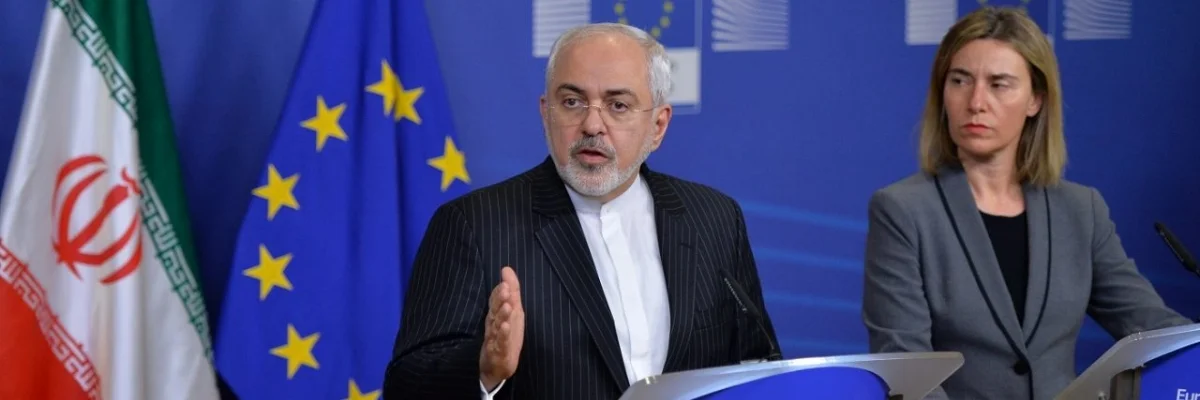
Iran FM Heads to Brussels on Final Leg of Nuclear Deal Saving Tour
◢ Iran's foreign minister is due to land in Brussels later Tuesday on the final leg of a global tour rallying diplomatic support for the country's nuclear deal. Mohammad Javad Zarif will meet with his counterparts from Britain, France and Germany—the three European nations involved in the landmark deal who are incensed by Washington's abandonment of the pact.
Iran's foreign minister is due to land in Brussels later Tuesday on the final leg of a global tour rallying diplomatic support for the country's nuclear deal after the Trump administration's abrupt withdrawal.
Mohammad Javad Zarif will meet with his counterparts from Britain, France and Germany—the three European nations involved in the landmark deal who are incensed by Washington's abandonment of the pact.
After long negotiations, Iran agreed in July 2015 to freeze its nuclear program in return for the repeal of punishing international sanctions.
But last week US President Donald Trump announced he was leaving the deal and reimposing sanctions.
Zarif's has since embarked on a whirlwind global tour, visiting both Russia and China, the two other signatory nations, in a bid to bolster support.
Washington's decision to go against its European allies' advice and abandon the deal has pushed them closer to Beijing and Moscow as diplomats scramble to keep the pact alive.
"The agreement with Iran is working, we must do our utmost to preserve it," Maja Kocijancic, spokeswoman for the head of European diplomacy Federica Mogherini, told AFP ahead of Zarif's arrival.
Iran has said it is preparing to resume "industrial-scale" uranium enrichment "without any restrictions" unless Europe can provide solid guarantees that it can maintain trade ties despite renewed US sanctions.
On Monday Zarif met with his Russian counterpart Sergei Lavrov, a day after visiting leaders in Beijing.
"The final aim of these negotiations is to seek assurances that the interests of the Iranian nation will be defended," Zarif said at the start of a meeting.
After the talks, Zarif praised the "excellent cooperation" between Moscow and Tehran and said Lavrov had promised him to "defend and keep the agreement".
Lavrov, for his part, said Russia and Europe had a duty to "jointly defend their legal interests" in terms of the deal.
'Malign Behaviour'
On Monday Zarif also sent a letter to the United Nations in which he accused the US of showing a "complete disregard for international law" in pulling out of the deal.
Russian President Vladimir Putin has already spoken with German Chancellor Angela Merkel and Turkey's President Recep Tayyip Erdogan about efforts to save the accord, after voicing his "deep concern" over Trump's decision.
And on Monday Putin met Yukiya Amano, the head of the International Atomic Energy Agency, telling him that Russia was "ready to continue to uphold the Iran nuclear deal despite the withdrawal of the United States."
Analyst say Trump's move to ditch the nuclear deal has brought Europe, Moscow and Beijing together.
"(European) cooperation with Russia, which until recently seemed impossible because of the Skripal (spy poisoning) case, with the expulsion of diplomats and the reduction of contact, is now receiving a fresh boost," said Andrei Baklitsky of the Moscow-based PIR Center nuclear safety NGO.
"The Europeans, after the withdrawal of the US from the deal, have found themselves forced to save the Joint Comprehensive Plan of Action themselves," he told AFP, referring to the official name of the nuclear deal.
Moscow would have to play a key role in ensuring Tehran does not resume its nuclear program, he added.
On Sunday, US Secretary of State Mike Pompeo said Washington still wants to work with Europe to counter Iran's "malign behavior" and was working hard to thrash out a more wide-ranging deal with its European partners.
But while he talked up the prospect of renewed coordination with America's allies, another top aide reminded Europe its companies could face sanctions if they continue to do business with the Middle Eastern power.
Russian efforts to save the accord will boost its role as a power player in the Middle East, after its intervention on the side of Bashar al-Assad's regime in Syria.
This, along with its diplomatic moves to orchestrate an end to the Syrian conflict, has put Moscow at loggerheads with the US and Europe, which have intervened against the regime.
Merkel is set to visit Russia and meet Putin in the Black Sea resort of Sochi on Friday, while French President Emmanuel Macron will be in Saint Petersburg later this month for an economic forum.
Photo Credit: IRNA
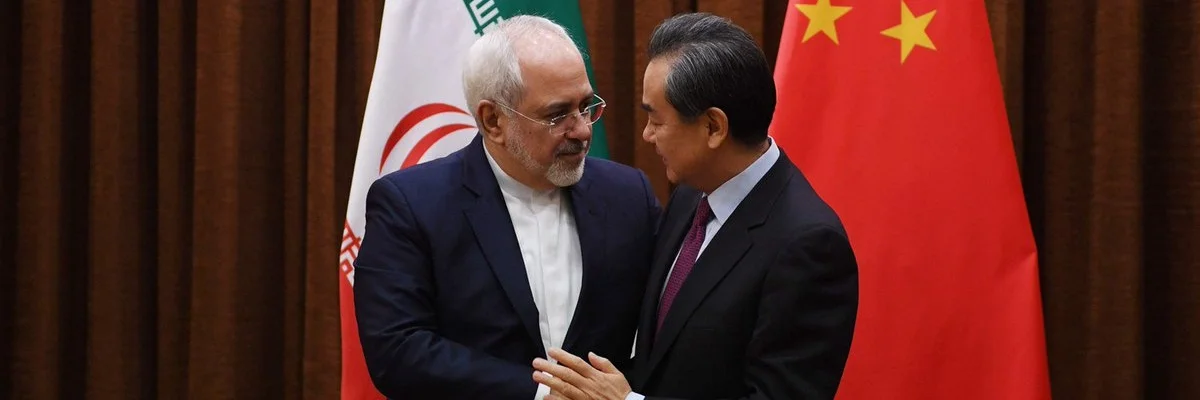
Iran FM Hopeful of Forging 'Clear Future' for Nuclear Deal on Diplomatic Tour
◢ Iran's foreign minister said Sunday he was hopeful of forging a "clear future design" for the nuclear deal facing collapse after Washington's withdrawal, at the start of a diplomatic tour aimed at rescuing the agreement. Zarif will later fly to Moscow and Brussels to consult the remaining signatories to the 2015 agreement denounced by US President Donald Trump.
Iran's foreign minister said Sunday he was hopeful of forging a "clear future design" for the nuclear deal facing collapse after Washington's withdrawal, at the start of a diplomatic tour aimed at rescuing the agreement.
"We hope that with this visit to China and other countries we will be able to construct a clear future design for the comprehensive agreement," Mohammad Javad Zarif told reporters after talks in Beijing with his Chinese counterpart Wang Yi.
Zarif will later fly to Moscow and Brussels to consult the remaining signatories to the 2015 agreement denounced by US President Donald Trump.
Washington's decision to withdraw from the deal and reimpose sanctions angered its European allies as well as China and Russia.
But on Sunday US Secretary of State Mike Pompeo said Washington was keen to hammer out a new agreement with its European partners to counter Tehran's "malign behavior."
China was one of the six powers -- with the United States, Russia, France, the UK and Germany—that signed the historic pact, which saw sanctions lifted in return for the commitment by Tehran not to acquire nuclear weapons.
As he arrived in Beijing, Zarif said Tehran was "ready for all option(s)," according to the semi-official ISNA news agency.
"If the nuclear deal is to continue, the interests of the people of Iran must be assured," he added.
After their meeting, Zarif and Wang hailed the "comprehensive strategic partnership" between their countries, with the Chinese minister saying: "I hope and believe that these visits to multiple countries will... help protect Iran's legitimate national interests and peace and stability in the region."
Tehran's chief diplomat embarked on the tour as regional tensions spiked just days after unprecedented Israeli strikes in Syria which a monitor said killed at least 11 Iranian pro-regime fighters, triggering fears of a broader conflict between the two arch-enemies.
'Extremist Administration'
Before leaving, Zarif published a government statement on his Twitter page, slamming Trump's "extremist administration" for abandoning "an accord recognized as a victory of diplomacy by the international community."
It reiterated that Iran was preparing to resume "industrial scale" uranium enrichment "without any restrictions" unless Europe provided solid guarantees it could maintain trade ties despite renewed US sanctions.
Trump shot back, claiming in a tweet on Saturday that Tehran had exploited the lifting of sanctions to bolster its military and increased its defense spending by 40 percent since 2015, when the pact was agreed.
Washington's top diplomat Pompeo later said the US was looking to thrash out a new wide-ranging deal with Europe "that achieves the outcomes that protect America".
"I'm hopeful in the days and weeks ahead we can come up with a deal that really works, that really protects the world from Iranian bad behavior, not just their nuclear program, but their missiles and their malign behavior as well," Pompeo told Fox News Sunday.
"And I will work closely with the Europeans to try and achieve that."
But European diplomats in Tehran fumed that Washington's withdrawal could undermine years of patient work to restore commercial and diplomatic ties with the Islamic Republic.
"Since the signing of the JCPOA (nuclear deal), we have gone from an atmosphere like a gold rush, to one of utter depression," said a Western trade diplomat on condition of anonymity.
"We are waiting now for how the decision-makers in the European Union will react. If the EU leans towards accommodating the US, all the progress we have made since 2015 will be lost."
Iran Hardliners Fight Back
Iranian hardliners—who have long opposed President Hassan Rouhani's moves to improve ties with the West—are already mobilizing against the efforts to save the nuclear deal.
Mohammad Ali Jafari, head of the Revolutionary Guards, said the country could not rely on the West.
"We hope recent events will lead us not to trust in the West and even Europeans," he said Sunday, according to the conservative-linked Fars news agency.
"The Europeans have repeated on several occasions that they will not be able to resist US sanctions."
The sentiment was echoed on the streets. "Officials shouldn't trust France and Britain. They will never abandon the US for us," said housewife Poormoslem at a protest against Trump on Friday.
A photo on the official Instagram site of supreme leader Ayatollah Ali Khamenei showed him reading a Farsi translation of Michael Wolff's blistering account of the Trump White House, "Fire and Fury", quickly picking up more than 100,000 likes.
Khamenei said last week he was highly doubtful that Europe would provide the "real guarantees" needed for Iran to stay in the nuclear deal.
But analysts said Iran was determined to maintain the moral high ground in the coming weeks.
"For the first time, Iran has the chance to show the world they are not the rogue nation they are always presented as, that they negotiated in good faith and keep to their commitments," said Karim Emile Bitar of the Institute for International and Strategic Studies in Paris.
Photo Credit: CCTV News
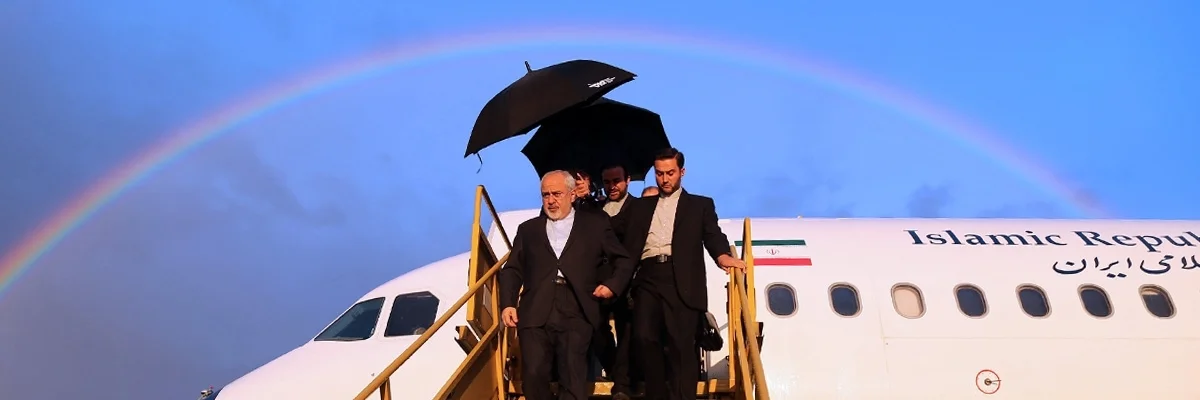
Iran FM Arrives in China On Diplomatic Tour to Save Nuclear Deal
◢ Iran's foreign minister arrived in Beijing Sunday, Iranian media said, on the first leg of a whirlwind diplomatic tour designed to try and rescue the nuclear deal left on the brink of collapse after the US pulled out. Mohammad Javad Zarif will later fly to Moscow and Brussels to consult with the remaining signatories to the 2015 agreement denounced by President Donald Trump.
Iran's foreign minister arrived in Beijing Sunday, Iranian media said, on the first leg of a whirlwind diplomatic tour designed to try and rescue the nuclear deal left on the brink of collapse after the US pulled out.
Mohammad Javad Zarif will later fly to Moscow and Brussels to consult with the remaining signatories to the 2015 agreement denounced by President Donald Trump.
Washington's decision to withdraw from the agreement and reimpose sanctions infuriated its allies in Europe as well as China and Russia.
China was one of the six powers—with the United States, Russia, France, the UK and Germany—that signed the historic pact which saw sanctions lifted in return for the commitment by Tehran not to acquire nuclear weapons.
As he arrived in Beijing, Zarif said, "we will discuss the decision that Iran should take", according to the semi-official ISNA news agency.
He added: "As the president of the republic has said, we are ready for all option(s). If the nuclear deal is to continue, the interests of the people of Iran must be assured."
Zarif, who is set to hold talks with his opposite number Wang Yi, hailed Tehran's relations with Beijing, ISNA reported.
"We have had good relations with China before and since the deal," he said. "China is by far the first economic partner of Iran. We are certain that today China is by our side."
Tehran's chief diplomat embarked on the tour as regional tensions spiked just days after unprecedented Israeli strikes in Syria which a monitor said killed at least 11 Iranian fighters, triggering fears of a broader conflict between the two arch-enemies.
Before leaving, Zarif published a government statement on his Twitter page, slamming Trump's "extremist administration" for abandoning "an accord recognized as a victory of diplomacy by the international community."
It reiterated that Iran was preparing to resume "industrial scale" uranium enrichment "without any restrictions" unless Europe provided solid guarantees it could maintain trade ties despite renewed US sanctions.
Trump hit back Saturday evening, tweeting that the accord had failed to contain Iran's militarism.
"Iran's Military Budget is up more than 40 percent since the Obama negotiated Nuclear Deal was reached... just another indicator that it was all a big lie," he wrote.
Zarif's delicate diplomatic mission was complicated by reports of clashes between Iranian and Israeli forces in Syria on Thursday.
The Syrian Observatory of Human Rights said Saturday that 11 Iranians were among the pro-regime fighters killed in strikes by Israel, which has vowed to prevent Iran gaining a military foothold in neighboring Syria.
Tehran, which has sought to avoid an escalation in a regional conflict that could alienate its European partners, has not commented on whether its forces were hit.
Israel and its allies have blamed Iran's Revolutionary Guards for initiating Thursday's exchange by launching missiles into the occupied Golan Heights.
Iran denies the claims, saying the Israeli strikes were launched on "invented pretexts."
Allies Fume at Trump
Meanwhile, European diplomats in Tehran fumed that Trump's decision to withdraw from the nuclear deal could undermine years of patient work to restore commercial and diplomatic ties with the Islamic Republic.
"Since the signing of the JCPOA (nuclear deal), we have gone from an atmosphere like a gold rush, to one of utter depression," said a Western trade diplomat on condition of anonymity.
"We are waiting now for how the decision makers in the European Union will react. If the EU leans towards accommodating the US, all the progress we have made since 2015 will be lost."
Iranian hardliners—who have long opposed President Hassan Rouhani's moves to improve ties with the West—are already mobilizing against the efforts to save the nuclear deal.
Mohammad Ali Jafari, head of the Revolutionary Guards, said the country could not rely on the West.
"We hope recent events will lead us not to trust in the West and even Europeans," he said Sunday, according to the conservative-linked Fars news agency.
"The Europeans have repeated on several occasions that they will not be able to resist US sanctions."
He added if the European powers were unable to make guarantees, "we must choose the path of self-sufficiency and nuclear industry with our own capabilities".
The sentiment was echoed on the streets. "Officials shouldn't trust France and Britain. They will never abandon the US for us," said housewife Poormoslem at a protest against Trump on Friday.
A photo on the official Instagram site of supreme leader Ayatollah Ali Khamenei showed him reading a Farsi translation of Michael Wolff's blistering account of the Trump White House, "The Fire and the Fury", quickly picking up more than 100,000 likes.
Khamenei said this week he is highly doubtful that Europe will provide the "real guarantees" needed for Iran to stay in the nuclear deal.
But analysts said Iran was determined to maintain the moral high ground in the coming weeks.
"For the first time, Iran has the chance to show the world they are not the rogue nation they are always presented as, that they negotiated in good faith and keep to their commitments," said Karim Emile Bitar of the Institute for International and Strategic Studies in Paris.
The challenge for Rouhani is to maintain his diplomatic efforts in the face of mounting challenges at home, where Iranians were already suffering high unemployment and inflation before Trump's decision.
Photo Credit: IRNA
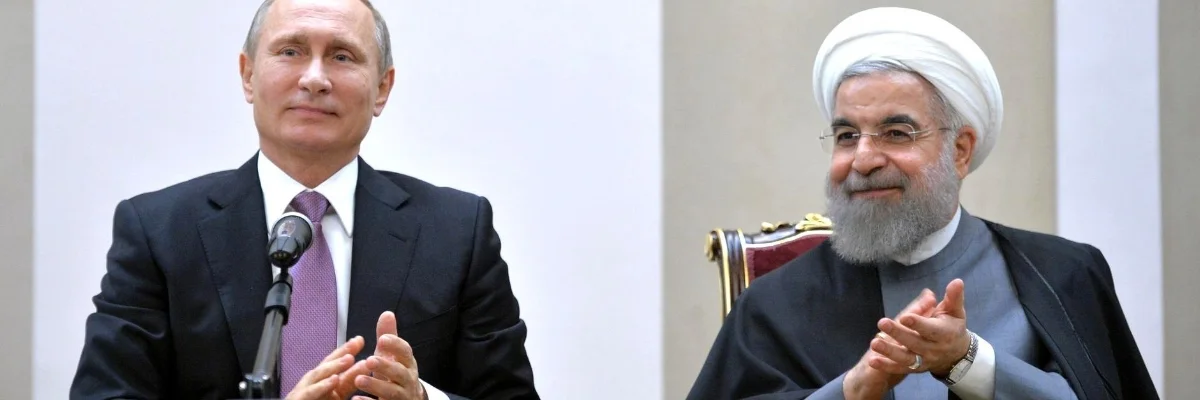
Russian Companies to Benefit from US Iran Withdrawal
◢ While Russia has condemned Washington for its withdrawal from the Iran nuclear deal, Moscow remains less exposed to the economic consequences of US sanctions than Europe and its companies could even benefit from the move. Russia and Iran sought to strengthen their business ties long before the 2015 agreement, despite international sanctions in place.
While Russia has condemned Washington for its withdrawal from the Iran nuclear deal, Moscow remains less exposed to the economic consequences of US sanctions than Europe and its companies could even benefit from the move.
"The deal and the lifting of sanctions in 2015 marked the return of European business to Iran. But it's unlikely they can keep doing business today, giving room to Russia," said independent political scientist Vladimir Sotnikov.
"Russia can now go ahead at full speed," he added. Russia and Iran once had difficult relations, but have seen ties improve since the end of the Cold War.
While Tehran was shunned by the international community in the 1990s, Moscow agreed to resume the construction of the Bushehr Iranian nuclear plant that Germany had abandoned.
Russia and Iran sought to strengthen their business ties long before the 2015 agreement, despite international sanctions in place.
"European companies are more exposed to the US market, they must comply not to get into trouble. The Russians are less (exposed) and have less to lose," said Igor Delanoe, an analyst at the Franco-Russian Observatory group.
He added that Russian companies continued to work in Iran "without any fuss" even when the sanctions were in place. "They are used to working within legal and economic constraints. The US has systematically forced Iran to turn more towards Russia and China."
The situation could revitalize Russian-Iranian economic ties that have been losing ground in recent years despite the involvement of Russian nuclear and oil giants in the Middle Eastern country.
According to Delanoe, bilateral trade amounted to $1.7 billion in 2017, down 20 percent from the previous year and well below the more than $3 billion in the late 2000s.
Moscow 'Is Not Scared'
On a visit to Tehran on Thursday, Russian deputy foreign minister Sergei Ryabkov said the two countries intended to continue "all round economic cooperation."
"We are not scared of sanctions," Ryabkov said.
This echoes statements from China, which has also said it wanted to continue normal business ties with Iran and is currently financing multi billion dollar infrastructure and electricity projects in the country.
"Russia wants to sell steel, transport infrastructure and other manufactured goods to Iran. The less competition from the US and the EU, the better," said Charlie Robertson, an analyst at Renaissance Capital.
Igor Delanoe said that Russia had a "real role to play" in Iran's energy and electricity sectors.
Another positive sign for the Russian economy is the rise in oil prices, which rose to their highest level since 2014 after the US withdrawal from the Iran deal.
Analysts at Russia's Alfa Bank said the current tensions should maintain oil prices at a high level, which they called a "great relief for the Russian market."
For the Russian state, whose finances remain highly dependent on natural resources, this is a significant source of income at a time when President
Vladimir Putin is beginning his fourth Kremlin term with promises of developing Russia's economy and reducing poverty.
Russian Prime Minister Dmitry Medvedev assessed the cost of Putin's long term goals at more than 100 billion euros.
Photo Credit: Kremlin
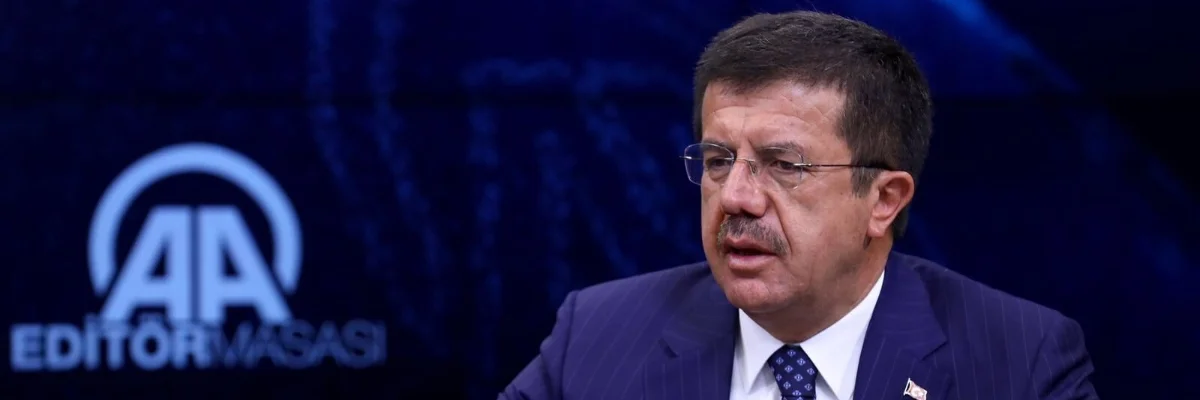
Turkey Says US Iran Deal Pullout 'Opportunity' for Ankara
◢ The Turkish economy minister on Friday said the United States withdrawal from the Iran nuclear deal was an "opportunity" for Turkey, insisting there would be no-let up in trade with Tehran. "I see it like this, this is an opportunity for Turkey," Nihat Zeybekci told state news agency Anadolu, adding: "I will continue to trade with Iran."
The Turkish economy minister on Friday said the United States withdrawal from the Iran nuclear deal was an "opportunity" for Turkey, insisting there would be no-let up in trade with Tehran.
Despite strong protests and last-minute lobbying by his European partners, US President Donald Trump announced that Washington would withdraw from the historic nuclear accord.
Trump then vowed that there would be fresh sanctions issued against Iran.
"I see it like this, this is an opportunity for Turkey," Nihat Zeybekci told state news agency Anadolu, adding: "I will continue to trade with Iran."
But he said that if there are United Nations decisions related to Iran's nuclear activities and other issues, "of course" trade would continue "complying with them."
Turkish President Recep Tayyip Erdogan spoke on the phone with his Russian counterpart Vladimir Putin during which both men agreed the US move was a mistake.
Zeybekci criticized the unilateral decision by Washington but added: "I don't see anything big to worry about at this stage," noting that other countries including EU members were not of the same opinion as the US.
Relations between Turkey and the US have been strained over several issues including the conviction in January of a Turkish banker who helped Iran evade US sanctions.
Mehmet Haka Atilla was convicted after well-connected Turkish-Iranian businessman Reza Zarrab, arrested in the US in 2016, became a government witness and admitted involvement in a multi-billion-dollar gold-for-oil scheme to subvert US economic sanctions against Iran.
During Zarrab's testimony late last year, the businessman, who was once close to the ruling party elite, implicated Erdogan and other officials in the scheme.
In a deal negotiated between Iran and the five permanent members of the UN
Security Council—the UK, China, France, Russia and the US—plus Germany, Iran agreed in 2015 to freeze its nuclear program in exchange for the lifting of international sanctions.
Turkey and Iran together with Russia have been working closely on the Syrian peace process despite being on opposing sides of the seven-year conflict.
Erdogan on Thursday held a telephone call with Iranian President Hassan Rouhani during which the Turkish leader reiterated Turkey's commitment to JCPOA (the formal abbreviation for the accord).
The men also touched upon developing bilateral economic relations, a Turkish presidential source said.
Photo Credit: Twitter
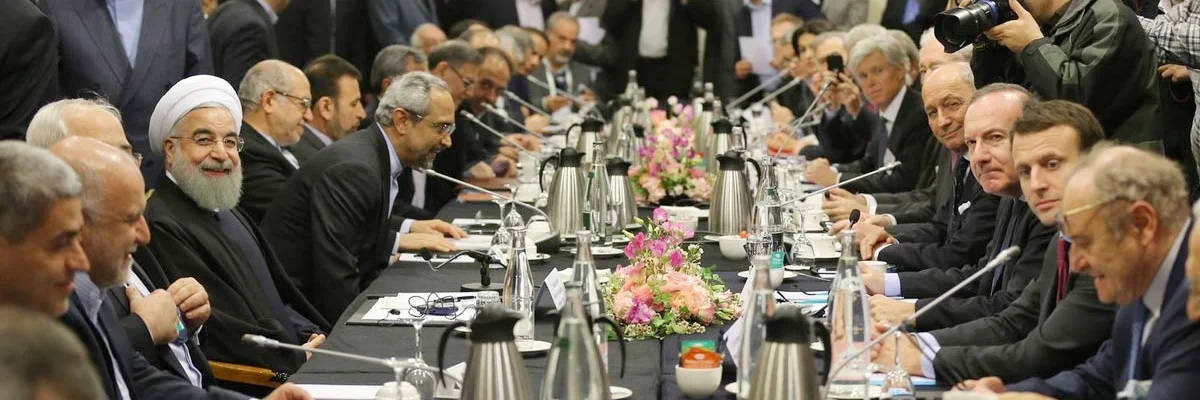
France Urges Europe to Act on 'Unacceptable' US Iran Sanctions
◢ France's economy minister Bruno Le Maire urged European nations Friday to defend themselves against US sanctions targeting foreign companies that trade with Iran, as the rift between Washington and its allies deepens. Le Maire said the European Union had to defend its "economic sovereignty" when it comes to the right to trade with Iran.
France's economy minister Bruno Le Maire urged European nations Friday to defend themselves against US sanctions targeting foreign companies that trade with Iran, as the rift between Washington and its allies deepens.
Le Maire said the European Union had to defend its "economic sovereignty" when it comes to the right to trade with Iran.
Foreign Minister Jean-Yves Le Drian has meanwhile branded the sanctions "unacceptable", in some of the most forceful criticism yet from a key European ally.
US President Donald Trump announced on Tuesday that he was pulling out of the landmark 2015 deal curbing Iran's nuclear program, reintroducing sanctions on the Islamic republic and those who trade with it.
The decision overturned years of painstaking diplomacy and left EU allies scrambling to save the hard-fought deal, as well as to protect the interests of their companies which do business with Iran.
"We have to work among ourselves in Europe to defend our economic sovereignty," Le Maire told Europe 1 radio ahead of talks with Dutch Finance Minister Wopke Hoekstra.
Le Maire said the EU would hold "collective discussions with the United States to obtain... different rules" covering European companies that do business with Iran.
"At the end of May I will meet with the British and German finance ministers and the three of us will look at what we can do."
Le Maire said he had called US Treasury Secretary Steve Mnuchin on Wednesday urging him to allow exceptions for French companies or a delay in implementing the sanctions, while admitting he has "few illusions" about the likely response.
Washington has given European firms doing business in Iran up to six months to wind up investments or risk US sanctions, and they are also forbidden from signing any new contracts with the country.
Return of Sanctions 'Blocking'?
Le Maire pointed to the possibility of reinstating of EU "blocking regulations", dating back to 1996, which were used as a countermeasure against US sanctions that targeted third countries doing business with Cuba.
The system, which was never actually used, permitted European companies to ignore the US sanctions and said that any decisions by foreign courts based on the sanctions would not be upheld in Europe.
"We want to reinforce this regulation and incorporate the recent decisions
taken by the United States," Le Maire said.
"The second avenue is looking at Europe's financial independence—what can we do to give Europe more financial tools allowing it to be independent from the United States?"
Le Maire further noted that the US Treasury has an agency, the Office of Foreign Assets Control, which tracks whether or not foreign companies are respecting its sanctions.
"Why don't we create the same type of agency in Europe, capable of following the activities of foreign companies and checking if they are respecting European decisions?" he said.
Le Drian had on Thursday insisted Washington needed to negotiate with its European allies on any sanctions that might affect their companies.
"We feel that the extraterritoriality of their sanction measures is unacceptable," he told Le Parisien newspaper, vowing that European countries would "do everything to protect the interests of their companies".
"The Europeans should not have to pay for the withdrawal of an agreement by the United States, to which they had themselves contributed."
Photo Credit: IRNA