
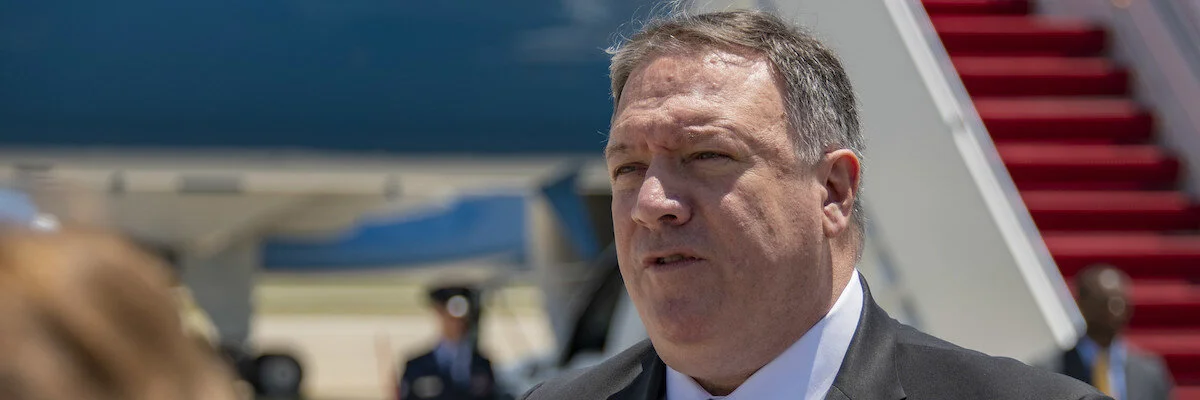
Pompeo Lands in Saudi for Talks Focused on Iran
◢ US Secretary of State Mike Pompeo landed in Riyadh Wednesday for talks with Saudi leaders focused on countering Tehran, his first visit since a top Iranian general's killing sent regional tensions soaring. The top US diplomat, whose visit follows his first trip to sub-Saharan Africa, will hold talks with King Salman and his son Crown Prince Mohammed bin Salman as well as Foreign Minister Faisal bin Farhan.
US Secretary of State Mike Pompeo landed in Riyadh Wednesday for talks with Saudi leaders focused on countering Tehran, his first visit since a top Iranian general's killing sent regional tensions soaring.
The top US diplomat, whose visit follows his first trip to sub-Saharan Africa, will hold talks with King Salman and his son Crown Prince Mohammed bin Salman as well as Foreign Minister Faisal bin Farhan, State Department officials said.
"We'll spend a lot of time talking about the security issues with the threat from the Islamic Republic of Iran in particular," Pompeo told reporters in the Ethiopian capital Addis Ababa before heading to Riyadh.
Pompeo said the United States was "prepared to talk anytime" to Iran but emphasised that the Iranian regime has "got to fundamentally change their behaviour".
"The pressure campaign continues. It's not just an economic pressure campaign, its diplomatic pressures, isolation through diplomacy as well," he said.
US President Donald Trump, who is closely allied with Saudi Arabia, in 2018 withdrew from a nuclear accord with Iran and imposed sweeping sanctions aimed at reducing Tehran's regional clout.
Pompeo's three-day visit to close ally Saudi Arabia comes in the wake of a US-ordered drone strike that killed Qasem Soleimani, Iran's most powerful general, as he visited Baghdad on January 3
Regional tensions rose following the killing and Iran responded with missile strikes on US forces in Iraq.
US officials blamed Iran for a September attack on Saudi oil installations, although Riyadh has since appeared keen to engage in cautious diplomacy to ease friction.
Pompeo faces a tough balancing act in Saudi Arabia as he said he would also discuss "human rights" during his visit.
The 2018 murder of Saudi journalist Jamal Khashoggi, which sparked global condemnation of the crown prince, has tested relations between the two allies.
After Riyadh, Pompeo will fly to Oman to meet the new sultan, Haitham bin Tariq, on Friday.
Pompeo will offer condolences over the death of his predecessor Qaboos, who was the Arab world's longest-serving leader and served as a go-between for Iran and the United States.
Photo: State Department
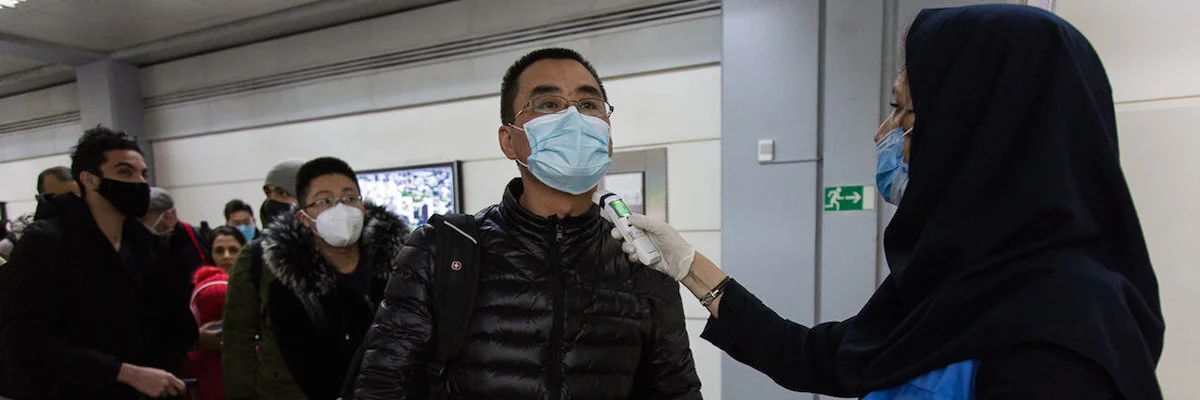
Coronavirus Kills Two Iranians, First Mideast Deaths
◢ Two people have died in Iran after testing positive on Wednesday for the new coronavirus, the health ministry said, in the Islamic republic's first cases of the disease. Kianoush Jahanpour, a ministry spokesman, said the cases were detected in the holy city of Qom, south of the Iranian capital.
Two people have died in Iran after testing positive on Wednesday for the new coronavirus, the health ministry said, in the Islamic republic's first cases of the disease.
According to YJC news agency, a branch of state television, the pair who died were Iranian citizens and residents of the holy city of Qom.
They are also the first deaths from the COVID-19 virus in the Middle East and only the seventh and eighth outside China, where the outbreak has killed more than 2,000 people.
State news agency IRNA quoted Kianoush Jahanpour, a ministry spokesman, as saying the virus was detected in two elderly people with immunity problems in Qom, south of the Iranian capital.
"Following the recent cases of chronic respiratory diseases in Qom, two of the patients tested positive in preliminary tests," it quoted him as saying.
"Unfortunately both passed away in the intensive care unit due to old age and issues with their immune system."
IRNA had earlier quoted Jahanpour as saying that the "new coronavirus" had been confirmed in two people and that other suspected cases were isolated.
The state news agency also quoted a media adviser to Iran's health minister as saying two people had died after testing positive for the coronavirus.
"Both of the people who had tested positive for coronavirus were in Qom and were old. Both have passed away," said Alireza Vahabzadeh.
Quarantine Hospitals Readied
Qom is a centre for Islamic studies attracting scholars from Iran and beyond.
However, the head of the health ministry's contagious diseases unit said the pair who died were Qom residents who were not known to have left Iran.
"These two were from Qom and visited (us) two days ago after falling ill... they didn't even have a history of going abroad," IRNA quoted Mohammad Mehdi Gouya as saying.
Another official in Qom said people suspected of being infected with the coronavirus would be put into quarantine in two hospitals.
Mohammadreza Ghadir, head of the city's medical sciences unit, told IRNA that "the spread of coronavirus in Qom has been controlled and we want the people not to worry about it."
The new coronavirus has now claimed the lives of eight people outside mainland China.
One has died in Japan, one in Taiwan, another in the Philippines and two in Hong Kong. One has also died in France.
The United Arab Emirates last month became the first country in the Middle East to report cases of the coronavirus strain.
Egypt has also reported cases.
Iran's health sector has been hit by sanctions imposed by the United States since Washington withdrew in 2018 from a landmark nuclear deal between the Islamic republic and world powers.
Photo: IRNA
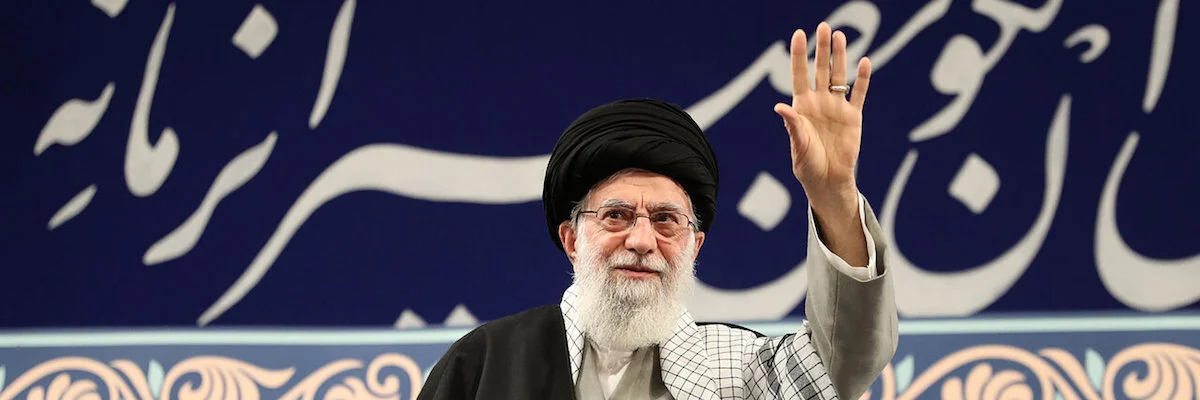
Iran Supreme Leader Says Voting is 'Religious Duty'
◢ Iran's supreme leader said Tuesday it is a "religious duty" for people to vote in this week's general election and strengthen the Islamic republic against the "propaganda" of its enemies. "Participating in elections and voting... is a religious duty, not just a national or revolutionary duty," Ayatollah Ali Khamenei said in a speech, parts of which were aired on state television.
Iran's supreme leader said Tuesday it is a "religious duty" for people to vote in this week's general election and strengthen the Islamic republic against the "propaganda" of its enemies.
"Participating in elections and voting... is a religious duty, not just a national or revolutionary duty," Ayatollah Ali Khamenei said in a speech, parts of which were aired on state television.
"Elections nullify many of the vicious plots the Americans have in their minds and Zionists have in their hearts against the country," he said, referring to US ally Israel.
Iranians are set to elect a new parliament on Friday, with conservatives expected to make a resurgence.
Observers expect a low turnout as many reformist and moderate candidates have been barred from running by the Guardian Council.
The council, made up of six clerics appointed by the supreme leader and six lawyers selected by the judiciary, disqualified more than half of the 14,444 hopefuls.
The move threatens the thin majority of President Hassan Rouhani's alliance in parliament.
Friday's election comes after months of domestic turmoil and steeply escalating tensions between Iran and its arch enemy the United States.
In November, nationwide demonstrations over petrol price hikes turned violent before being crushed in a deadly crackdown.
Tensions with Washington have risen since 2018 when US President Donald Trump withdrew from a landmark nuclear agreement and reimposed crippling sanctions.
But they have never come as close to a direct confrontation as in the past seven months, when it has happened twice, most recently after the US killed prominent Iranian general Qasem Soleimani on January 3.
Iran hit back on January 8 by firing a barrage of missiles at US troops in Iraq.
It had been on high alert for US retaliation that day when they shot down a Ukrainian airliner in Tehran, killing all 176 people on board.
The downing of the Boeing 737, which the armed forces later admitted was accidental, sparked more protests that turned political.
Khamenei said the election would show that Iran's enemies had failed to divide the nation.
"Watch how the people favor the election despite the enemies' insistence on distancing the people from the system," the supreme leader said.
Photo: IRNA
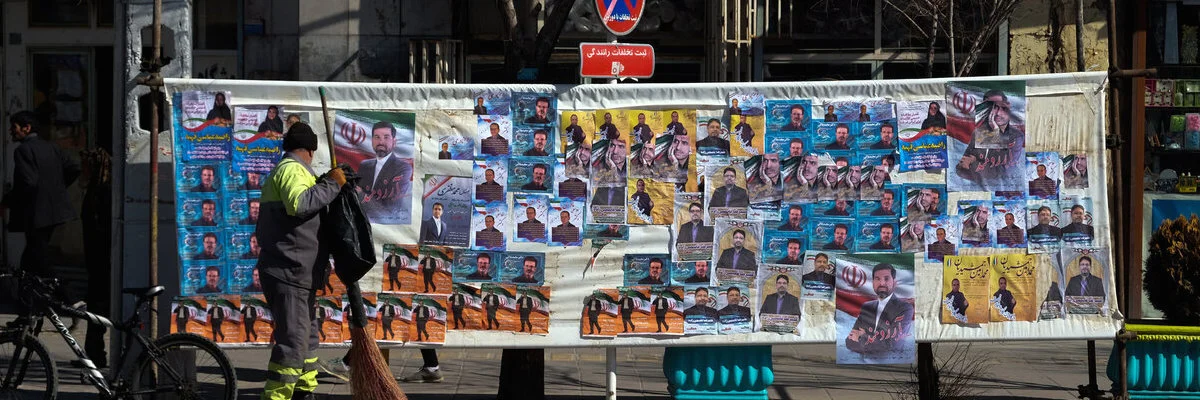
Iran’s Hard Liners Are Making a Comeback
◢ So-called “principlists”—conservatives wedded to the theocratic ideals of Iran’s 1979 Islamic Revolution and often connected to the IRGC—are set to win elections to Iran’s parliament on Friday. And although the legislature has only limited powers, the vote will set the foundations for presidential elections due next year and the eight-year political cycle to follow.
By Marc Campion and Arsalan Shahla
Last month, a strategist for Iran’s Islamic Revolutionary Guard Corps proposed an alarming tactic to revive the ailing economy: Take an American hostage every week and ransom them back for $1 billion each.
“That’s the way to do it,” Hassan Abbasi told a public meeting in Nowshahr, a port city on the Caspian Sea.
Abbasi’s bombast, widely viewed on YouTube, has been disowned by the IRGC’s leadership and isn’t policy. Yet it raises a vital question: What would hard liners do differently if they secured control over all branches of power in Iran? That’s important because it’s probably about to happen for the first time since 2013, when President Hassan Rouhani swept to office promising an end to Iran’s long-running nuclear standoff with the West and a new era of economic prosperity.
So-called “principlists”—conservatives wedded to the theocratic ideals of Iran’s 1979 Islamic Revolution and often connected to the IRGC—are set to win elections to Iran’s parliament on Friday. And although the legislature has only limited powers, the vote will set the foundations for presidential elections due next year and the eight-year political cycle to follow.
The return of conservative control to all branches of government for the first time since the end of Mahmoud Ahmadinejad’s presidency in mid-2013 has significant potential consequences for the Iranian economy and the wider Middle East – including any hopes Iran will renegotiate its landmark nuclear settlement with the U.S.
About 90 current MPs have been barred from running again, tipping the field heavily in favor of principlists who have argued that Iran should not yield to the economic privations imposed by tightening U.S. sanctions.
That piles additional pressure on Rouhani and his less ideologically-driven government, which has already lost much credibility in the eyes of voters since the U.S. unilaterally withdrew from the 2015 nuclear deal he championed.
Rouhani signed that agreement expecting the accompanying sanctions relief to trigger foreign investment and plug the nation of 84 million into the global economy after decades of isolation. Never fully realized, those hopes disappeared after the U.S. reimposed sanctions in 2018.
“What is especially important for people is to see this severe pressure lifted from their lives in line with the values of the Islamic revolution,” Alaeddin Boroujerdi, prominent conservative legislator and former head of parliament’s committee on foreign policy and national security, said in a phone interview on Monday. “As the Supreme Leader has said, we are in an imposed economic war.”
Officials from Supreme Leader Ayatollah Ali Khamenei down are urging a shift to “economic resistance” -- an idea floated in the midst of nuclear negotiations as a fall back option should the West abrogate its commitments. That would see Iran abandon Rouhani’s push to open up toWestern investment and trade, and focus, instead, on boosting self-reliance. It calls for looser fiscal policies to support the poor, less dependence on oil exports, and more investment in domestic industries.
Conservatives say Iran should turn instead to China, already the nation’s biggest trade partner, though that’s probably not enough to ensure growth. Chinese energy technologies have disappointed Iranian partners in the past and, already embroiled in a trade war with the U.S., China has proved reluctant to invite American penalties by buying much more Iranian oil.
The re-imposition of sanctions has hammered the economy – the International Monetary Fund estimates it shrank by 9.5% last year – but Iran’s growth, inflation and, to an extent, its currency have begun to stabilize, even if recovery remains elusive. Oil exports, down 80%, show no sign of recovering. Yet the construction sector is doing well, as are steel production and exports for cash to Iran’s immediate neighbors – a trade more difficult for the U.S. to interdict than oil.
A crisis budget issued in December gives an idea of the emerging approach. Unusually, it received approval from the National Economic Security Council before presentation to parliament, signalling cross-system support. It boosts handouts for the poor as well as defense spending, though in both cases by less than inflation and relying on some heroic growth and oil export assumptions to make the sums add up.
Iran appears confident it has sufficient reserves to plug those fiscal holes, at least for a year or so. Critically, that would take the country beyond November elections in the U.S., which might bring a change of attitude in Washington – even if President Donald Trump secures a second term.
“The Trump administration has framed its policy as giving Iran a choice: Capitulate to U.S. demands, or see the economy collapse,” said Henry Rome, an Iran specialist at Eurasia Group, a New York-based risk consultancy. “But the Iranians have made it clear they are forging their own third option – to muddle through until circumstances shift in their favor.”
IRGC to Power?
In a recent research note to clients, Tehran business consultancy Ara Enterprise predicted a landslide conservative victory in parliamentary polls, leading to deeper political and economic isolation. Yet they could also surprise.
“Many believe that the IRGC in power is not such a bad scenario, as no one could sabotage their mandate,” the note said, whereas reformist President Mohammad Khatami (1997-2005), like Rouhani, faced a conservative assault. IRGC control, it added, could even lead to a Nixon-to-China-style settlement with the U.S., something conservatives would never allow with Rouhani as president.
The IRGC, the only national military force listed by the U.S. as a terrorist organization, has become richer and more powerful than it was even under Ahmadinejad. Across sectors, it has taken contracts that either belonged to or were intended for foreign investors driven away by sanctions. That process is likely to continue.
The risk for conservatives is that some voters will stay home, reducing turnout and, potentially legitimacy. One poll taken after fuel-price protests in November found only 21% of respondents in Tehran planned to vote, though confrontation with the U.S. has energized Khamenei’s conservative base.
“It’s not a matter of reformists versus conservatives anymore,” said Mohsen, a 33-year-old who attended last week’s celebration of the revolution. “It’s about revolutionaries against non-revolutionaries, supporters of the Islamic revolution against infiltrators and deviants.”
Photo: IRNA
Iran Says German Freed in Prisoner Swap
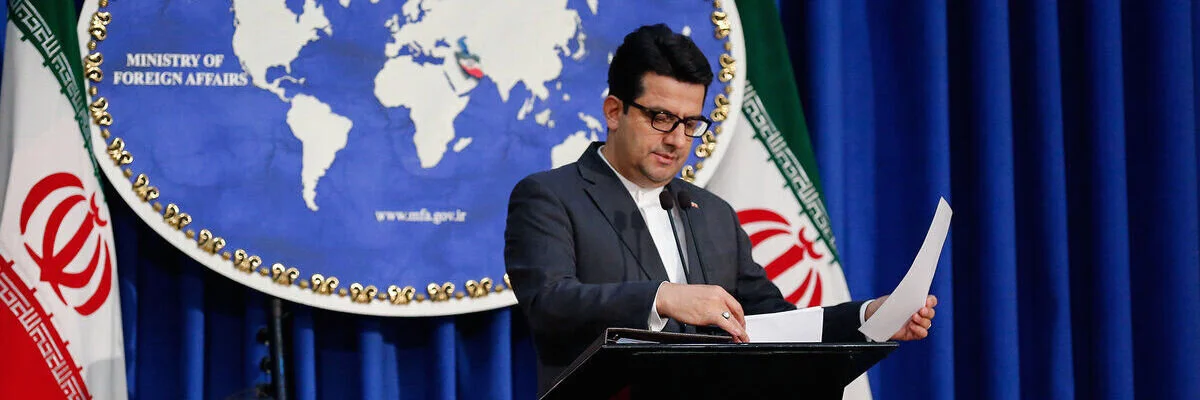
◢ An Iranian man arrested in Germany on suspicion of violating U.S. sanctions returned home Monday after being released, the foreign ministry said. Ahmad Khalili had been detained "on the pretext of violating the illegal and cruel sanctions of the United States,” ministry spokesman Abbas Mousavi said.
Iran said Tuesday that a German held in Iran has been released as part of a prisoner swap for an Iranian held in Germany on suspicion of violating US sanctions.
"We announced that we are ready to (release) this German national... on condition that they (the Germans) do not extradite our citizen to America," judiciary spokesman Gholamhossein Esmaili said.
"On Sunday... the Iranian national left Germany and entered Iran, and on Monday... we released the German national," he told a televised news conference.
According to the official, the unidentified German had been detained "for some time" for "taking photos and videos" in areas without authorisation and had been serving a three-year prison sentence.
The German was swapped for Iranian Ahmad Khalili, who according to Iran's foreign ministry was detained in Germany "on the pretext of violating the illegal and cruel sanctions of the United States".
Khalili was freed on Sunday night after "intensive diplomatic consultations" and cooperation involving the judiciary and the Revolutionary Guards' intelligence service, ministry spokesman Abbas Mousavi said in a statement.
He returned to Iran together with Foreign Minister Mohammad Javad Zarif, who last week attended a security conference in the German city of Munich, Mousavi added.
Iran said in December it was ready for more prisoner swaps with the US after it secured the return of scientist Massoud Soleimani in exchange for Xiyue Wang, a Chinese-born American held in the Islamic republic.
Decades-old tensions between Tehran and Washington have escalated steeply since 2018, when US President Donald Trump unilaterally withdrew from a landmark 2015 nuclear deal and reimposed sanctions on Iran.
Soleimani, a stem cell researcher at a Tehran university, on December 7, also flew back home from the United States with Zarif.
Photo: IRNA
Iran Could Reverse Nuclear Breaches if Europe Acts: Zarif
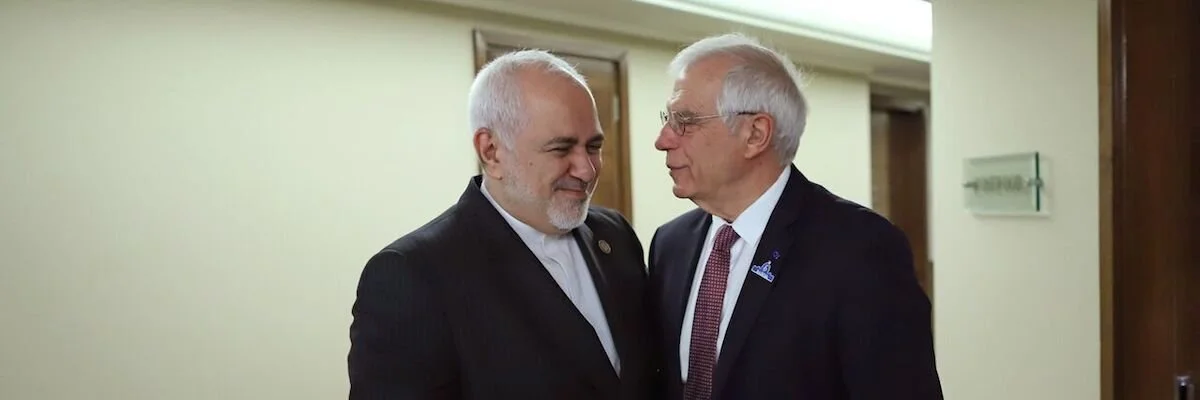
◢ Iran would be willing to move back towards the 2015 nuclear deal if Europe provides "meaningful" economic benefits, the country's foreign minister said last Friday. "We have said that we are prepared to slow down or reverse these measures commensurate with what Europe does," Mr Zarif told reporters at the Munich Security Conference.
Iran would be willing to move back towards the 2015 nuclear deal if Europe provides "meaningful" economic benefits, the country's foreign minister said last Friday .
The European parties to the Iran nuclear deal—Britain, France and Germany—have been battling to save it since US President Donald Trump withdrew from it and reimposed tough sanctions on Tehran.
Iran has responded to the US pullout with a series of steps back from its own commitments under the deal, including by increasing uranium enrichment.
But Foreign Minister Mohammad Javad Zarif said the Islamic republic could be willing to move back towards compliance—under certain circumstances.
"We have said that we are prepared to slow down or reverse these measures commensurate with what Europe does," Mr Zarif told reporters at the Munich Security Conference. "We will decide whether what Europe does is sufficient to slow down or to reverse some steps - we have not even ruled out reversing some of the steps that we have taken."
Europe has set up a special trading mechanism called Instex to try to enable legitimate humanitarian trade with Iran to offset some of the effects of US sanctions.
But it has yet to complete any transactions and the Iranian side does not think it is sufficient.
"We're not talking about charity. We're talking about Iranian rights and the rights of the Iranian people to receive the economic benefits," Mr Zarif said. "We have received irreversible harm or irreparable harm because of US sanctions, but nevertheless we will reverse the steps that we have taken provided that Europe takes steps that are meaningful."
The EU's top diplomat Josep Borrell met Zarif in Teheran earlier this month to try to lower tensions after Britain, France and Germany triggered a complaint mechanism under the deal to try to press Teheran to return to full implementation.
Washington accuses Tehran of seeking a nuclear weapon, which Iran has always denied.
The renewed US sanctions have almost entirely isolated Iran from the international financial system, driven away oil buyers and plunged the country into a severe recession.
Mr Borrell has also been in consultation with the other countries still in the deal—Russia and China—who like their European counterparts want to save the accord.
A meeting of the joint commission that oversees the deal is due to be held this month to consider the dispute mechanism.
Photo: IRNA

Oman Sees Prospects of Talks Between Iran and U.S.
◢ Oman is working to reduce tensions in the Persian Gulf and sees prospects of talks between arch-rivals Iran and the U.S., its foreign minister said. “We are in touch with the U.S. and Iran,” Yousef Bin Alawi, Oman’s foreign minister, was cited as saying on Sunday at the Munich Security Conference.
By Golnar Motevalli and Abbas Al Lawati
Oman is working to reduce tensions in the Persian Gulf and sees prospects of talks between arch-rivals Iran and the U.S., its foreign minister said.
“We are in touch with the U.S. and Iran,” Yousef Bin Alawi, Oman’s foreign minister, was cited as saying on Sunday by the state-run Oman News Agency at the Munich Security Conference. “We feel that there is a possibility of dialogue between them.”
“We don’t expect military military confrontation in the region at the moment,” Bin Alawi added.
Iranian President Hassan Rouhani said in a press briefing in Tehran that “there is no complicated, unresolvable issue between Iran and Saudi Arabia,” but as far as the U.S. is concerned, his country will “never come to the negotiating table in weakness.”
Rouhani’s foreign minister, Mohammad Javad Zarif, told journalists at the Munich conference that Saudia Arabia showed willingness to hold talks shortly after the U.S. killed top Iranian general Qassem Soleimani in a drone strike, state-run Islamic Republic News Agency reported.
Tehran replied positively to Riyadh’s overture, but Saudi officials didn’t continue the exchange, IRNA reported, citing comments Zarif made to reporters at the conference on Saturday.Tensions in the Persian Gulf escalated after the Soleimani killing on Jan. 3. He was Iran’s most senior military commander and a driving force of the country’s strategy of building a network of proxy forces to counter the U.S. in the region.
Saudi Foreign Minister Faisal Bin Farhan Al Saud denied any talks and accused Iran of behaving in a way that threatens global security, the state-run Saudi Press Agency reported.
Photo: IRNA
Iran's Beleaguered President Rouhani Rules Out Resigning
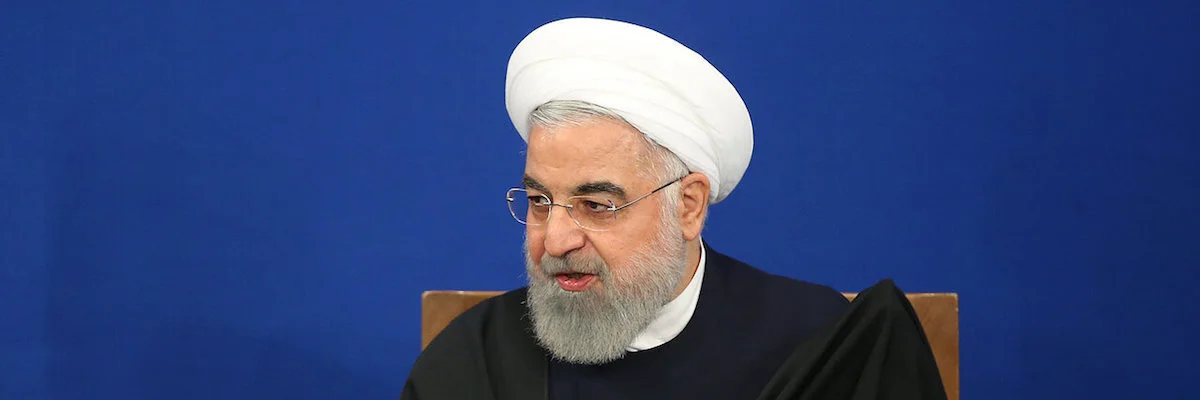
◢ Iran's President Hassan Rouhani on Sunday ruled out resigning and vowed to see out his term, even as he admitted he had offered to step aside twice since being elected. Speaking ahead of a general election next Friday, Rouhani also appealed to voters to turn out despite the fact that many moderate and reformist candidates were disqualified from the race.
By Amir Havasi
Iran's President Hassan Rouhani on Sunday ruled out resigning and vowed to see out his term, even as he admitted he had offered to step aside twice since being elected.
Speaking ahead of a general election next Friday, Rouhani also appealed to voters to turn out despite the fact that many moderate and reformist candidates were disqualified from the race.
Rumours have swirled in Iran recently that the 71-year-old, whose second and last term ends next year, had been planning to quit, but his office denied the reports.
Rouhani's government has come under fire over the state of Iran's sanctions-hit economy and for allegedly failing to fulfil election promises.
The legitimacy of Rouhani and his government have been called into question after they were left in the dark for days after the armed forces admitted they "accidentally" shot down a Ukrainian airliner on January 8.
Hardliners have attacked his administration for negotiating a nuclear deal with world powers that ultimately backfired when the United States withdrew unilaterally and reimposed harsh sanctions.
"My resignation does not make much sense... we have made promises to the people and we will continue to fulfil those promises" despite the economic situation and pressure from "the enemy", Rouhani said, referring to the US.
"The idea of resigning (because of these recent problems) never occurred to me."
But Rouhani admitted he had offered to resign twice in the past, and that they were rejected by supreme leader Ayatollah Ali Khamenei.
"In the first months after my election, I told the supreme leader 'If you think for some reason that someone else or another government can serve the country better, I'm ready to go'," said Rouhani.
"He vehemently rejected it," he told a news conference in Tehran.
Rouhani, a moderate conservative, said he raised the issue with the supreme leader again during his second term.
"I would not even let the government leave its responsibility an hour earlier, not a month or a week earlier'," he quoted Khamenei as saying.
Election Appeal
Rouhani's supporters suffered a setback in the lead-up to the February 21 election after more than half of the 14,444 who sought to stand were disqualified, most of them moderates and reformists.
Despite the purge, Rouhani called for a strong showing at the election.
"All elections are important to us, and I urge all people to come to the ballot box and vote... to choose the best (candidates) and have a good parliament," he told Sunday's news conference.
Iran's seventh president, Rouhani won election in 2013 after promising greater social freedoms and the benefits of engagement with the West.
He delivered on the second pledge in 2015, when Iran agreed to limit its nuclear activities in return for the lifting of international sanctions.
The president was re-elected in 2017 with the support of reformists.
But support from those who backed him in the past has fallen away badly amid criticism over his austerity measures.
In November, street protests broke out in Iran over a surprise petrol price hike.
They spread to dozens of urban centres and turned violent before being put down by the security forces.
Iran's economy has been battered since the US pulled out of the nuclear deal, with the World Bank estimating it shrunk by 8.7 percent in 2019.
Photo: IRNA
Senate Votes to Curb Trump’s War Powers Over Soleimani Strike
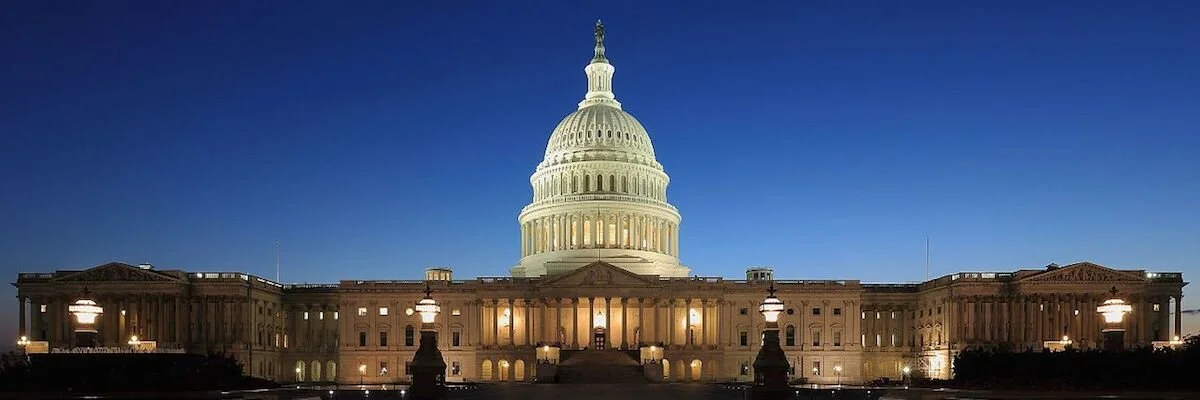
◢ The Senate voted to restrict President Donald Trump’s ability to take military action against Iran, with eight Republicans joining Democrats to approve a measure that would require express congressional approval before a strike.
By Daniel Flatley
The Senate voted to restrict President Donald Trump’s ability to take military action against Iran, with eight Republicans joining Democrats to approve a measure that would require express congressional approval before a strike.
The resolution, introduced by Democratic Senator Tim Kaine, bars U.S. troops from engaging in hostilities against Iran or any part of its government or military, unless Congress declares war or specifically authorizes the use of military force. The president said he will veto the legislation.
“With passage of this resolution, we sent a powerful message that we don’t support starting a war with Iran unless Congress votes that military action is necessary,” Kaine said in a statement after the vote. “If we’re to order our young men and women in uniform to risk their lives and health in war, it should be on the basis of careful deliberation.”
The resolution was adopted on a 55-45 vote and next goes to the Democratic-led House, where it’s expected to be approved. Thursday’s Senate vote fell short of the margin that would be needed to override a Trump veto.
Senate Minority Leader Chuck Schumer called Thursday’s vote a “clear shot across the bow,” to show Trump that “a bipartisan majority of senators don’t want the president waging war without congressional approval.”
Inadequate Briefing
Republican senators Mike Lee and Rand Paul signed on as cosponsors of the measure last month after a briefing by Trump administration officials about the drone strike that killed Iranian General Qassem Soleimani in early January. The two senators said the explanation from officials, including Secretary of State Michael Pompeo, was inadequate and condescending.
Lee opposed one of several attempts by GOP colleagues to sink or weaken the legislation by amending it on the Senate floor. The Utah Republican said the “military-industrial complex” has grown too powerful during the country’s longest period at war. He said measures like the Kaine resolution will clarify that it is Congress’s responsibility to debate and declare war.
“We’ve been lied to by the Pentagon for years regarding a war that’s gone on two decades,” Lee said. “We don’t want additional ambiguities, we don’t want any more war.”
Lee and Paul were joined by fellow Republicans Susan Collins of Maine and Todd Young of Indiana, who signed on to the measure after Kaine removed direct references to Trump and the Soleimani strike. Kaine said Wednesday the resolution is “not directed toward President Trump,” but rather to the executive branch in general.
Bipartisan Vote
In addition to GOP Senators Lee, Paul, Collins and Young, four other Republicans voted for the resolution: Lamar Alexander of Tennessee, Bill Cassidy of Louisiana, Jerry Moran of Kansas and Lisa Murkowski of Alaska.
The three senators seeking the 2020 Democratic presidential nomination—Bernie Sanders, Amy Klobuchar and Elizabeth Warren—also left the campaign trail to be in Washington and support the measure.
Kaine has said that the resolution would not prevent the president from taking action to defend U.S. troops in harm’s way or to take defensive action against an imminent threat.
“While the president does and must always have the ability to defend the United States from imminent attack, the executive power to initiate war stops there,” Kaine said. “An offensive war requires a congressional debate and vote.”
The president would veto the resolution, according to a Wednesday statement from his administration that called it “untimely and misguided.” Kaine’s resolution was drafted several weeks ago and is no longer relevant since the U.S. is not currently engaged in any hostilities against Iran, the statement said.
Photo: Wikicommons
Campaigning Begins in Iran Parliamentary Election
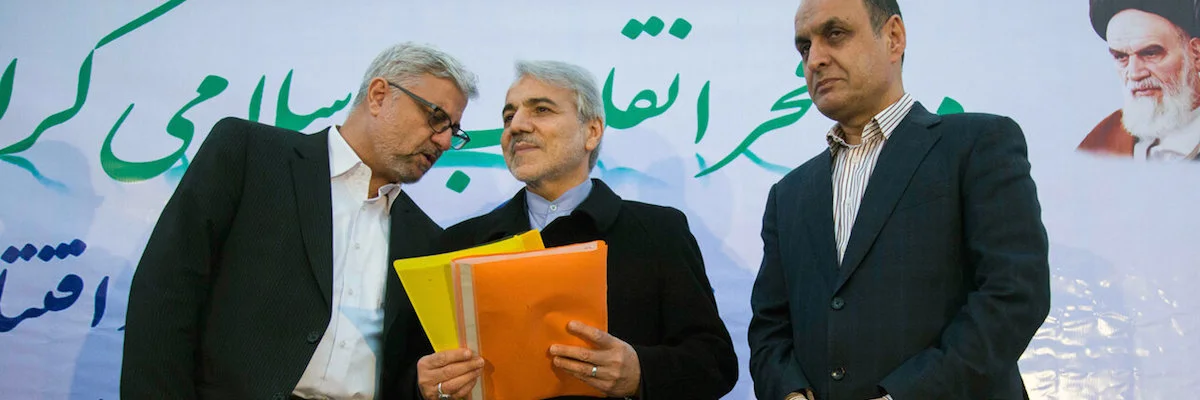
◢ Campaigning kicked off in Iran on Thursday ahead of next week's crucial parliamentary election at which conservatives are expected to win most seats after thousands of moderates and reformists were disqualified. The February 21 election comes after months of escalating tensions between Iran and its arch enemy the United States.
Campaigning kicked off in Iran on Thursday ahead of next week's crucial parliamentary election at which conservatives are expected to win most seats after thousands of moderates and reformists were disqualified.
The February 21 election comes after months of escalating tensions between Iran and its arch enemy the United States.
The Guardian Council, which vets candidates, said more than 7,000 qualified to stand in the election, but even more were disqualified, semi-official news agency ISNA reported.
"In this election 7,148 will compete for the parliament's 290 seats... and 7,296 have been disqualified," it quoted National Elections Commission chief Jamal Orf as saying.
Most of the barred candidates come from the ranks of moderate conservative President Hassan Rouhani's alliance with reformists.
There was not much fanfare seen on the streets of Tehran where posters went up for the first day of campaigning, an AFP correspondent reported.
State news agency IRNA said campaign posters and banners of candidates were also going up in other cities and towns in the country.
The purge of candidates is likely to discourage many Iranians from voting, but supporters of conservatives and ultra-conservatives are still expected to make a strong showing.
The parliament—or Majles—drafts legislation, ratifies international treaties and approves the country's budget.
But analysts say the election will be a rare opportunity to gauge sentiment of the Iranian public after months of turmoil.
Backing for Rouhani and the reformists has fallen away since US President Donald Trump withdrew from a nuclear deal that was supposed to give Iran relief from sanctions.
Since the withdrawal, Trump has slapped wave after wave of sanctions on Iran as part of a stated campaign of "maximum pressure".
The campaign has battered the economy of the Islamic republic, which saw nationwide protests against a fuel price hike turn violent in November before they were crushed by the security forces.
In January, Iran came to the brink of an all-out confrontation with the United States for the second time in seven months when it fired missiles at US troops in Iraq in retaliation for the killing of one of its top generals.
Photo: IRNA
France Condemns Latest Iranian Space Launch
◢ France condemned efforts by Iran to build a new ballistic missile with a range of more than 500 kilometers, further complicating efforts to keep Tehran operating within the framework of a faltering nuclear accord. France also said Iran had fired off a “space launcher” with ballistic missile technology.
By Ania Nussbaum
France condemned efforts by Iran to build a new ballistic missile with a range of more than 500 kilometers, further complicating efforts to keep Tehran operating within the framework of a faltering nuclear accord.
“The development of Iran’s ballistic missile program undermines regional stability and affects the security of Europe,” the French foreign affairs ministry said on Monday. “France calls on Iran to fully comply with its international obligations in this regard.”
Iran already breached aspects of the 2015 nuclear deal known as the Joint Comprehensive Plan of Action, such as exceeding levels of enriched uranium and no longer adhering to limits of centrifuges -- a response to the U.S. abandoning the accord in 2018. The European Union last month initiated formal proceedings to resolve the dispute that could lead to a re-imposition of sanctions by the United Nations.
France also said Iran on February 9 fired off a “space launcher” with ballistic missile technology. “Iran cannot carry out activities, including launches, related to ballistic missiles capable of delivering nuclear weapons,” according to the statement.
Photo: IRNA
Jeers as Weakened Rouhani Calls for Unity in Deeply Divided Iran
◢ Iranian President Hassan Rouhani was jeered by supporters of hard-line conservative rivals as he called for national unity and fair elections in a key address just weeks head of parliamentary polls. Marking the anniversary of the 1979 Islamic revolution, Rouhani praised Iranians for withstanding the economic hardship.
By Arsalan Shahla and Golnar Motevalli
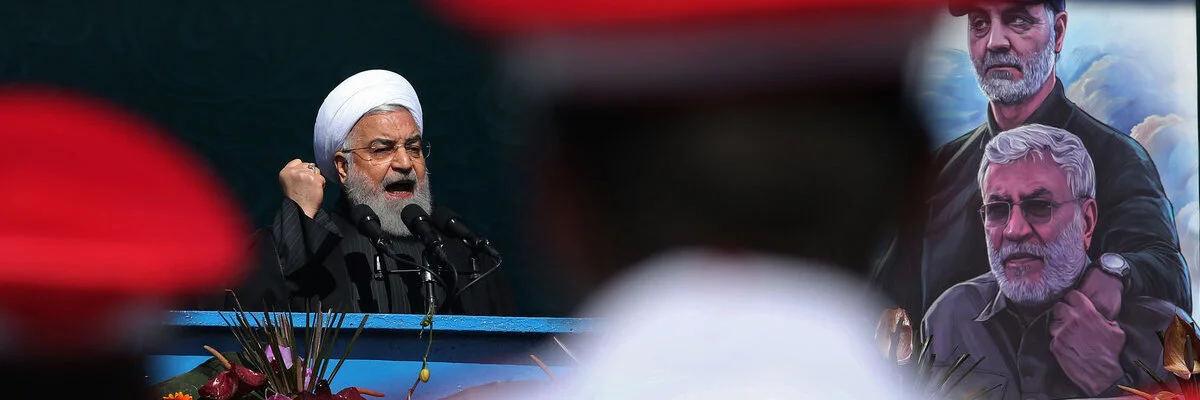
Iranian President Hassan Rouhani was jeered by supporters of hard-line conservative rivals as he called for national unity and fair elections in a key address just weeks head of parliamentary polls.
Marking the anniversary of the 1979 Islamic revolution, Rouhani praised Iranians for withstanding the economic hardship and instability brought on by U.S. President Donald Trump’s “maximum pressure” campaign.
“We shouldn’t talk about this or that faction. The revolution belongs to everyone,” Rouhani told a crowd that also included supporters, government workers and school children.
But his speech in Tehran’s Azadi Square was often drowned out by vocal, mostly male groups who had swarmed a temporary fence dividing the stage area from the public enclosure. They booed Rouhani loudly, while glorifying Supreme Leader Ayatollah Ali Khamenei and even calling for war with the U.S.
The two countries have been locked in an increasingly perilous confrontation since Trump reimposed sanctions and sought to contain Iran’s regional influence. The dispute culminated in the killing of Iran’s most senior military general, Qassem Soleimani, last month and Iranian reprisals that sparked fears of war.
‘Shut Up’
“Whenever we’ve stood together, we’ve managed to defeat the U.S.,” Rouhani said, only to be met with chants of “shut up” and “death to the conciliator.”
The main road leading to Azadi Square was lined with stalls promoting the Islamic revolution and Shiite Islam, and decrying the U.S. and Israel.
Rouhani and his government have always been the target of hard-liners opposed to his engagement with the West and the landmark 2015 nuclear deal it delivered.
But his rivals—fiercely loyal to Khamenei’s leadership and brand of ultra-conservative religious politics—have been empowered since Trump abrogated the accord and imposed sanctions. They are expected to dominate parliamentary elections on Feb. 21, gaining a new foothold in power ahead of next year’s presidential ballot.
Thousands of reformists, as well as centrist conservatives who backed Rouhani, have been barred from contesting. Last month, the president rebuked officials vetting candidates, charging them with in effect of denying voters a choice. Turnout is expected to drop from previous polls.
Oil Penalties
Rouhani, whose two election wins were propelled by middle class support, has seen his popularity slump as the economy nosedived under sanctions, especially those on Iran’s oil exports. Tehran has responded to Trump’s offensive by abandoning many of the nuclear deal’s enrichment caps.
In November, widespread protests erupted after gasoline prices were raised without warning, and hundreds of people were then killed in a violent crackdown by security forces.
Unrest broke out again in January when, after days of official denials, Iran’s Revolutionary Guard admitted it had unintentionally shot down a Ukrainian passenger jet above Tehran, killing all on board.
The tragedy occurred hours after Iran had responded to Soleimani’s killing with missile strikes on bases in Iraq that housed U.S. troops, sending tensions in the region soaring to new heights.
Invoking Soleimani’s legacy, Rouhani said on Tuesday that Iran “must pursue both diplomacy and resistance,” a comment most likely aimed at opponents who oppose ties with outside powers.
Photo: IRNA
Senate to Vote This Week on Limiting Trump’s Iran Options
◢ The Senate will take up a resolution this week intended to rein in President Donald Trump’s ability to attack Iran without congressional authorization, as Democrats and a small group of Republican senators push back following the killing in January of Iranian General Qassem Soleimani.
By David Flatley
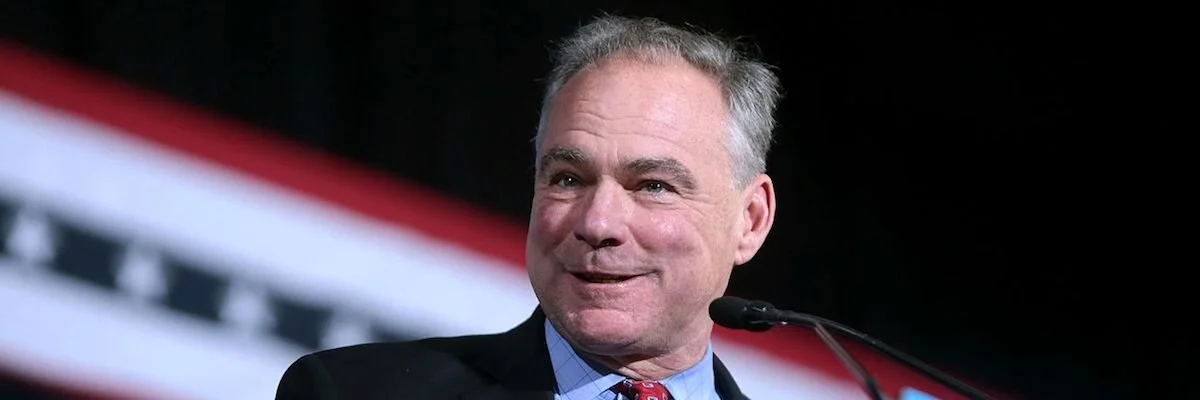
The Senate will take up a resolution this week intended to rein in President Donald Trump’s ability to attack Iran without congressional authorization, as Democrats and a small group of Republican senators push back following the killing in January of Iranian General Qassem Soleimani.
“This is not about bucking the president,” Senator Mike Lee, a Utah Republican, said Monday. “This about making sure the process works as the Constitution requires.”
Lee is one of four Republican senators co-sponsoring the measure with Senator Tim Kaine, a Virginia Democrat, that would order the president to cease any hostilities against Iran, its government or its military without express authorization from Congress.
The GOP support will provide the 51 votes needed for the Senate to pass the resolution. The House passed a similar measure in January but would need to pass Kaine’s resolution for the legislation to go to Trump’s desk. The president is likely to veto it, and the Senate lacks the votes for an override.
“We’re likely to start the debate on Wednesday afternoon,” Kaine said. “We’ll probably have it done by Thursday.”
Trump ordered a drone strike on Jan. 3 that killed Soleimani in Baghdad. Some lawmakers, especially Democrats, have said the White House repeatedly shifted its justification for the strike.
Classified Briefing
The Senate measure, S.J.Res. 68, includes changes sought by Republicans who were frustrated by a classified briefing in January by Secretary of State Michael Pompeo and other administration officials. Lee said it was the worst briefing he’d ever received on military matters.
Republicans Rand Paul of Kentucky, Todd Young of Indiana and Susan Collins of Maine are also co-sponsoring the Senate measure.
With four Democratic senators—Bernie Sanders of Vermont, Elizabeth Warren of Massachusetts, Amy Klobuchar of Minnesota and Michael Bennet of Colorado—in New Hampshire for the presidential primary Tuesday, holding the vote late Wednesday or Thursday would give them time to return to Washington.
The House resolution similar to Kaine’s is sponsored by Representative Elissa Slotkin, a Michigan Democrat and a former CIA analyst.
The House also has passed other bills related to the Soleimani operation, including two in January from Representatives Ro Khanna and Barbara Lee, both of California, that would defund military action against Iran not authorized by Congress. It also would repeal a 2002 authorization for the use of military force that the administration has cited as part of its justification for the strike on Soleimani.
Photo: IRNA
Sanctions Push Iran Past Russia as Biggest Buyer of Indian Tea
◢ Iran overtook Russia to emerge as the top buyer of Indian tea last year, after sanctions against the Islamic Republic halted imports other than specially negotiated deals. India and Iran have been trading through a rupee-based bank account to bypass restrictions imposed by the U.S.
By Pradipta Mukherjee
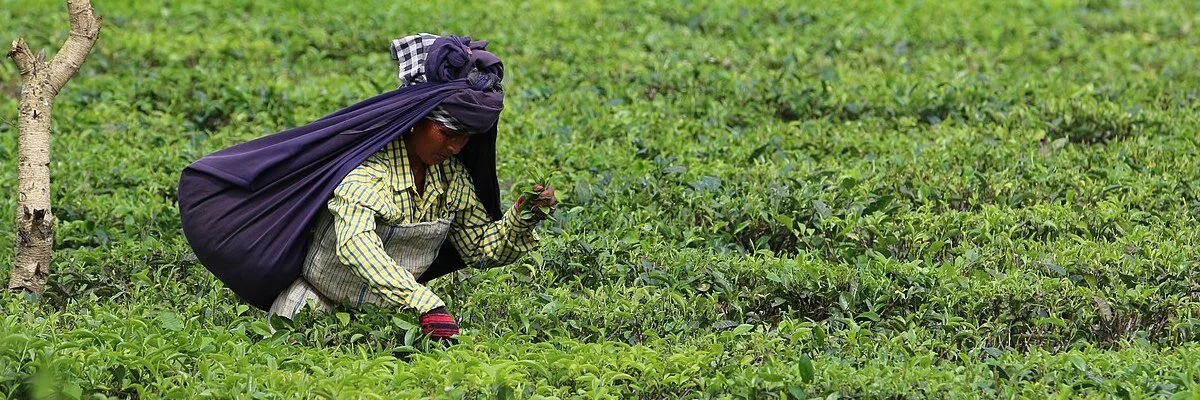
Iran overtook Russia to emerge as the top buyer of Indian tea last year, after sanctions against the Islamic Republic halted imports other than specially negotiated deals.
India and Iran have been trading through a rupee-based bank account to bypass restrictions imposed by the U.S. While this bilateral trade has boosted imports of the Indian leaf at higher-than-normal prices, the outlook for orthodox teas is uncertain with even Lipton owner Unilever Plc weighing a sale of one of its best-known brands.
“This boost really has come because of the rupee-rial trade arrangement that we have had with Iran,” said Azam Monem, a director at McLeod Russel India Ltd., which is among the nation’s largest tea exporters. “India’s diplomacy should allow us to remain a partner to Iran where we supply humanitarian aid, tea and rice.”
Iranian Imports:
Iran imported 53.5 million kilograms of tea from India last year, a rise of 74% from 2018
The price per kilogram for Iranian purchases rose to about 276 rupees ($4) from 255 rupees, data from India’s Tea Board show
Russian shipments dipped 3% to 46 million kilograms
Overall, Indian exports dropped 3% to 248 million kilograms last year as bad weather hit production in the crucial months of June and July. Prices rose 8.5% to 226 rupees per kilogram.
India also saw a 30% increase in shipments to China, the world’s biggest producer of tea, due to rising demand in the green-tea-drinking nation for India’s black-tea brands. Indian leaves such as Darjeeling, Assam and Nilgiri are used in processing the ready-to-drink milk tea popular across Asian nations.
However, India’s tea industry faces headwinds in controlling costs, after an increase in wages last year. Prices are unlikely to rise in 2020 unless consumption surges, according to Vivek Goenka, chairman of the Indian Tea Association.
“Any material increase in wage rates in the new season, without a substantial increase in tea prices, would prolong the stress,” said Kaushik Das, an analyst at Icra Ltd.
Photo: IRNA
Iranians Feel Strain of Turmoil and Sanctions
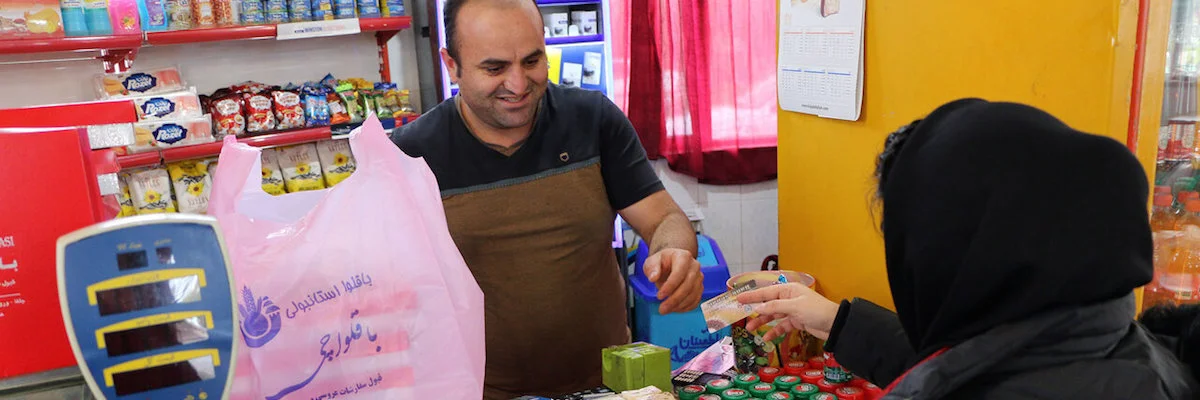
◢ In a country weighed down by sanctions, shaken by protests and stressed by military tensions with the United States, many Tehranis struggle to hide their pessimism. Iran's economy has been battered since US President Donald Trump in 2018 abandoned an international nuclear deal and reimposed sanctions and a "maximum pressure" campaign.
By Lucie Peytermann
On a crisp winter's day the snow glistens on the mountains above Tehran, but the mood is as heavy as the pall of pollution that often shrouds Iran's capital.
In a country weighed down by sanctions, shaken by protests and stressed by military tensions with the United States, many Tehranis struggle to hide their pessimism.
"Life is really hard right now. The situation here is unpredictable," said Rana, a 20-year-old biology student walking in the upmarket district of Tajrish.
It is a part of the city where young women subtly thwart the Islamic republic's conservative dress codes, opting for short coats, stylish make-up and scarves revealing ever more hair.
But, despite such relative liberties, Rana said she feels trapped.
"The quality of life isn't good at all—we have pollution, angry people, high prices," she said, pointing also to a "huge class gap" and Iran's deepening "isolation".
Iran's economy has been battered since US President Donald Trump in 2018 abandoned an international nuclear deal and reimposed sanctions and a "maximum pressure" campaign.
When Iran hiked petrol prices in November, nationwide protests erupted and turned violent before security forces put them down amid a near-total internet blackout.
Tensions with Washington escalated in early January when a US drone strike killed powerful Iranian general Qassem Soleimani in Baghdad.
Iran retaliated by targeting US forces but then accidentally shot down a Ukrainian airliner, killing all 176 people on board, in a tragedy that sparked anger at home and abroad.
Rana said she still feels "sad" about the disaster that claimed the lives of many young people who had left Iran to study abroad.
‘Angry with Trump'
One young Iranian who has chosen to stay in her country is Pegah Golami, a 25-year-old engineer who was shopping three days ahead of her wedding.
"The country's economic condition is now really difficult, especially for youths," she said, dressed in a chic coat and suede boots.
"I feel very bad... my friends have decided to leave. But I, as an Iranian, decided to stay and build my country."
The strains of a violin filled the air as a busker tried to make himself heard above the noise of the heavy traffic.
It is increasingly difficult to make a living, said Bahram Sobhani, a 47-year-old electrician who was unshaven, nervous and almost completely toothless.
"It's a little difficult to find work these days, but it is out there," he said.
"The sanctions have of course affected us, but we have to tolerate it because we can't do anything else. We live in Iran, not somewhere else."
The economic situation is also hurting Mohammadreza Khademi, vice-president of the Delham Tabesh company that sells smart technology devices from Italy for luxury homes.
His company took a hit after the renewed sanctions trippled costs, forcing it to lay off 20 of its 30 employees.
"The end of 2018 was awful and all of 2019 was not good at all," said Mohammadreza.
"I will continue to run my business. I will try to have that line of production in Iran locally, but it is super difficult to change," he said, adding that "I am angry with Mr Trump".
'We Feel Hopeless'
If the mood is glum in Tehran's middle and upper class districts, it's even worse in the poorer areas of the sprawling city of eight million people.
In the southern district of Molavi, a melange of architectural styles gives way to a maze of alleyways and shops where craftsmen practice time-honoured trades.
Only a few women are seen on the streets, most of them dressed in chadors and many carrying freshly baked flatbread.
Mehdi Golzadeh, a businessman who imports goods from Asia, looked exhausted as he walked out of a grocery store.
"Living in Iran has become very hard. With this economic situation, one can't import anything, and Iran doesn't have the materials" needed to make such products, he said.
"I am single... One can't start a family on this meagre income. We feel hopeless."
Akbar Gharibvand, a 50-year-old shop-owner and father of five, said his income is "just enough to eat and survive".
"These sanctions of course do affect things... It's the lower class that has come under pressure."
But, despite the hardships, he said Iran "is not a bad country" and that he considers himself lucky compared with people living in strife-torn neighboring nations.
"We aren't like Iraq, Afghanistan or Pakistan, or other countries where there are killings every day," he said.
"We are better off because we have security."
Photo: IRNA
Iran Satellite Launch Ends in Disappointment
◢ Iran said it "successfully" launched a satellite Sunday but failed to put it into orbit, in a blow to its space program that the US alleges is a cover for missile development. The attempted launch of the Zafar—"Victory" in Persian—comes days before the 41st anniversary of the Islamic Revolution and crucial parliamentary elections in Iran.
By Amir Havasi
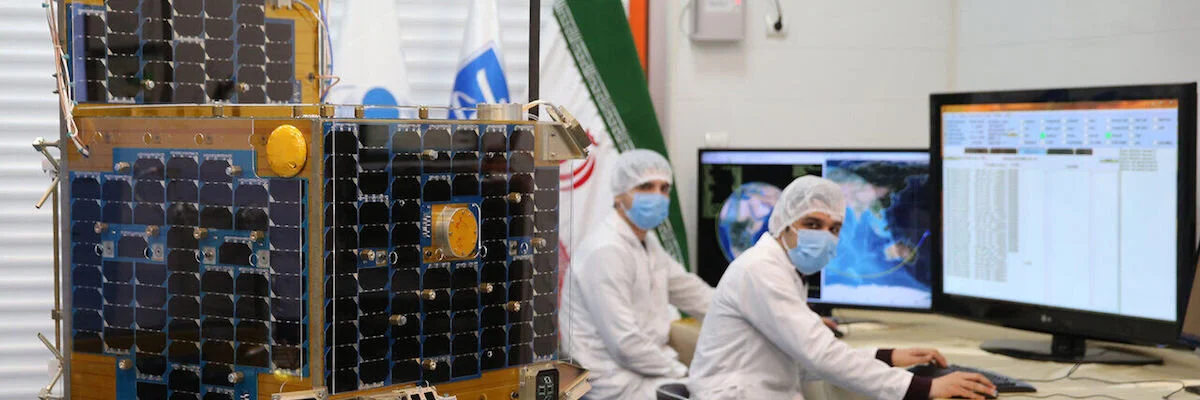
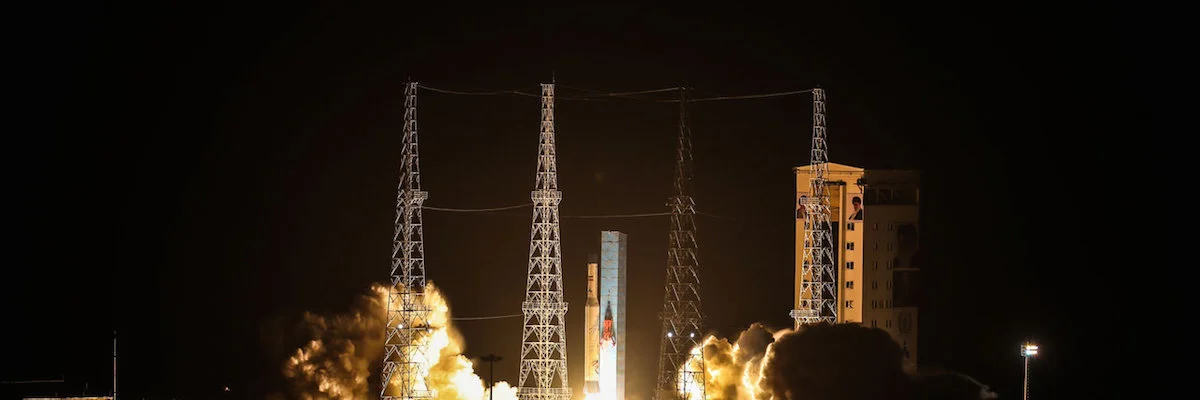
Iran said it "successfully" launched a satellite Sunday but failed to put it into orbit, in a blow to its space programme that the US alleges is a cover for missile development.
The attempted launch of the Zafar—"Victory" in Persian—comes days before the 41st anniversary of the Islamic Revolution and crucial parliamentary elections in Iran.
Arch foes Iran and the United States have appeared to be on the brink of an all-out confrontation twice in the past seven months.
Long-standing acrimony between Tehran and Washington was exacerbated in 2018 when US President Donald Trump unilaterally withdrew from a deal that froze Iran's nuclear programme, before issuing new demands that Tehran curtail its development of ballistic missiles.
Washington has also raised concerns in the past about Tehran's satellite programme, saying the launch of a carrier rocket in January 2019 amounted to a violation of limits on its ballistic missiles.
Iran maintains it has no intention of acquiring nuclear weapons, and says its aerospace activities are peaceful and comply with a UN Security Council resolution.
On Sunday, it launched the Zafar satellite at 7:15 pm (1545 GMT) but it fell short of reaching orbit, the defence ministry said.
A ministry spokesman said initially that the satellite was "successfully" launched and went "90 percent of the way", reaching an altitude of 540 kilometres (335 miles).
"The Simorgh (rocket) successfully propelled the Zafar satellite into space," said Ahmad Hosseini of the ministry's space unit.
"Unfortunately, in the final moments the carrier did not reach the required speed" to put it into orbit, he told state television.
"God willing with improvements made in future launches this part of the mission will be done as well," he added.
"We achieved most of the goals we had and data has been acquired, and in the near future, by analysing the data, we will take the next steps."
Telecommunications Minister Mohammad Javad Azari Jahromi admitted in an English-language tweet soon after that the launch had "failed".
"But We're UNSTOPPABLE! We have more Upcoming Great Iranian Satellites!" said Jahromi.
Tweeting in Farsi, he added: "I would have liked to make you happy with #good_news but sometimes life does not go the way we want it."
'New Generation'
Iran on Sunday also unveiled a new a short-range ballistic missile and its "new generation" of engines designed to put satellites into space.
The Revolutionary Guards' website said the Raad-500 missile was equipped with new Zoheir engines made of composite materials that make them lighter than previous steel models.
It also unveiled Salman engines made of the same materials but with a "movable nozzle" for the delivery of satellites into space, allowing "manoeuvrability beyond the atmosphere".
In January 2019, Tehran announced that its Payam—"Message" in Farsi—satellite had failed to reach orbit, after authorities said they launched it to collect data on the environment in Iran.
The United States said the launch of the carrier rocket was a violation of a 2015 UN Security Council resolution endorsing the international accord on curbing Tehran's nuclear programme.
Resolution 2231 called on Iran to refrain from any activity related to ballistic missiles capable of delivering nuclear weapons.
Cyber Attacks
Tehran confirmed in September that an explosion had taken place at one of its satellite launch pads due to a technical fault, and slammed Trump for "gleefully" tweeting about it at the time.
Trump said the US had nothing to do with what he called a "catastrophic accident" at Semnan Space Centre, also tweeting a high-resolution picture pointing to apparent damage at the site.
Sunday's developments come at a time of heightened tensions between Tehran and Washington, after a January 3 US drone strike killed top Iranian general Qasem Soleimani in Baghdad.
Iran retaliated days later by firing a wave of missiles at American troops stationed in Iraq.
Its defence forces had been braced for US retaliation when they accidentally shot down a Ukraine International Airlines flight a few minutes after take-off from Tehran on January 8.
Iran says its internet services have faced cyber attacks for the past two days, without elaborating on the source of the attack or the likely motives.
The country's on-off space programme unsettles some Western nations as the technology used in space-bound rockets can also be used in ballistic missiles.
The Islamic republic has successfully launched several satellites since February 2009.
It has also sent monkeys, a turtle, mouse and worms into space.
Photo: IRNA
Iran’s Rouhani Seeks Checks on Election-Vetting Body
◢ Iran’s President Hassan Rouhani asked his top aides and lawmakers to draft a bill revising the election-related powers of the Guardian Council, one of the Islamic Republic’s most powerful institutions. The move comes after swathes of candidates, including allies of Rouhani, were disqualified from standing in the February 21 parliamentary vote.
By Golnar Motevalli
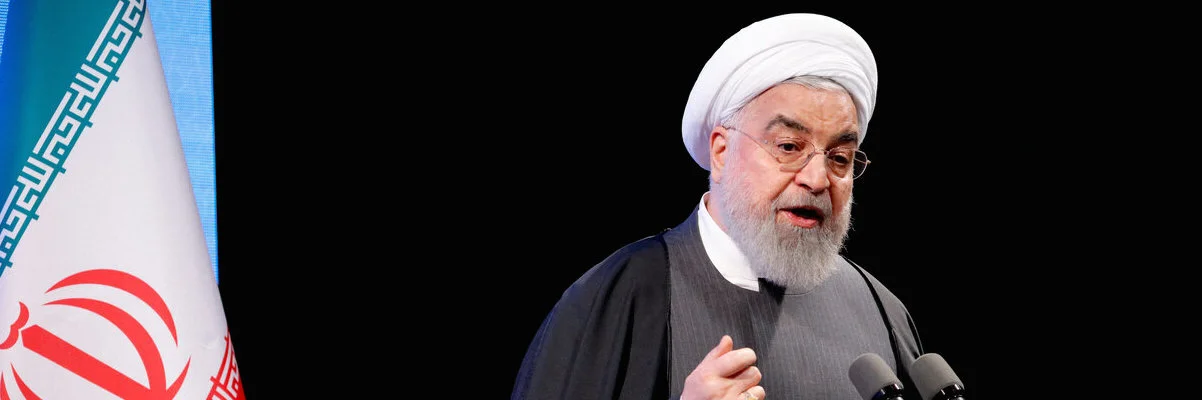
Iran’s President Hassan Rouhani asked his top aides and lawmakers to draft a bill revising the election-related powers of the Guardian Council, one of the Islamic Republic’s most powerful institutions, the state-run Islamic Republic News Agency reported.
Rouhani instructed his first vice president, Eshaq Jahangiri, to work with his top legal advisers and parliamentarians to review the ability of the council—a 12-member chamber of clerics and legal scholars—to vet and disqualify potential candidates for elections, IRNA reported.
The move, which is likely to face resistance from other political factions and from Supreme Leader Ayatollah Ali Khamenei, comes after swathes of candidates, including allies of Rouhani, were disqualified from standing in the Feb. 21 parliamentary vote. Khamenei appoints half of the council’s members.
Last month Rouhani said the scale of the disqualifications, which include 90 sitting reformist lawmakers, undermined the validity of the election and would result in a single-party race. Earlier Wednesday, Khamenei criticized those who challenged the Guardian Council’s vetting process and urged all Iranians to participate in the vote.
Photo: IRNA
Iran Starts New Domestic Bond to Support Manufacturers
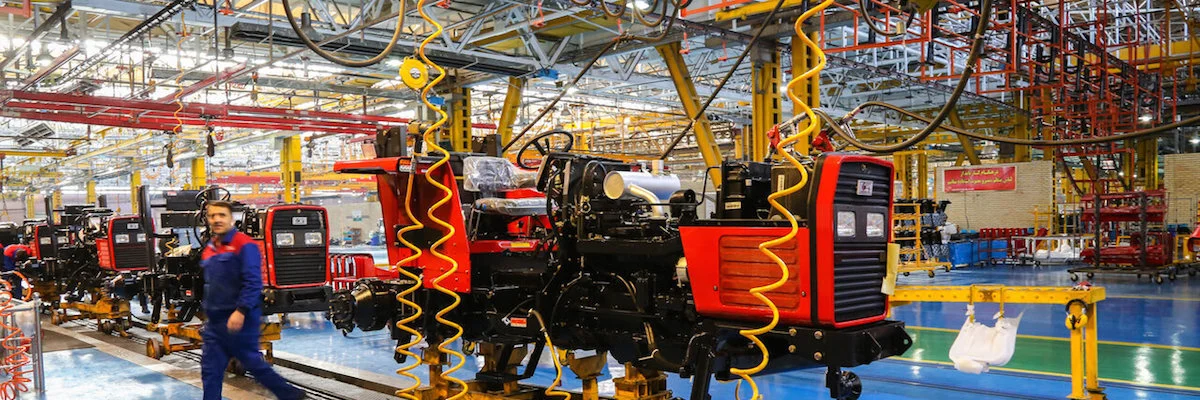
◢ Iran has launched a new domestic bond to support manufacturers and non-oil sectors, Central Bank Governor Abdolnaser Hemmati said. The new bond is expected to raise the equivalent of $3.6 billion at the current free market exchange rate.
By Yasna Haghdoost
Iran has launched a new domestic bond to support manufacturers and non-oil sectors, Central Bank Governor Abdolnaser Hemmati said.
Hemmati said he expects the local bonds, dubbed “Gam,” or “step” in Farsi, will raise 50,000 trillion rials from the first round of issue, the state-run Islamic Republic News Agency reported on Tuesday. That’s equivalent to $11.9 billion, according to the Central Bank of Iran’s official fixed exchange rate, or $3.6 billion on the open, unregulated market.
Four national banks – Melli, Mellat, Tejarat, and Saderat – will use the bonds to finance manufacturing.
“I am confident that the measures taken by the banking system will see growth in the country’s production and economy,” Hemmati said at the launch.
Iran has sought to boost its non-oil sectors after U.S. sanctions drastically reduced crude oil exports.
The loss of revenue from oil exports, Iran’s main source of hard currency, dealt a blow to the currency, fueling inflation and shortages of some imports.'
Photo: IRNA
Halkbank Wins Reprieve in U.S. Prosecution Over Iran Sanctions
◢ A federal appeals court granted a temporary halt in the U.S. prosecution of Turkish lender Halkbank over sanctions violation charges while it weighs other requests by the bank. Halkbank had previously sought to pursue a dismissal of the case without entering a plea on the charges.
By Christian Berthelsen
A federal appeals court granted a temporary halt in the U.S. prosecution of Turkish lender Halkbank over sanctions violation charges while it weighs other requests by the bank.
Halkbank had previously sought to pursue a dismissal of the case without entering a plea on the charges. A judge denied the request, and the bank is appealing that ruling. A three-judge panel of the Second Circuit Court of Appeals will weigh the request on an expedited basis.
Prosecutors have deemed the bank a fugitive from justice, asking a judge to hold it in contempt and impose fines until it begins answering the charges.
Halkbank, which is owned by the Turkish government, was charged in October with helping Iran access billions of dollars in oil revenue that had been frozen in its accounts under U.S. sanctions. A senior bank executive was previously convicted in the case, and a money launderer pleaded guilty to charges of orchestrating the scheme.
The case has become a persistent thorn in the side of Turkey’s president, Recep Erdogan, who has pressed President Donald Trump to intervene. The charges were brought at the height of tensions between Washington and Ankara over Turkey’s military offensive in Syria. The geopolitical context is complicated by Trump’s campaign to hobble Iran.
Photo: Halkbank
EU Top Diplomat Holds Talks in Iran 'To De-Escalate Tensions'
◢ Top EU diplomat Josep Borrell on Monday held talks in the Iranian capital on a mission aimed at lowering tensions over the Islamic republic's nuclear program. Borrell's mission aims "to de-escalate tensions and seek opportunities for political solutions to the current crisis," said the office of the EU's high representative for foreign affairs and security policy.
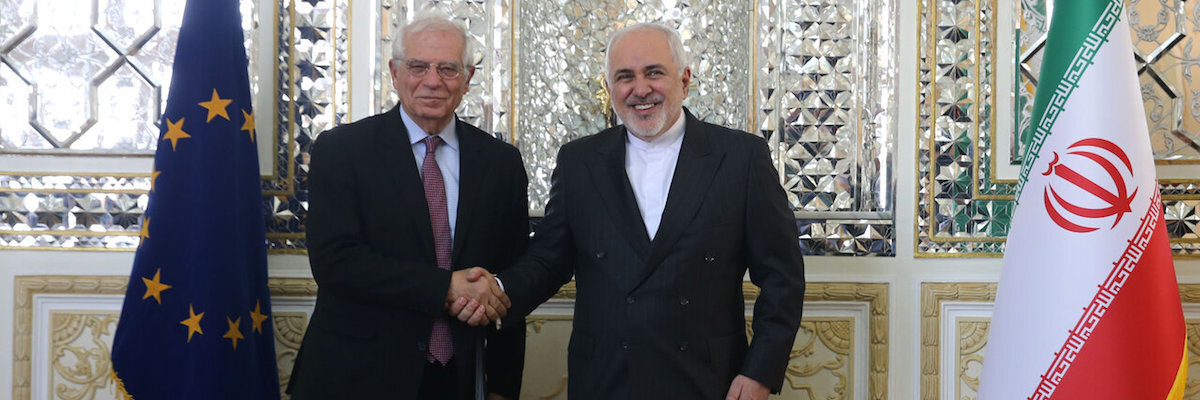
Top EU diplomat Josep Borrell on Monday held talks in the Iranian capital on a mission aimed at lowering tensions over the Islamic republic's nuclear program.
Borrell's trip, his first to Iran since taking office, follows a spike in tensions between arch foes Washington and Tehran after the January 3 assassination in Baghdad of a top Iranian general in a US drone strike.
Borrell's visit opened with a meeting with Foreign Minister Mohammad Javad Zarif.
According to a ministry statement, the two men discussed "the situation in the Persian Gulf and the need to reduce regional tensions" and the 2015 deal on Iran's nuclear program.
The deal between Tehran and a group of world powers has been crumbling since US President Donald Trump withdrew from it in 2018, and Washington has since stepped up sanctions and a campaign of "maximum pressure" against Iran.
Tehran has gradually stepped back from its own commitments under the deal, while military tensions with the US brought the two countries to the brink of full-blown confrontation last month.
Borrell's mission aims "to de-escalate tensions and seek opportunities for political solutions to the current crisis," said the office of the EU's high representative for foreign affairs and security policy.
The trip will allow Borrell "to convey the EU's strong commitment to preserve" the nuclear deal, known as the Joint Comprehensive Plan of Action, and to discuss cooperation between the EU and Iran, it said.
Zarif and Borrell also touched on Trump's controversial peace plan for the Israeli-Palestinian conflict and developments in Iraq, Syria and Yemen, the foreign ministry said.
The European diplomat later met President Hassan Rouhani and is set to meet parliament speaker Ali Larijani.
Iranian foreign ministry spokesman Abbas Mousavi told a news conference that Tehran hoped Borrell's visit would help the European Union "understand" its situation and prompt the bloc to "show goodwill by taking serious measures".
Accusations, Denials
Borrell said on January 24 that he had consulted the countries still in the deal—which also include Russia and China—and that all are determined to save the accord.
A joint commission that oversees the deal and comprises representatives of all the countries involved will meet in February, he said, without giving a precise date.
Washington accuses Tehran of seeking a nuclear weapon, which Iran has always denied.
The deal struck in Vienna between Iran and the five permanent members of the UN Security Council—Britain, China, France, the United States and Russia—plus Germany, offered Tehran a partial reprieve from crippling international sanctions.
In exchange, Iran agreed to drastically reduce its nuclear activities and to submit to a tailor-made inspection regime by the International Atomic Energy Agency (IAEA).
The US withdrawal from the deal and its reimposition of biting sanctions deprived Iran of anticipated economic benefits.
The renewed US sanctions have almost entirely isolated Iran from the international financial system, driven away oil buyers and plunged the country into a severe recession.
Since May 2019, Iran has progressively scaled back commitments under the agreement in response to the US sanctions and Europe's inability to circumvent them.
Iran is now producing uranium enriched beyond the 3.67 percent set by the agreement, and no longer adheres to the limit of 300 kilogrammes (660 pounds) imposed on its enriched uranium stocks.
It has also resumed research and development that was restricted under the deal.
Photo: IRNA