
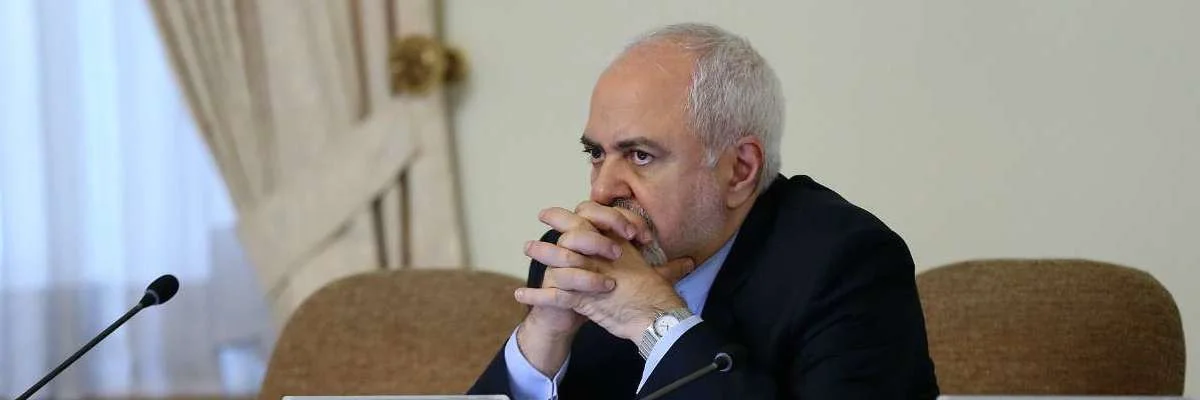
Iran Urges West to End 'Absurdities' on Missiles
◢ Iran on Thursday urged the United States and its allies to stop their "absurd" accusations about Iranian missile tests, a day after Washington urged the UN to adopt punitive measures against Tehran. "US & allies should cease their hypocritical absurdities about Iran's missiles," Iranian Foreign Minister Javad Zarif wrote on Twitter.
Iran on Thursday urged the United States and its allies to stop their "absurd" accusations about Iranian missile tests, a day after Washington urged the UN to adopt punitive measures against Tehran.
"US & allies should cease their hypocritical absurdities about Iran's missiles," Iranian Foreign Minister Javad Zarif wrote on Twitter.
"Facts speak for themselves. It's they who sell USD 100s of billions in arms to butcher Yemenis," he added, referring to the devastating Saudi-led war backed by the West against Yemen rebels.
Beneath the text, Zarif published a graphic detailing arms exports to Saudi Arabia from 2013 to 2017 using figures from the Stockholm International Peace Research Institute (SIPRI).
The US accounted for 61 percent of those arms sales to Riyadh, Britain made up 23 percent of sales, and deals from France accounted for four percent,
according to the chart.
US Secretary of State Mike Pompeo on Wednesday urged the UN Security Council to take punitive action against Iran to limit its ballistic missile program, which Washington says poses a threat to the region and beyond.
A day earlier, Iran confirmed it had carried out a missile test and reiterated its intention to keep up ballistic activities despite Western condemnation.
Paris and London said Tehran's test was "provocative" but called for dialogue with Iran rather than sanctions as demanded by the US.
Iran reined in most of its nuclear program under a landmark 2015 deal with major powers, which the US walked away from in May, but has continued to develop its ballistic missile technology.
UN Security Council Resolution 2231 adopted after the agreement calls on Iran to refrain from testing missiles capable of carrying a nuclear weapon, but does not specifically bar Tehran from missile launches.
Tehran says it has no intention of acquiring atomic weapons and that its missile development programs are purely defensive and comply with the resolution.
Photo Credit:
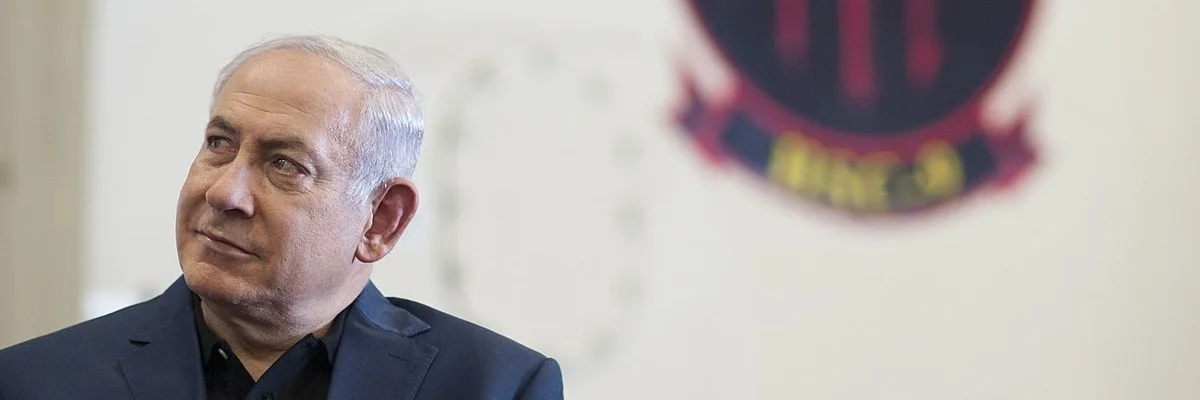
Netanyahu: Israel Would Hit Iran to Ensure its Own Survival
◢ Israeli Prime Minister Benjamin Netanyahu said Wednesday that Israel would be prepared to attack inside Iran if the Jewish state's survival was at stake. "Our red line is our survival," Netanyahu said at a meeting with foreign media where he was asked what his "red line" was for attacking Iranian territory, rather than its proxies in Syria and Lebanon.
Israeli Prime Minister Benjamin Netanyahu said Wednesday that Israel would be prepared to attack inside Iran if the Jewish state's survival was at stake.
"Our red line is our survival," Netanyahu said at a meeting with foreign media where he was asked what his "red line" was for attacking Iranian territory, rather than its proxies in Syria and Lebanon.
"We do what is necessary to protect the state of Israel against the Iranian regime that openly calls for the annihilation of the Jewish state."
"I'm not ruling out doing anything that we need to do to defend ourselves," added Netanyahu, who sees Iran as the most dangerous threat to Israel.
He said that Israel is the only country whose military is "directly engaging Iranian forces" with air strikes in neighboring Syria, where Iran supports the forces of President Bashar al-Assad.
Netanyahu said Wednesday that Iran's aggressive regional behavior, in contrast to Israel's fight against radical Islamic militants and its advanced technology, had brought once-hostile Arab states closer to the Jewish state.
"The Arab countries understand exactly that Israel is not their enemy, but their indispensable partner" against extremists, he said, speaking of "new relationship between Israel and the Arab world".
Israel has diplomatic relations with only two Arab countries—Egypt and Jordan—but has recently been pushing to broaden regional ties.
A rapprochement with Saudi Arabia in particular, a regional heavyweight and rival of Iran, would be a considerable breakthrough for Israel.
Netanyahu said that a balanced diplomatic response was needed to the murder of Saudi journalist Jamal Khashoggi in his country's consulate in Istanbul on October 2, which sparked a global outcry.
While he described the crime as "horrific, nothing short of that," he said that every country, especially those with formal relations with Saudi Arabia, must decide how to react.
"It's balanced by the importance of Saudi Arabia and the role it plays in the Middle East, because if Saudi Arabia were to be destabilized the world would be destabilized... and I think that has to be taken into account, there's a balance," he said.
Photo Credit: Wikicommons

Pompeo Urges UN to Get Tough on Iran Missiles
◢ US Secretary of State Mike Pompeo on Wednesday urged the United Nations to tighten restrictions on Iran's missiles, which he warned could strike US allies, but other powers called instead for dialogue. Pompeo headed to New York for a Security Council meeting on Iran, which recently confirmed a medium-range ballistic missile test, arguing it is legal and necessary for its defense.
US Secretary of State Mike Pompeo on Wednesday urged the United Nations to tighten restrictions on Iran's missiles, which he warned could strike US allies, but other powers called instead for dialogue.
Pompeo headed to New York for a Security Council meeting on Iran, which recently confirmed a medium-range ballistic missile test, arguing it is legal and necessary for its defense.
"We risk the security of our people if Iran continues stocking up on ballistic missiles," Pompeo told the Security Council.
"We risk escalation of conflict in the region if we fail to restore deterrence. And we convey to all other malign actors that they too can defy the Security Council with impunity if we do nothing," he said.
Iran has "hundreds of missiles which pose a threat to our partners in the region," Pompeo said, referring to Israel and Arab allies such as Saudi Arabia.
Pompeo said the United States would press to preserve a UN arms embargo on Iran due to expire in 2020 and urge the Security Council to set up inspections at sea to prevent weapons shipments.
He also called for the return of a firmer prohibition on Iran developing missiles capable of delivering nuclear weapons, toughening language from the Security Council resolution that supported the nuclear deal.
President Donald Trump has made pressuring Iran a major focus, withdrawing from an international accord on curbing Tehran's nuclear program negotiated under his predecessor Barack Obama and reimposing sweeping sanctions.
Confirming US concerns, a UN report submitted to the Security Council said that recent missiles fired by Yemen's Huthi rebels were manufactured in Iran.
Saudi Arabia has been waging air strikes and a blockade against the rebels, who share religious ties with Iran, triggering what the United Nations calls the world's worst humanitarian crisis.
Iran Denounces 'Lies'
Responding as Pompeo looked on, Iranian envoy Eshagh Al Habib said the top US diplomat was casting Iran as a threat to sell more "beautiful weapons," sarcastically quoting Trump's rationale for backing Saudi Arabia.
He said Iran's missiles were not nuclear in nature and defended the need for strong defense, noting that Western powers backed Saddam Hussein as his warplanes destroyed Iranian cities in the 1980-88 Iran-Iraq war.
"What we heard today was another series of lies, fabrications, disinformation and deceptive statement by the US," Al Habib said, recalling the "infamous speeches" of top US officials in the past—a clear reference to Colin Powell's selling of the 2003 invasion of Iraq.
“For the first time in the UN history, a permanent member of this Council is blatantly punishing UN members not for violating, rather for complying with, a Security Council resolution," he said.
Russian Ambassador Vassily Nebenzia also made a veiled but clear swipe at Pompeo as he denounced attempts to "fan anti-Iranian hysteria."
"There is no proof that the ballistic missiles can carry a nuclear load," Nebenzia told the council, adding that Iran "is ready for dialogue."
France, while saying it shared US goals on Iran, pleaded for the preservation of the nuclear accord, saying it was verifiably working in freezing Iran's nuclear program.
"It's only on this basis that we can build together a long-term strategy for the region," Ambassador Francois Delattre told the council.
"Such a strategy can't come down to a policy of pressure and sanctions; it equally has to come with a firm, frank dialogue with the Iranians on our concerns," he said.
European powers said they were working to ensure that Iran sees the economic fruits of compliance.
But Iran's economy has suffered a severe blow and is forecast to contract due to the renewal of sanctions by the United States, which has vowed to preclude all countries from virtually any business in Iran.
Photo Credit: Wikicommons
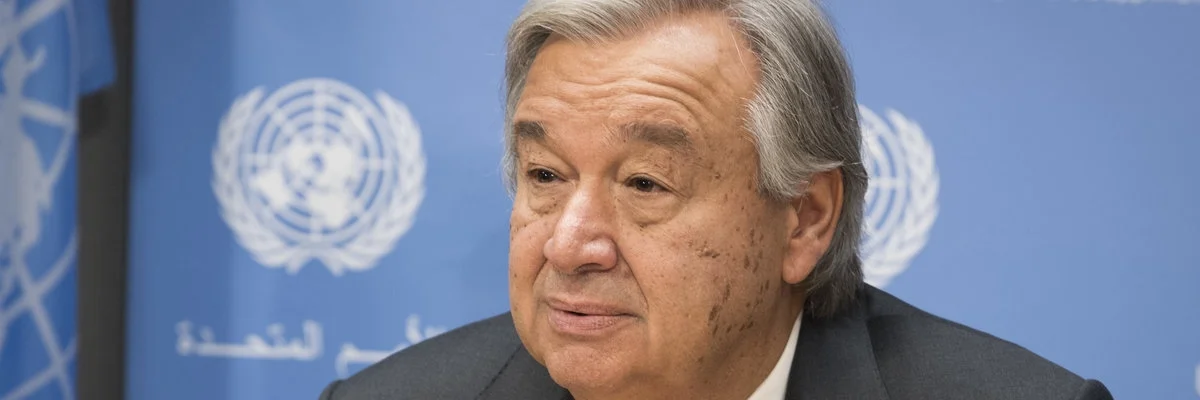
UN Reports More Suspected Iranian Missiles Found in Yemen
◢ More suspected Iranian-made weapons have been found in Yemen, the UN says in a report that will be discussed Wednesday by the Security Council. The Gulf monarchies and United States accuse Iran of supporting Houthi rebels in Yemen—and see this as justification for the military campaign they have been waging in Yemen since 2015.
More suspected Iranian-made weapons have been found in Yemen, the UN says in a report that will be discussed Wednesday by the Security Council.
The Gulf monarchies and United States accuse Iran of supporting Houthi rebels in Yemen—and see this as justification for the military campaign they have been waging in Yemen since 2015.
Iran supports the rebels politically but denies supplying them with arms.
The report from UN Secretary General Antonio Guterres' office says his staff examined two container launch units for anti-tank guided missiles recovered by the Saudi-led coalition in Yemen.
"The Secretariat found that they had characteristics of Iranian manufacture," the report said.
"The Secretariat also examined a partly disassembled surface-to-air missile seized by the Saudi-led coalition and observed that its features appeared to be consistent with those of an Iranian missile," it added.
A probe into the origin of the weapons continues, it said.
US Secretary of State Mike Pompeo was expected to attend Wednesday's meeting on Iran, scheduled to start at 1500 GMT.
Guterres' report mainly addresses Iran's obligations under the 2015 nuclear deal it struck with six major powers. The United States pulled out of the accord in May and has reimposed sanctions on Iran.
The report concludes that Iran continues to abide by the nuclear accord, under which it won sanctions relief in exchange for limiting its nuclear program.
The UN has said in the past that Yemen's Houthi rebels have fired Iranian-made missiles at Saudi Arabia. But it said it could not be certain that these weapons were in fact supplied by Iran in what would be a violation of UN resolutions.
Photo Credit: UN
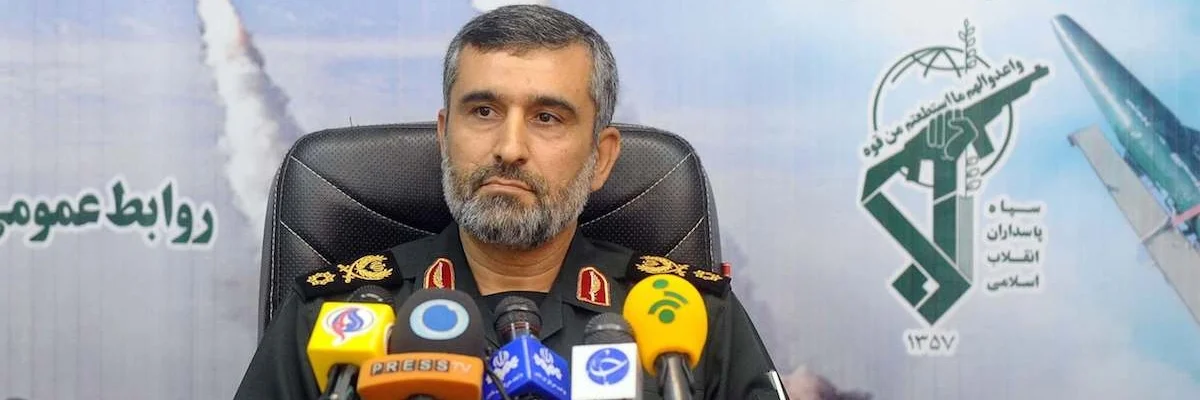
Iran Confirms Recent Missile Test Amid Western Criticism
◢ Iran confirmed on Tuesday that it had carried out a recent test of a medium-range ballistic missile after Western powers sharply criticized a December 1 launch. “We are continuing our missile tests and this recent one was a significant test," the Fars news agency reported, citing Revolutionary Guards aerospace commander Brigadier General Amirali Hajizadeh.
Iran confirmed on Tuesday that it had carried out a recent test of a medium-range ballistic missile after Western powers sharply criticized a December 1 launch.
“We are continuing our missile tests and this recent one was a significant test," the Fars news agency reported, citing Revolutionary Guards aerospace commander Brigadier General Amirali Hajizadeh.
"The US reaction showed that it was a big thing for them and that it upset them," the conservative news agency said, adding that Iran carried out between 40 and 50 missile tests a year.
Iran has pressed on with its ballistic missile program after reining in much of its nuclear program under a landmark 2015 deal with major powers.
A UN Security Council resolution adopted after the agreement calls on Iran to refrain from testing missiles capable of carrying a nuclear weapon, but does not specifically bar Tehran from missile launches.
The UN Security Council convened at the request of Britain and France on December 4 to discuss the latest test which both governments described as "provocative" and "inconsistent" with Resolution 2231.
Britain said that the types of missiles fired had capabilities that "go way beyond legitimate defensive needs".
Iran has developed several types of ballistic missiles with a range of up to 3,000 kilometers (1,875 miles)—sufficient to reach Israel and Western bases across the region.
In its report, Fars did not specify the date of the latest test or say which types of missile were fired.
Washington, which quit the nuclear deal in May, described the test as an outright "violation" of Resolution 2231 and called on the Security Council to condemn it.
But veto-wielding Moscow has defended Tehran's right to carry out the missile tests, and the December 4 meeting ended with no joint statement or any plan for follow-up action.
The council is due to meet again on December 19 for a regular review of the resolution's implementation.
Iran has received regular certifications of compliance with the provisions of the nuclear deal from the UN atomic watchdog.
Western criticism has focused instead on Tehran's missile program and its military interventions in the region.
Photo Credit: ISNA
Iran Arrests 10 Over Suicide Attack on Police
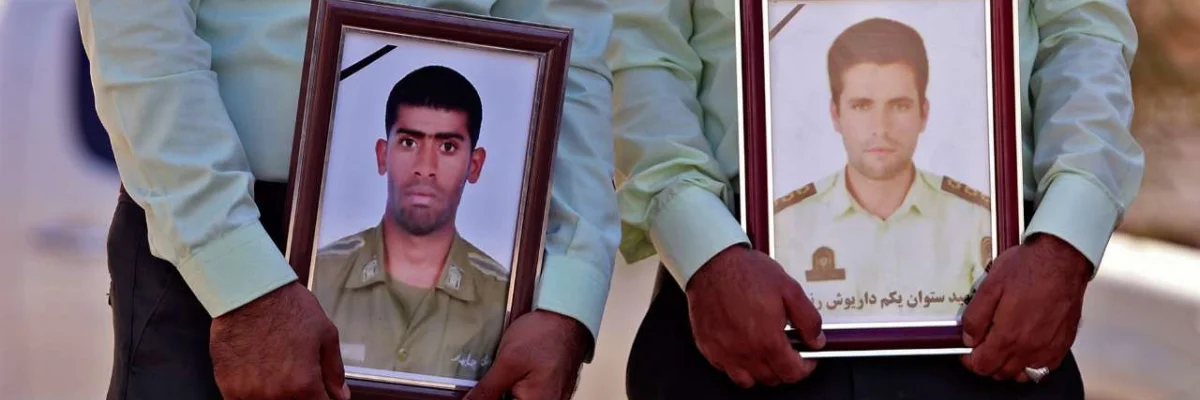
◢ Iranian police said Sunday that 10 people had been arrested in connection with a suicide attack in southeastern Iran that killed two police officers. Jihadist separatist group Ansar al-Furqan has claimed responsibility for Thursday's assault in which an explosives-laden car was driven into a police station in the port city of Chabahar.
Iranian police said Sunday that 10 people had been arrested in connection with a suicide attack in southeastern Iran that killed two police officers.
Jihadist separatist group Ansar al-Furqan has claimed responsibility for Thursday's assault in which an explosives-laden car was driven into a police station in the port city of Chabahar.
The authorities have rejected the claim of responsibility for the attack, relatively rare in Iran, which also injured around 40 people.
Police chief Hossein Ashtari said 10 people had been arrested, according to the conservative Fars news agency, without giving any details.
Ansar al-Furqan released a photo of the alleged suicide bomber on Saturday, identified as Abdullah Aziz, according to the Site Intelligence Group, which monitors jihadist activities.
Sistan-Baluchistan province has faced decades-long insurgencies by Pakistan-based Baluchi separatists and Sunni Muslim extremists.
Iran has blamed the United States and Tehran's regional rivals, Saudi Arabia and Israel, for supporting the insurgent groups.
Photo Credit: IRNA
Iran Seeks Regional Front Against US 'Economic Terrorism'
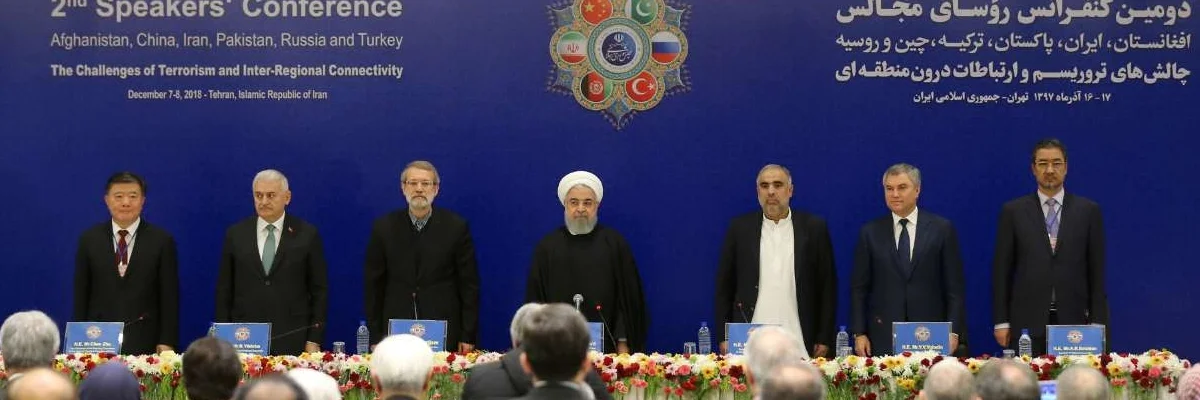
◢ Iran's President Hassan Rouhani said US sanctions were "economic terrorism", as he sought to foster a united front from visiting regional officials on Saturday. Addressing parliament speakers from Afghanistan, China, Pakistan, Russia and Turkey, Rouhani said they had all suffered economic pressure from the US.
Iran's President Hassan Rouhani said US sanctions were "economic terrorism", as he sought to foster a united front from visiting regional officials on Saturday.
Addressing parliament speakers from Afghanistan, China, Pakistan, Russia and Turkey, Rouhani said they had all suffered economic pressure from the US.
"We are facing an all-out assault which is not only threatening our independence and identity but also is bent on breaking our longstanding ties," he said.
Washington has reimposed an oil embargo and other damaging sanctions on Iran since withdrawing in May from a landmark 2015 nuclear deal between Tehran and major powers.
"America's unjust and illegal sanctions against the honorable nation of Iran have targeted our nation in a clear instance of terrorism," Rouhani said.
"Economic terrorism is designed to create panic in the economy of a country and fear in other countries in order to prevent investment."
The conference in Tehran was a second annual meeting of parliament speakers focused on terrorism and regional cooperation. The first was held last December in Islamabad.
Most participating countries have faced harsh sanctions and other economic pressure as part of the Trump administration's use of trade as a diplomatic weapon.
A brief truce in Trump's trade war with China was again in doubt this week after the arrest of Chinese telecom giant Huawei's chief financial officer, who was detained in Canada to face fraud charges in the US.
Washington has continued to pile fresh sanctions on Russia that began over its military intervention in Ukraine, while Turkey also faced penalties this year over the detention of an American pastor.
'We are all punished'
Trump has also cancelled hundreds of millions of dollars in aid to Pakistan, accusing it of failing to crack down on militancy.
"When they put pressure on China's trade, we are all harmed... By punishing Turkey, we are all punished. Any time they threaten Russia, we too consider our security to be endangered," Rouhani said.
"When they impose sanctions on Iran, they deprive all of us of the benefits of international trade, energy security and sustainable development. And in fact, they impose sanctions on everyone.
"We are here to say that we don't intend to tolerate such insolence."
Rouhani warned Europe—which has strongly objected to the US withdrawal from the nuclear deal—that much is at stake in its efforts to bypass US sanctions and maintain trade with Iran.
"They should know that by sanctioning Iran, they would harm our ability to fight drugs and terrorism," Rouhani said, referring to Iran's efforts to combat smuggling, particularly from Afghanistan.
The European Union is working on a payment system, known as the "special purpose vehicle", to keep money flowing into Iran, but has struggled to find a host since many countries fear repercussions from the Trump administration.
Photo Credit: IRNA
Huawei Exec Faces US Fraud Charges Linked to Iran, Court Hears
◢ Chinese telecom giant Huawei's chief financial officer faces US fraud charges related to sanctions-breaking business dealings with Iran. Meng Wanzhou was arrested in Canada's Pacific coast city of Vancouver on December 1 while changing planes during a trip from Hong Kong to Mexico—ratcheting tensions between the United States and China just as the countries' leaders agreed a truce in their trade war.
Chinese telecom giant Huawei's chief financial officer faces US fraud charges related to sanctions-breaking business dealings with Iran, a Canadian court heard Friday, a week after she was detained on an American extradition request.
Meng Wanzhou was arrested in Canada's Pacific coast city of Vancouver on December 1 while changing planes during a trip from Hong Kong to Mexico—ratcheting tensions between the United States and China just as the countries' leaders agreed a truce in their trade war.
A Canadian government lawyer asked the court to deny her bail, saying she has been accused of "conspiracy to defraud multiple financial institutions" and if convicted faces more than 30 years in prison.
She is specifically accused of lying to US banks about the use of a covert subsidiary to sell to Iran in breach of sanctions.
The lawyer said that Meng had personally denied to American bankers any direct connections between Huawei and the subsidiary, SkyCom, when in fact "SkyCom is Huawei." SkyCom's alleged sanctions breaches occurred from 2009 to 2014.
He suggested that Meng has also shown a pattern of avoiding the United States over the past year since becoming aware of the investigation into the matter, argued that she has no ties to Canada and has access to vast wealth and political connections—and thus poses a flight risk.
Meng's detention in Canada came on the day of a summit at which US President Donald Trump and his Chinese counterpart Xi Jinping agreed to a truce in the escalating trade dispute opposing the two economic powerhouses.
China says Meng—the daughter of Huawei founder Ren Zhengfei, a former engineer in China's People's Liberation Army—has violated no laws in Canada or the United States and has demanded her release.
Washington and Beijing have exchanged steep tariffs on more than USD 300 billion in total two-way trade, locking them in a conflict that has begun to eat into profits.
Trump tweeted Friday that negotiations to defuse the high stakes dispute were "going very well" but the messages since Meng's arrest have been mixed, roiling global stock markets.
Her appearance at the British Columbia Supreme Court in Vancouver is a prelude to an extradition process that could take months.
'Princess' of Huawei
CNN, quoting an unnamed official, said the United States saw the arrest as providing leverage in US-China trade talks—although White House trade advisor Peter Navarro has denied any link to the dialogue.
On Friday, Beijing nevertheless alleged that Meng, known internally as the "princess" of Huawei and possible heir to the throne, had become a pawn in the dispute.
"The Chinese government should seriously mull over the US tendency to abuse legal procedures to suppress China's high-tech enterprises," said the nationalist tabloid Global Times in an editorial.
"Obviously, Washington is resorting to a despicable rogue's approach as it cannot stop Huawei's 5G advance in the market," it went on.
Meng spent most of the past week at a women's detention facility in a suburb of Vancouver.
If she is released on bail, she would likely have to surrender her passport and submit to electronic monitoring until she is discharged or surrendered for trial to the United States. All security costs would be borne by her.
The extradition process could take months, even years, if appeals are made in the case. The Vancouver Sun reported on Friday that Meng's husband Xiaozong Liu is believed to own at least one luxury home in the city.
Repeated Setbacks
Canada is one of more than 100 countries that have an extradition treaty with the United States, requiring it to cooperate with US Department of Justice requests to hand over suspects.
This longstanding treaty requires that the offense for which extradition is being sought is also a crime in Canada.
A Canadian court must decide if there is sufficient evidence to support the extradition, but then it is left to Canada's justice minister to sign the order.
On Thursday, Prime Minister Justin Trudeau defended Canada's arrest of Meng, saying politics played no part in the decision.
"I can assure everyone that we are a country (with) an independent judiciary," Trudeau told a tech conference in Montreal.
Huawei's affordable smartphones have made strong inroads in the developing world, but the company has faced repeated setbacks in major Western economies over security concerns.
Earlier this week, Canadian officials said Ottawa was continuing to review Huawei's technology for use in upcoming fifth generation networks.
The company faces being shut out of Australia, New Zealand and US 5G rollouts, and British telecom group BT revealed on Wednesday it was removing Huawei equipment from its core cellular network.
The five nations together form the "Five Eyes" intelligence alliance.
Photo Credit: Wikicommons
Suicide Bomber Kills Two in Southeast Iran
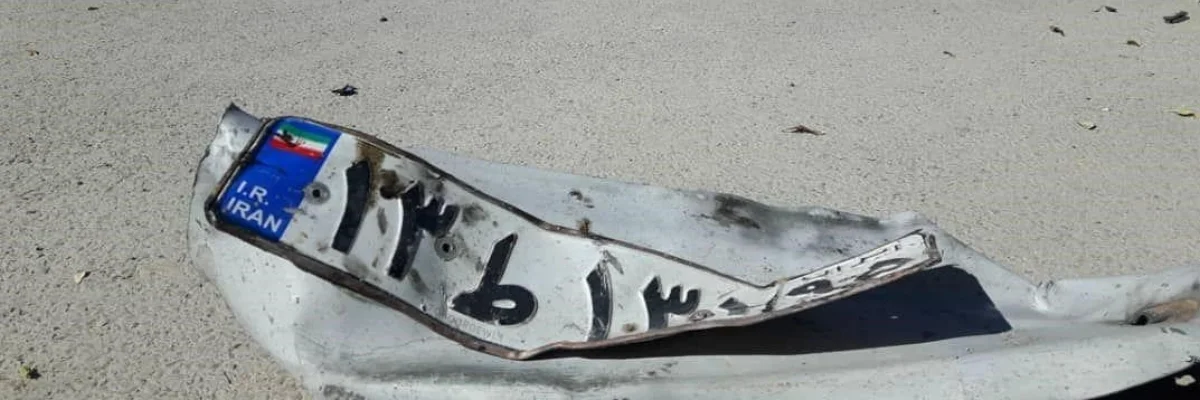
◢ A suicide bomber killed at least two people and wounded many more outside police headquarters in the port city of Chabahar in restive southeastern Iran on Thursday, according to a revised official toll. Chabahar lies in Sistan-Baluchistan province which has long been a flashpoint, with Pakistan-based Baluchi separatists and Sunni Muslim extremists carrying out cross-border attacks targeting the Shiite authorities.
A suicide bomber killed at least two people and wounded many more outside police headquarters in the port city of Chabahar in restive southeastern Iran on Thursday, according to a revised official toll.
Chabahar lies in Sistan-Baluchistan province which has long been a flashpoint, with Pakistan-based Baluchi separatists and Sunni Muslim extremists carrying out cross-border attacks targeting the Shiite authorities.
"This terrorist act led to the martyrdom of two members of the police force," the province's deputy governor in charge of security, Mohammad Hadi Marashi, told state television.
Chabahar city governor Rahmdel Bameri said earlier that four people were
killed and many more wounded when the bomber blew up a car, but later revised
the death toll to two.
"The explosion was very strong and broke the glass of many buildings close by," Bameri told state television.
Many nearby shop owners and civilian passers-by, including women and children, were severely wounded, he added.
Chabahar lies some 100 kilometres (60 miles) west of the Pakistan border and is home to a large, mainly Sunni Muslim ethnic Baluchi community which straddles the two countries.
The number of assailants was not immediately clear.
"The terrorists tried to enter Chabahar police headquarters but they were prevented by the guards and they detonated the car bomb," Marashi said without elaborating on how many assailants took part.
Chabahar has a deep-water port on the Gulf of Oman and with Indian assistance Iran has been developing it as a major energy and freight hub between Central Asia and India, bypassing Pakistan.
Photo Credit: Tasnim
Iran's Rouhani Threatens to Cut Off Persian Gulf Oil
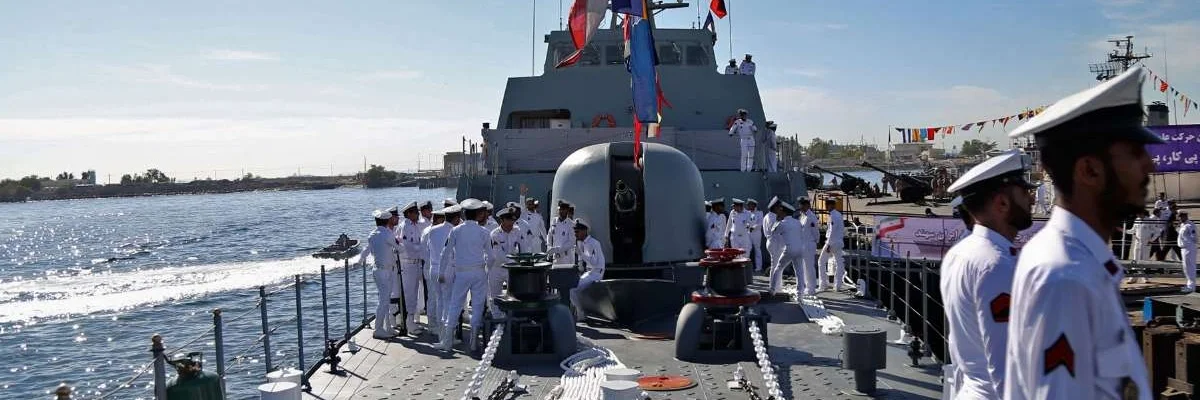
◢ Iran's President Hassan Rouhani struck a defiant stance against US sanctions on Tuesday, renewing his threat to cut off international oil sales from the Gulf. “America should know... it is not capable of preventing the export of Iran's oil," Rouhani said at a televised rally in Semnan province.
Iran's President Hassan Rouhani struck a defiant stance against US sanctions on Tuesday, renewing his threat to cut off international oil sales from the Persian Gulf.
“America should know... it is not capable of preventing the export of Iran's oil," Rouhani said at a televised rally in Semnan province.
"If it ever tries to do so... no oil will be exported from the Persian Gulf," he added. since the 1980s, Iran has said repeatedly it would blockade the Gulf in response to international pressure but has never carried out the threat.
Washington has reimposed sanctions, including an oil embargo, since withdrawing from a landmark 2015 nuclear deal between Tehran and major powers in May.
It has vowed to reduce Iran's oil sales to zero, but has granted temporary waivers to eight countries.
Rouhani last threatened to close the Gulf in July when he warned the US "should not play with the lion's tail."
The president downplayed the economic impact of sanctions, accusing the media of exaggerating the country's problems.
"No hyperinflation, no massive unemployment will threaten us. People should stop saying such things in the papers," he told the crowd.
The latest inflation report from Iran's central bank says food prices rose 56 percent year-on-year in October.
Rouhani acknowledged there were "some problems", but said these would be addressed in the new budget plan to be presented on December 16.
He said the government would maintain subsidies on essential goods and increase public sector wages and pensions by 20 percent.
Photo Credit: IRNA
France, Britain Seek UN Security Council Meeting on Iran Missile Test
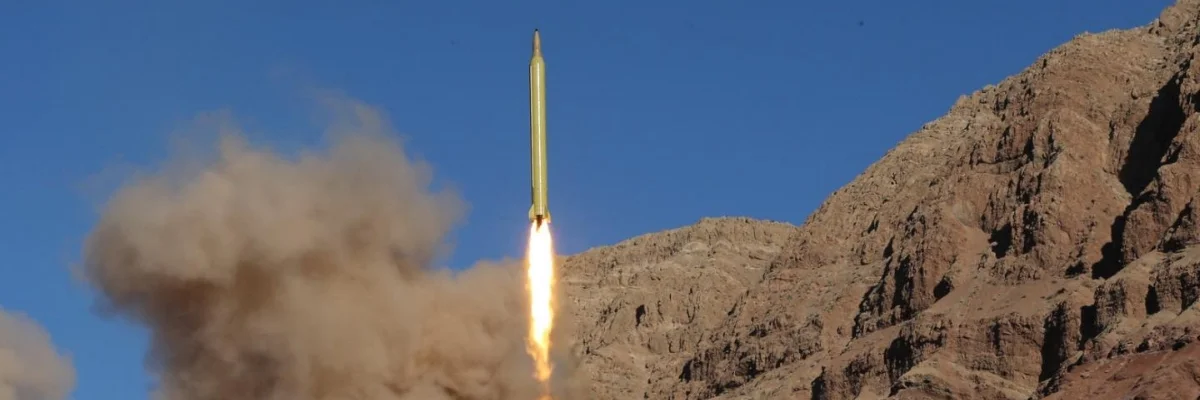
◢ France and Britain on Monday requested a closed-door meeting of the UN Security Council after charging that Iran test-fired a medium-range missile at the weekend, diplomats said. The meeting is expected to be held Tuesday. The United States said the missile launch on Saturday was a violation of a UN resolution that endorsed the 2015 Iran nuclear deal, from which Washington has withdrawn.
France and Britain on Monday requested a closed-door meeting of the UN Security Council after charging that Iran test-fired a medium-range missile at the weekend, diplomats said.
The meeting is expected to be held Tuesday.
The United States said the missile launch on Saturday was a violation of a UN resolution that endorsed the 2015 Iran nuclear deal, from which Washington has withdrawn.
That resolution calls on Iran to refrain from testing missiles capable of carrying a nuclear weapon.
France said it was concerned by the test-firing with the foreign ministry describing it as "provocative and destabilizing" and "does not conform" with UN resolution 2231 on the Iran deal.
British Foreign Secretary Jeremy Hunt called the missile test "provocative, threatening and inconsistent" with the resolution and said Britain was determined "that it should cease."
Iran has long maintained that its missile program is defensive in nature and not aimed at ensuring the delivery of a nuclear weapon, a stance supported by Russia at the Security Council.
Washington's Iran envoy Brian Hook urged the European Union to slap sanctions that target Tehran's missile program as US Secretary of State Mike Pompeo traveled to Brussels for talks with European partners.
The United States decided in May to withdraw from the 2015 nuclear deal and reimpose sanctions on Iran, to the dismay of its Europeans allies.
The nuclear deal provides for a lifting of sanctions against Iran in return for curbs on its nuclear activities.
The remaining five signatories to the nuclear deal—Britain, China, France, Germany and Russia—have backed an EU effort to set up a special payment system in a bid to maintain trade and business ties with Iran.
Photo Commons: Tasnim
US Calls for EU Sanctions on Iranian Ballistic Program
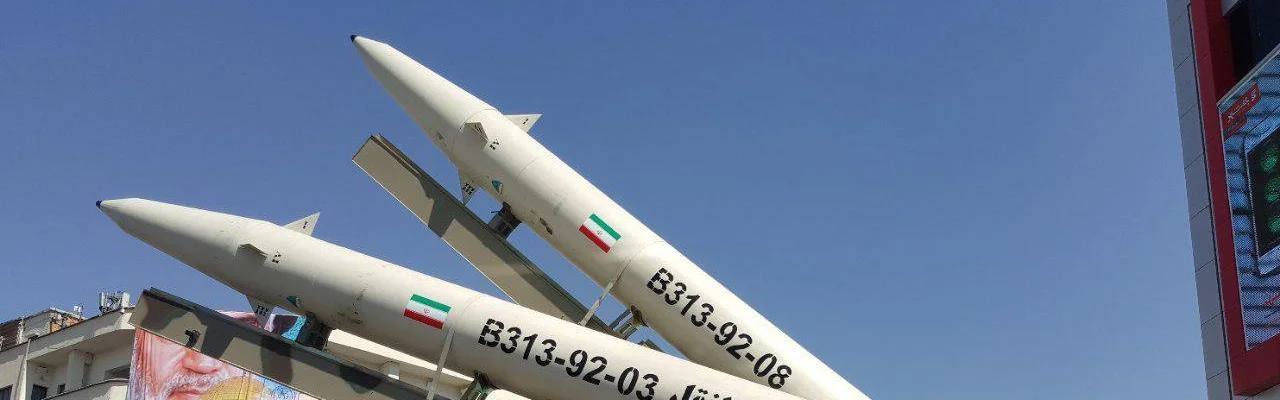
◢ The United States urged the European Union on Monday to apply sanctions targeting Iran's ballistic missile program, calling it a "grave and escalating threat." Over the weekend, US Secretary of State Mike Pompeo charged that Iran tested a medium-range missile capable of carrying multiple warheads and striking parts of Europe and the entire Middle East.
The United States urged the European Union on Monday to apply sanctions targeting Iran's ballistic missile program, calling it a "grave and escalating threat."
Over the weekend, US Secretary of State Mike Pompeo charged that Iran tested a medium-range missile capable of carrying multiple warheads and striking parts of Europe and the entire Middle East.
He said the test violated UN Security Council Resolution 2231, which endorsed the Iran nuclear deal signed by world powers with the Islamic republic.
"The Iranian government claims that its missile testing is purely defensive in nature. It's not defensive," Washington's Iran special envoy Brian Hook told reporters aboard Pompeo's plane as he traveled to Brussels for a NATO meeting.
"We would like to see the European Union move sanctions that target Iran's missile program."
Hook said President Donald Trump's campaign of "maximum pressure" on Tehran since withdrawing from the Iran nuclear deal "can be effective if more nations can join us in those (sanctions)."
"It is a grave and escalating threat, and nations around the world, not just Europe, need to do everything they can to be targeting Iran's missile program," he added.
Hook said "progress" was being made on getting NATO allies to consider a proposal to target individuals and entities that play key roles in Iran's missile program.
The United States decided in May to withdraw from the 2015 nuclear deal and reimpose sanctions on Iran.
EU countries have denounced the move and are working to preserve the nuclear deal, even though they have also criticized Iranian positions on other matters.
Photo Credit: IRNA
Iran Faces 'Chronic Challenges' Beyond US Sanctions: Speaker
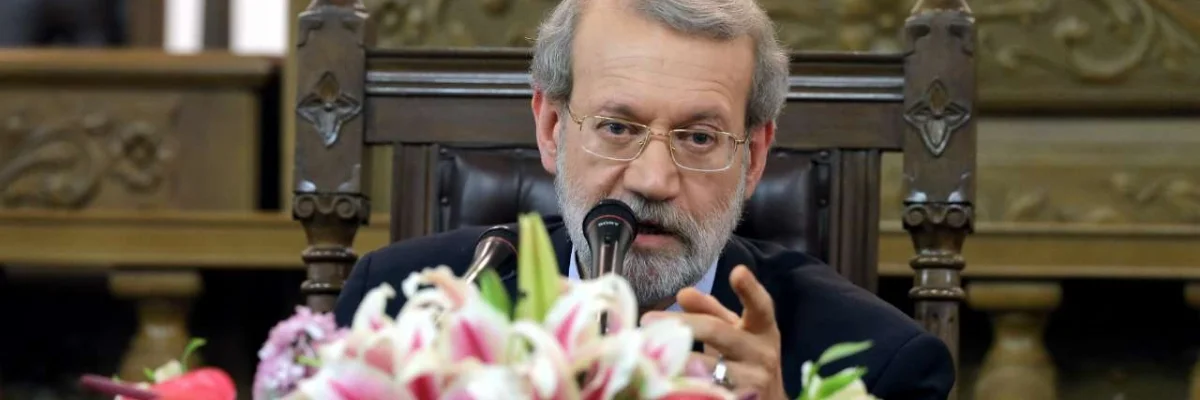
◢ Iran is facing "chronic challenges" that existed long before US sanctions were reimposed, the influential parliament speaker Ali Larijani said on Monday. "External factors do affect our economy, but there are problems persisting from before," Larijani said at a press conference.
Iran is facing "chronic challenges" that existed long before US sanctions were reimposed, the influential parliament speaker Ali Larijani said on Monday.
"External factors do affect our economy, but there are problems persisting from before," Larijani said at a press conference.
He listed a number of challenges, including "big, costly government", high interest rates that "disrupt production", cash-strapped pension funds and a water crisis.
Parliament's research centre had "repeatedly warned" of these challenges, Larijani said, but the government has yet to respond on key issues.
The United States' decision in May to withdraw from the 2015 nuclear deal and reimpose sanctions on Iran has added another layer of difficulty.
The International Monetary Fund says the Iranian economy will contract by 1.5 percent in 2018 and 3.6 percent is 2019, largely due to reduced oil sales caused by the renewed sanctions.
Larijani is an influential insider who was previously seen as deeply conservative but has lately forged a close working relationship with the moderate faction led by President Hassan Rouhani.
He dismissed US President Donald Trump's offer to open fresh negotiations
on a new deal.
"We hear two types of rhetoric from the US president—some cheap words and some talk on the side that they are ready for negotiation," he said.
"Didn't we negotiate? When a country doesn't stand by international accords, how can we trust them?"
Photo Credit: IRNA
Iran Arrests Population Expert Accused of Spy Links
◢ An Iranian fertility expert accused of working with foreign "espionage networks" to downplay the country's population crisis has been arrested, state news agency IRNA confirmed on Sunday. It did not give details of the charges, but quoted a lawyer who named the expert as Meimanat Hosseini Chavoshi.
An Iranian fertility expert accused of working with foreign "espionage networks" to downplay the country's population crisis has been arrested, state news agency IRNA confirmed on Sunday.
It did not give details of the charges, but quoted a lawyer who named the expert as Meimanat Hosseini Chavoshi.
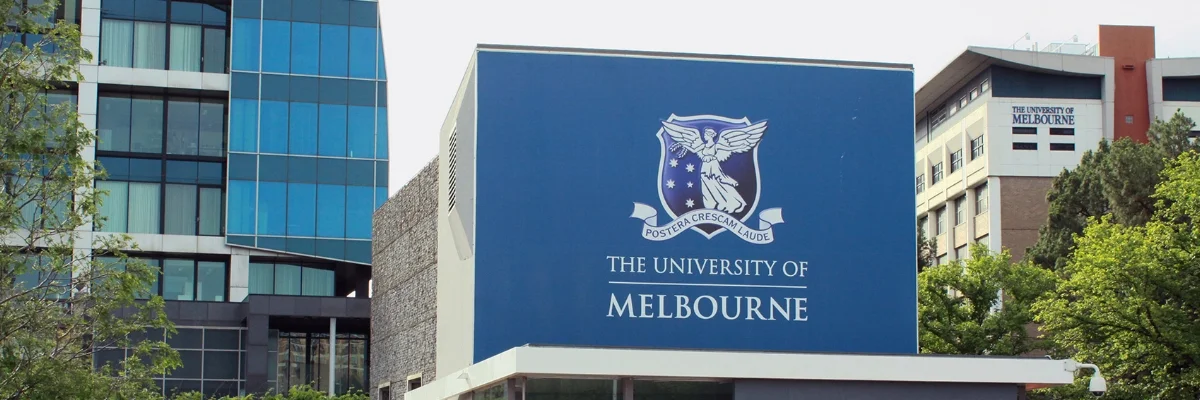
She is listed by the University of Melbourne as working at its School of Population and Global Health, published widely on Iran's once-lauded fertility and family-planning policies.
On Saturday, hardline newspaper Kayhan reported the arrest of several population "activists... who, under the cover of scientific activities, had infiltrated state bodies.”
It said they manipulated statistics and handed sensitive information to Iran's enemies as part of efforts at "cultural and social invasion".
Iran was once considered an international success story in population control, bringing birth rates down from seven per woman in the 1980s to 1.66 in 2016, according to World Bank figures.
Then-health minister Alireza Marandi received the United Nations Population Award in 2000 for his family planning initiatives, which had to overcome entrenched taboos in an Islamic society.
Chavoshi has written extensively about these efforts, which she described as the "fastest fall in fertility ever recorded" in a 2009 book.
But lately there has been concern that Iran overshot its target, with the number of births falling well below the level needed to keep the population growing.
In 2012, supreme leader Ayatollah Ali Khamenei said it was a mistake to have continued the family planning policies of the 1990s, and called for new measures to double the population to 150 million.
The Kayhan report said Iran's enemies were using population experts to counter these efforts by downplaying the gravity of the situation.
"There is evidence these individuals are connected to Western espionage networks," Nasrollah Pejmanfar, a member of parliament's cultural commission, told the newspaper.
Photo Credit: UoM
Iran Hails Oil-For-Goods Deal With South Korea
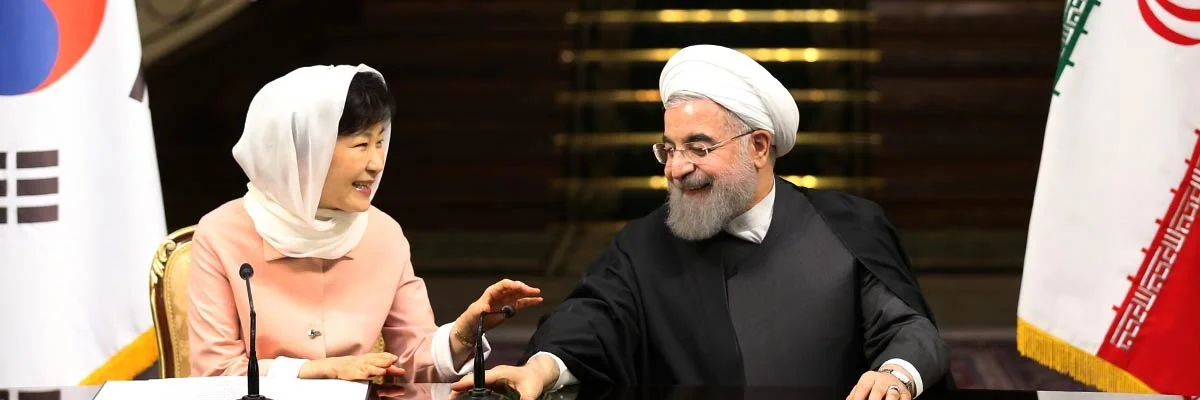
◢ Iran said Saturday it had finalized a deal with South Korea to trade oil for goods, skirting renewed US sanctions. "A mechanism has been devised for returning oil export revenues from South Korea, by which Iran's oil export revenue will be bartered with imported goods," Hossein Tanhayi, head of the Iran-South Korea chamber of commerce, told state news agency IRNA.
Iran said Saturday it had finalized a deal with South Korea to trade oil for goods, skirting renewed US sanctions.
"A mechanism has been devised for returning oil export revenues from South Korea, by which Iran's oil export revenue will be bartered with imported goods," Hossein Tanhayi, head of the Iran-South Korea chamber of commerce, told state news agency IRNA.
Washington unilaterally reimposed a crippling oil embargo on Iran last month following its withdrawal in May from a landmark 2015 nuclear deal.
South Korea—a close political ally of the United States—has cut Iranian oil purchases to zero from an estimated 285,000 barrels per day in the first six months of the year, according to Bloomberg figures.
The sanctions also target Iran's banking sector and its ability to bring dollars into the country, but leave open the possibility of trade in goods.
Tanhayi did not give details of the mechanism, but said a "joint fund" could be opened between their respective central banks.
South Korea is Iran's third largest trade partner after China and the United Arab Emirates.
Bilateral trade has dropped from USD 12 billion in 2017 to USD 5.7 for the first
10 months of 2018, according to the chamber of commerce.
Photo Credit: IRNA
Iran's Saffron Seeks Global Recognition
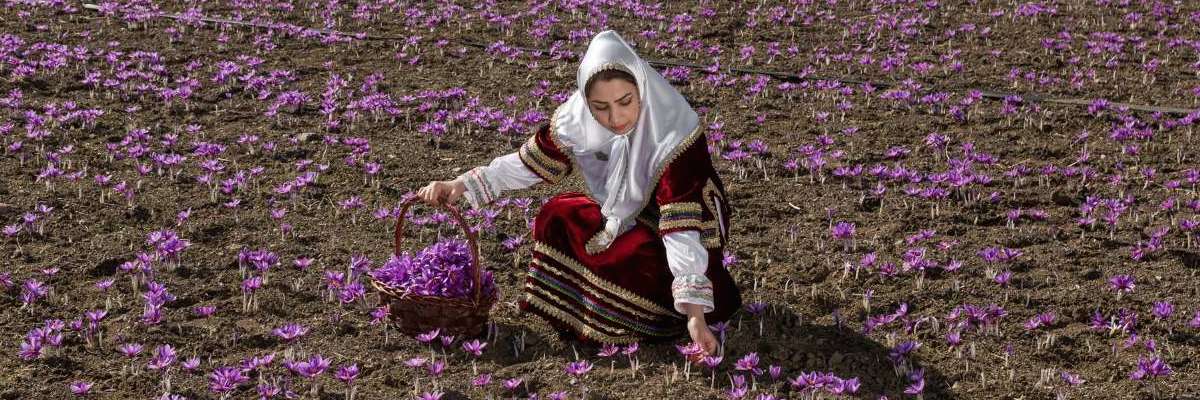
◢ The laborers edge their way across a field of bright purple flowers gathering up the world's most expensive spice, a bounty that makes this dusty corner of Iran a crucial part of global cuisine. The delicate purple leaves of the Crocus sativus plant hold just three or four of the even more delicate red stamen, better known as saffron, that sprouts for just 10 days a year.
The laborers edge their way across a field of bright purple flowers gathering up the world's most expensive spice, a bounty that makes this dusty corner of Iran a crucial part of global cuisine.
The delicate purple leaves of the Crocus sativus plant hold just three or four of the even more delicate red stamen, better known as saffron, that sprouts for just 10 days a year.
These tiny filaments are currently selling in local markets for 90 million rials per kilo—about USD 700 on Iran's volatile exchanges—and perhaps four times higher abroad.
The government says more than 90 percent of the world's saffron grows from the hard soil in Khorasan province of northeastern Iran—a figure corroborated by France's specialist institute of agriculture and fishing FranceAgriMer—eventually finding its way into Spanish paellas, Indian curries, Swedish saffron buns and much more.
India is a distant second, followed by Greece, Morocco, Azerbaijan, Afghanistan and Spain, according to a FranceAgriMer report in 2013.
The star producer in Iran is the small town of of Torbat-e Heydariyeh, about 700 kilometers (435 miles) east of Tehran—which accounts for a third of global production, according to FranceAgriMer.
But poor marketing means Iran has not always won the credit it deserves as the home of saffron, having mostly exported it wholesale to other countries who label it as their own.
“All the cultivation is done here, but the marketing and sales is done elsewhere," local parliament member Saeid Bastani told AFP.
"The people of the world should know that all saffron—of any brand in any market in the world—is Iranian whether it says Spain, Italy or Switzerland," he added with just a sprinkle of patriotic exaggeration.
The government is working with local businesses and farmers to fix the problem.
From his swish new factory on the outskirts of Mashhad, Ali Shariati, CEO of Novin Saffron, sends out around 15 tonnes of high-grade saffron to world markets each year and is spearheading "Made in Iran" efforts.
It's tricky because the major markets each have their own saffron needs that require specific packaging and branding—Spain wants powder for paella, Britain likes entire threads for Indian cuisine, Sweden likes tiny capsules for seasonal saffron treats.
"We have to keep innovating and adapting so we can compete with the marketing in other countries," said Shariati.
Drought Migration
Other issues are forcing innovation on the industry—most pressingly, the devastating drought that has hit Iran's dry regions for the past two decades.
Saffron plants require much less water than many other crops, but the drought is still causing a migration northwards.
"The land being cultivated is gradually moving north, but that means they're moving into wetter regions and that's no good because the quality is better in dry areas," said Amin Rezaee, a farmer in the heart of saffron country—around two hours' drive south of Mashhad.
Like most farmers, he has been sucking water out of the ground to water his land, but now realizes he must invest in more sophisticated irrigation systems if he wants it to survive.
"It's a problem that people are irrigating in traditional ways. They must start to invest in modern methods," he said.
At his factory, Shariati said the problem is easily solvable with better education and support for villagers, which could boost Iran's production from 400 to 1,000 tonnes per year.
The biggest issue for farmers, he recognized, was navigating Iran's nightmarish banking sector, which is notoriously reluctant to lend to small businesses.
So under a new "fair trade" scheme his firm now organizes loans on farmers' behalf, bulk-buys equipment at cheaper prices, and provides education on farming techniques.
"We're educating at least 20,000 farmers and we have guaranteed purchases contracts with 4,000," he said.
"We want them to deliver more organic saffron and improve their lives at the same time."
‘Salt, Pepper, Saffron'
The other obstacle is Iran's struggling economy, which has lately seen wild fluctuations in the currency, in part due to US sanctions.
"The price of bulbs, fertilizer and laborers have all trebled this year, but the price of saffron has only doubled," said Mohamad Jafari, whose family has been selling saffron in the small town of Torbat-e Heydariyeh for half a century.
That is good for exports, but another blow for Iranians hit by soaring prices.
Still, most people in the saffron trade remain upbeat.
International sales have been boosted in the past five years by increasing interest from China, and foodstuffs are protected from US sanctions—making it a priority export for the government.
"The biggest problem with saffron is that people don't know about saffron," said Shariati.
“We want them to think 'salt, pepper, saffron'."
Photo Credit: IRNA
Iran Vows to Fight Trump's Israel-Palestinian Deal
◢ Iran is determined to fight against US Donald Trump's anticipated Israel-Palestinian peace plan, parliament speaker Ali Larijani said Tuesday according to semi-official news agency ISNA. Trump has dubbed his administration's long-awaited plan the "ultimate deal.” which has already unsettled the Palestinians although no details have yet been disclosed.
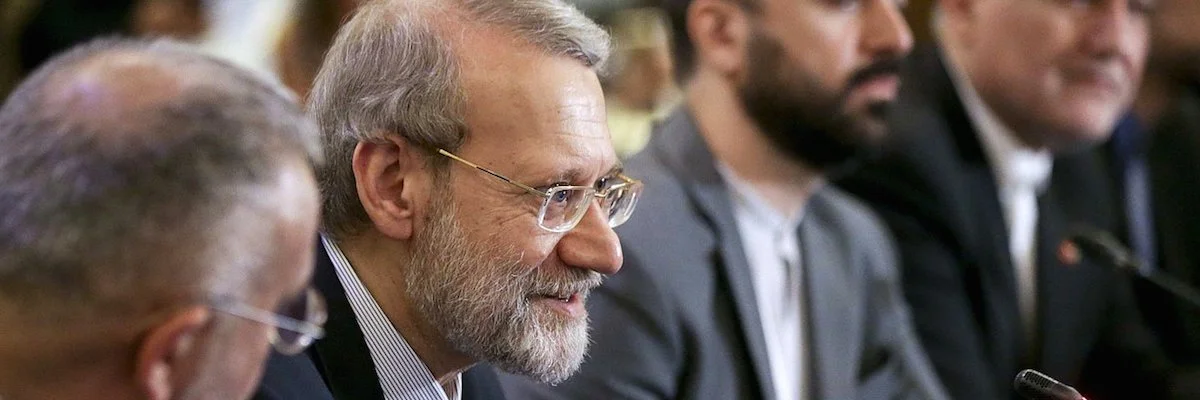
Iran is determined to fight against US Donald Trump's anticipated Israel-Palestinian peace plan, parliament speaker Ali Larijani said Tuesday according to semi-official news agency ISNA.
Trump has dubbed his administration's long-awaited plan the "ultimate deal.” which has already unsettled the Palestinians although no details have yet been disclosed.
Speaking in Tehran, Larijani said the "deal of the century" was a "plot" between Iran's arch foe Israel and the United States to establish the Jewish state's domination in the Middle East.
"We will stand against the regime of Israel and won't let this deal take place in the region," Larijani said at an annual conference on Islamic unity.
"If Americans are imposing sanctions on Iran today and are putting pressure on Iran, the reason for it is because Iran has stood against Israel," he added, quoted by ISNA.
Earlier this year, Washington pulled out of the landmark international nuclear accord with Iran and reimposed crippling sanctions on Tehran.
"In order to achieve their objective they try to create new political arrangements in the region," Larijani said of US-Israeli strategy in the Middle East.
The parliament speaker also singled out regional rival Saudi Arabia and the United Arab Emirates (UAE) as he warned countries against normalizing relations with Israel.
Countries in the region "should know that they would not benefit at all by letting (Israeli Prime Minister Benjamin) Netanyahu to their countries", Larijani said.
"People in the region, in any country, regard Israel as a cancerous tumour and hate it," he added.
Saudi Crown Prince Mohammed bin Salman earlier this year reaffirmed his country's "steadfast" support for the Palestinian cause, after coming under fire for saying both Israelis and Palestinians "have the right to have their own land".
Israel has diplomatic relations with just two Arab states—Egypt and Jordan—but Netanyahu has been pushing for broader regional ties.
The Israeli premier travelled to Oman in October, while two of his ministers visited the UAE.
Photo Credit: IRNA
Iran Judicial Chief Warns Over Worker Unrest
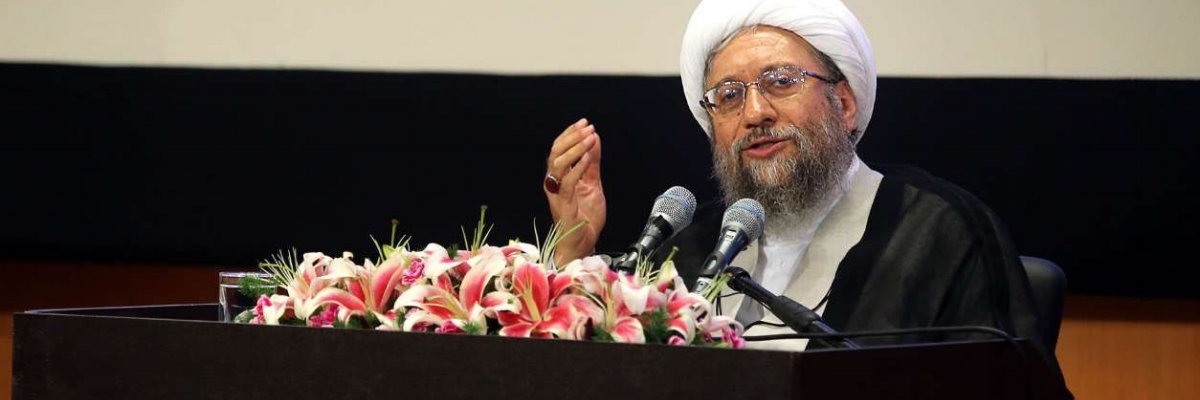
◢ The head of Iran's judicial authority on Monday warned restive workers against creating "disorder", while calling on the government to address their problems. Ayatollah Sadegh Larijani spoke amid efforts to resolve a weeks-long strike at a major sugar factory in western Iran and popular discontent over rising prices.
The head of Iran's judicial authority on Monday warned restive workers against creating "disorder", while calling on the government to address their problems.
Ayatollah Sadegh Larijani spoke amid efforts to resolve a weeks-long strike at a major sugar factory in western Iran and popular discontent over rising prices.
"Workers should not allow their demands to become an excuse and an instrument for the enemy and creation of disorder in the country," Larijani said, quoted by the judiciary's news agency Mizan Online.
Acknowledging that many workers are struggling to make ends meet, he said the government must address workers' problems "immediately", according to Mizan.
"The demands of dear workers must be met in a rational atmosphere... with the involvement of the government and the judiciary branch," he said.
But "demands will never be met by turmoil, crisis and actions contrary to public order", he said.
A strike by workers at the Haft Tapeh sugar factory in Shush, a city in Khuzestan province, on Monday entered its 22nd day, according to the reformist ILNA news agency.
Workers are protesting against salary arrears and alleged criminal activity by managers.
The business has around 4,000 workers and was privatized in 2016.
The workers said on Monday that they have been paid their salaries for the period August 23 to 22 September, ILNA said.
ILNA said three out of four workers that it had reported arrested on November 18 have subsequently been freed.
Iran has been hit by strikes over working conditions in several key sectors this year, including education, mines, transport and the steel industry, mainly outside Tehran.
Inflation stands at 36.9 percent, according to the latest monthly data published by the central bank.
Photo Credit: IRNA
Qatar Airways to Expand Iran Flights Despite Sanctions
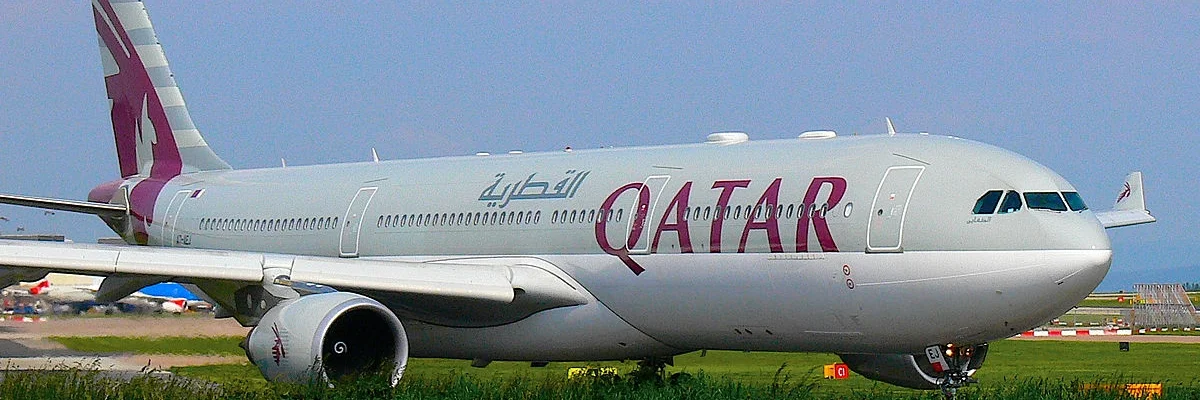
◢ Qatar Airways announced Monday it is expanding operations in Iran, despite US sanctions on the Islamic republic and a Gulf diplomatic rift over accusations Doha was too close to Tehran. The carrier will begin twice-weekly flights to Isfahan in February 2019 and increase existing services to Shiraz and Tehran in January 2019, it said in a statement.
Qatar Airways announced Monday it is expanding operations in Iran, despite US sanctions on the Islamic republic and a Gulf diplomatic rift over accusations Doha was too close to Tehran.
The carrier will begin twice-weekly flights to Isfahan in February 2019 and increase existing services to Shiraz and Tehran in January 2019, it said in a statement.
"These latest launches are further evidence of Qatar Airways' commitment to Iran," said Akbar al-Baker, the airline's group chief executive.
Last month, Baker said services to Iran would continue despite a tightening economic and political squeeze on the Islamic republic by Washington.
The United States said it would impose sanctions on any American or foreign company that continues to do business with Iran, prompting some major airlines, including Air France, KLM and British Airways, to stop flights to Iran.
A first tranche of US punitive measures were introduced in August after Washington withdrew earlier this year from the 2015 international deal aimed at curbing Tehran's nuclear ambitions.
Coupled with the US sanctions, Qatar is under scrutiny from regional powers over its relationship with Iran.
Since June 5, 2017, Saudi Arabia, the United Arab Emirates, Bahrain and Egypt have imposed a sweeping diplomatic and economic embargo on Qatar.
The four countries accuse Doha of seeking closer ties with Iran, Saudi Arabia's arch-rival, as well as supporting radical Islamist groups.
Qatar, which shares the world's largest natural gas field with Iran, denies the charges, saying its former allies are seeking regime change.
Photo Credit: Wikicommons
Strong Earthquake Rocks Western Iran
◢ A strong 6.4-magnitude earthquake hit Iran's western province of Kermanshah late Sunday, the country's institute of geophysics said, with local officials reporting some 260 people injured. The epicenter of the quake was 17 kilometers southwest of the city of Sarpol-e Zahab, according to the institute, which said it struck at a depth of 7 kilometers.
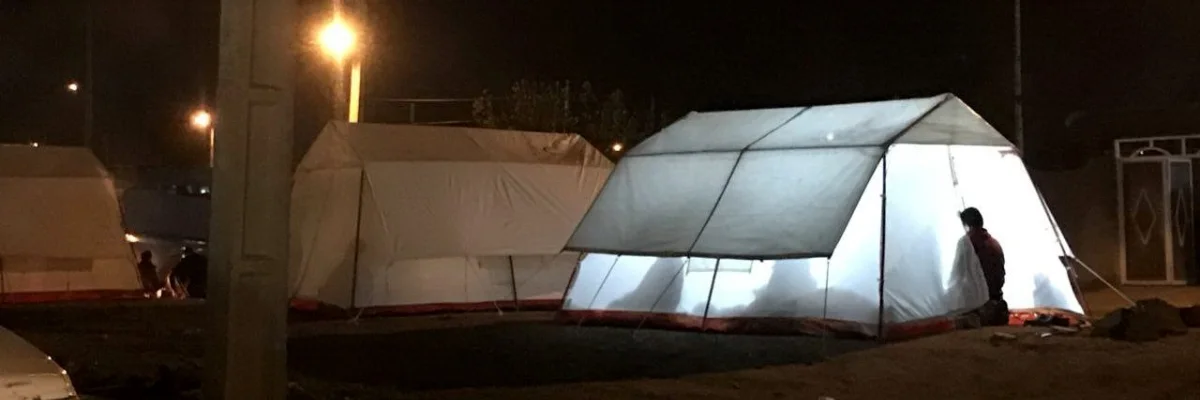
A strong 6.4-magnitude earthquake hit Iran's western province of Kermanshah late Sunday, the country's institute of geophysics said, with local officials reporting some 260 people injured.
The epicenter of the quake was 17 kilometers southwest of the city of Sarpol-e Zahab, according to the institute, which said it struck at a depth of 7 kilometers.
At least 260 people were injured in Sarpol-e Zahab and the neighboring city of Gilan-e Gharb, close to the Iraqi border, Kermanshah governor Houshang Bazvand told state television.
"We've had no reports of fatalities so far. The situation is currently under control," Bazvand said.
"There were power and water cuts in both cities, but they lasted only a few minutes."
The head of Iran's emergency medical services Pirhossein Kolivand said in televised comments that most of the injuries were due to "people panicking and fleeing their homes".
The number of those hurt could rise as 18 emergency teams dispatched from neighboring provinces were still assessing the damage, he said.
Sarpol-e Zahab resident Fariba Babayi described the fear that swept the city when the quake hit.
"Lights went out, walls looked as if they were going to fall and all the neighbors were screaming," Babayi, 36, told AFP by telephone.
"I didn't run this time, even though my mother was out calling to me."
Those living in the city are all too familiar with the devastation earthquakes can bring after it bore the brunt of a 7.3-magnitude tremor last November that killed 620 people and injured thousands more.
Partial rebuilding work on Babayi's house finished just a month ago after it was razed in that quake and her family are still paying construction costs.
"We cannot go back to normal life anymore. There are all the bad memories, the trauma people live with," she told AFP.
There were no official details of any damage to buildings and infrastructure after the latest earthquake.
The region was rocked by seven weaker aftershocks an hour after the initial tremor, the strongest of which was magnitude 5.2, the geophysics institute said.
There were also reports that the initial quake was felt across the border in Iraq.
’Just Reconstructed'
Morteza Salimi, an official with the red crescent society of Iran, told semi-official news agency ISNA that the quake rocked areas "just reconstructed" after the tremor a year ago.
The quake last November damaged some 30,000 houses, with huge numbers made homeless at the start of the cold season in the mountainous region.
Local officials said the estimated cost of reconstruction would be billions of dollars, at a time when Iran was struggling to cope with a tanking economy.
There was criticism that new social housing built as part of a scheme championed by ex-president Mahmoud Ahmadinejad had failed to withstand the tremor.
The western province of Kermanshah was also hit by a 6.0-magnitude quake in August that killed two people and injured more than 250.
Iran sits on top of two major tectonic plates and sees frequent seismic activity.
In 2003, a 6.6-magnitude tremor struck the southeast of the country, decimating the ancient mud-brick city of Bam and killing at least 31,000 people.
The country's deadliest was a 7.4-magnitude quake in 1990, that killed 40,000 people in northern Iran, injured 300,000 and left half a million homeless.
Photo Credit: IRNA