
EU Bid to Sidestep US Iran Sanctions Hits Quicksand
◢ The EU effort to save the Iran nuclear accord by building a mechanism to buy Tehran's oil despite the return of US sanctions has run into difficulty. Brussels supports the deal struck in 2015 to curb Iran's nuclear ambitions, which was dealt a blow in May when the US President Donald Trump pulled out. But Washington has announced the reimposition of broad sanctions from November 4, including on Iran's oil sector, scaring off European traders.
The EU effort to save the Iran nuclear accord by building a mechanism to buy Tehran's oil despite the return of US sanctions has run into difficulty.
Brussels supports the deal struck in 2015 to curb Iran's nuclear ambitions, which was dealt a blow in May when the US President Donald Trump pulled out.
But Washington has announced the reimposition of broad sanctions from November 4, including on Iran's oil sector, scaring off European traders.
Last month at the United Nations, the EU announced plans for a "special purpose vehicle"—a payment system to continue trade and business ties with Iran.
The renewed US sanctions come into force on Sunday, and work on the mechanism is still going on.
"We are in the process of putting measures in place. Work is ongoing," EU foreign affairs spokeswoman Maja Kocijancic told reporters on Wednesday.
The payment mechanism has the backing of the remaining five signatories to the Iran deal—Britain, China, France, Germany and Russia.
But senior officials in Brussels admit that it is proving difficult to set up.
"The undertaking is very complicated... the vehicle will not be operational on November 5," one told AFP.
The EU will publish a statement on Tuesday reaffirming support for the nuclear deal, as long as Tehran continues to respect its side of the bargain.
And an EU diplomat said the plan to create the new entity would be confirmed at the same time.
"The intention is to create a company registered in an EU country which will allow transactions," the official said.
"We need to supply it with capital and clarify its governance -- this is not easy and it will not just start working overnight."
The three EU deal signatories—France, Britain and Germany—are involved in the project, along with other countries which buy Iranian oil.
But not all EU countries are on board, Iranian agents have been accused of plotting attacks on opposition figures in Europe and US elections are looming.
One European diplomat said the bloc wants to avoid a "direct confrontation" with Trump's administration over Iran before the November 6 congressional poll.
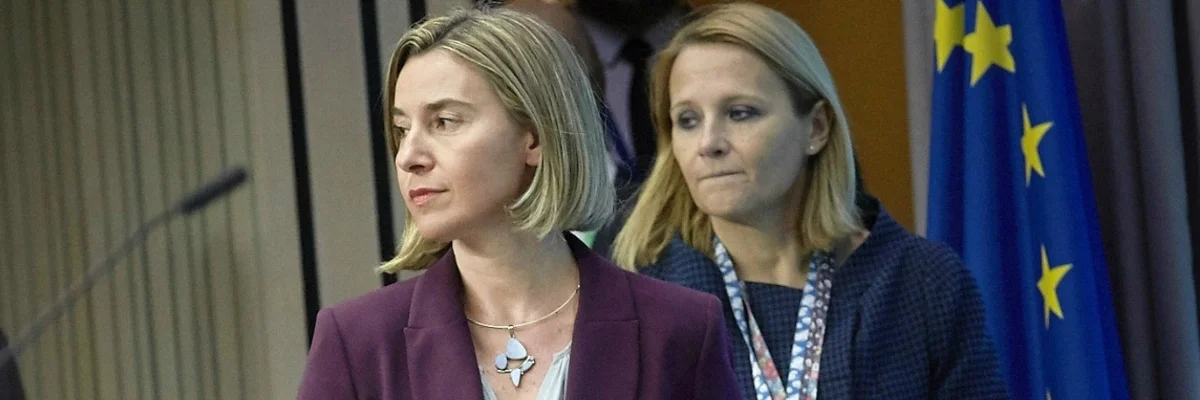
But in any case, the plans—championed by EU high representative for foreign affairs Federica Mogherini—are progressing very slowly.
"For the moment, we're nowhere. There's no will to proceed on the behalf of the member states," one of those negotiating the design of the mechanism said.
Another official insisted: "The plan's not dead." But he admitted the whole enterprise is "politically risky" for capitals wary of antagonizing Washington.
Oil Prices Up?
US Secretary of State Mike Pompeo has explicitly warned against EU states or companies trying to get around the sanctions, which are a US policy priority.
The idea is that the SPV acts as a clearing house. Traders would pay into it to buy Iranian exports and Iran's purchases in Europe would be paid by the fund.
This would allow Europeans to trade Iranian oil without sending cash directly to the Islamic republic.
And EU leaders have not ruled out allowing entities from other states keen to avoid US sanctions—notably India, China and Turkey—to use the SPV.
This would blow a hole in US efforts to use oil sanctions to pressure Iran into more concessions than agreed to in the nuclear deal—or face collapse.
But it would also accelerate the widening of the rift between the US and its allies on foreign policy, and Trump may seek to punish firms using the vehicle.
Europe nevertheless hopes it can avoid an immediate crisis, and persuade Iran to stick by its side of the nuclear deal despite Washington's refusal to do so.
“Iranian oil sales won't drop to zero on November 5, the day after the US reimposes sanctions," a European expert told AFP.
"The Americans known that prices are already high and that Iran's exit from the market will only force them higher, which isn't in their interests."
European clients—mainly in Spain, Italy, Greece and France—buy 20 percent of Iran's oil exports.
According to the European Commission, last year EU members bought nine billion dollars of Iranian exports and Iran spent 10 billion in the union.
Photo Credit: Wikicommons

Denmark Says Consulting Allies Over Possible Iran Sanctions
◢ Denmark said Wednesday it was consulting with its allies about possible sanctions against Iran after accusing Tehran of plotting an attack against Iranian dissidents living in the Scandinavian country. Danish Foreign Minister Anders Samuelsen was to begin contacting his European counterparts on Wednesday to discuss possible sanctions against Iran—most likely economic ones, a diplomatic source told AFP.
Denmark said Wednesday it was consulting with its allies about possible sanctions against Iran after accusing Tehran of plotting an attack against Iranian dissidents living in the Scandinavian country.
"We are going to reach out to our European allies in the coming days to try to find a united response," Danish Prime Minister Lars Lokke Rasmussen told reporters during a meeting of Northern European leaders in Oslo.
British Prime Minister Theresa May expressed her support for Denmark at the meeting.
Danish Foreign Minister Anders Samuelsen was to begin contacting his European counterparts on Wednesday to discuss possible sanctions against Iran—most likely economic ones, a diplomatic source told AFP.
"We want to preserve the nuclear agreement," Lokke Rasmussen said, referring to how possible sanctions would approach the 2015 international accord on Iran's nuclear program.
Denmark on Tuesday announced it was recalling its ambassador to Iran after the Danish intelligence service PET accused the Iranian intelligence service of "planning an attack in Denmark" against three Iranians suspected of belonging to the Arab Struggle Movement for the Liberation of Ahvaz or ASMLA.
ASMLA is a separatist group that advocates an Arab state in a southwestern Iranian province. Tehran calls it a terrorist organization.
A Norwegian of Iranian origin was arrested on October 21 for allegedly planning the attack and spying for Iran.
Iran has denied the allegations, saying they were part of a European conspiracy against the Islamic Republic.
NATO Allies
Tehran summoned the Danish ambassador on Wednesday, foreign ministry spokesman Bahram Ghasemi said.
"In this meeting the (senior foreign ministry) official strongly denied the biased reports on a foiled attack plot on an Iranian dissident in Denmark and its attribution to the Islamic republic of Iran," Ghasemi said.
In late September, Tehran accused Denmark, the Netherlands and Britain of "hosting several members of the terrorist group" that Iran holds responsible for an attack in the mainly ethnic Arab city of Ahvaz in southwestern Iran.
The September 22 attack, during which five commandos opened fire on a military parade, left 24 people dead.
The so-called Islamic State group and a separatist Arab group claimed responsibility, and Iran staged several operations in Iraq and Syria in response.
US Secretary of State Mike Pompeo said Tuesday that Washington stood behind Denmark, a NATO ally.
In Oslo for a meeting of the Nordic Council, Northern European leaders were prudent.
"We're working on a concrete response. We've said that we will react," Norwegian Prime Minister Erna Solberg said.
"We are following this very closely together with our Danish friends and when we know more we will make a decision about possible measures," Swedish Prime Minister Stefan Lofven said.
Photo Credit: Wikicommons
After Bolton Takes aim at Russia and Iran, is Armenia the Collateral Damage?
◢ Befitting his bull-in-a-china-shop reputation, John Bolton's whirlwind tour of the Caucasus left a trail of geopolitical wreckage that his hosts are still trying to pick up even after Bolton himself is back in Washington. As expected, the visit of Bolton, the U.S. National Security Adviser, focused on getting the states of the South Caucasus—Georgia, Armenia, and Azerbaijan—on board with Washington's efforts to isolate Iran.
Befitting his bull-in-a-china-shop reputation, John Bolton's whirlwind tour of the Caucasus left a trail of geopolitical wreckage that his hosts are still trying to pick up even after Bolton himself is back in Washington.
As expected, the visit of Bolton, the U.S. National Security Adviser, focused on getting the states of the South Caucasus—Georgia, Armenia, and Azerbaijan—on board with Washington's efforts to isolate Iran.
Bolton visited all three countries, but his public statements in Tbilisi and Baku were more or less pro forma for an American official visiting the Caucasus. It was in Yerevan where he repeatedly made provocative comments that vexed his hosts, and where the fallout from his visit continues.
Armenia's position vis-à-vis Iran is especially delicate, as the ongoing conflict with Azerbaijan has resulted in its borders to the east (with Azerbaijan) and west (with Turkey) being closed. So Armenia relies on its southern border with Iran as a key outlet.
In the past, the U.S. has tended to look the other way at Armenia-Iran ties, even as it pursues broad sanctions against Tehran, since it understands that Armenia has few other options. Bolton, though, suggested that that lenience may be coming to an end.
As the U.S. ratchets up pressure on Iran, the Armenian-Iranian border is “going to be a significant issue,” Bolton told the Armenian service of Radio Free Europe/Radio Liberty.“We are going to squeeze Iran because we think their behavior in the Middle East and, really globally, is malign and needs to be changed.”
Bolton acknowledged that he understood why Armenia needed Iran, but said that the solution was to end the conflict with Azerbaijan.
Bolton told RFE/RL that “current circumstances highlight” the importance of Armenia and Azerbaijan “finding a mutually satisfactory agreement to the Nagorno-Karabakh issue,” referring to the territory over which the two countries are fighting. “Once that happened, then the Armenian-Azerbaijani border would open,” Bolton said. “The Turkish border, I believe, would almost certainly open.”
That is all technically true, but the notion that Yerevan would orient its relations toward Azerbaijan—which it regards as an existential threat—around the U.S.'s policy of isolating Iran fell flat among Armenians.
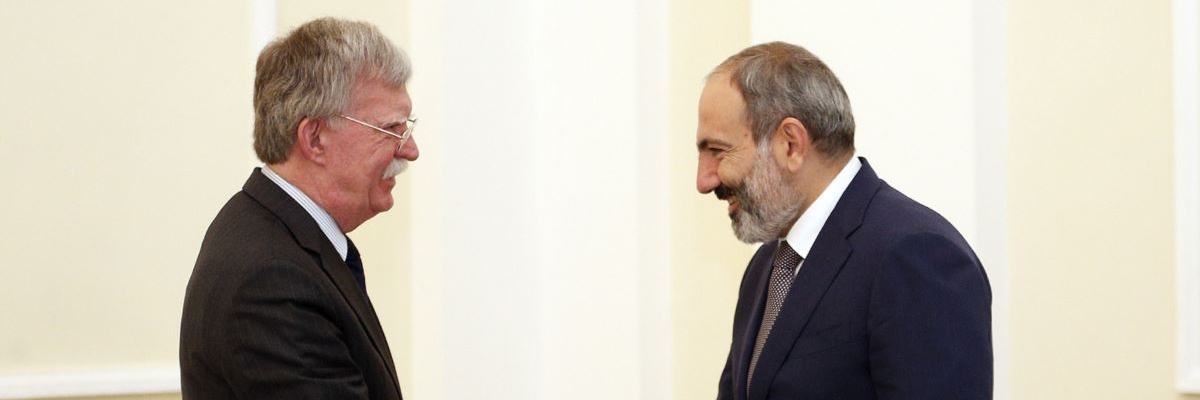
“John Bolton, or anyone for that matter, cannot speak on my behalf,” Armenian Prime Minister Nikol Pashinyan told a news conference following Bolton's visit. “They are moving forward with the logic that they have some kind of ownership of the Karabakh issue, and now they are attempting to sell it to me, without asking my opinion.”
Bolton's dabbling in Karabakh diplomacy followed a controversial interview given the week before by the outgoing U.S. ambassador, Richard Mills, in which the envoy said it was “disturbing” how few Armenians were willing to make concessions to Azerbaijan over Nagorno-Karabakh. “The harsh reality is that any settlement is going to require the return of some portion of the occupied territories,” Mills told the news site EVN Report.
While that is also technically true, the combined effect of the Mills and Bolton statements added to a sense in Yerevan that the new Pashinyan government's tentative steps toward the West are being repaid by a conspicuous lack of sympathy toward Yerevan's position. On top of that, the Trump administration has evinced little interest in the Caucasus – even by the low standards of the U.S. – and little indication that Washington has anything to offer Armenia in exchange for the dramatic moves Bolton proposed.
“Not since the failed and dangerous Turkey-Armenia Protocols has the United States been so keen on pressuring Armenia to adapt to American priorities in the region,” wrote the Armenian-American news site Asbarez in a commentary on Bolton's visit.
That sense was seized on by members of the former regime. In a Facebook post, former defense minister Vigen Sargsyan criticized “Pashinyan's American fiasco” and complained that “Bolton not only repeated Azerbaijan's thesis that Armenia is to blame for the blockade [of the Armenia-Azerbaijan border], but also justified Turkey's closure of its border with Armenia.”
While in the Caucasus, Bolton also mooted the prospect of the U.S. reversing its policy of not selling arms to Armenia or Azerbaijan. That would almost certainly benefit Azerbaijan more, as Baku has far more money with which to buy American weapons, which are generally much more expensive than the Russian arms on which both Armenia and Azerbaijan largely rely.
Nevertheless, the offer was presented as a sort of carrot for Yerevan. “As I said to the prime minister, if it’s a question of buying Russian military equipment versus buying U.S. military equipment, we’d prefer the latter,” Bolton told RFE/RL. “We think our equipment is better than the Russians’ anyway.”
Bolton also targeted Armenia's recent announcement that it would send a small team of sappers to help Russia in its demining efforts in Syria. “It would be a mistake for anybody else to get involved militarily in the Syrian conflict at the moment,” Bolton told a news conference in Yerevan. “There are already … seven or eight different combatant sides. To get involved with any one of them for any other country would be a mistake,” he said.
The Kremlin, naturally, did not take kindly to Bolton's attempts to drive a wedge between Armenia and Russia; Yerevan is Moscow's closest ally in the Caucasus and Armenia depends heavily on subsidized Russian weaponry.
In a sharply worded statement issued after Bolton left, the Russian Ministry of Foreign Affairs seized on the American's reference to Armenia not needing to be constrained by “historical antecedents” in its foreign relations. Bolton “demanded openly that Armenia renounce historical clichés in its international relations and hardly bothered to conceal the fact that this implied Armenia’s traditional friendship with Russia,” the MFA said, calling the demand “impudent.”
The statement continued: “Incidentally, not all of John Bolton’s statements in Yerevan deserve to be criticized. In his October 25 interview to Radio Liberty, he made a wonderful comment: 'I think that’s really fundamental to Armenia exercising its full sovereignty and not being dependent on or subject to excessive foreign influence.' It would be good if John Bolton thinks over the meaning of his own words.”
Photo Credit: Armenian Prime Minister
Denmark Recalls Ambassador to Iran Over Foiled 'Attack'
◢ Denmark on Tuesday recalled its ambassador to Iran after it accused Tehran of plotting a foiled "attack" against three Iranians living in the Scandinavian country. "It is the Iranian government, it is the Iranian state that is behind" the plot, Danish Foreign Minister Anders Samuelsen told reporters. He added that he was consulting with "partners and allies", including the EU, about possible sanctions.
Denmark on Tuesday recalled its ambassador to Iran after it accused Tehran of plotting a foiled "attack" against three Iranians living in the Scandinavian country.
"I have decided to recall Denmark's ambassador in Tehran for consultations... Denmark can in no way accept that people with ties to Iran's intelligence service plot attacks against people in Denmark," Danish Foreign Minister Anders Samuelsen told reporters.
"It is the Iranian government, it is the Iranian state that is behind" the plot, Samuelsen said.
He added that he was consulting with "partners and allies", including the EU, about possible sanctions.
Earlier Tuesday, the head of Denmark's intelligence service PET, Finn Borch Andersen, said his agency believed the Iranian intelligence service "was planning an attack in Denmark" against three Iranians suspected of belonging to the Arab Struggle Movement for the Liberation of Ahvaz.
A Norwegian of Iranian origin was arrested on October 21 for allegedly planning the attack and spying for Iran.
The suspect was detained in the southwestern Swedish city of Goteborg, according to the Swedish security service Sapo.
Iran has denied the Danish allegations, with foreign ministry spokesman Bahram Ghasemi saying they were part of a European conspiracy against Iran.
In late September, Tehran accused Denmark, the Netherlands and Britain of "hosting several members of the terrorist group" that Iran holds responsible for an attack in the mainly ethnic Arab city of Ahvaz in southwestern Iran.
The September 22 attack, during which five commandos opened fire on a military parade, left 24 people dead.
The so-called Islamic State group and a separatist Arab group claimed responsibility, and Iran staged several operations in Iraq and Syria in response.
’Will Stand Up to Iran'
Danish Prime Minister Lars Lokke Rasmussen echoed Samuelsen's comments, writing on Twitter: "It is totally unacceptable that Iran or any other foreign state plans assassinations on Danish soil. Further actions against Iran will be discussed in the EU."
In Oslo, where he was meeting other Northern European leaders, Rasmussen spoke with British counterpart Theresa May, whom he said expressed "support" for Denmark.
"In close collaboration with UK and other countries we will stand up to Iran," he added.
Iran's ambassador to Denmark was summoned to the foreign ministry Tuesday for an explanation.
Meanwhile, US Secretary of State Mike Pompeo said the US also stood behind Denmark.
"We congratulate the government of Denmark on its arrest of an Iranian regime assassin. For nearly 40 years, Europe has been the target of Iran-sponsored terrorist attacks. We call on our allies and partners to confront the full range of Iran's threats to peace and security," Pompeo wrote on Twitter.
The US and European countries nonetheless have different approaches to engagement with Iran.
In May, the US pulled out of a 2015 international accord on Iran's nuclear program and in August it reimposed sanctions against Tehran.
A second wave of sanctions is to take effect on November 5.
EU countries, China and Russia want to preserve the 2015 agreement and maintain trade ties with Iran however.
PET's announcement ended weeks of speculation about why Denmark shut down bridges and ferries to Sweden on September 28 during a manhunt that mobilized hundreds of police and the military.
The shutdown was aimed at foiling the Iranian operation, PET acknowledged on Tuesday.
Photo Credit: Wikicommons
Iran Backlash After Top Cleric Meets Reformists
◢ A hardline member of Iran's powerful Guardian Council was facing a backlash on Sunday after criticizing one of the country's top religious figures for meeting with reformist politicians. The dispute reflects the diversity of views within Iran's religious elite and the fact that, well after the 1979 Islamic revolution, some senior Shiite clerics fiercely defend their independence.
A hardline member of Iran's powerful Guardian Council was facing a backlash on Sunday after criticizing one of the country's top religious figures for meeting with reformist politicians.
The dispute reflects the diversity of views within Iran's religious elite and the fact that, well after the 1979 Islamic revolution, some senior Shiite clerics fiercely defend their independence.
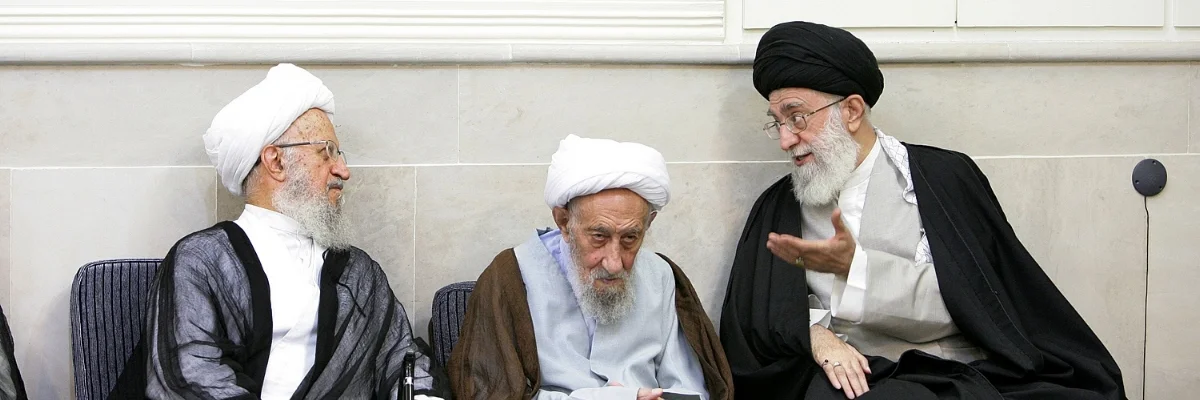
The controversy started a fortnight ago when 90-year-old Grand Ayatollah Musa Shobairi Zanjani—considered one of the highest religious authorities and a "marja" (or "source of emulation") for huge numbers of Shiite Muslims—met with ex-president Mohammad Khatami and other members of the reformist camp.
Khatami was president from 1997 to 2005 but has since fallen foul of the system, especially after supporting mass protests in 2009, and is banned from leaving the country or appearing in official media.
That meeting drew a shocked response from another leading ayatollah, Mohammad Yazdi, who leads an influential conservative clerical association in Qom, regarded as Iran's religious capital.
Yazdi is one of supreme leader Ayatollah Ali Khamenei's appointees to the Guardian Council, a supervisory body that has a veto over all parliamentary laws.
"Following the publication of pictures on social media of you alongside some problematic individuals who have no respect for the system of the Islamic republic and the supreme leader, I hereby state that this issue has caused concern and upset among followers and in the seminaries," Yazdi wrote in an open letter published by the Jamaran news site.
"I would like to remind you that your status and respect are tied to your respect for the ruling Islamic system, the leadership and the status of marjas... and take steps to ensure such matters are not repeated again," he added.
To criticise a grand ayatollah in this way was considered beyond the pale for many observers.
Abbas Salehi, minister of Islamic culture and guidance, tweeted late Saturday: "We must be careful not to weaken the pure marjas under the banner of preserving the system, and not spoil Shiite historical heritage."
At least one ayatollah resigned from Yazdi's religious association in protest, while another, Ayatollah Hadavi Tehrani, said the "impolite" letter to Zanjani had caused "sadness and sorrow".
Responses continued to come from many senior officials and commentators on Sunday.
"We Shiites are proud that our noble marjas have never gotten permission from any power but glorious God and have not been bound by the constraints of any political and economic bodies," tweeted Elisa Hazrati, a member of parliament and managing director of the reformist Etemad newspaper.
Photo Credit: IRNA
Iran Sells Oil on Exchange in Bid to Counter Sanctions
◢ Iran sold oil to private buyers through its energy exchange for the first time on Sunday, as part of its efforts to counter the imminent return of US sanctions. Only 280,000 barrels were sold out of one million offered, and went for USD 74.85 per barrel, more than USD 4 below the initial asking price.
Iran sold oil to private buyers through its energy exchange for the first time on Sunday, as part of its efforts to counter the imminent return of US sanctions.
Only 280,000 barrels were sold out of one million offered, and went for USD 74.85 per barrel, more than USD 4 below the initial asking price.
The identity of the buyer remained a secret, with the conservative Fars news agency saying only that a conglomerate of private firms had made the purchase through three brokerages.
The US is set to reimpose sanctions on Iran's oil industry on November 5, following President Donald Trump's decision to walk out of the 2015 nuclear deal in May.
The plan to sell oil to private companies on the energy exchange was floated back in July by first vice-president Eshaq Jahangiri with the aim of "defeating America's efforts ... to stop Iran's oil exports."
The government hopes selling to private buyers, rather than direct to foreign clients, will make it harder for the US to monitor and stop its sales.
"With the imminent return of a new wave of sanctions, the government is determined to utilise the maneuvering ability of the private sector to sell Iran's oil and find new markets," Hamidreza Salehi, director of Iran's energy exports federation, told semi-official news agency ILNA.
Some estimates show Iran's crude exports have already dropped by a third since May when it was selling around 2.5 million barrels per day.
The government currently intends to offer oil on the energy exchange once a week, according to Fars.
Its initial base price on Sunday was USD 79.16, but it received limited bids as much as USD 16 lower as trading began, the exchange's website showed.
The final buyer only emerged after the base price was dropped to USD 74.85 in the closing hours.
The head of Iran's securities and exchange organization, Shapour Mohammadi, promised on Friday that the identity of the buyer would not be revealed.
Photo Credit:IRNA
Europe Support Against US 'Rare Victory' for Iran: Rouhani
◢ President Hassan Rouhani said Saturday that the divisions between the US and Europe over renewed sanctions on Iran were a "rare historical victory" for the Islamic republic. EU countries have fiercely opposed the decision by US President Donald Trump to abandon their landmark 2015 nuclear deal with Iran and reimpose sanctions—the last of which will return on November 5.
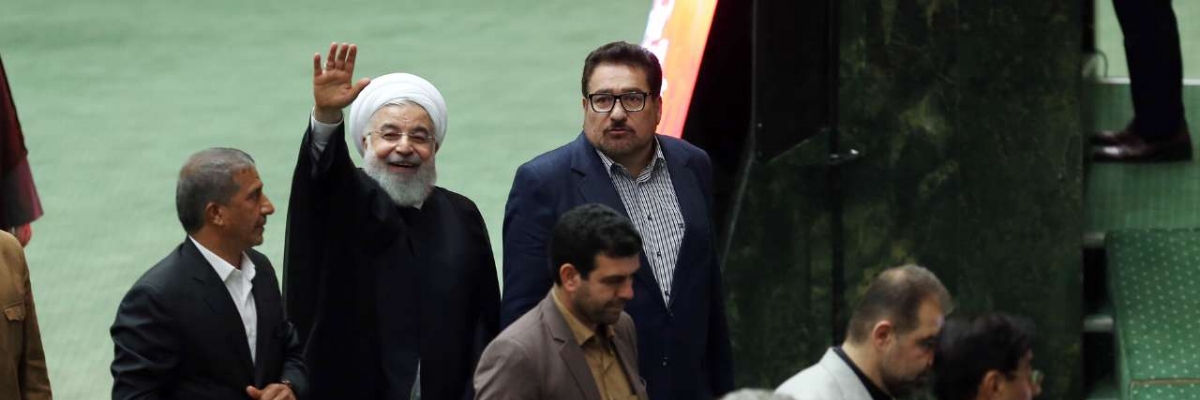
President Hassan Rouhani said Saturday that the divisions between the US and Europe over renewed sanctions on Iran were a "rare historical victory" for the Islamic republic.
"If this time last year, we had stated that America would stand against the great nation of Iran... and Europe would stand with Iran and against America, the overwhelming majority of us... would have said that this was pure optimism," Rouhani told lawmakers in a televised address.
"The political victory of the great nation of Iran over the past months is a rare victory in history."
EU countries have fiercely opposed the decision by US President Donald Trump to abandon their landmark 2015 nuclear deal with Iran and reimpose sanctions—the last of which will return on November 5.
Rouhani was addressing parliament for a special session to approve four new ministers covering the portfolios of economy, transport, labour and industry.
He acknowledged Iranians were feeling the economic strain, saying: "All of us understand people are suffering and under pressure. People's lives, in particular those on a fixed income, are very difficult."
But he insisted there were sufficient reserves of basic commodities and foreign currency to weather the storm, even after a record-breaking plunge in the rial over the summer and imminent sanctions on its crucial oil industry.
"We cannot tell our people that because of America's pressure, we cannot do anything. This answer is not acceptable. We cannot tell people that because there are problems with selling our oil, we are unable to manage the country," he said.
He criticized foreign media reports that costs were soaring, despite Iran's own central bank showing food and drink prices had risen 46.5 percent in the year to September.
"Foreign media lie to people of Iran and say that Iran is the most expensive country people live in," Rouhani said.
Lawmakers later approved the four names put forward by Rouhani: Farhad Dejpasand as economy minister, Mohammad Eslami for transport, Reza Rahmani for industry and Mohammad Shariatmadari for labour.
The previous economy and labour ministers were impeached by parliament in August, while the other two resigned last week.
Photo Credit: IRNA
Almost 2 Million Iranian Pilgrims Head Into Iraq for Arbaeen
◢ At the border town of Mehran between Iran and Iraq, a sea of pilgrims surges forwards, en route to one of the biggest religious pilgrimages on the planet. Iranian organizers say more than 1.8 million Iraqi visas have been issued for Iranians this year for the Arbaeen pilgrimage which culminates on Tuesday as the devout head, many by foot, to Karbala and one of the holiest sites of Shiite Islam, the shrine of Imam Hussein.
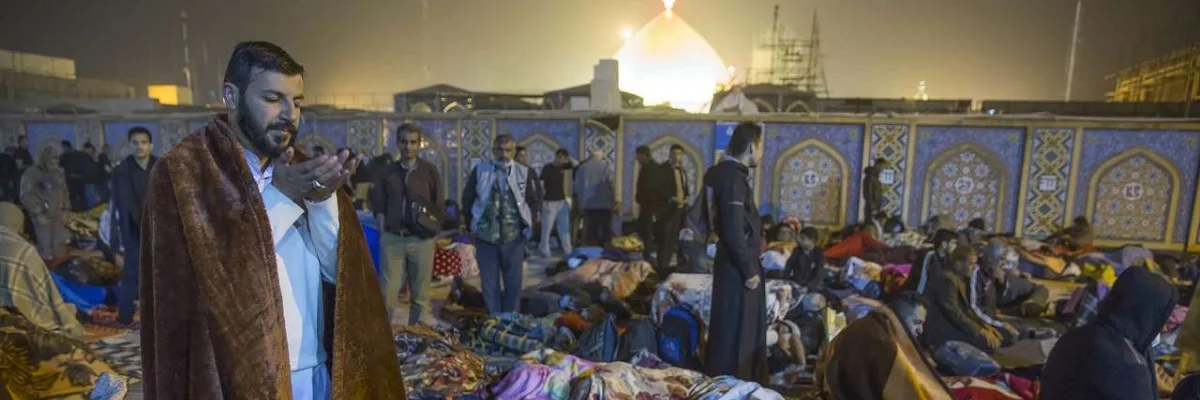
At the border town of Mehran between Iran and Iraq, a sea of pilgrims surges forwards, en route to one of the biggest religious pilgrimages on the planet.
Iranian organizers say more than 1.8 million Iraqi visas have been issued for Iranians this year for the Arbaeen pilgrimage which culminates on Tuesday as the devout head, many by foot, to Karbala and one of the holiest sites of Shiite Islam, the shrine of Imam Hussein.
Men and women, young and old, toddlers in prams and elderly pushed in wheelchairs—they converge from all over the Islamic republic.
"I go because my heart demands it of me, I go because of my love for Imam Hussein," said Morteza Taghikhani, a 39-year-old auto worker, who had already been on the pilgrimage five times before.
His wife and young children were accompanying him for the first time: "They insisted on coming. Though it is a difficult trip, they've enjoyed it so much."
The pilgrims stream past tents, called "mokebs", which hand out free food ranging from scrambled eggs to boiled turnips. Full meals are served at midday and in the evenings.
The crossing stays open around the clock, but blankets and tents are provided for anyone needing a rest.
Every few meters there is a free shoeshine, and when the pilgrims take off their shoes the attendant kisses their feet as a sign of respect: for Shiites the Arbaeen march is so holy that just serving the pilgrims is thought to bring divine reward.
The pilgrimage marks the martyrdom in 680 of Imam Hussein, grandson of the Prophet Mohammad, who refused to accept the leadership of the "usurper" Caliph Yazid and was massacred along with his followers at Karbala.
’Cannot be Defeated'
Shiite Muslims have honoured his death with elaborate mourning ceremonies ever since and Hussein's last stand has come to serve as a powerful symbol of resolve and sacrifice in the face of oppression.
That imagery remains a key part of Iran's religious and political self-image, and even as modernity has transformed much of the country, the huge scale of the Arbaeen pilgrimage is a reminder of how significant the symbolism remains.
"This march shows world imperialism that the Muslim nation cannot be defeated, whether by economic or military or political means," said Sajjad Entezar, a 23-year-old cleric from the Iranian holy centre of Qom.
Arbaeen marks the 40th day after Imam Hussein's martyrdom, with the devout marching on foot for all or part of the way to Karbala.
Khadijeh Mehrjoo, a 36-year-old city council member from a small town in central Iran, said she was not concerned by the long days and nights—or even Iraq's security issues.
"There is no need to worry, Imam Hussein himself looks after us," she said.
State institutions offer free services and food to pilgrims alongside those of the public, while the national broadcaster gives wall-to-wall coverage for a fortnight before Arbaeen, which falls on October 30 this year.
The march was forbidden for many years, under former Iraqi dictator Saddam Hussein, who fought a devastating war with Iran in the 1980s. Restrictions were only lifted after his downfall in 2003.
With the formation of a new Iraqi state, where the post of prime minister is held by a Shiite, the march quickly became one of the most popular religious pilgrimages in the world.
Even the Islamic State group's emergence and its ruthless campaign against Shiites, which it considers infidels, did not deter the pilgrims.
If anything, the Sunni extremists' seizure of vast swathes of Iraqi territory in 2014—reaching within 70 kilometers (45 miles) of Karbala—only invigorated the faithful, pushing the number of pilgrims into the millions.
For Mehrjoo the pilgrimage is itself a means to defeat the threats against it. "The march creates unity, solidarity," she said.
"If we join hands we can overcome. We can defeat the enemies of Islam."
Photo Credit: IRNA
Four Iran Environmentalists Could Face Death Penalty
◢ Four detained Iranian environmental activists could face the death penalty after the charges leveled against them were changed, the Tehran prosecutor said on Wednesday. "After completion of the investigation, the charges against four of the defendants have been changed to corruption on earth," said Abbas Jafari Dolatabadi, cited by Mizan Online, a news outlet run by the judiciary.
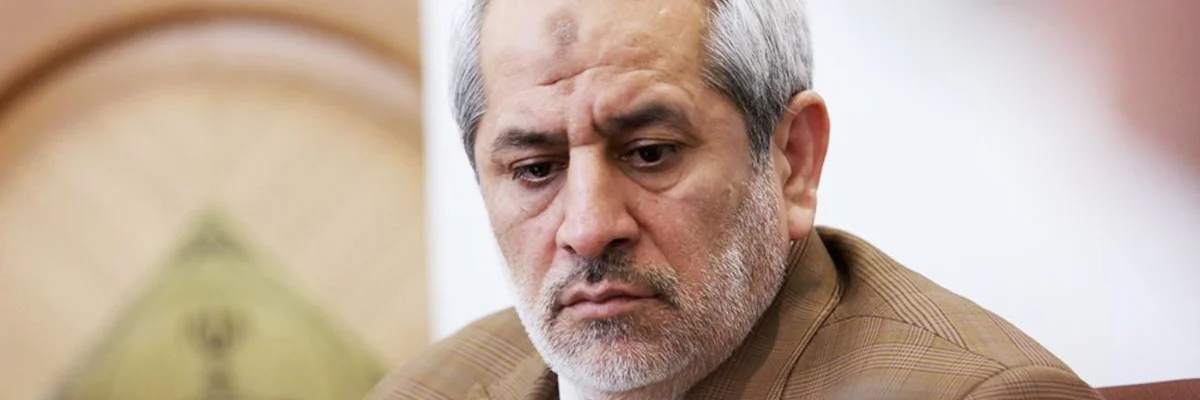
Four detained Iranian environmental activists could face the death penalty after the charges leveled against them were changed, the Tehran prosecutor said on Wednesday.
"After completion of the investigation, the charges against four of the defendants have been changed to corruption on earth," said Abbas Jafari Dolatabadi, cited by Mizan Online, a news outlet run by the judiciary.
"Corruption on earth" is one of the most serious charges in Iran and can be punishable by death.
The defendants were initially arrested on suspicion of espionage, but Mizan Online did not specify the charges that had preceded Wednesday's alteration.
Indictments for eight environmental activists have been issued in total and "are ready to be sent to court," the agency quoted the prosecutor as saying.
“The defendants had been notified of the charges," he added.
The prosecutor did not specify the charges against the other four activists, nor did he say when the trial would be held.
The authorities have not released the names of the defendants, who were arrested in January.
Iran has arrested at least a dozen environmental activists this year on charges of spying for foreign intelligence agencies.
One of them, Kavous Seyed Emami, a 63-year-old professor and renowned environmentalist, allegedly committed suicide in prison in February, a fortnight after his arrest.
Military authorities told the judiciary that the defendants had tried to "get close to military centers and get military information about these centers, under the cover of environmental activities," the prosecutor said.
In early September, the head of Iran's Environment Department, Isa Kalantari, called for the fate of the environmental activists to be explained.
"We are not asking for their release or for their execution, we just want their fate to be clarified. This is part of their citizenship rights," Kalantari said.
Photo Credit: IRNA
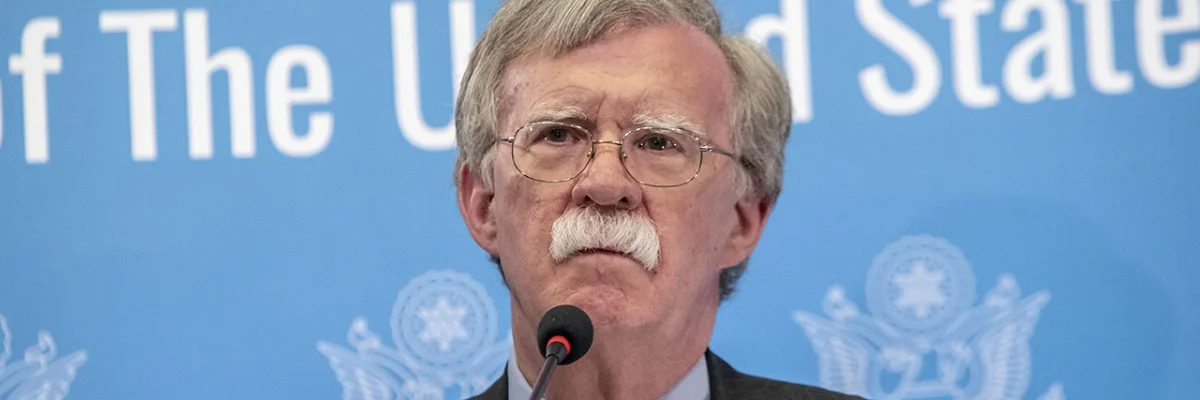
Bolton Visits Caucasus Amid Anti-Iran Campaign
◢ A senior adviser to U.S. President Donald Trump is visiting the Caucasus, where he is expected to try to enlist the region's three governments in Washington's campaign of isolating Iran. But leaders in the Caucasus, wary of confronting Tehran, will likely instead be promoting their own interests to an administration that has thus far largely neglected the region.
This article has been republished with permission from Eurasianet.
A senior adviser to U.S. President Donald Trump is visiting the Caucasus, where he is expected to try to enlist the region's three governments in Washington's campaign of isolating Iran. But leaders in the Caucasus, wary of confronting Tehran, will likely instead be promoting their own interests to an administration that has thus far largely neglected the region.
National Security Adviser John Bolton is scheduled to arrive in Baku on October 24, before visiting Yerevan and Tbilisi. It will be the highest-profile visit yet by a Trump administration official to all three countries of the Caucasus. None of the three currently has a U.S. ambassador, and policymakers have complained of a lack of American engagement.
Bolton has said his visit will focus on regional security. He told radio host Hugh Hewitt before the trip that he will be “in the Caucasus to see the very significant geographical role that they have dealing with Iran, dealing with Russia, dealing with Turkey.”
In particular, Bolton is expected to focus on Iran, a country that maintains good relations with Armenia, Azerbaijan and Georgia, but which the Trump administration is aggressively attempting to isolate. Bolton is a longtime Iran hawk and a leading advocate in the administration for leaving the Iran nuclear deal and reimposing sanctions on Tehran.
“I can't figure out what else [besides Iran] he would have to discuss” in the Caucasus, said Paul Stronski, senior fellow in the Russia and Eurasia Program of the Carnegie Endowment for International Peace, a Washington, DC, think tank.
“Last month at the United Nations, Trump called for international action to deter Iran, but his efforts have for the most part been unsuccessful,” said Carey Cavanaugh, a retired U.S. ambassador who worked in the Caucasus, in an interview with Armenian news website news.am. “Now Bolton is trying to secure support in the Caucasus and in Moscow so as to counter Iran influence.”
In its long diplomatic and economic campaign against Iran, Washington has tried to force other countries to also curtail ties with Tehran. But it has tended to look the other way at the Caucasus countries' growing ties with Iran, given their geographic proximity. Especially in the case of Armenia, Iran provides a critical lifeline as its borders to the east (Azerbaijan) and west (Turkey) are closed.
“It's always a friction point,” Stronski told Eurasianet. “Because of U.S. concerns and U.S. sanctions, these countries have not developed as robust economic ties [with Iran] as you would expect for such close geographic neighbors. But they have always been able to push back at criticism, simply because they have no other options.”
It is not clear, however, whether the Trump administration intends to stick to this hands-off policy with regard to the Caucasus and Iran. “U.S. policy is so muddled right now that it's really hard to figure that out,” Stronski said. “The M.O. of this administration is to make big pronouncements and then not be as clear in the follow through. But Bolton and Trump certainly feel strongly about Iran and so maybe they will be putting in that second level of guidance.”
In any case, the increasing pressure has complicated the Caucasus countries' already precarious geopolitical position.
“The pullout from the JCPOA puts these countries in a difficult position,” Stronski said, referring to the Trump administration’s withdrawal from the 2015 nuclear deal with Iran. “The horrible deterioration in U.S.-Russia relations has made their balancing act very difficult, and to the south you have a similar deterioration. It really puts these countries between a rock and a hard place.”
While Iran is likely at the top of Bolton’s agenda, his interlocutors in the Caucasus may instead try to steer the conversation away from Iran and towards their priorities instead.
In Tbilisi, Georgian government officials are unlikely to want to get drawn into a U.S.-Iran conflict, instead preferring to keep the agenda focused on issues like security cooperation, said Kornely Kakachia, the director of the Georgian Institute of Politics.
“Georgia remains a steadfast supporter of U.S. initiatives,” Kakachia told Eurasianet. “However, due to permanent pressure from Russia it can't endanger its national interest, which seeks pragmatic and balanced relations with Iran. So, as in the last decade, Tbilisi will try to find a delicate balance between its regional interests and those of the West.”
Similarly, the Azerbaijani side is likely to seek more active engagement of the U.S in resolving the conflict with Armenia over Nagorno-Karabakh, said Zaur Shiriyev, a Baku-based analyst for the International Crisis Group. “The Azerbaijani side is reluctant to be seen in Iran as participating in U.S. policy. It could be misinterpreted by Tehran, and Baku doesn’t want to damage its bilateral relations with Iran,” Shiriyev told Eurasianet. “The Nagorno-Karabakh issue will be the top issue [for the Azerbaijanis when Bolton visits], but it is hard to expect much new initiative from the U.S. side,” he added.
“Baku nurtures hopes for U.S. efforts as co-chairman of the Minsk Group of the OSCE,” the body attempting to resolve the Nagorno-Karabakh conflict, wrote the haqqin.az website in a recent commentary. “And, of course, Baku will be conducting negotiations with Bolton exactly on this.”
In Armenia, Bolton will be meeting with a new leadership which has promised dramatic domestic reforms but thus far vowed no significant foreign policy shifts. Still, Yerevan is trying to formulate a strategy for dealing with an administration that has moved away from the traditional U.S. emphasis – at least rhetorically – on democratization and toward a “more neorealist approach which is predicated on interests-sharing and functions-sharing,” said Eduard Abrahamyan, a London-based analyst of Armenia.
“From Armenia's perspective, there is a genuine intention to balance Russia through proactive engagement with the United States on one side and with Iran from the other,” Abrahamyan told Eurasianet. “This means advancing Armenia-Iran strategic ties while being transparent with the U.S. about the core intentions.”
Photo Credit: U.S. Embassy Kyiv
Iran Condemns 'Sultan of Coins' to Death for Economic Crimes
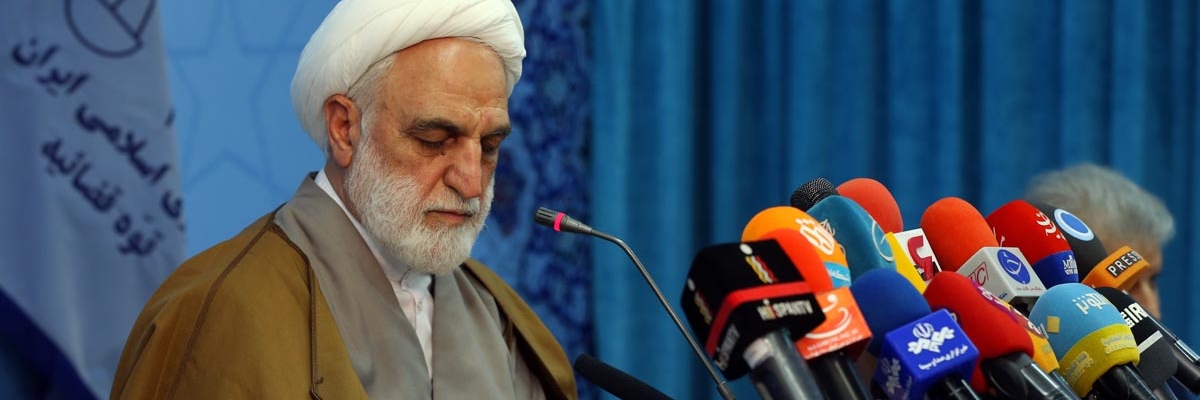
◢ A court in Iran sentenced to death a financial trader known as the "Sultan of Coins" on Sunday, along with another man, the judiciary's Mizan Online news agency reported. "Corruption on earth" is the gravest charge in the Islamic republic which warrants a death sentence.
A court in Iran sentenced to death a financial trader known as the "Sultan of Coins" on Sunday, along with another man, the judiciary's Mizan Online news agency reported.
"Two of those convicted of spreading corruption on earth in preliminary hearings had their case reviewed in the Supreme Court and were sentenced to death today," said judiciary spokesman Gholamhossein Mohseni-Ejei.
"Corruption on earth" is the gravest charge in the Islamic republic which warrants a death sentence.
One of the two men set for death row was identified as Vahid Mazloumin—the trader popularly referred to as the "Sultan of Coins" in Iranian media.
Mizan named the other as Mohammad-Esmaeel Ghasemi, without elaborating.
The pair first went on trial on September 8 over charges of "disrupting the economy" through the creation of a network trading in illegal currency and gold coins, Mizan reported.
A third person, Hamid Bagheri-Dermani, was also accused of corruption and sentenced to death in the preliminary hearings. His case is still up for appeal before the Supreme Court.
Ejei said the swift conclusion of the cases served as a "warning to opportunists" aiming to disrupt the economy during the time of the "enemy's pressure" on Iran.
Iran's crackdown on such corruption has intensified since its economy tanked over internal difficulties coupled with the US withdrawal from the 2015 nuclear deal in May and reimposition of sanctions.
Photo Credit: IRNA
Europeans Want Iran Bank Connected to World: French Senator
◢ European nations are seeking to ensure at least one Iranian bank stays connected to the world after the US imposed new sanctions against the country, a French senator said in Tehran on Sunday. The United States pulled out of a landmark 2015 nuclear deal with Iran in May and has been reimposing punishing sanctions on the Islamic republic, targeting in particular its financial system.
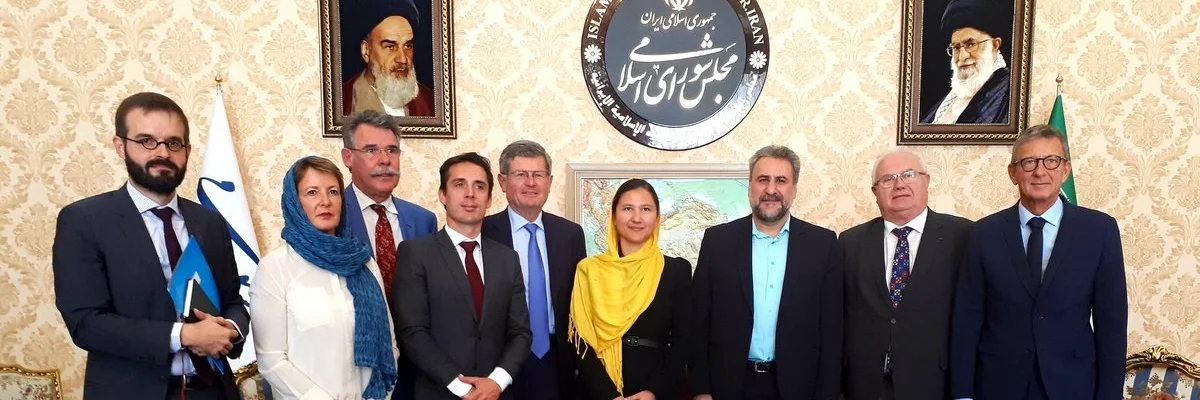
European nations are seeking to ensure at least one Iranian bank stays connected to the world after the US imposed new sanctions against the country, a French senator said in Tehran on Sunday.
The United States pulled out of a landmark 2015 nuclear deal with Iran in May and has been reimposing punishing sanctions on the Islamic republic, targeting in particular its financial system.
The European efforts to help Iranians benefit from the nuclear deal despite the US sanctions is "difficult but it's possible", said French Senator Philippe Bonnecarrere.
One way was "to have at least one Iranian bank remain connected to the international banking system through SWIFT to keep up commercial relations on goods or services that are not subject to sanctions," he added.
Bonnecarrere, who heads the France-Iran friendship group in the upper house of parliament, made the remarks during a news conference with French and Iranian counterparts.
The 2015 nuclear deal was agreed between Iran and the so-called 5+1 group—UN Security Council permanent members Britain, China, France, Russia and the United States, plus Germany.
Bonnecarrere was in Iran with six other members of the French parliament.
The visit was a sign of "all the determination and all the will of France to keep alive the nuclear agreement," said Delphine O, one of lawmakers.
Photo Credit: France en Iran
Iran's Industry and Roads Ministers Resign
◢ Iran's President Hassan Rouhani has accepted the resignation of the embattled ministers of industry and roads, a statement on the presidential website said Saturday. The president thanked industry minister Mohammad Shariatmadari and roads minister Abbas Akhoundi's "selfless service" and "sincere efforts" during their tenures and appointed two acting ministers.
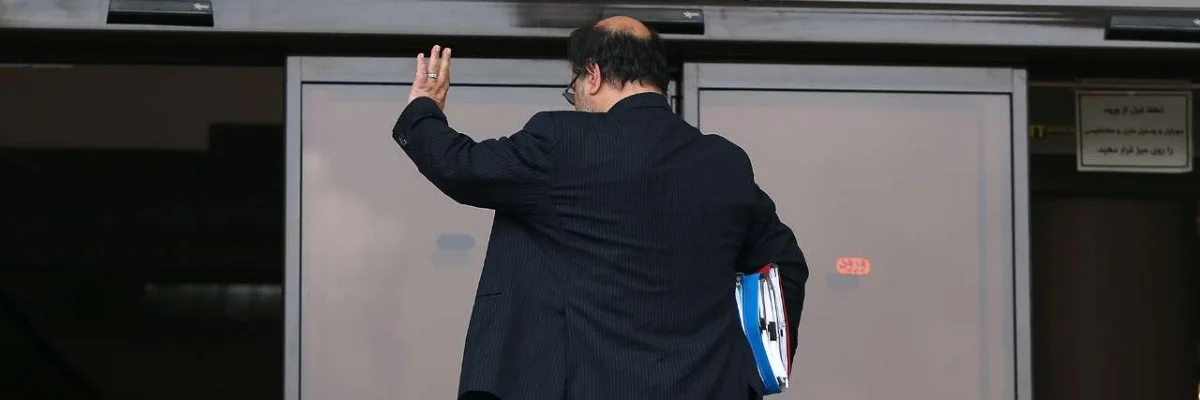
Iran's President Hassan Rouhani has accepted the resignation of the embattled ministers of industry and roads, a statement on the presidential website said Saturday.
The president thanked industry minister Mohammad Shariatmadari and roads minister Abbas Akhoundi's "selfless service" and "sincere efforts" during their tenures and appointed two acting ministers.
Reza Rahmani, current deputy industries minister, will take over for Shariatmadari and the current governor of Mazandaran, Mohammad Eslami, will become acting roads minister effective immediately, the website said.
The two ministers reportedly handed in their resignations over a month ago as lawmakers were preparing impeachment proceedings against them.
Rumours of Shariatmadari's resignation first surfaced mid-September but were quickly denied by the ministry.
Akhoundi published his resignation letter dated September 1 on Saturday, pointing to a "difference of opinion" as the main cause.
Rouhani's labour and economy ministers were sacked by the parliament in August over their handling of an economic crisis, partly triggered by the withdrawal of the United States from the 2015 nuclear deal and reimpoisition of sanctions.
Rouhani himself was summoned to the parliament to answer questions from lawmakers on August 28, a first in his five years in power, and only the second time for a sitting president.
Lawmakers were also ready to impeach education minister Mohammad Bathaei but called it off on September 2 due to the upcoming school year.
Photo Credit: IRNA

FATF Grants Key Extension for Iran Financial Reforms
◢ The Financial Action Task Force has granted Iran until February to complete necessary reforms in the area of anti-money laundering and combating financing of terrorism. In a statement issued following the conclusion of the group’s plenary meeting in Paris, the FATF announced that it had “decided at its meeting this week to continue the suspension of counter-measures.”
The Financial Action Task Force has granted Iran until February to complete necessary reforms in the area of anti-money laundering and combating financing of terrorism. In a statement issued following the conclusion of the group’s plenary meeting in Paris, the FATF announced that it had “decided at its meeting this week to continue the suspension of counter-measures.”
The move will be seen as a victory by reform-minded bankers and politicians in Iran, who have battled fierce domestic opposition and foreign skepticism to push through critical legislation required by the FATF action plan.
The United States, which recently took over the presidency of the FATF, had been pushing aggressively for Iran to be returned to the so-called “blacklist.” Senior Republican lawmakers had recently written to President Trump to ask him to ensure Iran would not be able to earn a clean bill of health from the FATF.
But European resistance, motivated in part by a desire to avoid politicizing the evaluations of the global body, helped ensure a fairer assessment of Iran’s technical progress on its action plan.
Despite the extension, Iran will continue to face pressure to complete its reforms. In its statement, the FATF expressed, “its disappointment that the majority of the Action Plan remains outstanding and expects Iran to proceed swiftly in the reform path.”
The group’s statement identifies nine items that remain to be addressed. At a minimum, by February of next year, “the FATF expects Iran to have brought into force the necessary legislation in line with FATF standards” in order for counter-measures to remain suspended.
The full statement follows below:
In June 2016, the FATF welcomed Iran’s high-level political commitment to address its strategic AML/CFT deficiencies, and its decision to seek technical assistance in the implementation of the Action Plan. Given that Iran provided that political commitment and the relevant steps it has taken, the FATF decided in June 2018 to continue the suspension of counter-measures.
In December 2017, Iran established a cash declaration regime. Since June 2018, Iran has enacted amendments to its Counter-Terrorist Financing Act and Parliament has passed amendments to its AML law and bills to ratify the Palermo and TF Conventions. The FATF notes the progress of the legislative efforts. As with any country, the FATF can only consider fully enacted legislation. Once the remaining legislation is fully in force, the FATF will review this alongside existing enacted legislation to determine whether the measures contained therein address Iran’s Action Plan, in line with the FATF standards.
Iran’s action plan expired in January 2018. In October 2018, the FATF noted that the following items are still not completed and Iran should fully address its remaining items, including: (1) adequately criminalising terrorist financing, including by removing the exemption for designated groups “attempting to end foreign occupation, colonialism and racism”; (2) identifying and freezing terrorist assets in line with the relevant United Nations Security Council resolutions; (3) ensuring an adequate and enforceable customer due diligence regime; (4) ensuring the full independence of the Financial Intelligence Unit and requiring the submission of STRs for attempted transactions; (5) demonstrating how authorities are identifying and sanctioning unlicensed money/value transfer service providers; (6) ratifying and implementing the Palermo and TF Conventions and clarifying the capability to provide mutual legal assistance; (7) ensuring that financial institutions verify that wire transfers contain complete originator and beneficiary information; (8) establishing a broader range of penalties for violations of the ML offense; and (9) ensuring adequate legislation and procedures to provide for confiscation of property of corresponding value.
The FATF decided at its meeting this week to continue the suspension of counter-measures. However, the FATF expresses its disappointment that the majority of the Action Plan remains outstanding and expects Iran to proceed swiftly in the reform path to ensure that it addresses all of the remaining items by completing and implementing the necessary AML/CFT reforms. By February 2019, the FATF expects Iran to have brought into force the necessary legislation in line with FATF standards, or the FATF will take further steps to protect against the risks emanating from deficiencies in Iran’s AML/CFT regime. The FATF also expects Iran to continue to progress with enabling regulations and other amendments.
Iran will remain on the FATF Public Statement until the full Action Plan has been completed. Until Iran implements the measures required to address the deficiencies identified in the Action Plan, the FATF will remain concerned with the terrorist financing risk emanating from Iran and the threat this poses to the international financial system. The FATF, therefore, calls on its members and urges all jurisdictions to continue to advise their financial institutions to apply enhanced due diligence, including obtaining information on the reasons for intended transactions, to business relationships and transactions with natural and legal persons from Iran, consistent with FATF Recommendation 19.
Photo Credit: IRNA
Iran Calls US Sanctions on Paramilitary Force 'Blind Vindictiveness'
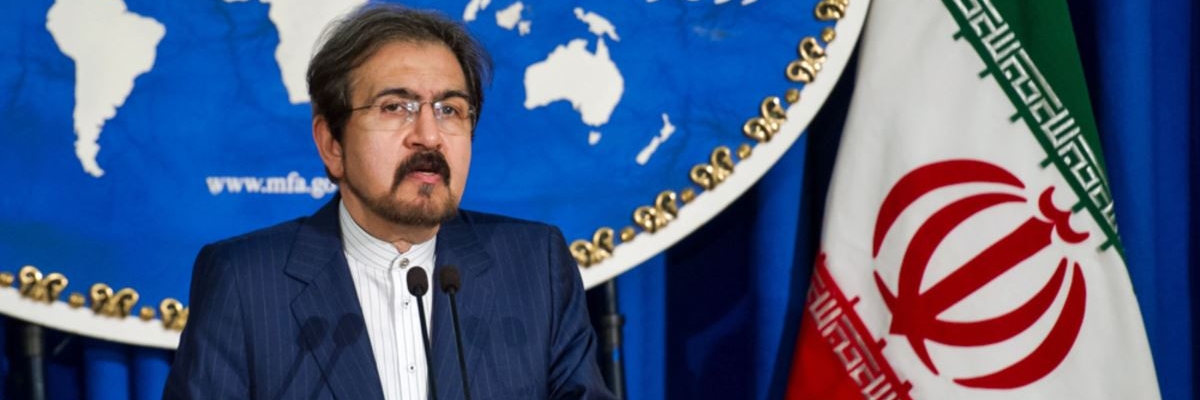
◢ Iran called new US sanctions against its paramilitary Basij group an act of "blind vindictiveness" on Tuesday. "America's new sanctions are a clear insult to international and legal mechanisms and a result of the American government's blind vindictiveness against the Iranian nation," said foreign ministry spokesman Bahram Ghasemi.
Iran called new US sanctions against its paramilitary Basij group an act of "blind vindictiveness" on Wednesday.
“America's new sanctions are a clear insult to international and legal mechanisms and a result of the American government's blind vindictiveness against the Iranian nation," said foreign ministry spokesman Bahram Ghasemi.
He called Washington's "lack of adherence to international legal mechanisms" a threat not only "to the Iranian people's interests but also the world's stability and security."
On Tuesday, the US Treasury Department slapped sanctions on the Basij paramilitary group along with a network of more than 20 businesses it said had financial links to the organisation.
The US pulled out of a landmark 2015 nuclear accord between Iran and six world powers in May and is reimposing punishing sanctions on the Middle Eastern country, hoping to pressure Tehran into what President Donald Trump calls a "better deal.”
Iran's biggest steel company, among the companies sanctioned on Tuesday, dismissed the measures as "nothing new", saying they will not affect its operations.
In a statement to investors, Mobarakeh Steel Company said: "International sanctions are nothing new and Mobarakeh has faced them throughout the years just like other sectors of the Iranian economy.
"This will not disrupt the company's production, financial activities and exports," it added.
’Can't Stop Exports'
Mobarakeh, the largest steelmaker in the Middle East and North Africa region, was accused of supporting the Mehr Eqtesad Iranian Investment Company, which is linked to Iran's Revolutionary Guards, according to the US Treasury.
A steel industry expert in Tehran said the sanctions would hurt Mobarakeh, but without entirely stopping its exports.
"The company will now have problems doing anything, be it attracting financing from abroad or having any overseas accounts," Mojtaba Fereydouni told AFP.
"But sanctions cannot just stop Iran's exports. You just ship it to a third country, unload the shipments there and leave it for a few days. Then you reship them from there with no mention of Iran and a new certificate of origin.
"All this will incur a cost of USD 20 - USD 30 on each tonne, but it's not impossible," he added.
Iran's steel industry was targeted under the first wave of US sanctions reimposed in August.
But Mobarakeh said it had indigenized its production line.
Fereydouni added that it had set up a factory to produce the key raw material of electrode graphite, which is normally imported, primarily from India.
Iran is the 10th biggest crude steel producer, according to the World Steel Association.
The government said it exported USD 2.53 billion of steel products between March and September, up 53 percent on the previous year—an increase which is thought to be driven by a rush by buyers to make purchase before sanctions hit.
Photo Credit: Mizan
Iran Stays Quiet on Khashoggi Case
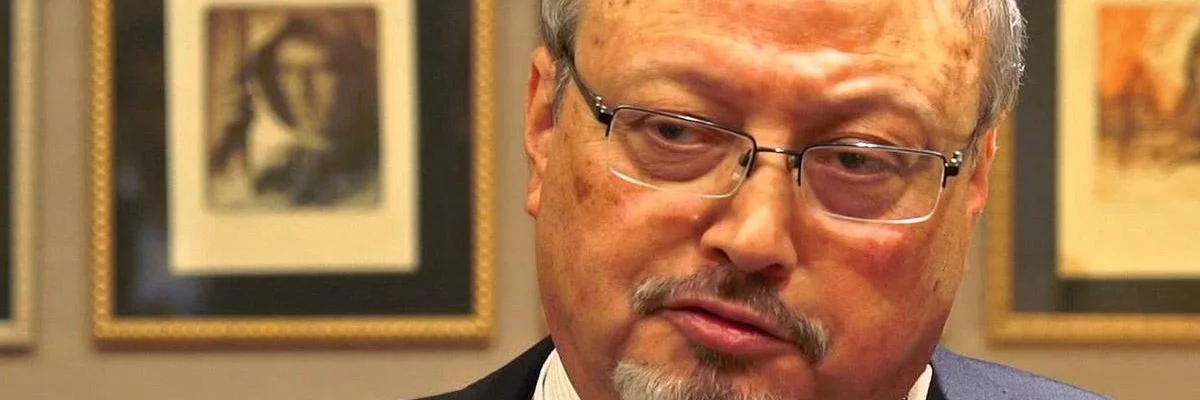
◢ Iran has been playing it cool as it watches the furore over the disappearance of writer Jamal Khashoggi create a crisis for its regional rival Saudi Arabia. As of Wednesday, the government had yet to make any official comment on the alleged murder of Khashoggi who vanished after entering the Saudi consulate in Istanbul on October 2.
Iran has been playing it cool as it watches the furore over the disappearance of writer Jamal Khashoggi create a crisis for its regional rival Saudi Arabia.
As of Wednesday, the government had yet to make any official comment on the alleged murder of Khashoggi who vanished after entering the Saudi consulate in Istanbul on October 2.
Barraged by questions at his weekly press conference on Monday, foreign ministry spokesman Bahram Ghasemi said only that Iran was monitoring events.
The Iranian press has been reprinting the gruesome claims from Turkish and other international sources that Khashoggi was tortured and dismembered inside the consulate, and on Wednesday alleged a cover-up by Riyadh and Washington.
"US, Turkey and Saudi colluding to close the murder case of Jamal Khashoggi," read the headline on Wednesday's Jomhuri Eslami, a conservative paper, as it reported on US Secretary of State Mike Pompeo's visit to Riyadh and Ankara.
"Pompeo's mission in travelling to Riyadh and then Turkey is to cover up Saudi brutality and scandal by making up stories, and this very project is an excuse to keep milking the Saudis (for weapons' contracts)," added the Javan newspaper, considered close to the Revolutionary Guards.
Reza Ghabishavi, in the reformist Arman newspaper, acknowledged the silence from Iran's leaders over the case.
"The whole world... has reacted, but after two weeks, Iran has made no remarks," he wrote.
"Of course, it's obvious the whole thing is in the interests of Iran because on the one hand it has caused serious differences between America and Saudi Arabia, and on the other hand, the young prince's reforms in Saudi Arabia have been destroyed in the public opinion of the world," he added.
'Terrorist Wahhabis'
Ghabishavi also pointed out that Khashoggi was no friend of Iran, having strongly criticised the country's foreign interventions in Yemen, Syria and Iraq.
The case comes just a few weeks before full US sanctions are reimposed on Iran following Washington's decision to scrap the 2015 nuclear deal.
Although the sanctions have contributed to a sharp economic downturn in Iran, its leaders have relished a rare opportunity to hold the moral high ground on the international scene, as much of the world criticizes the aggression of US moves against Iran.
"Everyone knows that America has lost legally and politically by giving up on its international obligations and that we have achieved victory," said President Hassan Rouhani in a speech on Sunday.
The Tehran Times emphasised that Khashoggi's alleged assassination was the inevitable result of the West's long-running support for Saudi monarchs.
"This is your own doing," wrote editor-in-chief Mohammad Ghaderi, addressing Western governments.
"You pick puppets to rule over (their) lands... and back terrorist Wahhabis," he said, referring to the fundamentalist Saudi interpretation of Islam.
Photo Credit: Twitter
US Announces Sanctions on Key Iranian Paramilitary Force
◢ The US Treasury Department on Tuesday slapped sanctions on an Iranian paramilitary group along with a network of businesses that were providing it financing, as part of Washington's campaign of maximum economic pressure against Tehran. In announcing the sanctions, Treasury said a network of more than 20 businesses known as the Bonyad Taavon Basij was financing the Basij Resistance Force.
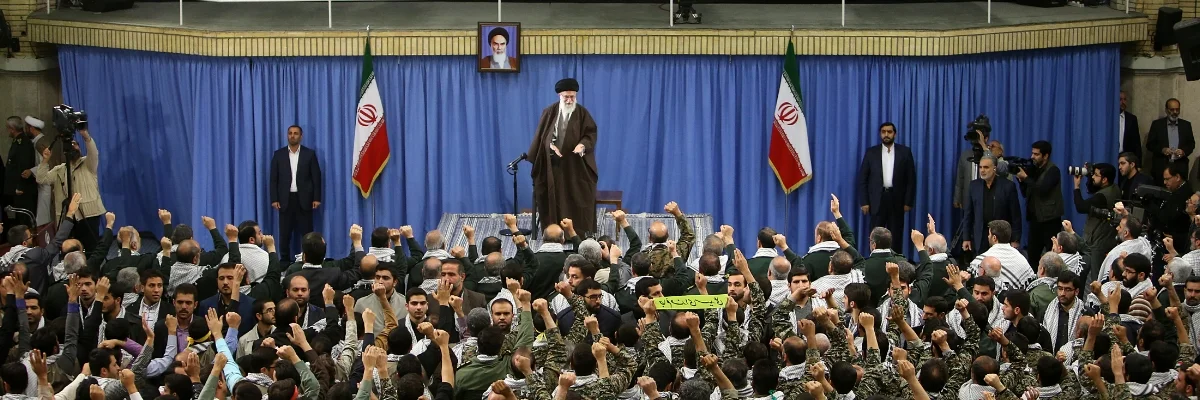
The US Treasury Department on Tuesday slapped sanctions on an Iranian paramilitary group along with a network of businesses that were providing it financing, as part of Washington's campaign of maximum economic pressure against Tehran.
In announcing the sanctions, Treasury said a network of more than 20 businesses known as the Bonyad Taavon Basij was financing the Basij Resistance Force, a component of Iran's Islamic Revolutionary Guard Corps (IRGC).
It also accused the militia of sending child soldiers to Syria in support of President Bashar al-Assad's regime.
"The international community must understand that business entanglements with the Bonyad Taavon Basij network and IRGC front companies have real world humanitarian consequences," said Treasury Secretary Steven Mnuchin.
The Basij, a paramilitary force formed soon after the 1979 revolution, is one of the Iranian regime's primary enforcers of internal security with branches in every province and city of Iran, according to the US Treasury.
"In addition to its involvement in violent crackdowns and serious human rights abuses in Iran, the Basij recruits and trains fighters ... including Iranian children, who then deploy to Syria to support the brutal Assad regime," it said.
It added that in addition to Iranians, the militia recruited Afghan immigrants to Iran through coercion, some of whom had fled to Europe as a result, as well as Pakistani nationals.
"Children recruited by Basij have tragically fought and died on the battleground in Syria," a senior administration official told AFP.
The Bonyad Taavon Basij is said to provide the Basij militia social welfare services, including housing and financial support, and manages economic activities by funding small companies.
"Bonyad Taavon Basij has expanded its reach into Iran's economy by establishing several investment firms through its financial and investment offshoot Mehr Eqtesad Bank," the Treasury statement said.
Among the other companies singled out was Iran Tractor Manufacturing Company (ITMC), the largest tractor manufacturer in the Middle East and North Africa which predates the Iranian revolution, that generates millions of dollars in profit for the investment firms that represent the Basij.
Also targeted was Iran's Zinc Mines Development Company, described as the country's "preeminent, multibillion-dollar zinc and lead mining and processing holding company."
Photo Credit: Leader.ir
Iran's New Breed of Charities on Poverty Frontline
◢ In a relatively new approach for Iran, where social welfare has often been left to informal groups based around the bazaar and mosque or fallen to large-scale government-controlled organizations, privately-run charities are emerging, with managers, targets and buzzwords such as "empowerment" and "skills-training", and funded by wealthy business people who have made fortunes in booming industries such as private healthcare.
At an outreach centre in southern Tehran, teenagers are learning to be journalists, while upstairs their mothers are fine-tuning their sewing skills and rushing to fill an order for hospital uniforms.
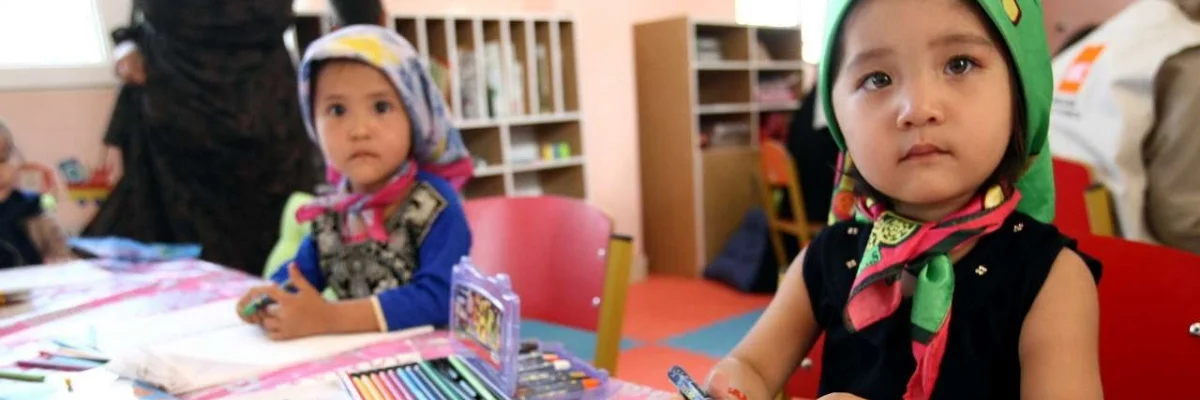
The brand-new centre in the working-class neighbourhood of Shahr-e Rey caters to hundreds of struggling families and Afghan refugees.
It's a relatively new approach for Iran, where social welfare has often been left to informal groups based around the bazaar and mosque or fallen to large-scale government-controlled organizations.
Today, privately-run charities are emerging, with managers, targets and buzzwords such as "empowerment" and "skills-training", and funded by wealthy business people who have made fortunes in booming industries such as private healthcare.
This centre is run by the ILIA Foundation, created by social workers and members of the Nikan Hospital Group, who have partnered with UN refugee and health agencies to help around 1,000 families from deprived backgrounds.
For now these groups can only reach a small number of those in need but supporters say it is providing a model for future social work in Iran.
At one of the sewing machines is 27-year-old Somareh Ghazvani, a second-generation refugee—one of around 3 million Afghans who have fled decades of conflict across the border.
"It was a surprise to find this place. The conditions are much better than other places I have worked, so I'm very happy," she said.
In the computer room, 16-year-old Masoumeh is working with InDesign and Photoshop as part of her summer classes in journalism.
"Our families have really counted on this centre. If we go to classes somewhere else, the fees are so high we can't afford it," she said.
Poverty Lines
One of the pioneers of the new approach to charity is the Imam Ali Popular Students Relief Society, which was recognised by the UN in 2010 and has built a network of 12,000 volunteers helping Iran's poorest children.
A recent football tournament it organized for street kids was a reminder of Iran's diversity, as Azeris, Baluchis, Kurds and many others were thrown together on the pitch in Tehran.
"The only choice for most of these kids in their neighborhoods is violence, poverty and misery. We have tried to give them self-confidence through sports to improve their lives," said Meysam Vahdei, head of sports for the foundation.
Ten-year-old Obeidollah had travelled since 3:00 a.m. from one of Iran's poorest cities—Sarbaz in southeastern Sistan-Baluchistan province—and, inevitably, dreams of being the next Cristiano Ronaldo.
The foundation brought him to Tehran so he could participate in the tournament in a sport he loves.
"Some charity workers came to our city square. They saw me do a backflip and said 'Wow! What a boy', and now I'm here in Tehran playing football," he said, excitedly.
Official data on poverty is hard to pin down in Iran.
The labour ministry said 800,000 households were eligible for government support because they earned below the poverty line of seven million rials (around USD 160) a month, according to a report in January by the Financial Tribune.
The English-language newspaper cited prominent economist Hossein Raghfar as saying some 12 million Iranians lived in absolute poverty, in a country with a population of around 80 million.
Faced with mounting economic woes, President Hassan Rouhani has introduced welfare cuts and other austerity measures since coming to power in 2013.
The government was already struggling to support the poor before the recent return of US sanctions—after Washington withdrew from a 2015 nuclear deal between Iran and world powers—which has sent prices soaring and threatens to take a huge chunk out of the budget this year.
That has put more pressure on charities and private donors, and encouraged the more modern approach to charity work.
'Breaking the Poverty Chain'
"We need to help these kids at an early stage of life to get them on the right path and help break the chain of poverty in their families," said Reza Taghdir, a doctor with the high-end Nikan hospital group and a director for the ILIA Foundation.
It marks a change from the old ways of doing things, said one of ILIA's promoters, who asked not to be named.
"In the past, some old guys would get near to death and start worrying about the afterlife, so they would hand out a load of money to build something in their name. It was really just about status and was not very organized," he said.
"Now it's much more professional, the donors are younger and much more concerned to find real solutions to problems in society."
Photo Credit: IRNA
US is Loser by Abandoning Iran Nuclear Deal: Rouhani
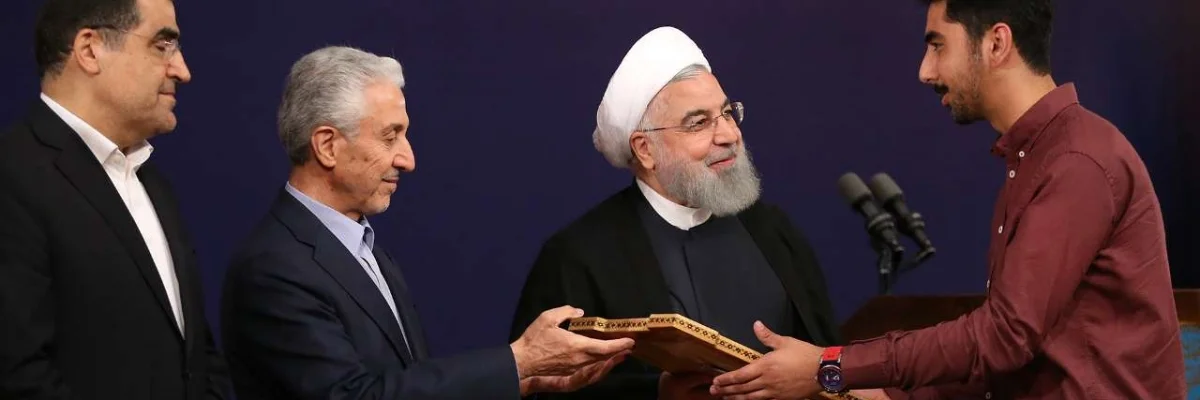
◢ Iran's president boasted Sunday that the United States has lost against the Islamic republic's "righteousness and wisdom" by walking out of the landmark nuclear deal. "Everyone knows that America has lost legally and politically by giving up on its international obligations and that we have achieved victory," said President Hassan Rouhani in a speech at the University of Tehran to mark the beginning of the school year.
Iran's president boasted Sunday that the United States has lost against the Islamic republic's "righteousness and wisdom" by walking out of the landmark nuclear deal.
"Everyone knows that America has lost legally and politically by giving up on its international obligations and that we have achieved victory," said President Hassan Rouhani in a speech at the University of Tehran to mark the beginning of the school year.
“There are but a few countries in the world that would call the US withdrawal from the JCPOA (nuclear deal) a good move," he added.
"Those that are cautious express disappointment, those that are more frank say it was a mistake, and the outspoken say it was illegal."
Washington pulled out of the 2015 nuclear deal between Iran and six world powers in May and is reimposing punishing sanctions on the country, hoping to pressure Tehran into what President Donald Trump calls a "better deal.”
The US is due to complete the reimposition of sanctions on November 5, targeting Iran's oil sector and central bank.
"There has never been a more spiteful team than the current US administration toward Iran, Iranians and the Islamic Republic," Rouhani said.
He said nothing would change on November 5 since "America has already done whatever it can.”
The other parties to the nuclear agreement—Russia, China, the UK, France and Germany—have all pledged to continue to try to make the deal work, despite their firms being vulnerable to the US sanctions if they keep doing business with Iran.
Rouhani said Iran's response had left Washington "empty-handed".
"They expected us to leave the JCPOA hours after they announced they are, and what would have happened? The case would have returned to the UN Security Council, turned against Iran and isolated us," he said.
He said Iran had lost nothing by staying in the deal and could leave "whenever" it chooses.
Photo Credit: IRNA
UN Highlights Illegal Somali Charcoal Trafficking to Iran
◢ Al-Qaeda-linked Al-Shabaab rebels are profiting from the illegal trafficking of charcoal exports produced in Somalia and transiting through Iran, United Nations experts said in a report recently shared with the UN Security Council. The document, which has not yet been made public, said Iranian ports in the Kish and Qeshm free zones have been the main destinations of the shipments since March 2018.
Al-Qaeda-linked Al-Shabaab rebels are profiting from the illegal trafficking of charcoal exports produced in Somalia and transiting through Iran, United Nations experts said in a report recently shared with the UN Security Council.
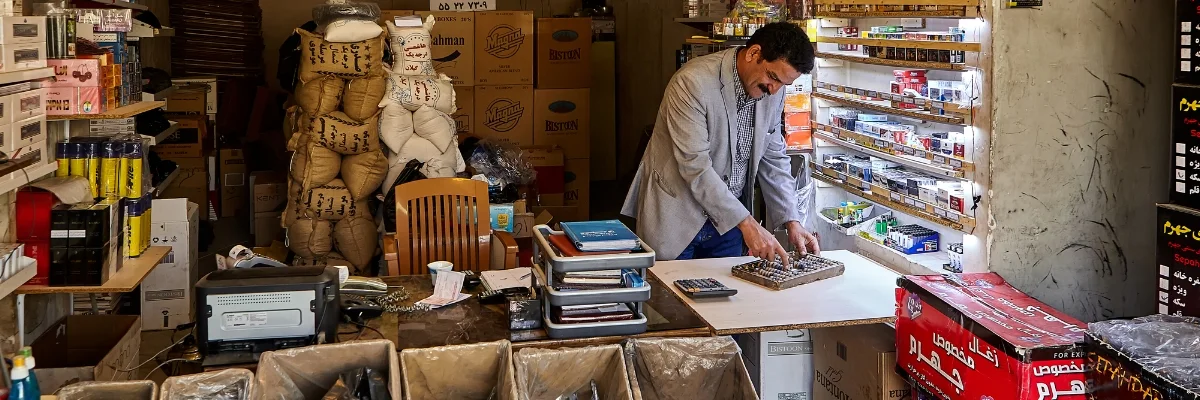
"The process involved using false Comoros, Cote d'Ivoire (Ivory Coast) and Ghana certificates of origin to import Somali charcoal, repackaging the charcoal from typical blue-green bags into white bags labeled as 'Product of Iran,'" said the report, excerpts of which AFP has obtained.
The document, which has not yet been made public, said Iranian ports in the Kish and Qeshm free zones have been the main destinations of the shipments since March 2018.
They would then travel onwards to ports in countries including the United Arab Emirates and Oman, where the charcoal is mainly used for smoking shisha water pipes.
The UN has banned Somali charcoal imports since 2012 in order to cut sources of revenue for the Shabaab, which levies taxes on charcoal production in regions they control.
The world body estimates that some 3.6 million bags of charcoal were produced in 2017 for exports, generating some USD 7.5 million in revenue for the Shabaab.
The report shared with the Security Council was drafted by a UN group of experts tasked with applying sanctions slapped on Somalia.
The document called Iran a "weak link" in implementing the charcoal ban and pointed to countries such as Ghana and the Ivory Coast for allowing charcoal traffickers to "exploit weaknesses" in the certification processes.
"Overall implementation of the charcoal ban by member states has improved compared to the previous mandate, and seizures of cargoes of Somali charcoal by Oman and the UAE have been influential in deterring the illicit charcoal trade," it added.
"However, implementation has also been inconsistent."
The Shabaab have vowed to overthrow the Somali government, which is backed by the international community and the 20,000-strong African Union mission in the country, AMISOM.
While they were pushed out of Mogadishu in 2011 and lost many of their bastions, they still control vast rural zones in the country.
Photo Credit: Depositphotos