
Iran Official Calls For 'Lobbying Anti-Trump Movements'
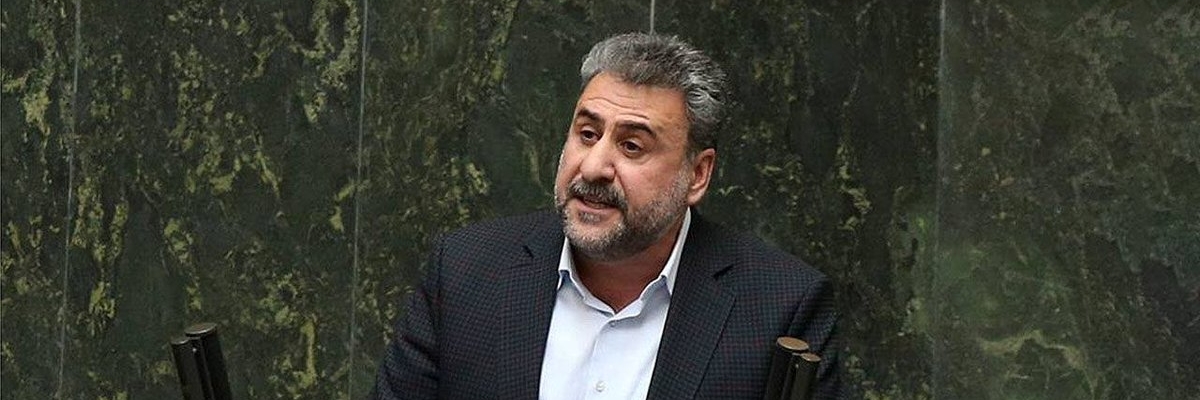
◢ One of Iran's top foreign policy officials has called for negotiations with "anti-Trump movements" in the US to dampen the impact of sanctions, local media reported Saturday. "America is not Trump," said Heshmatollah Falahat-Pisheh, a conservative lawmaker who heads parliament's influential national security and foreign policy commission, according to reformist newspaper Arman.
One of Iran's top foreign policy officials has called for negotiations with "anti-Trump movements" in the US to dampen the impact of sanctions, local media reported Saturday.
"America is not Trump," said Heshmatollah Falahat-Pisheh, a conservative lawmaker who heads parliament's influential national security and foreign policy commission, according to reformist newspaper Arman.
“There is a new diplomatic atmosphere for deescalation with America and it is fitting that Iran follows negotiation diplomacy and lobbying anti-Trump movements in America," he added.
He said this would help alleviate pressure caused by Washington's "extensive sanction-focused force.”
The US pulled out of the 2015 Iran nuclear deal in May and reimposed punishing sanctions on the country, hoping to pressure Tehran into what President Donald Trump calls a "better deal".
The US is due to complete the reimposition of sanctions on November 5, targeting Iran's oil sector and central bank.
Supreme leader Ayatollah Ali Khamenei has dismissed Trump's offers to talk as "a dangerous game.”
But Mehdi Motaharnia, a Tehran-based political analyst, described Falahat-Pisheh's proposal as "very meaningful" since it signifies a potential shift in conservatives' stance on talking with the US.
"This comes from a conservative whose party members called (Foreign Minister Mohammad) Javad Zarif a traitor for negotiating with the US," Motaharnia told reformist daily Hamdeli.
"But now we do not see such reactions when the head of national security and foreign policy commission proposes talks," he added.
Photo Credit:
EIA Lifts Brent Forecast on Iran Sanctions Worries
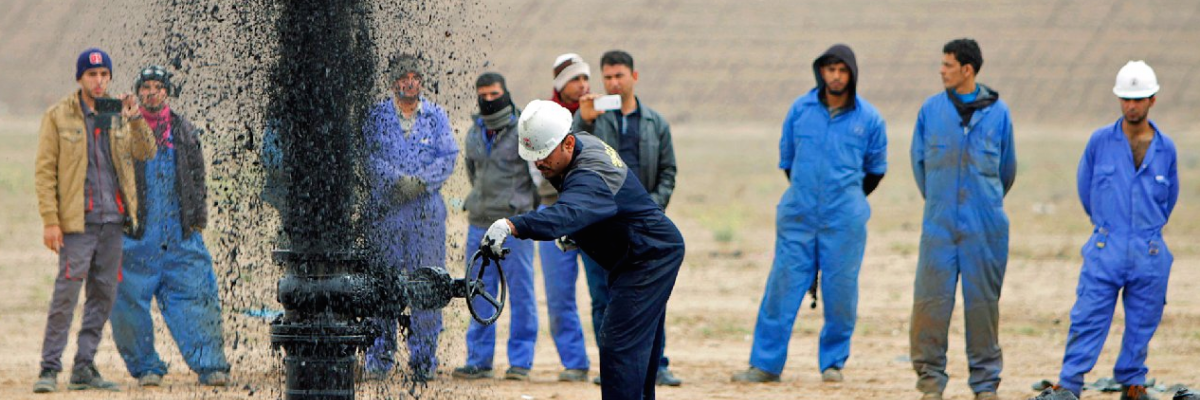
◢ The US Energy Information Administration (EIA) is raising its Brent crude price forecast by USD 5/bl to USD 81/bl for the fourth quarter, citing uncertainty over the effects of US sanctions on Iran. US will re-impose restrictions on Iran's oil exports on 5 November, but many buyers already have begun to wind down their purchases of Iranian crude.
This article has been republished with permission from Argus Media.
The US Energy Information Administration (EIA) is raising its Brent crude price forecast by USD 5/bl to USD 81/bl for the fourth quarter, citing uncertainty over the effects of US sanctions on Iran.
US will re-impose restrictions on Iran's oil exports on 5 November, but many buyers already have begun to wind down their purchases of Iranian crude.
Opec members in the third quarter increased output by an amount greater than declining exports from Iran and Venezuela, the EIA said today in its Short-Term Energy Outlook. But "recent price increases indicate that oil market participants have concerns about the ability of Saudi Arabia, other OPEC members, and Russia to continue to offset expected further production declines in Iran and Venezuela," the agency said.
The EIA data are among the factors the administration must consider as it decides on the scope of waivers from Iran sanctions in coming weeks.
Administration officials insist that Iran's forced exit from the market, partial or full, will not have a significant effect on global crude markets as Saudi Arabia and other Opec and non-Opec producers, as well as growth in US output, make up the gap. A rise in oil prices could hurt President Donald Trump's administration politically if Americans see a noticeable jump in what they pay for gasoline ahead of crucial midterm elections in November. Trump has taken to blaming Opec producers for the recent increase.
"The administration is learning the hard way that it is difficult to drive Iran's oil off the market and keep gasoline below USD 3/USG," consultancy Rapidan Energy Group president Bob McNally said. "We are kind of touching the stove and learning that Saudi Arabia really cannot or will not keep oil prices from rising."
The EIA estimated Opec spare capacity at 1.3mn b/d in September — its lowest level since December 2016 when global oil inventory levels were much higher.
But the agency also forecasts that global oil supply and demand will be nearly balanced in 2019, contributing to downward pressure on the oil price.
The administration's economic brain trust has sought to downplay the risks to pump prices.
White House chief economic adviser Larry Kudlow last week said—without any details—that internal government analysis shows US crude output growing to 15mn b/d in 2020. The EIA today estimated 2019 output at 11.76mn b/d. The agency's most optimistic scenario for oil production in 2020, published in February as part of its Annual Energy Outlook 2018, pegs it at 12.8mn b/d.
White House Council of Economic Advisers chairman Kevin Hassett said yesterday that global demand growth is the primary driver of higher oil prices, even though Iran sanctions have played a role as well. "When the global economy is strong, oil prices tend to increase, and those increases can be quite non-linear," Hassett said.
The IMF in its latest economic outlook released yesterday lowered global growth projections to 3.7pc/yr in 2018-19, citing negative effects from the US administration's trade wars with key partners.
"If the IMF revisions of the world growth forecasts are correct, that will put less pressure on the oil prices," Hassett said.
Trading firm executives speaking at the Oil and Money conference in London today agreed on the severity of the effect of US sanctions against Iran.
The administration sees such comments as validation of their approach, despite concerns about effects on US gasoline consumers.
"Iran is fighting for their lives. They have got riots in all their cities. It is blowing up. Their inflation, their economy is in tatters. And at some point, they will probably come and want to make a real deal, not the deal that they made," Trump said yesterday.
The IMF expects Iran's economy to contract by 1.5 percent in 2018 and another 3.6 percent in 2019 as US sanctions affect oil exports from that country.
The EIA, in a separate bimonthly report to Congress on the effects of sanctions on Iran, estimated global production of oil and products—excluding Iran—at 93.4mn b/d in August-September and consumption at 96.5mn b/d. The estimated 3.1mn b/d gap compares with a 4mn b/d shortfall estimated in the EIA's previous report based on June-July data. The estimate is a hypothetical snapshot of the market balance assuming Iran is completely shut out from the global supply-and-demand balance.
Photo Credit: IRNA
Iranian Diplomat Held in Belgium Over 'Bomb Plot'
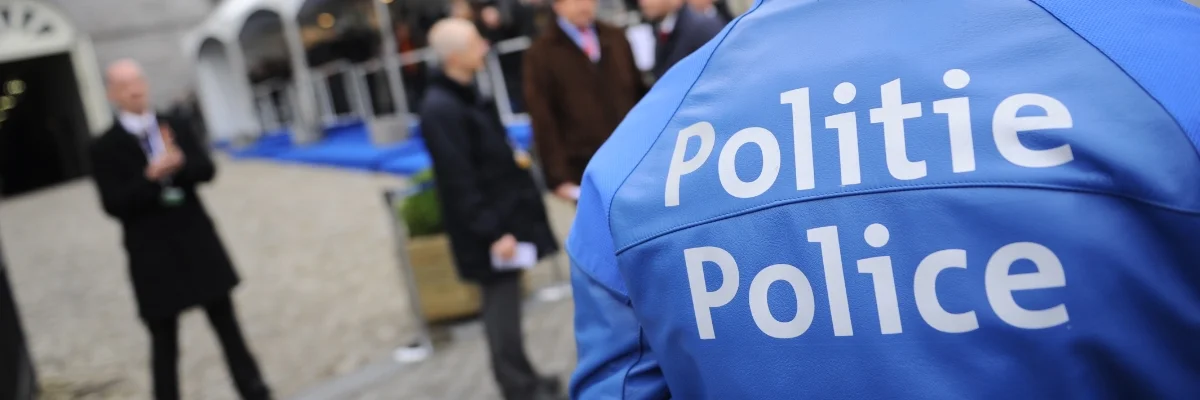
◢ An Iranian diplomat was taken into custody in Belgium on Wednesday on suspicion of involvement in an alleged plot to bomb an Iranian opposition rally in France. An investigating magistrate earlier questioned the Iranian, normally based in Vienna, in the northern Belgian city of Antwerp, the Federal Prosecutor's Office said in a statement.
An Iranian diplomat was taken into custody in Belgium on Wednesday on suspicion of involvement in an alleged plot to bomb an Iranian opposition rally in France.
An investigating magistrate earlier questioned the Iranian, normally based in Vienna, in the northern Belgian city of Antwerp, the Federal Prosecutor's Office said in a statement.
Prosecutors said Tuesday that the suspect, previously identified as Assadollah Assadi, had been extradited to Belgium from Germany.
Tehran summoned the German ambassador on Wednesday to protest the extradition, which the foreign ministry said was "caused by a fabricated conspiracy by enemies of Iran and European relations.”
Iran has denied French accusations that Assadi was involved in a plot targeting an annual gathering of the National Council of Resistance of Iran (NCRI) on June 30 just outside Paris.
Belgian anti-terrorism prosecutors announced on July 2 that they had foiled the plot. They then requested the extradition of both Assadi and a man identified as Merhad A., who was detained in Paris.
Belgian police believe Mehrad A. is an accomplice of a husband and wife team caught in Brussels in possession of 500 grammes (about a pound) of the powerful explosive TATP and a detonator.
All three are Belgian nationals of Iranian origin.
The accusations come at a particularly sensitive time as Iran works with European powers to salvage the 2015 nuclear deal, abandoned by the United States earlier this year.
Photo Credit: Wikicommons
Stolen Ancient Artifact Returns to Iran Museum
◢ A twice-stolen ancient Persian artifact is back in Tehran's national museum after a New York court ordered it returned to Iran. The limestone relief was handed over to Iran's representative at the United Nations last month and was personally brought back to Iran by President Hassan Rouhani, returning from the UN General Assembly.
A twice-stolen ancient Persian artifact is back in Tehran's national museum after a New York court ordered it returned to Iran.
"It now belongs to the people who made it in the first place, and who are now going to preserve it, and is part of their identity," Firouzeh Sepidnameh, director of the ancient history section of the National Museum told AFP on Tuesday.
The limestone relief was handed over to Iran's representative at the United Nations last month and was personally brought back to Iran by President Hassan Rouhani, returning from the UN General Assembly.
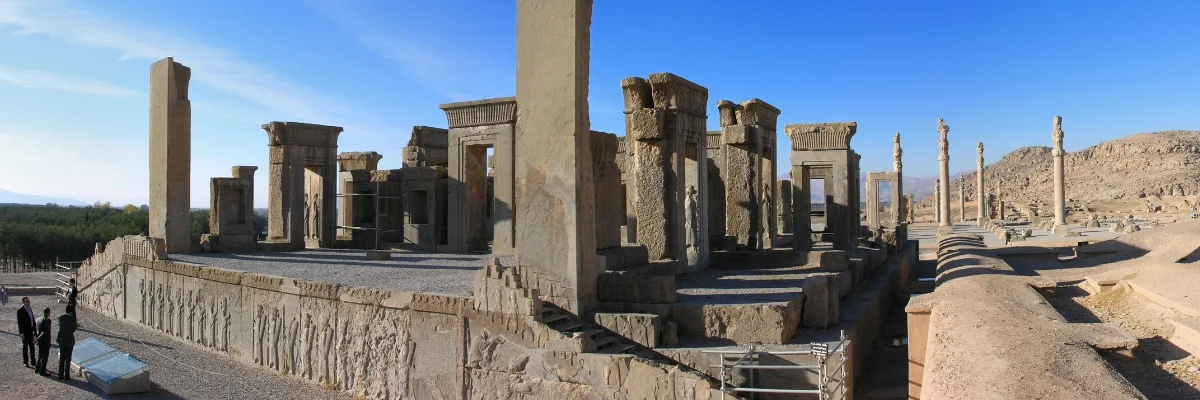
The bas-relief, approximately 25 centuries old, depicts the head of a soldier from a line of Immortal Guards.
It was discovered in an archaeological dig in the early 1930s at Persepolis, capital of the Achaemenid Empire near today's central Iranian city of Shiraz.
The artifact was stolen four years after it was found, and ultimately ended up at the Montreal Museum of Fine Arts where it was again stolen in 2011.
It was seized by the Manhattan district attorney's office in 2017 when it resurfaced and was put on sale at an art fair.
"The international community has evolved enough to realize every artifact must return to its point of origin," said Sepidnameh.
Photo Credit: Wikicommons

IMF Reverses Iran Growth, Lifts Saudi Forecast
◢ The International Monetary Fund on Tuesday predicted Iran's economy will sink deep in the red due to renewed US sanctions but forecast increased Saudi growth on the back of higher oil production. In its World Economic Outlook, the IMF said the oil-dependent economy of the Islamic republic is expected to shrink by 1.5 percent this year and by 3.6 percent in 2019.
The International Monetary Fund on Tuesday predicted Iran's economy will sink deep in the red due to renewed US sanctions but forecast increased Saudi growth on the back of higher oil production.
In its World Economic Outlook, the IMF said the oil-dependent economy of the Islamic republic is expected to shrink by 1.5 percent this year and by 3.6 percent in 2019.
In May, before US President Donald Trump announced reinstating sanctions against Tehran, the IMF had projected Iran's economy would grow by 4.0 percent in 2018 and again next year.
The IMF said the Iranian economy was now expected to contract over the next two years "on account of reduced oil production, before returning to modest positive growth in 2020-23.”
Trump withdrew the United States from the 2015 nuclear deal between Iran and world powers in May, and his administration reimposed a round of sanctions on the Islamic republic in August.
Iranian crude exports, which reach some 2.5 million barrels per day normally, have plunged by over half a million bpd and are expected to dive further when expanded sanctions on oil take effect next month, depriving Tehran of its main source of income.
The IMF also sharply slashed growth forecasts for the whole Middle East and North Africa region due to the slump in the Iranian economy and increased energy costs.
It now projects the MENA region to grow by 2.0 percent this year and 2.5 percent in 2019, 1.2 percent and 1.1 percent lower, respectively, than it forecast in April.
"The downward revisions reflect to an important extent the worsening of growth prospects for Iran, following the reimposition of US sanctions," it said.
The IMF, however, lifted its projections for economic growth in Saudi Arabia, the region's biggest economy, and its oil-rich neighbours in the Gulf.
It said the Saudi economy, which contracted by 0.9 percent last year, is expected to grow by 2.2 percent in 2018 and 2.4 percent next year, raising previous projections by 0.5 percent.
The growth is being "driven by a pickup in non-oil economic activity and a projected increase in crude oil production in line" agreed by the Organization of the Petroleum Exporting Countries and independent producers, the IMF said.
Oil prices, which account for about 80 percent of Saudi public income, have increased by more than 70 percent since June last year to over USD 80 a barrel.
The London-based Capital Economics think-tank said last week that revenues of Saudi Arabia and the five other Gulf states are expected to rise by USD 200 billion this year compared to 2017 due to high oil prices and output.
Photo Credit: IMF
Iran Says Saudi Claims To Replace Its Oil 'Unbelievable'
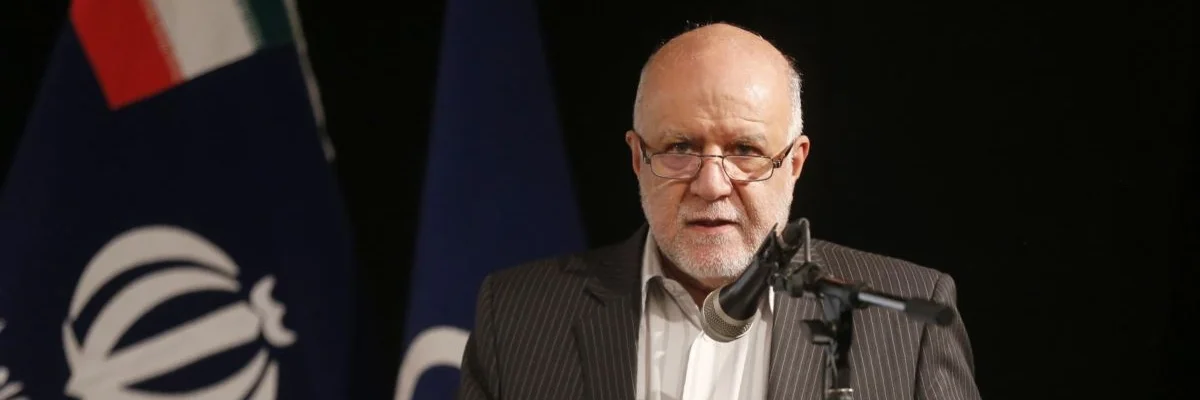
◢ Iran's oil minister said on Monday that the market will never believe "exaggerated" claims by Saudi Arabia that it can replace Iranian oil shipments lost due to renewed US sanctions. "Such exaggerations might please Mr Trump, but the market will never believe them," Bijan Namdar Zanganeh said, according to the oil ministry's SHANA news site.
Iran's oil minister said on Monday that the market will never believe "exaggerated" claims by Saudi Arabia that it can replace Iranian oil shipments lost due to renewed US sanctions.
"Such exaggerations might please Mr Trump, but the market will never believe them," Bijan Namdar Zanganeh said, according to the oil ministry's SHANA news site.
"These statements were made due to Mr Trump's pressure on Saudi authorities. In reality, neither Saudi Arabia nor any other producer has such a capability," he added.
Saudi Crown Prince Mohammed bin Salman told Bloomberg on Friday that Saudi Arabia "did(its) job and more" by making up for the recent drop in Iranian oil sales.
He said Iran's sales had fallen by 700,000 barrels per day since the United States announced in May that it was pulling out of the 2015 nuclear deal with Iran and reimposing sanctions on its oil industry.
Precise figures are unavailable, not least because Iran has begun switching off tracking devices on some oil-exporting ships since the threat of sanctions returned, according to analysts.
Iran was exporting between 2.5 and 2.7 million bpd in April before the US announced the return of sanctions.
"We export as much as two barrels for any barrel that disappeared from Iran recently," Prince Mohammed told Bloomberg.
But Zanganeh retorted that the Saudis had only opened up "their previous reserves" to the market and that their output capacity had not increased.
The Saudi statement could have a "short-term psychological effect", he added, but it would not mean much to global energy markets which had shown their concern over shortages by hiking prices.
The sanctions on Iran's oil sector are not due to hit until November 5, but several key buyers in Europe and Asia have already cut purchases in recent months under pressure from Washington.
Photo Credit: IRNA
Qatar Airways Commits to Iran Flights Despite Sanctions
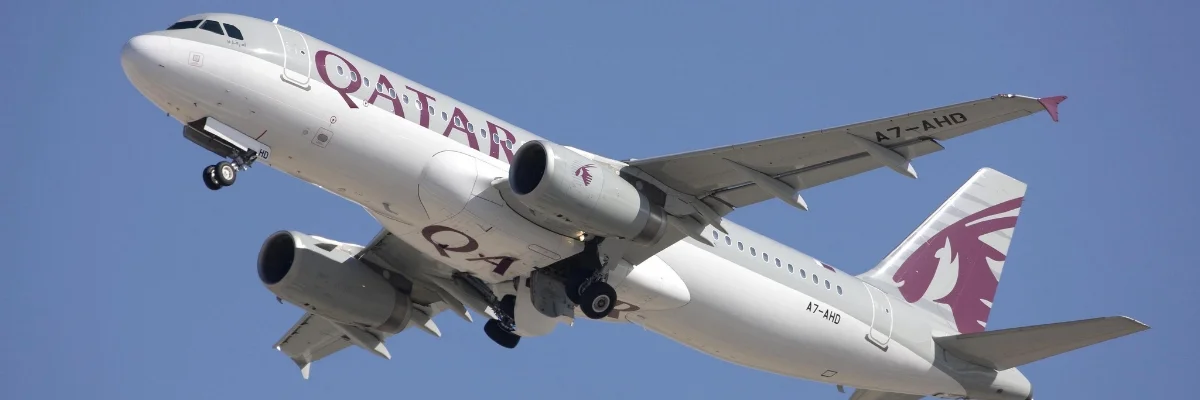
◢ US sanctions on Iran will not impact Qatar Airways' flights to the Islamic republic, the airline's boss Akbar al-Baker said on Monday. Speaking at a high-profile business conference in the Qatari capital Doha, Baker said services to Iran would continue despite a tightening economic and political squeeze on Iran by Washington.
US sanctions on Iran will not impact Qatar Airways' flights to the Islamic republic, the airline's boss Akbar al-Baker said on Monday.
Speaking at a high-profile business conference in the Qatari capital Doha, Baker said services to Iran would continue despite a tightening economic and political squeeze on Iran by Washington.
"Aviation is not a sanctioned industry, Qatar Airways will continue to operate into the cities we are currently operating in Iran," he said.
"Our flights to Iran will not be affected."
Qatar Airways' Iran destinations include Mashhad and Shiraz, while the airline operates daily flights to Tehran, according to its website.
Baker's comments come as US President Donald Trump's administration is expected to impose a second round of tough sanctions on Iran next month.
A first tranche of punitive measures were introduced in August by the US after it withdrew in May from the 2015 international deal aimed at curbing Tehran's nuclear ambitions.
Washington has also warned foreign businesses to steer clear of Iran.
Already, major European airlines including Air France and British Airways have stopped flights to Iran, following the sanctions' announcement.
Qatar is also under scrutiny over its relationship with Iran, with whom it shares the world's largest natural gas field.
Since June 5, 2017, Saudi Arabia, the United Arab Emirates, Bahrain and Egypt have imposed a sweeping embargo on Qatar, sparking the worst political rift to ever hit the Gulf, in part because of Iran.
The four countries accuse Doha of seeking closer ties with Tehran, Saudi Arabia's arch-rival, as well as supporting radical Islamist groups.
Qatar denies the charges, accusing its neighbors of seeking regime change.
Photo Credit:
Iran Has 'Unclean Hands' in World Court Battle, US Says
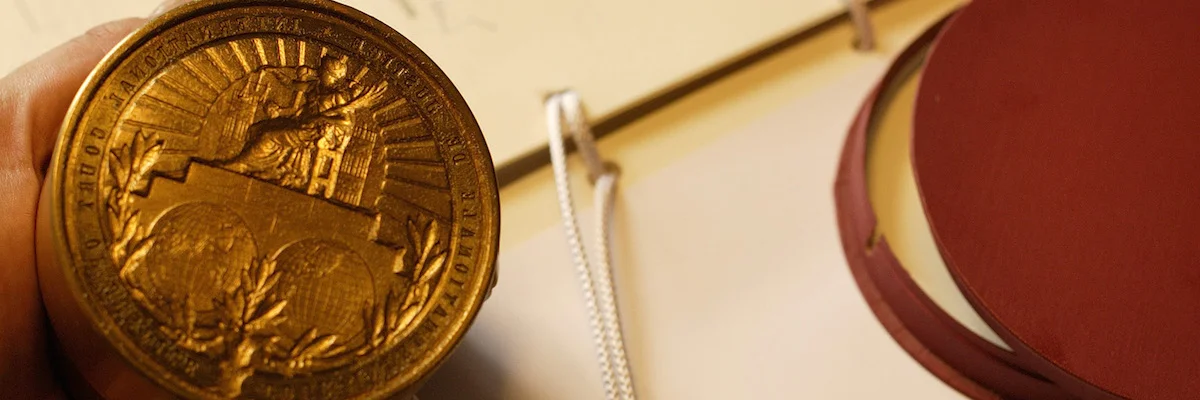
◢ The United States accused Tehran Monday of having "unclean hands" as it fought an Iranian court bid to unfreeze billions of dollars earmarked by Washington for terror victims. Washington said Iran's "support for international terrorism", including bombings and airline hijackings, should rule out its case at the International Court of Justice (ICJ) in The Hague.
The United States accused Tehran Monday of having "unclean hands" as it fought an Iranian court bid to unfreeze billions of dollars earmarked by Washington for terror victims.
Washington said Iran's "support for international terrorism", including bombings and airline hijackings, should rule out its case at the International Court of Justice (ICJ) in The Hague.
Iran dragged Washington to the UN's top court in 2016 over a US Supreme Court ruling that the USD 2 billion should go to victims of attacks blamed on the Islamic republic.
Iran said the case breached a 1955 "Treaty of Amity" between Washington and Tehran signed before Iran's Islamic revolution.
Washington tore up that treaty last week after the ICJ in a separate case ordered the United States to ease sanctions reimposed on Iran by US President Donald Trump after he pulled out of Iran's 2015 international nuclear deal.
"Iran comes to the court with unclean hands. Indeed, it is a remarkable show of bad faith," Richard Visek, a US State Department legal official, told the court.
"The actions at the root of this case centre on Iran's support for international terrorism... Iran's bad acts include supports for terrorist bombings, assassinations, kidnappings, and airline hijackings," he said.
Visek also accused Iran's "most senior leaders" of the "encouragement and promotion of terrorism" and "violation of nuclear non-proliferation, ballistic missile and arms trafficking obligations".
Iran's use of the 1955 treaty to lodge the case was an "abuse of process", he added.
The ICJ was set up after World War II to rule on disputes between United Nations member states. Its rulings are binding but it has no power to enforce them.
'Full Reparations'
At Monday's hearing, a 15-judge bench is listening to US arguments over whether the ICJ can take up the case under its strict rules governing its procedure.
The US Supreme Court ruled in April 2016 that USD 2 billion in Iran's frozen assets must go to American victims of terror attacks.
These included the 1983 bombing of a US Marine barracks in Beirut, in which 241 soldiers were killed, and the 1996 Khobar Towers bombing in Saudi Arabia. In total, the decision affects more than 1,000 Americans.
Iran angrily accused Washington of breaking the 1955 treaty—even though it was signed at the time with the pro-US regime of the Shah—and called for the US "to make full reparations to Iran for the violation of its international legal obligations".
A decision by the ICJ's judges could take weeks or even months before being made public.
But Monday's showdown risks deepening the Trump administration's rift with international justice.
Last Wednesday, Trump's national security advisor John Bolton announced the US was not only leaving the amity treaty but also quitting the international accord relating to the UN top court's jurisdiction.
That followed Iran's shock victory last week when the ICJ ruled that the US must lift sanctions against Tehran targeting humanitarian goods like food and medicine.
The step also came after the Palestinians went to the ICJ to challenge the US move of its Israel embassy to Jerusalem.
Trump last month at the United Nations virulently rejected the authority of the International Criminal Court—a separate court based in The Hague that the US is not a member of—over a probe into US forces in Afghanistan.
Photo Credit: ICJ
Iran Parliament Passes Counter-Terror Finance Bill
◢ Iran's parliament on Sunday approved a bill to counter terrorist financing that was strongly opposed by conservatives but seen as vital to salvaging the nuclear deal with European and Asian partners. The bill, one of four put forward by the government to meet demands set by the international Financial Action Task Force (FATF), was passed by 143 votes to 120.
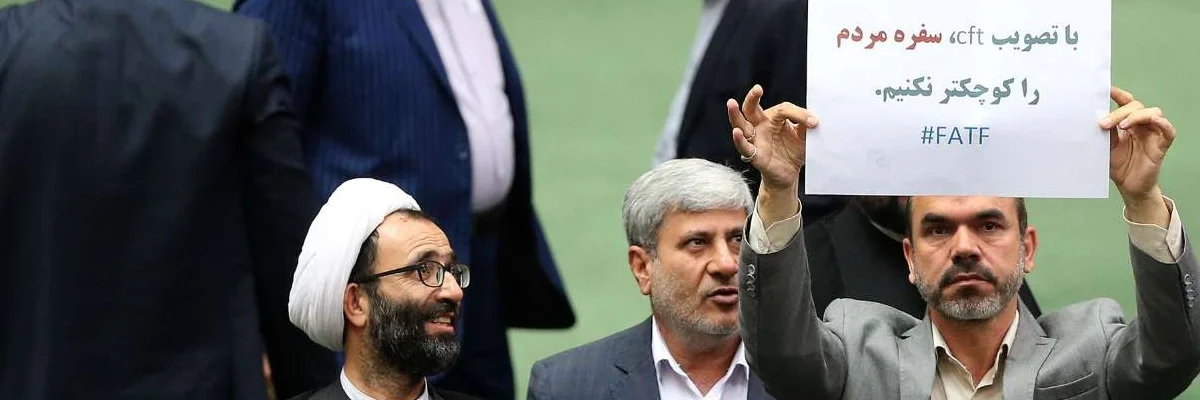
Iran's parliament on Sunday approved a bill to counter terrorist financing that was strongly opposed by conservatives but seen as vital to salvaging the nuclear deal with European and Asian partners.
The bill, one of four put forward by the government in a bid to meet demands set by the international Financial Action Task Force (FATF), was passed by 143 votes to 120, according to the semi-official ISNA news agency.
It aims to bring Iran's laws in line with international standards and allow it to join the UN Terrorism Financing Convention.
A previous bill on the mechanics of monitoring and preventing terrorist financing was signed into law in August.
But joining the UN convention has been controversial because hardliners say it will limit Iran's ability to support armed groups in the region such as its Lebanese ally, Hezbollah.
Two other bills—on money-laundering and organised crime—have also been passed by parliament but are being held up by the Guardian Council, which vets all legislation.
Iran is alone with North Korea on the blacklist of the Paris-based FATF, which monitors global money laundering and terrorist financing.
The FATF suspended counter-measures against Iran in June 2017 and has set a final deadline of mid-October for it to amend its laws.
The issue has become particularly pressing since the United States walked out of the 2015 nuclear deal with Iran earlier this year and began reimposing sanctions.
The other parties to the deal—Britain, France, Germany, China and Russia—have sought to salvage the agreement and maintain trade with Iran, but have demanded that it accede to the FATF.
"Neither I nor the president can guarantee that all problems will go away if we join (the UN convention)," said Iran's Foreign Minister Mohammad Javad Zarif during the debate ahead of the vote.
"But I guarantee that not joining will provide the US with more excuses to increase our problems," he added.
He said Russia and China—two of Iran's "strategic allies"—have refused to maintain financial ties unless it joined the FATF.
'Death to Traitors'
Conservatives were furious with the vote on Sunday, with hardliners leading chants of "death to traitors" outside parliament.
In a heated debate ahead of the vote, opponents of the bill said it would not solve the country's financial problems, and would help its enemies.
"We did what (the FATF) demanded, we passed three bills but nothing happened. Our financial problems will not go away even if we join," said lawmaker Hossein Naghavi Hosseini.
Another hardliner, Mohammad Dehghan, warned the bill means "providing the enemy with intelligence during an economic war" and that passing it amounted to "treason".
Both sides have evoked supreme leader Ayatollah Ali Khamenei to support their position.
Conservatives pointed to Khamenei's statement in June that Iran has "no need to join" global conventions.
But parliament speaker Ali Larijani, who supports the government's position, said he had received a letter from Khamenei explaining that his remarks were about "conventions in general" and not meant to oppose any particular bills.
Reformist lawmaker Mohammad Feyzi told the session that Iran does not have "the luxury of choice" and will face negative consequences if it refuses to join the FATF.
Ali Najafi, spokesman for the parliament's commission which produced the bill, said Iran retained the right to walk away from the UN convention "wherever it acts against the Iranian constitution" and emphasized that it does not force Iran to recognize Israel.
Photo Credit: IRNA
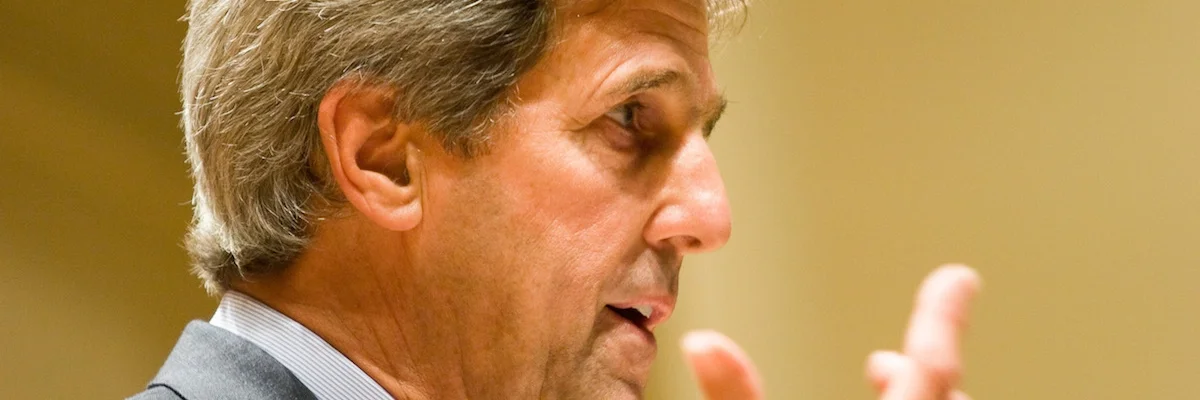
Kerry Says War Chances Rising After US Leaves Iran Deal
◢ Former secretary of state John Kerry voiced fear Friday of conflict with Iran after the United States pulled out of a denuclearization deal, saying regional leaders had privately pressed him for military strikes. Kerry spearheaded diplomacy that led to the 2015 agreement in which Iran promised Western powers, Russia and China to scale back its nuclear program drastically in return for sanctions relief.
Former secretary of state John Kerry voiced fear Friday of conflict with Iran after the United States pulled out of a denuclearization deal, saying regional leaders had privately pressed him for military strikes.
Kerry spearheaded diplomacy that led to the 2015 agreement in which Iran promised Western powers, Russia and China to scale back its nuclear program drastically in return for sanctions relief.
By pulling out of the accord, President Donald Trump has "made it more likely that there will be conflict in the region because there are people there who would love to have the United States of America bomb Iran," the former senator and presidential candidate told the Council on Foreign Relations as he promotes his memoir, "Every Day is Extra."
Kerry said that Saudi Arabia's late king Abdullah and Egypt's ousted president Hosni Mubarak had both told him that the United States should attack Iran, even while they would not take the position publicly.
Israeli Prime Minister Benjamin Netanyahu, an outspoken critic of the Iran deal, had also asked then US president Barack Obama for the green light to bomb Iran, Kerry said.
While UN inspectors found that Iran was complying with the accord, Trump declared the deal to be a disaster for not addressing other US concerns with Iran including threats to Israel, support for Islamist militant moves such as Hezbollah and Tehran's missile program.
But Kerry said the United States was "actually getting them to do things, quietly," including on easing the conflict in war-ravaged Yemen, and believed that President Hassan Rouhani was "trying to move the country in a different direction."
"What Trump has done is now empower the guys in Iran who said don't deal with the United States, they'll burn you," Kerry said.
"He has made it more likely that if there is an implosion in Iran internally through pressure or otherwise, it will not be an unknown Jeffersonian democrat who is going to appear and take over, it will be the IRGC or another Ahmadinejad, and we will be worse off and the people of Iran will be worse off," he said, referring to the hardline Revolutionary Guards and former firebrand president Mahmoud Ahmadinejad.
Trump has lashed out at Kerry for meeting Iranian Foreign Minister Mohammad Javad Zarif since leaving office, accusing him of violating an obscure US law that prohibits private citizens from negotiating on disputes with foreign governments.
Kerry said Trump was seeking to distract from his own scandal related to alleged Russian interference in the 2016 election and said it was normal for former officials to maintain communication with foreign counterparts.
Photo Credit: Wikicommons
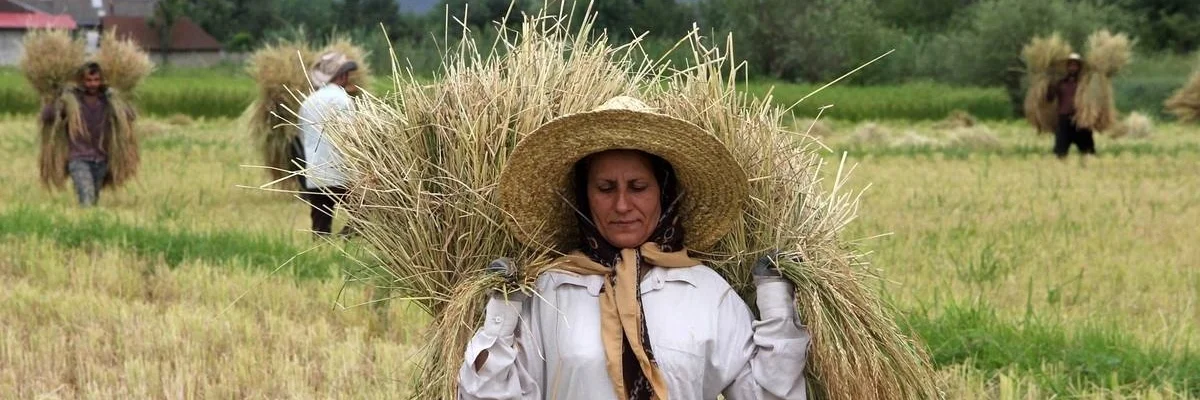
Iran Risks Losing 70% of Farmlands: Environment Chief
◢ Iran faces losing 70 percent of its farmlands if urgent action is not taken to overcome a litany of climate woes, the country's environment chief Isa Kalantari told AFP. The Islamic Republic is grappling not only with air, water and soil pollution, as well as drought and desertification, but also with the effect of years of crippling US and international sanctions.
Iran faces losing 70 percent of its farmlands if urgent action is not taken to overcome a litany of climate woes, the country's environment chief Isa Kalantari told AFP.
The Islamic Republic is grappling not only with air, water and soil pollution, as well as drought and desertification, but also with the effect of years of crippling US and international sanctions.
Adding to the dire situation, "we currently use about 100 percent of our renewable water ... according to global standards this figure should not be higher than 40 percent," said Kalantari, vice president and head of Iran's Environment Department, in an exclusive interview in Tehran.
"The excessive consumption of water, especially from groundwater is a threat and could have terrible social consequences," he warned.
If the situation is not brought under control, then "we would lose about 70 percent of our cultivated land in a maximum of 20 to 30 years."
"The south of Alborz and east of Zagros, if we don't take swift action, will become unusable for agriculture," Kalantari added.
Alborz and Zagros are mountain ranges in the north and west of Iran respectively. The majority of Iran's mostly arid land mass and population centres are located to the south and east of them.
According to the UN's Food and Agriculture Organization, Iran, a country of some 80 million people, predominantly relies on agriculture.
Past Errors
Kalantari said there had been many years of mismanagement of water resources, and mistaken decisions forced by political and economic concerns such as the US sanctions and climate change.
“We basically thought that environment was not that important," he said.
Other countries had also failed to address climate issues introducing policy errors in the 1960s and 1970s.
"We made these mistakes in the 1980s. Then we came to realize that in places that we'd built dams, we shouldn't have built any, and in places where we should have built dams, we didn't build any," he said.
The pressure on the country's resources has also been exacerbated by population growth, with Iranians encouraged to have large families in the years following its 1979 Islamic revolution.
“In the first decade after the revolution, we encountered a high population growth rate, more than three percent annually," Kalantari said.
This policy was taken "without paying attention to utilising and improving" the use of resources, he said.
He also highlighted the effects of the Iran-Iraq war (1980-1988), when the country was isolated and could not concern itself with sustainable development as it had a burgeoning population to feed.
"Iran could not, and cannot, bear the pressure that this (population growth) exerted on the consumption of water, for the supply of food and for agriculture," he added.
The strain has shown recently with Iranians taking to the streets in December and January this year, protesting over economic conditions.
A former agriculture minister in the 1990s, Kalantari said Iran could not be self-sufficient in food production for its estimated 80 million people "if we want sustainable policies".
Even with state-of-the-art technology, Iran could only be completely self-sufficient to supply food for 50 to 55 million people.
Sanctions Hit
He also blamed some of the country's air pollution woes on biting sanctions.
"Locally-produced car engines are not up to standard, so when sanctions are imposed, car manufacturers such as Peugeot and Renault depart," said Kalantari.
The two carmakers suspended operations in Iran after Washington withdrew from a ground-breaking nuclear deal earlier this year and reimposed sanctions, as European leaders have so far failed to gain any exemptions for their firms.
A lack of new cars prompts Iranians to "use domestically-made engines" which do not adhere to modern environmental standards.
The resulting pollution frequently hangs heavily over the capital Tehran, with smog often rendering the mountains to the north invisible, while there have been growing cases of people hospitalized with respiratory problems.
Photo Credit: IRNA

Khamenei Vows 'Never' to Allow Iran to Bow
◢ Iran's supreme leader Ayatollah Ali Khamenei vowed Thursday "never" to allow the Islamic republic to bow to the demands of its enemies, at a time of increased tensions between Tehran and Washington. "To entertain the idea, as desired by the enemy, that the only solution is to hand ourselves over to the enemy, is the worst act of treason towards the Iranian nation, and that will not happen,"
Iran's supreme leader Ayatollah Ali Khamenei vowed Thursday "never" to allow the Islamic republic to bow to the demands of its enemies, at a time of increased tensions between Tehran and Washington.
"To entertain the idea, as desired by the enemy, that the only solution is to hand ourselves over to the enemy, is the worst act of treason towards the Iranian nation, and that will not happen," Khamenei said in an address to tens of thousands of members of the Basij, an Islamic volunteer militia, broadcast live on state television.
"With God's help, so long as I am alive and retain my capacities and with your help, I will never allow such a thing to happen," he said in the speech at Tehran's Azadi stadium.
For Iran's clerical establishment, enemy refers firstly to the United States which is dubbed the "Great Satan" and with which relations have been severed since the aftermath of its 1979 Islamic revolution.
Khamenei played down the impact of economic sanctions reimposed on Iran by the United States in August after Washington pulled out of the 2015 nuclear accord between Tehran and world powers.
"Our national economy can overcome the sanctions, and, with the help of God, we will overcome them, and this defeat will signal the defeat of America and a new slap for America from the Iranian nation," he said.
On Wednesday, Tehran hailed its "victory" after the International Court of Justice ruled that sanctions reimposed after President Donald Trump pulled out of a nuclear deal put Iranian lives at risk.
But the United States insisted it was already allowing humanitarian exemptions to sanctions and, accusing Iran of seeking a "propaganda" win, announced it was terminating a treaty on which the case was based.
Photo Credit:
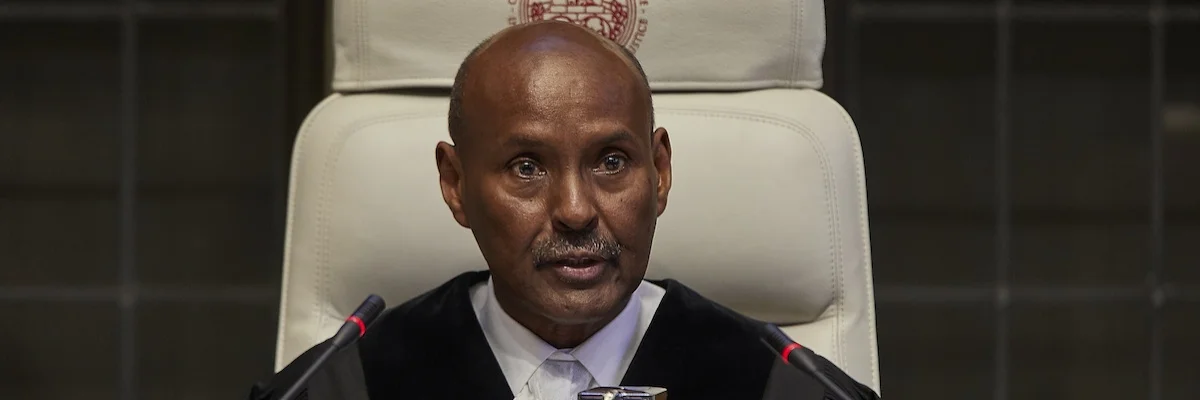
UN Court Tells US to Ease Iran Sanctions in Blow for Trump
◢ The UN's top court ordered the United States on Wednesday to lift sanctions on humanitarian goods for Iran, in a stinging rebuke for the Trump administration which nonetheless made clear the decision would change nothing. Tehran declared victory after the International Court of Justice ruled that sanctions reimposed after President Donald Trump pulled out of a nuclear deal put Iranian lives at risk.
The UN's top court ordered the United States on Wednesday to lift sanctions on humanitarian goods for Iran, in a stinging rebuke for the Trump administration which nonetheless made clear the decision would change nothing.
Tehran declared victory after the International Court of Justice ruled that sanctions reimposed after President Donald Trump pulled out of a nuclear deal put Iranian lives at risk.
But the United States insisted it was already allowing humanitarian
exemptions and, accusing Iran of seeking a "propaganda" win, announced it was
terminating a treaty on which the case was based.
The judges at the court in The Hague ruled unanimously that sanctions on some goods breached the 1955 Treaty of Amity between Iran and the United States that predates Iran's Islamic Revolution.
They called on Washington to "remove by means of its choosing any impediments arising from the measures announced on 8 May to the free exportation to Iran of medicines and medical devices, food and agricultural commodities" as well as airplane parts and services, chief judge Abdulqawi Ahmed Yusuf said.
The court said sanctions on goods "required for humanitarian needs... may have a serious detrimental impact on the health and lives of individuals on the territory of Iran."
US sanctions also had the "potential to endanger civil aviation safety in Iran."
Trump slapped a first round of sanctions on Iran in August after pulling out in May from the 2015 international deal aimed at curbing Tehran's nuclear ambitions, to the dismay of his European allies. A second round of punitive measures is due in November.
Iran Hails Ruling
Iran dragged the United States to the ICJ in July and, during four days of hearings in late August, its lawyers accused Washington of "strangling" its economy.
Foreign drugs are now a rare commodity in Iran which is also dealing with a free-falling rial currency and price hikes. Official Iranian statements acknowledge the shortage and say imports of certain drugs are no longer subsidised.
Iranian Foreign Minister Mohammad Javad Zarif called the court ruling "another failure for (the) sanctions-addicted US government and victory for rule of law".
The foreign ministry said in a statement that the ruling was a "clear sign" that "Iran is in the right".
But US Secretary of State Mike Pompeo accused Iran of "abusing the ICJ for political and propaganda purposes" and noted that the court did not reject US sanctions more broadly.
"The court's ruling today was a defeat for Iran. It rightly rejected all of Iran's baseless requests," Pompeo told reporters in Washington.
He said that the United States was ending the 1955 friendship treaty, signed when Iran was ruled by the Western-oriented shah.
"This is a decision, frankly, that is 39 years overdue," Pompeo said, referring to the time since the 1979 Islamic revolution transformed Iran from one of the closest US allies to a sworn foe.
"Given Iran's history of terrorism, ballistic missile activity and other malign behaviours, Iran's claims under the treaty are absurd," he said.
Zarif said that the move showed the United States to be an "outlaw regime".
The end of the treaty will have little direct effect but Iran as well as the United States have cited it in court cases including when Tehran sought compensation when the US Navy downed an Iran Air civilian flight in 1988, killing 290 people.
Wednesday's ruling is in fact a decision on so-called provisional measures ahead of a final ruling which may take several more years, experts said.
Decisions by the Hague-based ICJ, which rules on disputes between United Nations members, are binding but it has no mechanism through which it can enforce its decisions.
Iran, US Ignored Rulings
In 1986, Washington disregarded the court's finding that it had violated international law by supporting the pro-US Contra the ICJ's ruling rebels in Nicaragua.
Iran in turn ignored the ICJ's ruling in 1980 to release hostages seized when revolutionary zealots took over the US embassy.
Trump has repeatedly voiced disdain for international organizations that he sees as limiting US sovereignty.
Trump's national security adviser John Bolton recently threatened that the United States would take action against any judge from the separate International Criminal Court who pursues a case against US troops in Afghanistan.
Negotiated under his predecessor Barack Obama, Trump argues that the 2015 Iran deal gave Tehran money to support extremist groups and build nuclear-capable missiles.
European allies have pledged to keep the agreement alive, with plans for a mechanism to let firms skirt the US sanctions as they do business with Iran.
Hearings in a separate Iranian case against the US freezing of around USD 2 billion of Iranian assets to help American terror victims are due to start at the ICJ next week.
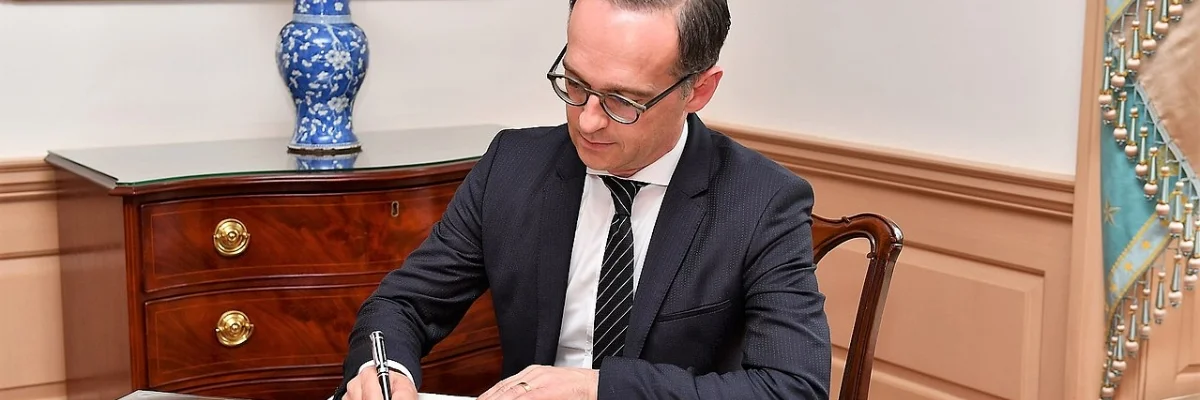
Germany Says Shares US Goals on Iran
◢ Germany on Wednesday told the United States that it shared its goals on Iran even as the Europeans press ahead to save a denuclearization deal threatened by US sanctions. German Foreign Minister Heiko Maas met in Washington with US Secretary of State Mike Pompeo who has voiced outrage over European plans to preserve commercial ties with Iran.
Germany on Wednesday told the United States that it shared its goals on Iran even as the Europeans press ahead to save a denuclearization deal threatened by US sanctions.
German Foreign Minister Heiko Maas met in Washington with US Secretary of State Mike Pompeo who has voiced outrage over European plans to preserve commercial ties with Iran.
"In the end, we pursue the same goals with respect to Iran," Maas told
reporters after meeting Pompeo.
“We just have different paths that we want to follow," he said.
Maas said that Germany shared concerns about Iran's ballistic missile program and believed Tehran should withdraw from Syria, where the Shiite clerical regime is supporting President Bashar al-Assad.
But Maas said that the end of the 2015 agreement would lead Iran to pursue a nuclear program with military purposes.
“This would create the danger of a military conflict in the region," Maas said.
The United States under former president Barack Obama negotiated the deal with Iran alongside Britain, China, France, Germany and Russia.
UN inspectors say that Iran has complied with the agreement, under which it ceased sensitive nuclear work in exchange for sanctions relief.
President Donald Trump withdrew from the accord, vowing instead to target Iran aggressively and roll back its role in the region.
That European Union said last month that it was working on a legal entity through which businesses could trade with Iran and avoid US sanctions.
Photo Credit: Wikicommons
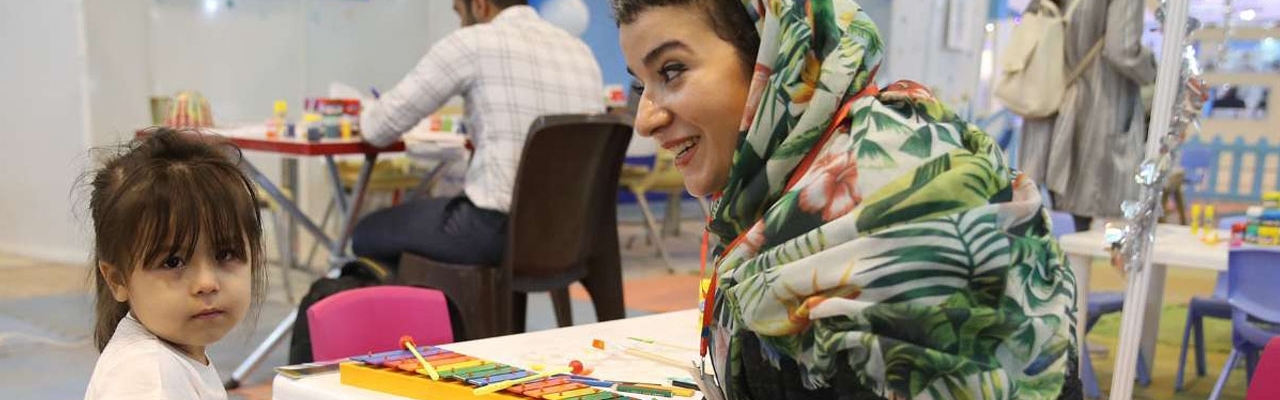
Foreign Drugs Rare Commodity in Sanctions-Hit Iran
◢ "Talk of sanctions on Iran reemerged, and my essential medicine was no longer available," said Masoud Mir who suffers from thalassaemia, a genetic blood disease common in Iran. Mir, 36, is one of many patients in the Islamic Republic who not only have to deal with their disability, but also the consequences of trade sanctions reimposed in August by the US, as well as a battered economy with a free-falling currency, a foreign drug shortage and price hikes.
"Talk of sanctions on Iran reemerged, and my essential medicine was no longer available," said Masoud Mir who suffers from thalassaemia, a genetic blood disease common in Iran.
Mir, 36, is one of many patients in the Islamic Republic who not only have to deal with their disability, but also the consequences of trade sanctions reimposed in August by the US, as well as a battered economy with a free-falling currency, a foreign drug shortage and price hikes.
His essential medicine, a Swiss-made anti-iron overload drug, is now rationed by the government and can only be freely purchased at exorbitant prices on the black market.
The same is true for other crucial drugs for treating multiple sclerosis, cancer and cardiac problems and even simple anaesthetics required for surgery.
On Wednesday, the UN's top court stepped in, and ruled in favor of Iran which had called for the US sanctions to be suspended.
Judges at the International Court of Justice in The Hague unanimously ruled Washington should remove barriers to "the free exportation to Iran of medicines and medical devices, food and agricultural commodities" as well as airplane parts.
Official Iranian statements acknowledge the shortage of medicines and say imports of certain drugs are no longer subsidized.
"We are currently short of 80 pharmaceutical items," Mohammad-Naeem Aminifard, a member of parliament's health commission, told semi-official news agency ISNA.
"The government and insurers have removed the support for foreign drugs that have a domestic equivalent which intensifies the pressure on patients."
Iran produces 96 percent of the drugs it uses, according to the Syndicate of Iranian Pharmaceutical Industries, but imports more than half the raw materials to make them.
The double-whammy of banking sanctions and a collapse in the value of its currency make total self-sufficiency difficult if not outright impossible.
Battered Economy Hits Patients
For others with family health concerns, sanctions are adding to their burden.
Ali, an electrical technician in his mid-30s, was fired from one job for spending too much time on hospital visits for his son.
His next company went bankrupt, and his current employer, a Dutch-Iranian firm, is stalled because they cannot import equipment and has stopped paying staff.
He spoke to AFP outside the busy 13 Aban pharmacy in central Tehran, where he had been hoping to buy a medicine for fungal infections caused by his son's cancer treatment.
"They're not giving me any because of insurance problems," he said.
"They said even if they could it's less than I need due to rationing. My son could die if his medicine is delayed for even a day."
Managers at the pharmacy, a state-owned outlet focusing on rarer diseases, declined to comment.
But others in central Tehran said there was "a notable shortage" in some anticoagulants, beta-blockers or drugs to treat blood pressure problems.
"The local versions are cheaper, but not as effective," one pharmacist told AFP. "Things will get worse if sanctions continue."
Many patients cannot afford black market prices and risk side effects from locally-made equivalents, the head of Iran's thalassaemia society, Meysam Ramezani, told the conservative Tasnim news agency recently.
Seven thalassaemia patients died in March alone, he said, blaming "either a lack of injections or low-quality drugs."
Who's to Blame?
Iranians on social media are blaming many people: the US for its crippling sanctions, government economic mismanagement, and pharma firms for skyrocketing prices.
Surgeon Hamidreza Vafayi said the refusal of international banks to work with Iran was the biggest challenge.
The United States pulled out of the 2015 nuclear deal and reimposed sanctions targeting key parts of Iran's economy including international banking ties and transactions in US dollars.
"As far as I know, there is no official statement on sanctioning medicine trade with Iran," Vafayi told AFP.
"Yet when we cannot have banking ties (with the world) we are in fact under an undeclared medicine sanction regime. The truth is that no company would sell us drugs now."
Thalassaemia patient Masoud Mir also angrily recalled that when sanctions were imposed between 2010 and 2016, pharmaceutical firms exploited the situation by hoarding goods and manipulating prices. The same thing is happening today, he claimed.
Medicine importers get subsidised currency rates from the government, but their names are not publicly available, making it difficult to hold them to account if drugs do not appear in state-owned pharmacies.
"In 2011, they kept saying that there was none (of his drug) in the market because of sanctions. But I could just walk out of the pharmacy and buy some from a street dealer at crazy prices," he said.
"Not everyone can pay that, so they may face a slow death."
Photo Credit: IRNA
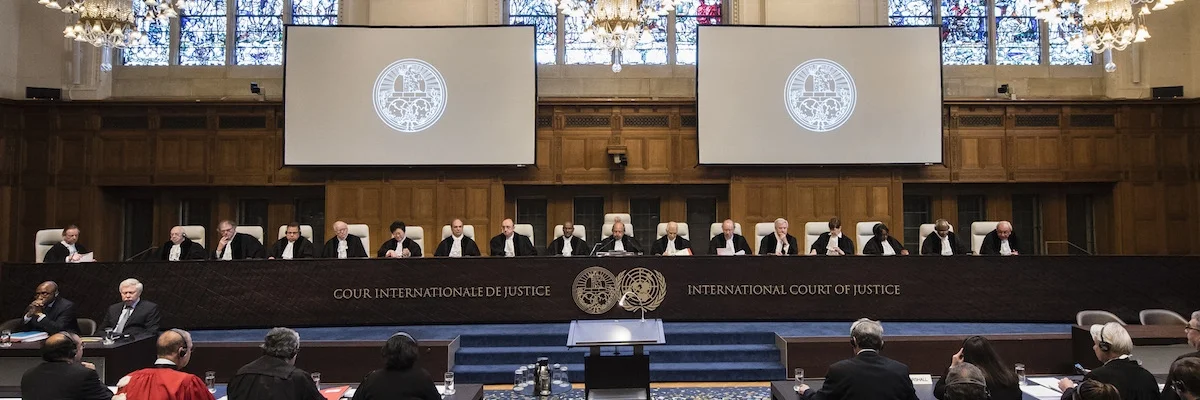
US Must Lift 'Humanitarian' Sanctions on Iran: UN court
◢ The UN's top court Wednesday ordered the United States to lift sanctions on "humanitarian" goods to Iran that President Donald Trump reimposed after pulling out of Tehran's nuclear deal. The International Court of Justice unanimously ruled that Washington "shall remove by means of its choosing any impediments arising from the measures announced on May 8 to the free exportation to Iran of medicines and medical devices, food and agricultural commodities" as well as airplane parts, said judge Abdulqawi Ahmed Yusuf.
Editor’s Note: The full text of the order of the International Court of Justice can be seen here.
The UN's top court Wednesday ordered the United States to lift sanctions on "humanitarian" goods to Iran that President Donald Trump reimposed after pulling out of Tehran's nuclear deal.
The International Court of Justice unanimously ruled that Washington "shall remove by means of its choosing any impediments arising from the measures announced on May 8 to the free exportation to Iran of medicines and medical devices, food and agricultural commodities" as well as airplane parts, said judge Abdulqawi Ahmed Yusuf.
The court said sanctions on goods "required for humanitarian needs... may have a serious detrimental impact on the health and lives of individuals on the territory of Iran."
US sanctions on aircraft spare parts also had the "potential to endanger civil aviation safety in Iran and the lives of its users.”
Trump slapped a first round of sanctions on Iran in August after pulling out in May of a historic deal aimed at curbing Tehran's nuclear ambitions, to the dismay of his European allies. A second round of punitive measures is due in November.
The ICJ rules on disputes between United Nations member states. Its decisions are binding and cannot be appealed, but it has no mechanism to enforce them.
Photo Credit: ICJ
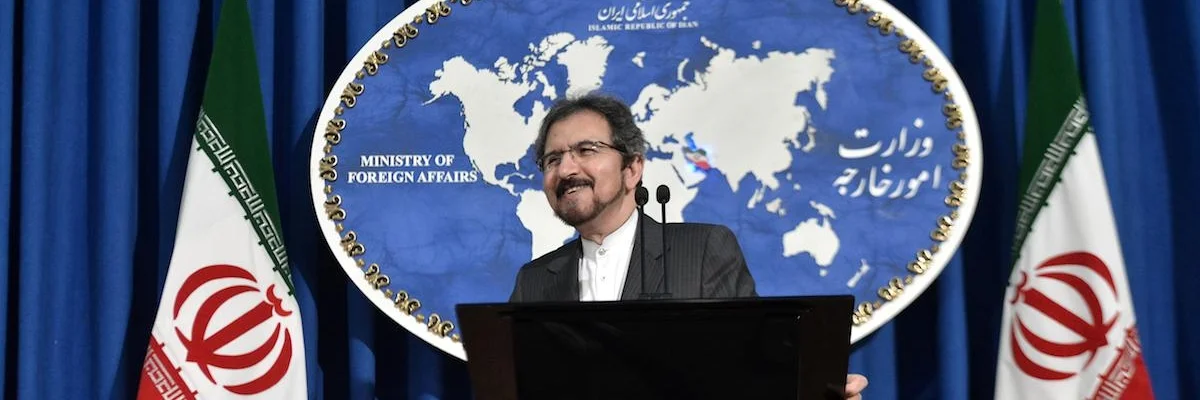
Iran Wants France Talks to Clear 'Misunderstanding' Over Alleged Bomb Plot
◢ Tehran called on Tuesday for talks with Paris to clear "misunderstanding" over an alleged bomb plot targeting an exiled opposition group near the French capital. "If there is a misunderstanding... about a thing that does not exist, be it a conspiracy by others or a mistake, we can sit down and talk about it," Iranian foreign ministry spokesman Bahram Ghasemi told AFP in an interview.
Tehran called on Tuesday for talks with Paris to clear "misunderstanding" over an alleged bomb plot targeting an exiled opposition group near the French capital.
"If there is a misunderstanding... about a thing that does not exist, be it a conspiracy by others or a mistake, we can sit down and talk about it," Iranian foreign ministry spokesman Bahram Ghasemi told AFP in an interview.
The only way to overcome the issue was through "the art of diplomacy," he said. "We know of no other way."
French authorities on Tuesday accused Iran's intelligence ministry of being behind a foiled plot to bomb a meeting of the People's Mujahedeen of Iran (MEK), according to a French diplomatic source.
Tehran considers the MEK a "terrorist group".
'Devious Moves'
"When the base issue is wrong and no more than an allegation, basing other hypotheses on such a claim is totally useless and wrong," Ghasemi said.
"You cannot accuse the intelligence ministry or anyone else working at it of being involved in an unconfirmed thing.
"Iran can definitely cooperate to fix any misunderstanding between France and Iran, or any other country in the region or Europe," said Ghasemi.
When the alleged bomb plot was foiled in late June, Iran's foreign minister Javad Zarif called it "a sinister false flag ploy" in a July 2 tweet and said that Iran is ready to work with all concerned to uncover the truth.
Ghasemi echoed the same remarks on Tuesday, saying that "certain conspiracies" are in play meant to affect Iran's "positive relations with France and other European countries", rooted in the environment created by "the US policies regarding Iran (focusing) on sowing division between Iran, Europe" and regional neighbours.
"Some centres (of power) do not approve of Iran's good relations with Europe—that it is staying in the JCPOA and that its economic ties continue with the EU," he said, refering to the 2015 Iran nuclear deal between the Islamic Republic and world powers.
This all started after the US pulled out of the 2015 nuclear deal in May, he hinted.
"The French government, whom we have a long-standing and significant relationship with ... must be vigilant and do not allow such devious moves to affect Iran's good relations with France and other European countries," Ghasemi said.
The diplomat also described Iran's missile program as its right to "have an acceptable level of defensive capability" and "not a threat to others.”
This came just a day after the Islamic Republic launched six missiles at a jihadists' headquarters in Syria over a deadly attack on an Iranian military parade that killed 24 people, and renewed French comments expressing concerns about the country's missile program.
The strike targeted the town of Hajin, about 24 kilometres (15 miles) north of Albu Kamal near Syria's eastern border with Iraq.
Despite the developing missile program, "Iran's military spending is very low compared to our neighbors, like Saudi Arabia and the Emirates," Ghasemi added.
Photo Credit: IRNA

Iran Denies French Accusations Over Alleged Bomb Plot
◢ French security services believe the Iranian intelligence ministry was behind a foiled bomb plot that aimed to target an opposition group in Paris in June, a diplomatic source told AFP. "The head of operations at the intelligence ministry ordered it," the source said on condition of anonymity, referring to an alleged plot to bomb a meeting of the People's Mujahedeen of Iran (MEK) in a Paris suburb.
Iran on Tuesday denied French accusations that one of its diplomats was involved in an alleged bomb plot targeting an exiled opposition group near Paris in June.
"We deny the accusations and forcefully condemn the Iranian diplomat's arrest and call for his immediate release," the foreign affairs ministry said in a statement.
It described the allegations as a conspiracy to "sabotage Iran's ancient and long-standing relations with France and other significant European countries."
The statement was released minutes before a French diplomatic source told AFP that security services believed the Iranian intelligence ministry was behind the foiled plot.
In retaliation, France announced it had frozen assets belonging to two suspected Iranian intelligence operatives as well as Iran's ministry of security and intelligence.
"This extremely serious act envisaged on our territory could not go without a response," France's interior, foreign and economy ministers said in a rare joint statement.
The opposition meeting allegedly targeted was also attended by leading US figures, including close allies of President Donald Trump.
Six people were arrested afterwards in coordinated raids by European police forces, including an Iranian diplomat identified as Assadollah Asadi, who is set to be extradited from Germany to Belgium for prosecution.
Asadi was targeted by France for the six-month asset freeze along with another man named as Saeid Hashemi Moghadam.
Iran has accused the opposition group, the People's Mujahedeen of Iran (MEK), which Tehran considers a "terrorist" group, of orchestrating the plot to discredit President Hassan Rouhani as he embarked on a tour of Europe.
Photo Credit: Wikicommons
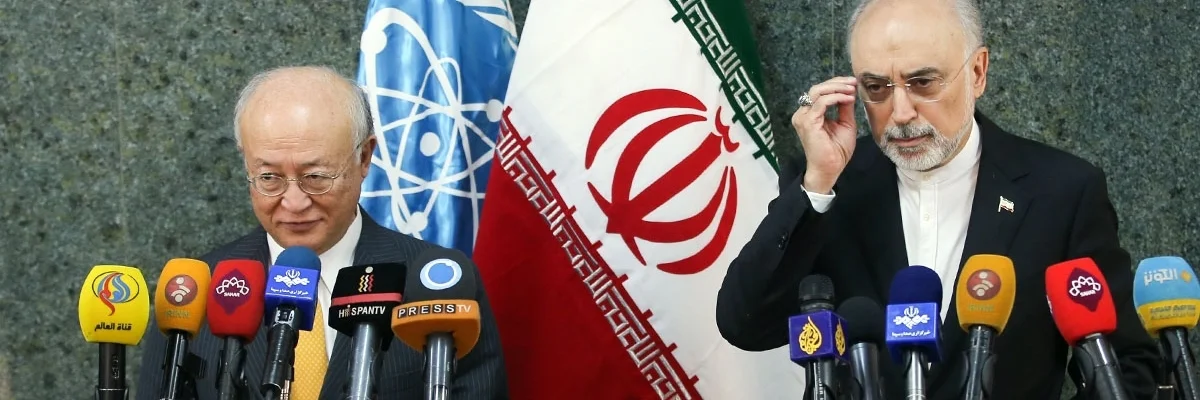
IAEA Fends Off Israel Pressure Over Iran
◢ The UN's nuclear watchdog Tuesday refused to "take at face value" Israel's claims that Iran is harboring a secret atomic warehouse, fending off pressure to inspect the allegedly suspect site. Israeli Prime Minister Benjamin Netanyahu made the claim in front of the UN General Assembly last week.
The UN's nuclear watchdog Tuesday refused to "take at face value" Israel's claims that Iran is harboring a secret atomic warehouse, fending off pressure to inspect the allegedly suspect site.
Israeli Prime Minister Benjamin Netanyahu made the claim in front of the UN General Assembly last week.
Without explicitly referring to Netanyahu's claim, IAEA chief Yukiya Amano insisted that the agency's independence was "of paramount importance" for its work.
The IAEA "uses all safeguards-relevant information available to it but it does not take any information at face value," Amano said in a statement.
Netanyahu accused Iran of operating a "secret atomic warehouse for storing massive amounts of equipment and material from Iran's secret nuclear weapons program."
He urged the IAEA to inspect the site.
Amano said the IAEA would not be told how to do its work.
"All information obtained, including from third parties, is subject to rigorous review," he said.
He said the IAEA's work "must always be impartial, factual, and professional."
Under the 2015 deal, Iran agreed to scale down its nuclear activities and submit to IAEA inspections in exchange for relief from sanctions.
Israel bitterly opposes the deal and congratulated US President Donald Trump for walking away from it earlier this year.
The IAEA has repeatedly said that Iran is continuing to meet its commitments under the deal.
Amano said on Tuesday that evaluations of Iran's compliance were "ongoing.”
Photo Credit: IRNA
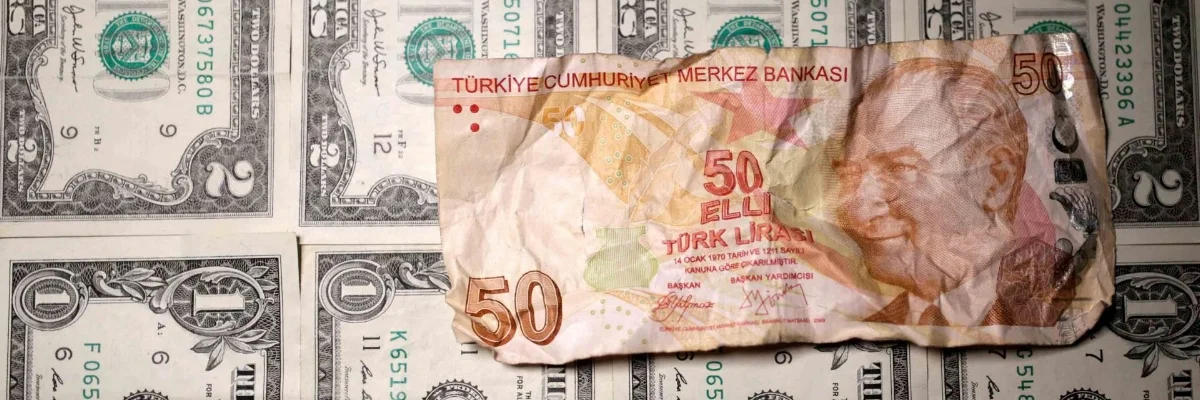
Turkey Detains Over 200 for 'Illicit Money Transfers' to US
◢ Turkish police detained Tuesday over 200 people in a major nationwide crackdown on illicit money transfers to individuals of Iranian-origin living in the United States. An Istanbul court issued arrest warrants for a total of 417 suspects and have so far rounded up 216 in a nationwide operation carried out in 40 cities, the official Anadolu news agency reported.
Turkish police detained Tuesday over 200 people in a major nationwide crackdown on illicit money transfers to individuals of Iranian-origin living in the United States.
An Istanbul court issued arrest warrants for a total of 417 suspects and have so far rounded up 216 in a nationwide operation carried out in 40 cities, the official Anadolu news agency reported.
The suspects are facing charges including criminal conspiracy and violating measures to prevent terrorism financing, Anadolu said.
There were no further details on who the suspects are.
An investigation found that from the beginning of 2017 some 2.4 billion lira (USD 400 million) had been transferred from Turkey to a total of 28,088 accounts abroad from several banks, it added.
Those conducting the money transfers earned "commissions", Anadolu said, citing the investigation, while the large majority of the recipients of the funds were people of Iranian origin living in the United States.
There were no further details on who these individuals were and if the transfers had an overall aim.
The arrests come as the United States is in the process of reimposing sanctions on Iran after Washington pulled out of a 2015 international deal limiting the nation's nuclear programme, including on Iran's ability to use the international financial system and export oil.
They also come several months after Turkey-US relations hit a rough patch over the detention of a US pastor, with US President Donald Trump making comments that sent the Turkish lira tumbling.
Sanctions busting has also been a source of tension between Washington and Ankara.
US authorities earlier this year convicted Mehmet Hakan Atilla, deputy director general of Turkish lender Halkbank on charges of helping Iran evade US sanctions on billions of dollars of oil proceeds.
In the case, Iranian-Turkish trader Reza Zarrab, who was once close to the Ankara authorities, turned whistleblower and gave evidence accusing the Turkish leadership of being complicit in the scheme.
Turkey depends on foreign suppliers including Iran for its energy needs. The country imports oil and natural gas from Russia as well as from neighboring Iran.
Photo Credit: Depositphoto