
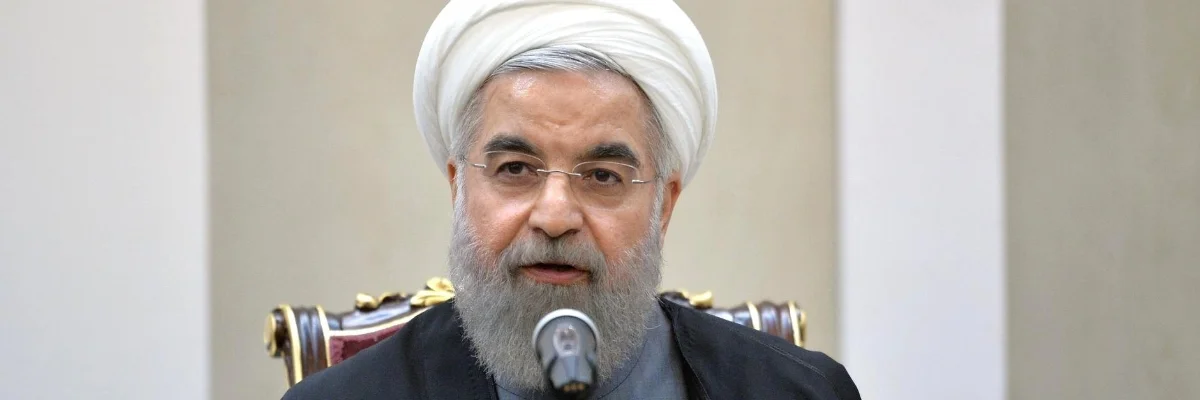
Iran Says To Discuss Response to Trump With Other Parties
◢ Iran said it will hold talks with signatories to a nuclear deal after US President Donald Trump's decision Tuesday to withdraw from the accord, which it branded "psychological warfare.” President Hassan Rouhani also said Iran could resume uranium enrichment "without limit" in response to Trump's announcement.
Iran said it will hold talks with signatories to a nuclear deal after US President Donald Trump's decision Tuesday to withdraw from the accord, which it branded "psychological warfare."
President Hassan Rouhani also said Iran could resume uranium enrichment "without limit" in response to Trump's announcement.
He said he would discuss Iran's response with the other parties to the 2015
deal—Britain, France, Germany, Russia, China and the European Union—before announcing a decision.
Speaking on state television, Rouhani described Trump's decision as "an act of psychological warfare against Iran".
"I have instructed the Iranian Atomic Energy Organisation to take the necessary measures for future actions so that if necessary we can resume industrial enrichment without limit," he said.
"We will wait several weeks before applying this decision. We will speak with our friends and allies, the other members of the nuclear agreement."
Rouhani said Iran had respected all its commitments under the nuclear agreement—as verified by international inspectors.
"We see today which country does not respect its international commitments.
"The only regime that supported the position of Trump is the illegitimate Zionist regime," Rouhani added in reference to Israel.
The Iranian president appeared on the state broadcaster just minutes after Trump announced the historic decision to withdraw the United States from the agreement—a move strongly opposed by the other parties to the deal.
"From this moment, the nuclear deal is between Iran and five countries," Rouhani said. "We must wait to see what the five great countries will do."
He said there would only be a "short period" in which to assess if Iran's interests could still be preserved in concert with the remaining parties to the deal.
"If our interests are not assured, I will speak to the people and inform them of the decisions that have been taken," Rouhani added.
Photo Credit: Wikicommons
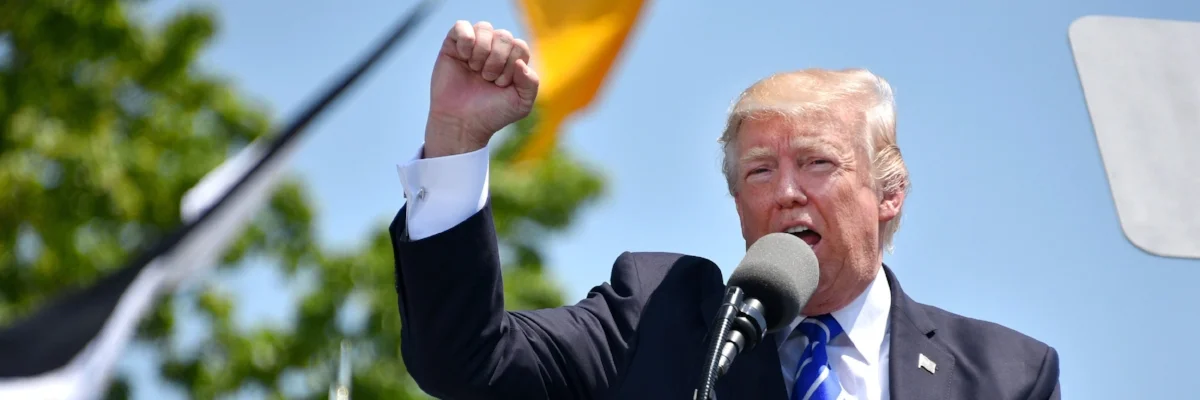
Trump Announces US Withdrawal From 'Defective' Iran Deal
◢ President Donald Trump on Tuesday announced the US withdrawal from the "defective" multinational nuclear deal with Iran, as Washington moved to reinstate punishing sanctions against the Islamic republic.
President Donald Trump on Tuesday announced the US withdrawal from the "defective" multinational nuclear deal with Iran, as Washington moved to reinstate punishing sanctions against the Islamic republic.
"The Iran deal is defective at its core," Trump said in a televised address from the White House. "I am announcing today that the United States will withdraw from the Iran nuclear deal."
After consulting US "friends" from across the Middle East, Trump said, "it is clear to me that we cannot prevent an Iranian nuclear bomb under the decaying and rotten structure of the current agreement."
"America will not be held hostage to nuclear blackmail," Trump vowed.
"We will not allow American cities to be threatened with destruction and we will not allow a regime that chants 'Death to America' to gain access to the most deadly weapons on Earth."
Following his address, the US leader signed a presidential memorandum to start reinstating US nuclear sanctions on the Iranian regime.
"We will be instituting the highest level of economic sanction," Trump said. "Any nation that helps Iran in its quest for nuclear weapons could also be strongly sanctioned by the United States."
National Security Advisor John Bolton told reporters after Trump's speech that the US sanctions would apply to new contracts "immediately," and that foreign firms would have months to wind down existing operations in Iran.
Describing Iran as the world's leading state sponsor of terror, and decrying its influence in the Middle East, Trump said the United States intended to work with its allies to "find a real, comprehensive, and lasting solution to the Iranian nuclear threat."
Such a solution, he said, would include efforts to eliminate the threat from Iran's ballistic missile program, stop its "terrorist activities" worldwide, and block its "menacing" activity across the region.
In the meantime, Trump warned, "if the regime continues its nuclear aspirations, it will have bigger problems than it has ever had."
Trump had long pledged to tear up the "very badly negotiated" agreement—which his predecessor Barack Obama agreed with Britain, China, France, Germany and Russia—daring Tehran's regime to restart its enrichment program and alleged quest for a nuclear weapon.
The US leader had until May 12 to decide whether to continue to waive sanctions on Iran's central bank and its oil sector dealings, a key pillar of the 2015 agreement.
For months, critics have warned that ending the waivers would unravel the carefully constructed deal, plunge Iran's already struggling economy into crisis and expose the biggest transatlantic rift since the Iraq War.
Photo Credit: Defense.gov
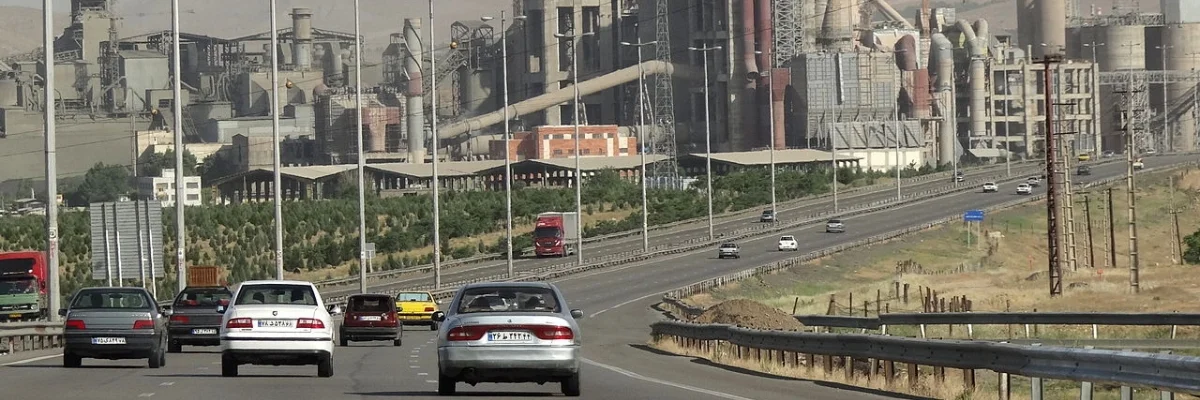
Iran Economy a Mess Even Before Trump Verdict
◢ Renewed nuclear sanctions would certainly cause severe problems for Iran's economy, but much of the damage has already been done by the uncertainty created by the US and myriad home-grown problems. It was awkward timing for the annual International Oil Show in Tehran this week, which opened just two days before US President Donald Trump was due to make his decision on the Iran deal.
Renewed nuclear sanctions would certainly cause severe problems for Iran's economy, but much of the damage has already been done by the uncertainty created by the US and myriad home-grown problems.
It was awkward timing for the annual International Oil Show in Tehran this week, which opened just two days before US President Donald Trump was due to make his decision on whether to rip up the 2015 nuclear deal and reimpose sanctions on Iran.
"The atmosphere was grim," said a European consultant who attended the conference on Monday.
"There were fewer foreigners, the stands were smaller, it was depressing."
Organizers admitted that foreign guests were down by a third compared to last year, according to the Hamshahri newspaper.
The only major oil deal that Iran has landed since the nuclear deal was a USD 5 billion exploration agreement with France's Total and China's CNPC last year, but its future hangs in the balance as executives wait to see what Trump will do.
Foreign banks remain terrified of touching any transaction even cursorily linked to Iran, even after they have been encouraged by their respective governments to facilitate trade and investment.
"We went to the French ministry of economy and they gave us a list of all the banks that would agree to work with Iran. But when we called them, every single one said no," said French entrepreneur Amaury de la Serre when he opened a branch of the high-end Sushi Shop restaurant in Tehran last summer.
Investment Halted
Iran has piled up promises of investment with foreign firms, but many have held back on actually moving money into the country while they wait to see if US sanctions will return.
The World Bank says only $3.4 billion actually showed up in 2016—a far cry from the $50 billion Rouhani said he was targeting in the deal's first year.
The nuclear deal has been "a genuine disappointment", said Ardavan Amir-Aslani, an international lawyer with an office in Tehran who has written several books on the region.
"They're able to sell oil, OK, that's just enough to pay civil servants and maintain infrastructure, but it hasn't attracted even a fraction of the investment needed," he said.
"Our business has reduced to a trickle. All foreign investment has come to a halt. The meagre amounts promised have been put on hold."
Meanwhile, Iranians are scrambling for the lifeboats. One wealthy family said they had moved their entire fortune out of the country this week ahead of the Trump decision.
They had already lost millions thanks to the crashing Iranian rial which has lost a third or more of its value against the dollar this year.
The numbers are hard to verify but analysts and officials have said between USD 10 billion and USD 30 billion has left the country in recent months.
Home-Grown Problems
Iranian officials say all this amounts to a flagrant violation of article 29 of the nuclear deal, which committed the US to ensure "the normalization of trade and economic relations with Iran".
The US counters that it never promised to lift non-nuclear sanctions related to issues such as human rights and Iran's missile program, which were already complicating trade before Trump came to power.
And many of Iran's problems have nothing to do with Trump. Iran's private sector is starved of investment, its banking system is crippled by bad loans, and record levels of unemployment mean a third of under-30s are out of work.
President Hassan Rouhani has tried to foster transparency and investment, but protests in December and January revealed the depth of anger at his limited progress.
"Much of the blame for Iran's lacklustre performance belongs to Rouhani's economic team, which has proved no match for the economy's mounting problems," Djavad Salehi-Isfahani, an economics professor at Virginia Tech in the US who specializes in the Iranian economy, wrote in an article for Project Syndicate.
He said Rouhani's efforts to move Iran towards a market-friendly, world-facing economy were now at risk of coming "to a grinding halt", to be replaced by his conservative opponents' preference for a tightly-controlled, inwardly-focused "resistance economy".
"The conservatives are not willing to negotiate on the missile issue or acknowledge their presence in other Middle Eastern countries so even if Trump stays in, there will just be four more months of negotiations with the Europeans that will lead nowhere," said Amir-Aslani.
"Inflation is ramping up, job creation is declining. At the end of the day it's an economic debacle."
Photo Credit: Wikicommons
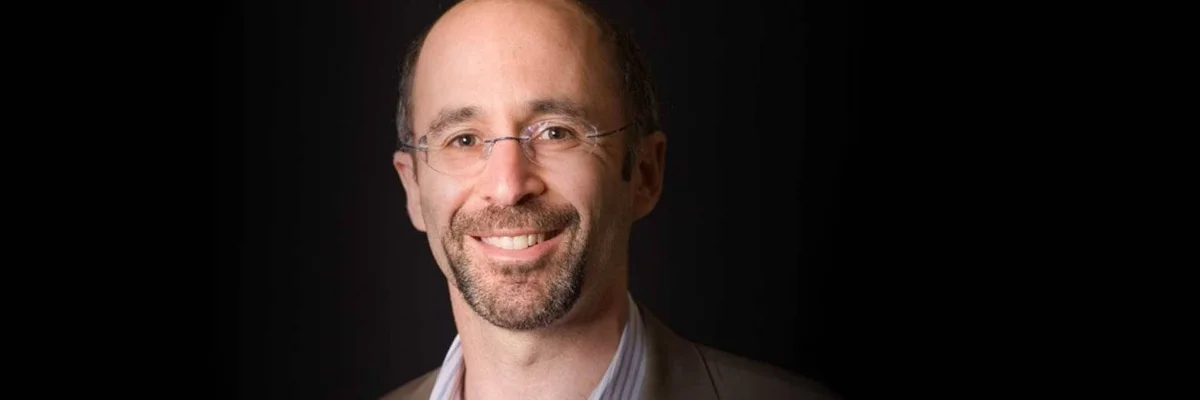
Fate of Iran Deal Now in Europe's Hands: Obama Advisor
◢ Rob Malley, the conflict resolution specialist and former adviser to Barack Obama who helped negotiate the Iran nuclear accord, has no doubt that Donald Trump will now try to kill it. The US president is expected to announce on Tuesday that he will re-impose economic sanctions on Tehran—effectively pulling the US out—but that does not mean the deal is dead and buried.
Rob Malley, the conflict resolution specialist and former advisor to Barack Obama who helped negotiate the Iran nuclear accord, has no doubt that Donald Trump will now try to kill it.
The US president is expected to announce on Tuesday that he will re-impose economic sanctions on Tehran—effectively pulling the US out—but that does not mean the deal is dead and buried.
Malley, now the head of the International Crisis Group peace-building think tank, said in an interview that the 2015 agreement's original European backers must try to keep Tehran inside the deal.
Through his constant attacks on the "terrible" agreement, Trump has shifted the narrative away from the prior international consensus that the deal has successfully curtailed Iran's nuclear ambitions.
But Malley, who served on Obama's White House National Security Council, holds out hope that fellow deal signatories Britain, France and Germany can work with Tehran to keep the agreement alive.
And the agreement, he argued, remains critical to preventing Iran from resuming its alleged search for a nuclear weapon.
"This is the most comprehensive verification regime ever negotiated by a country other than one that's been defeated in war," Malley said in Washington on the eve of Trump's decision.
"If they do try to cheat, there are so many tripwires to know when they're cheating, where they're cheating... it would be discovered."
President Emmanuel Macron of France, Chancellor Angela Merkel of Germany and British Prime Minister Theresa May have sought to "mollify" Trump by offering to negotiate tougher anti-Iran measures.
But they remained determined the Iran deal implementation mechanism—the Joint Comprehensive Plan of Action (JCPOA) -- must remain in place, even if a supplemental agreement is found.
Trump now seems unlikely to renew the US sanctions waivers that Obama announced as the US commitment under the JCPOA, but it is unclear whether Iran will seize on this to renew its nuclear program.
If Europe is willing to impose tougher penalties on Iran's ballistic missile program and regional military adventurism, Malley said, it is only because they want to preserve the underlying nuclear deal.
"It is a slight inflection, I won't deny that," he added. "And frankly, I think if what Trump wants is to be able to claim victory he could do that."
Perpetual Uncertainty
"He could say 'without me, Europe never would have cared so much about Iran's ballistic missiles program, never would have cared so much about its regional behavior.'"
Malley said Trump is bent on undoing whatever foreign policy legacy Obama has, and fails to understand that pressure without compromise will not curtail Iran's other provocations.
"Either Trump will walk away from the deal or he will stick with the deal for another period and say I'm going to postpone my decision. I'm going to wait for the Europeans to fix it," Malley predicted.
"That's going to perpetuate all the uncertainty that currently surrounds the deal. That's going to make it very unlikely for businesses to invest in Iran."
"It's clear that the US is in the mode of killing the deal." Malley's International Crisis Group, therefore, has been urging the Europeans to shift their attention from Trump and to work instead on convincing an angry Tehran not to break its end of the bargain.
"It's going to be a very tough endeavor," he said. "What we try to do... is to say here are steps that the European can take mitigate the harm of the reimposition of US sanctions."
Smaller EU businesses that do not have investments in the United States that could be exposed to renewed US sanctions, could work together to do business with Iran, he suggested.
Economic Dividends
"It's not easy but that's the effort the Europeans need to be engaged in and Iranians too," Malley said.
Such trade, he added, could show "why preserving this deal is better for Europe and it's better for Iran even if the economic dividends of the deal that Iran expected to get they're not going to see now."
And he has a message for the Iranians: "Isn't it better to have some kind of continued commercial and trade relations with Europe and have the US being isolated, than have you isolated and have the Europeans and the Americans on your case?
"Because the truth is if tomorrow the US reimposes the sanctions and the Iranian response is 'We're leaving the deal too,' Europe won't have the choice," Malley warned.
"They may blame president Trump (but) they will reimpose sanctions on Iran if Iran resumes its nuclear program."
Photo Credit: APB
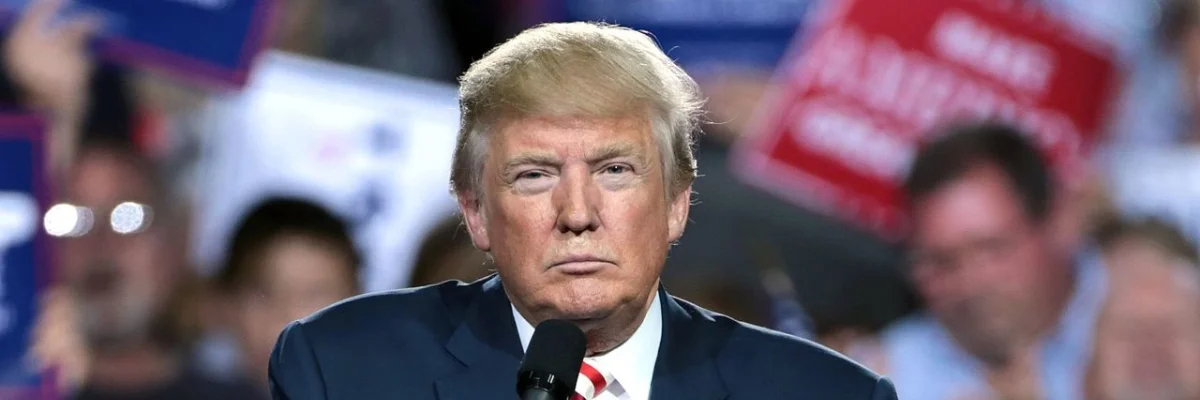
Trump Set to Announce Iran Sanctions Move That May Kill Nuclear Deal
◢ President Donald Trump will confirm on Tuesday whether he will make good on a threat to re-impose US sanctions on Tehran and thereby throw the entire Iran nuclear deal into question. Trump's announcement that a decision was imminent cut short a last-ditch European diplomatic drive to save the accord ahead of what had been a May 12 deadline.
President Donald Trump will confirm on Tuesday whether he will make good on a threat to re-impose US sanctions on Tehran and thereby throw the entire Iran nuclear deal into question.
Trump's announcement that a decision was imminent cut short a last-ditch European diplomatic drive to save the accord ahead of what had been a May 12 deadline.
Trump had until Saturday to decide whether to renew a waiver on one package of US sanctions targeting Iran's oil sector that had been lifted as part of Washington's commitment under the 2015 deal.
"I will be announcing my decision on the Iran Deal tomorrow from the White House at 2:00 pm (1800 GMT)," the president said in a tweet. The president may now also decide to announce the fate of the rest of Washington's nuclear-related sanctions, which are covered by different waivers, and effectively undermine the entire accord, reached between Tehran and six world powers.
European leaders and diplomats—including Britain's Foreign Secretary Boris Johnson, who was in Washington on Monday—have been pleading with the United States to retain the core of what Trump called the "flawed" accord.
Mixed Signals
And even if, as now seems inevitable, Trump pulls Washington out of the agreement, Britain, France, Germany, Russia and China may decide to stay in and to urge Tehran to maintain its own commitments.
But if Trump's decision raises the prospect of renewed US sanctions on European firms and banks doing business with Iran, the accord itself will be in peril—amid mixed signals from Tehran.
Some Iranian leaders have signaled they might seek to rapidly restore the enrichment capabilities they surrendered under the deal, and European capitals fear Tehran may resume the hunt for a bomb.
Tehran has long insisted it has no ambition to build nuclear weapons, but the signatories to the deal never believed them, and supporters of the accord have warned of a Middle East arms race if it fails.
And they are skeptical that Trump's administration has a back-up plan to restrain Iranian ambitions once he has made good on his campaign promise to tear up a deal endorsed by his predecessor Barack Obama.
Britain's Johnson, who was in Washington to lobby Secretary of State Mike Pompeo and Vice President Mike Pence, told Fox News: "Plan B does not seem to be, to me, particularly well-developed at this stage."
Given the multinational nature of the deal, nothing the so-called EU three—Britain, France and Germany—can do would allow them to rewrite it, but they have promised to work on a powerful supplemental agreement.
US diplomats have been working furiously with their partners in the three countries to make this a reality, with measures to limit Iran's ballistic missile program and regional subversion.
But so far, all signs point to Trump making good on his threat.
German Foreign Minister Heiko Maas warned the accord's collapse could spark "an escalation" in the region and stressed that Washington's European allies think the deal "makes the world a safer place."
His French counterpart Jean-Yves Le Drian, on a visit to Berlin, said the agreement is "the right way to stop Iran from getting access to nuclear weapons" and "will save us from nuclear proliferation."
Sunset Clauses
Under the landmark nuclear pact, Iran agreed to scale back nuclear enrichment and put its program under international supervision in return for international sanctions relief.
Trump has consistently complained about the agreement, reached under Obama, citing as its shortcomings certain clauses such as the "sunset" provisions lifting some nuclear restrictions on Tehran from 2025.
In an attempt to salvage the deal, French President Emmanuel Macron has pushed to extend its scope to address this issue, as well as Iran's missile capabilities and its role in the region.
Iran's support for Syrian President Bashar al-Assad, the Lebanese armed group Hezbollah in Syria's civil war and Shiite Houthi rebels in Yemen have added to tension between Tehran and Western powers.
Iran's President Hassan Rouhani on Sunday issued a strong warning to the United States not to quit the pact.
"If the United States leaves the nuclear agreement, you will soon see that they will regret it like never before in history," Rouhani said.
He also vehemently reiterated his country's opposition to curtailing its non-nuclear missile capabilities, insisting Tehran "will build as many missiles and weapons as needed."
Photo Credit: Wikicommons

Iran Warns US It Would Regret Quitting Nuclear Deal
◢ Iranian President Hassan Rouhani warned that if the United States quits the nuclear deal then Washington will regret it "like never before", as British Foreign Secretary Boris Johnson scrambles to save the agreement during talks with the Trump administration Monday.
Iranian President Hassan Rouhani warned that if the United States quits the nuclear deal then Washington will regret it "like never before", as British Foreign Secretary Boris Johnson scrambles to save the agreement during talks with the Trump administration Monday.
US President Donald Trump has threatened to withdraw from the agreement when it comes up for renewal on May 12, demanding his country's European allies "fix the terrible flaws" or he will re-impose sanctions.
"If the United States leaves the nuclear agreement, you will soon see that they will regret it like never before in history," reformist Rouhani said in a televised speech in northwestern Iran.
"Trump must know that our people are united, the Zionist regime (Israel) must know that our people are united," Rouhani said.
"Today all (Iran's) political factions, whether they be from the right, the left, the conservatives, reformers and moderates are united," he added.
The nuclear deal was struck in 2015 between Iran and Britain, China, France, Germany, Russia and the United States, then led by Barack Obama.
Under the pact, sanctions were eased in return for a commitment not to pursue a nuclear bomb, but Iran says it is not reaping the rewards despite complying with the deal.
A senior Israeli official said Sunday that Trump had not informed Israel of whether it will withdraw from the agreement.
"In effect, I don't know what Trump will decide because he hasn't told me," the official said on condition of anonymity, making clear Israel had not yet been told of Trump's decision.
Trump has consistently complained about the agreement, citing perceived flaws including "sunset" provisions lifting some nuclear restrictions from 2025.
In an attempt to salvage the deal, French President Emmanuel Macron has recently pushed to extend its scope to address this issue, as well as the absence of any limits on Iran's conventional missile capabilities and Tehran's role in the region.
Britain's Johnson will on Monday begin a two-day visit to Washington, with the nuclear deal among issues on top of the agenda, the Foreign Office said.
He is due to meet US Vice President Mike Pence, National Security Advisor John Bolton and Congressional foreign policy leaders.
He said Britain—which remains committed to the agreement—the United States and Europe were "united in our effort to tackle the kind of Iranian behavior that makes the Middle East region less secure—its cyber activities, its support for groups like Hezbollah, and its dangerous missile program".
Iran's support for Syrian President Bashar al-Assad, via the Lebanese armed group Hezbollah in Syria's civil war, and its backing for Shiite Huthi rebels in Yemen have added to frictions between Tehran and Western powers.
'Honouring our Commitment'
Rouhani vehemently reiterated his country's opposition to curtailing its non-nuclear missile capabilities, in his speech on Sunday.
Tehran "will build as many missiles and weapons as needed" for its defense, he said.
"We are honoring our commitment, but we are telling the whole world we will not negotiate with anyone about our weapons and our defense."
Iran's president also said that while he is open to discussing the
country's regional role, he would not abandon what he described as its fight
"against terrorism."
"We want to talk to the world so that our region is safe" but "we will not allow you to create a new Daesh," he said, using an Arabic term for the Islamic State group.
While Rouhani did not elaborate on this point, Iran's ally the Syrian government has consistently referred to all armed opponents as "terrorists" and accused the West of facilitating terrorism.
Iran has always denied it sought a nuclear weapon, insisting its atomic program was for civilian purposes.
Rouhani did not specify how Iran would react if the US pulls out of the 2015 deal.
But he said he had given "the necessary orders", notably to Iran's Atomic Energy Organisation, in anticipation of Trump's decision.
As the May 12 US decision point nears, Iranian leaders have shuffled between placatory and hawkish comments, although the hardliners have taken a uncompromising stance.
On Thursday Ali Akbar Velayati, the foreign policy adviser to Iran's supreme leader Ayatollah Ali Khamenei, warned Tehran would quit the nuclear deal if the United States withdraws.
Photo Credit: Kremlin
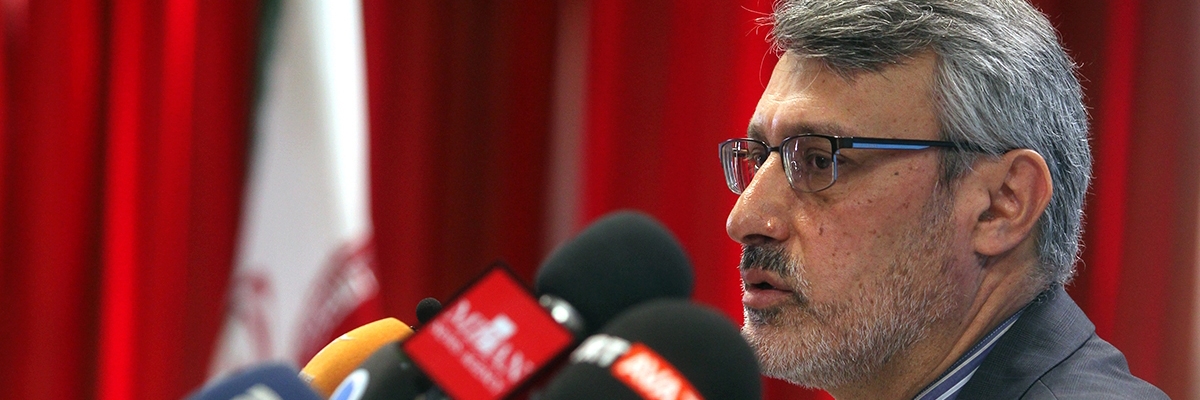
Iran Envoy to UK Warns it May Scrap Nuclear Deal if US Withdraws
◢ Iran's ambassador to Britain said Tehran will consider walking away from the nuclear deal if the United States withdraws from the agreement, in an interview aired Wednesday. Hamid Baeidinejad, the country's top envoy in London, said Iran would "be ready to go back to the previous situation" if America pulls out of the 2015 pact, as threatened by US President Donald Trump.
Iran's ambassador to Britain said Tehran will consider walking away from the nuclear deal if the United States withdraws from the agreement, in an interview aired Wednesday.
Hamid Baeidinejad, the country's top envoy in London, said Iran would "be ready to go back to the previous situation" if America pulls out of the 2015 pact, as threatened by US President Donald Trump.
"When the United States is out of the deal, it means that there is no deal left," he told CNN's Christiane Amanpour.
"Because (an) important party of the treaty has abrogated and violated in clear terms the treaty."
Trump is reportedly poised to scrap the agreement, negotiated in 2015 between Tehran and six world powers, ahead of a May 12 deadline for Washington to renew its support for the deal.
The agreement imposes strict restrictions on Iran's nuclear program in return for the loosening of economic sanctions.
Baeidinejad said Tehran was exploring various responses to such a move from the US—including restarting nuclear activities.
"It could be enriching uranium, it could be redefining our cooperation with the agency and some other activities that are under consideration," he added.
"That is something very real, in fact very realistic." The ambassador denied Iran would restart any nuclear weapons production.
The country has always denied it sought a nuclear weapon, insisting its atomic program was for civilian purposes.
European leaders, including French President Emmanuel Macron, have been pressing Trump to strengthen rather than abandon the three-year-old deal that took more than a decade to reach.
Macron, who met Trump in Washington last week to try to convince him to not walk away, admitted Wednesday he still did not know what decision the US leader would take.
Trump has pilloried the agreement designed to curb Iran's nuclear program as "insane" and "ridiculous" and called for fresh measures to counter Iran's ballistic missile program and support for militant groups across the Middle East.
On Tuesday, Israeli Prime Minister Benjamin Netanyahu said he had new "proof" of an Iranian nuclear weapons plan that could be activated at any time.
Baeidinejad said international observers' final assessment ahead of the 2015 agreement contradicted Israel's claims.
Photo Credit: Mehr

Israel Claims 'Underline Importance' of Iran Nuclear Deal: UK
◢ Israeli Prime Minister Benjamin Netanyahu's presentation on Iran's nuclear program "underlines the importance" of the controls imposed on Tehran in the 2015 deal, British Foreign Secretary Boris Johnson said Tuesday.
Israeli Prime Minister Benjamin Netanyahu's presentation on Iran's nuclear program "underlines the importance" of the controls imposed on Tehran in the 2015 deal, British Foreign Secretary Boris Johnson said Tuesday.
"The Israeli prime minister's presentation on Iran's past research into nuclear weapons technology underlines the importance of keeping the Iran nuclear deal's constraints on Tehran's nuclear ambitions," Johnson said in a Foreign Office statement.
With US President Donald Trump weighing up whether to stay in the deal, Johnson insisted that the agreement was not "based on trust about Iran's intentions"—the core of Netanyahu's claims—"rather it is based on tough verification" by the International Atomic Energy Agency.
"The fact that Iran conducted sensitive research in secret until 2003 shows why we need the intrusive inspections allowed by the Iran nuclear deal today," added Johnson.
The 2015 deal negotiated between Iran and six world powers, including Britain, imposes nuclear inspections on Iran in return for the loosening of economic sanctions, but Trump is threatening to pull out.
Johnson insisted that the verification provisions in the deal "would make it harder for Iran to restart any such research."
"That is another good reason for keeping the deal while building on it in order to take account of the legitimate concerns of the US and our other allies," he added.
The Israeli premier has repeatedly called for the deal to be either altered or scrapped, but did not present evidence on Monday that Iran had actively worked to obtain an atomic weapon since the deal was struck.
Photo Credit: Wikicommons
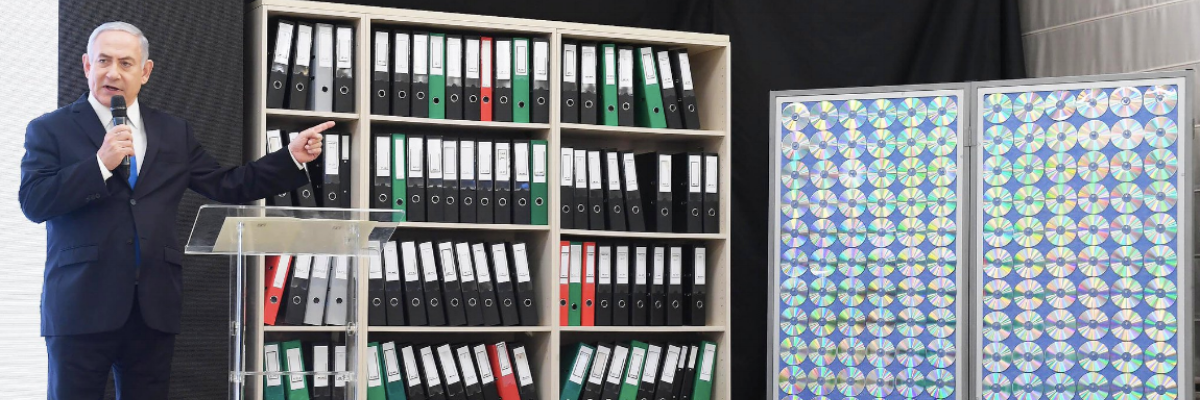
Netanyahu's Iran Nuke Claims Fail to Convince Deal Proponents
◢ Israel began sharing an intelligence trove on Iran's alleged nuclear ambitions Tuesday, but Prime Minister Benjamin Netanyahu faced accusations his televised unveiling of it lacked evidence a 2015 accord had been violated. The presentation that included props, video and slides immediately led to accusations from some that the White House and Netanyahu coordinated it as Trump considers whether to pull out of the nuclear deal he has harshly criticized.
Israel began sharing an intelligence trove on Iran's alleged nuclear ambitions Tuesday, but Prime Minister Benjamin Netanyahu faced accusations his televised unveiling of it lacked evidence a 2015 accord had been violated.
The IAEA, the United Nations atomic watchdog, said it would evaluate any new relevant information, but cited its assessment from three years ago that it had no "credible indications" of an Iranian nuclear weapons pursuit after 2009.
Netanyahu's elaborate presentation live on television Monday night came ahead of a crucial decision by US President Donald Trump by May 12 on whether to withdraw from the nuclear agreement between world powers and Iran.
The Israeli premier said tens of thousands of documents recently recovered by intelligence operatives in Tehran proved his country's main enemy Iran had a secret nuclear weapons program it could put into action at any time.
But the presentation that included props, video and slides immediately led to accusations from some that the White House and Netanyahu coordinated it as Trump considers whether to pull out of the nuclear deal he has harshly criticized.
Some analysts and proponents of the nuclear agreement also said Netanyahu had presented previously known details and failed to produce evidence that showed Iran was not abiding by the accord.
"I have not seen from Prime Minister Netanyahu arguments for the moment on non-compliance, meaning violation by Iran of its nuclear commitments under the deal," European Union diplomatic chief Federica Mogherini said.
"And again, the deal was put in place exactly because there was no trust between the parties, otherwise we would not have required a nuclear deal to be put in place."
France's foreign ministry said Tuesday Netanyahu's claims reinforced the importance of the nuclear deal.
'Infamous Liar'
Iran lashed out at Netanyahu, with foreign ministry spokesman Bahram Ghasemi on Tuesday calling him an "infamous liar."
Iranian Foreign Minister Mohammad Javad Zarif said immediately after the presentation that Netanyahu was "the boy who cries wolf."
Trump however welcomed Netanyahu's presentation, as did his Secretary of State Mike Pompeo, who met with the Israeli leader on Sunday in Tel Aviv.
The White House caused some confusion with its statement on the Israeli trove, at first saying it showed Iran "has" a secret nuclear weapons program before later changing it to "had".
"These facts are consistent with what the United States has long known: Iran had a robust, clandestine nuclear weapons program that it has tried and failed to hide from the world and from its own people," the statement said.
"The Iranian regime has shown it will use destructive weapons against its neighbors and others. Iran must never have nuclear weapons."
Trump and his Middle East allies, particularly Israel, argue that the agreement approved by Barack Obama was too weak and needs to be replaced with a more permanent arrangement and supplemented by controls on Iran's missile program.
The Israeli premier has repeatedly called for the accord—which Iran signed with Britain, China, France, Germany, Russia and the United States—to either be altered or scrapped.
In Monday night's presentation, Netanyahu accused Iran of lying about its nuclear ambitions, saying Israel had recently obtained tens of thousands of files in a "great intelligence achievement."
Iran has always denied it sought a nuclear weapon, insisting its atomic program was for civilian purposes.
Netanyahu said the files had been moved to a secret compound in Tehran in 2017 that looked dilapidated from the outside.
'Half a Tonne'
The material obtained weighed a half a tonne, he said, speaking in English in the staged presentation in front of a bookcase laden with binders he said held copies of original documents and cases of CDs.
He detailed an alleged program—"Project Amad"—that he said Iran was forced to shelve in 2003, but kept ready to put into action at any time while improving its "know-how".
He alleged the 2015 nuclear deal was "based on Iranian lies and Iranian deception."
"Even after the deal, Iran continued to preserve and expand its nuclear weapons know-how for future use," Netanyahu added.
Pompeo, until last week director of the CIA, called the intelligence trove authentic and said much of it was new to US experts.
But others argued it failed to show the nuclear accord was a "terrible deal," as Netanyahu called it, with some saying his presentation in fact furthered the case for the agreement.
"The information in the documents Netanyahu revealed is not new," Dan Shapiro, US ambassador to Israel under Obama, said on Twitter, echoing the reactions of many other proponents of the deal.
But he added that Netanyahu's presentation will be "useful to Trump when he announces he is leaving the deal by May 12. I believe he has already made that decision. This presentation, coordinated with his team, will be cited as evidence to justify it."
Photo Credit: Israeli PM
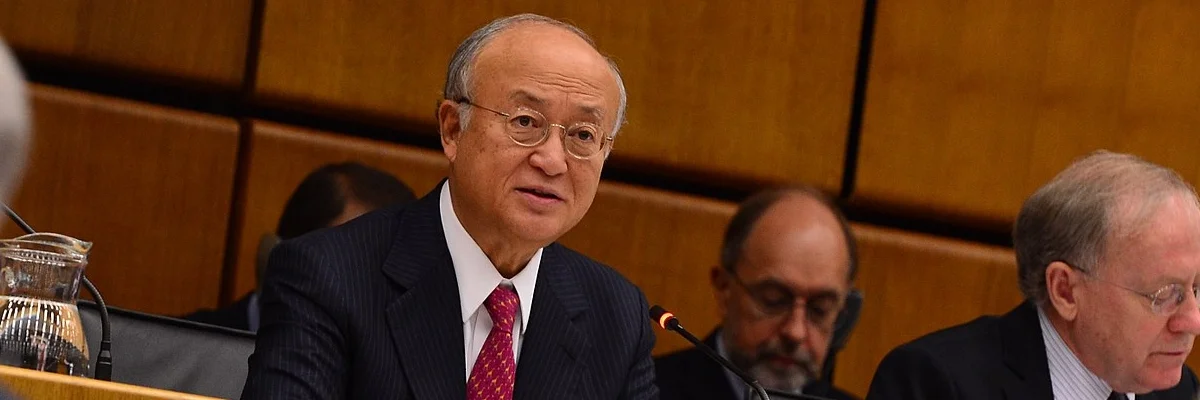
'No Credible Indications' of Iran Nuclear Weapons Program After 2009: IAEA
◢ The UN's nuclear watchdog reiterated Tuesday it had "no credible indications of activities in Iran relevant to the development of a nuclear explosive device after 2009", citing its assessments from 2015. The statement came a day after Israeli Prime Minister Benjamin Netanyahu unveiled what he said was new "proof" that Iran's nuclear weapons program could be reactivated at any time.
The UN's nuclear watchdog reiterated Tuesday it had "no credible indications of activities in Iran relevant to the development of a nuclear explosive device after 2009", citing its assessments from 2015.
A spokesman for the International Atomic Energy Agency (IAEA) said in a statement that its board of governors had "declared that its consideration of this issue was closed" after it was presented with a report in December 2015.
The statement came a day after Israeli Prime Minister Benjamin Netanyahu unveiled what he said was new "proof" that Iran's nuclear weapons program could be reactivated at any time.
Without referring to Netanyahu's claims directly, the IAEA spokesman said the agency "evaluates all safeguards-relevant information available to it".
"However, it is not the practice of the IAEA to publicly discuss issues related to any such information," he added.
Netanyahu said on Monday that he would share the material with other countries and with the IAEA.
In the statement the IAEA pointed to its previous findings relating to Iran's activities before 2009.
"Before the end of 2003, an organizational structure was in place in Iran suitable for the coordination of a range of activities relevant to the development of a nuclear explosive device," the statement says.
"Although some activities took place after 2003, they were not part of a coordinated effort," it said, adding that "these activities did not advance beyond feasibility and scientific studies, and the acquisition of certain relevant technical competences and capabilities."
Netanyahu's presentation came as US President Donald Trump considers whether to pull out of the 2015 atomic accord between Tehran and six world powers.
Under the JCPOA (Joint Comprehensive Plan of Action)—signed by Iran, the US, Britain, China, France, Germany and Russia—Tehran agreed to curbs on its nuclear program in exchange for the lifting of crippling economic sanctions.
The US could withdraw from the deal completely on May 12—the next deadline for waiving Iranian sanctions.
Photo Credit: Wikicommons

France says Iran Nuclear Deal Strengthened by Netanyahu Claims
◢ France said Tuesday that new claims about Iran's nuclear program presented by Israeli Prime Minister Benjamin Netanyahu reinforced the importance of a 2015 deal that imposes controls on the Islamic republic.
France said Tuesday that new claims about Iran's nuclear program presented by Israeli Prime Minister Benjamin Netanyahu reinforced the importance of a 2015 deal that imposes controls on the Islamic republic.
In an elaborate televised presentation on Monday, the hawkish Israeli leader claimed he had new "proof" via captured documents that Iran had developed a nuclear weapons plan which could be activated at any time.
The French foreign ministry said the details needed to be "studied and evaluated" but a spokesperson added that the evidence appeared to confirm what European powers had known for more than a decade and half.
"At first sight, they (the details) confirm that part of the Iranian nuclear program, as France and its partners stated during the first revelations in the summer of 2002, was not civilian," said the spokesperson in a statement received by AFP.
The 2015 nuclear deal negotiated between Iran and six world powers imposes nuclear inspections on Iran in return for the loosening of economic sanctions, but US President Donald Trump is threatening to pull out.
"The pertinence of the deal is reinforced by the details presented by Israel: all activity linked to the development of a nuclear weapon is permanently forbidden by the deal," said the foreign ministry spokesperson.
"The inspection regime put in place by the (UN nuclear watchdog) IAEA thanks to the deal is one of the most exhaustive and the most robust in the history of nuclear non-proliferation," the statement added.
French President Emmanuel Macron has urged Trump to stick with the nuclear accord, arguing that it presents the only viable option available to the international community.
Besides agreeing to snap inspections Iran also cut the number of centrifuges used for enriching uranium and reduced its stockpiles of the material.
The Israeli premier has repeatedly called for the deal—which Iran signed with Britain, China, France, Germany, Russia and the United States—to be either altered or scrapped.
Netanyahu did not present evidence on Monday that Iran had actively worked to obtain an atomic weapon since the 2015 agreement and the International Atomic Energy Agency (IAEA) considers the country to be complying. Trump is set to make announcement on May 12.
Photo Credit: Wikicommons
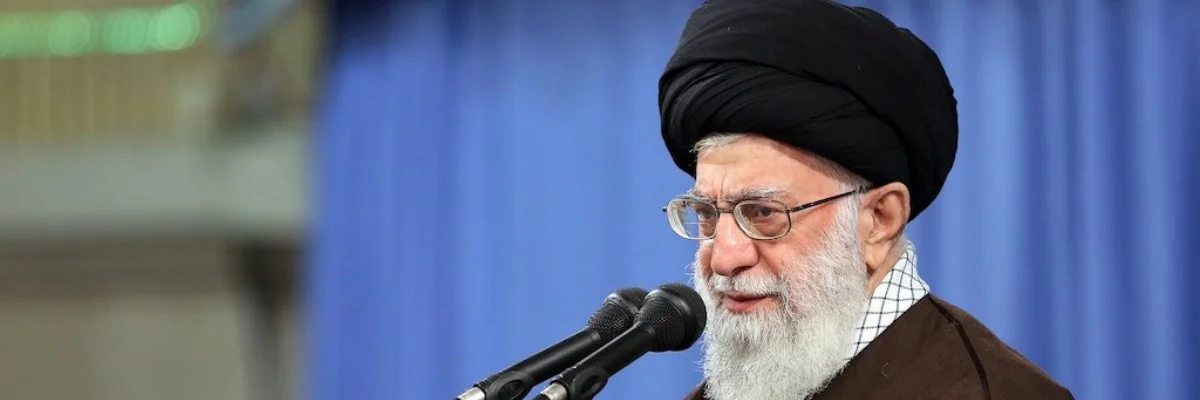
Iran Leader Keen to Boost Ties With World, 'Not Merely' US and Europe
◢ Supreme leader Ayatollah Ali Khamenei said on Monday that Iran is keen to develop ties with the rest of the world, which is "not merely" the United States and European countries. The powerful leader's remarks, published on the khamenei.ir website, come with the United States threatening to quit a landmark 2015 nuclear deal with the Islamic republic.
Supreme leader Ayatollah Ali Khamenei said on Monday that Iran is keen to develop ties with the rest of the world, which is "not merely" the United States and European countries.
The powerful leader's remarks, published on the khamenei.ir website, come with the United States threatening to quit a landmark 2015 nuclear deal with the Islamic republic.
"I don't believe in cutting ties with the world but relying on the outside of the borders is a mistake within a mistake," Khamenei was quoted as saying.
"We must certainly be wise, smart and resolute in our relations with the world, but we should also know that the world is not merely America and several European countries.
"The world is big and (we) must have relations with different countries," he added, according to extracts of a speech he gave in Tehran published on his website.
Khamenei is also quoted as blasting the US Treasury Department, denouncing it as an "economic war chamber against the system of the Islamic republic."
Since taking office in January 2017, US President Donald Trump has adopted a tough stance against Iran and repeatedly denounced the landmark nuclear deal which Tehran reached with world powers to curb its nuclear program.
Trump has said the deal—which Iran signed with Britain, France, China, Russia, the United States and Germany—must be "fixed" by May 12 or Washington will walk away.
Most world powers however say the nuclear deal is working as intended for now and is the best way to keep Iran from acquiring the bomb.
During Sunday's speech, Khamenei also accused the United States of waging an "economic and cultural war" against Iran, according to his website.
Photo Credit: Khamenei.ir
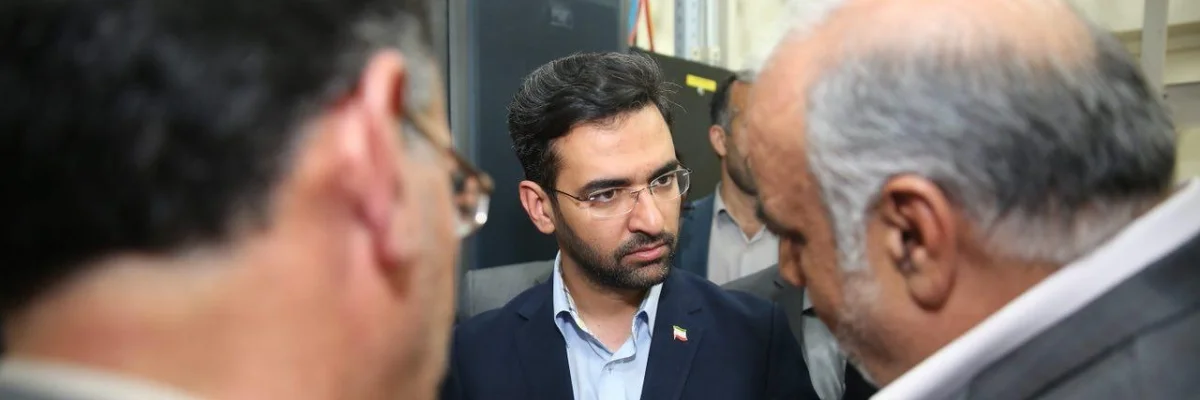
Iran Minister Says 'Impossible' to Block Information by Banning Apps
◢ Iran's telecoms minister said Tuesday it was "impossible to block citizen's access to information", a day after the conservative-dominated judiciary banned the hugely popular Telegram messaging app. The move follows a presidential directive banning all government workers from using foreign messenger apps to communicate.
Iran's telecoms minister said Tuesday it was "impossible to block citizen's access to information", a day after the conservative-dominated judiciary banned the hugely popular Telegram messaging app.
Mohammad Javad Azari Jahromi's comments on Twitter highlighted differences of opinion between the government of reformist President Hassan Rouhani and ultra-conservatives who control the judiciary and security services.
"Even if we ban the use of software, other software will be found and information will start to circulate freely again," Jahromi wrote. "Technology is not intrinsically guilty, corrupt, or deviant," he added.
"It is human beings who misuse it to promote crime and corruption in the virtual world, just as they do in real life."
A Tehran judge on Monday ordered the blocking of Telegram, the judiciary's Mizan Online news agency said, following accusations that the app has allowed armed opposition groups to fuel unrest.
The move follows a presidential directive banning all government workers from using foreign messenger apps to communicate.
Built by Russian tech guru Pavel Durov, Telegram is the most popular social network in Iran with some 40 million users—roughly half the population.
During a wave of protests that hit dozens of Iranian cities early this year, authorities temporarily banned the app, saying it enabled foreign-based "counter-revolutionary" groups to stir tensions.
Since then, authorities have sought to develop Iranian social media networks and limit reliance on foreign-based platforms, which Tehran accuses of hosting sites hostile to the Islamic Republic.
The ban adds Telegram to the list of social networks blocked in the Islamic Republic but accessible via virtual private network (VPN) software which can circumvent internet blackouts—something the judiciary wants to prevent in the case of the messaging app.
Monday's announcement was followed by rumors Jahromi had resigned, but the semi-official ISNA news agency denied that.
"On the question of filtering (social networks), we said and repeated that this is not the only solution," it cited him as saying. "The competent authorities heard our arguments and made their decision."
Photo Credit: IRNA

Iran Bans Use of Popular Telegram Messaging App
◢ Iran's judiciary on Monday banned the hugely popular Telegram messaging app, which the authorities have accused of allowing armed opposition groups to fuel unrest. A judge in Tehran gave "the order to interrupt Telegram,” the judiciary's Mizan Online news agency said.
Iran's judiciary on Monday banned the hugely popular Telegram messaging app, which the authorities have accused of allowing armed opposition groups to fuel unrest.
A judge in Tehran gave "the order to interrupt Telegram," the judiciary's Mizan Online news agency said.
The move comes on the heels of a recent presidential directive banning all government workers from using foreign messenger apps to communicate.
Telegram, built by Russian tech guru Pavel Durov, is the most popular social network in Iran with some 40 million users—roughly half the population.
During a wave of protests that hit dozens of Iranian cities over at the start of the year, authorities temporarily banned Telegram, saying the service enabled foreign-based "counter-revolutionary" groups to stir tensions.
Since then, authorities have sought to develop Iranian social media networks and limit the reliance on foreign-based platforms, which Tehran accuses of hosting sites deemed hostile to the Islamic Republic.
Several Iranian platforms offering services similar to Telegram have emerged in recent months, like the Soroush network, which already claims to have five million subscribers.
Iran's supreme leader Ayatollah Ali Khamenei and President Hassan Rouhani both announced in mid-April they would stop using Telegram.
The last message on Khamenei's Telegram channel directed users to accounts on Iranian messaging services, including Soroush and Gap.
The tribunal in Tehran issued its order Monday after receiving complaints against Telegram, accusing it of "inciting rebellion" and allowing "terrorist groups" to threaten national security, Mizan Online reported.
All internet providers and phone operators now have "a duty to completely block access to Telegram," the news agency said, citing the judge's decision
Anyone in breach of the order "will be considered in violation with the judicial order and prosecuted", the news agency said. AFP journalists said Telegram was still working by Monday evening.
Photo Credit: Wikicommons
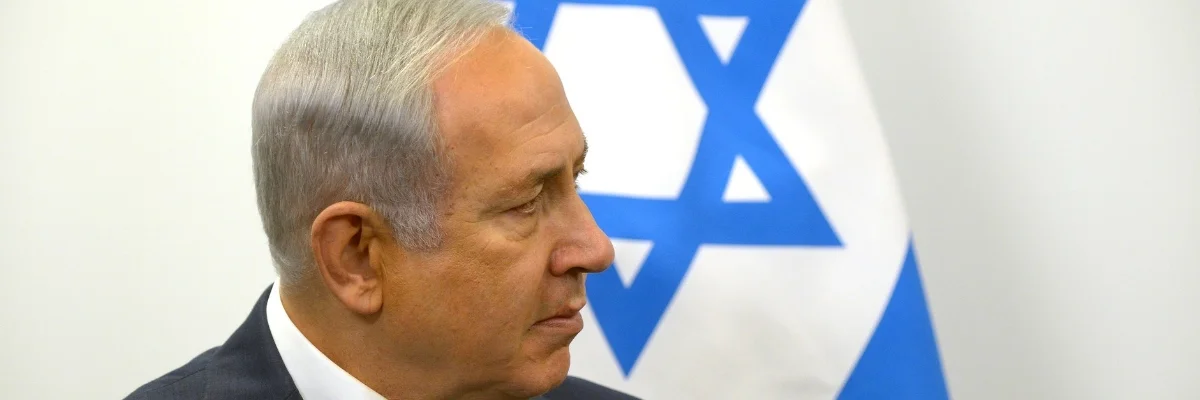
Netanyahu Says Has New 'Proof' of Iran Nuclear Weapons Program
◢ Israeli Prime Minister Benjamin Netanyahu said in a televised address Monday he had new "proof" of an Iranian nuclear weapons plan that could be activated at any time, as the US considers whether to pull out of the atomic accord with Tehran.
Israeli Prime Minister Benjamin Netanyahu said in a televised address Monday he had new "proof" of an Iranian nuclear weapons plan that could be activated at any time, as the US considers whether to pull out of the atomic accord with Tehran.
But while Netanyahu accused Israel's main enemy Iran of lying about its nuclear ambitions, he did not provide evidence that it had actively worked to obtain an atomic weapon since the 2015 agreement between Tehran and six world powers.
Iran has always denied it sought a nuclear weapon, insisting its atomic program was for civilian purposes.
Netanyahu made the comments in an elaborate presentation that included props, video and slides, broadcast live on television from Tel Aviv.
He said Israel had obtained tens of thousands of files "a few weeks ago in a great intelligence achievement," saying they had been moved to a secret compound in Tehran in 2017 that looked dilapidated from the outside.
The material obtained weighed a half a ton, he said. As he spoke, binders that he said held copies of original documents were on shelves behind him, as were cases containing CDs.
"Tonight we're going to reveal new and conclusive proof of the secret nuclear weapons program that Iran has been hiding for years from the international community in its secret atomic archive," Netanyahu said.
"We're going to show you Iran's secret nuclear files." He then laid out what he said was a years-old secret nuclear weapons program stored away and which could be put into action at any time. The details have been shared with the United States and will also be given to other countries and the International Atomic Energy Agency (IAEA), he said.
'Boy Who Cries Wolf'
After Netanyahu's statement was announced but before he spoke, Iranian Foreign Minister Mohammad Javad Zarif already dismissed it. "The boy who can't stop crying wolf is at it again," he wrote on Twitter.
"You can only fool some of the people so many times." Zarif then took to twitter again to lambast both Netanyahu and US President Donald Trump, who has a May 12 deadline to decide on whether or not to walk away from the nuclear deal.
Trump "is jumping on a rehash of old allegations already dealt with by the IAEA to 'nix' the (2015 nuclear) deal", Zarif tweeted.
"How convenient. Coordinated timing of alleged intelligence revelations by the boy who cries wolf just days before May 12," he added.
Trump has derided the nuclear deal with Iran as "insane" partly because its restrictions on Iran's nuclear activities begin expiring in 2025.
Most world powers however say the nuclear deal is working as intended for now and is the best way to keep Iran from acquiring the bomb.
French President Emmanuel Macron and Chancellor Angela Merkel of Germany left Washington last week after talks with Trump which failed to secure any promise to keep the deal alive.
'Dominate the Middle East'
The Israeli premier has repeatedly called for the accord—which Iran signed with Britain, France, China, Russia, the United States and Germany— to either be altered or scrapped.
He says the agreement does not prevent Tehran from eventually obtaining nuclear weapons and says the lifting of sanctions has increased Tehran's ability to finance proxy militants in the Middle East.
Netanyahu also wants to see curbs on Iran's missile program. On Monday, he said the nuclear deal was "based on Iranian lies and Iranian deception."
"Even after the deal, Iran continued to preserve and expand its nuclear weapons know-how for future use," Netanyahu said.
His presentation came after he met visiting US Secretary of State Mike Pompeo on Sunday and spoke with Trump by phone on Saturday. Pompeo reiterated during the visit that Trump will withdraw from the nuclear deal "if we can't fix it."
Trump and his Middle East allies argue the deal, approved by Barack Obama, was too weak and needs to be replaced with a more permanent arrangement and supplemented by controls on Iran's missile program.
Pompeo, a former CIA chief and congressman, also joined Netanyahu in lashing out at Iran on Sunday. "Iran's ambition to dominate the Middle East remains," Pompeo said.
Rob Malley, a former official in Obama's administration, said on Twitter that "for those who have followed the Iranian nuclear file, there is nothing new in (Netanyahu's) presentation".
"All it does is vindicate need for the nuclear deal. But the Israeli prime minister has an audience of one: Trump. And he's unfortunately unlikely to reach the same conclusion."
Israel is considered the Middle East's sole nuclear-armed nation, though it has never acknowledged the capability.
Photo Credit: Kremlin
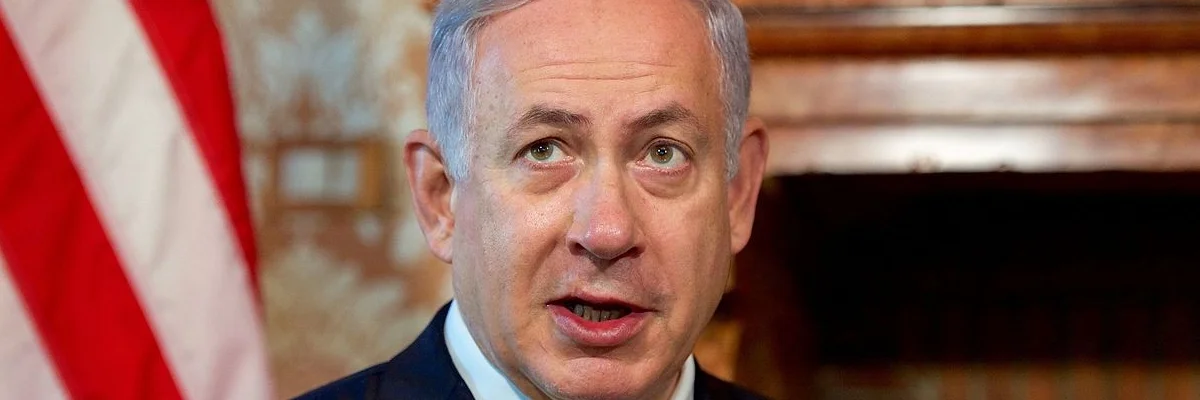
Netanyahu to Speak on 'Significant Development' on Iran Nuclear Deal
◢ Prime Minister Benjamin Netanyahu will speak Monday on a "significant development" on the Iran nuclear deal, his office said, as the White House considers whether to pull out of the landmark accord that Israel opposes.
Prime Minister Benjamin Netanyahu will speak Monday on a "significant development" on the Iran nuclear deal, his office said, as the White House considers whether to pull out of the landmark accord that Israel opposes.
Netanyahu will give the statement at Israel's defence ministry in Tel Aviv at 8:00 pm (1700 GMT). It follows US Secretary of State Mike Pompeo's visit on Sunday and a telephone conversation between Netanyahu and US President Donald Trump on Saturday.
Trump is due to decide on May 12 whether to reimpose sanctions on Tehran, putting in peril the 2015 nuclear accord.
Pompeo has warned that the United States will withdraw from the agreement "if we can't fix it."
The Israeli premier has repeatedly called for the accord between world powers and his country's main enemy to either be altered or scrapped.
He alleges the agreement does not prevent Iran from eventually obtaining nuclear weapons and says the lifting of sanctions has increased Tehran's ability to finance proxy militants in the Middle East.
Most world powers however say the nuclear deal is working as intended for now and is the best way to keep Iran from acquiring the bomb.
Israel is also deeply concerned over Iran's presence in Syria, where it is backing President Bashar al-Assad's regime.
Netanyahu has pledged to stop Iran from entrenching itself militarily in the neighbouring country.
On Monday, a monitor said missile strikes on central Syria killed 26 pro-regime fighters, most of them Iranians, in a raid it said bore the hallmarks of an Israeli operation.
Israeli Intelligence Minister Yisrael Katz told army radio that he was "not aware" of the strikes.
The latest such attacks came amid heightened tensions after Damascus and Tehran accused Israel on April 9 of conducting deadly strikes against a military base in central Syria.
Pompeo joined Netanyahu in lashing out at Iran when the two met in Tel Aviv on Sunday. "Iran's ambition to dominate the Middle East remains," Pompeo said.
Photo Credit: Wikicommons
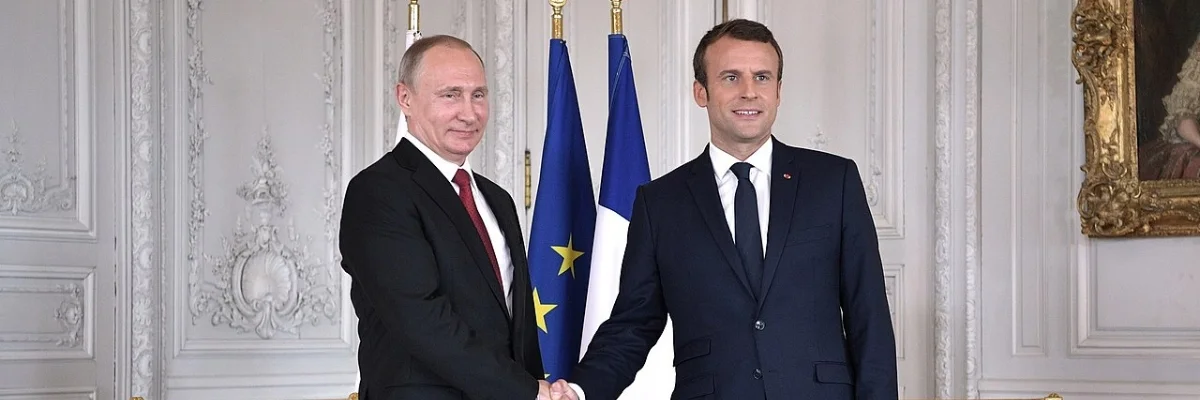
Putin, Macron Urge 'Strict' Observance of Iran Nuclear Accord: Kremlin
◢ Russian President Vladimir Putin and French leader Emmanuel Macron on Monday called for the "strict observance" of the current Iran nuclear accord, with US President Donald Trump still deciding whether to scrap the agreement. The statement was released after Macron called Putin to inform him of his talks with Trump in the United States.
Russian President Vladimir Putin and French leader Emmanuel Macron on Monday called for the "strict observance" of the current Iran nuclear accord, with US President Donald Trump still deciding whether to scrap the agreement.
"The Presidents of Russia and France spoke in favor of keeping the Plan and its strict observance," the Kremlin said, referring to the Joint Comprehensive Plan of Action.
The statement was released after Macron called Putin to inform him of his talks with Trump in the United States.
Trump faces a May 12 deadline to decide on the fate of the Iran nuclear accord and is demanding changes that European capitals believe would represent a legal breach.
On Sunday, US National Security Advisor John Bolton said the mercurial US president had not yet decided whether to scrap the accord.
Macron, who held talks with Trump last week, has positioned himself as an emissary for European officials seeking a compromise that would keep the deal intact.
Macron has earlier proposed an additional deal that extends Iran's nuclear restrictions.
Russia has said that there was "no alternative" to the agreement and that Iran's position was on the issue was paramount.
Iran's President Hassan Rouhani rejected any hopes of rewriting the nuclear deal.
Photo Credit: Wikicommons
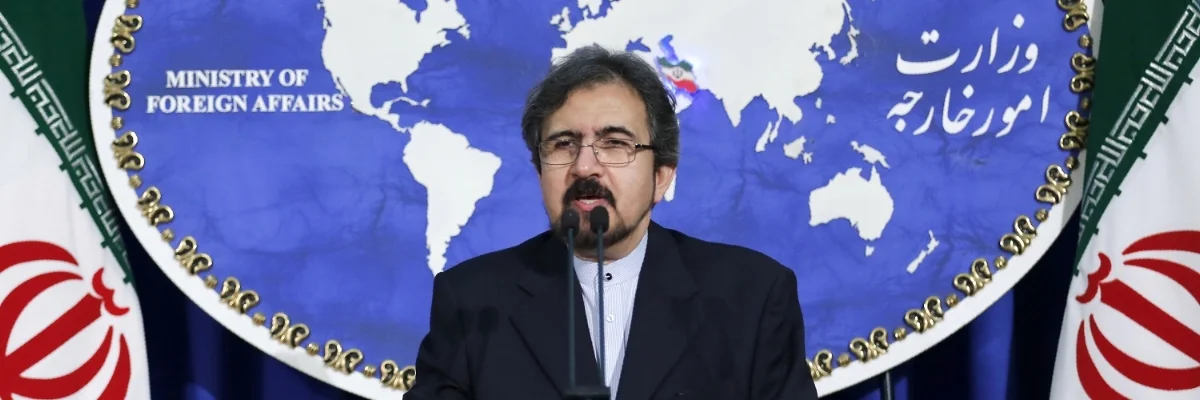
Tehran Dismisses Pompeo's 'Unfounded' Accusations
◢ Iran on Monday dismissed "unfounded" accusations by new US Secretary of State Mike Pompeo over its "ambition to dominate the Middle East." Pompeo lashed out at Tehran on Sunday during a rapid tour of Middle East allies ahead of a crucial White House decision on whether to quit a landmark 2015 nuclear deal with Iran.
Iran on Monday dismissed "unfounded" accusations by new US Secretary of State Mike Pompeo over its "ambition to dominate the Middle East."
Pompeo lashed out at Tehran on Sunday during a rapid tour of Middle East allies ahead of a crucial White House decision on whether to quit a landmark 2015 nuclear deal with Iran.
Speaking during a visit to Iran's arch-rival and key US ally Saudi Arabia just days after he took office, Pompeo accused Tehran of destabilising the Middle East through its support for Syria's President Bashar al-Assad and for rebels in Yemen.
"The US secretary of state's remarks on the presence and role of the Islamic Republic of Iran in certain countries in the region are a repetition of absurd and unfounded accusations," Iran's foreign ministry spokesman Bahram Ghassemi said in a statement Monday.
Iran's presence in Syria and Iraq is in response to requests from the two countries' governments and is part of "the fight against terrorism in the region", he said.
"This assistance will continue as long as (these) governments need help in this fight," he said. Ghassemi also reiterated previous government statements denying Saudi and US accusations that Iran is supplying weapons to Yemen's Huthi rebels, backed politically by Tehran.
Such charges are "a false problem, created solely for the purpose of diverting the attention of international public opinion from the atrocities committed by Saudi Arabia in its daily attacks" in Yemen, he said.
Shiite-dominated Iran and Sunni heavyweight Saudi Arabia, which cut diplomatic ties in January 2016, are engaged in a region-wide struggle for influence and back rival sides in Lebanon, Syria and Yemen.
Tehran has deployed "military advisors" and thousands of Iranian and Afghan "volunteer" fighters to Syria and Iraq.
Saudi Arabia launched a military coalition in 2015 to battle Huthi rebels in Yemen who had seized the capital Sanaa the previous year.
The United Nations and rights groups have slammed the Saudi-led campaign for causing civilian casualties and sparking a humanitarian crisis.
Photo Credit: Mehr

Europe Backs Iran Deal as 'Best Way' to Counter Nuclear Threat
◢ The leaders of Britain, France and Germany have reiterated their commitment to the Iran nuclear deal "as the best way of neutralizing the threat of a nuclear-armed Iran", Downing Street said Sunday. Prime Minister Theresa May talked by phone with French President Emmanuel Macron and German Chancellor Angela Merkel on Saturday and Sunday.
The leaders of Britain, France and Germany have reiterated their commitment to the Iran nuclear deal "as the best way of neutralising the threat of a nuclear-armed Iran", Downing Street said Sunday.
Prime Minister Theresa May talked by phone with French President Emmanuel Macron and German Chancellor Angela Merkel on Saturday and Sunday when they agreed the current deal also left out some "important elements," it said.
"Our priority as an international community remained preventing Iran from developing a nuclear weapon," it said.
"They agreed that there were important elements that the deal does not cover but which we need to address—including ballistic missiles, what happens when the deal expires, and Iran's destabilizing regional activity.
"They committed to continue working closely together and with the US on how to tackle the range of challenges that Iran poses—including those issues that a new deal might cover."
Both Macron and Merkel held talks in Washington this week with US President Donald Trump, who has repeatedly threatened to quit the 2015 pact with Iran negotiated by his predecessor Barack Obama.
The pair tried to sell Trump on the idea of the deal being a stepping stone to a longer-term, broader agreement, pitching a "four pillars" solution.
The first column is Iran's nuclear program under the current accord. The others would target the country's nuclear activities after 2025 when so-called sunset clauses kick in, beef up global leverage against its regional influence and curtail its ballistic missile program.
US National Security Advisor John Bolton said Sunday that Trump had not yet decided whether or not to scrap the pact.
"He has made no decision on the nuclear deal, whether to stay in or get out," he told Fox News.
Photo Credit:
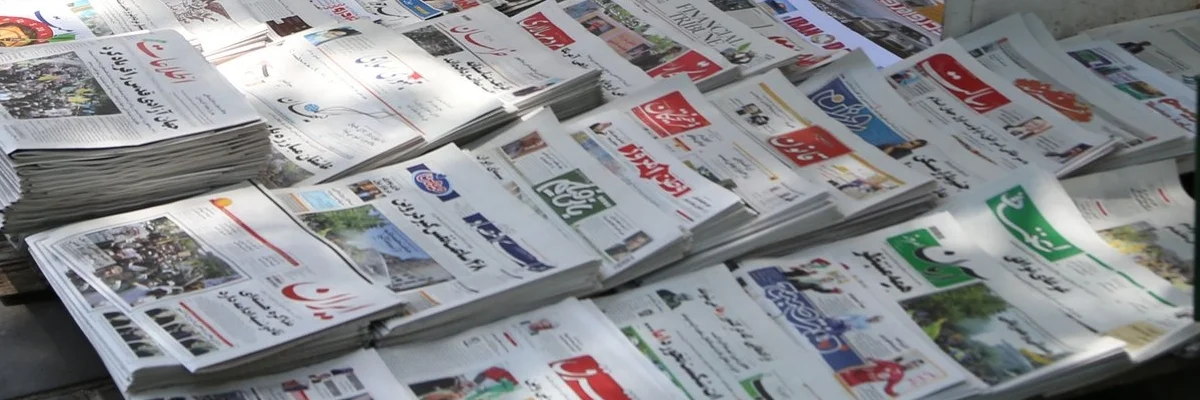
Iran Newspaper Chief Freed After Arrest
◢ The head of Iran's reformist newspaper Shargh was freed Sunday, a day after being arrested over a report on "prostitution" in a northeastern city that angered residents, Iranian media said. Mehdi Rahmanian, the director of the newspaper, was released in the afternoon after paying bail of 500 million rials (USD 9,000), the ILNA news agency reported.
The head of Iran's reformist newspaper Shargh was freed Sunday, a day after being arrested over a report on "prostitution" in a northeastern city that angered residents, Iranian media said.
Mehdi Rahmanian, the director of the newspaper, was released in the afternoon after paying bail of 500 million rials (USD 9,000), the ILNA news agency reported.
The courts had summoned him "after a complaint by a group of residents of the Shahid Rajai neighborhood of Mashhad," the semi-official ISNA news agency reported, quoting the city's deputy prosecutor Hassan Heydari.
"The newspaper had described some of the district's women as prostitutes." Mashhad's Khorassan newspaper said Rahmanian had been detained after initially failing to pay the bail.
Shargh on April 8 published a report on the murder of a six-year-old Afghan girl in the impoverished Shahid Rajai district of Mashhad, the second-largest city in Iran.
The article quoted an official from an association for children and poor people who said the district was home to several brothels and that drugs were sold there.
Khorassan said the article had provoked an angry protest by residents in front of the local mosque three days later.
Heydari said the prosecution had asked Rahmanian to "take action" against the journalist who wrote the article and "repair" the damage caused but measures were not taken.
Like other reformist newspapers, Shargh returned to the newsstands in late 2012 after being banned for several years.
It is one of the main reformist newspapers and a key supporter of President Hassan Rouhani, a moderate conservative elected to a second term in 2017.
Since taking office, Rouhani has been the target of intense criticism by ultra-conservatives, who dominate the judiciary and the security services.
Photo Credit: Ted Regencia