
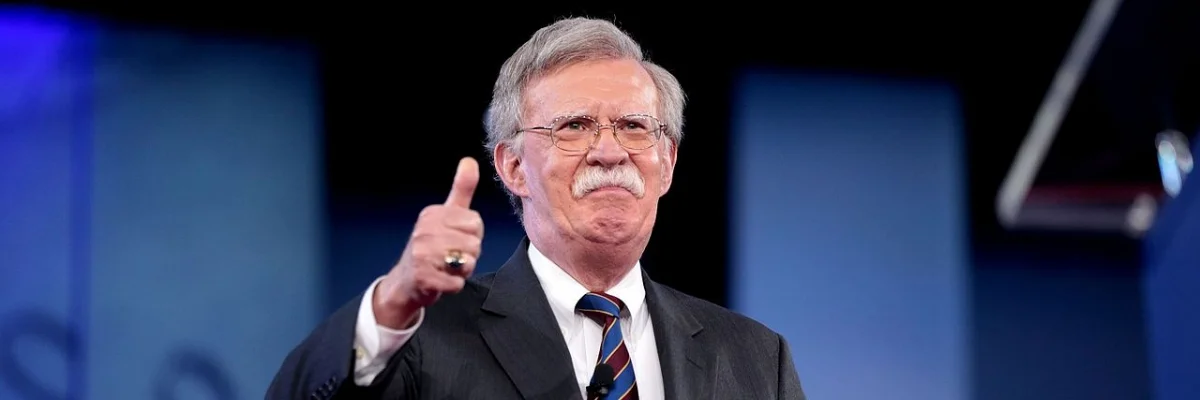
'No Decision' by Trump on Iran Nuclear Deal: Bolton
◢ US President Donald Trump has not decided whether or not to scrap the Iran nuclear deal, US National Security Advisor John Bolton said Sunday. Trump has called the existing accord "insane" and "ridiculous," in part because its restrictions start to expire in 2025.
US President Donald Trump has not decided whether or not to scrap the Iran nuclear deal, US National Security Advisor John Bolton said Sunday.
"He has made no decision on the nuclear deal, whether to stay in or get out," Bolton told Fox News Sunday.
"He is certainly considering the framework, the four pillars that President (Emmanuel) Macron laid out in their meeting last week," said Bolton, referring to efforts to supplement the Iran deal with additional measures to make it more palatable to Trump.
In 2015 the United States, along with other nations, struck a deal with Iran to end a 12-year standoff over that country's nuclear program, which was feared to be leading towards an atomic weapons capability.
Iran agreed to freeze its nuclear program in return for the lifting of punishing international sanctions, but Trump has criticized the deal as not going far enough.
Britain, France and Germany—the three European countries that signed the Iran nuclear deal—are working to head off Trump's threat to walk away from the accord and reimpose sanctions.
Trump has called the existing accord "insane" and "ridiculous," in part because its restrictions start to expire in 2025.
French President Emmanuel Macron has proposed an additional deal that extends Iran's nuclear restrictions while also curbing its ballistic missile program and support for militias in the Middle East.
Iran's President Hassan Rouhani rejected any hopes of rewriting the nuclear deal itself.
Photoe Credit: Wikicommons

Germany's Merkel Says Existing Iran Deal 'Not Sufficient' to Curb Iran Ambitions
◢ German Chancellor Angela Merkel, standing alongside President Donald Trump at the White House, said Friday that the existing international accord on Iran is not enough to curb the Islamic republic's regional ambitions.
AFP Correction: Headline corrected to remove reference to 'nuclear program' to better reflect original German speech.
German Chancellor Angela Merkel, standing alongside President Donald Trump at the White House, said Friday that the existing international accord on Iran is not enough to curb the Islamic republic's regional ambitions.
The so-called Joint Comprehensive Plan of Action, signed by Tehran and six world powers including Germany and the United States, is "a first step that has contributed to slowing down their activities in this particular respect," Merkel told reporters.
"But we also think from a German perspective that this is not sufficient in order to see to it that Iran's ambitions are curbed and contained."
"Europe and the United States ought to be in lock step on this," she said.
Photo Credit: Wikicommons

'No Decision' Yet on Iran Deal: Mattis
◢ Defense Secretary Jim Mattis on Thursday said no decision had been made on whether the United States is going to withdraw from the Iran nuclear deal. President Donald Trump is due on May 12 to announce his decision about whether America will stay in the historic pact, as US and European diplomats work on a supplemental deal to address his concerns.
Defense Secretary Jim Mattis on Thursday said no decision had been made on whether the United States is going to withdraw from the Iran nuclear deal.
President Donald Trump is due on May 12 to announce his decision about whether America will stay in the historic pact, as US and European diplomats work on a supplemental deal to address his concerns.
"I can assure you there has been no decision made on any withdrawal from JCPOA," Mattis said of the deal, which is officially known as the Joint Comprehensive Plan of Action.
"The discussions are ongoing in the national security staff and those of us who are charged with that responsibility of giving the president advice. It's going on today as we speak," Mattis told the Senate Armed Services Committee.
Though he thinks the deal is flawed, Mattis has previously said he supports America staying in it, telling lawmakers in October it is in the US national interest to do so.
But Mattis offered no such support Thursday. "There are obviously aspects of the JCPOA... that can be improved on. We are working with our European allies on it at this time, and again at this time the decision has not been made whether we can repair it enough to stay, or if the president if going to decide to withdraw from it," he said.
Trump, who campaigned on scrapping the Iran deal, has branded it as "insane" and the "worst" in history.
"This is a deal with decayed foundations. It's a bad deal, it's a bad structure. It's falling down," Trump said Tuesday. "We're going to see what happens on the 12th."
Photo Credit: Wikicommons

Merkel Heads for Tough Trump Talks on Trade, Iran Nuclear Deal
◢ German Chancellor Angela Merkel visits US President Donald Trump on Friday for a last-ditch European effort to prevent a transatlantic trade war and save the Iran nuclear deal. Merkel's working trip is expected to be far more business-like than this week's pomp-filled state visit by French President Emmanuel Macron, who has built a warm rapport with Trump despite stark policy differences.
German Chancellor Angela Merkel visits US President Donald Trump on Friday for a last-ditch European effort to prevent a transatlantic trade war and save the Iran nuclear deal.
Merkel's working trip is expected to be far more business-like than this week's pomp-filled state visit by French President Emmanuel Macron, who has built a warm rapport with Trump despite stark policy differences.
Trump's lavish welcome for Macron, with hugs and much back-slapping, contrasted sharply with a tense White House event in March last year in which Trump appeared to ignore Merkel's offer of a handshake.
Despite Merkel's more sober style, her objective will be the same as Macron's—to persuade Trump to back off his dual threats of punitive measures that could spark a transatlantic trade war and scrapping the Iran nuclear deal.
Trump last month announced tariffs of 25 percent on steel and 10 percent on aluminum, claiming foreign imports were harming US national security by undermining the domestic production needed for military readiness.
After an outcry from US allies, Trump granted a temporary exemption to key partners including the EU—but this expires on May 1.
On the eve of Merkel's Washington visit, Berlin's hopes were dim that the EU may be spared the sweeping customs duties, to which it has vowed to retaliate, potentially setting off spiraling counter-measures.
"From today's perspective, we must assume that the tariffs will come on May 1," said a German government source." And then we will see how we will handle it."
'Juggling Act'
The next looming deadline is May 12, the date by which Trump has threatened to tear up the landmark 2015 agreement to stop Iran from developing nuclear weapons in return for relief from international sanctions.
Trump has called the agreement, which Germany helped negotiate, "insane" and the "worst deal ever," demanding that its "disastrous flaws" be fixed.
The EU and other signatory powers have sought to convince Trump not to abandon the pact, warning that it was the best defense against a regional nuclear arms race.
Macron pitched the idea of seeking a separate pact to curb Iran's ballistic missile program and support for militias in the Middle East.
The German foreign ministry has insisted that "the biggest priority is maintaining the existing nuclear accord," while Merkel has also called Iran's ballistic missile programme a "cause for concern."
The talks won't be helped by the rocky relations between Germany's veteran leader and the billionaire and former reality TV star Trump.
'Difficult Partner'
Trump has repeatedly berated the EU's top economy for its huge trade surplus with the US and spending too little on NATO joint defense.
He has criticized Merkel for opening German borders since 2015 to a mass influx of mostly Muslim refugees, while she has watched with dismay Trump's decision to withdraw from the Paris climate accord.
Merkel routinely praises the a rules-based international order to tackle global problems from conflict and terrorism to environmental destruction, in stark contrast to Trump's "America First" stance.
"Angela Merkel is on her third US president in her long tenure as chancellor of Germany," said think-tank the German Marshall Fund of the United States.
"It is no secret that she sees the current resident of the White House as a 'difficult partner.' Her return to Washington this week, by all accounts, will be a juggling act."
Merkel—who developed close relationships with Trump's predecessors Barack Obama and George W. Bush—this week stressed that, despite the differences, she wants to preserve the bedrock strategic partnership.
"The transatlantic alliance, given the many non-democratic developments in this world," she said, "is a great treasure that I certainly want to cherish and nurture."
The Berliner Zeitung daily looked ahead to Merkel's tough diplomatic mission just after Macron's charm offensive, saying that "she can hardly follow Macron's best-buddy act, but she does need a strategy."
Photo Credit: Wikicommons
China Warns US Against Causing 'Damage' to Trade in Huawei Probe
◢ China warned the United States on Thursday against harming trade after a report that US authorities had opened an investigation into suspected violations of Iran sanctions by China's Huawei Technologies. A US Justice Department probe would come on the back of subpoenas issued to the company by the US Commerce and Treasury Departments.
China warned the United States on Thursday against harming trade after a report that US authorities had opened an investigation into suspected violations of Iran sanctions by China's Huawei Technologies.
A US Justice Department probe would come on the back of subpoenas issued to the company by the US Commerce and Treasury Departments over sanctions-related issues, according to the Wall Street Journal.
Huawei—one of the world's largest telecommunications equipment and services providers—has been under tough scrutiny in the United States, where government national security officials say that its alleged close links to the Chinese government make it a security risk.
Its US business has been tightly constrained by worries it could undermine US competitors and that its cellphones and networking equipment, used widely in other countries, could provide Beijing with avenues for espionage.
The Journal report gave no details about the investigation. The New York Times has reported that the company has been subpoenaed by the Commerce and Treasury Departments over alleged violations of Iran and North Korea sanctions.
Huawei would not comment on the Journal report. "Huawei complies with all applicable laws and regulations where it operates, including the applicable export control and sanction laws and regulations of the UN, US and EU," spokesman Charles Zinkowski said in a statement.
Chinese foreign ministry spokeswoman Hua Chunying said she had seen the report.
"We hope that the US doesn't take any further steps to damage confidence in the American business environment," Hua said at a regular press briefing.
Hua added that China hopes "the US doesn't do things that damage its domestic economy and the normal, transparent, mutually beneficial development of international trade."
Signaling the rising unease in the United States towards Huawei and fellow Chinese telecoms group ZTE Corp, last month the Federal Communications Commission proposed a new rule that would restrict small telecoms carriers from purchasing "equipment or services from companies that pose a national security threat."
Major US telecoms companies have already steered clear of the two Chinese firms, sometimes on the strong suggestions of US officials.
The cases come as the United States and China are gearing up for a potential trade war, with the high-tech sector among the concerns for both sides.
Photo Credit: Wikicommons
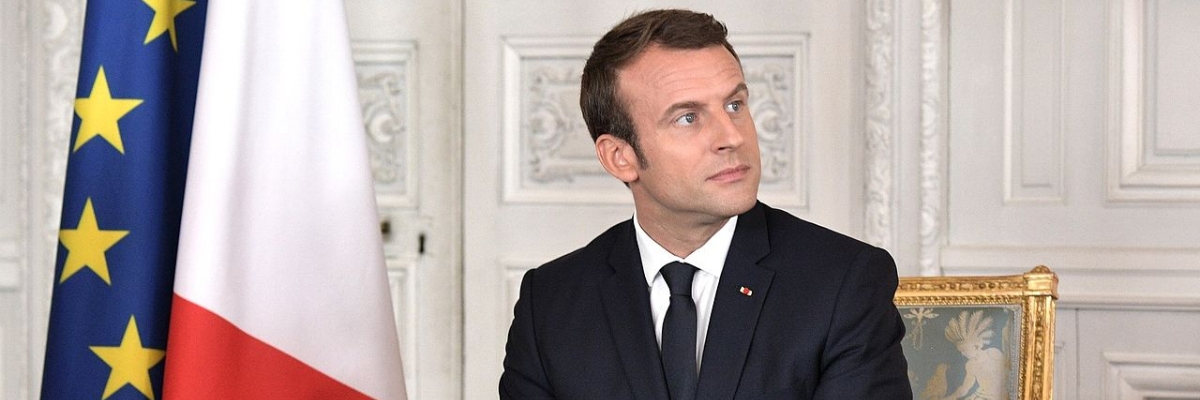
France's Macron Pessimistic About Future of Iran Nuclear Pact
◢ Donald Trump may well pull out of the Iran nuclear deal for domestic political reasons, French President Emmanuel Macron said Wednesday, after he and his American counterpart held talks addressing the agreement's future. Macron told US media that while he did not know specifically what Trump will decide, he believes the US leader "will get rid of this deal on his own, for domestic reasons."
Donald Trump may well pull out of the Iran nuclear deal for domestic political reasons, French President Emmanuel Macron said Wednesday, after he and his American counterpart held talks addressing the agreement's future.
Near the end of his three-day state visit, Macron told US media that while he did not know specifically what Trump will decide, he believes the US leader "will get rid of this deal on his own, for domestic reasons."
Trump—a fierce opponent of the July 2015 agreement signed by Tehran and international powers—must declare by May 12 if he will essentially walk away from the existing deal when the renewal deadline arrives on May 12, or stay in.
Macron had come to Washington in part to plead for a more comprehensive "new agreement" that would address what he and Trump believe to be shortcomings of the existing accord.
Trump has branded the Iran deal "insane" and the "worst" in history.
"I have no inside information" on what decision Trump will make on the agreement, Macron told journalists.
But "I listen to what President Trump is saying and it seems to me that he is not very eager to defend it."
Macron recalled that Trump made killing the Iran nuclear accord a campaign pledge during his 2016 presidential run.
"The rational analysis of all his statements does not make me think that he will do everything to maintain" the agreement signed with Iran to prevent the Islamic republic from acquiring an atomic bomb.
Asked whether such a decision would signify a personal failure for him, Macron stressed that his role "is not to try to convince President Trump to walk away from his campaign commitments."
Instead he offered further defense of the deal, saying "I'm trying to prove that this agreement makes sense."
The proposal that Macron put forward to his US counterpart involves preserving the existing agreement on the first of "four pillars" of a future deal.
The others would address the period after 2025, when certain clauses concerning nuclear activities will sunset; Tehran's highly controversial ballistic missile program; and its "destabilizing" role in the region.
"For me it's progress, it avoids falling into the complete unknown if the US decision is a hard exit," said Macron, who confirmed that the proposal was a strategy coordinated with European partners and not a unilateral one.
Photo Credit: Wikicommons

Iran Deal 'Needs To Be Preserved': EU's Mogherini
◢ The EU's diplomatic chief insisted Wednesday that the current Iran nuclear deal was working and "needs to be preserved", after US President Donald Trump and French counterpart Emmanuel Macron called for a new agreement with Tehran.
The EU's diplomatic chief insisted Wednesday that the current Iran nuclear deal was working and "needs to be preserved", after US President Donald Trump and French counterpart Emmanuel Macron called for a new agreement with Tehran.
The landmark 2015 deal to curb Iran's nuclear program is hanging in the balance, with Trump threatening to walk away from the accord unless it is expanded to include Iran's ballistic missile program and regional activities by a May 12 deadline.
Trump slammed the deal as "insane" at the White House with Macron on Tuesday but said there was a "great shot" at a new accord, while Macron said he wanted to work for a new arrangement.
The EU's Federica Mogherini, who has staunchly defended the deal, said Wednesday that it was working and was "essential for European security" but appeared to leave the door open for some new arrangement.
"On what can happen in the future we'll see in the future, but there is one deal existing, it's working, it needs to be preserved," the former Italian foreign minister said as she arrived for a donor conference on Syria in Brussels.
Europe, led by Britain, France and Germany, has repeatedly tried to persuade Trump not to abandon the 2015 deal, which gave Iran massive sanctions relief and the guarantee of a civilian nuclear program in return for limiting enrichment that could produce weapons grade fuel.
German Chancellor Angela Merkel will renew those calls when she follows Macron to Washington on Friday.
Photo Credit: Wikicommons

Iran's Rouhani Questions 'Right' to Seek New Nuclear Deal
◢ Iran's President Hassan Rouhani on Wednesday questioned the legitimacy of demands for a fresh nuclear agreement with Tehran, after the leaders of the US and France called for a "new" deal.
Iran's President Hassan Rouhani on Wednesday questioned the legitimacy of demands for a fresh nuclear agreement with Tehran, after the leaders of the US and France called for a "new" deal.
"Together with a leader of a European country they say: 'We want to decide on an agreement reached by seven parties'. What for? With what right?" Rouhani said in a speech.
US President Donald Trump has fiercely criticized a three-year-old deal reached by world powers to curb Iran's nuclear program, and threatened to pull the US out of the agreement.
Trump is eyeing a broader pact that also limits Iran's ballistic missile program and support for armed groups across the Middle East.
European signatories to the 2015 deal have been scrambling to salvage it, with French President Emmanuel Macron saying Tuesday after talks with Trump that he wished "for now to work on a new deal with Iran".
Iran has repeatedly insisted it is sticking to the nuclear deal and will not negotiate over its missile program.
Rouhani took aim at Trump—a former real estate mogul and TV reality star—and accused him of lacking in experience.
"You are just a businessman... you have no experience in politics or law or international agreements," he said. "How can he pass judgements on international affairs?"
Rouhani insisted that by agreeing to the nuclear accord in 2015 Tehran "showed goodwill to the world".
"We wanted to prove to the world that Iran does not seek to acquire weapons
of mass destruction."
Photo Credit: IRNA
Trump, Macron Call for 'New' Nuclear Deal with Iran
◢ US President Donald Trump and French counterpart Emmanuel Macron called for a "new" deal with Iran Tuesday, looking beyond disagreements over a landmark nuclear accord that still hangs in the balance. Trump laid transatlantic divisions bare during a visit by the French president, pillorying a three-year old agreement designed to curb Iran's nuclear program.
US President Donald Trump and French counterpart Emmanuel Macron called for a "new" deal with Iran Tuesday, looking beyond disagreements over a landmark nuclear accord that still hangs in the balance.
Trump laid transatlantic divisions bare during a visit by the French president, pillorying a three-year old agreement designed to curb Iran's nuclear program.
The US leader described the deal as "insane" and "ridiculous," despite European pleas for him not to walk away.Instead, Trump eyed a broader "deal" that would also limit Iran's ballistic missile program and support for militant groups across the Middle East.
"I think we will have a great shot at doing a much bigger, maybe, deal," said Trump, stressing that any new accord would have to be built on "solid foundations."
"They should have made a deal that covered Yemen, that covered Syria," said Trump. "No matter where you go in the Middle East, you see the fingerprints of Iran behind problems."
Macron admitted after meeting Trump that he did not know whether the US president would walk away from the nuclear deal when a May 12 decision deadline comes up.
"I can say that we have had very frank discussions on that, just the two of us," Macron told a joint press conference with Trump at his side.
Putting on a brave face, he said he wished "for now to work on a new deal with Iran" of which the nuclear accord could be one part.
Neither Trump nor Macron indicated whether Iran would get something in return for concessions on its ballistic programs, activities in the Middle East or extending nuclear controls beyond 2025.
Trump—true to his background in reality TV—teased his looming decision.
"This is a deal with decayed foundations. It's a bad deal, it's a bad structure. It's falling down," the US leader said. "We're going to see what happens on the 12th."
Trump's European allies have repeatedly tried to persuade him not to abandon the 2015 deal, which gave Iran massive sanctions relief and the guarantee of a civilian nuclear program in return for limiting enrichment that could produce weapons grade fuel.
German Chancellor Angela Merkel will renew those calls when she visits Washington on Friday.
Iran, meanwhile, has warned it will ramp up enrichment if Trump walks away from the accord, prompting a blunt warning from the US leader.
"They're not going to be restarting anything. If they restart it, they're going to have big problems, bigger than they ever had before. And you can mark it down," he said.
Simmering Tensions
For months American and European officials have been working behind the scenes trying to find a compromise on Iran that allows the mercurial US president to claim a public victory, while keeping the deal intact.
More hawkish American officials accuse Europeans—particularly Germany—of putting business interests ahead of security, and of opposing a tougher stance against Iran to safeguard investments in the Islamic Republic.
That charge is sharply rejected by European officials, who are increasingly frustrated at spending time dealing with Trump's complaints rather than tackling Iran's behavior.
The disagreement threatens to plunge transatlantic relations to their lowest point since the Iraq War.
Trump's comments on Iran contrasts markedly with the exuberant welcome he gave the French leader.
Tuesday morning both men waxed lyrical about shared heroes of yore—from the Marquis de Lafayette to Alexis de Tocqueville—as they listened to strains of "La Marseillaise" and "The Star-Spangled Banner."
Later, the Trumps rolled out the red carpet for the Macrons once more at a lavish state dinner—of which the US first lady was said to have fine-tuned every last detail, from gold tableware to white floral centerpieces, for star guests including Apple CEO Tim Cook and media mogul Rupert Murdoch.
Melania Trump dazzled in a sequined Chanel dress of black Chantilly lace, while Brigitte Macron stepped out in a long-sleeved creamy white gown with gold lattice detailing by Louis Vuitton.
"May our friendship grow even deeper, may our kinship grow even stronger, and may our sacred liberty never die," Trump said in his toast to the Macrons.
In turn, the French leader spoke at length of "how deep, how strong, and how intense the relationship is between our two countries," and marveled at the unforeseen rapport he has forged with Trump.
"I got to know you, you got to know me. We both know that none of us easily changes our minds, but we will work together, and we have this ability to listen to one another," he said.
The key question is whether Macron can translate that privileged relationship into concrete results—as he also pushes for a permanent exemption for Europe from US steel and aluminum tariffs.
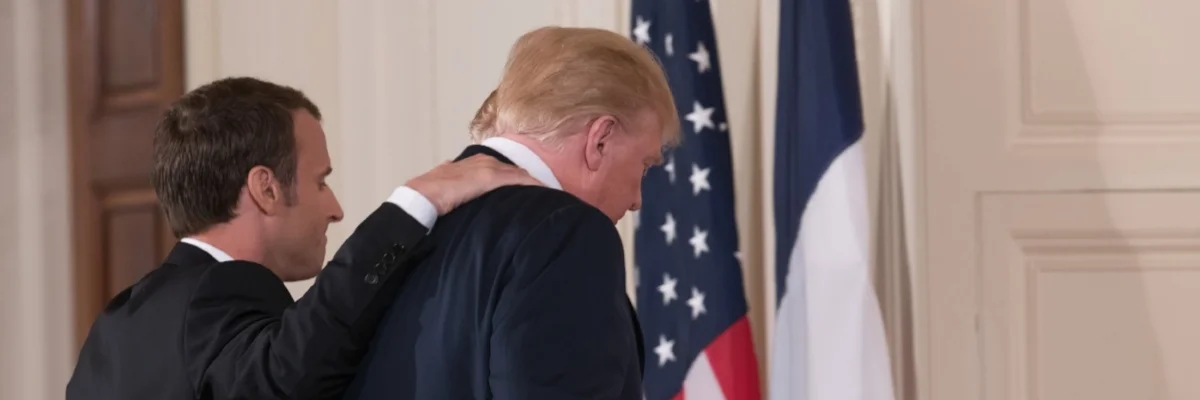
Earlier in the Oval Office, Trump offered a striking—and slightly awkward—sign of their much-vaunted intimacy. "We have a very special relationship, in fact I'll get that little piece of dandruff off," Trump said, swiping something off Macron's jacket. "We have to make him perfect—he is perfect."
Photo Credit: Jacques Witt/SIPA
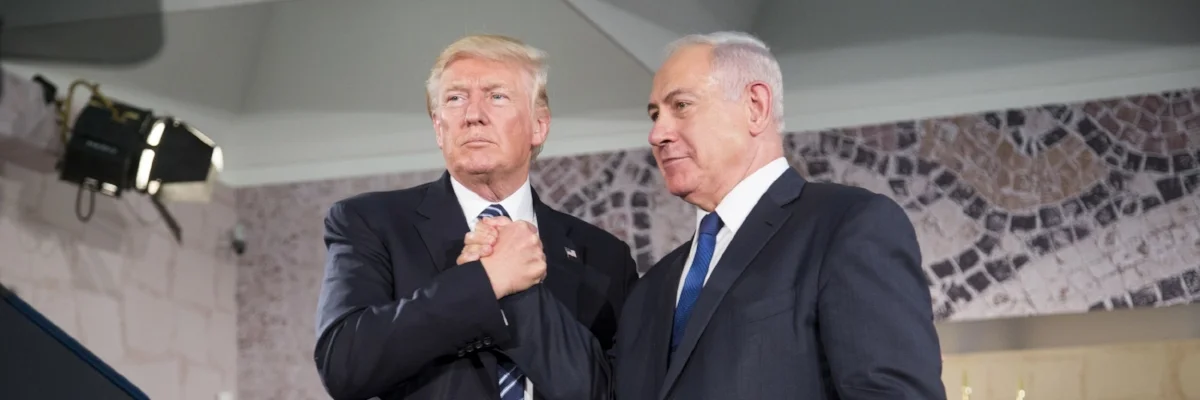
Netanyahu Turns Up Volume as Iran Deadline Nears
◢ Israeli Prime Minister Benjamin Netanyahu made a fresh call Monday for an overhaul of the Iran nuclear deal as US President Donald Trump's deadline for further Iranian concessions edged closer. Netanyahu said the 2015 agreement leaves Iran able to quickly reboot its nuclear program to enable military production.
Israeli Prime Minister Benjamin Netanyahu made a fresh call Monday for an overhaul of the Iran nuclear deal as US President Donald Trump's deadline for further Iranian concessions edged closer.
Trump has threatened to tear up the 2015 agreement that lifted sanctions on Iran in exchange for curbs to its nuclear activity, unless it curbs its ballistic missile program by May 12.
"Israel will not allow regimes that seek our annihilation to acquire nuclear weapons," Netanyahu told an audience of diplomats in a speech in Jerusalem.
"This is why this deal has to be either fully fixed or fully nixed," he said in English.
Iran says it is ready to relaunch its nuclear program—which the West suspects is designed to produce a bomb—if Trump kills the deal.
Netanyahu said the 2015 agreement leaves Iran able to quickly reboot its nuclear program to enable military production.
"It gives Iran a clear path to a nuclear arsenal," he said. "It allows, over a few years, unlimited enrichment of uranium, the core ingredient required to produce nuclear bombs."
The United States delivered much the same message Monday, at a meeting of the Nuclear Non-Proliferation Treaty (NPT) in Geneva.
Christopher Ford, US Assistant Secretary for International Security and Nonproliferation, said the Islamic republic's nuclear program remained "dangerously close to rapid weaponization."
Iran insists it never intended to build a nuclear weapon.
Photo Credit: Wikicommons
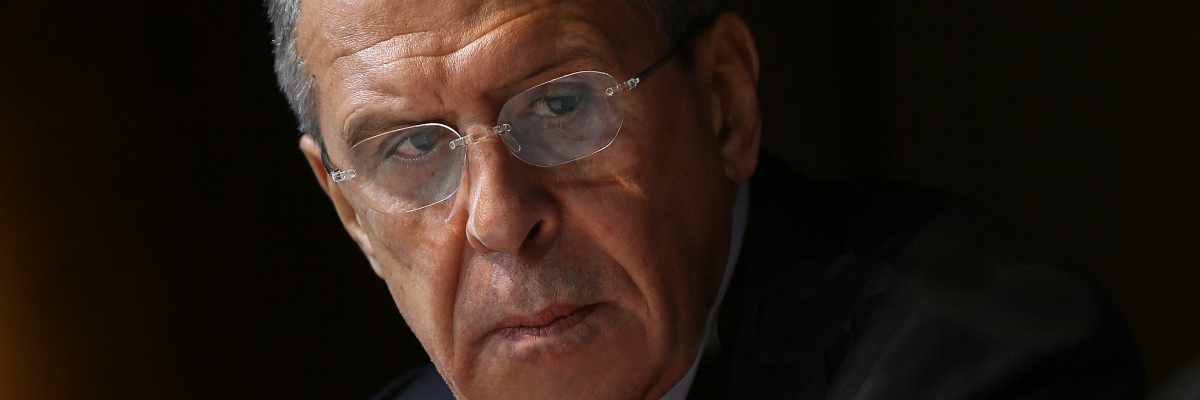
Russia, China to Stop Bid to 'Sabotage' Iran Deal: Lavrov
◢ China and Russia will block any attempts to "sabotage" the Iran nuclear agreement, Russian Foreign Minister Sergei Lavrov said Monday, as US President Donald Trump mulls whether to scrap the deal. He was speaking on the eve of a meeting of the Shanghai Cooperation Organisation, a regional security bloc spearheaded by Moscow and Beijing.
China and Russia will block any attempts to "sabotage" the Iran nuclear agreement, Russian Foreign Minister Sergei Lavrov said Monday, as US President Donald Trump mulls whether to scrap the deal.
Trump has set a May 12 deadline to "fix" the 2015 accord, which curbs Tehran's nuclear program in exchange for sanctions relief and was the fruit of intense diplomacy involving the US, European powers, Russia and China.
"There are attempts to interfere with the international order upon which the United Nations depends," Lavrov said after talks with his Chinese counterpart Wang Yi in Beijing.
"We said clearly with China that we will stop attempts to sabotage these agreements that were passed in a UN Security Council resolution," Lavrov said.
He was speaking on the eve of a meeting of the Shanghai Cooperation Organisation, a regional security bloc spearheaded by Moscow and Beijing.
Calling the Iran agreement "one of the biggest achievements in international diplomacy in recent times", Lavrov said that "revising this document is unacceptable."
Trump has threatened to abandon the accord unless European capitals agree to supplement it with tougher controls on Iran's missile program and its future ability to enrich nuclear fuel.
His partners maintain that implementation of the agreement under the Joint Comprehensive Plan of Action is the best way to prevent Tehran from seeking an atomic bomb.
Iran warned Saturday it was ready to "vigorously" resume nuclear enrichment if the United States ditches the deal.
Photo Credit: Wikicommons
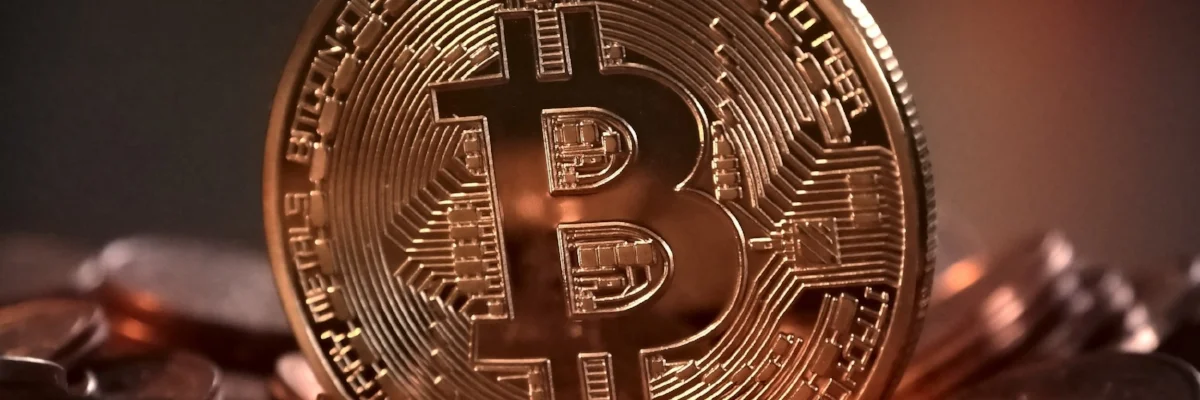
Iran Bans Banks From Using Cryptocurrencies
◢ Iran banned the use of bitcoin and other cryptocurrencies by banks and financial institutions on Monday amid ongoing debate over how best to regulate the technology. Many in Iran see great potential in digital currencies as a way to overcome problems related to international sanctions and difficulties facing the country's ailing banks.
Iran banned the use of bitcoin and other cryptocurrencies by banks and financial institutions on Monday amid ongoing debate over how best to regulate the technology.
"The use of bitcoin and other cryptocurrencies in all the country's monetary and financial centers was banned," the central bank said in a statement overnight.
It said the government's money-laundering committee had taken the decision in late December and it was now being put into effect.
The ban came because "all cryptocurrencies have the capacity to be turned into a means for money-laundering and financing terrorism and in general can be turned into a means for transferring criminals' money," it added.
Many in Iran see great potential in digital currencies as a way to overcome problems related to international sanctions and difficulties facing the country's ailing banks.
Earlier this year, the country's 36-year-old telecoms minister Mohammad-Javad Azari Jahromi set up a team to create Iran's own cryptocurrency.
But there are also fears that the technology could undermine the country's already weak banking system and exacerbate capital flight.
Iranians working in the fledgling private cryptocurrency market said the ban was unlikely to affect their operations.
"This ruling referred directly to banks, financial institutions and currency exchangers that work with the central bank," Hadi Nemati, who works for cryptocurrency exchange platform Coinex, told AFP.
"In my opinion, it doesn't include the general public -- it's not a total ban on cryptocurrencies."
Coinex had however halted activity on its exchange platform because "we always want to make sure we comply with the law", he said. "But I have seen other crypto exchanges were still working normally."
Photo Credit: PXHere

Can Macron's White House Visit Save the Iran Deal?
◢ French President Emmanuel Macron seems to have developed some kind of rapport with his American counterpart Donald Trump. But will their apparent bond prove productive as European capitals struggle to save the Iran nuclear deal from Trump's impulsive wrath? The idea will be tested Monday when the young French leader begins a state visit in Washington.
French President Emmanuel Macron seems, as much as any world leader, to have developed some kind of rapport with his American counterpart Donald Trump.
But will their apparent bond prove productive as European capitals struggle to save the Iran nuclear deal from Trump's impulsive wrath?
The idea will be tested Monday when the young French leader begins a state visit in Washington, and European diplomats have a lot invested in what seems a tricky task.
There is not much time. Trump is due to decide by May 12 whether talks with Paris, Berlin and London on tougher anti-Iran measures have advanced far enough.
If he feels the "flaws" in the 2015 deal have not been adequately repaired, he may decide to withdraw his support, opening the way for renewed US sanctions that could torpedo the whole accord.
Europe would see this as a disaster, both in terms of the deal itself—a central plank in their non-proliferation strategy—and in terms of relations with Washington.
If anyone can talk down Trump, it might be Macron, who has better relations with the White House than his British and German counterparts Theresa May and Angela Merkel.
Paris was the first European ally to suggest tougher measures against Iran's ballistic missile programs to "supplement" the nuclear deal—but will that suffice?
Trump also wants to reform the agreement itself to end the so-called "sunset clauses" that would allow Iran to progressively restart parts of its nuclear program after 2025.
But the West cannot unilaterally reopen the text. Iran has said the deal is final and warned it is ready to relaunch its nuclear program—which the West alleges is designed to produce an atomic bomb—if it fails.
Iranian Foreign Minister Mohammad Javad Zarif told reporters in New York on Saturday that Iran is not seeking to acquire a nuclear bomb, but that its "probable" response to a US withdrawal would be to restart production of enriched uranium—a key bomb-making ingredient.
In addition, the agreement was the fruit of months of intense diplomacy between Britain, China, France, Germany, Russia and the United States—under
EU auspices.
Only Trump wants to rip it up. "It's a dialogue of the deaf," complained one European envoy. A US diplomat acknowledged that getting Trump to buy in will be the "trickiest" part of the
problem. British, French and German representatives have been in deep talks with the
US State Department's head of policy Brian Hook on what a supplemental deal
would look like.
'He Hates The Deal'
But the representatives complain privately that, despite progress with their American counterparts, they have no idea whether they are close to an agreement that the mercurial president would accept. To appease Trump, European capitals are working on a document that would amount to a political engagement to prevent Iran from returning to the nuclear path after the 2015 deal starts to expire.
The Europeans could even call such a statement a new "deal," if it convinces the US leader to stay within the terms of the original and "true" agreement.
Therein lies the rub. "He hates the deal," another European diplomat acknowledged.
All Hook can say is that once he comes to terms with his European partners, it will be up to Trump, in consultations with his hardline new NationalSecurity Advisor John Bolton, to decide.
"If we can reach an agreement, then that will be presented to the president by the secretary of state and the NSA, and then he will make a decision on whether he wants to remain in the deal or stop waiving sanctions," Hook said.
"We always have to prepare for any eventuality, and so we are engaged in contingency planning because it would not be responsible not to engage in it."
The appointment of Bolton, an avowed Iran hawk, fueled Europe's pessimism, as did the nomination of CIA director Mike Pompeo to become the next US secretary of state.
But Pompeo, who has always talked tough on Iran, played down the significance of the May 12 deadline in his Senate confirmation hearing. "I want to fix this deal. That's the objective," he told US lawmakers concerned that he might push for war.
"If there is no chance to fix it, I'll recommend to the president we do our level best to work with our allies to achieve a better outcome and better deal. Even after May 12th, even after May 12th, there's still much diplomatic work to be done."
No Plan 'B'
As the deadline looms, even some of the more hawkish Washington pundits—critics of the deal when it was signed—have begun to suggest that the return of US nuclear-related sanctions could be postponed until a new fixed date.
But if all the talk fails and Trump follows his clear inclination to tear up the "terrible deal," there appears to be no Plan B, at least from Europe. "Anyone who wants to blow up the Iran deal has first to tell us what he will do if Iran relaunches its uranium enrichment program," France's ambassador to the United States Gerard Araud tweeted in exasperation.
After Macron's visit, there is only one from Merkel, whose chemistry with the US leader appears more toxic than productive, and then the ball in Trump's hands.
Photo Credit: The White House
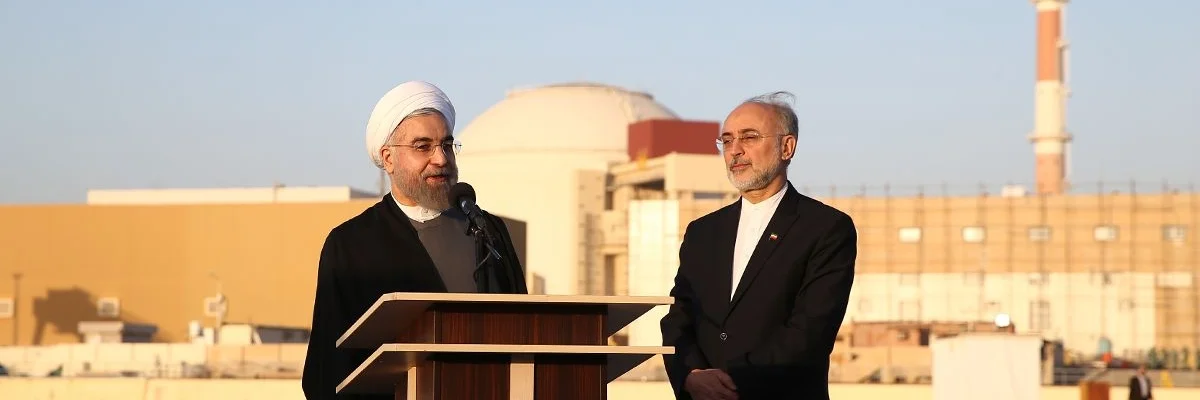
Iran Threatens to 'Vigorously' Resume Enrichment if US Quits Deal
◢ Iran warned Saturday it is ready to "vigorously" resume nuclear enrichment if the United States ditches the 2015 nuclear deal, and said further "drastic measures" are being considered in response to a US exit. Foreign Minister Mohammad Zarif told reporters in New York that Iran is not seeking to acquire a nuclear bomb, but that its "probable" response to a US withdrawal would be to restart production of enriched uranium.
Iran warned Saturday it is ready to "vigorously" resume nuclear enrichment if the United States ditches the 2015 nuclear deal, and said further "drastic measures" are being considered in response to a US exit.
Iranian Foreign Minister Mohammad Javad Zarif told reporters in New York that Iran is not seeking to acquire a nuclear bomb, but that its "probable" response to a US withdrawal would be to restart production of enriched uranium—a key bomb-making ingredient.
"America never should have feared Iran producing a nuclear bomb, but we will pursue vigorously our nuclear enrichment," added Zarif, who is in the United States to attend a UN meeting on sustaining peace.
US President Donald Trump has set a May 12 deadline for the Europeans to "fix" the 2015 agreement that provides for curbs to Iran's nuclear program in exchange for relief from financial sanctions.
Zarif's comments marked a further hardening of rhetoric following a warning earlier this month from Iranian President Hassan Rouhani that Washington would "regret" withdrawing from the nuclear deal, and that Iran would respond within a week if it did.
The fate of the Iran deal will be a key issue during French President Emmanuel Macron's state visit to Washington beginning Monday, followed by talks with German Chancellor Angela Merkel in Washington on Friday.
Zarif said the European leaders must press Trump to stick to the deal if the United States "intends to maintain any credibility in the international community" and to abide by it, "rather than demand more."
The foreign minister also warned against offering any concessions to Trump.
"To try to appease the president, I think, would be an exercise in futility," he said.
European leaders are hoping to persuade Trump to save the deal if they, in turn, agree to press Iran to enter into agreement on missile tests and moderating its regional influence in Yemen, Syria and Lebanon.
No One-Sided Deal
If the United States buries the deal, Iran is unlikely to stick to the agreement alongside the other signatories - Britain, China, France, Germany and Russia, said the foreign minister.
"That's highly unlikely," he said. "It is important for Iran to receive the benefits of the agreement and there is no way that Iran would do a one-sided implementation of the agreement."
European diplomats have argued that the deal could be salvaged without the United States, with a view to bringing Washington back in the fold at a later time, possibly under a new administration.
"The United States under the Trump administration has done everything it could to prevent Iran from benefiting from this agreement," Zarif charged.
The foreign minister warned of "drastic measures" under discussion in Iran. Zarif declined to specify, pointing to "what certain members of our parliament are saying about Iran's options."
Despite the threats of a tough response to a US pullout, Zarif also left open the possibility of diplomatic action during a 45-day period to formally notify the withdrawal.
"Whether other things can be done during those 45 days ... is a hypothetical question that needs to be addressed at that time," said Zarif.
A decision by Trump to walk away, he warned, would send a message to all governments "that you should never come to an agreement with the United States, because at the end of the day, the operating principle for the United States is, what's mine is mine, what's yours is negotiable."
Photo Credit: President.ir
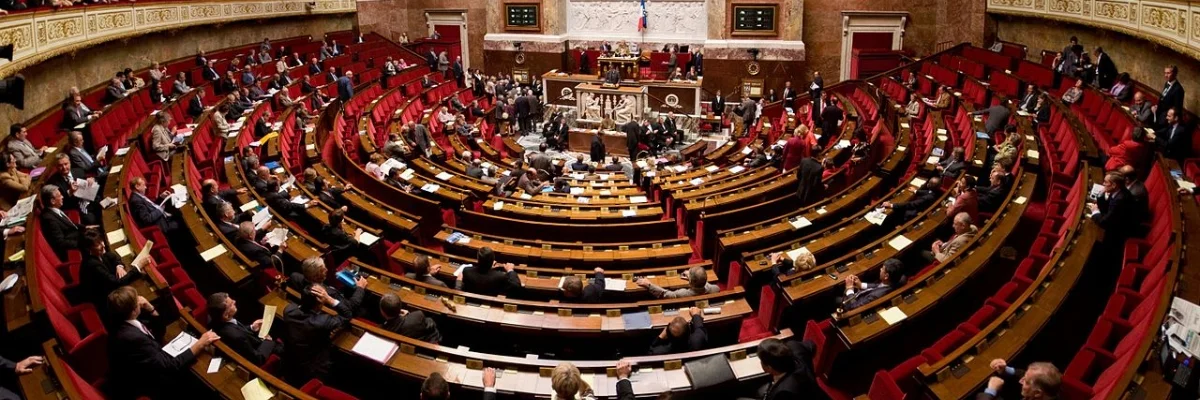
European MPs Urge US Not to Scrap Iran Nuclear Deal
◢ About 500 lawmakers from Germany, France and Britain on Thursday urged the US Congress to support the Iran nuclear deal which President Donald Trump has threatened to abandon. The MPs from the parliaments of the three European signatory countries said the landmark 2015 deal was a "major diplomatic breakthrough" that had halted the imminent threat of a nuclear-armed Iran.
About 500 lawmakers from Germany, France and Britain on Thursday urged the US Congress to support the Iran nuclear deal which President Donald Trump has threatened to abandon.
"It is the US's and Europe's interest to prevent nuclear proliferation in a volatile region and to maintain the transatlantic partnership as a reliable and credible driving force of world politics," the MPs wrote.
The MPs from the parliaments of the three European signatory countries said the landmark 2015 deal was a "major diplomatic breakthrough" that had halted the imminent threat of a nuclear-armed Iran.
"We were able to impose unprecedented scrutiny on the Iranian nuclear program, dismantle most of their nuclear enrichment facilities and drastically diminish the danger of a nuclear arms race," they wrote. "Not a drop of blood was spilt."
Scrapping the agreement would result "in another source of devastating conflict in the Middle East and beyond," they warned in an open letter published in several newspapers.
Trump has derided the deal as a capitulation to Tehran and has declared it no longer is in the US interest to maintain the sanctions relief his predecessor Barack Obama granted Iran in return for controls on its nuclear program.
He has demanded that US lawmakers and European allies fix "disastrous flaws" in the deal or face a US exit, possibly as early as next month.
The MPs warned that ending the deal would spell "lasting damage to our credibility as international partners in negotiation, and more generally, to diplomacy as a tool to achieve peace and ensure security."
French President Emmanuel Macron and German Chancellor Angela Merkel will both travel to Washington next week on separate official visits, in part to lobby Trump on the Iran issue.
Photo Credit: Wikicommons
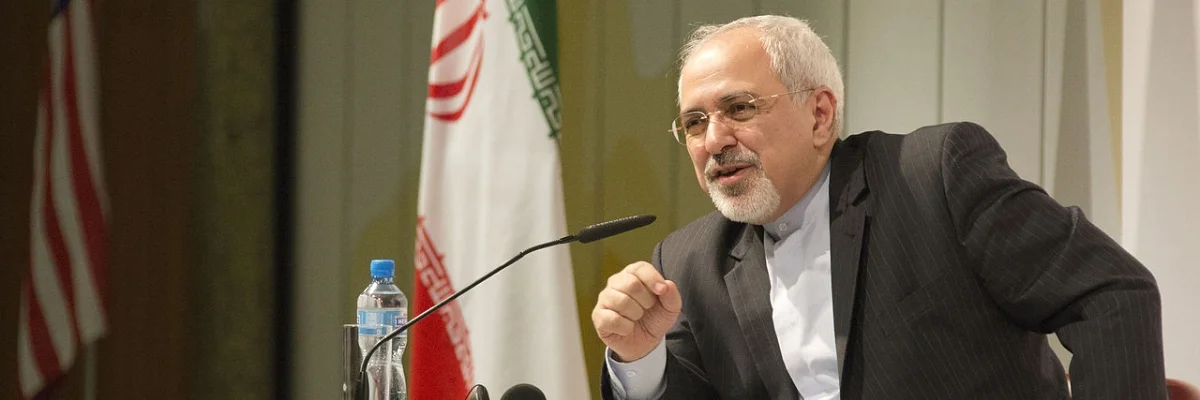
Iran Would Talk Prisoners if US Shows Respect: Zarif
◢ Iran's Foreign Minister Mohammad Javad Zarif says Tehran is open to prisoner swap negotiations with the US if the Trump administration shows a "change of attitude." Negotiations are a "possibility certainly from a humanitarian perspective, but it requires a change of attitude," Zarif said in an interview with CBS television's "Face the Nation" set to air Sunday.
Iran's Foreign Minister Mohammad Javad Zarif says Tehran is open to prisoner swap negotiations with the US if the Trump administration shows a "change of attitude."
Negotiations are a "possibility certainly from a humanitarian perspective, but it requires a change of attitude," Zarif said in an interview with CBS television's "Face the Nation" set to air Sunday.
Five Americans are held in Tehran, including 81-year-old Baquer Namazi, who is in failing health.
Zarif blasted the US administration for showing "disrespect" toward Iran, a frequent target of President Donald Trump's wrath.
Trump has said he wants to rip up the Iran nuclear deal, and his new National Security Advisor John Bolton has advocated for regime change in Tehran.
"You do not engage in negotiations by exercising disrespect for a country, for its people, for its government, by openly making claims, including this illusion about regime change," Zarif said, according to interview excerpts.
In January 2016, after months of secret talks between senior Iranian and US officials during Barack Obama's administration, Tehran released four Americans in exchange for seven Iranians being released in the United States.
A fifth American, identified as Matthew Trevithick, was also released separately as an "associated goodwill gesture."
According to Zarif, there are "many" Iranian prisoners being held in the United States or elsewhere at America's request, "including a lady who had to give birth in an Australian prison because of a US extradition request."
Photo Credit: Wikicommons
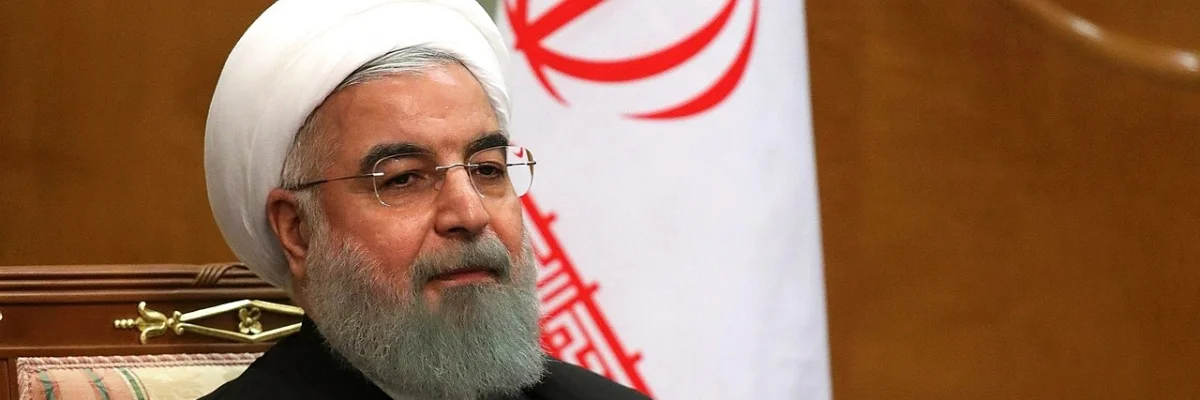
Rouhani Slams Officials' 'Vow of Silence' in Face of Protests
◢ Iran's President Hassan Rouhani said Saturday that officials were failing to respond effectively to mounting popular protests, in part because they are being threatened by unnamed behind-the-scenes forces. In a wide-ranging speech carried on state television, Rouhani said officials were failing to respond and appeared to have taken "a vow of silence."
Iran's President Hassan Rouhani said Saturday that officials were failing to respond effectively to mounting popular protests, in part because they are being threatened by unnamed behind-the-scenes forces.
Recent weeks have seen social media filled with videos and reports of protests, but since they are barely covered by domestic media and access is restricted for foreign journalists, they have been hard to verify.
They include protests by farmers over water shortages in Isfahan; by ethnic Arabs over the treatment of minorities in the southern province of Khuzestan; and over administrative reforms in the southwestern city of Kazeroon.
The videos appear to show these localized protests taking on broader slogans against the Islamic establishment, such as: "Our enemy is right here and falsely they say America is our enemy."
But in a wide-ranging speech carried on state television, Rouhani said officials were failing to respond and appeared to have taken "a vow of silence."
"As people haven't got enough information... as people don't see plans for the future, as people see the current problems, they may get upset and angry, come to the streets and cry out," he told senior officials in Tehran.
"(But) we speak little to the people. Our government managers have taken a vow of silence. I don't know who told them to. I don't know what they are scared of."
Rouhani said a major problem was that officials were being intimidated by unnamed "supervisory bodies."
He did not name them, but Rouhani has previously clashed with the powerful Revolutionary Guards and the conservative-dominated judiciary over their outsized role in politics and the economy.
"When in the morning (an official) is going to work, somebody sends him a text message, another calls him, another threatens him... the country cannot be run like this," he said.
In the past month, Tehran's reformist mayor Mohammad-Ali Najafi and the deputy head of the environment agency Kaveh Madani both quit their posts following pressure from hardliners, though Najafi claimed he left for health reasons.
"Don't pay attention to some letters, some threats. If you are scared to respond, send them to me," Rouhani said.
Photo Credit: Wikicommons
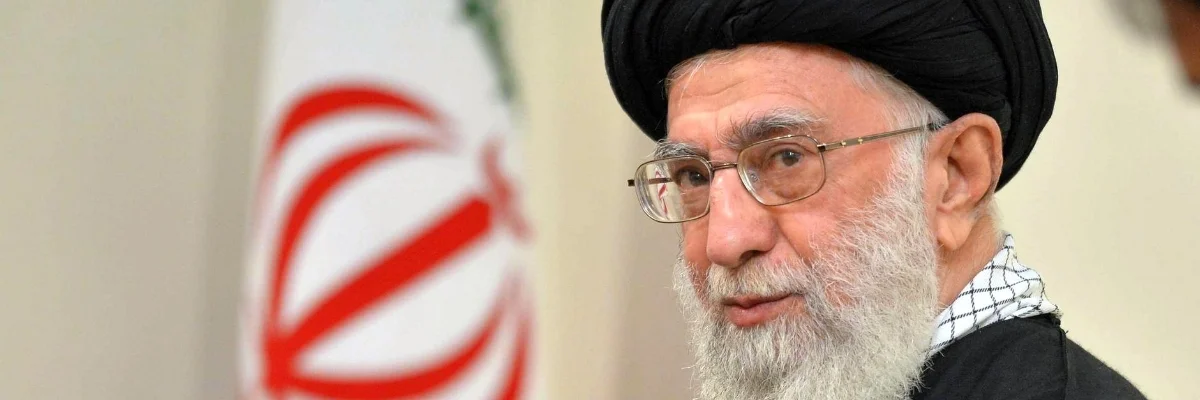
Iran's Khamenei Quits Telegram
◢ Iran's supreme leader Ayatollah Ali Khamenei announced Wednesday that he would no longer use the hugely popular messaging app Telegram, shifting instead to domestic services. President Hassan Rouhani quickly followed suit, announcing that he too was giving up Telegram shortly after issuing a directive banning the government and administration workers from using foreign messenger apps to communicate,
Iran's supreme leader Ayatollah Ali Khamenei announced Wednesday that he would no longer use the hugely popular messaging app Telegram, shifting instead to domestic services.
President Hassan Rouhani quickly followed suit, announcing that he too was giving up Telegram shortly after issuing a directive banning the government and administration workers from using foreign messenger apps to communicate, according to the official IRNA news agency.
The announcements came as rumours continued that Iran would soon block Telegram, built by Russian tech guru Pavel Durov and the most popular social media service in the country with some 40 million users—roughly half the population.
"In line with safeguarding national interests and removing the monopoly of the Telegram messaging network, the website for the preservation and publication of the works of Grand Ayatollah Khamenei will stop its activities in this network from this moment," said the last message on Khamenei's Telegram channel.
It directed users to accounts on Iranian messaging services, including Soroush and Gap, which the authorities are trying to promote. Rouhani's account said the president's messages would continue through the "messaging applications of our country".
First Vice President Eshagh Jahangiri and foreign ministry spokesperson Bahram Ghassemi also closed their Telegram accounts on Wednesday, IRNA reported.
Last week, Khamenei issued a statement saying any breaches of online privacy were "haram," meaning they were religiously forbidden.
This was interpreted as seeking to encourage the use of domestic apps, which many Iranians fear will be monitored by intelligence services.
Khamenei's channel said his move away from Telegram was an initial step towards stopping its use by all "official bodies".
On Sunday, the ministry of education banned the use of foreign social media networks in schools.
During a wave of protests that hit dozens of Iranian cities in December and January, Iranian authorities temporarily banned Telegram, accusing it of allowing foreign-based "counter-revolutionary" groups to fuel unrest.
But Rouhani's government has pushed back against efforts to block Telegram and other popular services such as Instagram, saying thousands of businesses use the service and access to the outside world should not be curtailed.
On Tuesday conservative lawmaker Abolfazl Abutorabi said "all foreign messaging services" could be banned on April 21, with Telegram first to go.
Soroush claims to have some 5 million users, while Gap has more than 1.3 million. There was no word on whether Khamenei's office would stop using his five Twitter feeds in different languages, which exist despite the service being blocked for ordinary Iranians.
Facebook and Twitter are both blocked in Iran, although they are easily accessible using virtual private network (VPN) software.
Photo Credit
Iran Lawmakers Slam Crackdown on Environmentalists
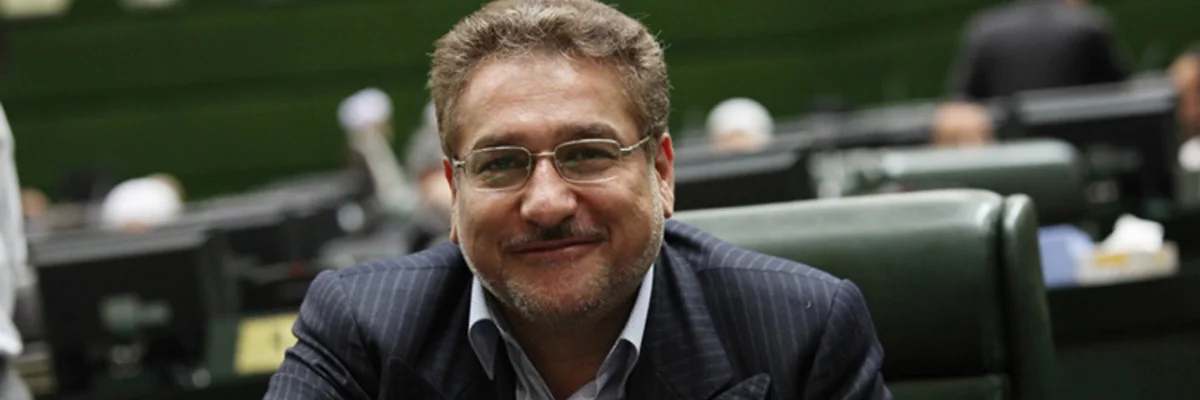
◢ An Iranian lawmaker on Tuesday criticized a recent crackdown on environmental activists and officials, saying it risked "bad consequences for the country." Parliament's environmental and transparency committees held a closed-door session in which they discussed the arrest on espionage charges of several NGO workers earlier this year.
An Iranian lawmaker on Tuesday criticized a recent crackdown on environmental activists and officials, saying it risked "bad consequences for the country", the semi-official ISNA news agency reported.
Parliament's environmental and transparency committees held a closed-door session in which they discussed the arrest on espionage charges of several NGO workers earlier this year. One detainee later died in custody.
"Some... have accused these individuals of spying, but the expert views of the Intelligence Ministry are almost exactly contrary to them," said Mohammad Reza Tabesh, head of parliament's environment committee, according to ISNA.
He was relaying information provided by the head of the government's Environment Protection Agency (EPA), Isa Kalantari.
Iran has multiple and competing intelligence agencies. One is under the moderate government of President Hassan Rouhani and another under the Revolutionary Guards, who have opposed his efforts to rebuild ties with the West.
The lawmakers discussed Kaveh Madani, a young water expert who took leave from his post at London's Imperial College last year to become deputy head of the EPA.
It was revealed on Monday that Madani, who had faced weeks of pressure from hardline opponents of the government, had abruptly resigned while traveling outside the country.
Kalantari told the lawmakers that Madani had wished to carry on his work "despite the pressures exerted," according to the account given by Tabesh. "But he resigned because his parents were not happy."
Madani released a cryptic message on Twitter on Tuesday. "Yes, the accused has escaped from a land in which online ignorance has rejected science, knowledge and expertise," he wrote.
"They have realized that finding a guilty person, enemy and spy is much easier than accountability and participation in resolving problems." Madani's appointment had been seen as a test of Rouhani's efforts to attract expat Iranians back home.
But Madani he was briefly detained in February in mysterious circumstances, then vilified by hardliners after photos were released purporting to show him dancing and drinking on holiday.
Among the environmentalists arrested in recent months were seven members of the Persian Wildlife Heritage Organisation.
Its head, renowned environmentalist Kaveh Seyed Emami, died in Tehran's Evin prison in February after being accused of spying for the United States and Israel.
Iranian authorities said he committed suicide in his cell, but this has been disputed by the family.
Iran is suffering from a range of extreme environmental problems, including world-beating levels of air pollution and years of drought that have devastated swathes of its agricultural land.
Photo Credit: Mehr
China's ZTE Halts Share Trading Following Ban for Exports to Iran, North Korea
◢ Chinese telecom giant ZTE halted trading of its shares in Hong Kong and Shenzhen Tuesday following a US ban on its purchase of sensitive technology, which drew a pledge by China to "safeguard" its companies if necessary. Washington said ZTE had failed to follow through on pledges to punish staff responsible for illegal exports to Iran and North Korea.
Chinese telecom giant ZTE halted trading of its shares in Hong Kong and Shenzhen Tuesday following a US ban on its purchase of sensitive technology, which drew a pledge by China to "safeguard" its companies if necessary.
Washington said ZTE had failed to follow through on pledges to punish staff responsible for illegal exports to Iran and North Korea.
But China's commerce ministry said the firm had created tens of thousands of American jobs.
The chairman of the Shenzhen-based firm, Yin Yimin, said ZTE had established a crisis team and was ready to "go to all lengths to face the crisis head-on."
"We are in a complicated international situation," Yin said in an open letter circulated online, warning that the company faces "twists and turns" abroad.
Following an investigation into the illegal sale of goods to Iran and North Korea, ZTE pleaded guilty in March 2017 to unlawful exports and was hit with USD 1.2 billion in fines, the largest criminal penalty in US history in an export control case.
But US Commerce Department investigators said it made additional false statements multiple times about having taken action against the employees responsible, when it had not.
In a statement on its website, the Chinese Ministry of Commerce said "China has always asked Chinese enterprises to abide by the host country's laws and policies and operate legally and properly in the process of overseas operation."
"ZTE has launched extensive trade and investment cooperation with hundreds of American businesses, and contributing tens of thousands of jobs to the United States," it added, saying that it was "ready to take necessary measures to safeguard the legitimate rights and interests of Chinese enterprises."
The five-year US government investigation into ZTE's actions was first revealed in March 2016.
From January 2010 to March 2016, the company shipped $32 million of US cellular network equipment to Iran, and made 283 shipments of cellphones to North Korea, with the full knowledge of the highest levels of management, officials said.
ZTE used third-party companies to hide the export of US components to the sanctioned countries, and then hid the information by "sanitizing databases" with information on the sales.
The firm deleted emails of employees involved in the scrubbing of records, and required employees with information about the illegal exports to sign non-disclosure agreements.
It also covered up the fact that ZTE paid full bonuses to employees who had engaged in illegal conduct, and failed to issue letters of reprimand.
Britain's National Cyber Security Centre (NCSC) also advised British telecommunication companies about the "potential risks" of using ZTE equipment.
"NCSC assess that the national security risks arising from the use of ZTE equipment or services within the context of the existing UK telecommunications infrastructure cannot be mitigated," said Ian Levy, its technical director, in a statement.
But a NCSC spokesman told AFP that the advice was not compulsory and that, legally speaking, British operators still have the right to use such equipment.
Photo Credit: Wikicommons