
Hazardous Effort to Recover Bodies From Plane Crash in Iran Mountains
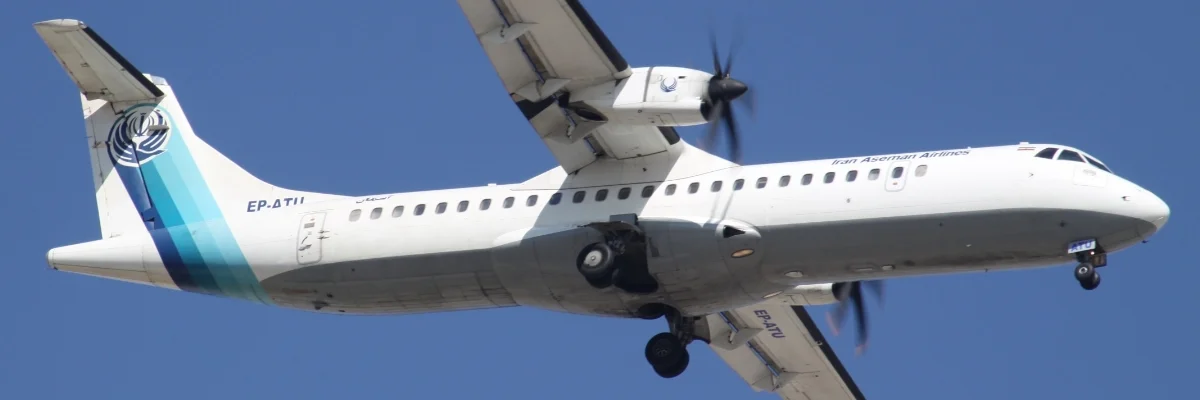
◢ Iranian rescue teams struggled to recover bodies on Tuesday from the wreckage of a plane that crashed in hazardous terrain near a mountain peak two days earlier with 66 people on board.
Iranian rescue teams struggled to recover bodies on Tuesday from the wreckage of a plane that crashed in hazardous terrain near a mountain peak two days earlier with 66 people on board.
"Deep and dangerous crevices in the area of the crash have made it impossible for helicopters to land," Ghafoor Rastinrooz, director of the regional medical centre, told official news agency IRNA. "The bodies must be transferred by hand to the foot of the mountain which will be time-consuming," he said.
Aseman Airlines flight EP3704 disappeared from radar as it flew over the Zagros mountain range on Sunday morning, around 45 minutes after taking off from Tehran on a domestic flight.
After two days of heavy snow and fog, the weather finally cleared on Tuesday morning, allowing a helicopter crew to spot a piece of the wreckage with the company's logo.
A pilot told state broadcaster IRIB he had seen "scattered bodies around the plane" and that it was located on one of the Dena mountains at a height of around 4,000 metres (13,000 feet).
Footage from the helicopter showed a glimpse of the wreckage in deep snow on a sheer mountain face, while officials warned that bad weather was due to return in a few hours.
Around 100 mountaineers have been making their way up the mountain since Monday and teams were being choppered to near the crash site. "Helicopters are dropping off the rescue and relief teams in the nearest spot possible, as accessing the site of the crash is very difficult," Ali Abedzadeh, head of the Civil Aviation Organisation, told state TV.
"Only highly professional and trained mountaineers can go there, get close to the plane and bring back the bodies," he said.
Aviation Safety
The ATR-72 twin-engine plane, in service since 1993, flew early Sunday from the capital's Mehrabad airport towards the city of Yasuj, some 500 kilometres (300 miles) to the south.
A team of crash investigators from French air safety agency BEA was due to arrive in Iran later on Tuesday. The incident has reawakened concerns over aviation safety in Iran, which has been exacerbated by international sanctions over the years.
Aseman Airlines was blacklisted by the European Commission in December 2016. It was one of only three airlines barred over safety concerns -- the other 190 being blacklisted due to broader concerns over oversight in their respective countries.
Iran has complained that sanctions imposed by the United States have jeopardised the safety of its airlines and made it difficult to maintain and modernise ageing fleets.
Aseman was forced to ground many of its planes at the height of the sanctions due to difficulties in obtaining spares. In a working paper presented to the United Nations' International Civil Aviation Organization (ICAO) in 2013, Iran said US sanctions were blocking "the acquisition of parts, services and support essential to aviation safety".
Iran has suffered multiple aviation disasters, most recently in 2014 when 39 people were killed as a Sepahan Airlines plane crashed just after take-off from Tehran, narrowly avoiding many more deaths when it plummeted near a busy market.
But figures from the Flight Safety Foundation, a US-based NGO, suggest Iran is nonetheless above-average in implementing ICAO safety standards.
Lifting sanctions on aviation purchases was a key clause in the nuclear deal that Iran signed with world powers in 2015. Following the deal, Aseman Airlines finalised an agreement to buy 30 Boeing 737 MAX jets for $3 billion (2.4 billion euros) last June, with an option to buy 30 more.
The sale could still be scuppered if US President Donald Trump chooses to reimpose sanctions in the coming months, as he has threatened to do.
By Eric Randolph in Tehran
Photo Credit: Ali Khodaei
New Wave Of Iranian Globetrotters Hits The Road
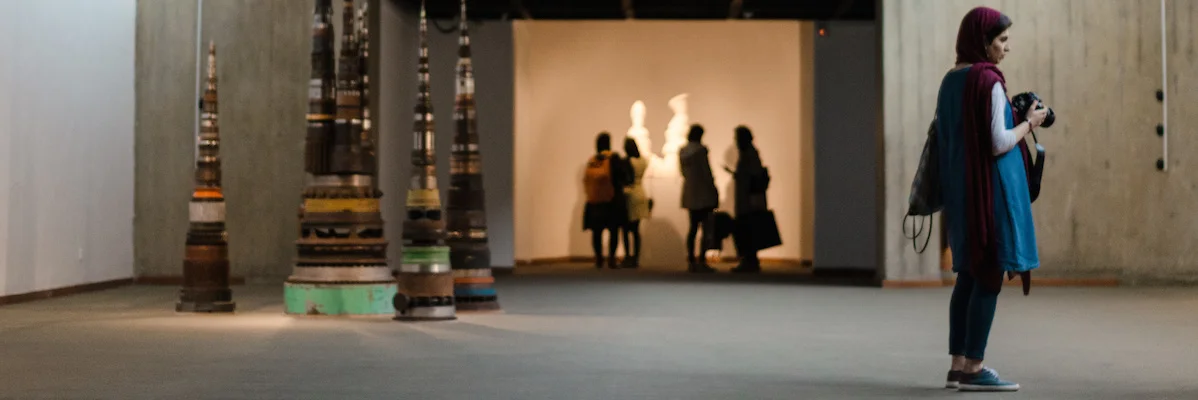
◢ A travel frenzy is gripping young Iranians, who are inspiring each other through social media to overcome traditional constraints and expand their horizons.
A travel frenzy is gripping young Iranians, who are inspiring each other through social media to overcome traditional constraints and expand their horizons.
The exploits of young Iranian travelers, hitchhiking and backpacking their way around the globe, have become immensely popular on Instagram and Telegram, the most widely used apps in Iran, with some gathering more than 200,000 followers.
Iran has long had a globetrotting elite thanks to the large diaspora that fled to the United States and Europe after the 1979 revolution, but now it is the turn of the emerging middle class to stretch their wings, overcoming cultural barriers and parental worries in the process.
Sara Louee, 31, grew up thinking that holidays were a family trip to the northern coasts of Iran.
But two years ago, she met a group of foreigners through the website couchsurfing.com and joined them as they hitchhiked to the ancient city of Yazd.
She was unprepared: "I had absolutely no equipment. I was wearing flimsy girly shoes and had borrowed a backpack from a friend," she told AFP.
But her mind was opened to a world of possibility and she was soon saving for a 40-day trip around Europe, even if it meant battling with her conservative-minded parents.
"My family didn't accept it easily or overnight. I went through a lot of pain. But I gradually proved I could do it with shorter trips and gained their trust," said Louee, who now blogs regularly about her travels.
"These days, if I stay home at the weekend, my dad comes over and asks if something is wrong," she added, laughing.
'Strangers in your room?!'
Other young Iranians, particularly women, say they had been taught that travelling alone was dangerous.
"When I told people I stayed in a hostel in Europe, Iranians would be shocked and say 'You mean there were strangers in your room?! Didn't they do anything to you?'" said Mahzad Elyassi, another travel blogger.
She only heard about hitchhiking for the first time in 2015 but has since travelled to all 32 of Iran's provinces and 20 countries.
"We've proven that Iran is really safe for such trips. It's become a trend.
"One woman said she used my Instagram page to convince her husband, saying: 'If she can do it alone, so can we.'"
Last year, Iran recorded 9.2 million departures, a 38.5-percent increase on the previous year and almost double the numbers a decade ago.
The trend has been helped by President Hassan Rouhani, who came to power in 2013 promising to improve Iran's relations with the world.
Iranians are not welcome everywhere: the United States this year banned them from entry unless they have close family, and European countries have strict and laborious procedures for tourists designed to weed out poor people.
But much of the rest of the world is welcoming Iran's tourist boom, with 38 countries now waiving visas for Iranians.
They include Georgia, Russia, Turkey and Malaysia, and talks are reportedly under way with India.
Tech Support
That has helped encourage travel among those outside of the rich elite by putting the focus on cheaper countries.
"Maybe Iranians don't have enough dollars or euros to travel to Europe but they can explore places like southeast Asia," said Elyassi.
Technology has also been crucial.
"When I started, Google Maps didn't exist. People couldn't just easily travel and share their experiences," said Reza Pakravan, 43, one of Iran's best-known travelers after he broke the world record for crossing the Sahara on a bike.
Alireza Zafari, 38, has spent two years on the "Herculean task" of documenting the whole of Iran for travelers, a project he expects will take another eight years to complete.
He hopes to encourage more Iranians and foreigners to visit Iran's beauty spots rather than the default option of popping across the border to Turkey, still the top choice for Iranians with 2.1 million visits last year thanks to cheap package tours and the availability of booze.
"The reason behind the travel wave is that people have become aware of the world, and technology gives them easy access to the information they need," Zafari told AFP.
By Ali Noorani in Tehran
Photo Credit: Negar Ghaffari, Iran Open Album