
Iran Starts Regional Shuttle Diplomacy Amid U.S. Tensions
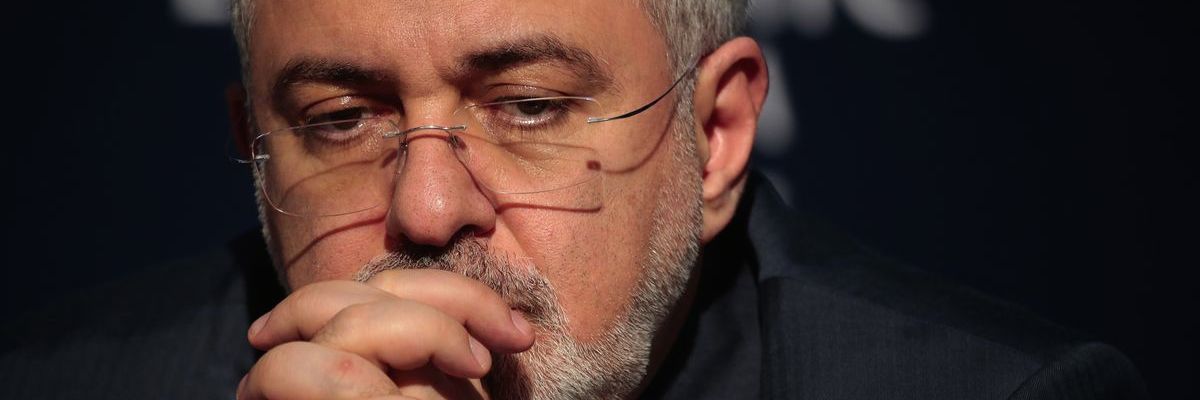
◢ Iran’s top diplomats are touring neighboring countries, including three Arab Gulf monarchies, to try to shore up support after the U.S. announced plans to increase troop deployments in the region and sell weapons to some of the Islamic Republic’s top rivals. Foreign Minister Mohammad Javad Zarif arrived in the Iraqi capital, Baghdad, late Saturday for meetings about the frictions, the semi-official Iranian Students’ News Agency reported.
By Golnar Motevalli
Iran’s top diplomats are touring neighboring countries, including three Arab Gulf monarchies, to try to shore up support after the U.S. announced plans to increase troop deployments in the region and sell weapons to some of the Islamic Republic’s top rivals.
Foreign Minister Mohammad Javad Zarif arrived in the Iraqi capital, Baghdad, late Saturday for meetings about the frictions, the semi-official Iranian Students’ News Agency reported. On Sunday, his deputy, Abbas Araghchi, started a tour of Gulf Arab neighbors including Oman, Kuwait and Qatar, according to the state-run Islamic Republic News Agency.
In Baghdad, Zarif told reports Iran had proposed non-aggression pacts with all Gulf Arab neighbors, IRNA reported, in an apparent effort to limit any U.S.-led regional front against it.
Tehran’s regional diplomacy went into high gear as President Hassan Rouhani hinted that the Islamic Republic could hold a public referendum over the fate of the beleaguered 2015 nuclear deal that’s been crumbling since the U.S. quit it last year. Asked by a journalist whether he’d invoke a constitutional rule on a vote, Rouhani replied: “When this article should be used or whether it should’ve been used before is another matter.”
Drumbeat of Threats
Tensions between the two countries, already high over President Donald Trump’s withdrawal from the nuclear accord that Iran had adhered to, deteriorated dramatically in recent weeks after the White House vowed to force Iran’s vital oil exports down to zero and revoked a series of key sanctions waivers. Frictions escalated even more this month after the U.S. claimed, without citing evidence, that Tehran was planning an escalated campaign against American interests in the region.
The U.S. has made a show of military force in the region, including the announcement Friday that it will send 1,500 additional troops and fighter jets to the region. That same day, the Trump administration also invoked emergency authority to advance the sale of billions of dollars of weapons to countries including Saudi Arabia and the U.A.E., citing the need to deter Iran’s “malign” activities in the Middle East.
For the first time, U.S. officials also said publicly over the weekend that they think Iran is behind recent attacks on tankers in the Gulf and a pipeline in Saudi Arabia.
Iran’s Response
Iran has responded by announcing limited steps to resume nuclear activity restricted under the agreement. It also set a deadline to start its own gradual withdrawal from the deal unless Europe can guarantee the agreement can function.
Zarif left for Iraq immediately after returning from a visit with officials in Pakistan. Departing Islamabad last night, he called the planned U.S. troop buildup “extremely dangerous and a threat to international peace and security.”
In Baghdad, Zarif’s Iraqi counterpart, Mohamad Alhakim, said his country was ready to act as a mediator between Iran and the U.S. to help ease strains.
“We stand by Iran in its position and, God willing, will be an intermediate factor for both parties,” Alhakim said. “We are very hopeful that the region will not slide into a war.”
Photo: Bloomberg
US Details New Sanctions to Hit Iran's Banks, Oil Industry
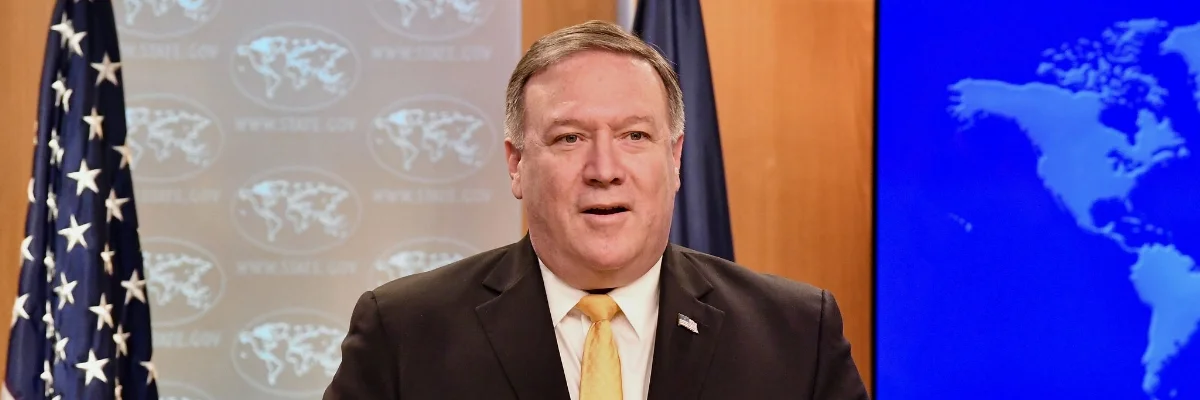
◢ The United States will allow eight countries to continue importing Iranian oil but only at much lower levels after the reimposition of sanctions on Monday, Secretary of State Mike Pompeo said Friday. 700 companies, individuals, businesses, aircraft and ships will be added to the US sanctions list, widely expanding the people and entities Washington seeks to block from accessing global business and financial networks.
he United States will add 700 individuals and entities to its Iran blacklist and pressure the global SWIFT banking network to cut off Tehran when expanded sanctions are put in place next week, US officials said Friday.
But eight countries will be able to continue importing Iranian oil at lower levels in order to avoid upsetting global crude markets when the sanctions take effect on Monday, they said.
The US aims to cripple the Iranian economy to pressure Tehran to halt its nuclear activities and what the US says is broad support for "terrorism" in the region, Secretary of State Mike Pompeo said.
The reimposition of sanctions "is aimed at depriving the regime of the revenues it uses to spread death and destruction around the world," Pompeo said.
"Our ultimate aim is to compel Iran to permanently abandon its well-documented outlaw activities and behave as a normal country."
The sanctions come six months after President Donald Trump withdrew from the 2015 nuclear deal struck between world powers and Iran.
At the time, he began reimposing sanctions that had been suspended or removed by his predecessor Barack Obama. That process will be completed starting from midnight Sunday, US eastern time, when sanctions on the regime's banks, shippers, shipbuilders and oil sector are imposed.
The impact remains in question as other countries, particularly Washington's European allies, resist joining its effort to economically strangle the Tehran regime.
The European Union has gone so far as to protect businesses that operate in Iran. It has announced plans for a legal framework through which firms can skirt US sanctions, although few major corporations have been eager to risk the wrath of penalties in the world's largest economy.
"This is not 2012 when the world was united behind sanctions against Iran. This is the Trump administration trying to force the rest of the world to go along with a policy that most countries do not accept," said Barbara Slavin, an Iran expert at the Washington-based Atlantic Council.
"The US has had some success in terms of frightening away major corporations. The sanctions hurt a lot. But Iran is still going to be able to sell oil," especially to China, she said.
Oil Trade Exemptions
Pompeo said the US will grant exemptions to eight countries that have pledged to or have already cut back on purchases of petroleum from Iran, which has long depended on crude exports to power its economy.
He did not name the eight countries, but they are believed to include India, Japan, South Korea, and possibly China.
Pompeo said the countries agreed that the payments for the oil will go into offshore accounts that Iran will only be able to tap for "humanitarian trade, or bilateral trade in non-sanctioned goods and services."
"Maximum pressure means maximum pressure," Pompeo said.
To punish Iranian banks, US Treasury Secretary Steve Mnuchin said the global financial network SWIFT—which enables secure bank-to-bank communications and transactions -- will also be subject to US sanctions if it provides services to Iranian financial institutions on the US blacklist, which includes most major Iranian banks.
That could make it very hard for Iran to do business with other countries.
"SWIFT is no different than any other entity," Mnuchin said.
US Objective in Question
Justifying the action, Pompeo has issued a list of demands for Iran that go well beyond the nuclear program that was the focus of Obama's deal.
He wants the Shiite clerical regime to withdraw from war-ravaged Syria, where it is a critical ally of President Bashar al-Assad, and to end longstanding support to regional militant movements Hezbollah and Hamas.
The US also wants Iran to stop backing Yemen's Huthi rebels, who are facing a US-supported air campaign led by Saudi Arabia.
But experts don't expect Iran's leaders to immediately throw in the towel.
"It's basically magical thinking. The Iranians have been able to continue their support to regional proxies and allies for 40 years despite economic pressure," said Ali Vaez of the International Crisis Group.
He said the Trump administration believed that a constrained, struggling Iran would see its influence erode. But the final goal, he said, was unclear.
"I think the end-game depends on who you're asking. The president himself is interested in having a broader, better deal with the Iranians, but I believe that most of his national security team are interested in either destabilizing Iran or assuring a regime change in Tehran," Vaez said.
Photo Credit: State.gov