
US Targets Iran Construction Sector with New Sanctions
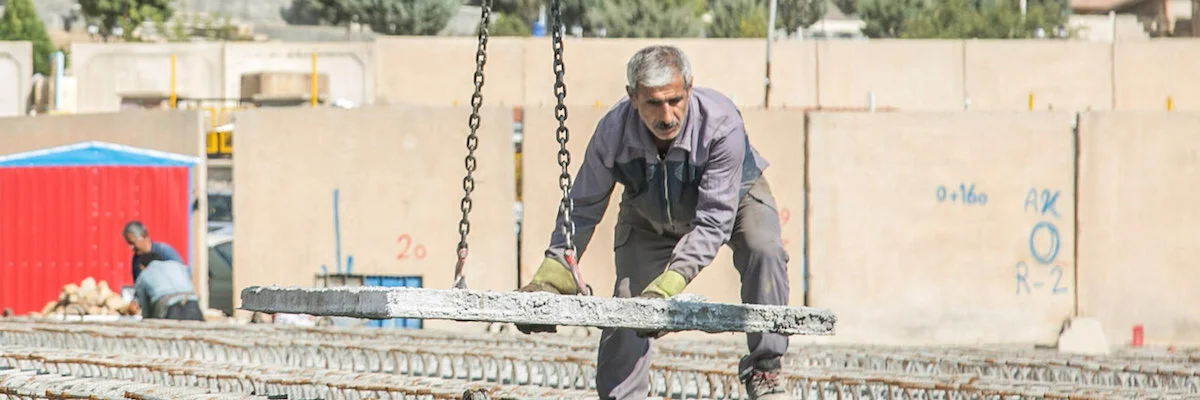
◢ The United States on Thursday extended its sanctions on Iran by taking aim at its construction sector, which Washington linked to the country's Revolutionary Guards. The sanctions, it said, would also target "four strategic materials as being used in connection with Iran's nuclear, military, or ballistic missile programs."
The United States on Thursday extended its sanctions on Iran by taking aim at its construction sector, which Washington linked to the country's Revolutionary Guards.
The sanctions, it said, would also target "four strategic materials as being used in connection with Iran's nuclear, military, or ballistic missile programs."
Secretary of State Mike Pompeo imposed the sanctions after the construction sector was identified as "being controlled directly or indirectly by the Islamic Revolutionary Guard Corps (IRGC)," spokeswoman Morgan Ortagus said in a statement.
Iranian tensions with the United States have escalated sharply since US President Donald Trump last year withdrew from the Iran nuclear deal and began reimposing crippling unilateral sanctions.
Tehran has hit back by suspending its compliance with parts of the nuclear deal until sanctions relief is restored.
The latest sanctions "will help preserve oversight of Iran's civil nuclear program, reduce proliferation risks, constrain Iran's ability to shorten its 'breakout time' to a nuclear weapon, and prevent the regime from reconstituting sites for proliferation-sensitive purposes," Ortagus said.
Just Tuesday, the UN's nuclear watchdog, the International Atomic Energy Agency (IAEA), elected Argentina's Rafael Grossi as its new head.
The IAEA is tasked with monitoring Iran's nuclear activities to ensure they abide by the terms of the 2015 deal known as the Joint Comprehensive Plan of Action (JCPOA).
The deal has become more shaky since the US pullout. However its European parties have repeatedly said they are committed to saving the accord, but their efforts have so far borne little fruit.
The decision to continue with restrictions on Iran's nuclear program gives the United States additional authority "to prevent Iran from acquiring strategic materials for the IRGC, its construction sector, and its proliferation programs," Ortagus said.
Tehran has hit back three times with countermeasures in response to the US withdrawal from the nuclear deal.
On July 1, Iran said it had increased its stockpile of enriched uranium to beyond a 300-kilogramme maximum set by the deal, and a week later it announced it had exceeded a 3.67-percent cap on the purity of its uranium stocks.
In its latest move it fired up advanced centrifuges to boost its enriched uranium stockpiles on September 7.
Photo: IRNA
Under Pressure, Some Young Iranians Persevere, But Many Want to Flee
◢ Some young Iranians are determined to modernize their country and rescue it from economic collapse. But facing relentless US pressure and increasing hardship, many of the educated elite simply want to leave. In some ways things have improved for young people, but not fast enough to meet their heightened expectations. Today, they openly criticize the government and the system in a way that would have been unthinkable even a few years ago, but they feel ignored. "Officials don't listen to young people. They ignore their hopes, their views on life, society, religion, politics," said Ehsan, a 24-year-old student.
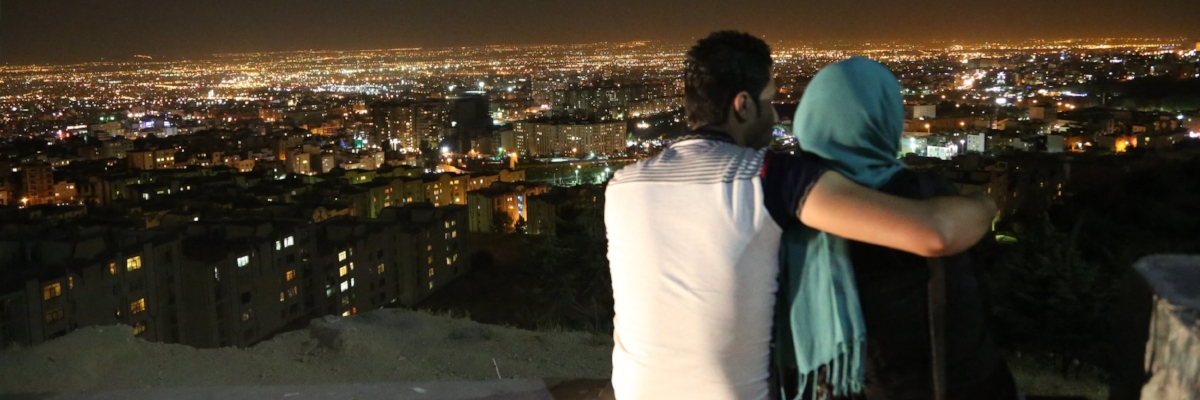
Some young Iranians are determined to modernize their country and rescue it from economic collapse. But facing relentless US pressure and increasing hardship, many of the educated elite simply want to leave.
On an up-market balcony in Tehran, shaded from a roasting summer sun, a string of entrepreneurs are filming success stories and advice for the next generation of start-up wannabes.
For a country supposedly on the brink of economic meltdown, the mood is surprisingly upbeat.
"We are experts in adapting to times of trouble," said Reza Ghiabi, CEO of a tech-focused consultancy firm, who calls himself an "unshakable responsible optimist".
"Many Iranians had success in the past in Berlin, Silicon Valley and London, but our generation is tired of emigrating and being just an employee. Now we're trying to create something for ourselves," he told AFP.
Everyone knows the challenges are daunting: rampant unemployment, rising prices, a crashing currency.
None of it is helped by the return of full-scale US sanctions next month following Washington's decision to abandon the 2015 nuclear deal, nor the bellicose threats between President Donald Trump and Iranian officials in recent days.
"We understand this is not a good situation, but we can't just wait for things to get better. We have to do it ourselves," said Alireza Khodaie, 30, who makes high-end shoes and is one of the organizers behind Tehran's inaugural Start-Up Week that begins on August 3.
There are a few examples that offer hope for Iran's highly educated, globalized youth: the huge success of taxi app Snapp, a slew of hip new cafes and restaurants, and tech hubs fostering everything from music streaming services to online education portals.
The more business-friendly government of President Hassan Rouhani is less suspicious than its predecessors of these Western-influenced innovations.
"We've tried to be independent in the past, but we can't ignore the government, and there are now people who understand and listen. We want to be part of policy-making," said Khodaie.
'I Won't Find Work'
But that sort of optimism is fading among Iran's educated middle- and upper-classes, who see little prospect of political and economic change.
If officials in Washington hope that will lead to mass protests against the government, they are likely to be disappointed. The brutal response to past demonstrations, and fears that protests could degenerate into violent chaos like in Syria, have bred a weary resignation.
Instead, most just want to leave.
"Young people have lost all hope in their future," said 21-year-old law student Parisa.
"I've been looking for work for three months to pay for my studies and help my father. I'm a law student but I know that once my studies are finished I won't find work," she said.
"There are many who want to leave and they are right because over there, they can progress and will have a decent salary."
The US stepped up its pressure campaign this weekend, with Trump threatening unprecedented "suffering" for Iran, and Secretary of State Mike Pompeo announcing a renewed propaganda effort to undermine its leaders.
But that is largely background noise to Iran's youth. Around two-thirds of Iranians were born after the 1979 revolution and have grown up with the incessant back-and-forth between their government and Washington.
They are more focused on what is happening internally, and for many it was the decision in April to block the most popular social media app Telegram that was the final straw.
"I spent two days in my room, I was so depressed," said a film editor in her 20s who campaigned for Rouhani's re-election last year when he vowed no more censorship.
"He made all these promises, and still this happened. I used to be so angry with all my friends who were leaving, but for the first time I thought maybe it's time to go."
'Officials Don't Listen'
In some ways things have improved for young people, but not fast enough to meet their heightened expectations.
Today, they openly criticize the government and the system in a way that would have been unthinkable even a few years ago, but they feel ignored.
"Officials don't listen to young people. They ignore their hopes, their views on life, society, religion, politics," said Ehsan, a 24-year-old student.
"I was one of those who told my friends they must vote because that allowed us to demand things... but now I see we can't do anything."
But abandoning friends, family and homeland is tough, so for the optimistic entrepreneurs there is a determination to struggle through.
Sanctions have not been entirely negative, said Amirreza Mohammadi, another of Start-Up Week's organizers.
By blocking foreign competition, sanctions "created jobs for young Iranians and created a desire to push forward our own projects," he said.
"Maybe one day I'll be forced to leave too," said Khodaie. "But this is somewhere I can have an impact and that moves me to stay."
Photo Credit: Ted Regencia