
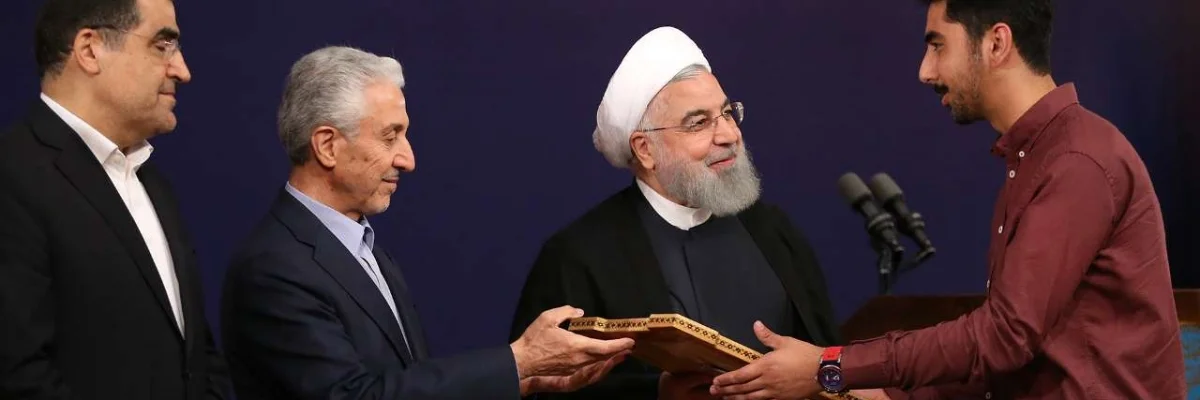
US is Loser by Abandoning Iran Nuclear Deal: Rouhani
◢ Iran's president boasted Sunday that the United States has lost against the Islamic republic's "righteousness and wisdom" by walking out of the landmark nuclear deal. "Everyone knows that America has lost legally and politically by giving up on its international obligations and that we have achieved victory," said President Hassan Rouhani in a speech at the University of Tehran to mark the beginning of the school year.
Iran's president boasted Sunday that the United States has lost against the Islamic republic's "righteousness and wisdom" by walking out of the landmark nuclear deal.
"Everyone knows that America has lost legally and politically by giving up on its international obligations and that we have achieved victory," said President Hassan Rouhani in a speech at the University of Tehran to mark the beginning of the school year.
“There are but a few countries in the world that would call the US withdrawal from the JCPOA (nuclear deal) a good move," he added.
"Those that are cautious express disappointment, those that are more frank say it was a mistake, and the outspoken say it was illegal."
Washington pulled out of the 2015 nuclear deal between Iran and six world powers in May and is reimposing punishing sanctions on the country, hoping to pressure Tehran into what President Donald Trump calls a "better deal.”
The US is due to complete the reimposition of sanctions on November 5, targeting Iran's oil sector and central bank.
"There has never been a more spiteful team than the current US administration toward Iran, Iranians and the Islamic Republic," Rouhani said.
He said nothing would change on November 5 since "America has already done whatever it can.”
The other parties to the nuclear agreement—Russia, China, the UK, France and Germany—have all pledged to continue to try to make the deal work, despite their firms being vulnerable to the US sanctions if they keep doing business with Iran.
Rouhani said Iran's response had left Washington "empty-handed".
"They expected us to leave the JCPOA hours after they announced they are, and what would have happened? The case would have returned to the UN Security Council, turned against Iran and isolated us," he said.
He said Iran had lost nothing by staying in the deal and could leave "whenever" it chooses.
Photo Credit: IRNA
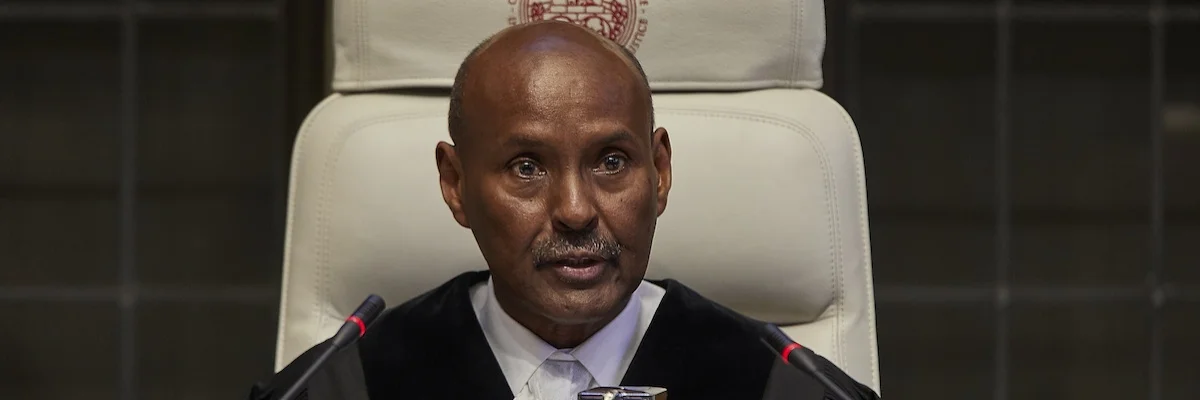
UN Court Tells US to Ease Iran Sanctions in Blow for Trump
◢ The UN's top court ordered the United States on Wednesday to lift sanctions on humanitarian goods for Iran, in a stinging rebuke for the Trump administration which nonetheless made clear the decision would change nothing. Tehran declared victory after the International Court of Justice ruled that sanctions reimposed after President Donald Trump pulled out of a nuclear deal put Iranian lives at risk.
The UN's top court ordered the United States on Wednesday to lift sanctions on humanitarian goods for Iran, in a stinging rebuke for the Trump administration which nonetheless made clear the decision would change nothing.
Tehran declared victory after the International Court of Justice ruled that sanctions reimposed after President Donald Trump pulled out of a nuclear deal put Iranian lives at risk.
But the United States insisted it was already allowing humanitarian
exemptions and, accusing Iran of seeking a "propaganda" win, announced it was
terminating a treaty on which the case was based.
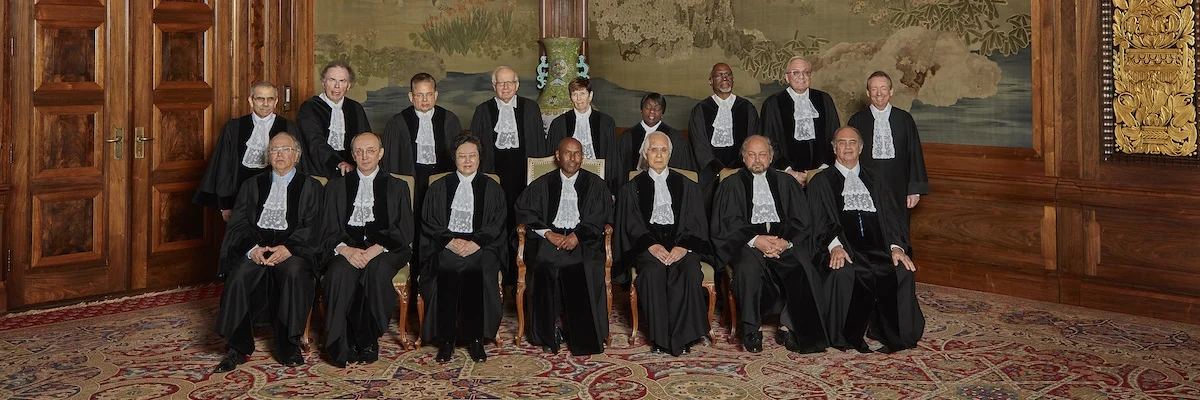
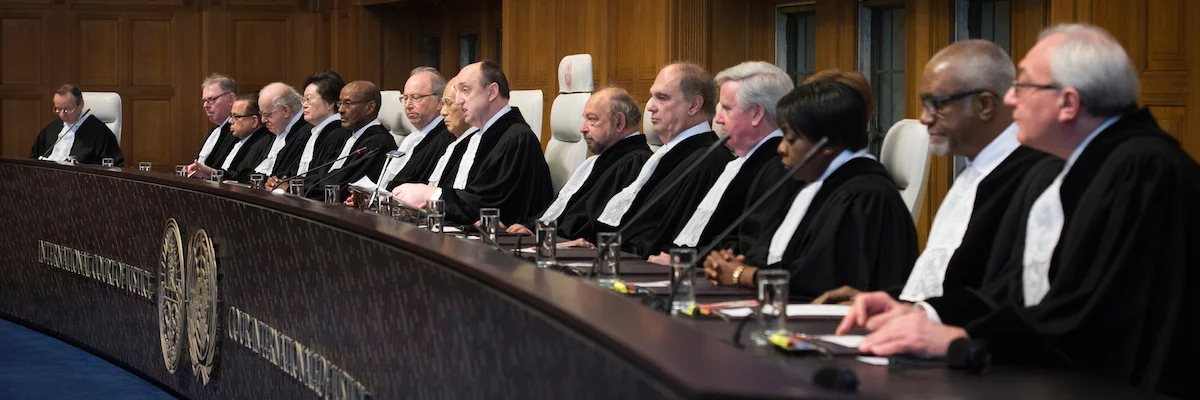
The judges at the court in The Hague ruled unanimously that sanctions on some goods breached the 1955 Treaty of Amity between Iran and the United States that predates Iran's Islamic Revolution.
They called on Washington to "remove by means of its choosing any impediments arising from the measures announced on 8 May to the free exportation to Iran of medicines and medical devices, food and agricultural commodities" as well as airplane parts and services, chief judge Abdulqawi Ahmed Yusuf said.
The court said sanctions on goods "required for humanitarian needs... may have a serious detrimental impact on the health and lives of individuals on the territory of Iran."
US sanctions also had the "potential to endanger civil aviation safety in Iran."
Trump slapped a first round of sanctions on Iran in August after pulling out in May from the 2015 international deal aimed at curbing Tehran's nuclear ambitions, to the dismay of his European allies. A second round of punitive measures is due in November.
Iran Hails Ruling
Iran dragged the United States to the ICJ in July and, during four days of hearings in late August, its lawyers accused Washington of "strangling" its economy.
Foreign drugs are now a rare commodity in Iran which is also dealing with a free-falling rial currency and price hikes. Official Iranian statements acknowledge the shortage and say imports of certain drugs are no longer subsidised.
Iranian Foreign Minister Mohammad Javad Zarif called the court ruling "another failure for (the) sanctions-addicted US government and victory for rule of law".
The foreign ministry said in a statement that the ruling was a "clear sign" that "Iran is in the right".
But US Secretary of State Mike Pompeo accused Iran of "abusing the ICJ for political and propaganda purposes" and noted that the court did not reject US sanctions more broadly.
"The court's ruling today was a defeat for Iran. It rightly rejected all of Iran's baseless requests," Pompeo told reporters in Washington.
He said that the United States was ending the 1955 friendship treaty, signed when Iran was ruled by the Western-oriented shah.
"This is a decision, frankly, that is 39 years overdue," Pompeo said, referring to the time since the 1979 Islamic revolution transformed Iran from one of the closest US allies to a sworn foe.
"Given Iran's history of terrorism, ballistic missile activity and other malign behaviours, Iran's claims under the treaty are absurd," he said.
Zarif said that the move showed the United States to be an "outlaw regime".
The end of the treaty will have little direct effect but Iran as well as the United States have cited it in court cases including when Tehran sought compensation when the US Navy downed an Iran Air civilian flight in 1988, killing 290 people.
Wednesday's ruling is in fact a decision on so-called provisional measures ahead of a final ruling which may take several more years, experts said.
Decisions by the Hague-based ICJ, which rules on disputes between United Nations members, are binding but it has no mechanism through which it can enforce its decisions.
Iran, US Ignored Rulings
In 1986, Washington disregarded the court's finding that it had violated international law by supporting the pro-US Contra the ICJ's ruling rebels in Nicaragua.
Iran in turn ignored the ICJ's ruling in 1980 to release hostages seized when revolutionary zealots took over the US embassy.
Trump has repeatedly voiced disdain for international organizations that he sees as limiting US sovereignty.
Trump's national security adviser John Bolton recently threatened that the United States would take action against any judge from the separate International Criminal Court who pursues a case against US troops in Afghanistan.
Negotiated under his predecessor Barack Obama, Trump argues that the 2015 Iran deal gave Tehran money to support extremist groups and build nuclear-capable missiles.
European allies have pledged to keep the agreement alive, with plans for a mechanism to let firms skirt the US sanctions as they do business with Iran.
Hearings in a separate Iranian case against the US freezing of around USD 2 billion of Iranian assets to help American terror victims are due to start at the ICJ next week.
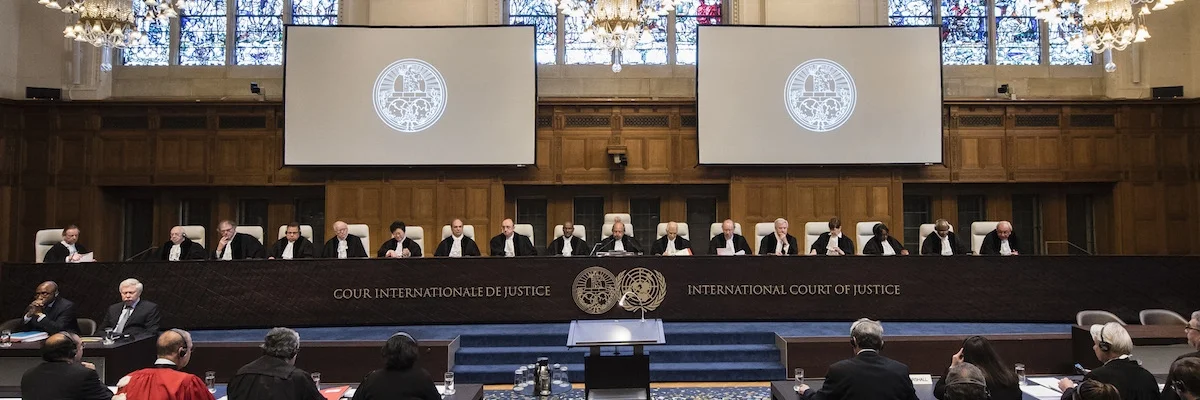
US Must Lift 'Humanitarian' Sanctions on Iran: UN court
◢ The UN's top court Wednesday ordered the United States to lift sanctions on "humanitarian" goods to Iran that President Donald Trump reimposed after pulling out of Tehran's nuclear deal. The International Court of Justice unanimously ruled that Washington "shall remove by means of its choosing any impediments arising from the measures announced on May 8 to the free exportation to Iran of medicines and medical devices, food and agricultural commodities" as well as airplane parts, said judge Abdulqawi Ahmed Yusuf.
Editor’s Note: The full text of the order of the International Court of Justice can be seen here.
The UN's top court Wednesday ordered the United States to lift sanctions on "humanitarian" goods to Iran that President Donald Trump reimposed after pulling out of Tehran's nuclear deal.
The International Court of Justice unanimously ruled that Washington "shall remove by means of its choosing any impediments arising from the measures announced on May 8 to the free exportation to Iran of medicines and medical devices, food and agricultural commodities" as well as airplane parts, said judge Abdulqawi Ahmed Yusuf.
The court said sanctions on goods "required for humanitarian needs... may have a serious detrimental impact on the health and lives of individuals on the territory of Iran."
US sanctions on aircraft spare parts also had the "potential to endanger civil aviation safety in Iran and the lives of its users.”
Trump slapped a first round of sanctions on Iran in August after pulling out in May of a historic deal aimed at curbing Tehran's nuclear ambitions, to the dismay of his European allies. A second round of punitive measures is due in November.
The ICJ rules on disputes between United Nations member states. Its decisions are binding and cannot be appealed, but it has no mechanism to enforce them.
Photo Credit: ICJ
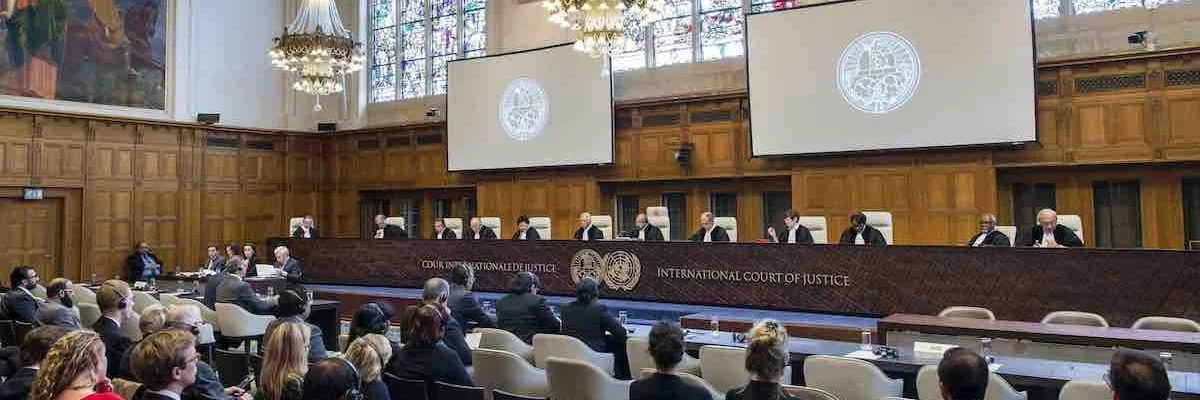
Iran, US in Tense Wait for World Court Sanctions Ruling
◢ The International Court of Justice will hand down an eagerly awaited decision this week on Iran's demand for the suspension of debilitating nuclear-related sanctions imposed by the United States. Accusing Washington of "strangling" its economy, Tehran has asked the court in The Hague to order Washington to lift the measures, reimposed after US President Donald Trump pulled out of a multilateral 2015 accord.
The International Court of Justice will hand down an eagerly awaited decision this week on Iran's demand for the suspension of debilitating nuclear-related sanctions imposed by the United States.
Accusing Washington of "strangling" its economy, Tehran has asked the court in The Hague to order Washington to lift the measures, reimposed after US President Donald Trump pulled out of a multilateral 2015 accord.
Despite its long enmity with the United States, Iran brought the case under a 1955 "friendship treaty" that predates the country's Islamic Revolution.
Washington has forcefully told the court, which rules on disputes between United Nations member states, that it has no jurisdiction to rule on the case as it concerns a matter of national security.
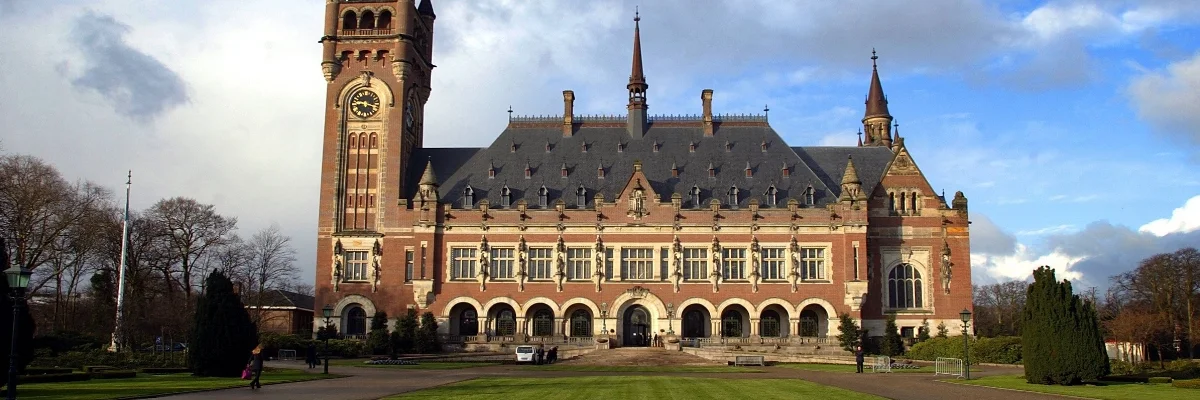
The ruling on Wednesday at 0800 GMT—in the grand surroundings of the 1913-built Peace Palace in the Dutch city—follows four days of hearings at the end of August.
Rulings by the ICJ are binding and cannot be appealed, but it has no way to enforce its decisions.
"If the court orders measures, they should be respected," Eric De Brabandere, a professor of international law at the University of Leiden, told AFP.
If the court decides it has jurisdiction, it will likely "declare that the parties should refrain from aggravating the dispute", but any steps beyond this remain to be seen, he said.
The 2015 nuclear deal saw Iran agree to limit its nuclear program and let in international inspectors in return for an end to years of sanctions by the West.
But Trump pulled out of the deal in May, to the dismay of European allies, arguing that funds from the lifting of sanctions under the pact had been used to support terrorism and build nuclear-capable missiles.
'Economic Warfare'
At the United Nations General Assembly last week, Trump denounced the deal as "horrible" and "one-sided.”
During the ICJ hearings, Iran said the sanctions reintroduced in September are causing economic suffering for its citizens. US lawyers retorted that economic mismanagement was at the root of Iran's woes.
A second wave of US measures is due to hit Iran in early November, targeting its vital oil exports.
Experts said the Iran-US case was an important opportunity for the ICJ to rule on the issue of "economic warfare"—not currently designated as a use of force.
The case "may offer the court sufficient legal basis to indicate a limit under international law to coercion by the US," Geoff Gordon, an international law expert at the Asser Institute in The Hague, told AFP.
"International law, for reasons to do with power politics, has never formally recognized economic warfare to be a use of force as prohibited by the UN Charter, though economic sanctions can have the same effects and worse as guns and bombs."
But he warned that "the decision is likely to be occasion for escalating tensions."
Relations have plunged to a new low since Trump's election, even as the US president reaches out to North Korean leader Kim Jong-un over his nuclear program.
Trump and Iranian President Hassan Rouhani faced off at the UN last week, with Rouhani denouncing leaders with "xenophobic tendencies resembling a Nazi disposition."
Despite their 1955 Treaty of Amity and Economic Relations, Iran and the United States have not had diplomatic ties since 1980.
The ICJ was set up in 1946, after the carnage of World War II, to rule in disputes between countries.
Photo Credit: ICJ
US Accuses Iran of Bad Faith Over Sanctions Lawsuit
◢ The United States on Wednesday accused Iran of bad faith for challenging Washington's renewed nuclear-linked sanctions against it at the UN's top court. Iran has asked the International Court of Justice to order the United States to lift the sanctions, reimposed after US President Donald Trump pulled out of a multilateral 2015 accord.
The United States on Wednesday accused Iran of bad faith for challenging Washington's renewed nuclear-linked sanctions against it at the UN's top court.
Iran has asked the International Court of Justice to order the United States to lift the sanctions, reimposed after US President Donald Trump pulled out of a multilateral 2015 accord.
Iran brought the case at the court in The Hague under a 1955 friendship treaty that predates the country's Islamic Revolution.
Washington told the court it had no jurisdiction to rule on the case, which it said was a matter of national security.
"Iran is not invoking the treaty of amity in good faith in this proceeding," US State Department lawyer Jennifer Newstead said in her closing argument.
"Iran cannot be permitted to draw this court into a political and psychological campaign" against the United States, she added.
During four days of hearings, Iran said the sanctions reintroduced this month are causing economic suffering for its citizens.
The US lawyers retorted that economic mismanagement was at the root of Iran's woes.
A second wave of US measures is due to hit Iran in early November, targeting its vital oil exports.
Closing the hearings, ICJ president Abdulqawi Yusuf said the court would issue a ruling "as soon as possible" but did not set a date.
"The judges are well aware of the political stakes," said Eric De Brabandere, professor of international dispute settlement at Leiden University in the Netherlands.
But "in principle the court will focus strictly on the legal aspects of the case", he told AFP.
Despite their 1955 Treaty of Amity and Economic Relations, Iran and the United States have not had diplomatic ties since 1980.
The ICJ was set up in 1946 to rule in disputes between countries.
The court is tasked with deciding only whether it has jurisdiction over Iran's request, De Brabandere said.
But he noted that "the political consequences of the decision are of course important," since either state would see a favorable outcome as "a huge victory."
Photo Credit: ICJ
UN Court Has No Jurisdiction in Iran Sanctions Case: US
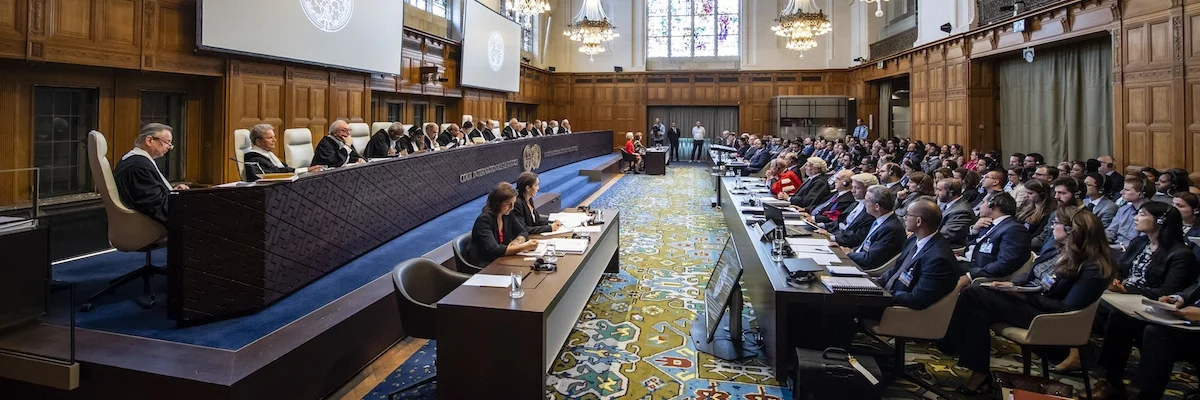
◢ The United States told UN judges Tuesday they had no jurisdiction to rule on Tehran's demand for them to order the suspension of debilitating nuclear-related sanctions against Iran. US State Department lawyer Jennifer Newstead told the court in The Hague that the 1955 treaty under which Iran has challenged the sanctions "cannot... provide a basis for this court's jurisdiction."
The United States told UN judges Tuesday they had no jurisdiction to rule on Tehran's demand for them to order the suspension of debilitating nuclear-related sanctions against Iran.
Iran has argued that US President Donald Trump breached a 1955 treaty with his decision to reimpose the sanctions after withdrawing from a multilateral nuclear accord.
But US State Department lawyer Jennifer Newstead told the court in The Hague that it "lacks prima facie jurisdiction to hear Iran's claims".
But Newstead argued that the United States had the right to protect its national security and other interests.
The treaty "cannot therefore provide a basis for this court's jurisdiction" in the case, she said.
The United States and several other world powers lifted sanctions on Iran under a 2015 accord after years of diplomacy. In return, Tehran made commitments not to seek to build nuclear weapons.
Trump said the 2015 accord did not do enough to curb the threat from Iran. He pulled out of the accord in May and began reimposing sanctions this month.
In the first day of hearings at the ICJ on Monday, Iran's lawyers said the sanctions were threatening the welfare of its citizens and disrupting tens of billions of dollars' worth of business deals.
Photo Credit: ICJ
Iran Urges UN Court to Halt 'Economic Strangulation' by US
◢ Iran on Monday demanded the UN's top court suspend US nuclear-linked sanctions against Tehran, accusing Washington of plotting its "economic strangulation.” The Islamic Republic launched a suit at the International Court of Justice in The Hague over US President Donald Trump's decision to reimpose the sanctions that had been lifted in a 2015 accord.
Iran on Monday demanded the UN's top court suspend US nuclear-linked sanctions against Tehran, accusing Washington of plotting its "economic strangulation".
The Islamic Republic launched a suit at the International Court of Justice in The Hague over US President Donald Trump's decision to reimpose the sanctions that had been lifted in a 2015 accord.
Iran says Trump's move breaches a 1955 treaty. It told the court the measures were already devastating its economy and threatening the welfare of its citizens.
"The United States is publicly propagating a policy intended to damage as severely as possible Iran's economy and Iranian nationals and companies," Iran's lawyer Mohsen Mohebi told the court.
"This policy is nothing but naked economic aggression against my country," he added.
"Iran will put up the strongest resistance to the US economic strangulation, by all peaceful means."
US lawyers are due to give their response in arguments before the court on Tuesday.
Sanctions had been lifted under a 2015 multilateral agreement in return for Iran committing not to pursue nuclear weapons.
But Trump reimposed unilateral sanctions three weeks ago. He said they were needed to ensure Iran never builds a nuclear bomb.
A second wave of punitive measures are due to hit Iran in early November, targeting its vital energy sector including oil exports.
'Irreparable prejudice'
The US measures have added to Iran's economic woes, helping to fuel strikes and protests from across the country and political spectrum.
In the latest blow, Iran's parliament impeached Economy Minister Masoud Karbasian on Sunday.
Tehran filed its case before the ICJ in late July, calling on the Hague-based tribunal's judges to order the immediate lifting of sanctions pending a definitive ruling.
It said the sanctions would cause it "irreparable prejudice". It argues they breach the 1955 Treaty of Amity and Economic Relations between Iran and the United States.
'One-sided deal'
The ICJ is expected to take a couple of months to decide whether to grant Tehran's request for a provisional ruling. A final decision in the case may take years.
The 2015 deal was signed by Iran and the five permanent members of the United Nations Security Council plus Germany.
Trump, who took office in 2016, called it a "horrible one-sided deal."
He said it "failed to achieve the fundamental objective of blocking all paths to a Iranian nuclear bomb."
To the horror of the other signatories, Trump pulled out and announced in May that he would reinstate sanctions.
'Neither war, nor negotiations' -
Tehran says that the new sanctions are already hurting its economy. Iran's currency the rial has lost around half its value since April.
In a court filing at the ICJ, Iran's lawyers said the US sanctions threaten tens of billions of dollars' worth of business deals with foreign companies.
International companies including France's Total, Peugeot and Renault, and Germany's Siemens and Daimler, have suspended operations in Iran since Trump announced the US withdrawal from the nuclear deal in May.
Air France and British Airways announced Thursday they would halt flights to Tehran next month, saying they were not commercially viable. The British carrier added however that the decision was unrelated to the fresh sanctions.
Trump said the sanctions would turn up the financial pressure on Tehran to come to a "comprehensive and lasting solution" regarding its activities such as its "ballistic missile program and its support for terrorism."
Iran's supreme leader Ayatollah Ali Khamenei this month appeared to rule out any immediate prospect of talks, saying "there will be neither war, nor negotiations," with the US.
Washington's lawyers will present their case on Tuesday, with a second round of arguments on Wednesday and Thursday. Experts expect the US to challenge the ICJ's jurisdiction.
The ICJ was set up in 1946 to rule in disputes between countries.
Photo Credit: ICJ
Four Questions on Iran's Legal Challenge to US Sanctions
◢ Iran's legal challenge against renewed sanctions by the United States goes before the UN's International Court of Justice on Monday. The case has two elements, said Eric De Brabandere, professor of international dispute settlement at Leiden University in the Netherlands. Firstly, "Iran genuinely considers the re-imposition of sanctions a violation of international law." Secondly, "Iran has the support of many European states on the question of sanctions, politically speaking.”
Iran's legal challenge against renewed sanctions by the United States goes before the UN's International Court of Justice on Monday.
Here are four key questions regarding the case:
What is the case about?
Iran's attempt to block the reinstatement of sanctions, announced by US President Donald Trump earlier this year, is the latest in a series of court battles that Tehran and Washington are fighting at the ICJ.
Trump announced on May 8 that he was pulling out of a landmark deal between Iran and major powers aimed at preventing Tehran from acquiring a nuclear weapon.
The deal agreed with the UN's five permanent Security Council members and Germany in 2015 limits Tehran's stockpile of enriched uranium until 2031 in exchange for sanctions relief.
Blasting the accord as a "horrible, one-sided deal", Trump reimposed a wave of tough, unilateral sanctions.
Tehran now accuses Washington of "besieging" its economy and wants the Hague-based court—which rules in disputes between countries—to order the US to temporarily halt punitive measures, while the judges mull the deeper merits of the case.
Does Tehran have a case?
The case has two elements, said Eric De Brabandere, professor of international dispute settlement at Leiden University in the Netherlands.
Firstly, "Iran genuinely considers the re-imposition of sanctions a violation of international law."
Secondly, "Iran has the support of many European states on the question of sanctions, politically speaking," De Brabandere argued.
Iran's representatives need to convince the ICJ that its 15 permanent judges indeed have the jurisdiction to hear the case.
Tehran bases its arguments on a little-known 1955 treaty between Iran and the United States. The treaty provides for "friendly relations" between the two countries, encourages mutual trade and investment and regulates consular relations.
However, there has been no formal diplomatic ties between Tehran and Washington since the regime of the US-back Shah was deposed by Iran's Islamic revolution in 1979.
What will Washington argue?
"My guess is that for this case they will argue that the court has no jurisdiction, as they did in a separate case launched against the US two years ago," said De Brabandere.
Washington could invoke two arguments.
One is that the 1955 treaty is no longer in force, because it is a "treaty of friendship" between two nations which have been adversaries for the last four decades.
Secondly, US representatives could say that the dispute was "not about the treaty, but about sanctions and Iran's alleged terrorist activities," De Brabandere said.
"The US is likely to argue that the dispute is about something much broader than a treaty," for instance Tehran's nuclear ambitions, the expert said.
Furthermore, there is a clause in the 1955 treaty which allows the states to take "any measures to protect essential security interests."
Can Iran's case succeed?
"I think it's very likely that the ICJ will, based on the 1955 treaty, decide to hear the case," said De Brabandere.
However, whether the case will be successful on its own merits—in other words whether the United States indeed breached its obligations—is more difficult to establish.
"For one, the 1955 treaty is relatively narrow in scope. It means that the ICJ can only rule whether the US violated its obligations under the specific treaty," De Brabandere said.
This means that the ICJ's judges will not rule in what they may consider any broader dispute between Iran and the United States.
The outcome of the case—which could still take years before being handed down—"is very difficult to predict," said De Brabandere.
Photo Credit: ICJ
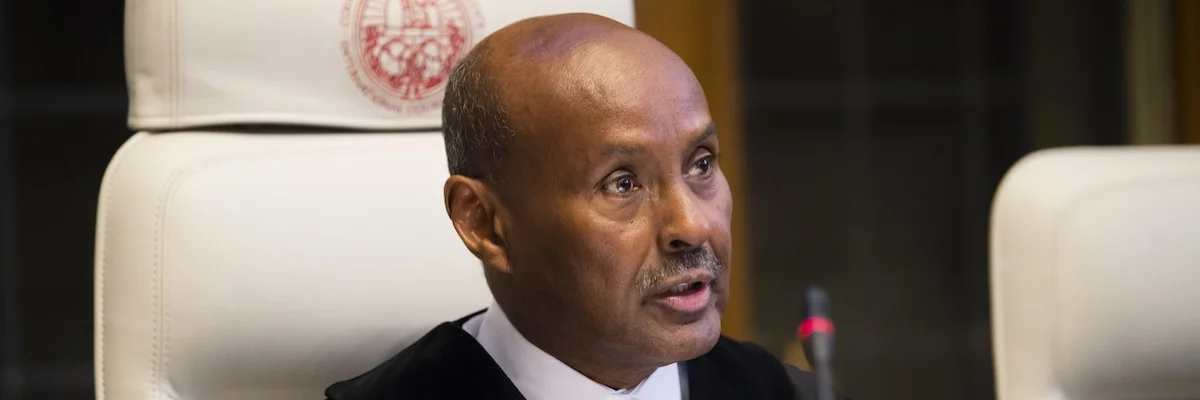
Iran Versus US Battle to Hit UN's Top Court in August
◢ The UN's top court said Thursday it will hold hearings next month in a bitter battle between Iran and the United States, after President Donald Trump reimposed sanctions on the Islamic republic. "The International Court of Justice (ICJ), the principal judicial organ of the United Nations, will hold public hearings from Monday 27 to Thursday 30 August in the case" concerning Iran versus the United States, the tribunal said.
The UN's top court said Thursday it will hold hearings next month in a bitter battle between Iran and the United States, after President Donald Trump reimposed sanctions on the Islamic republic.
"The International Court of Justice (ICJ), the principal judicial organ of the United Nations, will hold public hearings from Monday 27 to Thursday 30 August in the case" concerning Iran versus the United States, the tribunal said.
"The hearings will be devoted to the request for the indication of provisional measures submitted by Iran," it added in a statement.
Tehran filed its case with the ICJ last week calling for the judges to order the immediate lifting of the sanctions which they said would cause "irreparable prejudice."
Iran maintained restoring the penalities, lifted under the landmark 2015 deal aimed at reining in Tehran's nuclear ambitions, violated a decades-old treaty.
Nuclear-related sanctions are set to be reimposed by Washington in two phases in August and November, and seek to bar European and other foreign companies from doing business with Iran and blocking its oil sales abroad.
Iran argued in its filing to the court that the move would break a 1955 Treaty of Amity and Economic Relations concluded between the two countries before the Islamic revolution under the regime of the shah. But the two foes have not had official diplomatic relations since 1980.
The court, set up in 1946 in The Hague to rule in disputes between nations, revealed Wednesday that its president, judge Abdulqawi Ahmed Yusuf, had taken the unusual step to write a letter about the case directly to US Secretary of State Mike Pompeo.
It did not reveal the contents, but said under its rules the court could appeal to any party "to act in such a way as will enable any order the court may make ... to have its appropriate effects."
Over the objections of allies, Trump in May withdrew the United States from the nuclear deal signed between Tehran and world powers in 2015.
He ordered the reimposition of the US sanctions that had been suspended in return for controls on Tehran's nuclear program, effectively barring many multinational firms from doing business in Iran.
Four days of hearings into an earlier complaint lodged by Iran in October 2016 against the US for freezing around USD 2 billion of its assets abroad are due to start on October 8 when the United States will argue the court has no authority to hear the case.
Photo Credit: ICJ
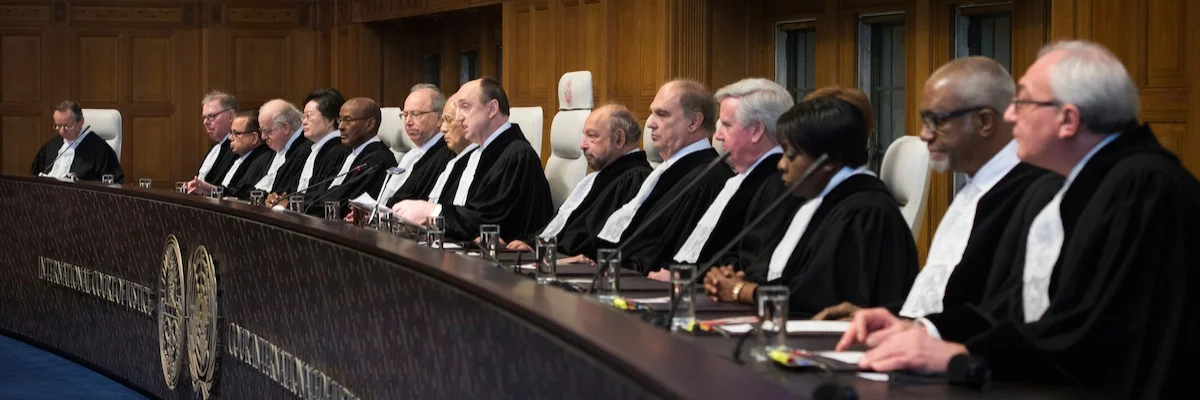
Iran Lodges Complaint Against US Over Renewed Sanctions
◢ Iran has lodged a complaint with the International Court of Justice against the United States' reimposition of sanctions, the foreign ministry said on Tuesday. The complaint was registered the previous day, spokesman Bahram Ghasemi said on the ministry's website. The goal is "to hold US accountable for its unlawful re-imposition of unilateral sanctions," Foreign Minister Mohammad Javad Zarif wrote on Twitter.
Iran has lodged a complaint with the International Court of Justice against the United States' reimposition of sanctions, the foreign ministry said on Tuesday.
The complaint was registered the previous day, spokesman Bahram Ghasemi said on the ministry's website.
The goal is "to hold US accountable for its unlawful re-imposition of unilateral sanctions," Foreign Minister Mohammad Javad Zarif wrote on Twitter.
"Iran is committed to the rule of law in the face of US contempt for diplomacy and legal obligations. It's imperative to counter its habit of violating (international) law," he added.
The complaint came in response to Washington's decision in May to abandon the 2015 nuclear deal and reimpose sanctions on Iran.
Tehran says the action violates international obligations, including the 1955 US-Iran Treaty of Amity—an agreement signed well before Iran's 1979 revolution, but which is still invoked in ongoing legal battles.
Iran and the US have not had diplomatic relations since 1980 when American embassy officials were held hostage in Iran.
Zarif addressed world diplomats and Iranian businessmen at a lavish Tehran hotel on Monday night, in a meeting designed as a show of continued mutual support in the face of US aggression.
"This administration in the United States doesn't know how to behave towards the world... it breaks international treaties as a tool. It is necessary to put a stop to this behavior," Zarif said.
Austrian ambassador Stefan Scholz, whose country currently holds the presidency of the European Union, said "unorthodox and innovative measures" were being considered to allow banking transactions to continue after US sanctions return.
"We are all in this together, since the EU is facing a net loss of EUR 10 billion (USD 11.7 billion) in lost trade with Iran next year," Scholz said.
The ICJ is already due to hear a complaint on October 8 that Iran lodged two years ago against the United States for freezing around USD 2 billion of its assets held abroad.
Photo Credit: ICJ