

Iran Airs Support for 'Resilient' Lebanese After Blasts
Iran's top diplomat expressed Tehran's support for the "resilient" people of Lebanon after Beirut was rocked by devastating explosions on Tuesday.
Iran's top diplomat expressed Tehran's support for the "resilient" people of Lebanon after Beirut was rocked by devastating explosions on Tuesday.
"Our thoughts and prayers are with the great and resilient people of Lebanon," Mohammad Javad Zarif tweeted.
"As always, Iran is fully prepared to render assistance in any way necessary," he said.
"Stay strong, Lebanon," added the Iranian foreign minister.
At least 27 people were killed and 2,500 injured, according to "preliminary estimates" announced by Lebanese Health Minister Hamad Hassan.
The explosions hit Beirut's port, flattening buildings in the vicinity and sending out shockwaves for kilometres (miles).
The cause was not immediately known.
Photo: IRNA
Quake Jolts Iran Capital, Sparking Panic
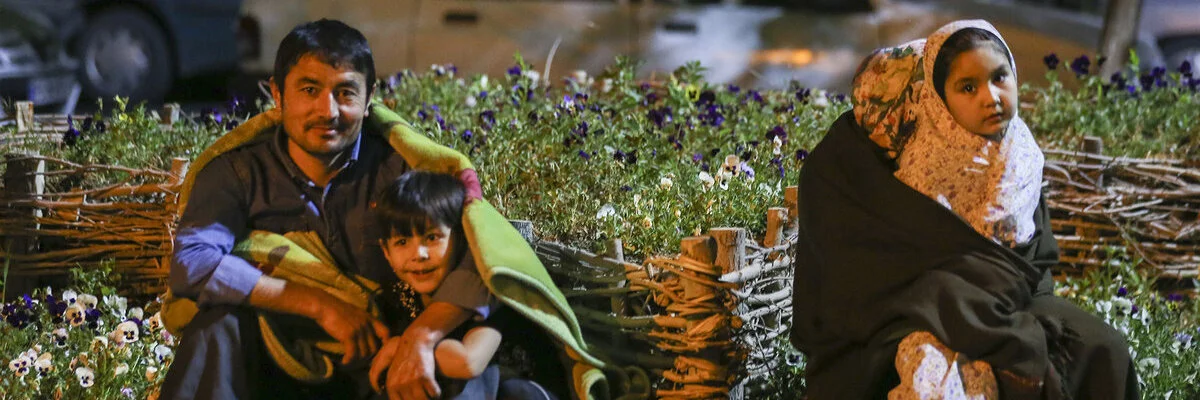
An earthquake jolted Tehran early on Friday, causing panicked residents to flee buildings for the safety of the streets, AFP journalists reported.
An earthquake near Iran's highest mountain killed at least one person and jolted the capital Tehran early Friday, forcing panicked residents to flee buildings.
The shallow 4.6 magnitude quake hit at 00:48 am local time near the city of Damavand, about 55 kilometers east of Tehran, the US Geological Survey said.
It saw scores of residents of the capital exit buildings for the safety of streets and parks, AFP journalists reported.
Health ministry spokesman Kianoush Jahanpour said on Twitter that the tremor claimed the life of one person and injured seven others.
He called on people to "keep calm" and to follow safety guidelines.
The USGS said on its website that the quake struck at a depth of 10 kilometres. Its epicentre was south of Mount Damavand, a volcanic mountain which at 5,671 metres (18,606 feet) is Iran's highest peak.
Iran sits on top of major tectonic plates and experiences frequent seismic activity.
A 5.7 magnitude earthquake that rattled the western village of Habash-e Olya on February 23 killed at least nine people over the border in neighbouring Turkey.
In November 2017, a 7.3-magnitude quake in Iran's western province of Kermanshah killed 620 people.
In 2003, a 6.6-magnitude quake in southeastern Iran decimated the ancient mud-brick city of Bam and killed at least 31,000 people.
Iran's deadliest quake was a 7.4-magnitude tremor in 1990 that killed 40,000 people in northern Iran, injured 300,000 and left half a million homeless.
In December and January, two earthquakes struck near Iran's Bushehr nuclear power plant.
Iran's Persian Gulf neighbors have raised concerns about the reliability of the country's sole nuclear power facility, which produces 1,000 megawatts of power, and the risk of radioactive leaks in case of a major earthquake.
Photo: IRNA
Iran FM Accuses US of 'Economic Terrorism' as Flood-Hit Cities Evacuated
◢ Iranian Foreign Minister Javad Zarif accused the United States of impeding aid efforts and "economic terrorism" on Monday as authorities ordered the immediate evacuation of flood-stricken cities in western Iran. US sanctions are "impeding aid efforts by #IranianRedcrescent to all communities devastated by unprecedented floods," Zarif tweeted.
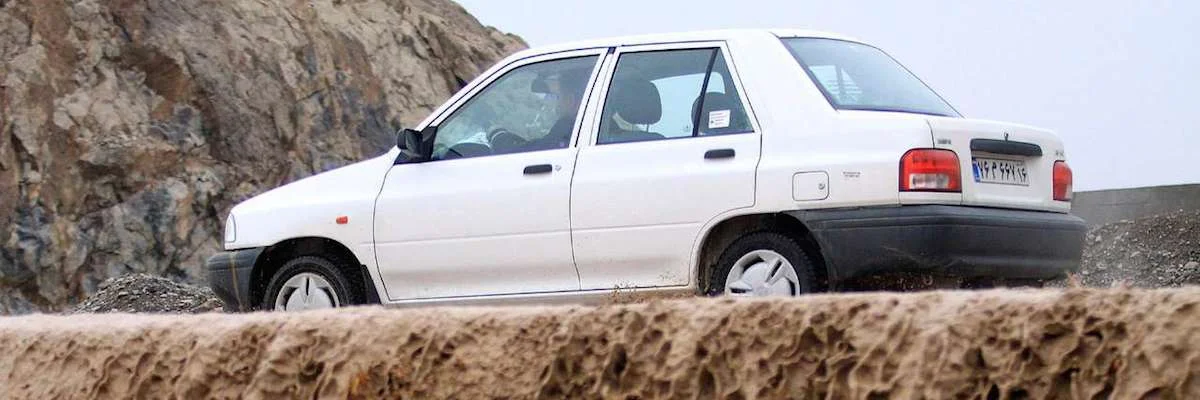
Iranian Foreign Minister Javad Zarif accused the United States of impeding aid efforts and "economic terrorism" on Monday as authorities ordered the immediate evacuation of flood-stricken cities in western Iran.
US sanctions are "impeding aid efforts by #IranianRedcrescent to all communities devastated by unprecedented floods," Zarif tweeted, referring to search and rescue operations being conducted after huge rainfalls triggered vast flooding.
"Blocked equipment includes relief choppers," the tweet read, adding that "this isn't just economic warfare; it's economic TERRORISM."
The evacuation was ordered after rivers burst their banks, dams overflowed and vast areas were cut off from communication.
A chronic shortage of rescue helicopters in Iran, due to US sanctions, has forced the emergency services to request help from military helicopters and amphibious armored personnel carriers to assist in the rescue operations.
The authorities declared a "situation red", the highest level of alert, in Lorestan province with four or five cities "completely critical", state television news network IRINN reported from Khorramabad, the region's capital.
"In Khorramabad the water has risen by as much as three meters (nearly 10 feet) in parts... and reports are coming in of regions... completely submerged with residents stranded on their rooftops," it added.
The Red Crescent's provincial director, Sarem Rezaee, said his organization had lost contact with much of the region.
“Telephones are not working, our radio communications are down... at this moment we have no news of other cities and villages," he told IRINN, adding roads were flooded and helicopters were unable to take off due to the bad weather.
“We have requested emergency help from neighboring provinces but at the present no one can do anything."
The airport in the western city of Khorramabad was flooded, with images showing water submerging the runway and cutting the province's main air link to the rest of the country.
Authorities in Lorestan ordered evacuations in many regions, bringing in the armed forces to forcibly remove those who do not comply, local media reported.
'Lost All Contact'
The authorities said Pol-e-Dokhtar and Mamulan cities were already half submerged, with one fatality reported in Mamulan.
Images on local media show water gushing through streets in Pol-e-Dokhtar where the water level had reached 1.5 meters (five feet).
Every village in the vicinity of the two cities had been surrounded by flood waters while all five dams in Lorestan had reached capacity and four of them were overflowing.
"We have lost all contact with Pol-e-Dokhtar," the Lorestan Governor General Mousa Khademi told the semi-official ISNA News Agency.
"We do not have any information on the situation there... we do not know how many people have been affected by the floods," he added.
Numerous rivers had burst their banks and landslides blocked many roads, said the reports.
Media outlets showed images of collapsed bridges and oil and gas pipelines destroyed by the flood.
The main railway line linking Tehran to the south of the country had also been blocked by the flood.
This is the third major flood to hit Iran in the past two weeks with unprecedented rainfalls in the mostly arid country that had endured a decades-long drought until this year.
The first occurred in the northeast of the country on March 19 and the second struck the west and southwest of Iran on March 25 with a combined toll of 45 people killed.
The present flood has again struck in the west and southwest following heavy rain that is set to continue into Tuesday. Apart from Lorestan half a dozen other provinces are also facing critical circumstances, with the emergency services reporting 23 out of Iran's 31 provinces have been affected and could face floods.
With the consecutive floods the reservoirs of many dams have reached full capacity forcing emergency discharge, as much as 1,800 cubic meters per second in some cases, to prevent them from breaking.
Photo Credit: IRNA
Iran Orders Evacuation of Flood-Hit Western Cities
◢ Iranian authorities on Monday ordered the immediate evacuation of flood-stricken cities in a western province as rivers burst their banks, dams overflowed and vast areas were cut off from communication. The highest level of alert was declared in Lorestan province with four or five cities "completely critical", state television news network IRINN reported from Khorramabad, the region's capital.
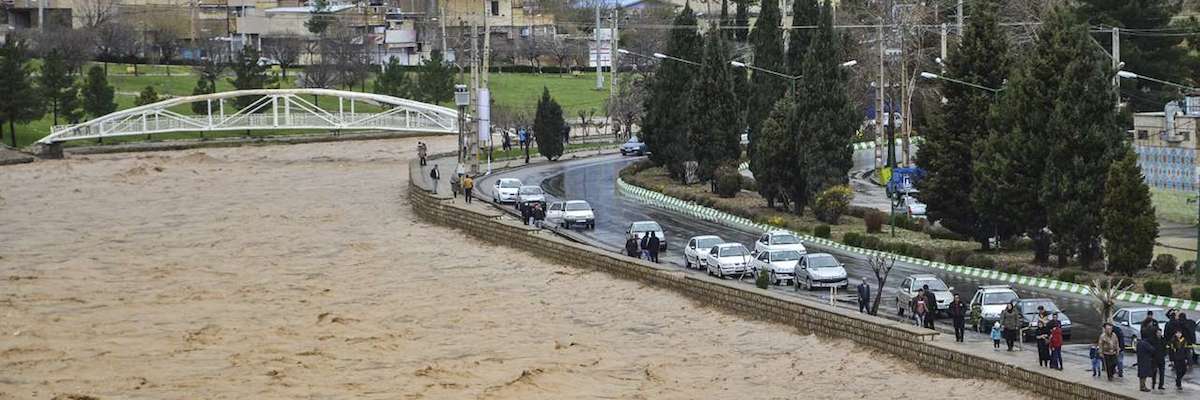
Iranian authorities on Monday ordered the immediate evacuation of flood-stricken cities in a western province as rivers burst their banks, dams overflowed and vast areas were cut off from communication.
The highest level of alert was declared in Lorestan province with four or five cities "completely critical", state television news network IRINN reported from Khorramabad, the region's capital.
"In Khorramabad the water has risen by as much as three metres (nearly 10 feet) in parts... and reports are coming in of regions... completely submerged with residents stranded on their rooftops," it added.
The Red Crescent's provincial director, Sarem Rezaee, said his organization had lost contact with much of the region.
"Telephones are not working, our radio communications are down... at this moment we have no news of other cities and villages," he told IRINN, adding roads were flooded and helicopters were unable to take off due to the bad weather.
"We have requested emergency help from neighbouring provinces but at the present no one can do anything."
The airport in the western city of Khorramabad was flooded, with images showing water submerging the runway and cutting the province's main air link to the rest of the country.
Authorities in Lorestan ordered evacuations in many regions, bringing in the armed forces to forcibly remove those who do not comply, local media reported.
The authorities said Pol-e-Dokhtar and Mamulan cities were already half submerged, with one fatality reported in Mamulan.
Images on local media show water gushing through streets in Pol-e-Dokhtar where the water level had reached 1.5 metres (five feet).
Every village in the vicinity of the two cities had been surrounded by flood waters while all five dams in Lorestan had reached capacity and four of them were overflowing.
Numerous rivers had burst their banks and landslides blocked many roads, said the reports.
Media outlets showed images of collapsed bridges and oil and gas pipelines destroyed by the flood.
The main railway line linking Tehran to the south of the country had also been blocked by the flood.
This is the third major flood to hit Iran in the past two weeks with unprecedented rainfalls in the mostly arid country that had endured a decades long drought until this year.
The first occurred in the northeast of the country on March 19 and the second struck the west and southwest of Iran on March 25 with a combined toll of 45 people killed.
The present flood has again struck in the west and southwest following heavy rain that is set to continue into Tuesday.
Apart from Lorestan half a dozen other provinces are also facing critical circumstances, with the emergency services reporting 23 out of Iran's 31 provinces have been affected and could face floods.
With the consecutive floods the reservoirs of many dams have reached full capacity forcing emergency discharge, as much as 1,800 cubic meters per second in some cases, to prevent them from breaking.
Photo Credit: IRNA