
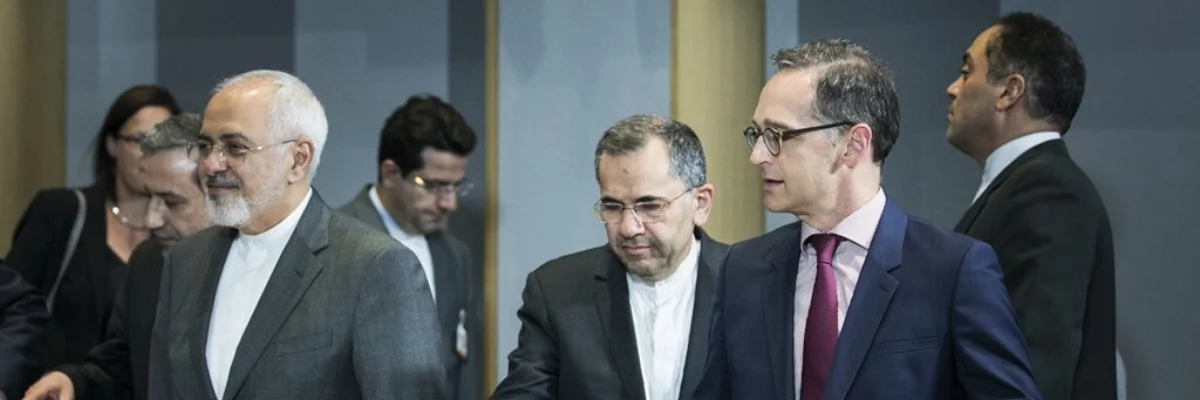
Iran's Zarif says EU Meetings Must be Turned Into Action
◢ Iran's foreign minister said Wednesday that meetings with EU leaders on salvaging the nuclear deal sent a strong political message but must now be turned into action. Zarif was returning from a diplomatic tour of the remaining parties to the 2015 nuclear agreement—Britain, France, Germany, China and Russia—following the US decision last week to pull out.
Iran's foreign minister said Wednesday that meetings with EU leaders on salvaging the nuclear deal sent a strong political message but must now be turned into action.
"If the JCPOA (nuclear deal) is supposed to continue, it was a good start and it has sent an important political message, but this is not the end of the work," Mohammad Javad Zarif told reporters on his flight back to Tehran, according to state news agency IRNA.
"From next week, intensive expert meetings will start in Europe. They must do the work, but they will consult us so that we are sure the actions they take are sufficient from our point of view," he added.
Zarif was returning from a diplomatic tour of the remaining parties to the 2015 nuclear agreement—Britain, France, Germany, China and Russia—following the US decision last week to pull out.
He met his European counterparts in Brussels on Tuesday.
"They said that they would ensure Iran enjoys the benefits of the JCPOA and they accepted that the implementation of the JCPOA has nothing to do with other issues," he said, referring to Iran's demand that talks on saving the deal must not be linked to pressure on its missile program and regional interventions.
EU foreign policy chief Federica Mogherini said Tuesday that experts had already begun work on measures to get round US sanctions, focusing on nine key areas including Iran's ability to continue selling oil and gas products, and how to protect European companies doing business in the country.
"We are not fantasizing that Europe will break its relations with America... but we want Europeans to defend their own interests," Zarif added.
He said the negative global reaction to Washington's withdrawal from the nuclear agreement —and the new sanctions it announced Tuesday on Iran's central bank—reflected US isolation on the Iran issue.
"America is not in charge of everything in the world. Of course, Americans would like the whole world to think this way and when the world doesn't think this way, they take some angry actions such as sanctioning the head of the central bank without any reason," Zarif said.
"We must expect more such moves by the Americans. These moves are against
the law, contrary to conventional international relations and indicate their
weakness."
Photo Credit: GermanyInEU
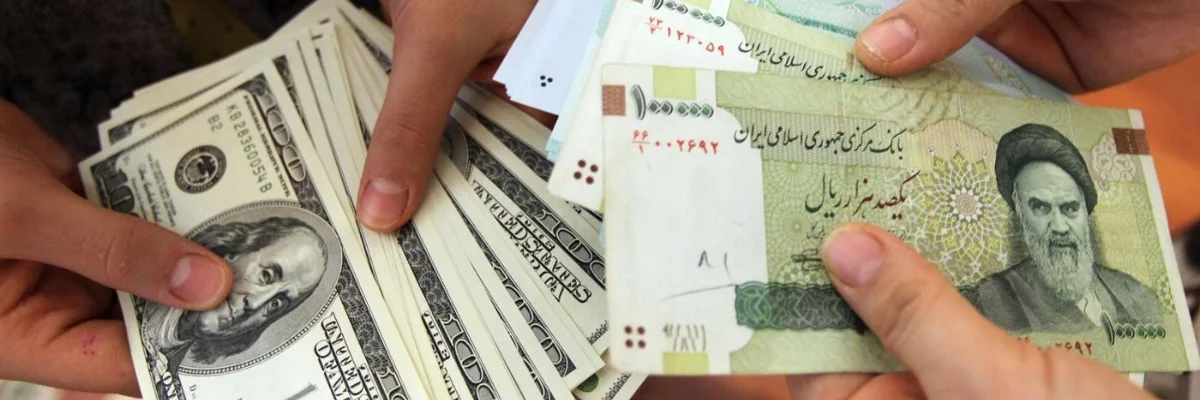
Iran's Rial Hits New Record-Low on Trump Fears
◢ Iran's currency fell more than six percent against the dollar on Sunday, hitting another record-low, as fears of a US withdrawal from the nuclear deal continued to drive speculation. The rial reached 55,200 to the dollar at the close on the open market—a drop of nearly a third in the past six months.
Iran's currency fell more than six percent against the dollar on Sunday, hitting another record-low, as fears of a US withdrawal from the nuclear deal continued to drive speculation.
The rial reached 55,200 to the dollar at the close on the open market—a drop of nearly a third in the past six months—according to the Financial Informing Network, considered the most reliable for fluctuations in the free rate.
"There is a clearly an increase of people buying dollars because they think the United States will pull out of the nuclear deal," said the head of an exchange office in Tehran, on condition of anonymity.
The gap with the government's official rate, which stood at 37,814 on Sunday, has continued to widen, threatening a return of high inflation which the government has battled to bring under control.
"The government can't do anything when there is this much panic. If the US exits the agreement, the Iranian currency could collapse even further and reach 70,000 to the dollar," said the exchange dealer.
The head of the central bank, Valiollah Seif, and Economy Minister Masoud Karbasian were summoned to parliament to discuss the issue last Monday.
Long queues have been seen outside exchange offices for weeks as uncertainty mounts over the nuclear deal which Iran reached with world powers in 2015.
President Donald Trump has threatened to walk away from the deal and reimpose sanctions by May 12—the next deadline for confirming US involvement—unless new restrictions are placed on Iran's nuclear and missile programs.
The rial stood at around 40,000 to the dollar in October, when Trump said he would no longer certify Iran's compliance with the nuclear deal, and has been falling steadily since.
Iran's government took drastic measures in February to stem the decline, arresting unlicenced exchange dealers and freezing speculators' accounts, but they have had little impact.
President Hassan Rouhani, who has staked his legacy on trying to revive the economy by rebuilding ties with the West, sought to play down the decline earlier this year, saying Iran was bringing in plenty of dollars through oil sales.
Photo Credit: AFP