
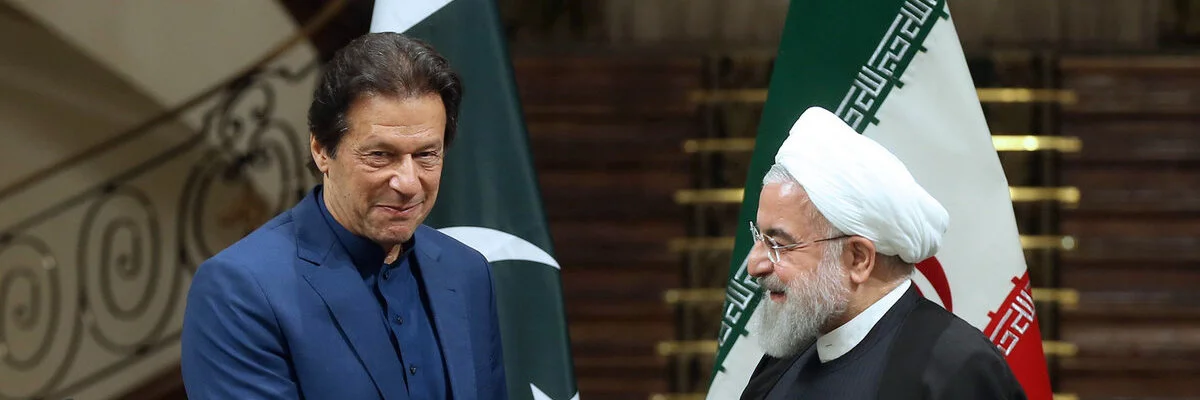
Pakistan PM in Tehran on Mission to 'Facilitate' Iran-Saudi Talks
◢ Pakistan Prime Minister Imran Khan visited Iran on Sunday on a mission to act as a "facilitator" between Tehran and Riyadh and try to defuse rising tensions in the Persian Gulf. "The reason for this trip is that we do not want a conflict between Saudi Arabia and Iran," Khan told reporters as he stood alongside Rouhani.
Pakistan Prime Minister Imran Khan visited Iran on Sunday on a mission to act as a "facilitator" between Tehran and Riyadh and try to defuse rising tensions in the Persian Gulf.
Khan landed in Tehran around midday and met with President Hassan Rouhani at the presidential palace.
He was also scheduled to hold talks with Iran's supreme leader Ayatollah Ali Khamenei, before traveling to Riyadh on Tuesday.
"The reason for this trip is that we do not want a conflict between Saudi Arabia and Iran," Khan told reporters as he stood alongside Rouhani.
"Whatever it takes we must never allow this conflict to take place, because we know, Mr. President, that there is a vested interest that wants this to take place," he told Rouhani.
Noting that it was a "complex" issue that can be resolved through talks, Khan warned that any conflict between Iran and Saudi Arabia would "cause poverty in the world".
Pakistan has strong relations with Saudi Arabia, with more than 2.5 million of its nationals living and working in the kingdom, but it also maintains good relations with Iran and represents Tehran's consular interests in the United States.
This is Khan's second visit this year to Iran, which shares a border of about 1,000 kilometres (620 miles) with Pakistan.
Emphasising that the visits to Tehran and Riyadh were Pakistan's "initiative", Khan said he was also approached by US President Donald Trump to "facilitate some sort of dialogue between Iran and the United States".
Tehran and Washington have been at loggerheads since the US withdrew from the 2015 Iran nuclear deal in May last year and reimposed sanctions on the Islamic republic.
Rouhani repeated Iran's official line that the United States must return to the deal and lift sanctions before any talks can take place.
"Any goodwill gesture and good words will be reciprocated with a goodwill gesture and good words," he said.
Tanker Attacks
Rouhani said he had expressed Iran's concern about Gulf security and especially a "missile attack" Friday on an Iranian vessel off the Saudi coast.
"We expressed our concerns to the prime minister about the incidents happening to oil tankers, especially the Iranian oil tanker in the Red Sea on Friday," he said.
Tehran says the Iranian-flagged Sabiti tanker was hit by two separate explosions off the Saudi port of Jeddah, making it the first Iranian vessel targeted since a spate of attacks in the Gulf that Washington has blamed on Tehran.
Rouhani said he had presented Khan with evidence from the incident and that investigations were ongoing.
"If a country thinks that it can cause insecurity in the region and not receive a proper response, it is mistaken," Rouhani said, without elaborating.
There has been a series of still-unexplained attacks on shipping in and around the vital seaway involving Iran and Western powers, as well as drone attacks on Saudi oil installations.
Washington has accused Tehran of attacking the vessels with mines and of being behind the drone assault, something it strongly denies.
Khan met both Rouhani and Trump at the United Nations General Assembly last month, shortly after he visited Crown Prince Mohammed bin Salman in Saudi Arabia.
The Pakistan premier said he was "very encouraged" by talking to Rouhani and will go to Saudi Arabia "in a very positive frame of mind", hoping the two countries can "iron out their differences."
Photo: IRNA
Pakistan PM Imran Khan Makes First Visit to Iran
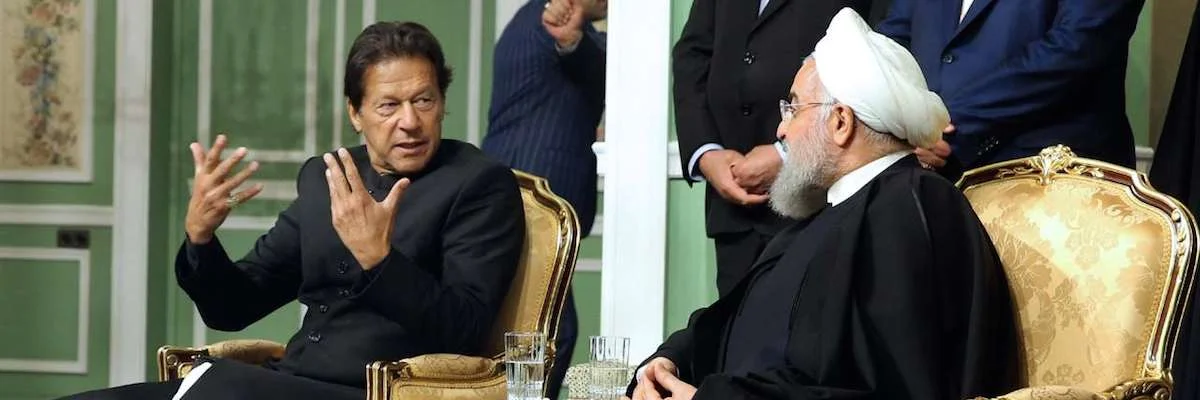
◢ Pakistani Prime Minister Imran Khan began his first official visit to Iran on Sunday for talks set to focus on
strengthening ties and countering terrorism. The state-run IRNA news agency said Khan's trip was expected to help "develop ties between the two countries, especially those related to regional cooperation in fighting terrorism and safeguarding borders.”
Pakistani Prime Minister Imran Khan began his first official visit to Iran on Sunday for talks set to focus on
strengthening ties and countering terrorism, state media reported.
Khan began his two-day visit with a stop in the northeastern holy city of Mashhad, Iran's second largest and home to the shrine of Imam Reza who is revered by Shiite muslims, state television said in a live broadcast.
After visiting the shrine, Khan was to fly to Tehran where on Monday he is expected to hold talks with President Hassan Rouhani and other top officials.
The state-run IRNA news agency said Khan's trip was expected to help "develop ties between the two countries, especially those related to regional cooperation in fighting terrorism and safeguarding borders.”
Iran and Pakistan share a long border that runs nears the volatile southeastern province of Sistan-Baluchistan which has witnessed over the years numerous attacks on Iran's security forces.
In March, Rouhani demanded Pakistan act "decisively against anti-Iranian terrorists", following a February attack that killed 27 members of the elite Revolutionary Guards in Sistan-Baluchistan.
Iran has said a Pakistani suicide bomber was behind the attack, which was claimed by the Sunni jihadist group, Jaish al-Adl (Army of Justice), which Tehran says operates mostly out of bases in Pakistan.
Khan's visit to Iran, the first since he took office last year, also comes days after gunmen killed 14 members of Pakistan's security forces in the Balochistan province.
On Saturday Pakistani Foreign Minister Shah Mehmood Qureshi said Islamabad had evidence the "terrorist outfits" that carried out the attack have "training and logistic camps inside Iranian areas bordering Pakistan".
Balochistan, which borders Afghanistan and Iran, is Pakistan's poorest province and the largest by landmass, with Islamist as well as ethnic Baloch separatists active there.
Photo: AFP
Iran Demands Pakistan Acts 'Decisively Against Terrorists'
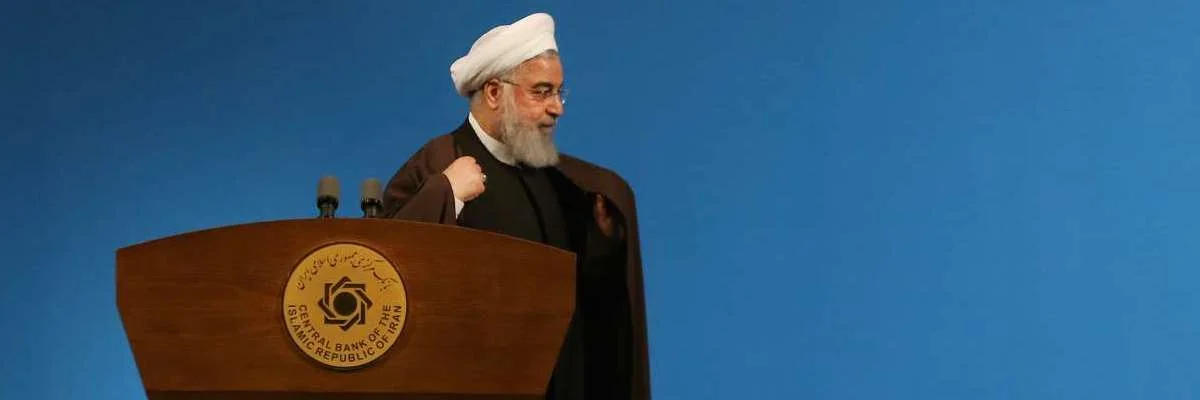
◢ Iran's President Hassan Rouhani has demanded Pakistan act "decisively against anti-Iranian terrorists" in a phone call with the country's premier, Tehran said, a month after a bloody attack on security forces. Iran says a Pakistani suicide bomber was behind the February 13 attack that killed 27 Revolutionary Guards in its volatile southeastern province of Sistan-Baluchistan.
Iran's President Hassan Rouhani has demanded Pakistan act "decisively against anti-Iranian terrorists" in a phone call with the country's premier, Tehran said, a month after a bloody attack on security forces.
Iran says a Pakistani suicide bomber was behind the February 13 attack that killed 27 Revolutionary Guards in its volatile southeastern province of Sistan-Baluchistan.
A Sunni jihadist group, Jaish al-Adl (Army of Justice), which Tehran says operates mostly out of bases in neighboring Pakistan, claimed responsibility for the blast.
Iran has accused Pakistan's army and intelligence agency of sheltering the jihadists and summoned the country's ambassador in the wake of the attack.
Rouhani in the phone conversation Saturday evening with Pakistani Prime Minister Imran Khan called to maintain good ties and pointed the finger of blame at Tehran's traditional regional and international foes.
"We shouldn't allow decades of friendship and brotherhood between the two countries be affected by terrorist groups that we both know from where they are being armed and financed," Rouhani said, according to a government statement.
The Iranian president was alluding to the United States and Israel, as well as Saudi Arabia and the United Arab Emirates, which it accuses of aiding jihadist groups responsible for attacks from Pakistani soil.
February's bombing was the latest of numerous attacks on Iran's security forces and officials in Sistan-Baluchistan, where the minority Sunni Baluchis accuse the authorities of discrimination.
Photo Credit: IRNA
Iranians Cry 'Revenge' at Funeral of Terrorism Victims
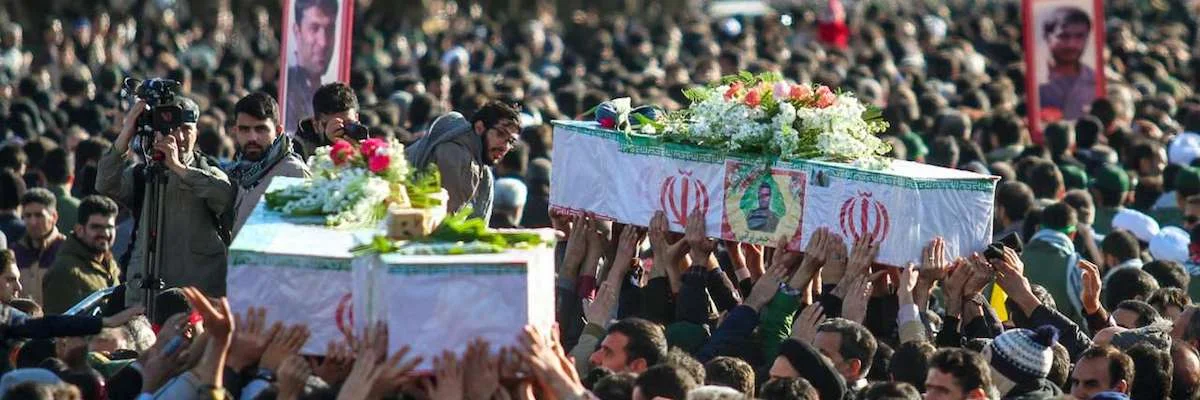
◢ Tens of thousands of Iranians called for "revenge" Saturday at the funeral of 27 Revolutionary Guards killed in a suicide attack perpetrated by jihadists that Tehran accuses Pakistan of supporting. "The Islamic Republic of Iran will no longer observe the previous reservations and will directly act to counter such acts," Jafari told mourners gathered at the city of Isfahan's Bozorgmehr Square.
Tens of thousands of Iranians called for "revenge" Saturday at the funeral of 27 Revolutionary Guards killed in a suicide attack perpetrated by jihadists that Tehran accuses Pakistan of supporting.
"The government of Pakistan must pay the price of harboring these terrorist groups and this price will undoubtedly be very high," said Major General Mohammad Ali Jafari, referring to jihadist outfit Jaish al-Adl ("Army of Justice").
"The Islamic Republic of Iran will no longer observe the previous reservations and will directly act to counter such acts," Jafari told mourners gathered at the city of Isfahan's Bozorgmehr Square.
The comments by Jafari, commander of Iran's elite Revolutionary Guards, came a day ahead of a planned two-day visit to Pakistan by Mohammed bin Salman, the crown prince of Iran's regional arch-rival Saudi Arabia.
Jafari blamed Pakistan's army and Inter-Services Intelligence agency, saying that "sheltering and silence" amounts to supporting the perpetrators.
As he left the podium, people shouted "Commander of Sepah (Farsi for Revolutionary Guards)—Revenge! Revenge!""
The Wednesday bombing targeted a busload of Revolutionary Guards in the volatile southeastern province of Sistan-Baluchistan, which straddles the border with Pakistan.
Jaish al-Adl was formed in 2012 as a successor to the Sunni extremist group Jundallah (Soldiers of God), which waged a deadly insurgency for a decade before it was severely weakened by the capture and execution of its leader Abdolmalek Rigi in 2010.
Jafari also blasted "the traitorous governments of Saudi Arabia and (the) Emirates" and said Iran will no longer tolerate their "hidden support for anti-Islam thugs and Takfiri groups".
He called on President Hassan Rouhani and the country's Supreme National Security Council to give the guards more freedom to carry out "retaliatory operations," but did not elaborate.
Iran's supreme leader Ayatollah Ali Khamenei has linked the perpetrators of Wednesday's attack to "the spying agencies of some regional and trans-regional countries".
'We will never submit'
Black flags attached to lamp-posts adorned Isfahan as the city prepared for the funeral and two days of mourning.
When the bodies of the troops arrived on the back of Toyota vans—the guards' signature vehicles—their comrades, women in black veils and young men in jeans were there to greet them.
Tens of thousands chanted "Down with America!" and "We will never submit!"
Iran's flag could be seen at half-mast in Bozorgmehr Square's southeastern side, and the crowd chanted "Allahu Akbar" each time the speaker read the names of the dead.
The troops killed in the bombing belonged to the Guards' 14th Imam Hussein Division, which is based in Isfahan province, according to Tasnim news agency.
Aged from 21 to 52, each will be buried in his hometown after the funeral.
A housekeeper originally from Khuzestan province, where a deadly attack killed 24 last year, told AFP of the thirst for revenge.
"We demand that the blood of these troops be avenged," said Tayebbeh Rezaee, 34. "They cannot weaken the Islamic Republic in any way—not war, not economic attacks. So they have to stoop to such acts."
Restive Sistan
Sistan-Baluchistan has long been a flashpoint, where Pakistan-based Baluchi separatists and jihadists carry out cross-border raids.
A Revolutionary Guard was killed and five wounded in a February 2 attack claimed by Jaish al-Adl on a base of the Basij militia in the town of Nikshahr, some way from the border.
One of the wounded—Khodarahm Heidari, who was critically injured in that attack—died on Saturday, semi-official news agency ISNA reported.
On January 29 three members of an Iranian bomb squad sent to the scene of an explosion in the provincial capital Zahedan were wounded when a second device blew up as they were trying to defuse it, police said at the time.
And in early December two people were killed and around 40 others wounded in the port city of Chabahar, also in Sistan-Baluchistan, in an attack which Iran's Foreign Minister Mohammad Javad Zarif blamed on "foreign-backed terrorists"—a reference to Sunni Muslim extremists.
In October, Jaish al-Adl claimed responsibility for abducting 12 Iranian security personnel near the border with Pakistan.
Photo Credit: IRNA