
Iranians Band Together to Battle Devastating Floods
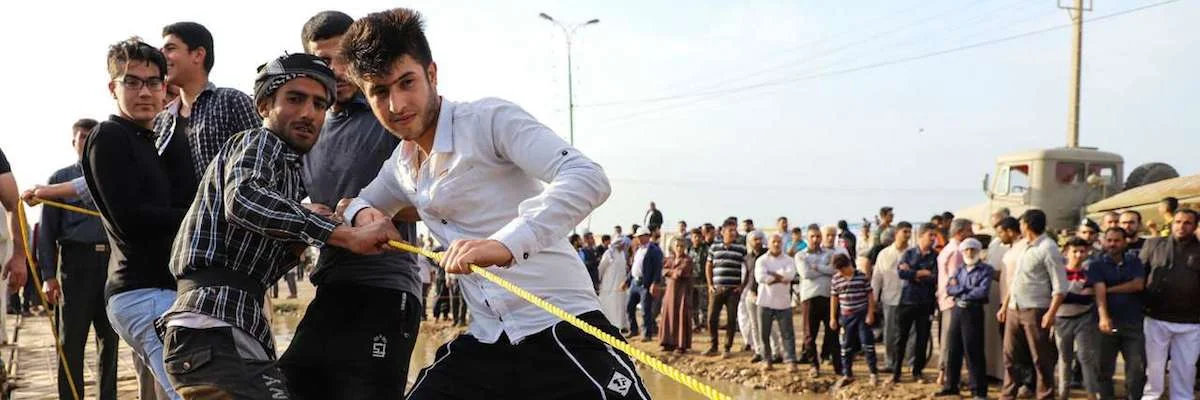
◢ The oil-rich Khuzestan province and its large Arab minority have been hit by major floods since early April due to heavy rains and floodwater rushing down from the north. In the absence of adequate resources in place to ease such disasters, people are banding together in towns like Hamidiyeh to battle the overflow.
Sweat rolling down his cheek, Ghasem Arabi filled sandbags to prop-up a makeshift dyke as flood waters surged just metres behind him in Iran's deluge-stricken southwest.
"Our youth are working day and night," said the 37-year-old nurse as he helped shovel sand into plastic sacks held by fellow residents in the agricultural town of Hamidiyeh.
"God willing this flood will not reach their homes... that's all they have left," he said, adding that many had already lost their farmlands to the rising waters.
The oil-rich Khuzestan province and its large Arab minority have been hit by major floods since early April due to heavy rains and floodwater rushing down from the north.
They are the latest in a series of unprecedented floods that have swamped the normally arid country since March 19, killing at least 70 people in 20 of Iran's 31 provinces.
In the absence of adequate resources in place to ease such disasters, people are banding together in towns like Hamidiyeh to battle the overflow.
Most women and children have been evacuated but young men and their fathers have stayed behind to help protect their homes, building barriers and banks to beat back the swelling waters of the Karkheh river.
Arabi works at a hospital in Ahvaz city, the capital of Khuzestan, roughly 30 kilometres (18 miles) southeast of Hamidiyeh.
He was on holiday with his family for the Nowruz Persian New Year holiday when the floods started. He decided to stay and help.
"We need clothes, food, drinking water. Running water and power get cut every night," said Arabi.
His brothers were busy lugging what little furniture and appliances they had up to the roof, hoping to protect them from the tide.
'Critical' Situation
Floodwaters have already swallowed up some houses along the river bank, seeping into the ground floors of others and turning yards into lakes.
The rising waters have submerged kilometres of surrounding flatlands too.
Many of the newly homeless residents have found shelter with neighbours in parts of the town still hoping to control the flood.
Along the bulging river banks, dozens dig up soil and fill sandbags.
The Karkheh's water level has risen dangerously close to the town's sole small bridge. Just a few more metres and the river will only be crossable by boat.
"See that tree? That's where my garden was," said one resident, throwing a stone towards a branch poking out of the water.
At one spot along the bank, more than a dozen men formed a chain from a nearby alley to the water's edge, handing down bags of sand.
The mix of locals, fatigue-clad members of the elite Revolutionary Guards and Muslim clerics wearing black and white robes looked almost jovial—singing revolutionary anthems and upbeat Arabic tunes.
Despite the presence of the Guards, residents said more government help was needed.
"We lack trucks, sandbags... and bulldozers. The situation is very critical," said Abbas Mansouri, a farmer whose house was heavily damaged but was handing out food, tea and cold water to his neighbours.
Two pumps draining water out of homes were donated by the Guards, locals said, and a bulldozer and a truck working nearby belonged to the government, according to their drivers.
"The government has sent us very little help," said one resident, without providing his name.
He said he had not seen any Red Crescent workers or soldiers pitching in to help out.
'My Heart Breaks'
The scale of the disaster and a lack of resources has meant the Red Crescent has been forced to prioritize villages with limited means, aid workers with the group told AFP.
The humanitarian organisation only has six helicopters to cover thousands of square kilometres hit by the floods, according to a Red Crescent flight engineer.
The flooding has caused damages worth IRR 40 trillion in Khuzestan—over USD 280 million at the free market rate—according to an official figure.
Despite oil riches and large agriculture industry, Khuzestan is one of Iran's most underprivileged provinces.
"Agriculture was their life and now it's destroyed," Mostafa Torfi, a 35-year old aid worker, told AFP.
"My heart breaks for the villagers every time I see them ... We are doing all we can for them," he added.
Photo Credit:INRA
Iran Flood Death Toll Reaches 62
◢ The death toll from major floods swamping much of Iran over the past 15 days has risen to 62, the head of the Iranian Legal Medicine Organization told local media Wednesday. Ahmad Shojaee told the semi-official Fars news agency the southern province of Fars has been hit the hardest with 21 dead.
The death toll from major floods swamping much of Iran over the past 15 days has risen to 62, the head of the Iranian Legal Medicine Organization told local media Wednesday.
Ahmad Shojaee told the semi-official Fars news agency the southern province of Fars has been hit the hardest with 21 dead.
The western province of Lorestan and the northern province of Golestan followed with 14 and 8 dead respectively, he said.
Flood-related deaths have been reported in 11 out of Iran's 31 provinces, Shojaee added.
The semi-official ISNA news agency said the current toll was a tally of the victims whose bodies have been transferred to coroner offices across the country—indicating the count could still rise.
Iran has been hit by flooding across most of the country since March.
The country's northeast was swamped on March 19 before the west and southwest of the country were inundated on March 25, killing a total 45 people.
Flooding in the west and southwest continued on April 1 when heavy rains returned to the area.
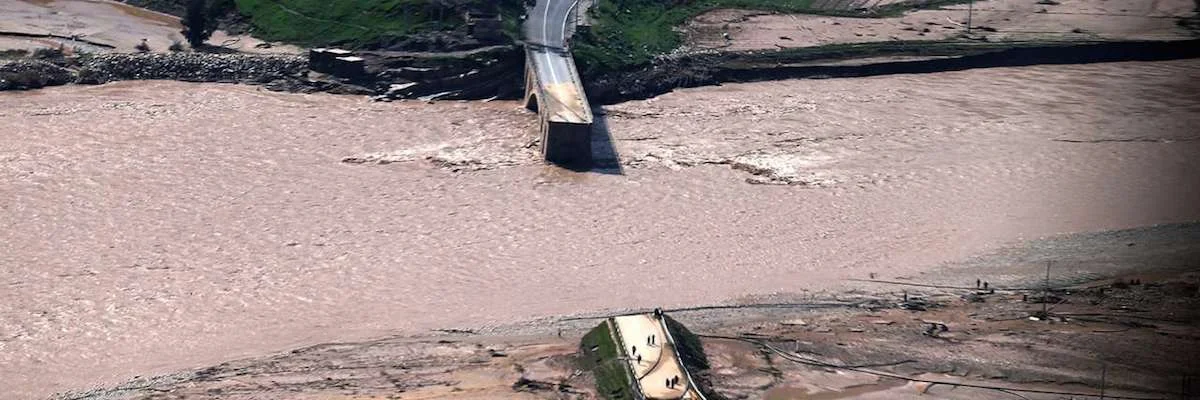
"Seventy-eight intercity roads have been blocked, as many as 2,199 rural roads and 84 bridges have been washed away," said Behnam Saeedi, spokesman for the National Disaster Management Organisation.
"Across 15 provinces, 141 rivers burst their banks and around 400 land slides were reported," he told state TV.
The government said the flooding had damaged nearly 12,000 kilometers (7,500 miles) of roads, or 36 percent of the country's entire street network.
Photo Credit: IRNA