
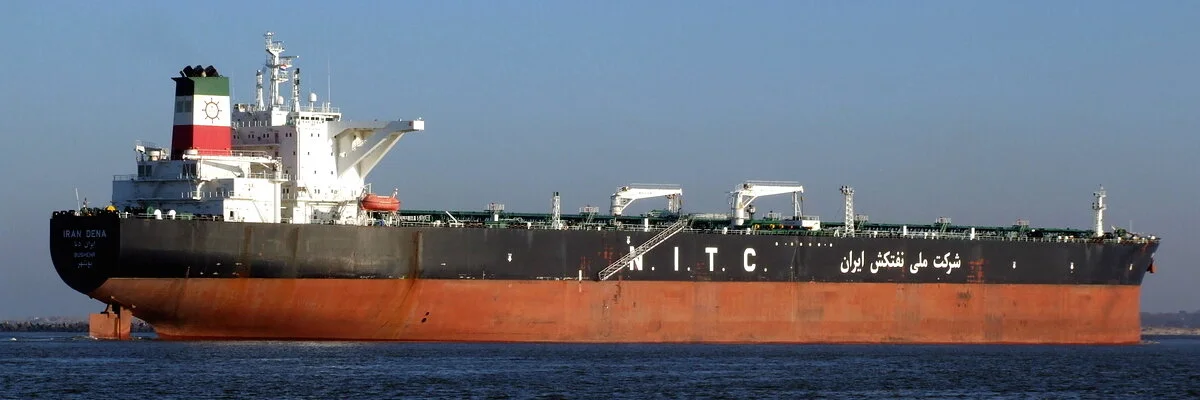
First Iranian Oil Tanker Docks in Venezuela
The first of five Iranian tankers carrying much-needed gasoline and oil derivatives docked in Venezuela on Monday, Caracas announced amid concern in Washington.
By Margioni Bermudez
The first of five Iranian tankers carrying much-needed gasoline and oil derivatives docked in Venezuela on Monday, Caracas announced amid concern in Washington.
In a statement delivered on state television, Oil Minister Tareck El Aissami said the convoy was an expression of the Venezuelan people's "self-determination" and praised Tehran's friendship at a time of need.
"What great fortune to have Iran in these times," said the minister, surrounded by members of the military leadership.
Earlier, El Aissami triumphantly shared images on Twitter of the first ship, "Fortune" arriving at El Palito refinery on Venezuela's northwest coast.
"We keep going and WINNING!" El Aissami wrote.
The United States has closely monitored the shipments, concerned that Iran and Venezuela—both under US sanctions—were taking their longstanding ties to another strategic level.
The Iranian tankers have run the gauntlet of US warships arrayed off the Venezuelan coast after Washington announced last month it was stepping up its naval presence, arguing there was an increase in organized crime.
Tensions between Washington and Caracas remain high following Venezuela's disruption last month of an abortive military assault by a group of mercenaries coordinated by a private US security company.
The US has stepped up sanctions against socialist President Nicolas Maduro and his inner circle, recently offering a $15 million reward for Maduro accusing him of masterminding a drug-smuggling ring.
Washington and more than 50 other states accuse Maduro of stealing 2018 elections and instead recognize his opposition rival Juan Guaido as interim president.
Vital Shipment
The vital shipment arrives at a time of chronic fuel shortages in the crisis-wracked South American country, exacerbated by the coronavirus lockdown.
In Caracas, where drivers lined up for hours to fill their tanks, Tehran's helping hand was viewed with a mixture of hope and suspicion.
Osvaldo Rodriguez, 22, doubts the fuel "is for us," but instead destined for those with their hands on the levers of power in Venezuela.
"If gasoline is sold at the same price as abroad, nobody will be able to afford it," he said, alluding to Venezuela's minimum wage of $4.60 a month.
Gasoline is currently selling for up to three dollars a liter on the black market in Caracas, unheard of in a country where motorists are used to filling up for practically nothing.
“We have no shortage of oil! Supposedly we are sitting on five billion barrels of it underground. But there's no gasoline," said Teodoro Lamonte, 50, as he slowly rolled his car along a line outside a service station.
Venezuela boasts the largest proven oil reserves in the world, but production has plummeted under the current regime and its oil exports have been hampered by US sanctions.
The Fortune arrived in Venezuela's territorial waters on Saturday night, escorted by the Venezuelan navy.
The navy on Twitter said its ships were escorting a second tanker, the Forest, which it said entered the country's waters early Monday.
The other Iranian tankers—Petunia, Faxon, Clavel and Forest—will arrive in the next few days, state television said.
The fleet is carrying around 1.5 million barrels of gasoline, according to press reports. Tehran had warned of "consequences" if the US stopped the ships from reaching their destination.
Iran and Venezuela have had close relations since the late socialist leader Hugo Chavez took power in Caracas in 1999.
Venezuela has been in recession for six years, its economy in shambles and its citizens struggling with shortages of basic necessities such as food and medicines.
US sanctions have targeted Venezuelan oil exports, starving Caracas of vital income.
Venezuela is almost entirely dependent on its oil revenues but its production has fallen to roughly a quarter of its 2008 level.
Maduro's government blames that on US sanctions, including against state oil company PDVSA, but many analysts say the regime has failed to invest in or maintain infrastructure.
Falling oil prices since 2014 have exacerbated Venezuela's economic crisis.
Last month, the oil ministry revealed that the price of Venezuelan crude had fallen to its lowest level in more than two decades, at less than $10 a barrel. Last year it averaged $56.70.
Photo: SHANA
US Warns to Stay Away from Iranian Shipping
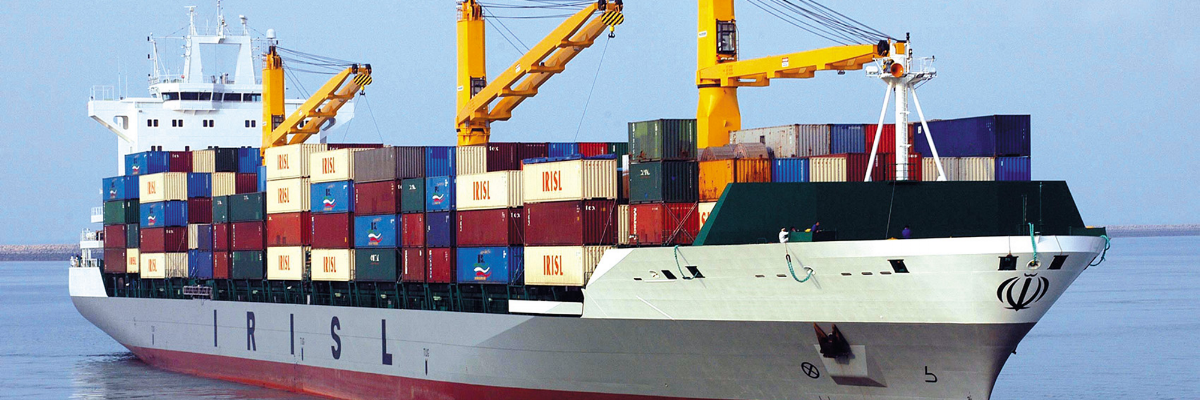
◢ The United States on Wednesday warned all ports and insurance companies to steer clear of Iranian ships, which it called a "floating liability" after the imposition of sweeping US sanctions. Since Monday, the United States has aimed to end all of Iran's sales of oil, its crucial export, in a bid to curtail the influence of the Shiite cleric-led state.
The United States on Wednesday warned all ports and insurance companies to steer clear of Iranian ships, which it called a "floating liability" after the imposition of sweeping US sanctions.
Since Monday, the United States has aimed to end all of Iran's sales of oil, its crucial export, in a bid to curtail the influence of the Shiite cleric-led state.
Brian Hook, the State Department's special representative on Iran policy, said that the US sanctions extended to insurers and underwriters.
“Knowingly providing these services to sanctioned Iranian shipping companies will result in the imposition of US sanctions," Hook told reporters.
"From the Suez Canal to the Strait of Malacca and all choke points in between, Iranian tankers are now a floating liability," he said.
He said that Iranian vessels would likely turn to domestic insurers but doubted that they could cover losses stretching into the millions or billions of dollars in a major calamity.
"Should there be an accident involving an Iranian tanker, there is simply no way these Iranian insurance companies can cover the loss," Hook said.
He said that the United States, whose military patrols the Gulf and is allied with Iran's rival Saudi Arabia, did not want incidents.
"We sincerely hope there will be no accidents, but accidents are a very real possibility, given Iran's record," Hook said.
President Donald Trump in May pulled out of an international agreement negotiated under his predecessor Barack Obama, in which Iran curtailed its nuclear program in return for sanctions relief.
The Trump administration said that the deal did not address other concerns, including Tehran's support for regional proxies such as Hezbollah, and has boasted of the economic contraction forecast in Iran due to the renewed sanctions.
The United States has nonetheless granted eight waivers to places including China, India and Japan, which will not immediately be punished for continuing to buy Iranian oil.
Photo Credit: IRISL
Iran Offers Discount Oil to Asia
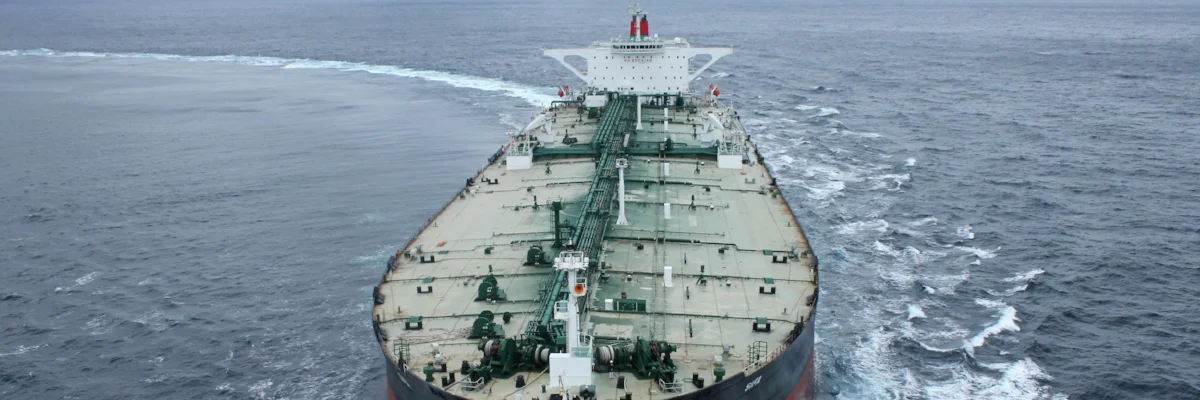
◢ Iran is selling oil and gas at a discount to Asian customers as it prepares for the return of US sanctions, state news agency IRNA reported on Monday. The "informed source" in Iran's oil ministry did not give details of the discount, but sought to downplay the move as common industry practice. "Discount is part of the nature of the global markets being offered by all oil exporters," the source told IRNA.
Iran is selling oil and gas at a discount to Asian customers as it prepares for the return of US sanctions, state news agency IRNA reported on Monday.
The "informed source" in Iran's oil ministry did not give details of the discount, but sought to downplay the move as common industry practice.
"Discount is part of the nature of the global markets being offered by all oil exporters," the source told IRNA.
Bloomberg reported on Friday that the state-run National Iranian Oil Company was reducing official prices for September sales to Asia to their lowest level in 14 years, compared with Saudi crude.
The United States will seek to block Iran's international oil sales from November 5, when the second phase of sanctions are reimposed as part of Washington's withdrawal from the 2015 nuclear deal.
Several key buyers, including China and India, who account for roughly half of Iran's sales, have said they are not willing to make significant cuts to their energy purchases from Iran.
But analysts predict Iran could still see its oil sales drop by around 700,000 barrels per day from their current level of around 2.3 million.
Much will depend on the European Union, which has vowed to resist US sanctions on Iran, but whose companies and financial institutions are more vulnerable to US financial pressure than their Asian counterparts.
French energy giant Total has already said it is pulling out of its multi-billion-dollar investment project in the South Pars oil field in southern Iran as a result of the renewed sanctions.
Photo Credit: IRNA
US Demands World Halt Iranian Oil Imports By Nov 4
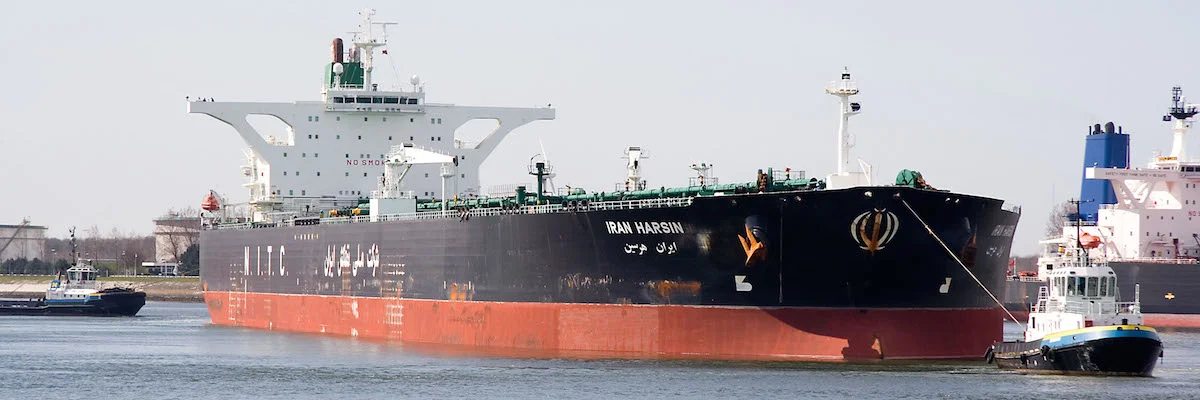
◢ The United States warned Tuesday that countries around the world must stop buying Iranian oil before November 4 or face a renewed round of American economic sanctions. A senior State Department official warned foreign capitals "we're not granting waivers" and described tightening the noose on Tehran as "one of our top national security priorities."
The United States warned Tuesday that countries around the world must stop buying Iranian oil before November 4 or face a renewed round of American economic sanctions
A senior State Department official warned foreign capitals "we're not granting waivers" and described tightening the noose on Tehran as "one of our top national security priorities."
Last month US President Donald Trump withdrew the United States from the Iran nuclear deal, re-imposing US sanctions that had been suspended in return for controls on Tehran's nuclear program.
Now, Washington is stepping up pressure on other countries to follow suit, including European allies who begged him to stay in the accord and major Iranian customers like India, Japan and China.
European powers in particular have been attempting to negotiate exemptions for their firms, but the official confirmed that Trump intends to stick to his 180-day deadline, expiring November 4.
"I would be hesitant to say zero waivers ever," he said, but added that the official position is: "No, we're not granting waivers."
The senior US official, briefing reporters on condition of anonymity, admitted that this would be unpopular.
"I don't think the Japanese answer was particularly different than other oil importing countries," the official said, adding that he plans to visit China and India soon to discuss the matter.
"This is a challenge for them, this is not something that any country that imports oil from Iran ... wants to do voluntarily because, you know, we're asking them to make a policy change.
"China, India? Yes, certainly their companies will be subject to the same sanctions that everybody else is," he said. "We will certainly be requesting that their oil imports go to zero."
Photo Credit: Wikicommons