
Iran Seizes Ship Smuggling Fuel, Arrests 16 Malaysians
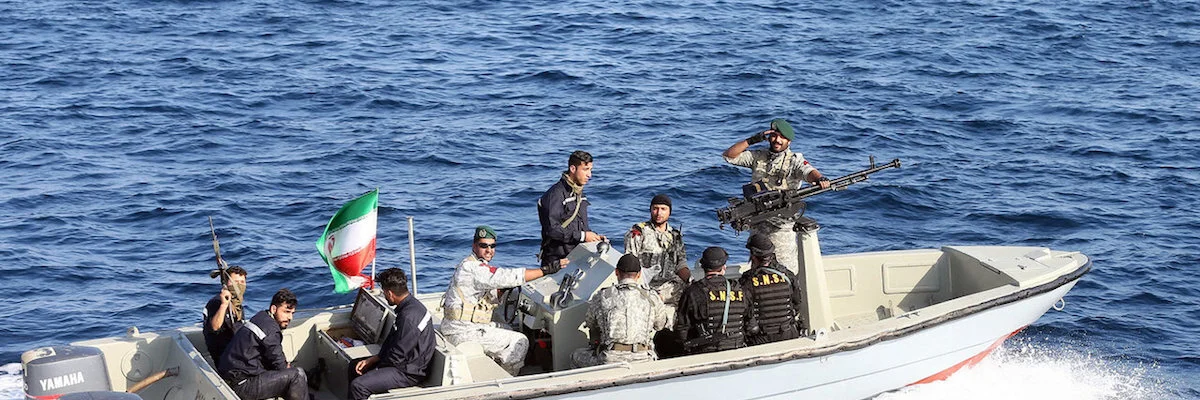
◢ Iran' Revolutionary Guards have seized a ship suspected of fuel-smuggling and arrested 16 Malaysian crew members. The website of IRIB state television said the Guards confiscated 1.3 million liters of "smuggled fuel" from the unnamed vessel 15 nautical miles from Abu Musa island.
Iran' Revolutionary Guards have seized a ship suspected of fuel-smuggling and arrested 16 Malaysian crew members, state media reported on Monday.
The website of IRIB state television said the Guards confiscated 1.3 million litres of "smuggled fuel" from the unnamed vessel 15 nautical miles from Abu Musa island.
“The ship's 16 crew who are of Malaysian nationality were arrested," the Guards' naval commander for the region, Brigadier General Ali Ozmayi, was quoted as saying.
Abu Musa is one of three islands in the southern Gulf that are under Iranian control but claimed by the United Arab Emirates.
"This is the sixth ship smuggling fuel that (the Guards') navy has confiscated," added Ozmayi.
In September, Iran seized a boat and arrested 12 Filipino crewmen from a suspected fuel-smuggling ring in the Strait of Hormuz, state media reported.
The Islamic Revolutionary Guard Corps detained a "foreign tanker" in Gulf waters on July 14 for allegedly smuggling contraband fuel.
Iran also seized another ship on July 31 with seven foreign crew aboard over fuel smuggling, but it never revealed the vessel's identity or the nationality of its crew.
Tensions have been high in the Gulf this year, after the United States stepped up a stated campaign of "maximum pressure" on Iran following its withdrawal from a landmark nuclear deal in 2018.
The escalation saw ships mysteriously attacked, drones downed and oil tankers seized in the Strait of Hormuz—a chokepoint for a third of world's seaborne oil.
And on July 19 the Guards seized the British-flagged oil tanker Stena Impero for allegedly hitting a fishing boat and released it two months later.
Photo: IRNA
Iran Urges Muslim World to Fight Dollar 'Domination'
◢ The president of sanctions-hit Iran called Thursday for Muslim countries to cooperate in fighting US "economic terrorism" at the opening of a summit aimed at tackling the Islamic world's woes. The Muslim world needs to be saved "from the domination of the United States dollar, and the American financial regime", he added, calling for greater financial cooperation between Islamic countries.
By Sam Reeves
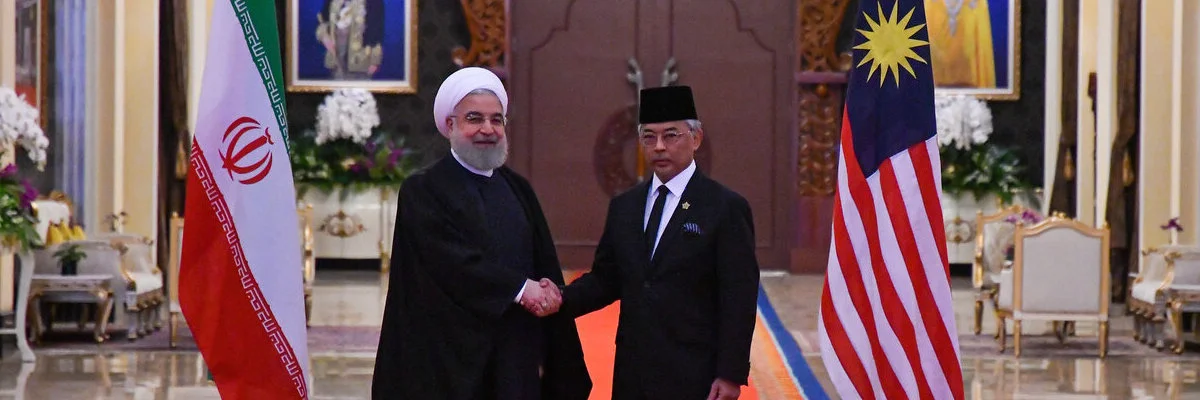
The president of sanctions-hit Iran called Thursday for Muslim countries to cooperate in fighting US "economic terrorism" at the opening of a summit aimed at tackling the Islamic world's woes.
Hundreds of delegates are attending the gathering in Malaysia—including heads of state and religious leaders—but the meeting has been snubbed by Saudi Arabia, home to Islam's holiest shrines.
The summit has also been criticized for undermining the Organisation of Islamic Conference (OIC), the Saudi-based global body representing Muslim nations and organizations.
Issues including the plight of Myanmar's Rohingya and China's mostly Muslim Uighur minority could be discussed, although, with massive Chinese infrastructure in many Islamic nations, criticism may be muted.
In opening remarks, Iran's President Hassan Rouhani slammed Washington's global clout.
"The American economic regime, and dollarization of national and global economies, have provided the United States with the possibility of advancing its hegemony under the threat of sanctions and economic terrorism," he said.
The Muslim world needs to be saved "from the domination of the United States dollar, and the American financial regime", he added, calling for greater financial cooperation between Islamic countries.
The United States re-imposed crippling sanctions on Iran in 2018 after withdrawing from an international deal aimed at tackling the Islamic Republic's nuclear program.
Iran's economy has since suffered a sharp economic downturn, with a plummeting currency sending inflation skyrocketing.
Speaking later alongside other leaders, Rouhani listed areas where Muslim nations could work together, from the banking sector to the tourism industries.
He proposed that Muslim countries' central banks could work together to introduce a unified cryptocurrency.
Muslim World 'in Crisis'
Turkish President Recep Tayyip Erdogan also suggested reducing dependence on the US dollar, calling on Muslim countries to "free bilateral trade from foreign exchange pressure".
"Instead of trade with foreign currencies, we would like to do foreign trade with our national currencies," he said.
"We are trying to develop alternative payment systems with countries like Russia and China and Brazil."
Turkey's lira plunged in value last year at a time of heightened tensions with the US, in one of the worst economic crises that Erdogan has faced in his long rule.
In his welcome address at the Kuala Lumpur event, Malaysian Prime Minister Mahathir Mohamad said that Muslim countries were "in a state of crisis, helpless and unworthy of this great religion which is meant to be good for mankind".
He also insisted summit organisers were "not discriminating (against) or isolating anyone" after the absence of Saudi Arabia triggered speculation the meeting was aimed at countering the kingdom's influence.
We have "invited almost all Muslim nations to participate in this summit, albeit at different levels", he said.
With Saudi rivals Iran, Qatar and Turkey in attendance, analysts had suggested the meeting could be aimed at forming a rival bloc to the OIC.
There were signs Riyadh was worried, with Pakistani Prime Minister Imran Khan withdrawing from the gathering—reportedly after Saudi pressure.
Mahathir dismissed such concerns in a phone call this week with Saudi Arabia's King Salman.
But the OIC, which has 57 members, launched a veiled attack Wednesday on the event, saying such gatherings would weaken Islam.
Photo: IRNA